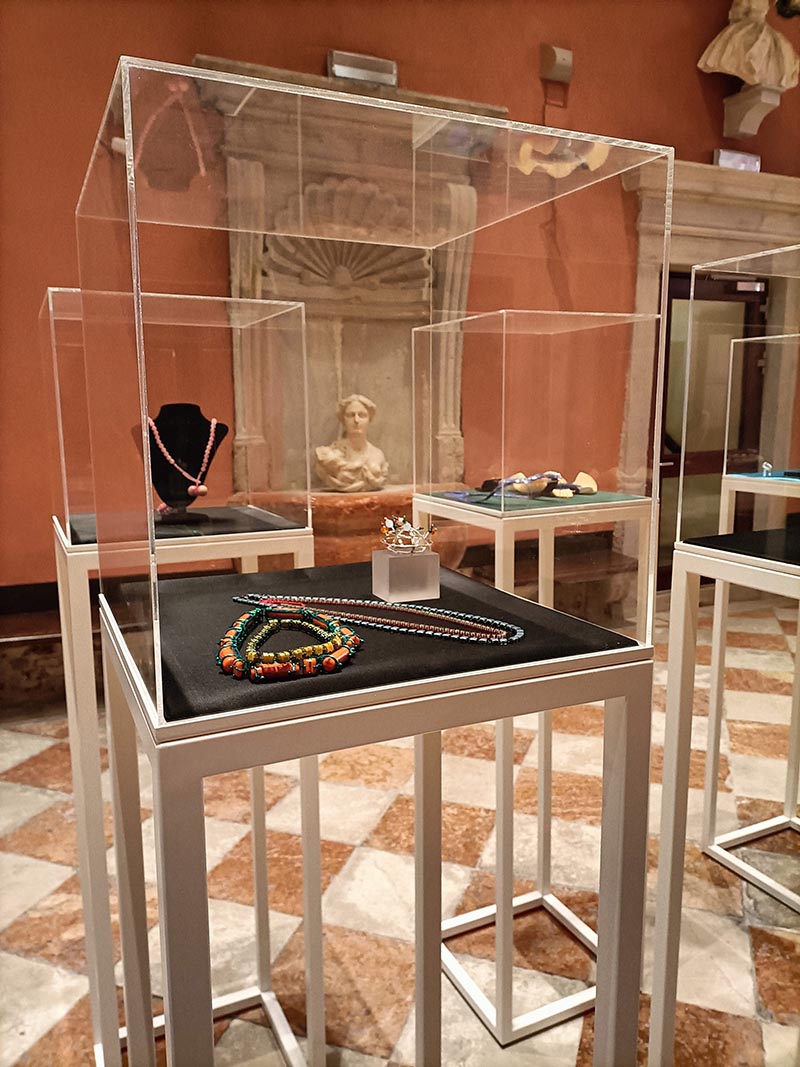
Lorenzo Quinn a Ca’ Rezzonico !

Ca’ Rezzonico (Venice)

For the English translation please scroll down the page, thank you !

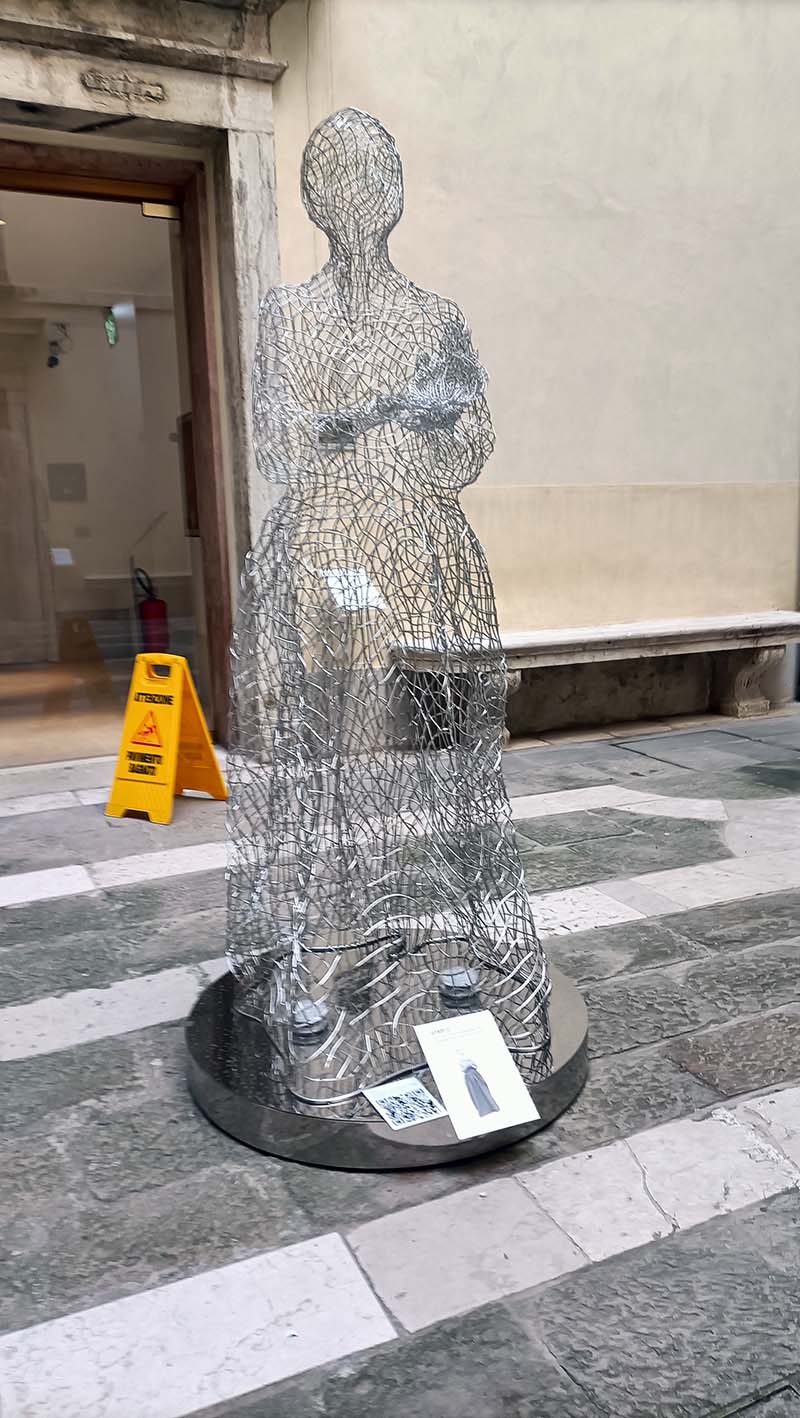
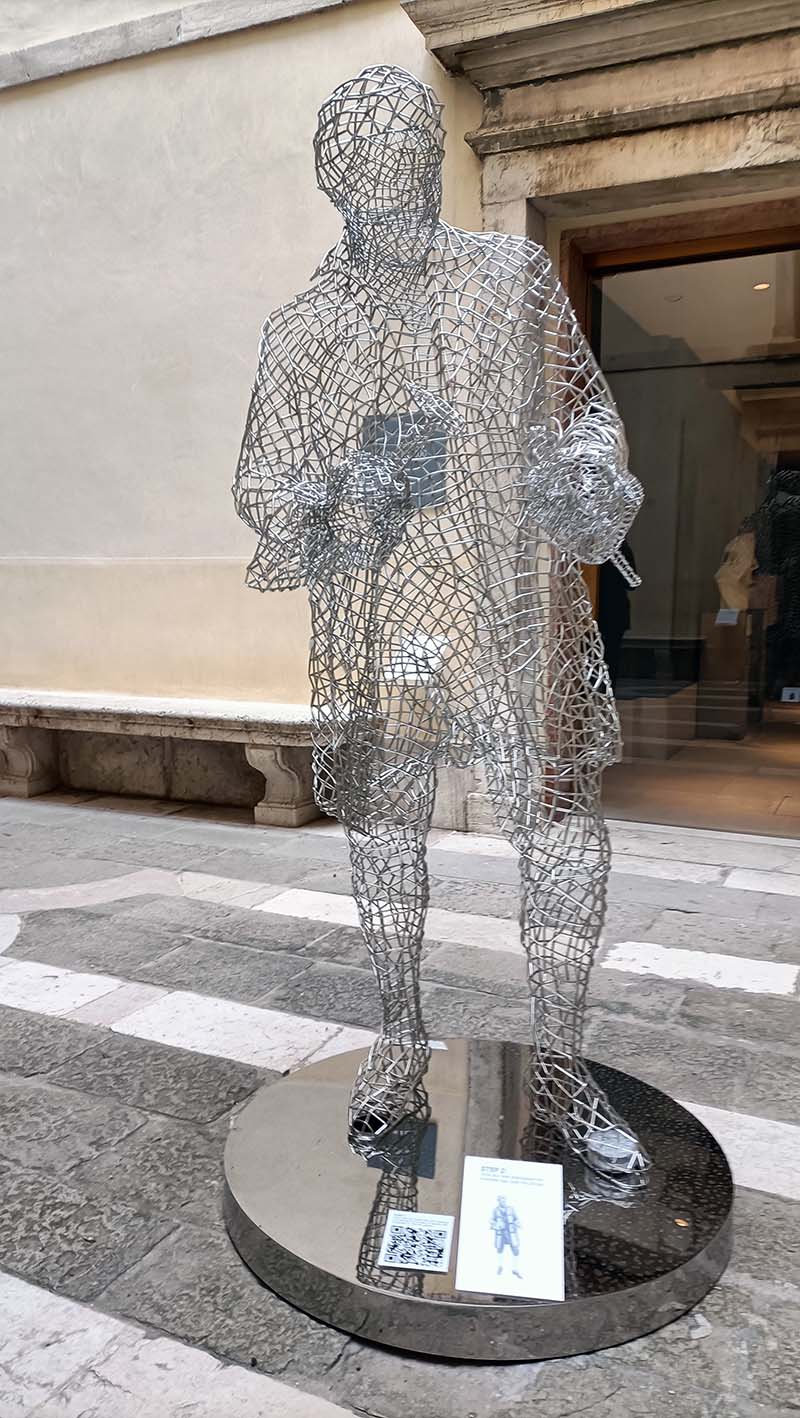
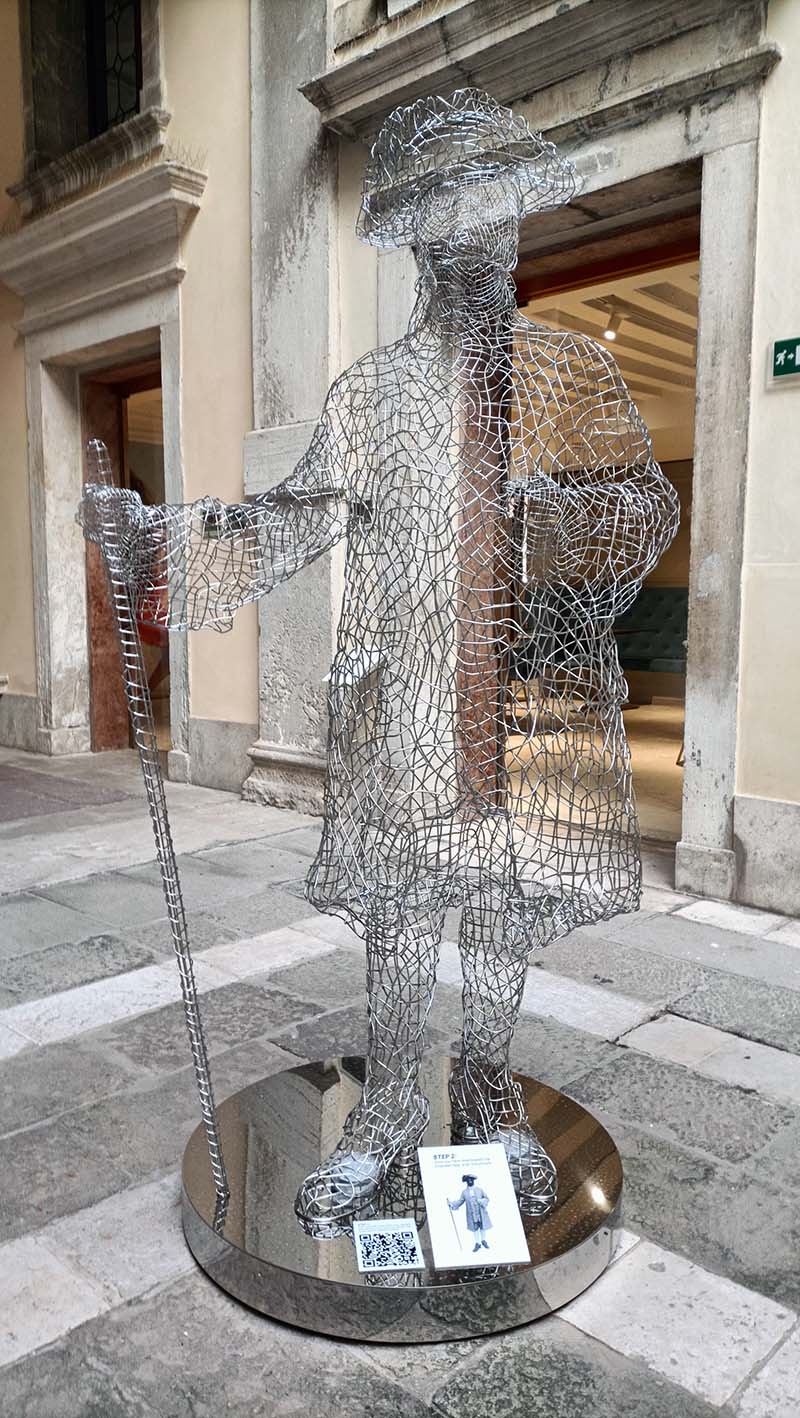
Nel bellissimo museo di Ca’ Rezzonico di Venezia, che potete vedere nella mappa nel link seguente, (https://maps.app.goo.gl/ABGLrmJ1Z1YfbZcL7) , oltre alla stupenda mostra sul Rinascimento in bianco e nero. L’arte dell’incisione a Venezia 1494-1615 ,è possibile ammirare una serie di meravigliose sculture ad opera del famoso artista internazionale Lorenzo Quinn, che si intitola “Anime di Venezia – Souls of Venice“, visibile dal 19 aprile al 15 settembre del 2024. Di lui vi ho già un po’ parlato per via della sua opera presente a Palazzo Ducale nella mostra dedicata a Marco Polo . Ma da ‘altronde chi non lo conosce già, visto la sua iconica opera di alcuni anni fa, presente nel canal grande, a fianco dell’albergo Ca’ Sagredo ?
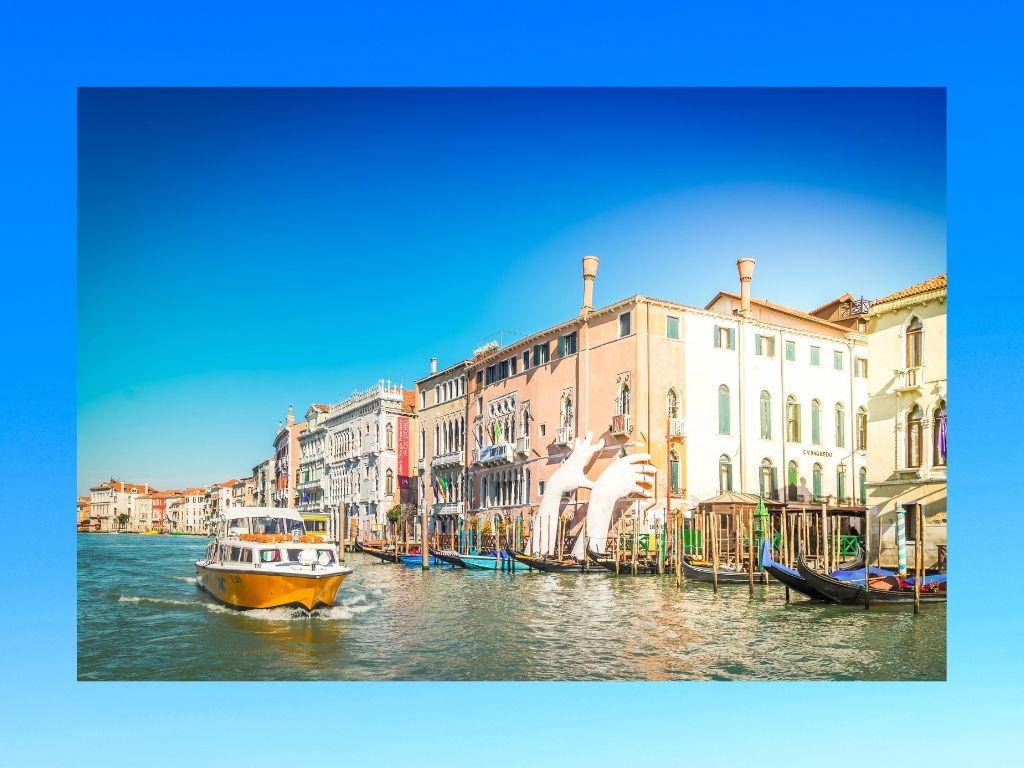
Lorenzo Quinn, figlio dell’attore Anthony Quinn, è nato a Roma nel 1966. Inizialmente attore, ha poi trovato la sua vocazione nella scultura, creando opere di grandi dimensioni che spesso raffigurano mani. Le sue creazioni trasmettono messaggi potenti su temi come la pace, la speranza, l’unità e il rispetto per la natura, con l’obiettivo di sensibilizzare e ispirare il pubblico. Le sue sculture sono esposte in tutto il mondo, ottenendo grande successo. Tra le sue opere più iconiche troviamo “Building Bridges” a Venezia, con mani colossali che emergono dal Canal Grande. https://lorenzoquinn.com/ https://www.soulsofvenice.com/

Questa mostra, è composta da 15 statue a maglie, distribuite a piano terra nell’androne del museo. Quest’opere simbolegianno gli importanti personaggi che hanno plasmato la storia della Serenissima nel corso dei secoli, consolidando il legame inscindibile tra la città e le sue diverse espressioni artistiche, immortalate per sempre dai creatori veneziani. Tra questi personaggi storici troviamo:

Lorenzo Tiepolo: nato in una famiglia di abili mercanti in ascesa politica, ricoprì importanti incarichi governativi prima di essere eletto doge della Repubblica di Venezia nel 1268. Durante il suo dogato, durato sette anni fino alla sua morte nel 1275, Tiepolo si impegnò nell’espansione territoriale della Serenissima, consolidando il suo potere e il prestigio della Repubblica

Marco Polo: nato a Venezia nel 1254, fu un celebre esploratore e mercante italiano. Insieme al padre Niccolò e allo zio Matteo, intraprese un epico viaggio lungo la Via della Seta, raggiungendo la Cina nel 1271. Per ben 17 anni rimase alla corte del Gran Khan Kublai, ricoprendo incarichi diplomatici e commerciali. Al suo ritorno a Venezia nel 1295, raccontò le sue straordinarie avventure nel libro “Il Milione”, divenendo una figura leggendaria e contribuendo ad aprire le porte dell’Occidente all’Oriente. Esplorate di più questo personaggio, andando a Palazzo Ducale, e a maggio anche a Palazzo Mocenigo, dove verranno, esposti i costumi di scena della omonima serie televisiva degli anni 80.

Caterina Corner è stata la regina consorte di Cipro e l’ultima sovrana indipendente dell’isola. Nata in una nobile famiglia veneziana, sposò il re Giacomo II di Cipro nel 1472. Rimasta vedova in giovane età con un figlio neonato, assunse la reggenza e poi il pieno regno, governando con saggezza e abilità politica. Il suo regno è stato segnato da intrighi politici e lotte di potere, tra le ambizioni espansionistiche di Venezia e le pressioni delle potenze straniere. Nonostante le difficoltà, Caterina Corner riuscì a mantenere l’autonomia di Cipro per quasi due decenni. Tuttavia, nel 1489, sotto la crescente influenza veneziana, fu costretta ad abdicare e cedere il regno alla Serenissima Repubblica. Tornata a Venezia, Caterina Corner ricevette in cambio il dominio di Asolo, dove creò una raffinata corte frequentata da scrittori e artisti. Trascorse gli ultimi anni della sua vita dedicandosi ad atti di mecenatismo e carità, spegnendosi nel 1510.

Veronica Franco fu una figura emblematica della Venezia rinascimentale, conosciuta come poetessa, cortigiana e donna d’affari di grande successo. Nata da una famiglia modesta, si distinse per la sua intelligenza, bellezza e talento letterario. Diventò una cortigiana di alto livello, frequentando i circoli intellettuali e aristocratici della città. Veronica Franco era anche una donna d’affari abile, gestendo il proprio patrimonio e investendo in diverse attività. Nonostante gli ostacoli e controversie, la sua posizione di cortigiana e i processi legali, difese la sua indipendenza e libertà di scelta. La sua opera letteraria e la sua storia personale offrono uno spaccato suggestivo sulla società e la cultura del tempo, e continuano ad ispirare studiosi e appassionati di storia e letteratura.

Elena Lucrezia Cornaro Piscopia (1646-1684): è stata un’erudita e filosofa italiana, considerata da alcune fonti come la prima donna al mondo ad aver ottenuto una laurea. Nata a Venezia da una nobile famiglia, dimostrò fin da giovane un grande interesse per la cultura e lo studio. Nonostante le resistenze dell’epoca legate al genere femminile, ottenne il permesso di sostenere l’esame di laurea in filosofia all’Università di Padova nel 1678, suscitando grande scalpore e acceso dibattito. La sua laurea rappresentò un evento storico di grande importanza, aprendo la strada all’istruzione superiore alle donne e sfidando i pregiudizi secolari, non si limitò ad essere una pioniera dell’istruzione femminile, ma si distinse anche per la sua profonda conoscenza in diverse discipline, tra cui la filosofia, la teologia, la matematica e le lingue antiche. Scrisse diverse opere letterarie e filosofiche, divenendo una figura di riferimento per gli intellettuali del suo tempo. Morì a Padova nel 1684 all’età di 38 anni, lasciando un’eredità duratura come simbolo di emancipazione femminile e di tenacia intellettuale. La sua storia e il suo impegno per l’istruzione rappresentano ancora oggi un’ispirazione per le donne di tutto il mondo.

Carlo Goldoni è stato un drammaturgo italiano noto come il “padre della commedia moderna”. Nato a Venezia, inizialmente intraprese la carriera legale, ma la sua passione per il teatro lo portò a diventare scrittore. Goldoni rivoluzionò il teatro italiano del XVIII secolo abbandonando la commedia dell’arte per creare opere più realistiche e borghesi. Le sue commedie si concentravano sulla vita quotidiana delle persone comuni, affrontando temi sociali e psicologici con arguzia e sottigliezza. Tra le sue opere più famose si annoverano “La locandiera”, “Gli amori delle dame”, “Arlecchino servitore di due padroni” e “I rusteghi”. Queste commedie, caratterizzate da trame brillanti, personaggi ben definiti e dialoghi vivaci, ottennero un grande successo sia tra il pubblico che tra la critica, consacrando Goldoni come uno dei più importanti drammaturghi europei del suo tempo.

Antonio Vivaldi fu un compositore, violinista e insegnante italiano noto per il suo significativo contributo all’era barocca. Nato a Venezia, mostrò un talento musicale fin da giovane e inizialmente intraprese una carriera nella chiesa, venendo ordinato sacerdote nel 1703. Chiamato il “Prete Rosso” a causa dei suoi capelli rossi, Vivaldi si dedicò con passione alla musica, componendo oltre 500 concerti, 90 opere liriche e numerose composizioni sacre e da camera. La sua musica si distingue per la sua inventiva melodica, la ricchezza armonica e il virtuosismo strumentale. Opere note includono “Le Quattro Stagioni,” un ciclo di concerti per violino che rappresentano le diverse stagioni dell’anno, e i “Concerti per Mandolino,” evidenziando le sue abilità come violinista e compositore. Vivaldi fu anche un innovatore nella musica strumentale, contribuendo allo sviluppo del concerto solistico e dell’orchestrazione. Il suo profondo e duraturo influsso sulla musica barocca ha ispirato generazioni di compositori successivi.

Marietta Barovier : fu una figura rivoluzionaria nella storia dell’arte vetraria veneziana. Nata da una famiglia di rinomati maestri vetrai, Marietta apprese fin da piccola i segreti di quest’arte affascinante. In un’epoca in cui il mestiere vetraio era prevalentemente maschile, Marietta si distinse per la sua abilità e la sua tenacia, diventando una delle prime donne ad assumere un ruolo di primo piano nella fornace di famiglia.

Andrea Palladio, un architetto italiano, è celebrato come una figura di spicco del Rinascimento e il pioniere dell’architettura palladiana. Nato a Padova, ha sviluppato le sue competenze a Vicenza, dove si è immerso nell’architettura classica e ha stabilito contatti con importanti intellettuali e mecenati. Lo stile architettonico di Palladio, noto come “palladianesimo”, ha influenzato profondamente l’architettura occidentale per secoli, diffondendosi in Europa, in America del Nord e ispirando innumerevoli edifici neoclassici. Considerato uno dei più grandi architetti di tutti i tempi, il suo lavoro ha lasciato un’impronta duratura nel settore e continua ad essere venerato e studiato da architetti e appassionati di tutto il mondo.

Elisabetta Caminer Turra (1751-1824) fu una scrittrice, traduttrice e intellettuale italiana, considerata una pioniera dell’istruzione femminile. Nata a Venezia da una famiglia ebrea, dimostrò fin da giovane un grande interesse per la cultura e lo studio. In un’epoca in cui l’istruzione era spesso preclusa alle donne, Elisabetta ebbe la possibilità di seguire un percorso formativo completo, approfondendo la conoscenza di diverse lingue e discipline. Elisabetta Caminer Turra rimane un esempio di donna colta, impegnata e visionaria che ha contribuito a promuovere l’istruzione femminile e l’emancipazione delle donne.

Tiziano Vecellio (1488/1490-1576), noto semplicemente come Tiziano, fu un pittore italiano, cittadino della Repubblica di Venezia e importante esponente della scuola veneziana. Considerato uno dei più grandi artisti di tutti i tempi, Tiziano rivoluzionò la pittura sacra e ritrattistica con la sua maestria nel colore, l’uso innovativo della luce e la sua profonda comprensione della psicologia umana.

Rosalba Carriera (1673-1757) è stata una pittrice italiana nota per la sua maestria nella pittura di ritratti in miniatura e pastello durante il diciottesimo secolo. Nata a Venezia, apprese l’arte nel laboratorio di suo padre, perfezionando le sue capacità nel ritrarre membri dell’alta società veneziana ed europea. Il lavoro di Carriera ebbe una profonda influenza sulla pittura di ritratti nel diciottesimo secolo, con il suo stile morbido e delicato che venne imitato da numerosi artisti. È considerata una delle più grandi pittrici di ritratti di tutti i tempi, e il suo lascito continua ad essere ammirato e studiato in tutto il mondo.

Infine l’opera del gondoliere e della gondola che più di ogni altra cosa, rappresenta Venezia !

Tutte le opere sono dotate di un codice QR code che si trova alla base della scultura. Inquadrandola con il cellulare, si apre il link che permette di esplorare di più uno dei personaggi storici di Venezia, che ho descritto sopra. All’apertura del link, bisogna inquadrare l’opera, e comparirà un personaggio in carne e ossa, che ci parlerà, raccontando i dettagli della sua storia. Un vero colpo di genio, che regala al visitatore una vera esperienza immersiva. Una mostra che parla del passato, con le tecnologie del futuro.

Una mostra da non perdere !! Invito tutta la cittadinanza e i turisti presenti in città di venire a vederla ! La mostra è presente a piano terra e, quindi non soggetta a biglietto, ma incoraggio tutti voi a visitare il magnifico museo di Ca’ Rezzonico ! Ne vale veramente la pena !! Non ve ne pentirete !

Dal 01 aprile al 31 ottobre: 10.00 – 18.00 (ultimo ingresso ore 17.00)

Dal 01 novembre al 31 marzo: 10.00 – 17.00 (ultimo ingresso ore 16.00)

Le operazioni di chiusura del museo iniziano 20 minuti prima dell’orario indicato.

Chiuso il martedì

Lorenzo Quinn at Ca’ Rezzonico Museum ! Souls of Venice

Ca’ Rezzonico (Venice)

In the beautiful Ca’ Rezzonico museum in Venice, which you can see on the map in the following link, (https://maps.app.goo.gl/ABGLrmJ1Z1YfbZcL7), in addition to the wonderful exhibition on the Renaissance in black and white. The art of engraving in Venice 1494-1615, it is possible to admire a series of wonderful sculptures by the famous international artist Lorenzo Quinn, which is entitled “Anime of Venice – Souls of Venice“, visible from 19 April to 15 September 2024. I have already spoken to you a little about him because of his work present at Doge’s Palace, in the exhibition dedicated to Marco Polo . But who doesn’t already know him, given his iconic work from a few years ago, present in the Grand Canal, next to the Ca’ Sagredo hotel?

Lorenzo Quinn, son of the actor Anthony Quinn, was born in Rome in 1966. Initially an actor, he then found his vocation in sculpture, creating large-scale works that often depict hands. His creations convey powerful messages on themes such as peace, hope, unity and respect for nature, with the aim of raising awareness and inspiring the public. His sculptures are exhibited all over the world, achieving great success. Among his most iconic works we find “Building Bridges” in Venice, with colossal hands emerging from the Grand Canal. https://lorenzoquinn.com/ https://www.soulsofvenice.com/

This exhibition is made up of 15 mesh statues, distributed on the ground floor in the museum’s entrance hall. These works symbolize the important characters who have shaped the history of the Serenissima over the centuries, consolidating the inseparable link between the city and its various artistic expressions, immortalized forever by Venetian creators. Among these historical figures we find:

Lorenzo Tiepolo: born into a family of skilled merchants on the political rise, he held important government positions before being elected doge of the Republic of Venice in 1268 During his reign, which lasted seven years until his death in 1275, Tiepolo committed himself to the territorial expansion of the Serenissima, consolidating his power and the prestige of the Republic.

Marco Polo: born in Venice in 1254, he was a famous Italian explorer and merchant. Together with his father Niccolò and his uncle Matteo, he undertook an epic journey along the Silk Road, reaching China in 1271. For 17 years he remained at the court of the Great Khan Kublai, holding diplomatic and commercial roles. Upon his return to Venice in 1295, he recounted his extraordinary adventures in the book “Il Milione”, becoming a legendary figure and helping to open the doors of the West to the East. Explore this character more by going to Doge’s Palace, and in May also to Mocenigo Palace, where the stage costumes from the 1980s television series of the same name will be on display.

Caterina Corner was the queen consort of Cyprus and the last independent ruler of the island. Born into a noble Venetian family, she married King James II of Cyprus in 1472. Widowed at a young age with an infant son, she assumed the regency and then full reign, governing with wisdom and political skill. His reign was marked by political intrigues and power struggles, between the expansionist ambitions of Venice and pressure from foreign powers. Despite the difficulties, Caterina Corner managed to maintain the autonomy of Cyprus for almost two decades. However, in 1489, under the growing Venetian influence, she was forced to abdicate and cede the kingdom to the Serenissima Republic. Returning to Venice, Caterina Corner received in exchange the dominion of Asolo, where she created a refined court frequented by writers and artists. He spent the last years of his life dedicating himself to acts of patronage and charity, dying in 1510.

Veronica Franco was an emblematic figure of Renaissance Venice, known as a highly successful poet, courtesan and businesswoman. Born to a modest family, she stood out for her intelligence, beauty and literary talent. She became a high-class courtesan, frequenting the city’s intellectual and aristocratic circles. Veronica Franco was also a skilled businesswoman, managing her own wealth and investing in several businesses. Despite obstacles and controversies, her position as a courtesan and legal processes, she defended her independence and freedom of choice. His literary work and his personal story offer a suggestive insight into the society and culture of the time, and continue to inspire scholars and enthusiasts of history and literature.

Elena Lucrezia Cornaro Piscopia (1646-1684): was an Italian scholar and philosopher, considered by some sources to be the first woman in the world to have obtained a degree. Born in Venice to a noble family, she demonstrated a great interest in culture and study from a young age. Despite the resistance of the time related to the female gender, she obtained permission to take the degree exam in philosophy at the University of Padua in 1678, causing a great stir and heated debate. Her graduation represented a historical event of great importance, paving the way for higher education for women and challenging age-old prejudices. She was not limited to being a pioneer of women’s education, but also distinguished herself for her profound knowledge in various disciplines. , including philosophy, theology, mathematics and ancient languages. He wrote several literary and philosophical works, becoming a reference figure for the intellectuals of his time. She died in Padua in 1684 at the age of 38, leaving a lasting legacy as a symbol of female empowerment and intellectual tenacity. Her story and commitment to education remain an inspiration to women around the world today.

Carlo Goldoni was an Italian playwright known as the “father of modern comedy”. Born in Venice, he initially pursued a legal career, but his passion for theater led him to become a writer. Goldoni revolutionized 18th-century Italian theater by abandoning the art comedy to create more realistic and bourgeois works. His plays focused on the daily lives of ordinary people, tackling social and psychological issues with wit and subtlety. Among his most famous works are “The innkeeper”, “The loves of the ladies”, “Harlequin servant of two masters” and “I rusteghi”. These comedies, characterized by brilliant plots, well-defined characters and lively dialogues, achieved great success among both the public and critics, establishing Goldoni as one of the most important European playwrights of his time.

Antonio Vivaldi was an Italian composer, violinist and teacher known for his significant contributions to the Baroque era. Born in Venice, he showed musical talent from a young age and initially pursued a career in the church, being ordained a priest in 1703. Called the “Red Priest” due to his red hair, Vivaldi devoted himself passionately to music, composing over 500 concertos , 90 operas and numerous sacred and chamber compositions. His music is distinguished by its melodic inventiveness, harmonic richness and instrumental virtuosity. Known works include “The Four Seasons,” a cycle of violin concertos representing the different seasons of the year, and the “Mandolin Concertos,” highlighting his skills as a violinist and composer. Vivaldi was also an innovator in instrumental music, contributing to the development of the solo concert and orchestration. His profound and lasting influence on Baroque music inspired generations of subsequent composers.

Marietta Barovier: she was a revolutionary figure in the history of Venetian glass art. Born to a family of renowned glass masters, Marietta learned the secrets of this fascinating art from an early age. In an era in which the glass-making profession was predominantly male, Marietta stood out for her skill and tenacity, becoming one of the first women to take on a leading role in the family furnace.

Andrea Palladio, an Italian architect, is celebrated as a leading figure of the Renaissance and the pioneer of Palladian architecture. Born in Padua, he developed his skills in Vicenza, where he immersed himself in classical architecture and established contacts with important intellectuals and patrons. Palladio’s architectural style, known as “Palladianism”, has profoundly influenced Western architecture for centuries, spreading across Europe, North America and inspiring countless neoclassical buildings. Considered one of the greatest architects of all time, his work has left a lasting imprint on the industry and continues to be revered and studied by architects and enthusiasts around the world.

Elisabetta Caminer Turra (1751-1824) was an Italian writer, translator and intellectual, considered a pioneer of female education. Born in Venice to a Jewish family, she demonstrated a great interest in culture and study from a young age. In an era in which education was often closed to women, Elisabetta had the opportunity to follow a complete educational path, deepening her knowledge of different languages ​​and disciplines. Elisabetta Caminer Turra remains an example of a cultured, committed and visionary woman who contributed to promoting female education and the emancipation of women.

Tiziano Vecellio (1488/1490-1576), known simply as Titian, was an Italian painter, citizen of the Republic of Venice and an important exponent of Venetian school. Considered one of the greatest artists of all time, Titian revolutionized sacred and portrait painting with his mastery of color, innovative use of light and his profound understanding of human psychology.

Rosalba Carriera (1673-1757) was an Italian painter known for her mastery of miniature and pastel portrait painting during the eighteenth century . Born in Venice, she learned the art in her father’s workshop, perfecting her skills in portraying members of Venetian and European high society. Carriera’s work had a profound influence on portrait painting in the eighteenth century, with his soft and delicate style being imitated by numerous artists. She is considered one of the greatest portrait painters of all time, and her legacy continues to be admired and studied around the world.

Finally, the work of the gondolier and the gondola that, more than anything else, represents Venice!

All works are equipped with a QR code located at the base of the sculpture. Framing it with your mobile phone opens the link that allows you to explore more one of the historical figures of Venice, which I described above. When you open the link, you need to frame the work, and a real character will appear and speak to you, telling you the details of his/her story. A true stroke of genius, which gives the visitor a truly immersive experience. An exhibition that talks about the past, with the technologies of the future.

An exhibition not to be missed!! I invite all citizens and tourists in the city to come and see it! The exhibition is on the ground floor and therefore not subject to a ticket, but I encourage all of you to visit the magnificent Ca’ Rezzonico museum! It’s really worth it!! You will not regret it !

From 01 April to 31 October: 10.00 – 18.00 (Last entrance at 17.00)

From 01 November to 31 March: 10.00 – 17.00 (Last entrance at 16.00)

The closing operations of the museum begin 20 minutes before the closing time.

Closed on Tuesdays
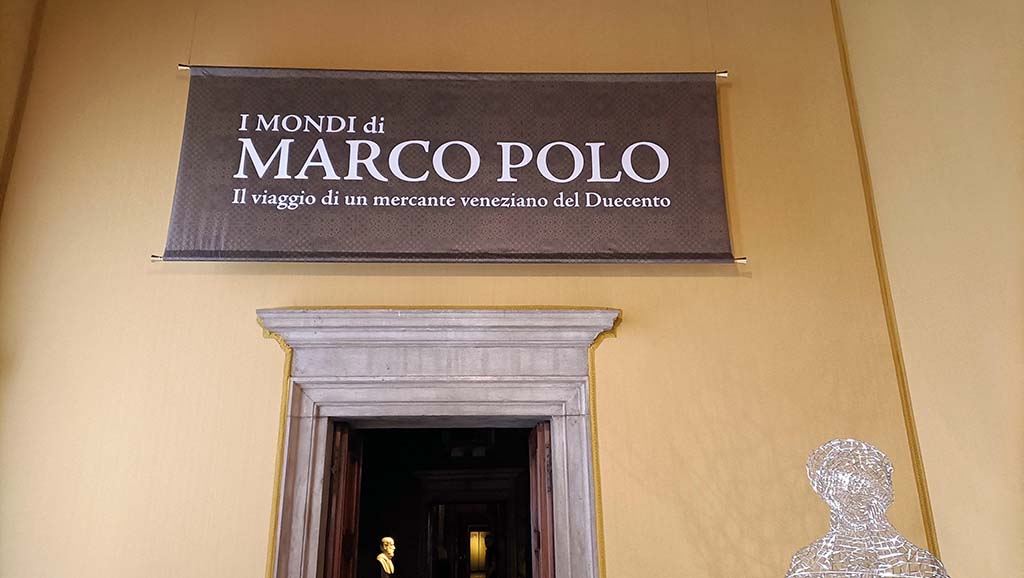
Marco Polo a palazzo Ducale

Finalmente sono andato a vedere la mostra su Marco Polo inaugurata a Palazzo Ducale Venerdì scorso. Prima di cominciare a descrivervi questa bellissima mostra, vi invito cortesemente a leggervi per bene questa pagina del sito web della Fondazione Musei Civici di Venezia: https://palazzoducale.visitmuve.it/it/pianifica-la-tua-visita/biglietti/ In quanto ci sono diverse tipologie di biglietto, e vi consiglio caldamente, di chiamare prima e farvi dare qualche informazione, o di passare per la biglietteria.

La mostra è localizzata dentro a Palazzo Ducale di Venezia, nell’area degli appartamenti privati del doge, luogo dove si sono tenute in passato, le altre stupende mostre di successo. All’ingresso della mostra ci saluta un’opera del famoso artista Lorenzo Quinn, che rappresenta il viaggiatore Veneziano. Sul piedestallo e anche sulla didascalia a muro è presente un QR code, da inquadrare con la telecamera del proprio cellulare / tablet, che consente di capire meglio l’opera. Vi lascio il link di questo grande artista https://www.soulsofvenice.com/souls-of-venice-4/ e vi ricordo che a breve, altre sue opere saranno visibili presso il meraviglioso museo di Ca’ Rezzonico https://carezzonico.visitmuve.it/it/mostre/mostre-in-corso/lorenzo-quinn-anime-di-venezia-souls-of-venice/2024/03/20187/mostra-lorenzo-quinn/ Non perdetevela !!

La mostra copre circa 10 sale, ognuna con una specifica area relativa a Marco Polo: Armenia, Mongolia, Iran, Cina, India, Korean ect. dove possiamo trovare di tutto, dalle mappe dove ci mostra tutte le sue tappe, e non solo; mappe originali dell’epoca, come il mappamondo borgiano, un planisfero di Tolomeo II, un astrolabio, il testamento redatto dal notaio Giovanni Giustinian, ceramiche, bassorilievi, manoscritti originali, vangeli, bibbie del 12/13 secolo, libri in lingua francese del milione, monete, tessuti e molto altro ancora.

https://it.wikipedia.org/wiki/Marco_Polo#/media/File:Travels_of_Marco_Polo_it.svg

Ma chi era Marco Polo ? Marco Polo nacque a Venezia nel 1254, in una famiglia di mercanti già orientata verso l’Est. Poco si sa della sua infanzia, ma la sua vita prese una svolta significativa all’età di 15 anni. Suo padre Niccolò e suo zio Matteo, già impegnati in commerci con l’Oriente, partirono per un lungo viaggio. Sorprendentemente, il giovane Marco li accompagnò. Questo viaggio segnò il destino di Marco Polo. Si trattava di un percorso lungo e pericoloso, la famosa Via della Seta, che collegava l’Europa all’Asia. Attraversarono deserti, montagne e steppe, impiegando ben tre anni e mezzo prima di giungere alla corte del sovrano mongolo Kublai Khan in Cina. Kublai Khan, impressionato dall’intelligenza e dall’intraprendenza di Marco, lo prese al suo servizio. Per ben 17 anni, Marco Polo viaggiò in lungo e in largo per l’immenso impero mongolo. Visitò città come Pechino, Hangzhou e Quanzhou, immergendosi in culture diverse e osservando meraviglie. Nel 1292, finalmente, Marco Polo fece ritorno a Venezia. Il viaggio di ritorno durò due anni e lo portò attraverso l’India, il Medio Oriente e l’Europa. Al suo arrivo a Venezia, era ormai un uomo adulto, ricco e famoso per le sue avventure orientali. Durante la sua prigionia dopo una battaglia navale (probabilmente la battaglia della Curzola), Marco Polo dettò le sue esperienze di viaggio a uno scrittore: Rustichello da Pisa. Nacque così “Il Milione”, un libro che descriveva in modo dettagliato le terre lontane visitate, le culture incontrate e le meraviglie dell’Oriente. Il Milione ebbe un successo immediato, aprendo gli occhi dell’Europa su un mondo sconosciuto e stimolando la curiosità per l’Est. Marco Polo morì a Venezia nel 1324. Nonostante alcuni dubbi sulla veridicità di alcuni racconti nel Milione, la sua eredità è indiscutibile. È considerato uno dei più grandi esploratori di tutti i tempi. Il suo viaggio aprì nuove rotte commerciali e contribuì a diffondere la conoscenza dell’Oriente in Europa. Il Milione rimane un’opera letteraria fondamentale e una fonte di ispirazione per viaggiatori e avventurieri ancora oggi.

Che altro dire ancora ? Io invito tutta la cittadinanza e i visitatori stranieri presenti in città , a visitare questa bellissima mostra, e per approfondire di più la storia di questo famoso mercante Veneziano, consiglio di restare sintonizzati sul sito della Fondazione Musei Civici di Venezia per la prossima grande mostra presente a Palazzo Mocenigo : https://mocenigo.visitmuve.it/it/mostre/mostre-in-corso/marco-polo-i-costumi-di-enrico-sabbatini/2024/01/20455/mostra-marco-polo-i-costumi-di-enrico-sabbatini/ e inoltre, potete rivedere le vecchie puntate del sceneggiato di Marco Polo, quello della Rai, con Ken Marshall, su Rai Play: https://www.raiplay.it/programmi/marcopolo

Marco Polo at the Doge’s Palace in Venice !

I finally went to see the Marco Polo exhibition inaugurated at Palazzo Ducale last Friday. Before starting to describe this beautiful exhibition, I kindly invite you to carefully read this page on the website of the Fondazione Musei Civici di Venezia: https://palazzoducale.visitmuve.it/it/pianifica-la-tua-visita/biglietti/ As there are different types of tickets, and I strongly advise you to call first and have them give you some information, or to go to the ticket office.

The exhibition is located inside the Doge’s Palace of Venice in the area of the Doge’s private apartments, the place where other wonderful, successful exhibitions were held in the past. At the entrance to the exhibition we are greeted by a work by the famous artist Lorenzo Quinn, representing the Venetian traveller. On the pedestal and also on the caption on the wall there is a QR code, to be framed with the camera of your mobile phone / tablet, which allows you to better understand the work. I leave you the link of this great artist https://www.soulsofvenice.com/souls-of-venice-4 / and I remind you that soon, other of his works will be visible at the wonderful Ca’ Rezzonico museum https://carezzonico.visitmuve.it/it/mostre/mostre-in-corso/ lorenzo-quinn-anime-di-venezia-souls-of-venice/2024/03/20187/mostra-lorenzo-quinn/ Don’t miss it!!

The exhibition is “illustrated” in approximately 10 rooms, each one covering a specific area of Marco Polo’s journey: Armenia, Mongolia, Iran, China, India, Korean ect. where we can find everything, from maps where it shows us all its stages, and not only that; original maps of the time, such as the Borgian globe, a planisphere of Ptolemy II, an astrolabe, the will drawn up by the notary Giovanni Giustinian, ceramics, bas-reliefs, original manuscripts, gospels, 12/13 century Bibles, millions of French-language books, coins, fabrics and much more.

https://it.wikipedia.org/wiki/Marco_Polo#/media/File:Travels_of_Marco_Polo_it.svg

But who was Marco Polo? Marco Polo was born in Venice in 1254, into a family of merchants already oriented towards the East. Little is known about his childhood, but his life took a significant turn at the age of 15. His father Niccolò and his uncle Matteo, already engaged in trade with the East, left for a long journey. Surprisingly, young Marco accompanied them. This journey marked the fate of Marco Polo. It was a long and dangerous route, the famous Silk Road, which connected Europe to Asia. They crossed deserts, mountains and steppes, taking three and a half years to reach the court of the Mongol ruler Kublai Khan in China. Kublai Khan, impressed by Marco’s intelligence and resourcefulness, took him into his service. For 17 years, Marco Polo traveled far and wide across the immense Mongol empire. He visited cities such as Beijing, Hangzhou and Quanzhou, immersing himself in different cultures and observing wonders. In 1292, Marco Polo finally returned to Venice. The return journey took two years and took him through India, the Middle East and Europe. Upon his arrival in Venice, he was now an adult man, rich and famous for his oriental adventures. During his imprisonment after a naval battle, Marco Polo dictated his travel experiences to a writer: “Rustichello da Pisa”. Thus “Il Milione” was born, a book that described in detail the distant lands visited, the cultures encountered and the wonders of the East. Il Milione was an immediate success, opening Europe’s eyes to an unknown world and stimulating curiosity about the East. Marco Polo died in Venice in 1324. Despite some doubts about the veracity of some stories in the Milione, his legacy is indisputable. He is considered one of the greatest explorers of all time. His voyage opened new trade routes and helped spread knowledge of the East to Europe. Il Milione remains a fundamental literary work and a source of inspiration for travelers and adventurers today.

What else can I say? I invite all citizens and foreign visitors present in the city to visit this beautiful exhibition, and to learn more about the history of this famous Venetian merchant, I recommend staying tuned to the website of the Civic Museums Foundation of Venice for the next major exhibition in Mocenigo Palace : https://mocenigo.visitmuve.it/it/mostre/mostre-in-corso/marco-polo-i-costumi-di-enrico-sabbatini/ 2024/01/20455/mostra-marco-polo-i-costumi-di-enrico-sabbatini/ and also, you can watch the old episodes of Marco Polo’s drama, the one from Rai, with Ken Marshall, on Rai Play: https://www.raiplay.it/programmi/marcopolo

Rinascimento in bianco e nero a Ca’ Rezzonico

Ca’ Rezzonico (Venice)

For the English translation please scroll down the page, thank you !


La rivoluzione per immagini: una mostra a Venezia celebra l’arte della stampa nel Rinascimento

La nuova mostra “Rinascimento in bianco e nero – L’arte dell’incisione a Venezia tra il 1494 e il 1615″ rappresenta un’occasione unica per immergersi nell’affascinante mondo dell’arte dell’incisione a Venezia. Situata a Ca’ Rezzonico, questa mostra offre uno sguardo approfondito sul periodo del Rinascimento e sulla straordinaria tecnica dell’incisione in bianco e nero. I visitatori avranno l’opportunità di ammirare opere straordinarie e di scoprire il ruolo cruciale che l’arte dell’incisione ha svolto nell’ambito artistico veneziano tra il 1494 e il 1615. Con un’ampia gamma di opere in esposizione, questa mostra promette di offrire uno sguardo affascinante e coinvolgente su un capitolo significativo della storia artistica di Venezia. Non perdete l’occasione di visitare questa straordinaria esposizione, aperta al pubblico dall’8 marzo al 3 giugno 2024.

La mostra è concentrata al primo piano, nella sala degli Arazzi, nella sala del Trono e del Portego. La mostra è a dir poco stupenda, con tantissime opere molto importanti, basta dire che si sono delle opere di Jacopo De Barbari e di Albrecht Dürer, e solo per questo vale la pena di visitarla ! Come sapete Jacopo De Barbari è famoso per la sua celebre veduta di Venezia a volo d’uccello: Immaginate di volare sopra la Serenissima all’alba del XVI secolo. I canali luccicano sotto i primi raggi di sole, le gondole scivolano silenziose, i palazzi si affacciano maestosi sulla laguna. Immaginate di poter osservare ogni dettaglio di questa città magica, dai tetti delle case ai cortili segreti, dalle barche ormeggiate alle piazze brulicanti di vita. Tutto questo è possibile grazie alla straordinaria xilografia di Jacopo de’ Barbari, conosciuta come “Veduta di Venezia” e realizzata nel 1500. Un’opera monumentale, incisa su sei tavole di legno di pero, che offre una veduta a volo d’uccello di Venezia con una precisione e un livello di dettaglio mai visti prima. Dietro a questa mappa prospettica si cela un vero e proprio lavoro di squadra. Jacopo de’ Barbari, verosimilmente coadiuvato da esperti di cartografia e disegno, ha curato la realizzazione della veduta, mentre il mercante tedesco Anton Kolb ha finanziato l’opera e ne ha curato la stampa e la diffusione. La “Veduta di Venezia” non è solo un’opera di grande valore cartografico, ma anche un vero e proprio capolavoro rinascimentale. La città è rappresentata con una ricchezza di dettagli e una cura prospettica che lasciano a bocca aperta. Si possono scorgere chiese, palazzi, canali, ponti, barche, persone e persino animali, offrendo una rappresentazione viva e realistica della vita quotidiana nella Venezia del Cinquecento. Ma ogni modo ci sono tante altre opere molto interessanti, che spaziano dai soggetti religiosi o tratti dalla mitologia greca.

La città di Venezia, emporio internazionale e centro propulsore della cultura rinascimentale, ha giocato un ruolo fondamentale come capitale italiana della stampa nel XVI secolo. Grazie alla sua posizione geografica e al fervore artistico che la contraddistingueva, la città lagunare è diventata il fulcro di una vera e propria “rivoluzione per immagini”. È qui che hanno preso vita alcune delle più straordinarie e affascinanti realizzazioni grafiche ed editoriali del tempo, contribuendo in modo significativo allo sviluppo della stampa e della diffusione delle conoscenze.

L’esposizione, allestita in due sedi: Ca’ Rezzonico a Venezia e il Museo Civico di Bassano del Grappa , ripercorre i più alti conseguimenti dell’arte grafica nella Serenissima, mettendo a confronto oltre duecento opere provenienti da collezioni pubbliche e private. In un dialogo serrato, incisioni e xilografie si confrontano con la pittura, quasi fossero due specchi l’una dell’altra. La rassegna si articola in sezioni cronologiche e tematiche: dalle novità alla fine del Quattrocento ai grandi formati, dagli incisori veneti e forestieri al chiaroscuro, dalla bottega di Tiziano all’opera di Agostino Carracci e Giuseppe Scolari. Questa straordinaria mostra rappresenta un’opportunità unica per immergersi nell’evoluzione dell’arte grafica a Venezia, permettendo ai visitatori di apprezzare la maestria e l’innovazione degli artisti che hanno contribuito a plasmare una delle epoche più ricche e affascinanti della storia dell’arte. La varietà e la profondità delle opere esposte offrono una prospettiva unica, permettendo di comprendere appieno l’importanza e l’influenza dell’arte grafica nella cultura veneziana del periodo.

Il percorso proposto è di grande impatto visivo e celebra in vari modi i temi fondanti dell’arte veneziana, tra cui il chiaroscuro, il paesaggio, la pittura narrativa, il nudo femminile, il rapporto con la tradizione antica e la difesa della propria identità. Questa mostra rappresenta un’opportunità straordinaria di esplorare e comprendere appieno l’eredità artistica e culturale della Serenissima, offrendo ai visitatori un’esperienza coinvolgente e memorabile. Attraverso le stampe, Venezia si rivela ancora una volta come crocevia di esperienze artistiche e fucina di innovazione, un faro che ha illuminato l’Europa del Rinascimento.

Che altro posso dire ? Invito tutta i cittadini di Venezia e i turisti presenti in città di venire nel stupendo museo di Ca’ Rezzonico per vedere questa stupenda mostra !! Sono sicuro che vi piacerà tantissimo !

Dal 01 novembre al 31 marzo: 10.00 – 17.00 (ultimo ingresso ore 16.00)
Dal 01 aprile al 31 ottobre: 10.00 – 18.00 (ultimo ingresso ore 17.00)
Le operazioni di chiusura del museo iniziano 20 minuti prima dell’orario indicato.
Chiuso il martedì

Renaissance in black and white at Ca’ Rezzonico

The revolution in images: an exhibition in Venice celebrates the art of printing in the Renaissance

The new exhibition “Renaissance in black and white – The art of engraving in Venice between 1494 and 1615″ represents an opportunity unique to immerse yourself in the fascinating world of the art of engraving in Venice. Located at Ca’ Rezzonico, this exhibition offers an in-depth look at the Renaissance period and the extraordinary technique of black and white printmaking. Visitors will have the opportunity to admire extraordinary works and discover the crucial role that the art of engraving played in Venetian art between 1494 and 1615. With a wide range of works on display, this exhibition promises to offer a fascinating and engaging look at a significant chapter in the artistic history of Venice. Don’t miss the opportunity to visit this extraordinary exhibition, open to the public from 8 March to 3 June 2024.

The exhibition is located on the first floor, in the Tapestry room, in the Throne and Portego rooms. The exhibition is nothing short of stupendous, with many very important works, suffice it to say that there are works by Jacopo De Barbari and Albrecht Dürer, and for this reason alone it is worth visiting! As you know, Jacopo De Barbari is famous for his famous bird’s eye view of Venice: Imagine flying over the Serenissima at dawn in the 16th century. The canals shimmer under the first rays of the sun, the gondolas glide silently, the buildings overlook the lagoon majestically. Imagine being able to observe every detail of this magical city, from the roofs of the houses to the secret courtyards, from the moored boats to the squares teeming with life. All this is possible thanks to the extraordinary woodcut by Jacopo de’ Barbari, known as the “View of Venice” and created in 1500. A monumental work, engraved on six pear wood panels, which offers a bird’s eye view of Venice with a precision and level of detail never seen before. Behind this perspective map lies real teamwork. Jacopo de’ Barbari, probably assisted by experts in cartography and drawing, oversaw the creation of the view, while the German merchant Anton Kolb financed the work and took care of its printing and diffusion. The “View of Venice” is not only a work of great cartographic value, but also a true Renaissance masterpiece. The city is represented with a wealth of detail and attention to perspective that leave you speechless. You can see churches, palaces, canals, bridges, boats, people and even animals, offering a lively and realistic representation of daily life in sixteenth-century Venice. But in any case there are many other very interesting works, ranging from religious subjects or taken from Greek mythology.

The city of Venice, an international emporium and driving force of Renaissance culture, played a fundamental role as the Italian capital of printing in the 16th century. Thanks to its geographical position and the artistic fervor that distinguished it, the lagoon city has become the fulcrum of a true “revolution in images”. It is here that some of the most extraordinary and fascinating graphic and editorial creations of the time came to life, contributing significantly to the development of printing and the diffusion of knowledge.

The exhibition, set up in two locations: Ca’ Rezzonico in Venice and the Civic Museum of Bassano del Grappa, traces the highest achievements of graphic art in the Serenissima, placing in comparison over two hundred works from public and private collections. In a close dialogue, engravings and woodcuts compare themselves with painting, almost as if they were two mirrors of each other. The exhibition is divided into chronological and thematic sections: from novelties at the end of the fifteenth century to large formats, from Venetian and foreign engravers to chiaroscuro, from Titian’s workshop to the work of Agostino Carracci and Giuseppe Scolari. This extraordinary exhibition represents a unique opportunity to immerse yourself in the evolution of graphic art in Venice, allowing visitors to appreciate the mastery and innovation of the artists who helped shape one of the richest and most fascinating eras in art history . The variety and depth of the works on display offer a unique perspective, allowing us to fully understand the importance and influence of graphic art in the Venetian culture of the period.

The proposed route is of great visual impact and celebrates in various ways the founding themes of Venetian art, including chiaroscuro, landscape, narrative painting, the female nude , the relationship with ancient tradition and the defense of one’s identity. This exhibition represents an extraordinary opportunity to fully explore and understand the artistic and cultural heritage of the Serenissima, offering visitors an engaging and memorable experience. Through prints, Venice reveals itself once again as a crossroads of artistic experiences and a hotbed of innovation, a beacon that illuminated Renaissance Europe.

What else can I say? I invite all the citizens of Venice and tourists present in the city to come to the wonderful Ca’ Rezzonico museum to see this wonderful exhibition!! I’m sure you’ll love it!

From 01 November to 31 March: 10.00 – 17.00 (last entry 16.00)
From 01 April to 31 October: 10.00 – 18.00 (last entry 17.00)
Museum closing operations begin 20 minutes before the indicated time.
Closed on Tuesday

Palazzo Mocenigo si fa’ in tre !

For the English translation please scroll down the page, thank you !

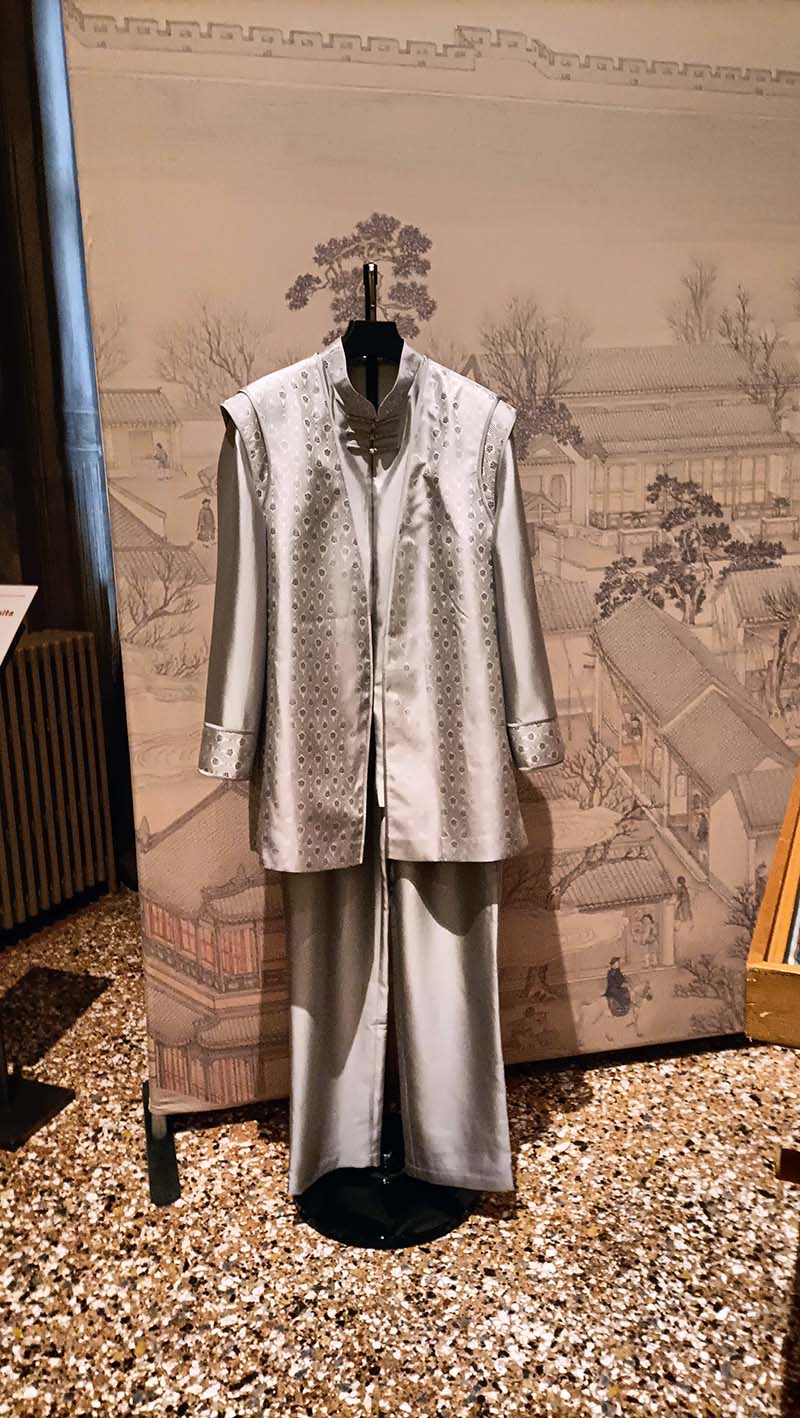
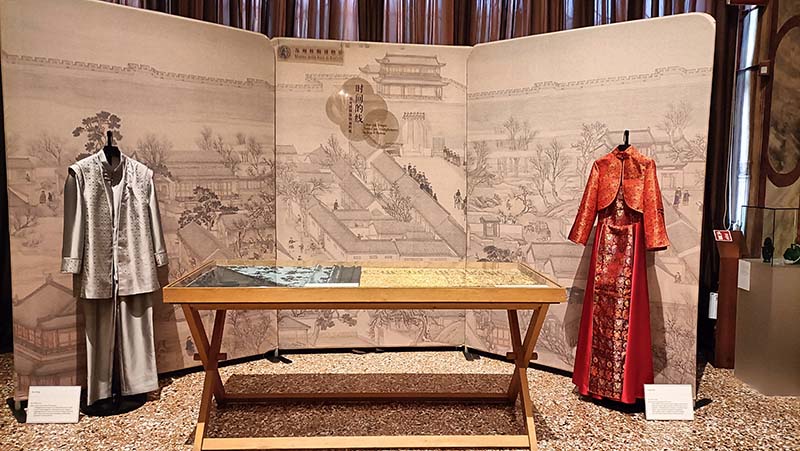
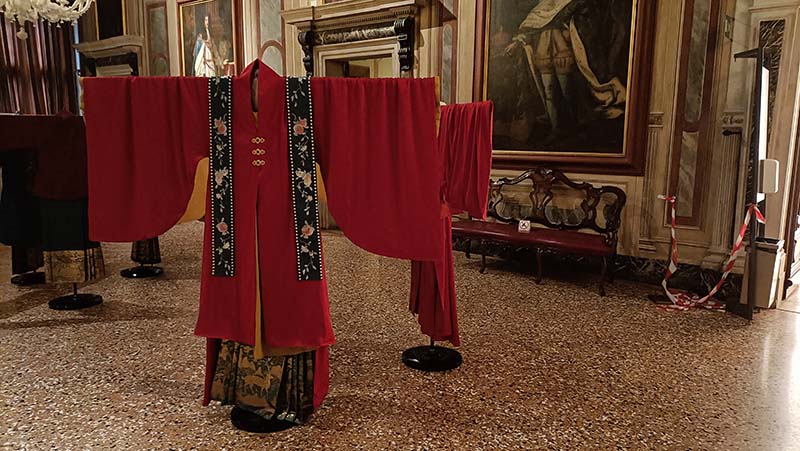
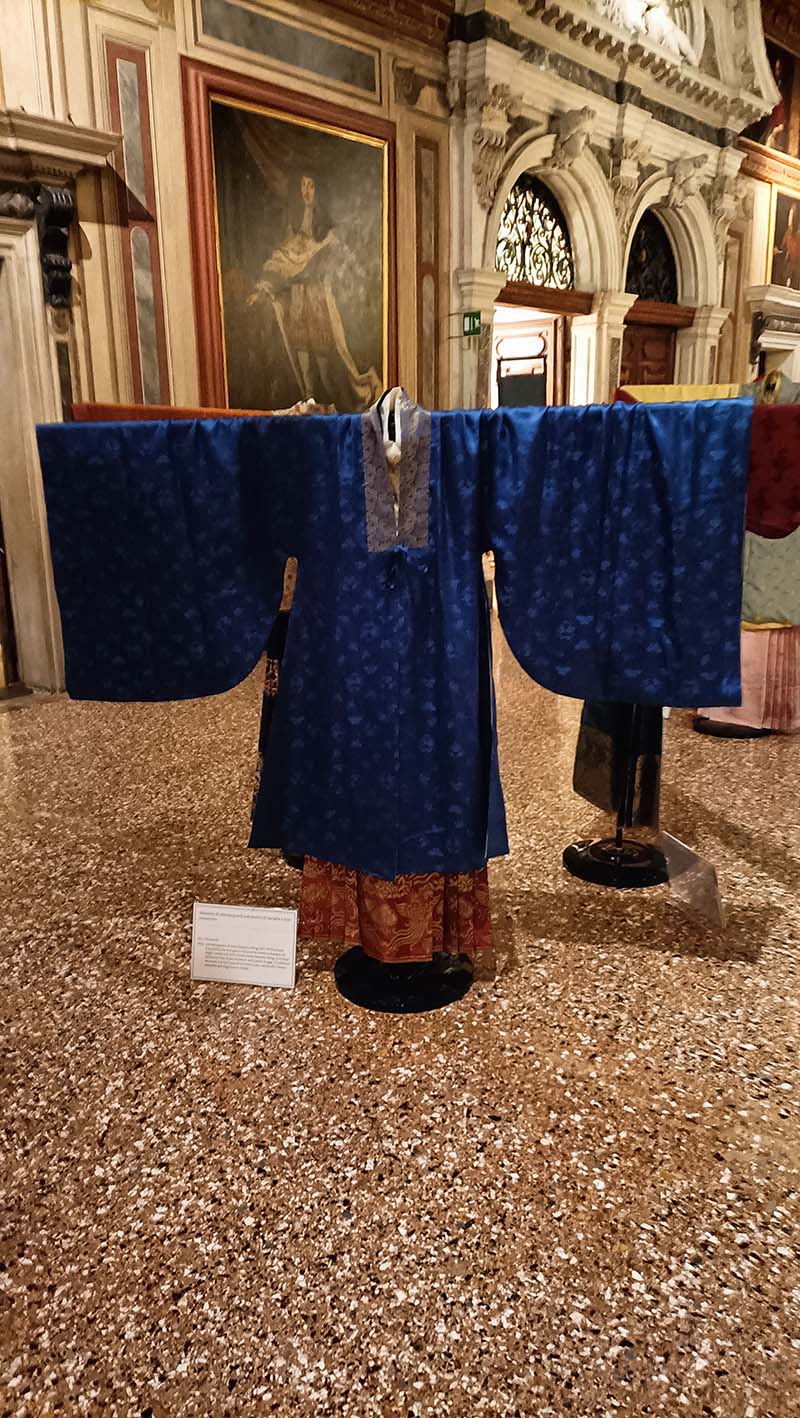
Palazzo Mocenigo si fa in tre e offre al suo pubblico tre diversi stili di costumi di diverse epoche. Proprio oggi (10/01/2024) si è inaugurata la mostra “L’asse del tempo” che è la prima iniziativa da parte della Fondazione Musei Civici di Venezia per festeggiare i 700 anni della morte di Marco Polo. Nella sala del Portego al primo piano (si possono vedere i due costumi nella foto in basso, mentre gli altri sono stati spostati in sala 8) si possono vedere dei costumi che provengono dal Museo della Seta di Suzhou, che ci portano a sognare la Cina ai tempi del famoso esploratore Veneziano. La mostra durerà dall’11 gennaio al 29 febbraio 2024.

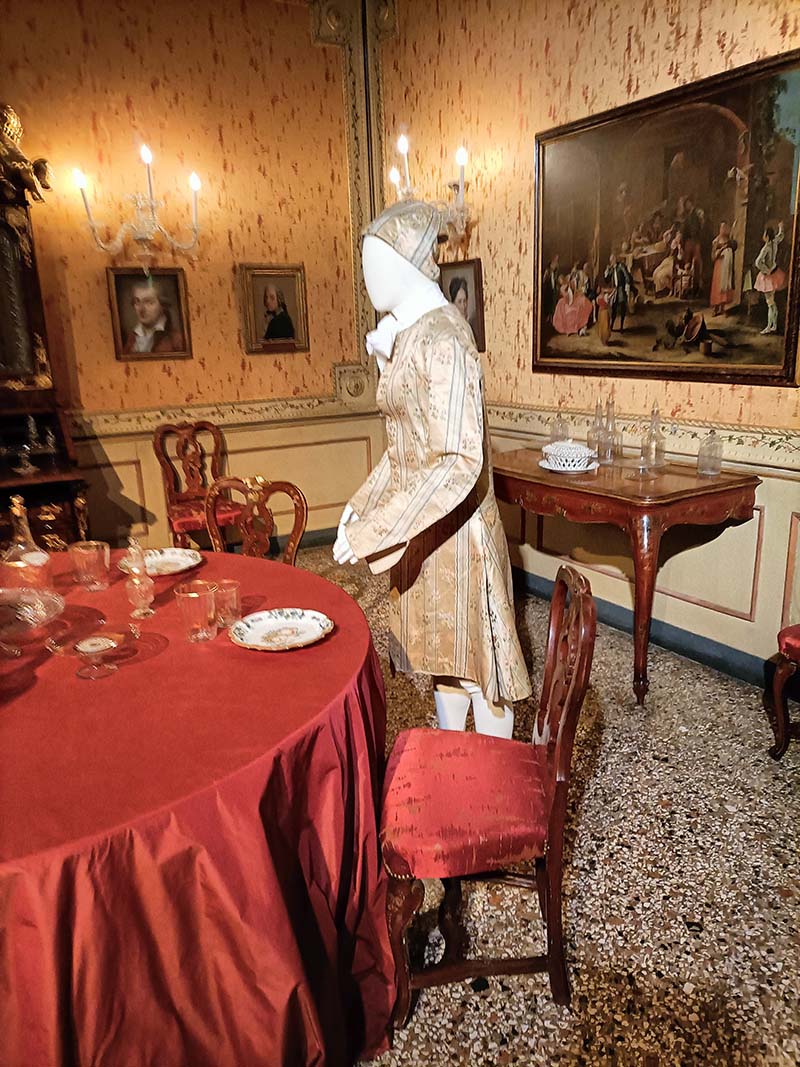
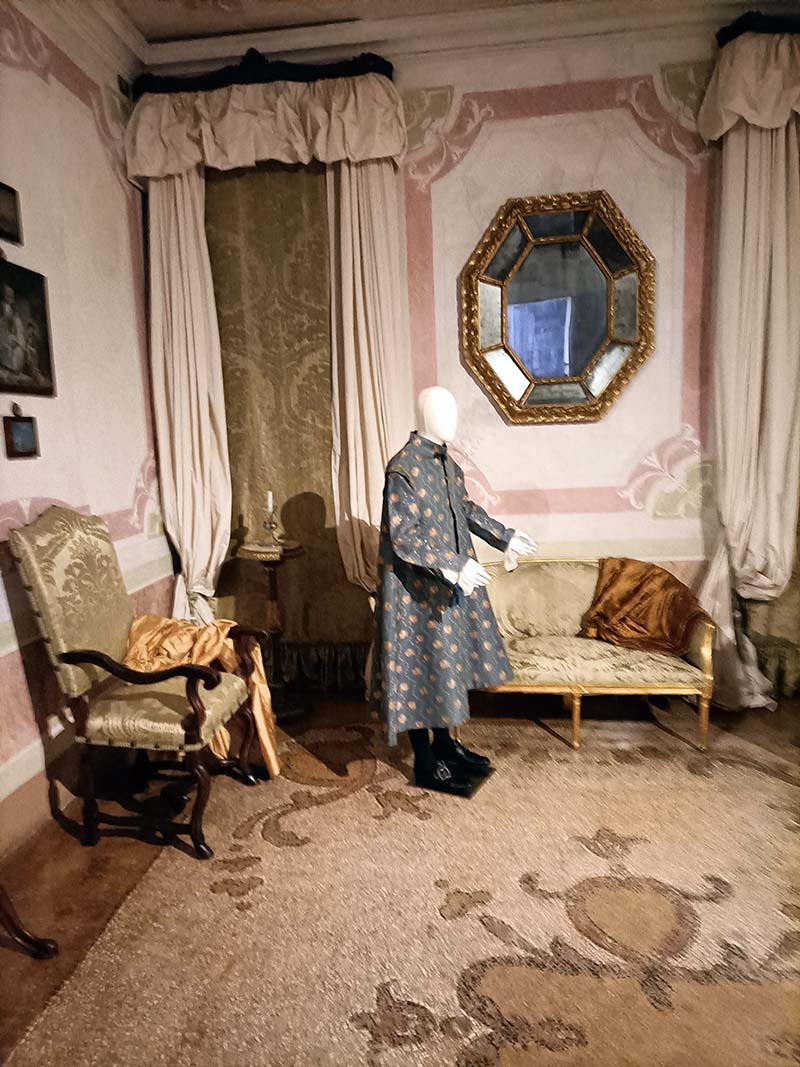
A partire dalla sala 1 fino alla sala 6, seguendo il percorso museale troverete invece una serie di costumi del 700 Veneziano, sarà come fare un salto nel tempo, ai tempi della Serenissima, e vedere com’era una volta il Palazzo Mocenigo.

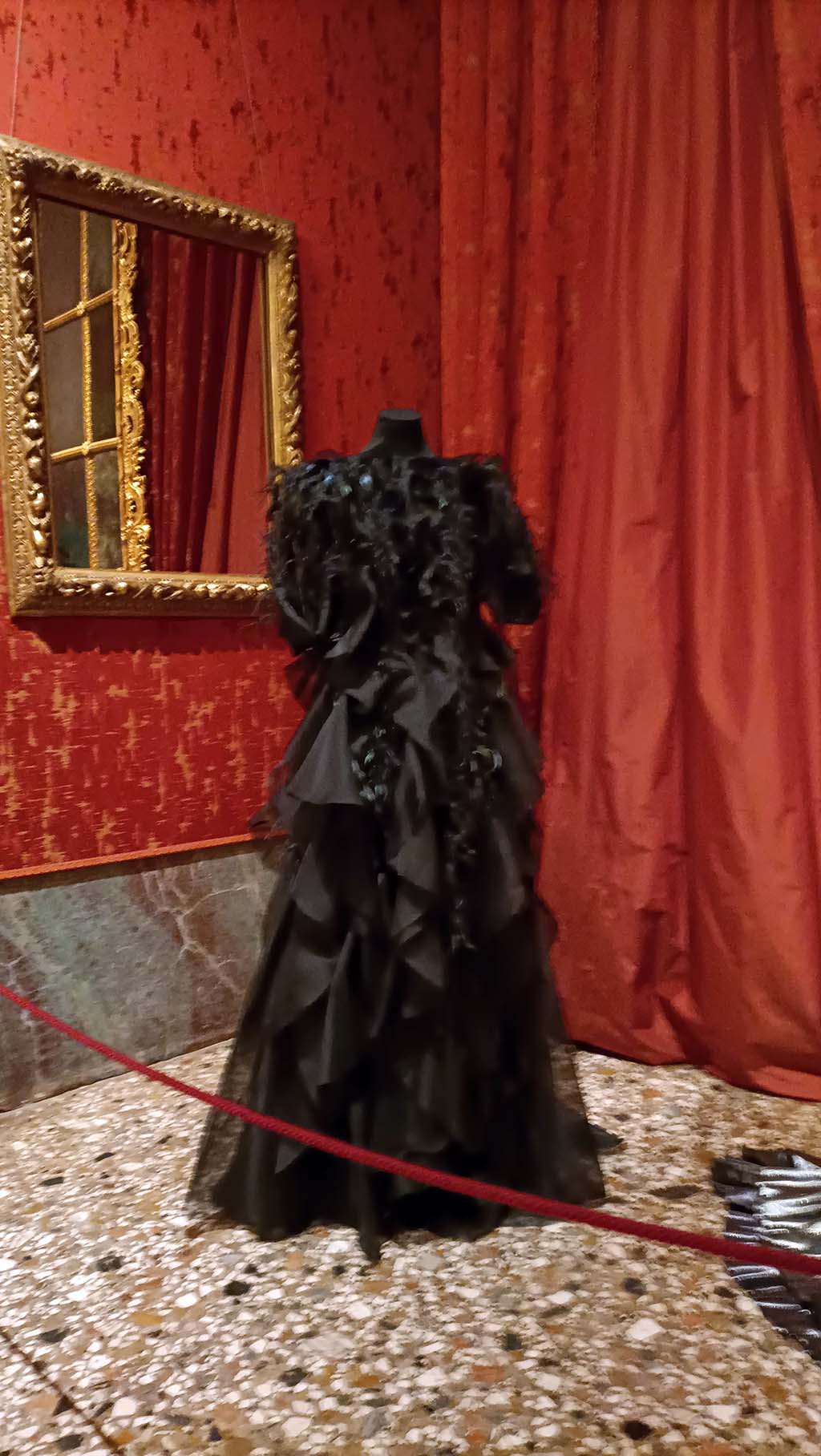
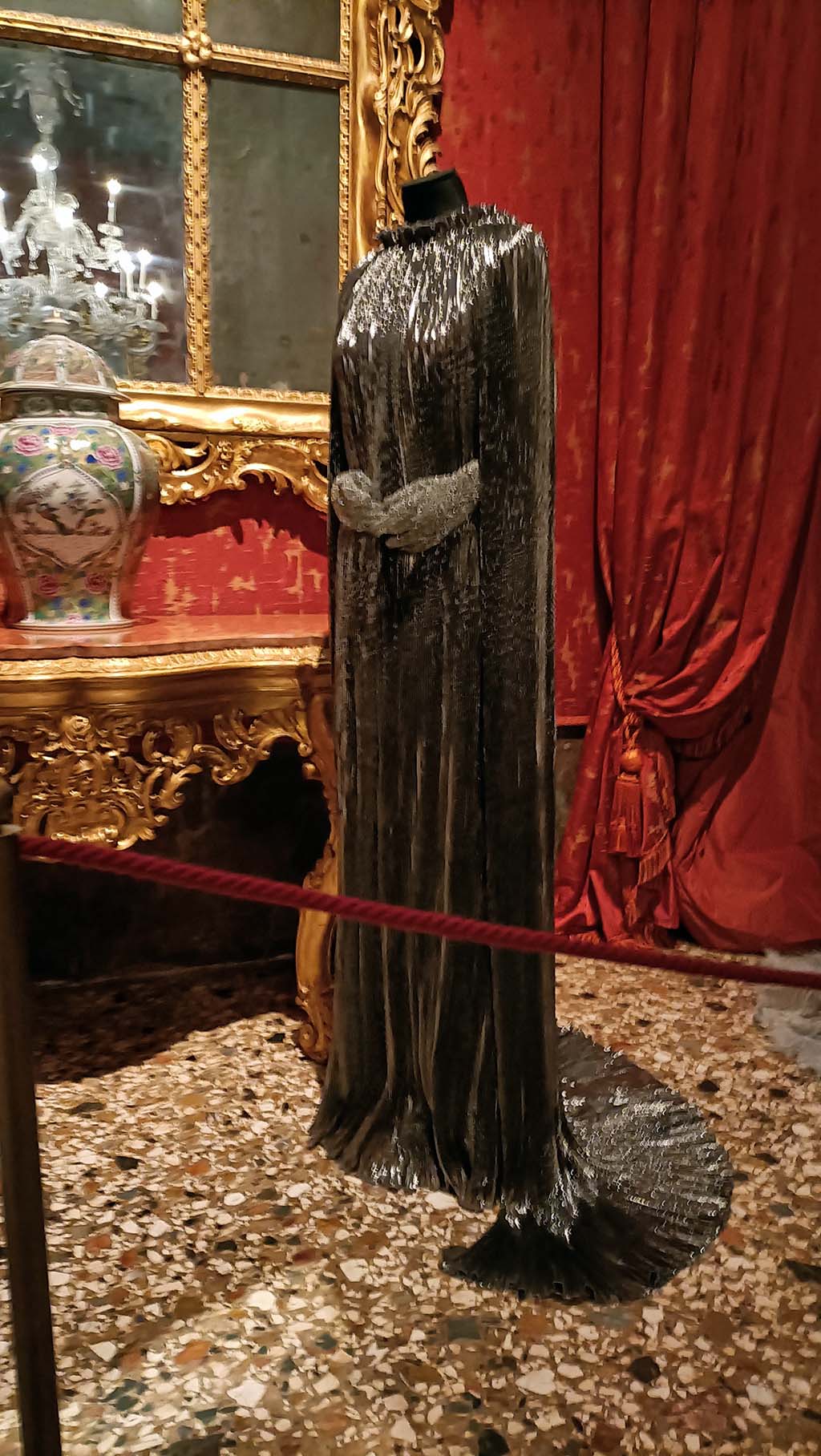
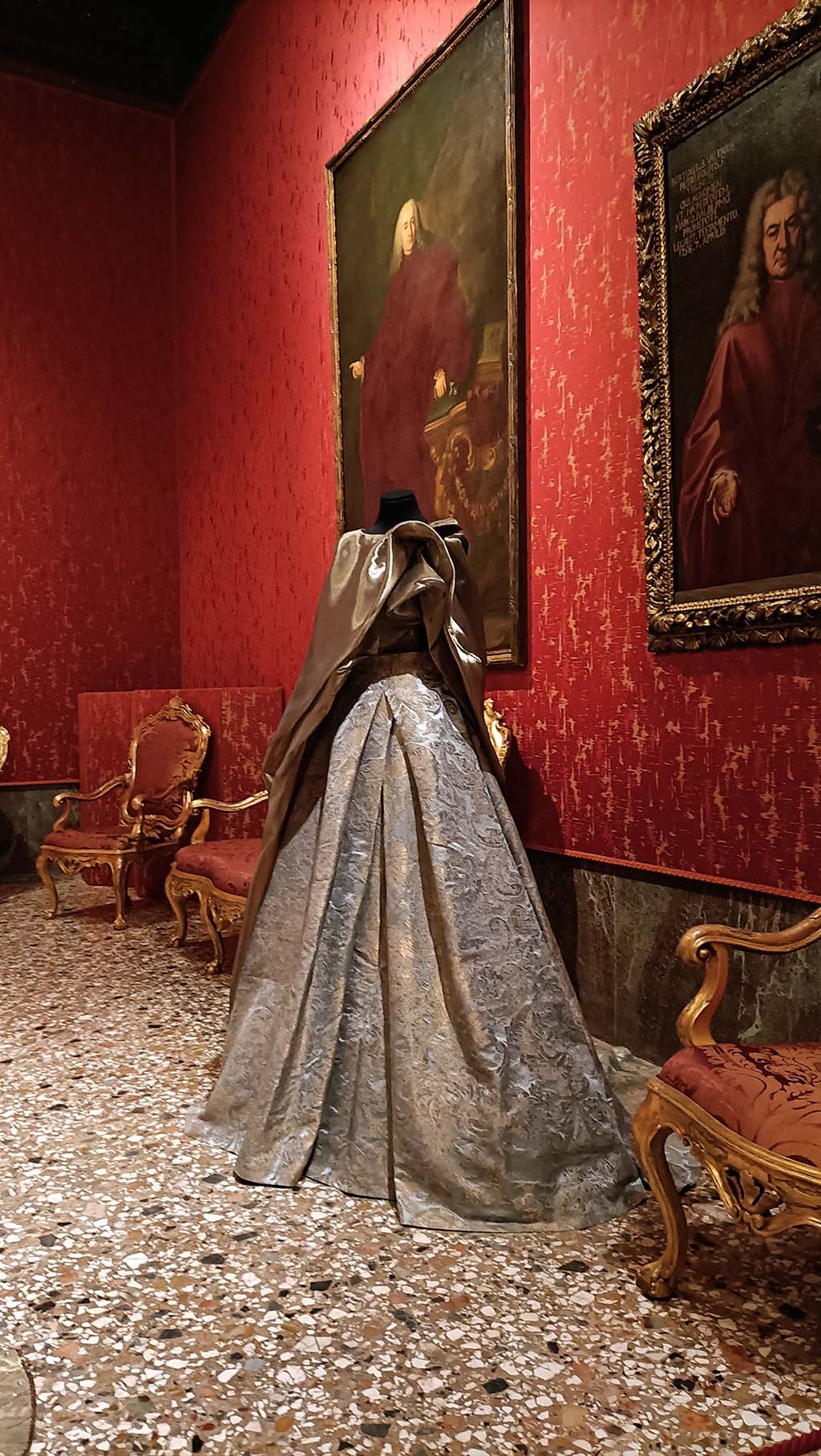
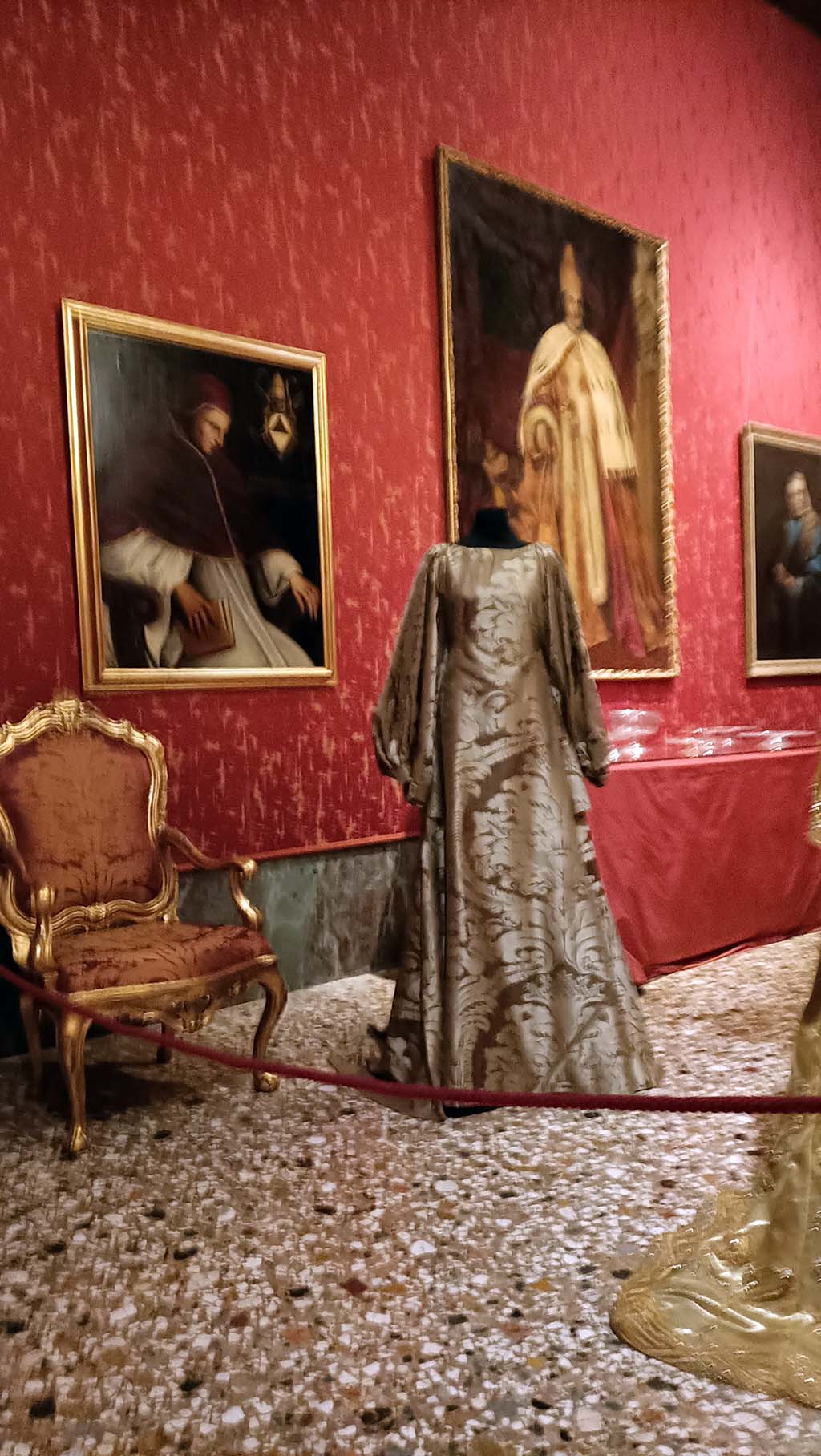
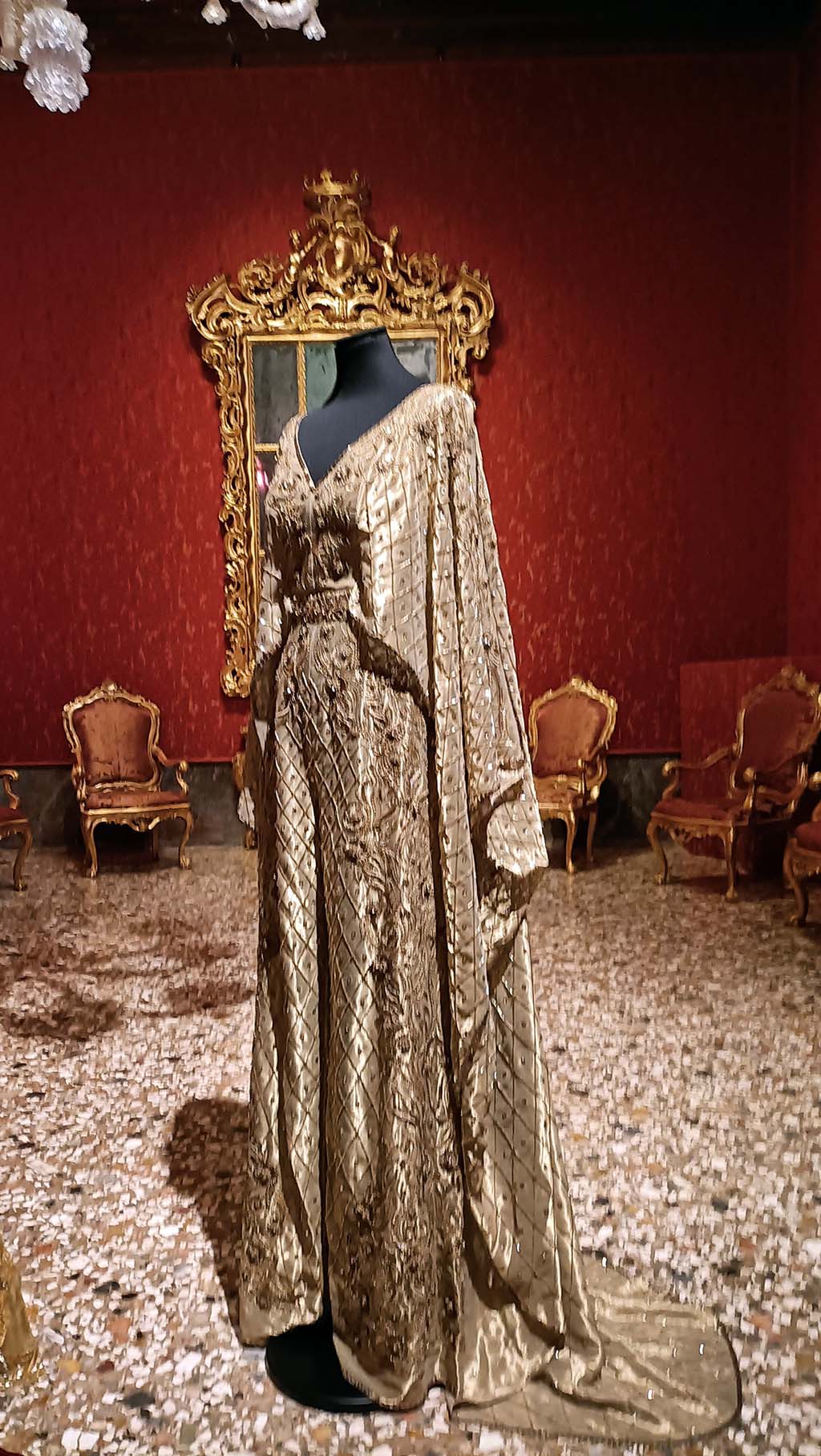
E infine nell’altra ala del percorso museale, nella sala 9, troverete dei vestiti della Collezione di Alba Ferretti. La stilista Alberta Ferretti ha donato alcuni abiti al Museo di Palazzo Mocenigo di Venezia. Gli abiti, protagonisti di una sfilata della stilista tenutasi a settembre 2021 a Ca’ Rezzonico, sono ora esposti al pubblico, un’opportunità unica per i visitatori, che potranno rivederli, o vederli per la prima , nel caso non fossero potuti venire durante la prima esposizione (sempre a Palazzo Mocenigo) nel 2022.

Non potete perdere questa occasione di vedere in un unico posto e nello stesso periodo di tempo, 3 diversi stili di costumi, in aggiunta alla sezione del profumo, e al sontuoso palazzo della famiglia Mocenigo. Vi aspettiamo !

Dal 01 novembre al 31 marzo: 10.00 – 17.00 (ultimo ingresso ore 16.00)
Dal 01 aprile al 31 ottobre: 10.00 – 18.00 (ultimo ingresso ore 17.00)
Le operazioni di chiusura del museo iniziano 20 minuti prima dell’orario indicato.

Chiuso il lunedì

Mocenigo Palace multiplied by three

The Mocenigo Palace multiply, and offers its audience, three different styles of costumes from different eras. Just today (10/01/2024) the exhibition “The axis of time” was inaugurated, which is the first initiative by the Civic Museums Foundation of Venice to celebrate the 700th anniversary of Marco Polo’s death. In the Portego room on the first floor, (you can see the two costumes in the photo below, while the others have been moved to room 8) we can see some costumes that come from the Suzhou Silk Museum, which lead us to dream of China at the time of the famous Venetian explorer. The exhibition will last from January 11th to February 29th 2024.

Starting from room 1 up to room 6, following the museum itinerary you will instead find a series of 18th century Venetian costumes, where you can take a leap in time, to the times of the Serenissima, and see how it was once the Mocenigo Palace.

And finally in the other wing of the museum itinerary, in room 9, you will find some clothes from the Alba Ferretti Collection. Fashion designer, Alberta Ferretti has donated some unique dresses to the Palazzo Mocenigo Museum in Venice. The dresses, protagonists of a fashion show by the designer held in September 2021 at Ca’ Rezzonico, are now on display to the public, a unique opportunity for visitors, who will be able to see them again or see them for the first time, in case they were not able to come during the premiere exhibition (also at Palazzo Mocenigo) in 2022.

You can’t miss this opportunity to see in one place and at the same time, 3 different styles of costumes, in addition to the perfume section, and the family’s sumptuous palace Mocenigo. We are waiting for you!

From 01 November to 31 March: 10.00 – 17.00 (last entry 16.00)
From 01 April to 31 October: 10.00 – 18.00 (last entry 17.00)
Museum closing operations begin 20 minutes before the indicated time.

Closed on Mondays

La seta che unisce Venezia e Suzhou

For the English translation please scroll down the page, thank you !

In occasione delle celebrazioni per i settecento anni della morte di Marco Polo, i Musei Civici di Venezia ospitano a Palazzo Mocenigo la mostra “L’Asse del Tempo: Tessuti per l’Abbigliamento in Seta di Suzhou”. La mostra, aperta dall’11 gennaio al 29 febbraio 2024, presenta una ricca selezione di abiti e tessuti provenienti dal Museo della Seta di Suzhou.

Venezia e Suzhou sono due città molto simili. Entrambe sono costruite sull’acqua e sono Patrimonio dell’Umanità dell’UNESCO. Sono anche legate da un gemellaggio ufficiale che dura dal 1980. Questa mostra vuole celebrare l’amicizia tra le due città e la loro comune passione per la seta, ed espone creazioni originali, tessuti e repliche di antichi abiti che raccontano la storia della seta, dalla sua nascita in Cina fino ai giorni nostri.

I visitatori potranno fare un viaggio nel tempo, seguendo abito dopo abito, tessuto dopo tessuto, l’evoluzione della moda tra Occidente ed Estremo Oriente. Potranno anche confrontare lo stile dell’abbigliamento durante la Repubblica Serenissima con quello delle principali dinastie regnanti nell’antico impero cinese. La mostra è un modo per celebrare l’eredità di Marco Polo, che fu uno dei primi a portare la seta europea in Cina, e di promuovere la comprensione e la cooperazione tra le due culture.

La mostra è un’occasione imperdibile per conoscere la storia della seta e l’amicizia tra Venezia e Suzhou. Invito tutta la cittadinanza e i turisti presenti nella città lagunare a visitare questa stupenda mostra, sono sicuro che vi piacerà moltissimo, e inoltre, avrete la possibilità di vedere questo magnifico palazzo che è stata la dimora di una importantissima famiglia Veneziana, ed anche museo del costume e del profumo. Non si può, non visitare Palazzo Mocenigo !! Vi aspettiamo !

Orari di visita:

Dal 01 novembre al 31 marzo: 10.00 – 17.00 (ultimo ingresso ore 16.00)

Dal 01 aprile al 31 ottobre: 10.00 – 18.00 (ultimo ingresso ore 17.00)

Le operazioni di chiusura del museo iniziano 20 minuti prima dell’orario indicato Chiuso il lunedì

The silk that unites Venice and Suzhou

On the occasion of the celebrations for the seven hundredth anniversary of Marco Polo’s death, the Civic Museums of Venice are hosting at Mocenigo Palace, the exhibition “The Axis of Time: Silk Clothing Fabrics of Suzhou”. The exhibition, open from 11 January to 29 February 2024, presents a rich selection of clothes and fabrics from the Suzhou Silk Museum.

Venice and Suzhou are two very similar cities. Both are built on water and are UNESCO World Heritage Sites. They are also linked by an official twinning that has lasted since 1980. This exhibition aims to celebrate the friendship between the two cities and their shared passion for silk. It exhibits original creations, fabrics and replicas of ancient clothes that tell the story of silk, from its birth in China to the present day.

Visitors will be able to take a journey through time, following dress after dress, fabric after fabric, the evolution of fashion between the West and the Far East. They will also be able to compare the style of clothing during the Serenissima Republic with that of the main ruling dynasties in the ancient Chinese empire. The exhibition is a way to celebrate the legacy of Marco Polo, who was one of the first to bring European silk to China, and a way to promote understanding and cooperation between the two cultures.

The exhibition is an unmissable opportunity to learn about the history of silk and the friendship between Venice and Suzhou. I invite all citizens and tourists present in the lagoon city to visit this wonderful exhibition, I am sure you will like it very much, and furthermore, you will have the opportunity to see this magnificent palace which was the home of a very important Venetian family, and also a museum of costume and perfume. You can’t not visit Palazzo Mocenigo!! We are waiting for you!!!

Timetable:

From November 1st to March 31st: 10.00am – 5.00pm (last entry 4.00pm)

From 01 April to 31 October: 10.00 – 18.00 (last entry 17.00)

The museum closing operations begin 20 minutes before the indicated time. Closed on Mondays

Il ritratto veneziano dell’Ottocento: un’occasione di riscoperta e riflessione

For the English translation please scroll down the page, thank you !

Ca’ Pesaro – Venezia

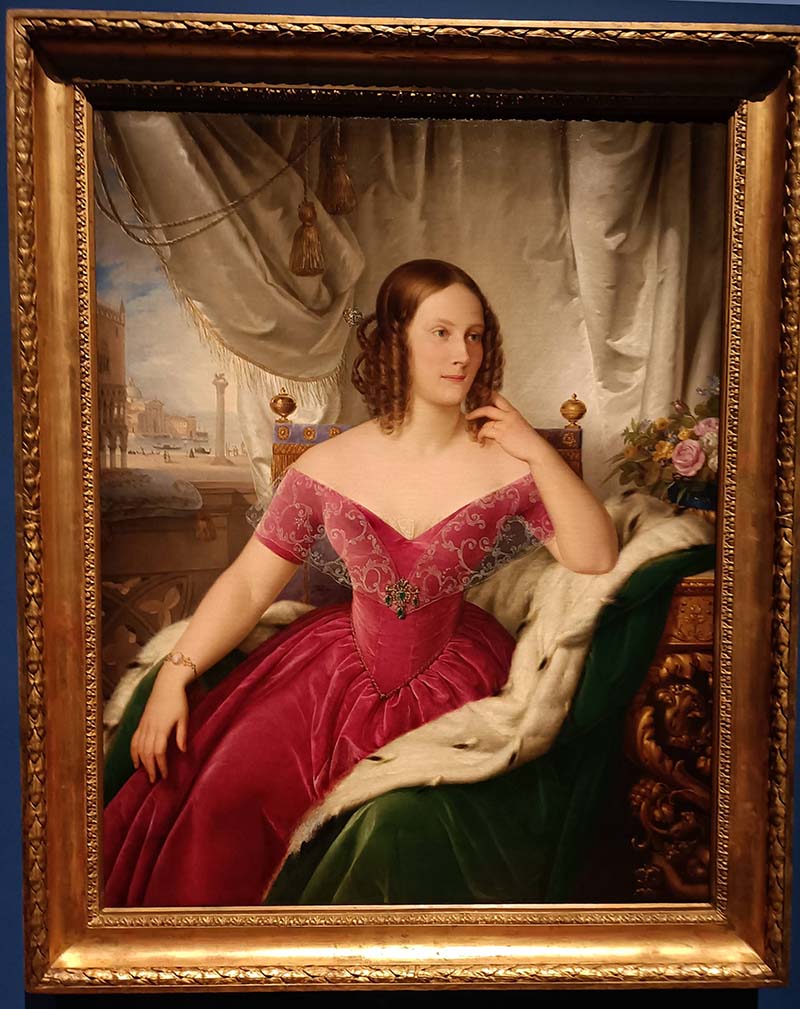
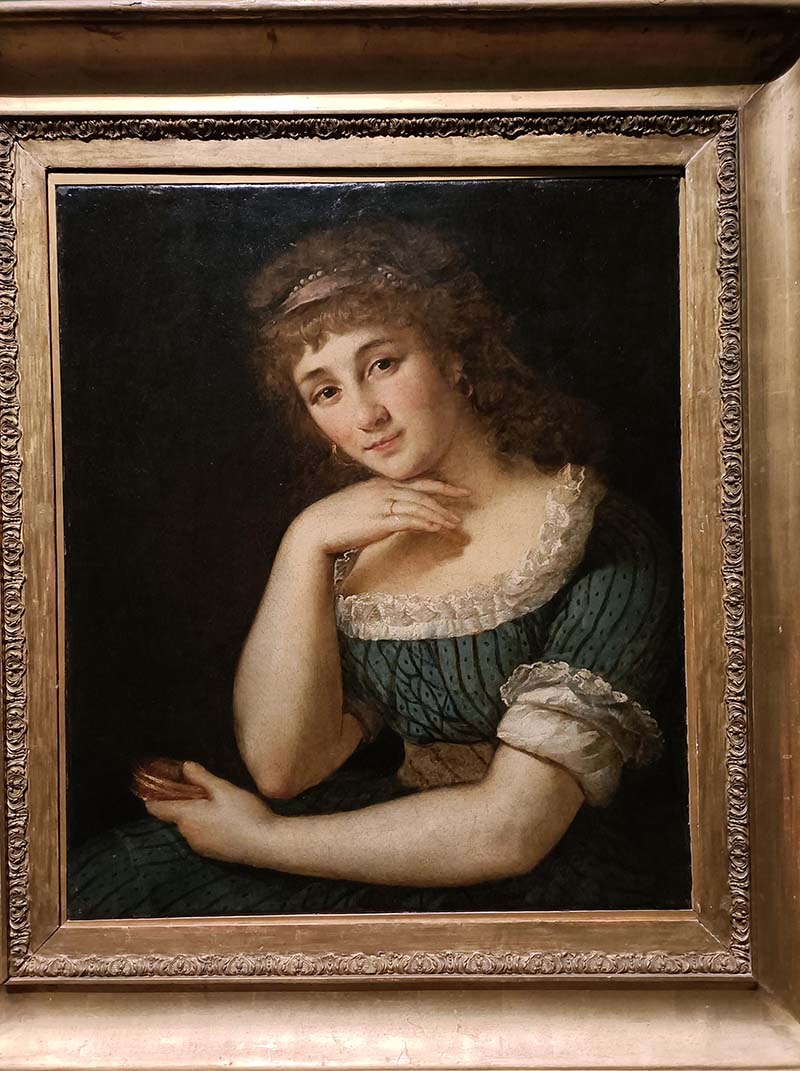
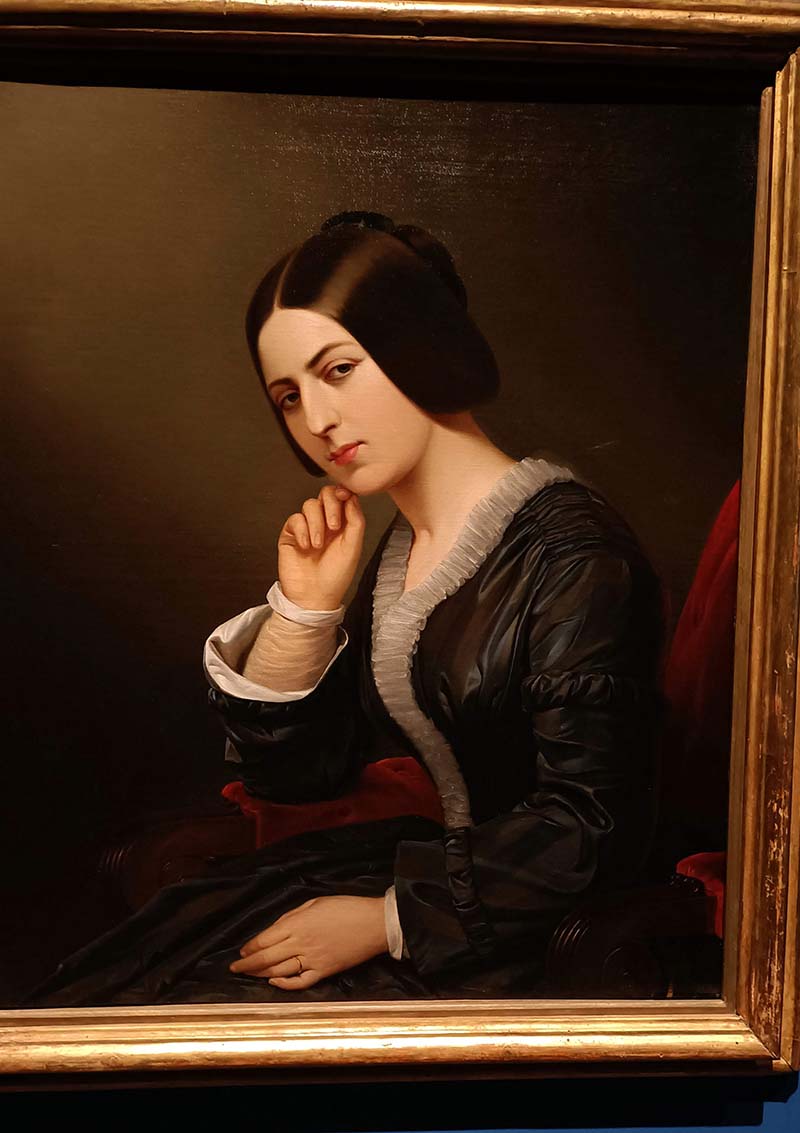
Questa volta mi son preso un po’ tardi, è già da un bel po’ che la nuova mostra di Ca’ Pesaro è stata inaugurata, e mi sono sempre promesso di andare a vederla, ma per un motivo o per un altro, non son mai riuscito ad andare: sapete, se sono di turno al lavoro, seppure a poca distanza, non posso, e se sono libero, ho un sacco di cose accumulate che mi impediscono di recarmi ancora a Venezia. Oggi, sono andato in anticipo al lavoro, per vedere la mostra, è stupenda, lasciate che ve la descriva.

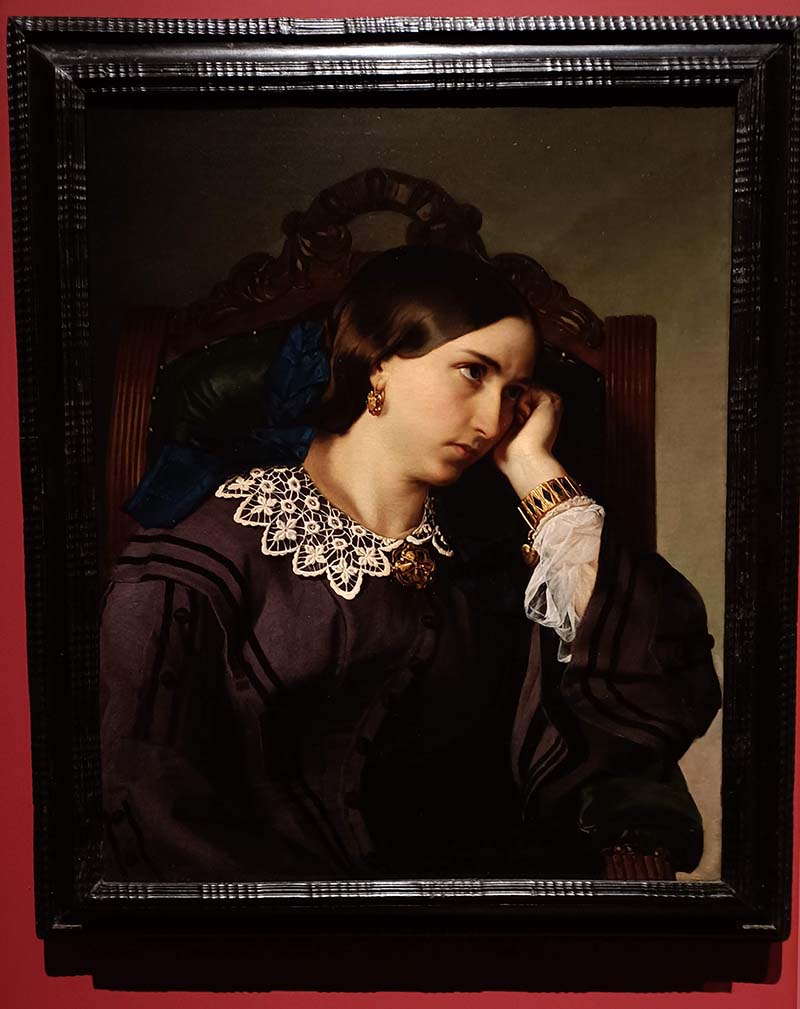
La mostra “Il ritratto veneziano dell’Ottocento”, ospitata a Ca’ Pesaro di Venezia dal 21 ottobre 2023 al 1° aprile 2024, costituisce un evento di grande rilievo per la città e per il mondo dell’arte. L’esposizione, a cura di Elisabetta Barisoni e Roberto De Feo, ricostruisce un secolo di arte attraverso le opere dei più importanti pittori, scultori e miniaturisti attivi a Venezia tra il 1800 e il 1900.

La mostra si articola in diverse sezioni principali, che ripercorrono le principali tendenze del ritratto veneziano dell’Ottocento:

Il ritratto di stato, che celebra i potenti e i rappresentanti delle istituzioni;
Il ritratto borghese, che documenta la vita sociale e culturale della città;
Il ritratto verso la modernità, che anticipa le forme dell’arte moderna.

Un viaggio nel tempo e nello spazio tra i ritratti veneziani dell’Ottocento Francesco Hayez, Tranquillo Cremona, Giovanni Boldini: sono solo alcuni dei grandi artisti che hanno dato vita a un’epoca d’oro del ritratto veneziano, un’occasione unica per conoscere la società e la cultura dell’Ottocento veneziano.

Aggiungo, che la mostra “Il ritratto veneziano dell’Ottocento” è un’occasione da non perdere, per conoscere e apprezzare la ricchezza e la varietà dell’arte veneziana di un secolo fondamentale per la storia della città e del Paese. Inoltre, la mostra offre un’occasione di riflessione sul tema del ritratto, che da sempre è uno dei generi più popolari e rappresentativi dell’arte. Il ritratto, infatti, non è solo un’immagine di un individuo, ma è anche una testimonianza della sua epoca, della sua cultura e dei suoi valori. Invito tutta la cittadinanza e i turisti presenti nella città lagunare di venire a vederla, perché merita veramente ! Fatevi un bel regalo di Natale, e visitate Ca’ Pesaro, Palazzo Mocenigo, Ca’ Rezzonico, Il museo di Casa di Carlo Goldoni, i migliori musei della Fondazione Musei Civici di Venezia !

La mostra è aperta al pubblico tutti i giorni, nei seguenti orari:

Da novembre a marzo

  • Aperto tutti i giorni dalle 10:00 alle 17:00
  • Ultimo ingresso alle 16:00
  • Le operazioni di chiusura iniziano alle 16:40

Da aprile a ottobre

  • Aperto tutti i giorni dalle 10:00 alle 18:00
  • Ultimo ingresso alle 17:00
  • Le operazioni di chiusura iniziano alle 17:40

Chiuso il lunedì

I miei migliori auguri di buon natale e buone feste, a tutti voi !!

The Venetian portrait of the nineteenth century: an opportunity for rediscovery and reflection

Ca’ Pesaro – Venice

This time I was a little late, it’s been a while since the new Ca’ Pesaro exhibition opened, and I always promised myself I’d go to see it, but for one reason or another, I have never been able to go: you know, if I’m on duty at work, even a short distance away, I can’t, and in my free days, I have a lot of things accumulated that prevent me to go to Venice again. Today, I went to work early to see the exhibition, it’s amazing, let me describe it to you.

The exhibition “The Venetian portrait of the nineteenth century”, hosted at Ca’ Pesaro in Venice from 21 October 2023 to 1 April 2024, constitutes an event of great importance for the city and for the art world. The exhibition, curated by Elisabetta Barisoni and Roberto De Feo, reconstructs a century of art through the works of the most important painters, sculptors and miniaturists active in Venice between 1800 and 1900.

The exhibition is divided into several sections, which trace the main trends of nineteenth-century Venetian portraiture:

The state portrait, which celebrates the powerful and the representatives of the institutions;
The bourgeois portrait, which documents the social and cultural life of the city;
The portrait towards modernity, which anticipates the forms of art modern.

A journey through time and space among nineteenth-century Venetian portraits Francesco Hayez, Tranquillo Cremona, Giovanni Boldini: these are just some of the great artists who gave life to a golden age of the Venetian portrait. Their works, exhibited at Ca’ Pesaro in Venice, offer us a unique opportunity to learn about nineteenth-century Venetian society and it’s culture.

And I tell you more: the exhibition “The Venetian portrait of the nineteenth century” is an unmissable opportunity to learn about and appreciate the richness and variety of Venetian art of a century fundamental to the history of city and country. Furthermore, the exhibition offers an opportunity for reflection on the theme of the portrait, which has always been one of the most popular and representative genres of art. The portrait, in fact, is not only an image of an individual, but is also a testimony of it’s era, it’s culture and it’s values. I invite all citizens and tourists present in the city to go to see it, because it’s really worthy ! Make yourself a great Xmas’s gift and visit the Ca’Pesaro Museum, Mocenigo Palace, Ca’ Rezzonico, The house of Carlo Goldoni, the best museums of the Foundation Civic Museums of Venice !

The exhibition is open to the public every day, at the following times:

From November to March

  • Open every day from 10:00 to 17:00
  • Last entry at 4pm
  • Closing operations begin at 4.40pm

From April to October

  • Open every day from 10:00 to 18:00
  • Last entry at 5pm
  • Closing operations begin at 5.40pm

Closed on Monday

My best wishes for a Merry Christmas and Happy Holidays to all of you!!

Una mostra molto interessante a Roncade

For the English translation please scroll down the page, thank you !

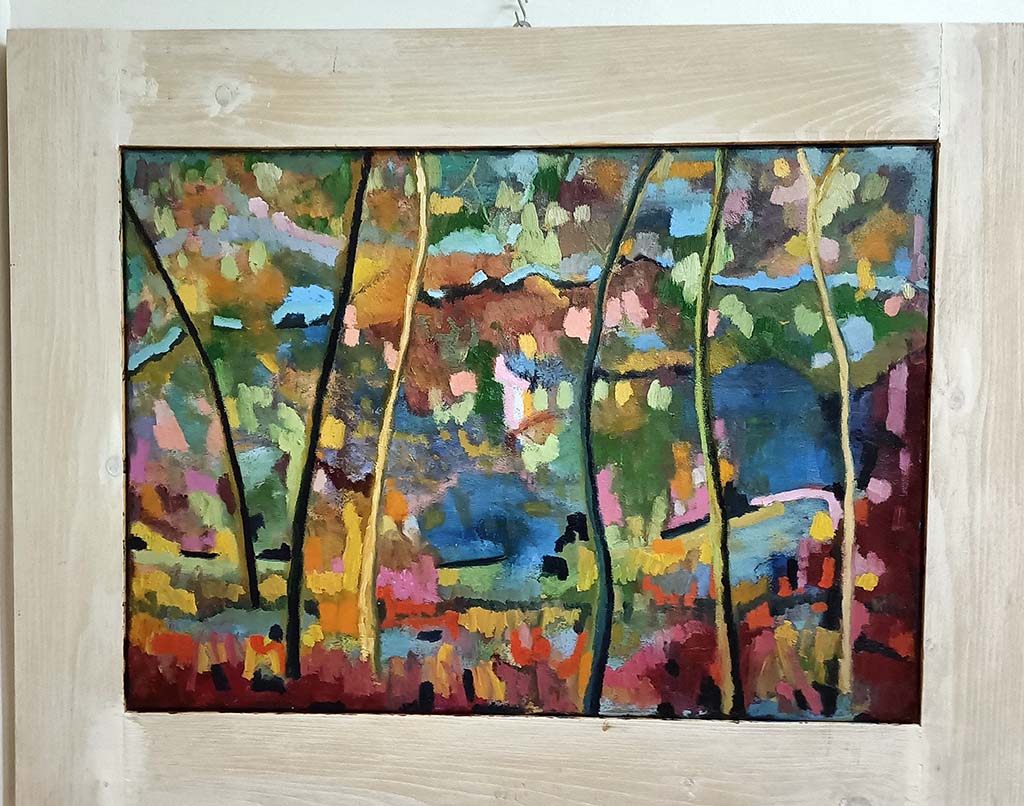
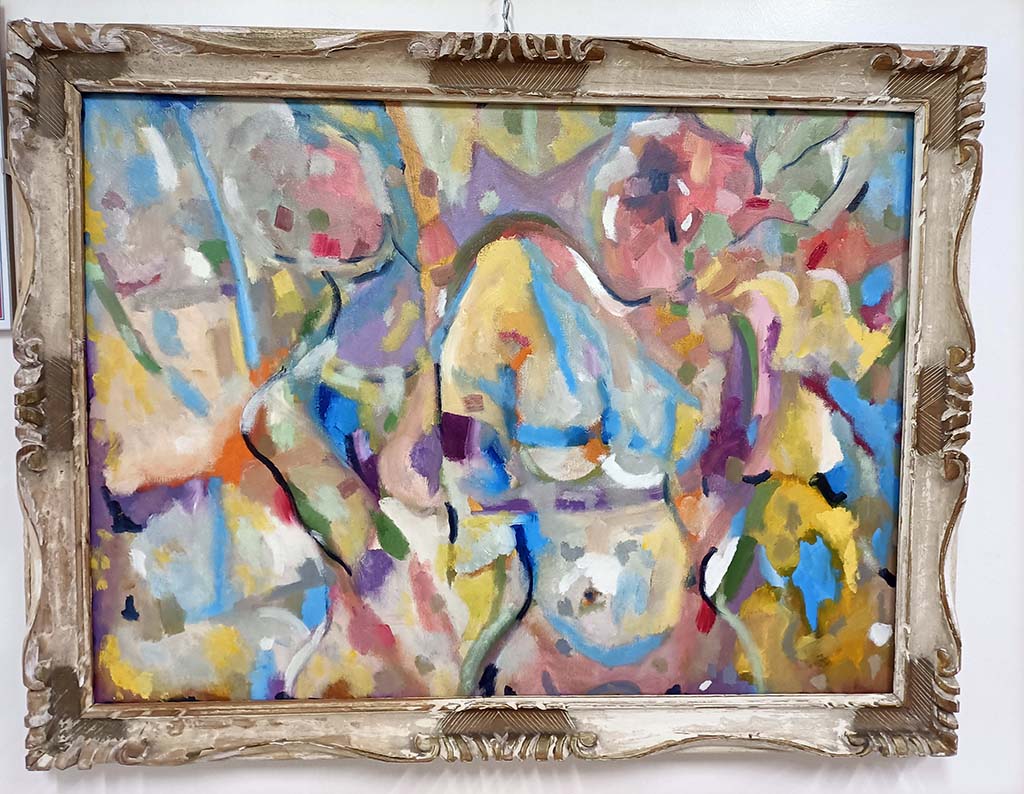
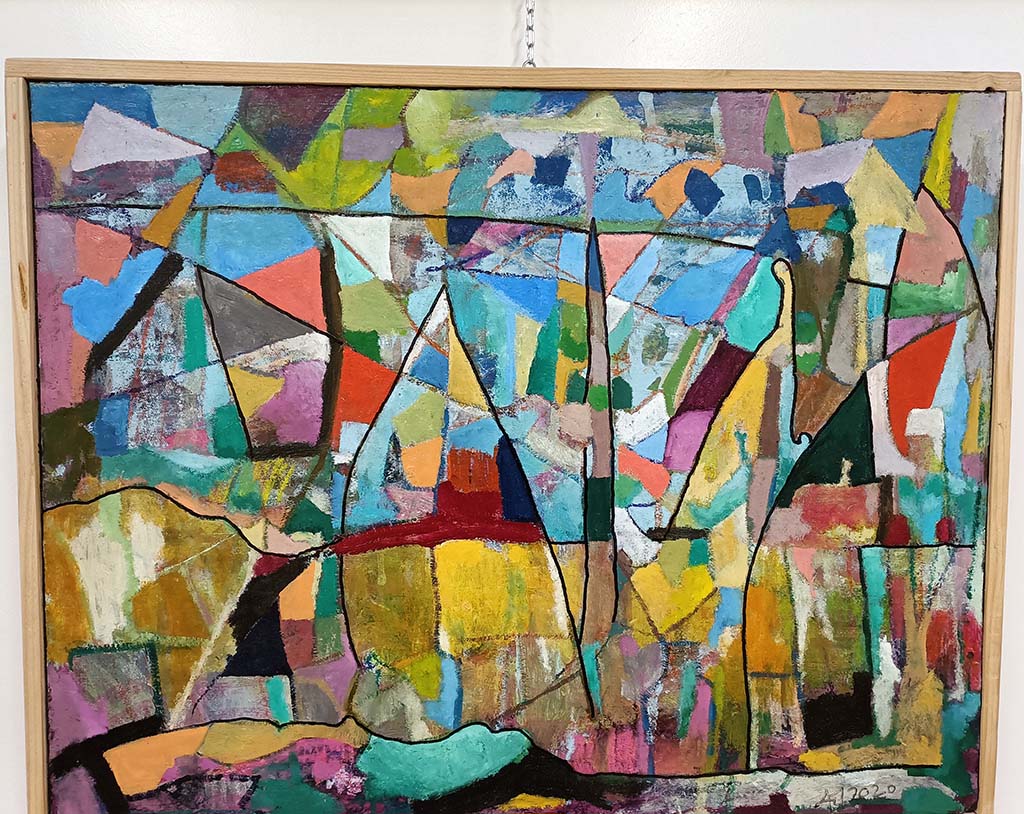
Di recente sono andato a vedere una mostra presso il municipio di Roncade, molto interessante ad opera dell’artista Antonio Massari. L’artista è nato a Padova il 22 dicembre 1954, dopo una carriera nel settore turistico, una volta in pensione, ha scoperto la sua vena artistica, che dopo tanti anni di esperimenti, ha finalmente prodotto dei risultati. Lui stesso si considera un autodidatta, non ha un proprio stile, o segue quello di altri pittori, ma nei suoi quadri, mette le proprie emozioni.

Il suo stile molto particolare, ha cominciato a muovere i primi passi, e non è passato molto tempo che è stato notato, e ha potuto mostrare agli occhi del pubblico le sue opere. Ha partecipato ad esposizioni collettive e personali a Treviso, al Museo Ca Robegan, a Palazzo dei Trecento Onigo Pederobba, a
Roncade, a, Mogliano, a Monastier, a Auronzo, nel Ghetto di Venezia e nell’isola di Burano.

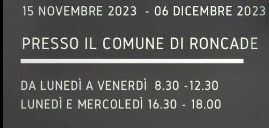
Al momento attuale, le sue opere, sono esposte presso il municipio di Roncade fino al 6 dicembre, con la speranza che venga prorogata. consiglio a tutti i cittadini di Roncade e dei dintorni di andare a vederla, ai turisti che possano essere in vacanza da quelle parti, prima che finisca !

A very interesting exhibition at Roncade

I recently went to see a very interesting exhibition at the Roncade town hall by the artist Antonio Massari. The artist was born in Padua on 22 December 1954 , after a career in the tourism sector, once retired, he discovered his artistic streak, which after many years of experiments, has finally produced results. He himself considers self-taught, he does not have his own style, or follows that of other painters, but in his paintings, he puts his own emotions.

His very particular style has began to take his first steps, and it wasn’t long before he was noticed, and he was able to show to the eyes of the public his works. He has participated in collective and personal exhibitions in Treviso, at the Ca Robegan Museum, at Palazzo dei Trecento Onigo Pederobba, in Roncade, in Mogliano, in Monastier, in Auronzo, in the Ghetto of Venice and on the island of Burano.

At the moment, his works are exhibited at the Roncade town hall until December 6th, with the hope that it will be extended. I advise all the citizens of Roncade and the surrounding area to go and see it, and to the tourists as well, who may be on holiday over there, before it ends!

Women on board a Palazzo Mocenigo

For the English translation please scroll down the page, thank you !

Donne a bordo: un appello all’azione per l’uguaglianza di genere nei consigli di amministrazione delle imprese

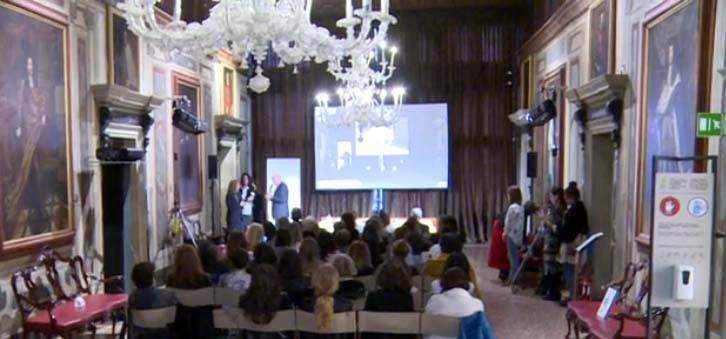
Giovedì 26 novembre 2023 , si è tenuto presso il bellissimo Museo di Palazzo Mocenigo della Fondazione Musei Civici di Venezia, un evento alquanto interessante : “Women on board”, dove oltre 60 donne manager da tutte Italia hanno partecipato. Un evento presenziato da importanti imprenditrici e altre personalità della politica, tra cui Francesca Torelli, Consigliera Parità Regione Veneto e Lorenza Lain, Consigliera Manager Italia Veneto, Elena Donazzan Assessore dell’istruzione – Formazione – Lavoro del Veneto, Chiara Squarcina, Direttrice del museo di Palazzo Mocenigo, la Presidente della Fondazione Musei Civici di Venezia Maria Cristina Gribaudi in remoto, e molte altre.

L’incontro si è concentrato sulla seguente realtà: l’uguaglianza di genere è una questione urgente in molti settori, compreso quello aziendale. Nell’ultimo decennio, il numero delle donne nei consigli di amministrazione è aumentato in modo significativo, ma continuano ad essere sottorappresentate rispetto ai loro colleghi maschi. Per promuovere ulteriormente la parità di genere nel mondo aziendale, si è tenuto presso Palazzo Mocenigo di Venezia la seconda edizione di “Women on Board”.

Immagine 21

Organizzato da Manager Italia, l’evento aveva l’obiettivo di incoraggiare un maggior numero di donne a prendere parte ai processi decisionali delle aziende. Il programma era composto da 14 incontri, la maggior parte dei quali si sono svolti online, e la partecipazione era gratuita. I partecipanti hanno ricevuto un attestato di partecipazione e sono stati aggiunti a un elenco di candidati qualificati che le aziende alla ricerca della persona giusta da inserire nei loro consigli di amministrazione potranno consultare.

L’evento è stato accolto molto bene, con moltissime partecipanti sia di persona che online. Si tratta di un grande passo nella giusta direzione, poiché lo studio “Rapporto Manager 2023” ha dimostrato che tra il 2021 e il 2018 il numero delle donne manager in Veneto è aumentato del 23,5%.

L’evento è stato un importante promemoria del fatto che il mondo aziendale deve sforzarsi di portare più donne in ruoli di leadership. Le donne portano sul tavolo un insieme unico di competenze e prospettive e dovrebbero avere le stesse opportunità dei loro colleghi maschi. Eventi come “Women on Board” contribuiscono ad aumentare la consapevolezza su questo problema e porteranno, in ultima analisi, a un panorama aziendale più equo e diversificato.

Women on board at Mocenigo Palace

Women on board: A call to action for gender equality in corporate boardrooms


On Thursday 26 November 2023, a rather interesting event was held at the beautiful Mocenigo Palace, of the Civic Museums Foundation of Venice: “Women on board”, where over 60 women managers from all over Italy participated. An event attended by important businesswomen and other political personalities, including Francesca Torelli, Councilor for Equality of the Veneto Region and Lorenza Lain, Councilor for Manager of Italy Veneto, Elena Donazzan Councilor for Education – Training – Work, of the Veneto, Chiara Squarcina, Director of the Mocenigo Palace museum, the President of the Civic Museums Foundation of Venice, Maria Cristina Gribaudi remotely, and many others.

The congress was about this: gender equality is a pressing issue in many industries, including in the corporate world. In the last decade, the number of women in corporate boards has increased significantly, but they still remain underrepresented in comparison to their male counterparts. To further promote gender equality in the corporate world, the second edition of “Women on Board” was recently held at the Mocenigo Palace in Venice.

Immagine 21

Organized by Manager Italia, the event was aimed at encouraging more women to take part in the decision-making of companies. The program was made up of 14 meetings, most of which were held online, and was free to attend. Attendees received an attendance certificate and were added to a list of qualified candidates to be consulted by companies looking for the right person to join their boards.

The event was very well received, with a lot of women attending both in person and online. This was a great step in the right direction, as the “Report Manager 2023” study showed that there was a 23.5% increase in the number of female managers in the Veneto region between 2021 and 2018.

The event was an important reminder that the corporate world must strive to bring more women into leadership roles. Women bring a unique set of skills and perspectives to the table and should be given the same opportunities as their male counterparts. Events like “Women on Board” help to raise awareness of this issue and will ultimately lead to a more equitable and diverse corporate landscape.

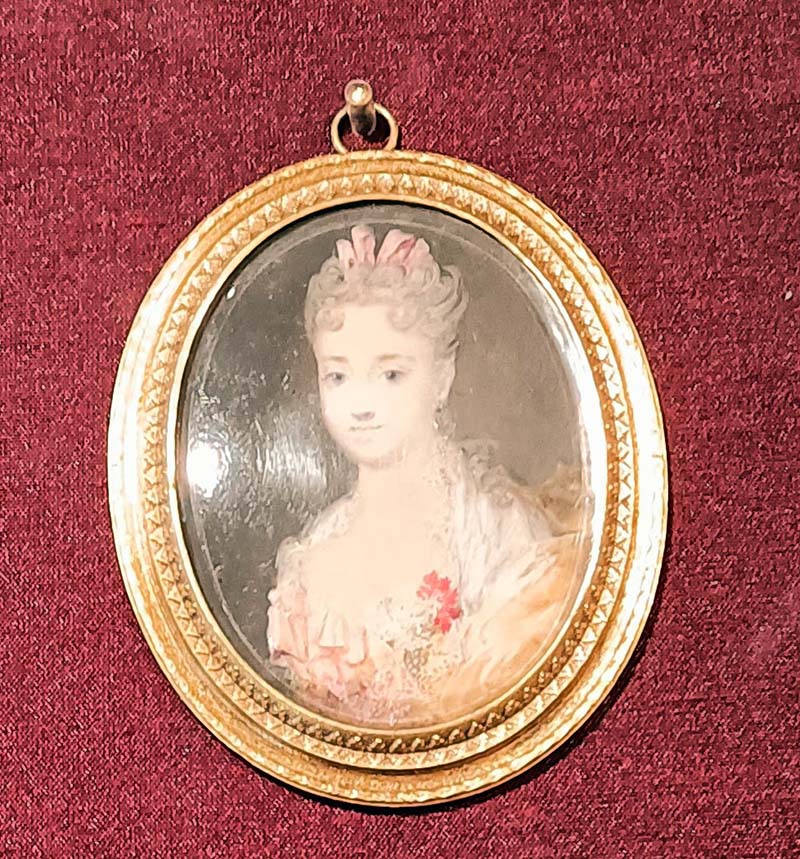
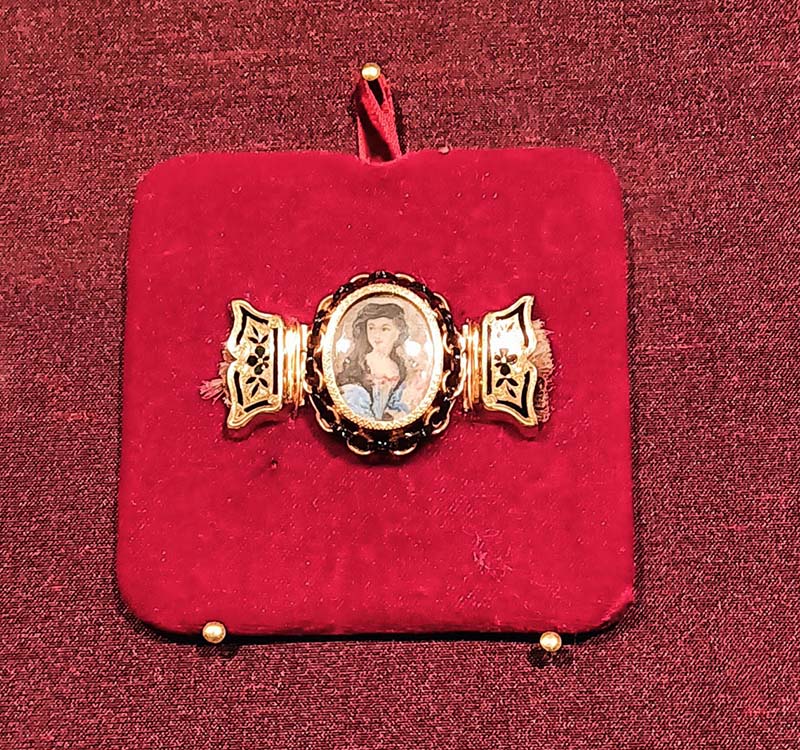
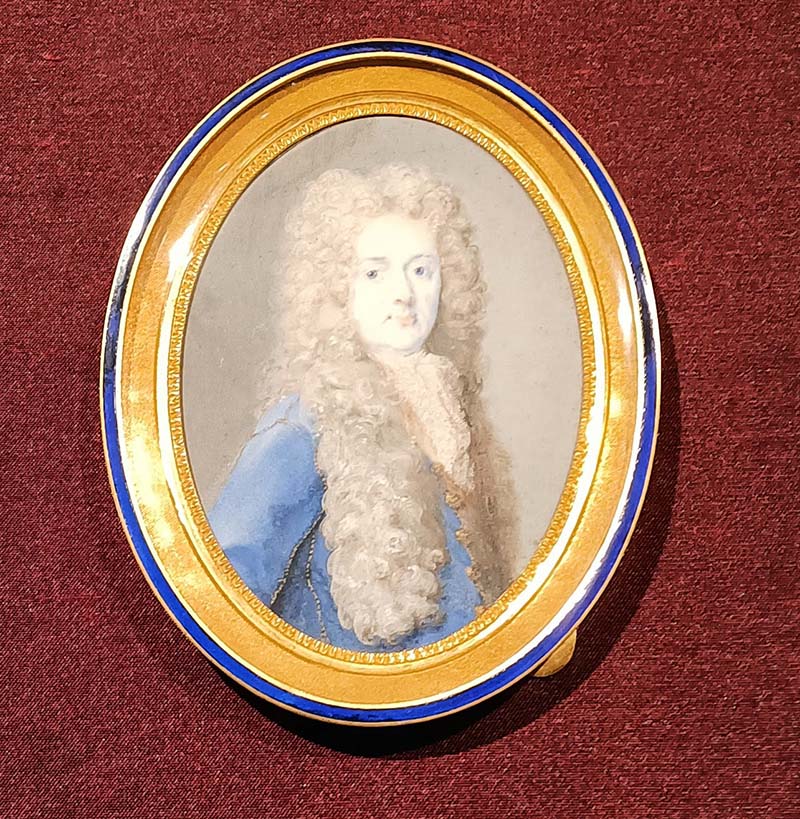
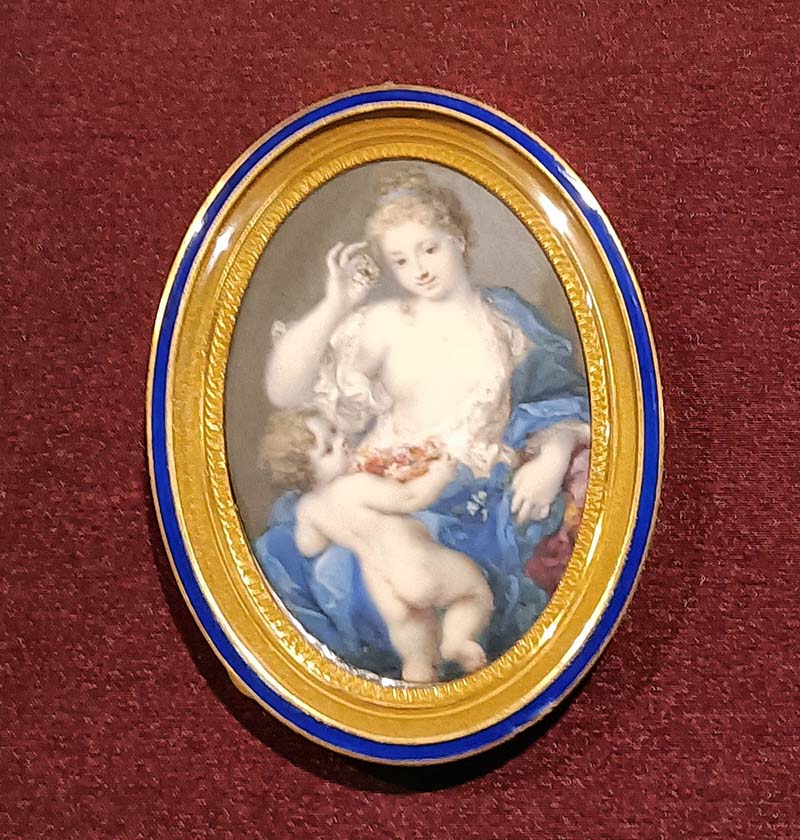
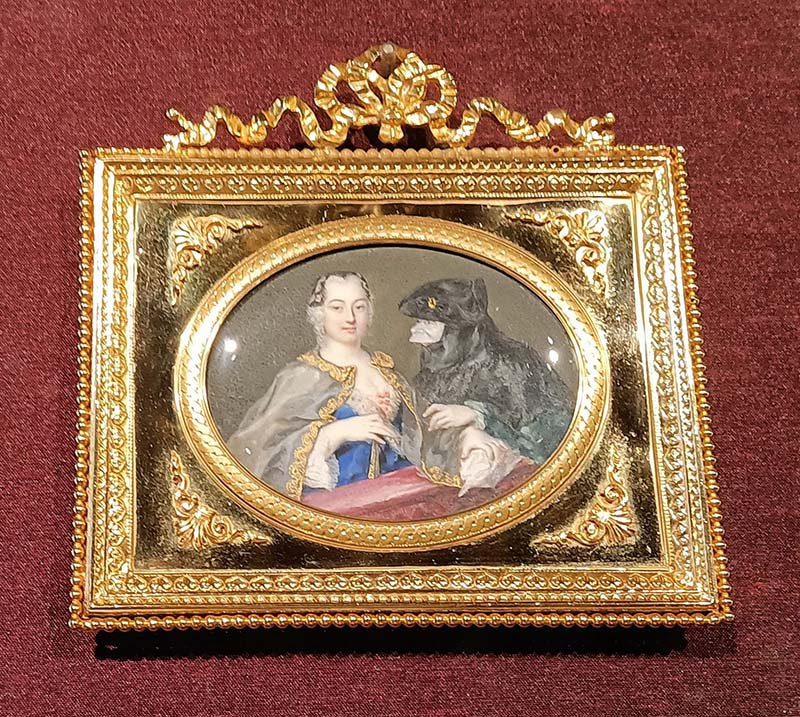
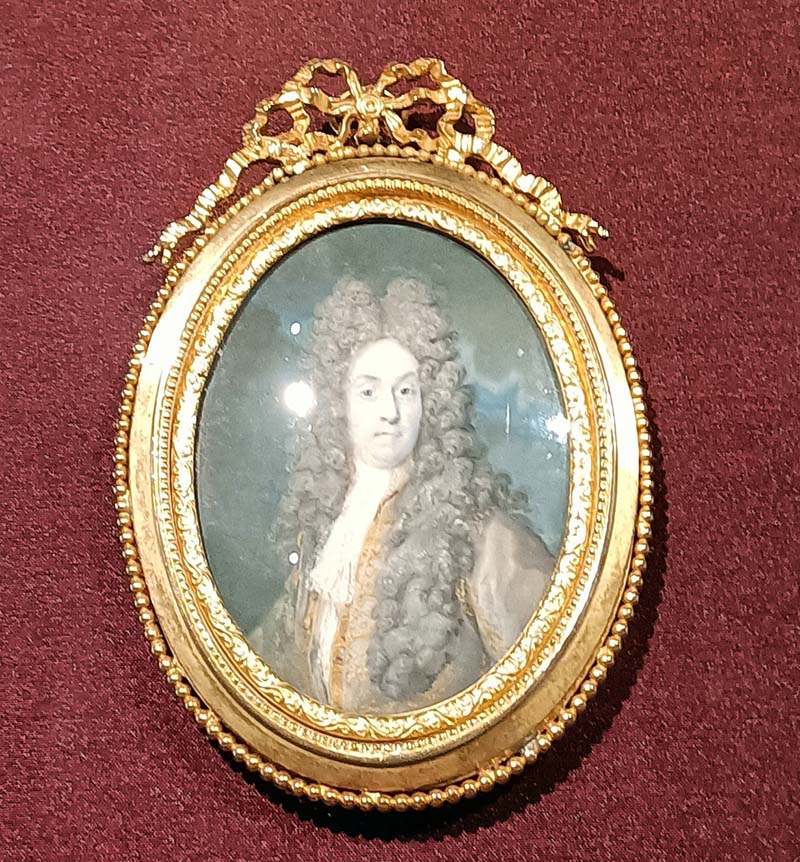
Rosalba Carriera, miniature su avorio

Ca’ Rezzonico (Venice)

For the English translation please scroll down the page, thank you !

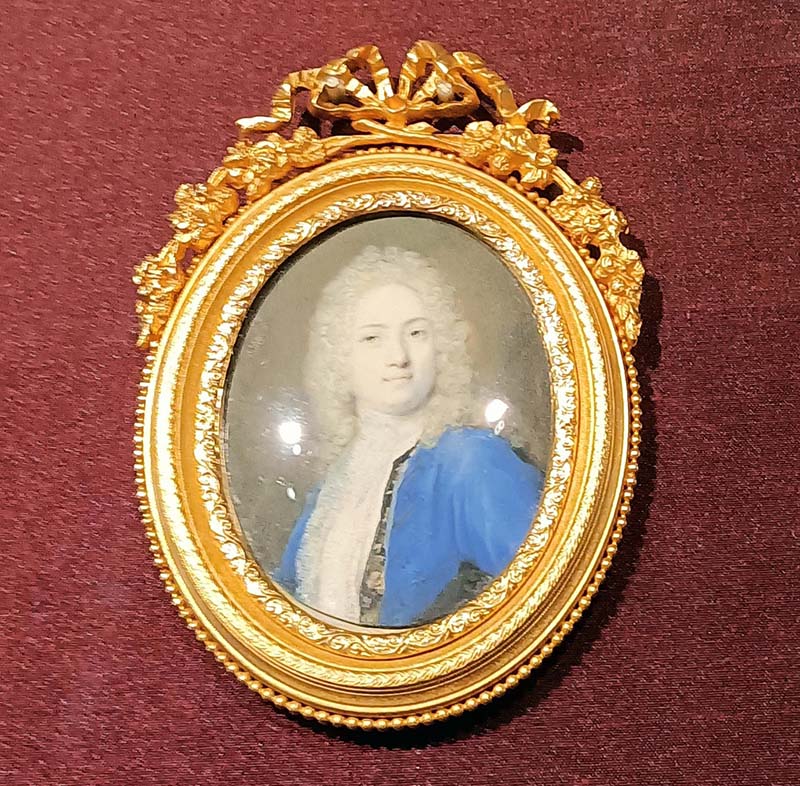
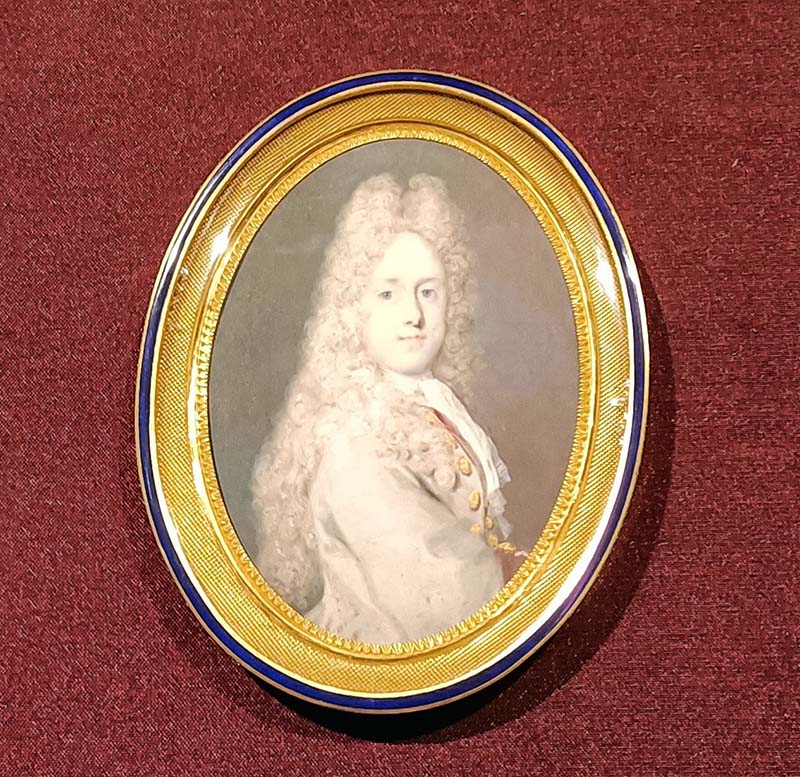
E finalmente, dopo tanto tempo, è stata inaugurata la così tanto attesa mostra su Rosalba Carriera nel bellissimo museo di Ca’ Rezzonico di Venezia, una mostra molto importante, molto interessante, che non mancherà di attirare molti visitatori, sia cittadini della città lagunare e delle terraferma, ma anche i numerosi turisti che vengono per trascorrere le loro vacanze! La mostra si può ammirare al primo piano nella sala del Portego. Tantissime opere conservate nelle teche dove si possono ammirare e capire la straordinaria bravura di questa artista che ha avuto successo in tutta Europa !

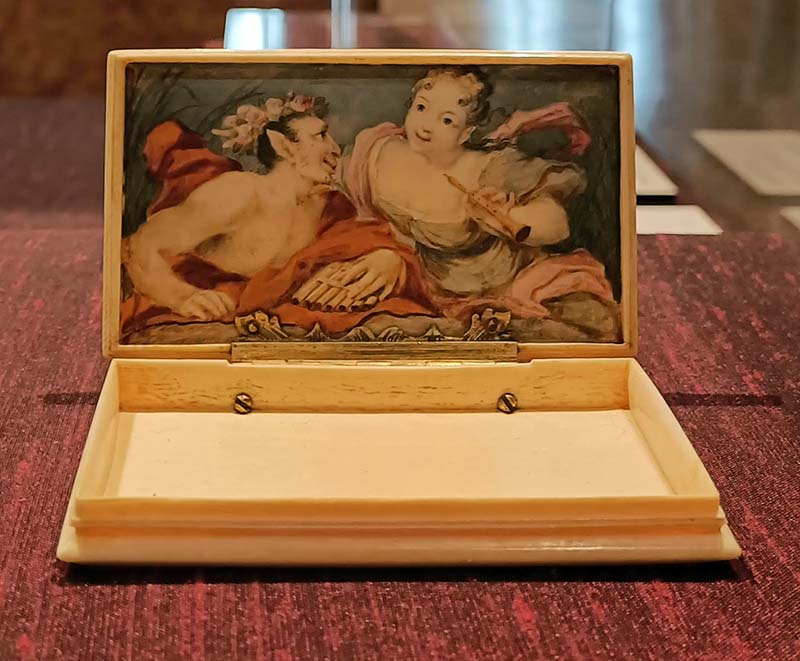
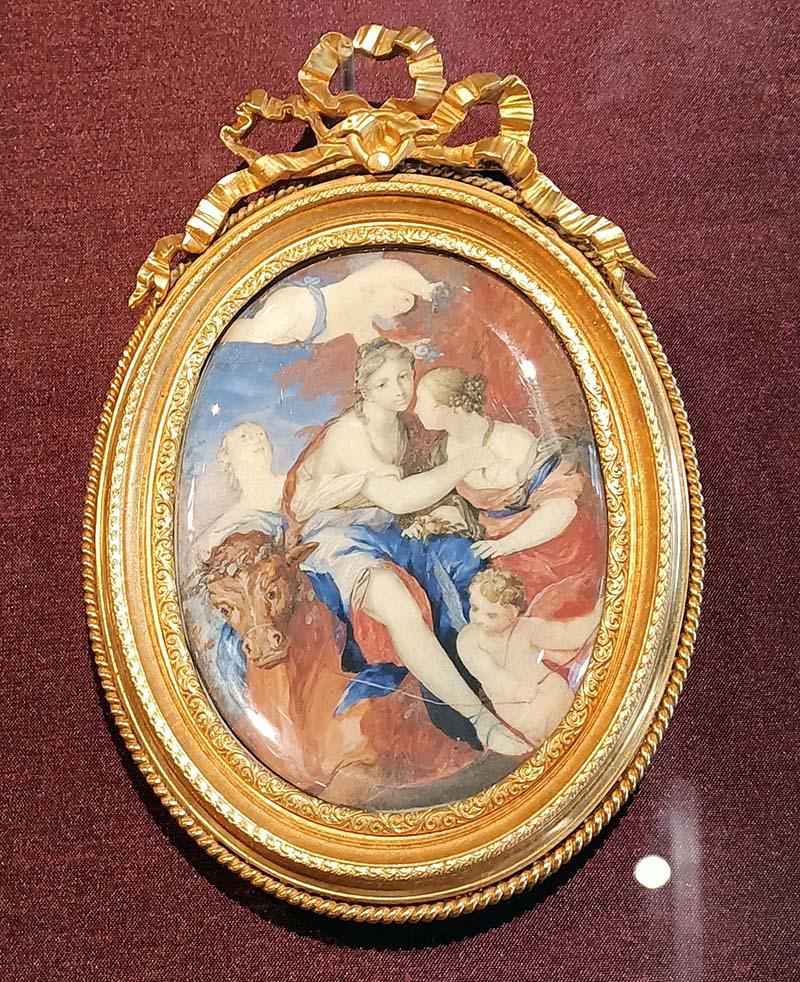
Rosalba Carriera, una delle più importanti pittrici del XVIII secolo, è nota per i suoi ritratti a pastello. Ma non tutti sanno che l’artista era anche una miniaturista di grande talento. La mostra “Rosalba Carriera: miniature su avorio” al Museo di Ca’ Rezzonico di Venezia dal 13 di ottobre 2023 fino al 9 gennaio 2024, presenta una selezione di 36 opere dell’artista realizzate su questo prezioso materiale. Le miniature di Rosalba Carriera sono caratterizzate da una grande raffinatezza e delicatezza. L’artista utilizzava una tecnica innovativa per l’epoca, che prevedeva l’utilizzo di polveri di colore applicate a strati sottilissimi. Questo le permetteva di ottenere effetti di grande luminosità e morbidezza.

I soggetti delle miniature sono molteplici, tra cui ritratti di personaggi illustri, scene mitologiche e religiose, e nature morte. In particolare, la mostra di Ca’ Rezzonico si concentra sui ritratti, che rappresentano il genere più importante dell’opera dell’artista. I ritratti di Rosalba Carriera sono caratterizzati da una grande attenzione ai dettagli e alla psicologia del personaggio. L’artista è in grado di catturare l’essenza di chi ritrae, sia dal punto di vista fisico che interiore.

La mostra di Ca’ Rezzonico offre un’occasione unica per ammirare le miniature di Rosalba Carriera, un’artista che ha contribuito a rendere celebre la pittura veneziana del XVIII secolo. Invito la cittadinanza e i turisti presenti nella città lagunare a visitare questa mostra e di cogliere l’occasione di visitare tutto il palazzo: 3 piani di stupendi capolavori pittorici, ma anche sculture, e mobilio del 700 Veneziano. Vi aspettiamo !

Rosalba Carriera, miniatures on ivory

Ca’ Rezzonico (Venice)

And finally, after a long time, the long-awaited exhibition on Rosalba Carriera was inaugurated at the beautiful Ca’ Rezzonico museum in Venice, a very important, very interesting exhibition, which will not fail to attract many visitors, both citizens of the lagoon city and the mainland, but also the numerous tourists who are here on holiday! The exhibition can be admired on the first floor in the Portego room. Many works are preserved in display cases, where you can admire and understand the extraordinary skill of this artist, who was very successful throughout Europe!

Rosalba Carriera, one of the most important painters of the 18th century, is known for her pastel portraits. But not everyone knows that the artist was also a very talented miniaturist. The exhibition “Rosalba Carriera: miniatures on ivory” at the Ca’ Rezzonico Museum in Venice from 13 October 2023 until 9 January 2024, presents a selection of 36 works by the artist created on this precious material . Rosalba Carriera’s miniatures are characterized by great refinement and delicacy. The artist used an innovative technique for the time, which involved the use of color powders applied in very thin layers. This allowed her to obtain effects of great brightness and softness.

The subjects of the miniatures are many, including portraits of illustrious people, mythological and religious scenes, and still life. In particular, the Ca’ Rezzonico exhibition focuses on portraits, which represent the most important genre of the artist’s work. Rosalba Carriera’s portraits are characterized by great attention to detail and the psychology of the character. The artist is able to capture the essence of who she portrays, both from a physical and internal point of view.

The Ca’ Rezzonico exhibition offers a unique opportunity to admire the miniatures of Rosalba Carriera, an artist who contributed to making 18th century Venetian painting famous. I invite citizens and tourists present in the lagoon city to visit this exhibition and to take the opportunity to visit the entire palace: 3 floors of stupendous pictorial masterpieces, but also sculptures and 18th century Venetian furniture. Come, you won’t regret it !

Venice Design Week a Palazzo Mocenigo

For the English translation please scroll down the page, thank you !

La decima edizione del concorso ospitata dal Museo di Palazzo Mocenigo

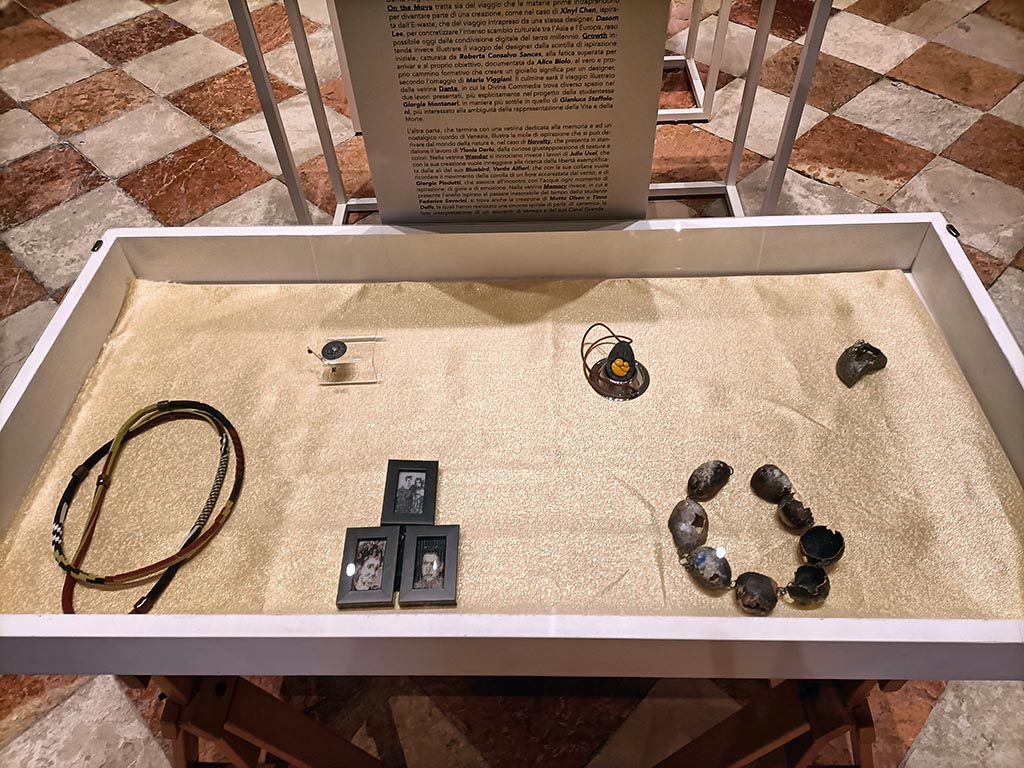
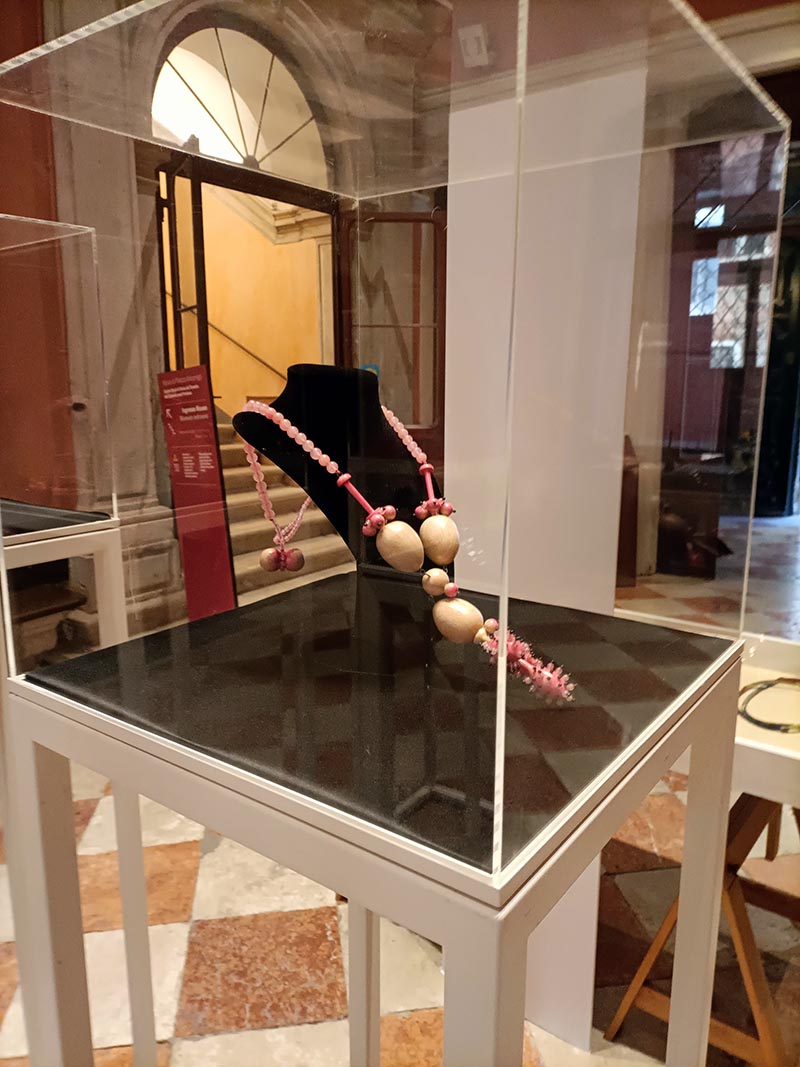
La Venice Design Week, il festival internazionale dedicato al design e all’innovazione, ospita anche un percorso interamente dedicato al gioiello. La Jewelry Selection, giunta alla sua decima edizione, è ospitata dal Museo di Palazzo Mocenigo, la sede che custodisce la storia della moda e del profumo.

La Jewelry Selection è un concorso che mira a promuovere e valorizzare il gioiello contemporaneo. Quest’anno, la giuria ha selezionato 20 progetti provenienti da tutto il mondo, che saranno esposti al Museo di Palazzo Mocenigo dal 7 al 15 ottobre 2023. I gioielli in mostra sono realizzati con materiali e tecniche innovative, e riflettono le diverse sensibilità e visioni artistiche dei designer. La Jewelry Selection è un’occasione unica per scoprire le ultime tendenze nel mondo del gioiello e per ammirare opere d’arte uniche e preziose.

I selezionati sono:

  • Ylenia Deriu (Italia)
  • Yasuko Kanno (Giappone)
  • Xinyi Chen (Cina)
  • Verde Alfieri (Italia)
  • Mette Olsen e Tinne Delfs (Danimarca)
  • Sita Pagehgiri (Indonesia)
  • Roberta Consalvo Sances (Italia)
  • Maria Viggiani (Italia)
  • Lital Mendel (Israele)
  • Laura Zecchini (Italia)
  • Julie Usel (Francia)
  • Giorgia Pisciutti (Italia)
  • Giorgia Montanari (Italia)
  • Gianluca Staffolani (Italia)
  • Federico Severini (Italia)
  • Dasom Lee (Corea del Sud)
  • Costanza D’Alpaos (Italia)
  • Alice Biolo (Italia)
  • Alessia Prati (Italia)

L’evento è patrocinato dal Ministero dei Beni Culturali, dalla Regione Veneto, dalla Città di Venezia, dalla Camera di Commercio Industria Artigianato e Agricoltura di Venezia Rovigo e dalla Fondazione Musei Civici Venezia. Fa inoltre parte della rete delle Design Week italiane e del network mondiale delle Settimane del Design.

In conclusione, la Venice Design Week è un’occasione unica per scoprire le ultime tendenze del design, incontrare i migliori designer del mondo e ammirare opere d’arte uniche e innovative. L’evento ospita una serie di eventi, mostre, conferenze e workshop che si svolgono in tutta la città. Invito tutta la cittadinanza e i turisti presenti nella città lagunare a visitare presso Il museo di Palazzo Mocenigo, questa sezione, della Venice Design Week, dove oltre ad ammirare questi capolavori, possono approfittare dell’occasione per visitare anche questo stupendo museo!

Venice Design Week

Palazzo Mocenigo

Venice Design Week at Palazzo Mocenigo

The tenth edition of the competition hosted by the Palazzo Mocenigo Museum

The Venice Design Week, the international festival dedicated to design and innovation, also hosts an itinerary entirely dedicated to jewellery. The Jewelry Selection, now in its tenth edition, is hosted by the Palazzo Mocenigo Museum, the venue that preserves the history of fashion and perfume.

The Jewelry Selection is a competition that aims to promote and enhance contemporary jewellery. This year, the jury has selected 20 projects from all over the world, which will be exhibited at the Museum of Palazzo Mocenigo from 7 to 15 October 2023. The jewels on display are made with innovative materials and techniques, and reflect the different sensibilities and visions artistic creations of the designers. The Jewelry Selection is a unique opportunity to discover the latest trends in the world of jewelery and to admire unique and precious works of art.

The selected ones are:

  • Ylenia Deriu (Italy)
  • Yasuko Kanno (Japan)
  • Xinyi Chen (China)
  • Verde Alfieri (Italy)
  • Mette Olsen and Tinne Delfs (Denmark)
  • Sita Pagehgiri (Indonesia)
  • Roberta Consalvo Sances (Italy)
  • Maria Viggiani (Italy)
  • Lital Mendel (Israel)
  • Laura Zecchini (Italy)
  • Julie Usel (France)
  • Giorgia Pisciutti (Italy)
  • Giorgia Montanari (Italy)
  • Gianluca Staffolani (Italy)
  • Federico Severini (Italy)
  • Dasom Lee (South Korea)
  • Costanza D’Alpaos (Italy)
  • Alice Biolo (Italy)
  • Alessia Prati (Italy)

The event is sponsored by the Ministry of Cultural Heritage, the Veneto Region, the City of Venice, the Chamber of Commerce, Industry, Crafts and Agriculture of Venice Rovigo and the Civic Museums Foundation of Venice. It is also part of the Italian Design Week network and the global Design Week network.

In conclusion, Venice Design Week is a unique opportunity to discover the latest design trends, meet the best designers in the world and admire unique and innovative works of art. The event hosts a series of events, exhibitions, conferences and workshops taking place across the city. I invite all citizens and tourists present in the lagoon city to visit this section of the Venice Design Week at the Palazzo Mocenigo museum, where in addition to admiring these masterpieces, they can take advantage of the opportunity to also visit this wonderful museum!

Venice Design Week

Mocenigo Palace