L’arte incontra l’inconscio: lo straordinario sodalizio tra Mouna Rebeiz ed Elsa Godart

For the English translation, please scroll down the page thank you

LE TARBOUCHE A PALAZZO MOCENIGO

Quando un accessorio diventa simbolo: l’arte di Mouna Rebeiz incontra il pensiero di Elsa Godart

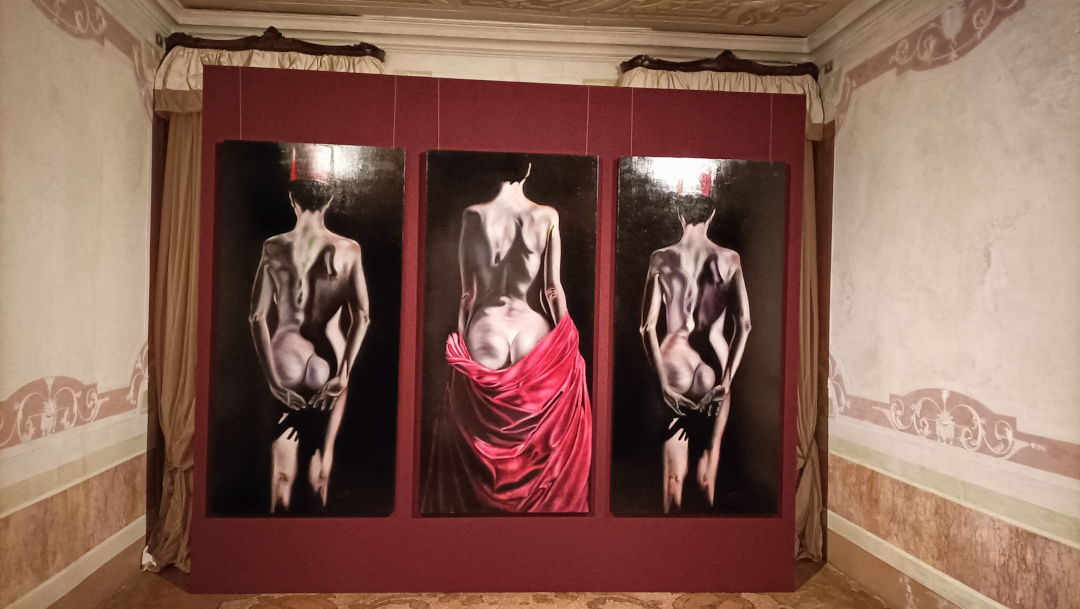
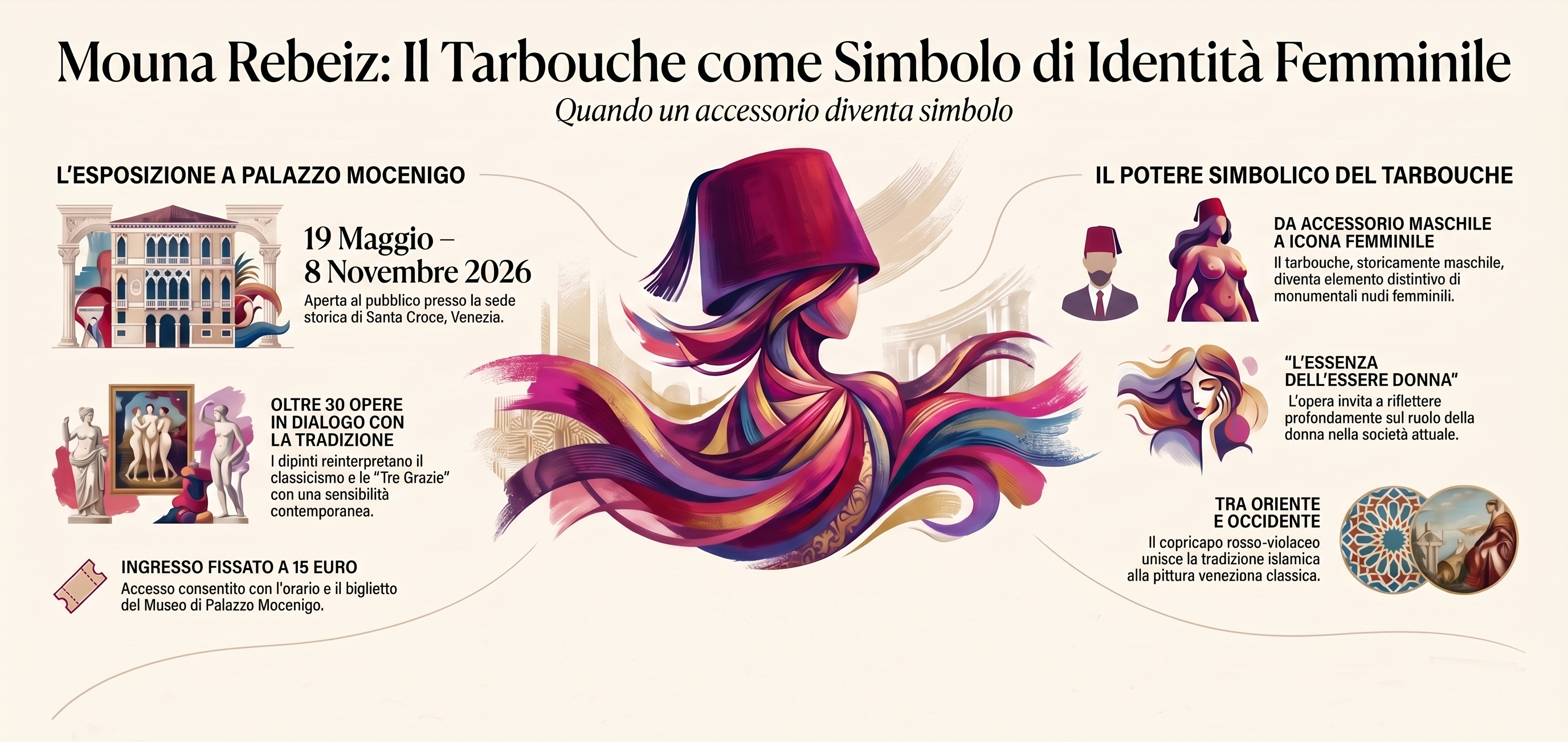
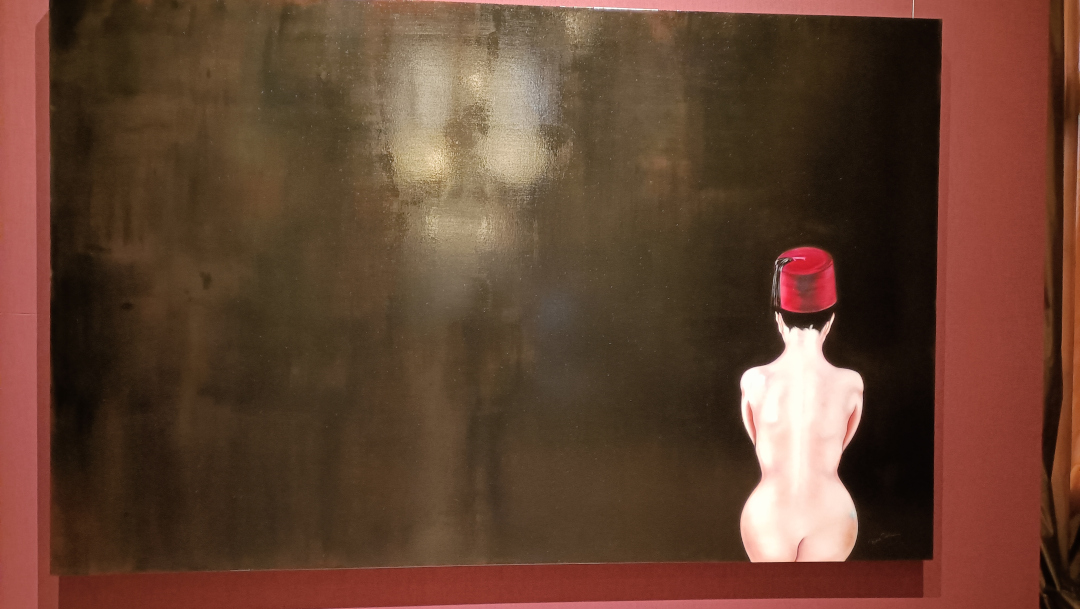
Nelle prestigiose sale del Museo di Palazzo Mocenigo a Venezia, la mostra “Le Tarbouche. Quando un accessorio diventa simbolo” si offre al pubblico come un’esperienza estetica e intellettuale di rara densità. Al centro di questo progetto espositivo si staglia l’iconico copricapo mediorientale — il tarbush o fez — storicamente legato al potere, alla virilità e alle rigide strutture patriarcali d’Oriente. Attraverso le monumentali tele dell’artista di origine libanese Mouna Rebeiz, questo antico accessorio maschile viene scardinato dal suo contesto originario per essere ripensato sul corpo femminile, trasformandosi in un potente manifesto di emancipazione e riappropriazione identitaria.
Il Sodalizio Intellettuale: La Pittrice e la Psicoanalista

La genesi e la forza dirompente di questa mostra risiedono in un profondo e storico legame artistico-filosofico che unisce da oltre un decennio Mouna Rebeiz e la nota filosofa e psicoanalista francese Elsa Godart. Questo legame affonda le radici in un terreno comune: la Rebeiz, prima di consacrarsi interamente alle arti visive, ha completato studi approfonditi in psicologia clinica tra Parigi e Beirut. Questa comune sensibilità verso i labirinti della psiche ha permesso la nascita di una stima intellettuale straordinaria.

Mouna Rebeiz vede nella Godart la mente illuminata capace di decodificare teoricamente ciò che l’istinto pittorico esprime sulla tela. Laddove la Rebeiz agisce con il pennello, evocando archetipi e tensioni tra Oriente e Occidente, la Godart interviene con la parola e lo scavo psicoanalitico. Nel corso degli anni, la studiosa francese è divenuta un’autentica amica e mentore per l’artista, curando i testi critici delle sue principali esposizioni e offrendo una legittimazione filosofica che svela la crisi dell’identità contemporanea e la complessa metamorfosi dell’universo femminile.

L’Enigma di “Bloody Mary”: Tra Storia, Provocazione e Fede
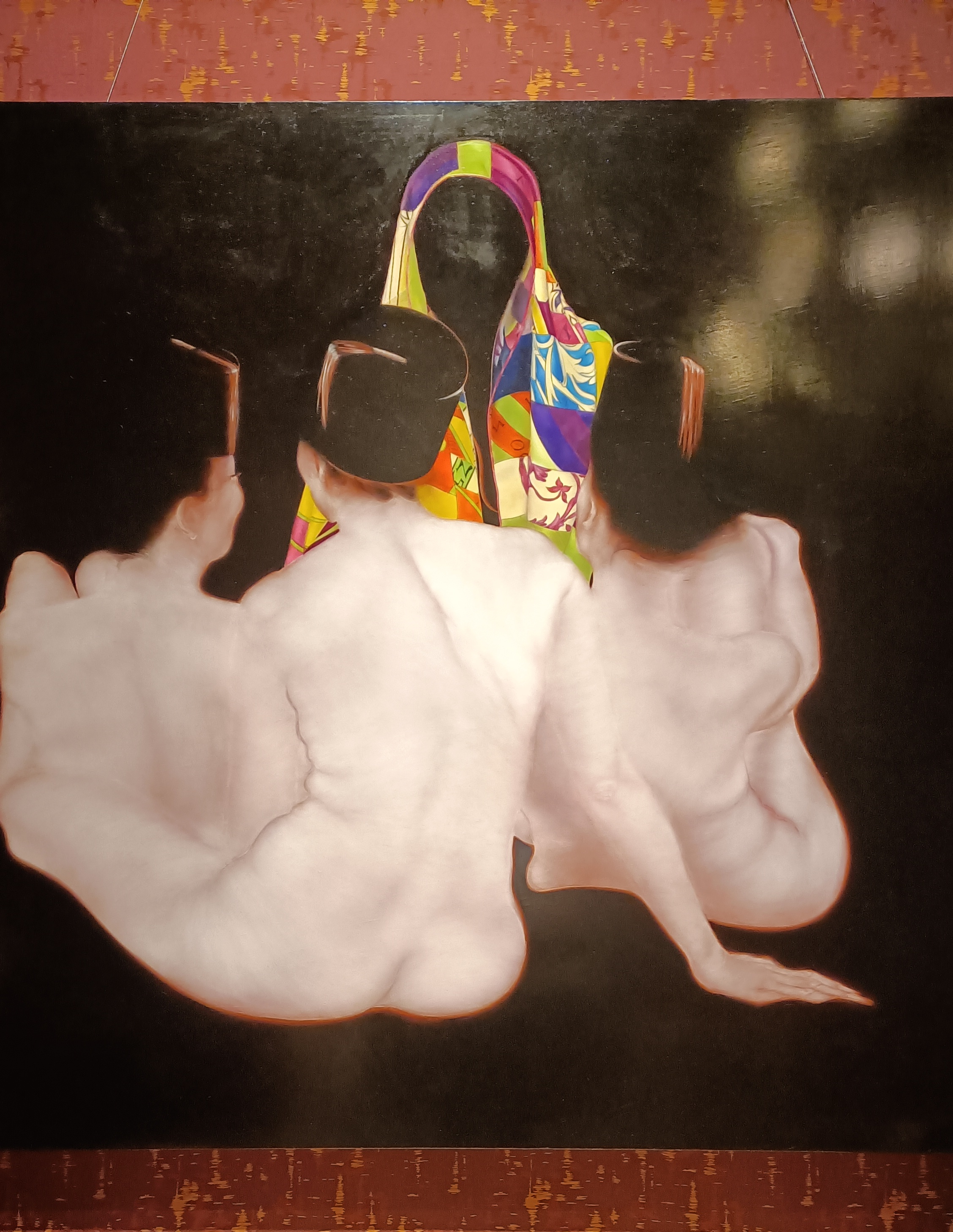
L’opera Bloody Mary (2014, olio su tela), tra le più magnetiche dell’esposizione, incarna perfettamente la sintesi di questo sodalizio e la natura provocatoria della ricerca di Rebeiz. Il dipinto affronta direttamente il tema della religione e del suo impatto dogmatico sulla sofferenza umana. Il titolo gioca intenzionalmente su un doppio binario ironico e drammatico: evoca il celebre cocktail a base di pomodoro e vodka, ma si rifà esplicitamente al personaggio storico di Maria I d’Inghilterra, passata alla storia come “Maria la Sanguinaria” (Bloody Mary) per aver ordinato il supplizio e l’esecuzione di centinaia di protestanti nel XVI secolo.

Nel dipinto, tre donne ritratte di spalle conversano, sormontate da tarbouche di un nero intenso che si estendono a tutto il dipinto facendo da sfondo ai loro corpi ambrati. Davanti a loro compare una figura femminile senza volto, il cui capo è celato da un velo composto da un coloratissimo foulard di Hermès. Questa figura, dedicata alla Vergine Maria, viene interpretata ed espressamente modellata sulle sembianze di Elsa Godart, amica e mentore dell’artista.

La scelta di non mostrare il volto del personaggio della Vergine — interpretato proprio dalla Godart — risponde a una precisa simbologia culturale e teologica. Secondo la tradizione islamica, infatti, il volto della Vergine, così come il volto della donna in generale nella sua dimensione più sacra e intima, deve rimanere segreto, sottratto allo sguardo profano. Celando il viso dietro l’elegante modernità di un foulard occidentale, Rebeiz e Godart uniscono i codici della tradizione e della contemporaneità, puntando il dito sulle restrizioni e sui dolori storicamente causati dalle interpretazioni religiose, e trasformando il silenzio visivo in un grido di denuncia e riflessione.

Un Binomio Universale in Viaggio verso il Futuro

È proprio l’indissolubile binomio tra l’audacia visiva di Mouna Rebeiz e la profondità analitica di Elsa Godart ad aver reso possibile una mostra della portata di Le Tarbouche. L’esposizione, che oggi trova a Palazzo Mocenigo a Venezia una sponda ideale tra merletti, profumi e memorie storiche veneziane, possiede in realtà un’anima nomade. Celebrata in passato in prestigiosi contesti internazionali (come la Saatchi Gallery di Londra nel 2015), la mostra continua a ridefinire i confini del dialogo interculturale. Questo straordinario sodalizio al femminile ha dato vita a un corpus di opere che, dopo aver conquistato la laguna, è destinato a viaggiare ancora, portando il proprio messaggio di libertà e provocazione verso mete future e orizzonti ancora da scoprire.

L’indovino

Tra i progetti più significativi della produzione recente di Mouna Rebeiz che merita di essere menzionato è: The Soothsayer (Le Devin), presentato per la prima volta nel 2022 in occasione della 59ª Biennale di Venezia. Il ciclo nasce da una riflessione sul desiderio umano di conoscere il futuro e intreccia simboli antichi e interrogativi contemporanei, mettendo in dialogo temi come la profezia, i tarocchi, l’inconscio, il destino e le nuove tecnologie. Attraverso una serie di opere fortemente evocative, l’artista esplora le paure e le speranze che accompagnano l’umanità di fronte all’incertezza del domani, interrogandosi sul ruolo dell’intelligenza artificiale e sul rapporto sempre più complesso tra intuizione umana e tecnologia.

Parlo di questa sua mostra passata, perché dopo il successo internazionale ottenuto negli ultimi anni, Le Devin approderà anche a Roma, dove sarà nuovamente esposta a partire dal 9 novembre. L’esposizione offrirà al pubblico italiano l’opportunità di immergersi nell’universo simbolico creato da Mouna Rebeiz, un mondo in cui arte, filosofia e psicoanalisi si incontrano per riflettere sulle grandi domande dell’esistenza contemporanea. Attraverso immagini visionarie e riferimenti che spaziano dall’esoterismo alla tecnologia, la mostra invita il visitatore a interrogarsi sul concetto di destino e sulla capacità dell’essere umano di immaginare il proprio futuro, confermando ancora una volta la profondità e l’attualità della ricerca artistica di Rebeiz.


LE TARBOUCHE AT PALAZZO MOCENIGO

When an Accessory Becomes a Symbol: The Art of Mouna Rebeiz Meets the Thought of Elsa Godart

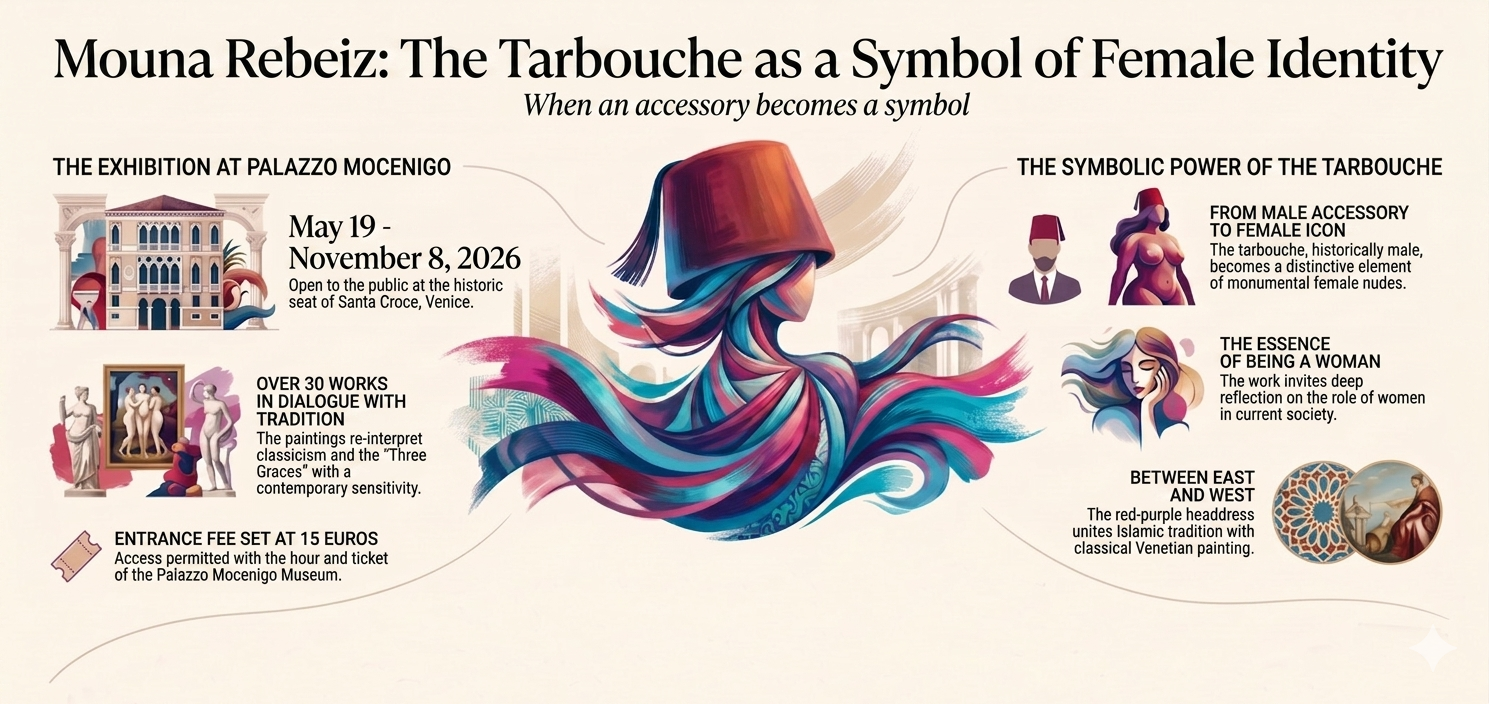
In the prestigious rooms of the Museo di Palazzo Mocenigo in Venice, the exhibition “Le Tarbouche. Quando un accessorio diventa simbolo” (When an Accessory Becomes a Symbol) offers visitors an aesthetic and intellectual experience of rare depth. At the center of this exhibition project stands the iconic Middle Eastern headpiece — the tarbush or fez — historically linked to power, masculinity, and the rigid patriarchal structures of the East. Through the monumental canvases of Lebanese-born artist Mouna Rebeiz, this ancient male accessory is unseated from its original context to be reimagined on the female body, transforming into a powerful manifesto of emancipation and identity reclamation.

The Intellectual Partnership: The Painter and the Psychoanalyst

The genesis and disruptive power of this exhibition lie in a deep and historic artistic-philosophical bond that has united Mouna Rebeiz and the renowned French philosopher and psychoanalyst Elsa Godart for over a decade. This connection is rooted in shared ground: before dedicating herself entirely to the visual arts, Rebeiz completed advanced studies in clinical psychology between Paris and Beirut. This mutual sensitivity toward the labyrinths of the psyche paved the way for an extraordinary intellectual respect.

Mouna Rebeiz views Godart as the enlightened mind capable of theoretically decoding what her painterly instinct expresses on canvas. Where Rebeiz acts with the brush, evoking archetypes and tensions between East and West, Godart steps in with language and psychoanalytic excavation. Over the years, the French scholar has become a true friend and mentor to the artist, authoring the critical texts for her major exhibitions and providing a philosophical validation that unveils the crisis of contemporary identity and the complex metamorphosis of the female universe.

The Enigma of “Bloody Mary”: Between History, Provocation, and Faith

The artwork Bloody Mary (2014, oil on canvas), one of the most magnetic pieces in the exhibition, perfectly embodies the synthesis of this partnership and the provocative nature of Rebeiz’s research. The painting directly addresses the theme of religion and its dogmatic impact on human suffering. The title intentionally plays on an ironic and dramatic double meaning: it evokes the famous tomato and vodka-based cocktail, but explicitly references the historical figure of Mary I of England, known to history as “Bloody Mary” for ordering the persecution and execution of hundreds of Protestants in the 16th century.

In the painting, three women depicted from behind are in conversation, topped by tarbouches of an intense black that extends across the whole canvas, forming a backdrop for their amber-hued bodies. In front of them appears a faceless female figure whose head is concealed by a veil made from a colorful Hermès scarf. This figure, dedicated to the Virgin Mary, is performed by and expressly modeled on the features of Elsa Godart, the artist’s friend and mentor.

The choice not to show the face of the Virgin character — portrayed by Godart — responds to a precise cultural and theological symbolism. According to Islamic tradition, the face of the Virgin, much like the face of women in general in its most sacred and intimate dimension, must remain secret, withheld from the profane gaze. By hiding the face behind the elegant modernity of a Western scarf, Rebeiz and Godart merge the codes of tradition and contemporaneity, pointing a finger at the restrictions and pain historically caused by religious interpretations, and turning visual silence into a cry of denunciation and reflection.

A Universal Duo Journeying into the Future

It is precisely the indissoluble bond between the visual audacity of Mouna Rebeiz and the analytical depth of Elsa Godart that has made an exhibition of the scale of Le Tarbouche possible. The exhibition, which today finds an ideal backdrop in Venice’s Palazzo Mocenigo among historical lace, perfumes, and Venetian memories, actually possesses a nomadic soul. Celebrated in the past in prestigious international contexts (such as the Saatchi Gallery in London in 2015), the exhibition continues to redefine the boundaries of intercultural dialogue. This extraordinary female partnership has given life to a body of work that, after conquering the lagoon, is destined to travel further, carrying its message of freedom and provocation toward future destinations and horizons yet to be discovered.

The soothsayer – Le Devin

Among the most significant projects in Mouna Rebeiz’s recent artistic production is The Soothsayer (Le Devin), first presented in 2022 during the 59th Venice Biennale. The series stems from a reflection on humanity’s enduring desire to foresee the future, weaving together ancient symbols and contemporary questions through themes such as prophecy, tarot, the unconscious, destiny, and emerging technologies. Through a collection of highly evocative works, the artist explores the fears and hopes that accompany humankind in the face of an uncertain future, while questioning the role of artificial intelligence and the increasingly complex relationship between human intuition and technology.

I mention this past exhibition because, following its international success over the past few years, Le Devin will also arrive in Rome, where it will be presented once again starting on November 9. The exhibition will offer Italian audiences the opportunity to immerse themselves in the symbolic universe created by Mouna Rebeiz—a world in which art, philosophy, and psychoanalysis converge to reflect on the fundamental questions of contemporary existence. Through visionary imagery and references ranging from esotericism to technology, the exhibition invites visitors to reflect on the concept of destiny and on humanity’s capacity to imagine its own future, once again confirming the depth, relevance, and contemporary resonance of Rebeiz’s artistic practice.

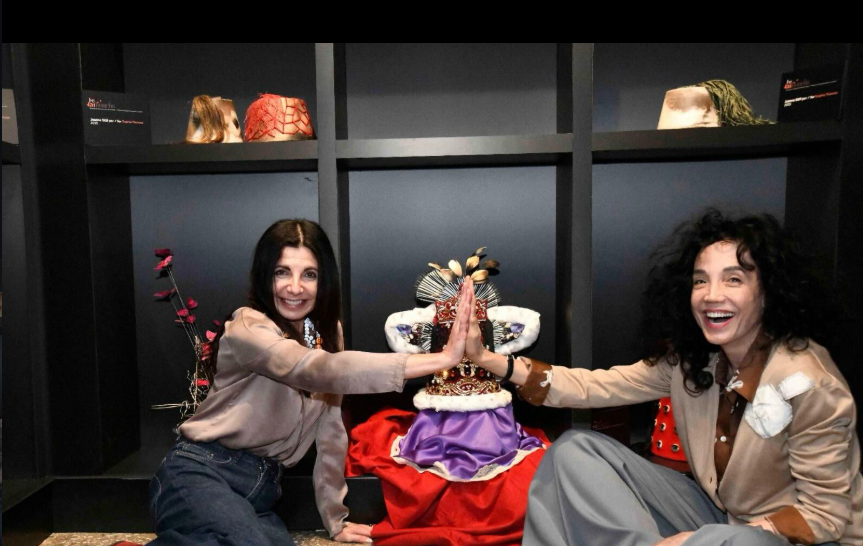
La mostra “Le Tarbouche” raccontata dalla curatrice Roberta Semeraro

Roberta Semeraro e “Le Tarbouche”: quando l’allestimento diventa dialogo tra identità, simboli e femminile

For the English translation, please scroll down the page thank you

A Venezia, negli spazi del Museo di Palazzo Mocenigo, la mostra Le Tarbouche. Quando un accessorio diventa simbolo dell’artista Mouna Rebeiz non si limita a presentare un corpus di opere pittoriche: costruisce un percorso concettuale complesso, in cui storia del costume, identità culturale e rappresentazione del femminile si intrecciano attraverso uno sguardo curatoriale preciso e riconoscibile. Al centro di questa operazione c’è infatti la figura della curatrice Roberta Semeraro.

Narratrice, critica d’arte e curatrice indipendente, Semeraro ha costruito negli anni un percorso professionale orientato all’indagine dei linguaggi contemporanei e delle trasformazioni culturali attraverso l’arte. Presidente dell’associazione culturale RO.SA.M., ha collaborato con istituzioni italiane e internazionali sviluppando progetti che intrecciano arte, memoria, sostenibilità e identità.

La mostra veneziana dedicata a Mouna Rebeiz sembra inserirsi perfettamente in questa linea di ricerca. Il tarbouche — tradizionale copricapo maschile diffuso nel mondo islamico sin dal XIV secolo — viene qui reinterpretato dall’artista come simbolo ambiguo e potente, trasferito su monumentali figure femminili che evocano tanto la pittura classica quanto una riflessione contemporanea sul corpo e sul ruolo della donna. Ma è proprio l’allestimento della Semeraro a trasformare questo elemento iconografico in un dispositivo narrativo più ampio. L’intuizione curatoriale consiste nel collocare le opere all’interno del contesto altamente simbolico di Palazzo Mocenigo, museo dedicato alla storia del tessuto, del costume e del profumo. Qui il tarbouche smette di essere soltanto un accessorio etnografico e diventa un ponte tra Oriente e Occidente, tra moda e identità, tra storia e contemporaneità. La mostra assume così una dimensione quasi antropologica, in cui gli oggetti raccontano strutture sociali, appartenenze e ruoli di genere.

Il lavoro di Roberta Semeraro emerge soprattutto nella costruzione del dialogo tra discipline diverse. Pittura, moda, design e storia del costume convivono infatti in un percorso che include anche reinterpretazioni contemporanee del tarbouche realizzate da designer internazionali. Una scelta curatoriale che amplia il significato della mostra e la sottrae alla semplice dimensione estetica, trasformandola in una riflessione sul valore culturale degli oggetti e sulla loro capacità di attraversare epoche e linguaggi. Da tempo Semeraro concentra la propria ricerca sui temi dell’identità e della rappresentazione del femminile nell’arte contemporanea. In Le Tarbouche questa attenzione si traduce in una lettura critica che evita sia l’esotismo sia la semplice provocazione visiva. Le figure femminili di Rebeiz, sensuali e monumentali, vengono inserite in un discorso più ampio sullo sguardo contemporaneo, sulla costruzione simbolica del potere e sul modo in cui gli accessori possano diventare strumenti di affermazione culturale.

La curatrice sembra inoltre lavorare su un equilibrio sottile tra tradizione e contemporaneità. Da una parte il richiamo alla grande pittura europea, dall’altra l’urgenza di interrogare il presente: identità fluide, ruoli di genere, memoria culturale e contaminazione tra mondi differenti. È in questo spazio di tensione che la mostra trova la sua forza. In un panorama artistico spesso dominato dalla rapidità visiva e dalla spettacolarizzazione, il progetto curatoriale di Roberta Semeraro restituisce invece centralità alla ricerca critica e alla costruzione del significato. Le Tarbouche non appare dunque solo come una mostra d’arte contemporanea, ma come un dispositivo culturale capace di mettere in relazione immagini, storia e pensiero.


Per approfondire la visione curatoriale alla base del progetto, ho intervistato la curatrice Roberta Semeraro, che mi ha raccontato la genesi della mostra e il dialogo costruito tra le opere di Mouna Rebeiz e gli spazi evocativi di Palazzo Mocenigo.

Come nasce l’idea di portare Mouna Rebeiz a Palazzo Mocenigo?
«Circa due anni fa, parlando con la direttrice scientifica dei Musei Civici Veneziani, ho avuto la sensazione di avere davanti l’artista perfetta per Palazzo Mocenigo. Mouna Rebeiz è di origini libanesi e il tarbouche, attorno al quale ruota questo ciclo di opere, appartiene profondamente all’immaginario orientale. Palazzo Mocenigo, invece, è il Centro Studi di Storia del Tessuto, del Costume e del Profumo. Tutte queste realtà hanno iniziato quasi naturalmente a dialogare tra loro, suggerendomi l’idea di proporre la mostra ai Musei Civici.»

Che rapporto ha con Palazzo Mocenigo?
«Palazzo Mocenigo e Palazzo Fortuny sono da sempre i miei musei preferiti di Venezia. Amo il fatto che abbiano conservato intatti i loro ambienti: entrarci significa fare un viaggio a ritroso nel tempo. In quei luoghi si percepiscono ancora le contaminazioni tra Oriente e Occidente che hanno reso Venezia unica al mondo.»

Cosa la colpisce maggiormente dell’arte di Mouna Rebeiz?
«Quello che apprezzo di più è la capacità di unire la bellezza alla forza espressiva. Le sue opere trasmettono messaggi molto potenti, ma lo fanno attraverso una forma seducente, elegante, quasi magnetica. È proprio questo contrasto a renderle così incisive.»

Tra le tante mostre che ha curato, ce n’è una che senti particolarmente vicina?
«Ho amato ogni mostra che ho allestito, dalla più piccola alla più complessa. Sicuramente le esposizioni di scultura ambientale sono state le più impegnative, perché richiedono un confronto diretto con il contesto urbano e con tutte le dinamiche che questo comporta. In Italia, poi, ogni luogo porta con sé una stratificazione storica delicatissima. Un progetto a cui resto profondamente legata è l’Amphisculpture di Parco del Sole all’Aquila: il più grande teatro all’aperto nato da un lungo lavoro di ideazione, gestazione e costruzione, che ho raccontato anche nel mio libro Ricostruire con l’arte

Cosa vorresti che il visitatore portasse con sé dopo aver visto “Le Tarbouche”?
«Consiglierei ai visitatori di soffermarsi con attenzione nelle sale, osservando i rimandi tra le opere contemporanee e la collezione permanente del museo. È proprio in quel dialogo tra presente e passato che la visita diventa più affascinante e il museo riesce davvero a raccontare qualcosa di vivo.»


The Exhibition “Le Tarbouche” Told by Curator Roberta Semeraro

In Venice, within the evocative spaces of Palazzo Mocenigo Museum, the exhibition Le Tarbouche. When an Accessory Becomes a Symbol by artist Mouna Rebeiz goes far beyond presenting a body of paintings: it constructs a complex conceptual journey in which the history of costume, cultural identity, and the representation of femininity intertwine through a precise and recognizable curatorial vision. At the heart of this operation stands curator Roberta Semeraro.

A storyteller, art critic, and independent curator, Semeraro has developed over the years a professional path focused on investigating contemporary artistic languages and cultural transformations through art. As president of the cultural association RO.SA.M., she has collaborated with Italian and international institutions, developing projects that connect art, memory, sustainability, and identity.

The Venetian exhibition dedicated to Mouna Rebeiz fits perfectly within this line of research. The tarbouche — a traditional male headdress widespread throughout the Islamic world since the 14th century — is reinterpreted here by the artist as an ambiguous yet powerful symbol, transferred onto monumental female figures that evoke both classical painting and a contemporary reflection on the body and the role of women. Yet it is Semeraro’s curatorial approach that transforms this iconographic element into a broader narrative device.

The curator’s intuition lies in placing the works within the highly symbolic context of Palazzo Mocenigo, a museum devoted to the history of textiles, costume, and perfume. Here, the tarbouche ceases to be merely an ethnographic accessory and becomes a bridge between East and West, between fashion and identity, between history and contemporaneity. The exhibition thus takes on an almost anthropological dimension, where objects tell stories of social structures, belonging, and gender roles.

Roberta Semeraro’s work emerges above all in the construction of a dialogue between different disciplines. Painting, fashion, design, and costume history coexist in a path that also includes contemporary reinterpretations of the tarbouche created by international designers. This curatorial choice expands the meaning of the exhibition and frees it from a purely aesthetic dimension, transforming it into a reflection on the cultural value of objects and their ability to move across eras and languages.

For years, Semeraro has focused her research on themes of identity and the representation of femininity in contemporary art. In Le Tarbouche, this attention translates into a critical reading that avoids both exoticism and mere visual provocation. Rebeiz’s female figures — sensual and monumental — are inserted into a broader discourse on the contemporary gaze, the symbolic construction of power, and the ways accessories can become instruments of cultural affirmation.

The curator also seems to work within a delicate balance between tradition and contemporaneity. On one side lies the reference to great European painting; on the other, the urgency to question the present: fluid identities, gender roles, cultural memory, and contamination between different worlds. It is within this space of tension that the exhibition finds its strength.

In an artistic landscape often dominated by visual speed and spectacle, Roberta Semeraro’s curatorial project restores centrality to critical research and the construction of meaning. Le Tarbouche therefore appears not simply as a contemporary art exhibition, but as a cultural device capable of connecting images, history, and thought.


To further explore the curatorial vision behind the project, I interviewed the curator Roberta Semeraro, who shared with me the origins of the exhibition and the dialogue created between Mouna Rebeiz’s works and the evocative spaces of Palazzo Mocenigo.

How did the idea of bringing Mouna Rebeiz to Palazzo Mocenigo come about?
“About two years ago, while speaking with the scientific director of the Venetian Civic Museums, I realized I had found the perfect artist for Palazzo Mocenigo. Mouna Rebeiz is of Lebanese origin, and the tarbouche — around which this cycle of works revolves — deeply belongs to the Eastern imagination. Palazzo Mocenigo, on the other hand, is the Study Center for the History of Textiles, Costume, and Perfume. All these realities naturally began to converse with one another, inspiring me to propose the exhibition to the Civic Museums.”

What kind of relationship do you have with Palazzo Mocenigo?
“Palazzo Mocenigo and Palazzo Fortuny have always been my favorite museums in Venice. I love the fact that they have preserved their interiors exactly as they once were: entering them feels like traveling back in time. In those spaces, you can still perceive the contaminations between East and West that made Venice unique in the world.”

What fascinates you most about Mouna Rebeiz’s art?
“What I appreciate most is her ability to combine beauty with expressive strength. Her works convey extremely powerful messages, yet they do so through a seductive, elegant, almost magnetic form. It is precisely this contrast that makes them so compelling.”

Among the many exhibitions you have curated, is there one that remains especially close to your heart?
“I have loved every exhibition I have curated, from the smallest to the most ambitious. Environmental sculpture exhibitions have certainly been the most challenging because they require engaging directly with the urban context and all the dynamics that come with it. In Italy, every place carries an incredibly delicate historical stratification. One project I remain particularly proud of is the Amphisculpture at Parco del Sole in L’Aquila: the largest open-air theater, born from a long process of conception, development, and construction, which I also recounted in my book Rebuilding Through Art.”

What would you like visitors to take away after seeing Le Tarbouche?
“I would encourage visitors to spend time carefully observing the rooms and discovering the connections between the contemporary works and the museum’s permanent collection. It is precisely in that dialogue between present and past that the visit becomes most fascinating, and the museum truly comes alive.”

La mostra imperdibile del 2026 a Venezia? Mouna Rebeiz a Palazzo Mocenigo

For the English translation, please scroll down the page, thank you !

Venezia si prepara ad accogliere una mostra destinata a lasciare il segno. Dal 20 maggio all’8 novembre 2026, le sale di Museo di Palazzo Mocenigo ospiteranno “Le Tarbouche. Quando un accessorio diventa simbolo”, il nuovo progetto espositivo dell’artista libanese-canadese Mouna Rebeiz. Un appuntamento che promette di fondere arte, identità, sensualità e memoria culturale in uno dei luoghi più affascinanti della Venezia artistica contemporanea.

Ci sono artisti che dipingono immagini. E poi ci sono artisti che dipingono simboli, trasformandoli in qualcosa di vivo, emotivo, quasi magnetico. Mouna Rebeiz appartiene senza dubbio alla seconda categoria. Il suo lavoro, intenso e profondamente spirituale, nasce da un percorso artistico e umano fuori dagli schemi: cresciuta in una famiglia di artisti, formatasi tra Beirut e Parigi con studi in psicologia, Rebeiz ha costruito negli anni una ricerca capace di unire pittura classica, introspezione e sperimentazione contemporanea.

Chi conosce il suo lavoro sa che le sue opere non si limitano a essere osservate: chiedono di essere attraversate. Nei suoi dipinti convivono femminilità, energia mistica, archetipi e richiami culturali che sembrano emergere da una dimensione sospesa tra Oriente e Occidente. Non a caso, durante la Biennale di Venezia del 2022, la sua mostra The Soothsayer aveva già attirato l’attenzione internazionale grazie a un linguaggio visivo visionario e immersivo.

Ed è proprio Venezia, ancora una volta, a diventare il palcoscenico ideale della sua poetica. La nuova mostra a Palazzo Mocenigo ruoterà attorno al “tarbouche” — il tradizionale copricapo maschile diffuso nel mondo musulmano sin dal XIV secolo — trasformato da Rebeiz in un simbolo carico di significati contemporanei. Nelle sue tele, questo elemento storico si intreccia con la rappresentazione del corpo femminile, dando vita a un dialogo sorprendente tra identità, sensualità e appartenenza culturale.

Secondo le anticipazioni, il percorso espositivo presenterà grandi dipinti ispirati alle Tre Grazie, figure che nella visione dell’artista diventano presenze potenti, quasi divine. Il tarbouche, collocato su corpi femminili monumentali e sensuali, perde la sua funzione originaria per diventare metafora: un ponte tra tradizione e trasformazione, tra memoria collettiva e libertà individuale.

Ed è qui che la mostra diventa davvero interessante. Perché Rebeiz non si limita a reinterpretare un accessorio storico: lo carica di domande attualissime. Quanto conta oggi il simbolo nell’affermazione dell’identità? Come cambia il significato di un oggetto quando viene sottratto al suo contesto originario? E soprattutto: cosa accade quando lo sguardo femminile si riappropria di simboli tradizionalmente maschili?

In una città come Venezia, storicamente crocevia di culture, commerci e contaminazioni artistiche, questa riflessione assume un valore ancora più forte. Palazzo Mocenigo, con le sue sale dedicate alla moda, al tessuto e alla storia del costume veneziano, sembra quasi il luogo naturale per accogliere una mostra che parla proprio del potere degli abiti e degli accessori nel raccontare chi siamo.

Scorrendo le immagini condivise dall’artista sui suoi canali social, emerge chiaramente la forza visiva della sua ricerca: colori profondi, figure enigmatiche, atmosfere teatrali e una costante tensione tra eleganza e provocazione. Il suo linguaggio è immediatamente riconoscibile, ma soprattutto emotivo. E forse è proprio questo il motivo per cui il pubblico internazionale continua a seguirla con crescente interesse.

“Le Tarbouche” non sarà semplicemente una mostra da visitare. Sarà un’esperienza da vivere lentamente, lasciandosi trasportare dalle suggestioni di un’artista che riesce a rendere contemporaneo persino un simbolo antico di secoli. Per chi ama l’arte capace di raccontare storie, creare connessioni culturali e sorprendere visivamente, questa è già una delle esposizioni più attese del 2026 veneziano. E Venezia, ancora una volta, si conferma il luogo perfetto dove le culture si incontrano e si trasformano in arte.


Venice’s Must-See Exhibition of 2026? Mouna Rebeiz at Palazzo Mocenigo

Venice is preparing to welcome an exhibition destined to leave a lasting impression. From May 20 to November 8, 2026, the rooms of Palazzo Mocenigo Museum will host “Le Tarbouche. When an Accessory Becomes a Symbol”, the new exhibition project by Lebanese-Canadian artist Mouna Rebeiz. An event that promises to blend art, identity, sensuality, and cultural memory within one of the most fascinating venues in Venice’s contemporary art scene.

There are artists who paint images. And then there are artists who paint symbols, transforming them into something alive, emotional, almost magnetic. Mouna Rebeiz undoubtedly belongs to the latter category. Her work, intense and deeply spiritual, emerges from an unconventional artistic and personal journey: raised in a family of artists and educated between Beirut and Paris with a background in psychology, Rebeiz has developed a body of work capable of merging classical painting, introspection, and contemporary experimentation.

Anyone familiar with her art knows that her works are not simply meant to be observed — they demand to be experienced. Within her paintings coexist femininity, mystical energy, archetypes, and cultural references that seem to emerge from a suspended dimension somewhere between East and West. It is no coincidence that during the 2022 Venice Biennale, her exhibition The Soothsayer attracted international attention thanks to its visionary and immersive visual language.

And once again, Venice becomes the ideal stage for her artistic vision. The new exhibition at Palazzo Mocenigo revolves around the “tarbouche” — the traditional male headpiece widely used throughout the Muslim world since the 14th century — transformed by Rebeiz into a symbol charged with contemporary meaning. In her paintings, this historical element intertwines with representations of the female body, creating a striking dialogue between identity, sensuality, and cultural belonging.

According to early previews, the exhibition will feature large-scale paintings inspired by the Three Graces, figures that in the artist’s vision become powerful, almost divine presences. The tarbouche, placed upon monumental and sensual female bodies, loses its original function and becomes a metaphor: a bridge between tradition and transformation, between collective memory and individual freedom.

And this is where the exhibition becomes truly compelling. Because Rebeiz does not simply reinterpret a historical accessory — she fills it with deeply contemporary questions. How important are symbols today in shaping identity? How does the meaning of an object change once it is removed from its original context? And above all: what happens when the female gaze reclaims symbols traditionally associated with masculinity?

In a city like Venice — historically a crossroads of cultures, trade, and artistic exchange — this reflection takes on even greater significance. Palazzo Mocenigo, with its collections dedicated to fashion, textiles, and the history of Venetian costume, feels like the natural setting for an exhibition that explores the power of clothing and accessories in telling the story of who we are.

Looking through the images shared by the artist on her social media channels, the visual strength of her artistic research becomes immediately evident: deep colors, enigmatic figures, theatrical atmospheres, and a constant tension between elegance and provocation. Her visual language is instantly recognizable, but above all, deeply emotional. Perhaps this is exactly why international audiences continue to follow her work with growing interest.

“Le Tarbouche” will not simply be an exhibition to visit. It will be an experience to move through slowly, allowing oneself to be carried away by the suggestions of an artist capable of making even a centuries-old symbol feel powerfully contemporary. For those who love art that tells stories, creates cultural connections, and surprises visually, this is already shaping up to be one of the most anticipated exhibitions of Venice’s 2026 cultural season. And Venice, once again, confirms itself as the perfect place where cultures meet and transform into art.