Roberta Semeraro e “Le Tarbouche”: quando l’allestimento diventa dialogo tra identità, simboli e femminile
For the English translation, please scroll down the page thank you
A Venezia, negli spazi del Museo di Palazzo Mocenigo, la mostra Le Tarbouche. Quando un accessorio diventa simbolo dell’artista Mouna Rebeiz non si limita a presentare un corpus di opere pittoriche: costruisce un percorso concettuale complesso, in cui storia del costume, identità culturale e rappresentazione del femminile si intrecciano attraverso uno sguardo curatoriale preciso e riconoscibile. Al centro di questa operazione c’è infatti la figura della curatrice Roberta Semeraro.

Narratrice, critica d’arte e curatrice indipendente, Semeraro ha costruito negli anni un percorso professionale orientato all’indagine dei linguaggi contemporanei e delle trasformazioni culturali attraverso l’arte. Presidente dell’associazione culturale RO.SA.M., ha collaborato con istituzioni italiane e internazionali sviluppando progetti che intrecciano arte, memoria, sostenibilità e identità.
La mostra veneziana dedicata a Mouna Rebeiz sembra inserirsi perfettamente in questa linea di ricerca. Il tarbouche — tradizionale copricapo maschile diffuso nel mondo islamico sin dal XIV secolo — viene qui reinterpretato dall’artista come simbolo ambiguo e potente, trasferito su monumentali figure femminili che evocano tanto la pittura classica quanto una riflessione contemporanea sul corpo e sul ruolo della donna. Ma è proprio l’allestimento della Semeraro a trasformare questo elemento iconografico in un dispositivo narrativo più ampio. L’intuizione curatoriale consiste nel collocare le opere all’interno del contesto altamente simbolico di Palazzo Mocenigo, museo dedicato alla storia del tessuto, del costume e del profumo. Qui il tarbouche smette di essere soltanto un accessorio etnografico e diventa un ponte tra Oriente e Occidente, tra moda e identità, tra storia e contemporaneità. La mostra assume così una dimensione quasi antropologica, in cui gli oggetti raccontano strutture sociali, appartenenze e ruoli di genere.
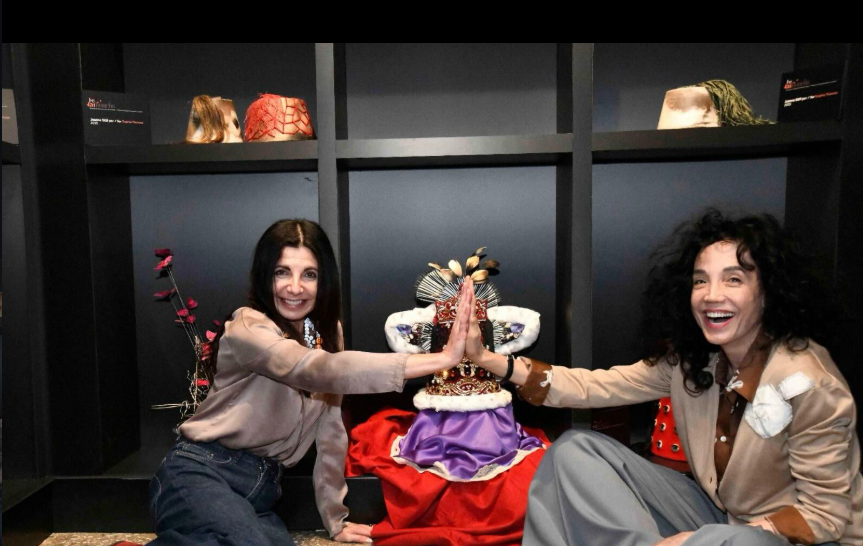
Il lavoro di Roberta Semeraro emerge soprattutto nella costruzione del dialogo tra discipline diverse. Pittura, moda, design e storia del costume convivono infatti in un percorso che include anche reinterpretazioni contemporanee del tarbouche realizzate da designer internazionali. Una scelta curatoriale che amplia il significato della mostra e la sottrae alla semplice dimensione estetica, trasformandola in una riflessione sul valore culturale degli oggetti e sulla loro capacità di attraversare epoche e linguaggi. Da tempo Semeraro concentra la propria ricerca sui temi dell’identità e della rappresentazione del femminile nell’arte contemporanea. In Le Tarbouche questa attenzione si traduce in una lettura critica che evita sia l’esotismo sia la semplice provocazione visiva. Le figure femminili di Rebeiz, sensuali e monumentali, vengono inserite in un discorso più ampio sullo sguardo contemporaneo, sulla costruzione simbolica del potere e sul modo in cui gli accessori possano diventare strumenti di affermazione culturale.
La curatrice sembra inoltre lavorare su un equilibrio sottile tra tradizione e contemporaneità. Da una parte il richiamo alla grande pittura europea, dall’altra l’urgenza di interrogare il presente: identità fluide, ruoli di genere, memoria culturale e contaminazione tra mondi differenti. È in questo spazio di tensione che la mostra trova la sua forza. In un panorama artistico spesso dominato dalla rapidità visiva e dalla spettacolarizzazione, il progetto curatoriale di Roberta Semeraro restituisce invece centralità alla ricerca critica e alla costruzione del significato. Le Tarbouche non appare dunque solo come una mostra d’arte contemporanea, ma come un dispositivo culturale capace di mettere in relazione immagini, storia e pensiero.
Per approfondire la visione curatoriale alla base del progetto, ho intervistato la curatrice Roberta Semeraro, che mi ha raccontato la genesi della mostra e il dialogo costruito tra le opere di Mouna Rebeiz e gli spazi evocativi di Palazzo Mocenigo.
Come nasce l’idea di portare Mouna Rebeiz a Palazzo Mocenigo?
«Circa due anni fa, parlando con la direttrice scientifica dei Musei Civici Veneziani, ho avuto la sensazione di avere davanti l’artista perfetta per Palazzo Mocenigo. Mouna Rebeiz è di origini libanesi e il tarbouche, attorno al quale ruota questo ciclo di opere, appartiene profondamente all’immaginario orientale. Palazzo Mocenigo, invece, è il Centro Studi di Storia del Tessuto, del Costume e del Profumo. Tutte queste realtà hanno iniziato quasi naturalmente a dialogare tra loro, suggerendomi l’idea di proporre la mostra ai Musei Civici.»
Che rapporto ha con Palazzo Mocenigo?
«Palazzo Mocenigo e Palazzo Fortuny sono da sempre i miei musei preferiti di Venezia. Amo il fatto che abbiano conservato intatti i loro ambienti: entrarci significa fare un viaggio a ritroso nel tempo. In quei luoghi si percepiscono ancora le contaminazioni tra Oriente e Occidente che hanno reso Venezia unica al mondo.»
Cosa la colpisce maggiormente dell’arte di Mouna Rebeiz?
«Quello che apprezzo di più è la capacità di unire la bellezza alla forza espressiva. Le sue opere trasmettono messaggi molto potenti, ma lo fanno attraverso una forma seducente, elegante, quasi magnetica. È proprio questo contrasto a renderle così incisive.»
Tra le tante mostre che ha curato, ce n’è una che senti particolarmente vicina?
«Ho amato ogni mostra che ho allestito, dalla più piccola alla più complessa. Sicuramente le esposizioni di scultura ambientale sono state le più impegnative, perché richiedono un confronto diretto con il contesto urbano e con tutte le dinamiche che questo comporta. In Italia, poi, ogni luogo porta con sé una stratificazione storica delicatissima. Un progetto a cui resto profondamente legata è l’Amphisculpture di Parco del Sole all’Aquila: il più grande teatro all’aperto nato da un lungo lavoro di ideazione, gestazione e costruzione, che ho raccontato anche nel mio libro Ricostruire con l’arte.»
Cosa vorresti che il visitatore portasse con sé dopo aver visto “Le Tarbouche”?
«Consiglierei ai visitatori di soffermarsi con attenzione nelle sale, osservando i rimandi tra le opere contemporanee e la collezione permanente del museo. È proprio in quel dialogo tra presente e passato che la visita diventa più affascinante e il museo riesce davvero a raccontare qualcosa di vivo.»
The Exhibition “Le Tarbouche” Told by Curator Roberta Semeraro
In Venice, within the evocative spaces of Palazzo Mocenigo Museum, the exhibition Le Tarbouche. When an Accessory Becomes a Symbol by artist Mouna Rebeiz goes far beyond presenting a body of paintings: it constructs a complex conceptual journey in which the history of costume, cultural identity, and the representation of femininity intertwine through a precise and recognizable curatorial vision. At the heart of this operation stands curator Roberta Semeraro.
A storyteller, art critic, and independent curator, Semeraro has developed over the years a professional path focused on investigating contemporary artistic languages and cultural transformations through art. As president of the cultural association RO.SA.M., she has collaborated with Italian and international institutions, developing projects that connect art, memory, sustainability, and identity.
The Venetian exhibition dedicated to Mouna Rebeiz fits perfectly within this line of research. The tarbouche — a traditional male headdress widespread throughout the Islamic world since the 14th century — is reinterpreted here by the artist as an ambiguous yet powerful symbol, transferred onto monumental female figures that evoke both classical painting and a contemporary reflection on the body and the role of women. Yet it is Semeraro’s curatorial approach that transforms this iconographic element into a broader narrative device.
The curator’s intuition lies in placing the works within the highly symbolic context of Palazzo Mocenigo, a museum devoted to the history of textiles, costume, and perfume. Here, the tarbouche ceases to be merely an ethnographic accessory and becomes a bridge between East and West, between fashion and identity, between history and contemporaneity. The exhibition thus takes on an almost anthropological dimension, where objects tell stories of social structures, belonging, and gender roles.
Roberta Semeraro’s work emerges above all in the construction of a dialogue between different disciplines. Painting, fashion, design, and costume history coexist in a path that also includes contemporary reinterpretations of the tarbouche created by international designers. This curatorial choice expands the meaning of the exhibition and frees it from a purely aesthetic dimension, transforming it into a reflection on the cultural value of objects and their ability to move across eras and languages.
For years, Semeraro has focused her research on themes of identity and the representation of femininity in contemporary art. In Le Tarbouche, this attention translates into a critical reading that avoids both exoticism and mere visual provocation. Rebeiz’s female figures — sensual and monumental — are inserted into a broader discourse on the contemporary gaze, the symbolic construction of power, and the ways accessories can become instruments of cultural affirmation.
The curator also seems to work within a delicate balance between tradition and contemporaneity. On one side lies the reference to great European painting; on the other, the urgency to question the present: fluid identities, gender roles, cultural memory, and contamination between different worlds. It is within this space of tension that the exhibition finds its strength.
In an artistic landscape often dominated by visual speed and spectacle, Roberta Semeraro’s curatorial project restores centrality to critical research and the construction of meaning. Le Tarbouche therefore appears not simply as a contemporary art exhibition, but as a cultural device capable of connecting images, history, and thought.
To further explore the curatorial vision behind the project, I interviewed the curator Roberta Semeraro, who shared with me the origins of the exhibition and the dialogue created between Mouna Rebeiz’s works and the evocative spaces of Palazzo Mocenigo.
How did the idea of bringing Mouna Rebeiz to Palazzo Mocenigo come about?
“About two years ago, while speaking with the scientific director of the Venetian Civic Museums, I realized I had found the perfect artist for Palazzo Mocenigo. Mouna Rebeiz is of Lebanese origin, and the tarbouche — around which this cycle of works revolves — deeply belongs to the Eastern imagination. Palazzo Mocenigo, on the other hand, is the Study Center for the History of Textiles, Costume, and Perfume. All these realities naturally began to converse with one another, inspiring me to propose the exhibition to the Civic Museums.”
What kind of relationship do you have with Palazzo Mocenigo?
“Palazzo Mocenigo and Palazzo Fortuny have always been my favorite museums in Venice. I love the fact that they have preserved their interiors exactly as they once were: entering them feels like traveling back in time. In those spaces, you can still perceive the contaminations between East and West that made Venice unique in the world.”
What fascinates you most about Mouna Rebeiz’s art?
“What I appreciate most is her ability to combine beauty with expressive strength. Her works convey extremely powerful messages, yet they do so through a seductive, elegant, almost magnetic form. It is precisely this contrast that makes them so compelling.”
Among the many exhibitions you have curated, is there one that remains especially close to your heart?
“I have loved every exhibition I have curated, from the smallest to the most ambitious. Environmental sculpture exhibitions have certainly been the most challenging because they require engaging directly with the urban context and all the dynamics that come with it. In Italy, every place carries an incredibly delicate historical stratification. One project I remain particularly proud of is the Amphisculpture at Parco del Sole in L’Aquila: the largest open-air theater, born from a long process of conception, development, and construction, which I also recounted in my book Rebuilding Through Art.”
What would you like visitors to take away after seeing Le Tarbouche?
“I would encourage visitors to spend time carefully observing the rooms and discovering the connections between the contemporary works and the museum’s permanent collection. It is precisely in that dialogue between present and past that the visit becomes most fascinating, and the museum truly comes alive.”

