For the English translation please scroll down the page, thank you !
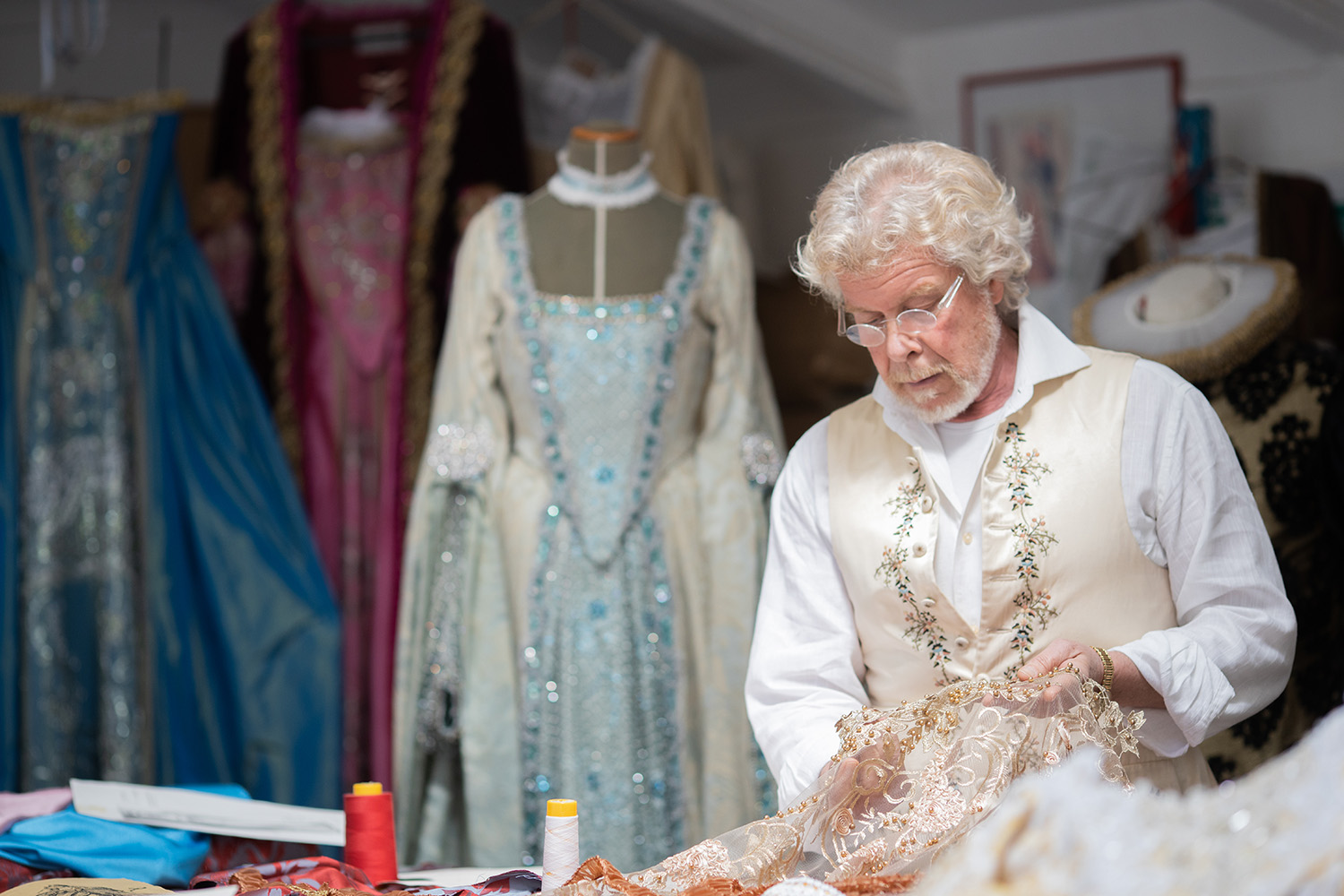
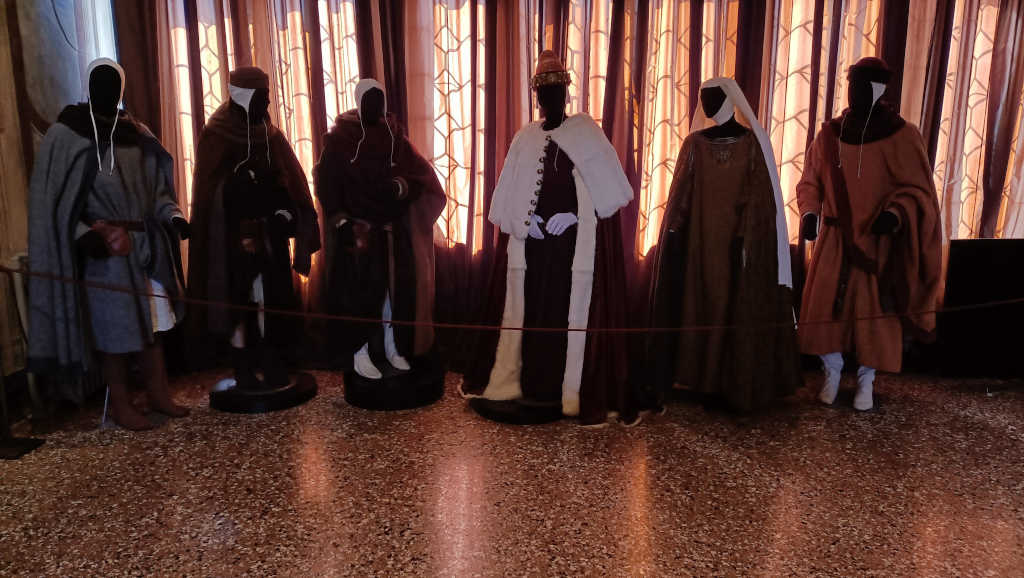
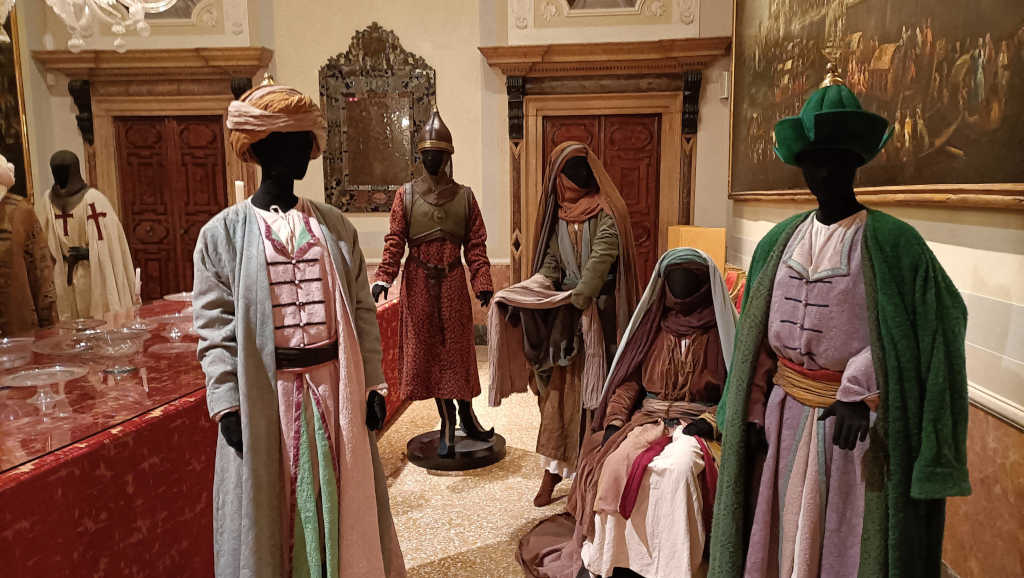
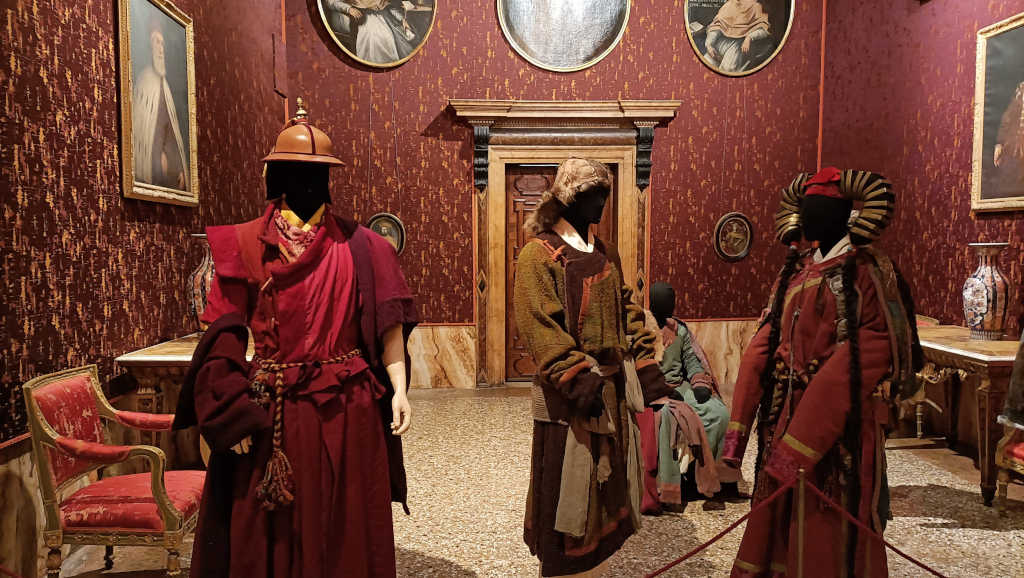
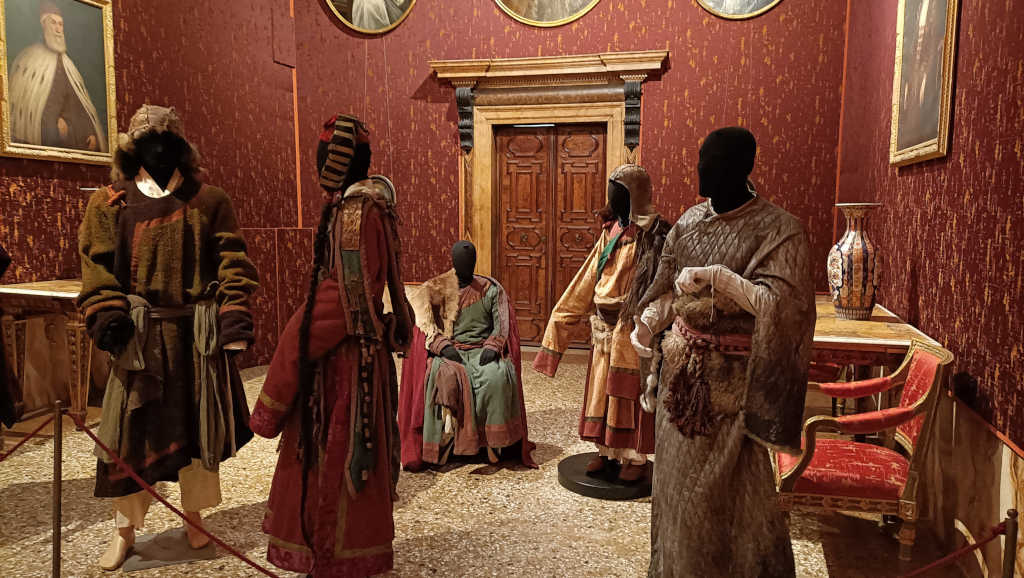
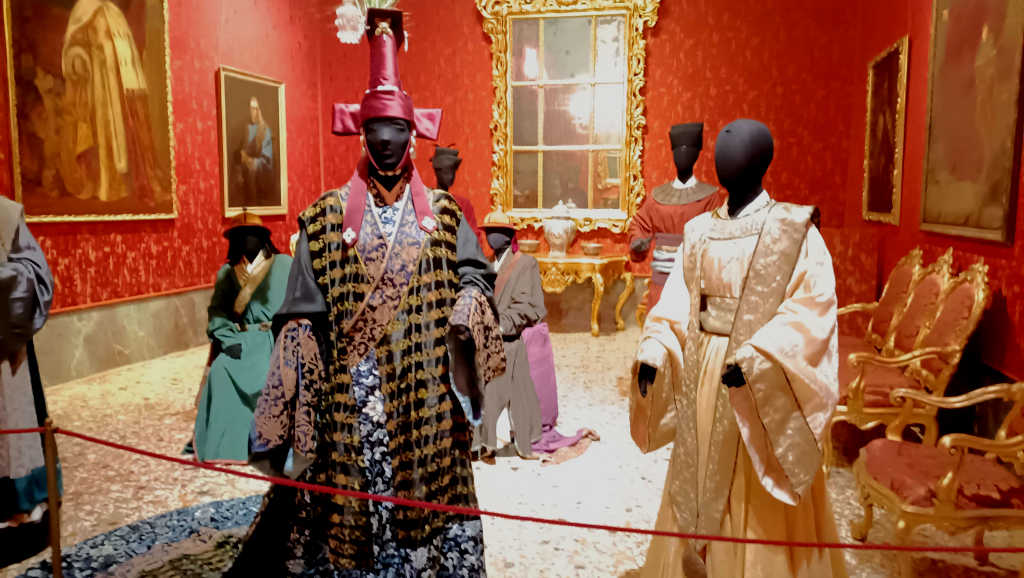
Quali sono le ragioni per cui la mostra dei costumi di Marco Polo presente a Palazzo Mocenigo, ha così tanto successo ? Le ragioni sono i costumi stessi che ci fanno ricordare uno dei più belli sceneggiati che siano mai stati prodotti in Italia, le cui puntate si possono tutt’ora vedere su Rai Play; una mostra che ci porta indietro nel tempo. Il costumista, di questo sceneggiato fu Enrico Sabattini, che realizzò questi stupendi costumi, ma c’è anche un’altra persona che lavorò con lui a questo progetto, che è l’artefice di questa bellissima mostra : Stefano Nicolao, scopriamo insieme chi è.
Stefano Nicolao ha avuto un ruolo chiave nella serie televisiva “Marco Polo” del 1982, prodotta dalla NBC negli Stati Uniti, dalla Rai in Italia, da Antenne 2 in Francia, e da RTVE in Spagna. Nicolao ha creato i costumi per la serie, contribuendo significativamente alla sua realizzazione visiva e storica.
Non tutti sanno delle grandi difficoltà che sono sorte per girare questa stupenda serie TV, alcune delle principali sfide affrontate da Stefano Nicolao durante la produzione della serie televisiva: ad esempio l’allestimento di una sartoria mobile ad alta quota. Per le riprese in Nepal, Nicolao ha dovuto allestire una sartoria mobile a tremila cinquecento metri di altitudine, affrontando le sfide logistiche di lavorare in un ambiente remoto e privo di infrastrutture. Reperimento di materiali e tessuti autentici, Nicolao ha dovuto cercare e reperire materiali, tessuti e accessori autentici in loco, in Nepal, per realizzare i costumi storici. Molti elementi non erano facilmente disponibili, rendendo il processo simile all’esperienza di Marco Polo stesso.
L’Atelier di Stefano Nicolao: Dove la Storia Prende Vita Attraverso i Costumi.
Stefano Nicolao è inoltre il fondatore di Nicolao Atelier, un’istituzione veneziana diventata un punto di riferimento per la creazione di costumi teatrali e cinematografici di alto livello. Fin dalla sua fondazione nel 1981, in concomitanza con la rinascita del Carnevale di Venezia, l’atelier di Nicolao si è distinto per la sua straordinaria collezione di oltre 15.000 costumi storici.
Costumi che Hanno Ispirato il Cinema e il Teatro: Alcuni di questi costumi hanno fatto da modello per produzioni cinematografiche di fama mondiale, come Elizabeth, Outlander, Twilight e Casanova. Inoltre, gli abiti di Nicolao Atelier sono stati utilizzati in prestigiose produzioni teatrali e liriche presso i più importanti palcoscenici internazionali, tra cui la Scala di Milano, il Teatro la Fenice di Venezia, la Washington Opera DC, la Lyric Opera of Chicago e la New National Opera of Tokyo.
Visite Guidate e Mostre L’Atelier di Stefano Nicolao offre visite guidate, sia in presenza che online, durante le quali il maestro costumista illustra il suo lavoro e mostra pezzi significativi della sua collezione di abiti originali, riproduzioni e ricostruzioni da campioni autentici. Inoltre, Nicolao Atelier organizza mostre e sfilate che raccontano la storia di Venezia attraverso il costume, frutto di una lunga ricerca storica e filologica.
Il Gran Ballo di Carnevale “Venetian Reflections” Ogni anno, Stefano Nicolao e il suo Atelier organizzano il prestigioso Gran Ballo di Carnevale “Venetian Reflections” in uno dei palazzi veneziani più belli affacciati sul Canal Grande, quest’anno a Ca Sagredo Hotel. Un evento che si è tenuto il 11 Febbraio 2024, e ha richiamato celebrità internazionali, un spettacolo stupendo che prevedeva uno spettacolo di apertura, un welcome cocktail, una cena, una lounge con open bar e una dance hall, il tutto immerso in un’atmosfera fiabesca e incantata.
L’Importanza dei Costumi per gli Attori Stefano Nicolao sottolinea sempre l’importanza dei costumi per la caratterizzazione dei personaggi e l’interpretazione degli attori. Come ha confessato l’attore Stefano Dionisi, indossare un costume realizzato da Nicolao lo ha aiutato a entrare pienamente nel ruolo di Farinelli. I costumi, infatti, hanno il potere di trasformare le persone, dando loro un senso di ciò che stanno interpretando e completando il loro ruolo. Grazie all’impegno e alla passione di Stefano Nicolao, l’Atelier veneziano è diventato un’istituzione di fama internazionale, custode di una preziosa eredità culturale e artistica che continua a ispirare il mondo del cinema, del teatro e dell’opera.
Per chi volesse saperne di più, invito tutti i cittadini di Venezia e i turisti presenti in città a visitare la bellissima mostra sui costumi di Marco Polo presso Palazzo Mocenigo, a S. Stae, e l’atelier di Stefano Nicolao, dove potranno ammirare un vasto assortimento di straordinari costumi. A chi non piacerebbe girare per le calli di Venezia in costume ?
Atelier Nicolao Cannaregio 2590 – 30121, Venezia
Palazzo Mocenigo Santa Croce 1992, 30135 Venezia
Who is behind the Marco Polo’s Costumes
What are the reasons why the exhibition of Marco Polo costumes present at Palazzo Mocenigo is so successful? The reasons are the costumes themselves which make us remember one of the most beautiful dramas that have ever been produced in Italy, the episodes of which can still be seen on Rai Play; an exhibition that takes us back in time. The costume designer of this drama was Enrico Sabattini, who created these wonderful costumes, but there is also another person who worked with him on this project, who is the creator of this beautiful exhibition: Stefano Nicolao, let’s find out together who he is .
Stefano Nicolao played a key role in the 1982 television series “Marco Polo”, produced by NBC in the United States, Rai in Italy, Antenne 2 in France, and RTVE in Spain. Nicolao created the costumes for the series, contributing significantly to its visual and historical realization.
Not everyone knows of the great difficulties that arose in filming this wonderful TV series, some of the main challenges faced by Stefano Nicolao during the production of the television series: for example the setting up of a mobile tailor’s shop at high altitude. For filming in Nepal, Nicolao had to set up a mobile tailor’s shop at three thousand five hundred meters above sea level, facing the logistical challenges of working in a remote environment with no infrastructure. Sourcing authentic materials and fabrics, Nicolao had to research and source authentic materials, fabrics and accessories locally in Nepal to make the historical costumes. Many items were not readily available, making the process similar to the experience of Marco Polo himself.
Stefano Nicolao’s Atelier: Where History Comes to Life Through Costumes
Stefano Nicolao is also the founder of Nicolao Atelier, a Venetian institution that has become a point of reference for the creation of high-level theatrical and cinema costumes. Since its foundation in 1981, coinciding with the revival of the Venice Carnival, Nicolao’s atelier has stood out for its extraordinary collection of over 15,000 historical costumes.
Costumes that Inspired Cinema and Theater: Some of these costumes have served as models for world-famous film productions, such as Elizabeth, Outlander , Twilight and Casanova. Furthermore, Nicolao Atelier’s clothes have been used in prestigious theatrical and opera productions at the most important international stages, including La Scala in Milan, Teatro la Fenice in Venice, Washington Opera DC, Lyric Opera of Chicago and New National Opera of Tokyo.
Guided Tours and Exhibitions Stefano Nicolao’s Atelier offers guided tours, both in person and online, during which the master costume designer illustrates his work and displays significant pieces from his collection of original clothing, reproductions and reconstructions from authentic samples. Furthermore, Nicolao Atelier organizes exhibitions and parades that tell the story of Venice through costume, the fruit of long historical and philological research.
The “Venetian Reflections” Carnival Grand Ball Every year, Stefano Nicolao and his Atelier organize the prestigious “Venetian Reflections” Carnival Grand Ball in one of the most beautiful Venetian palaces overlooking the Grand Canal, this year at Ca Sagredo Hotel. An event that was held on February 11, 2024, and attracted international celebrities, a wonderful show that included an opening show, a welcome cocktail, a dinner, a lounge with open bar and a dance hall, all immersed in a fairy-tale and enchanted atmosphere.
The Importance of Costumes for Actors Stefano Nicolao always underlines the importance of costumes for the characterization of the characters and the interpretation of the actors. As the actor Stefano Dionisi confessed, wearing a costume made by Nicolao helped him to fully enter the role of Farinelli. Costumes, in fact, have the power to transform people, giving them a sense of what they are playing and completing their role. Thanks to the commitment and passion of Stefano Nicolao, the Venetian Atelier has become an internationally renowned institution, guardian of a precious cultural and artistic heritage that continues to inspire the world of cinema, theater and opera.
For those wishing, to know more, I invite all citizens of Venice and tourists present in the city to visit the beautiful exhibition on Marco Polo’s costumes at Palazzo Mocenigo, in S. Stae, and Stefano Nicolao’s atelier, where they will be able to admire a vast assortment of extraordinary costumes. Who wouldn’t like to wander around the streets of Venice in costume?
For the English translation please scroll down the page, thank you !
Nel 1982, gli schermi televisivi di ben 46 nazioni vennero rapiti da un’avventura epica: la miniserie “Marco Polo”. Co-produzione italo-statunitense-britannica-francese, questa serie in otto puntate ha ripercorso le vicende del celebre esploratore veneziano, interpretato da un giovane e magnetico Kenneth Marshall.
La serie, diretta dal maestro Giuliano Montaldo, si distingueva per la sua imponenza e la sua cura per i dettagli. Le riprese si svolsero in luoghi mozzafiato come la Cina, la Mongolia e l’Uzbekistan, contribuendo a creare un’atmosfera autentica e coinvolgente. Accanto a Marshall, un cast stellare di attori internazionali ha dato vita a personaggi indimenticabili, tra cui Burt Lancaster, Denholm Elliott, Tony Vogel, Leonar Nimoy, Anne Bancroft, con molti altri con le musiche del grande Ennio Morricone, e soprattutto i costumi di Enrico Sabatini.
Ma il vero protagonista era senza dubbio Marco Polo. La serie ha saputo catturare lo spirito di avventura e la sete di conoscenza che spinsero il giovane veneziano ad attraversare il mondo e ad immergersi in culture lontane. Nonostante la sua fedeltà storica, “Marco Polo” non era un semplice documentario. La serie si è presa alcune licenze creative per rendere la storia più avvincente e appassionante. Il risultato è stato un’opera che ha saputo conquistare il pubblico di tutte le età.
Ancora oggi, a distanza di quasi quarant’anni, “Marco Polo” rimane una pietra miliare della televisione. La serie ha aperto la strada ad altre produzioni epiche e ha contribuito a far conoscere al grande pubblico la figura di Marco Polo e la sua straordinaria avventura. Se siete alla ricerca di una serie TV che vi trasporti in un’epoca lontana e vi faccia vivere emozioni indimenticabili, “Marco Polo” è un titolo da non perdere. Oltre alla sua valenza storica e culturale, la serie offre anche uno spunto di riflessione sulla diversità e sull’importanza del dialogo interculturale. In un mondo sempre più globalizzato, il messaggio di “Marco Polo” è più attuale che mai.
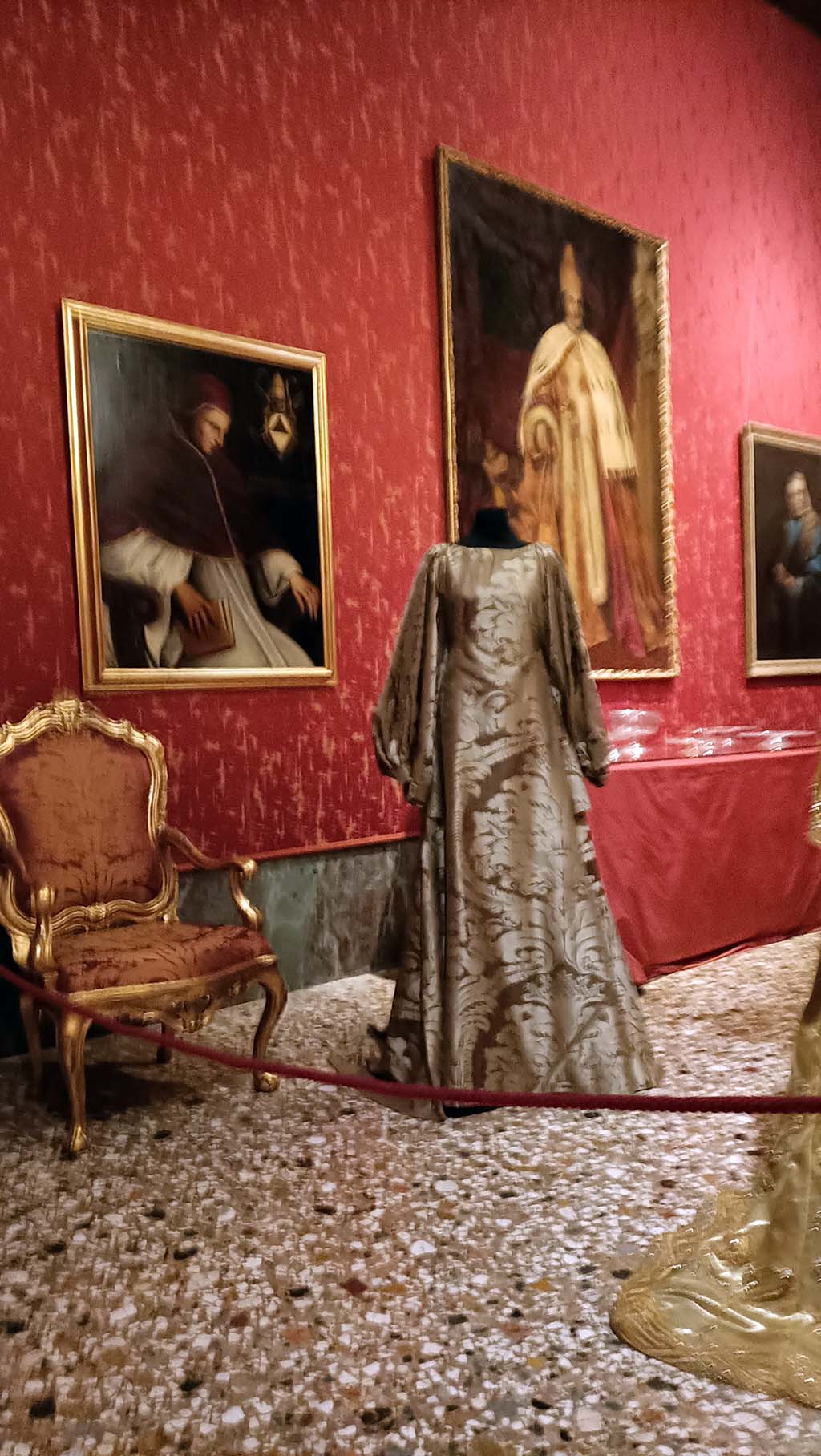
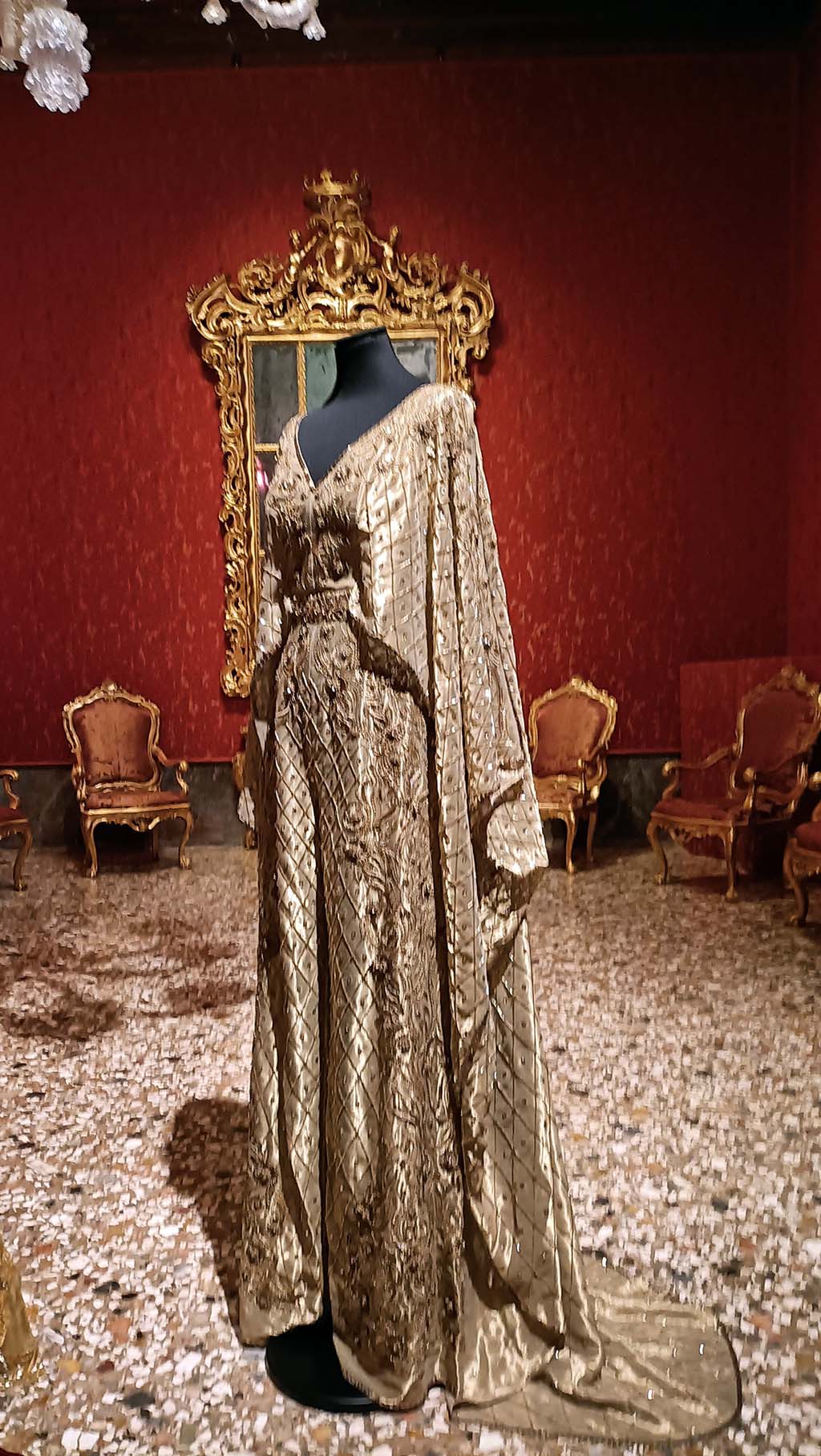
Come avete potuto vedere dalle foto, Palazzo Mocenigo ospita i costumi usati nella serie televisiva, per questo bisogna ringraziare Stefano Nicolao che ha organizzato l’allestimento di questa mostra. Questa è un’opportunità per vederli da vicino, ed essere catapultati indietro nel tempo, nei luoghi dove Marco Polo è stato. Questa mostra durerà dal 14 maggio fino al 30 settembre 2024, nel stupendo Museo di Palazzo Mocenigo di Venezia. Invito tutti i cittadini e i turisti a venire a vederla, vi piacerà di sicuro !
Marco Polo’s costumes at Palazzo Mocenigo
In 1982, the television screens of 46 nations were captivated by an epic adventure: the miniseries “Marco Polo”. An Italian-American-British-French co-production, this eight-part series retraced the events of the famous Venetian explorer, played by a young and magnetic Kenneth Marshall.
The series, directed by maestro Giuliano Montaldo, stood out for its grandeur and its attention to detail. Filming took place in breathtaking locations such as China, Mongolia and Uzbekistan, helping to create an authentic and immersive atmosphere. Alongside Marshall, a stellar cast of international actors brought to life unforgettable characters, including Burt Lancaster, Denholm Elliott, Tony Vogel, Leonard Nimoy, Anne Bancroft, and many others, with the music of the great Ennio Morricone, and above all the costumes by Enrico Sabatini.
But the real protagonist was undoubtedly Marco Polo. The series was able to capture the spirit of adventure and the thirst for knowledge that pushed the young Venetian to cross the world and immerse himself in distant cultures. Despite its historical fidelity, “Marco Polo” was not a simple documentary. The series has taken some creative license to make the story more compelling and engaging. The result was a work that was able to conquer audiences of all ages.
Even today, almost forty years later, “Marco Polo” remains a milestone in television. The series paved the way for other epic productions and contributed to making the figure of Marco Polo and his extraordinary adventure known to the general public. If you are looking for a TV series that transports you to a distant era and makes you experience unforgettable emotions, “Marco Polo” is a title not to be missed. In addition to its historical and cultural value, the series also offers food for thought on diversity and the importance of intercultural dialogue. In an increasingly globalized world, the message of “Marco Polo” is more relevant than ever.
As you can see from the pics, the Mocenigo Palace houses the costumes used in the television series, For this we must thank Stefano Nicolao who organized the staging of this exhibition. This is an opportunity to see them up close, and be transported back in time to the places where Marco Polo has been. This exhibition will last from 14 May until 30 September 2024, in the beautiful Mocenigo Palace Museum in Venice. I invite all citizens and tourists to come and see it, you will certainly like it!
For the English translation please scroll down the page, thank you !
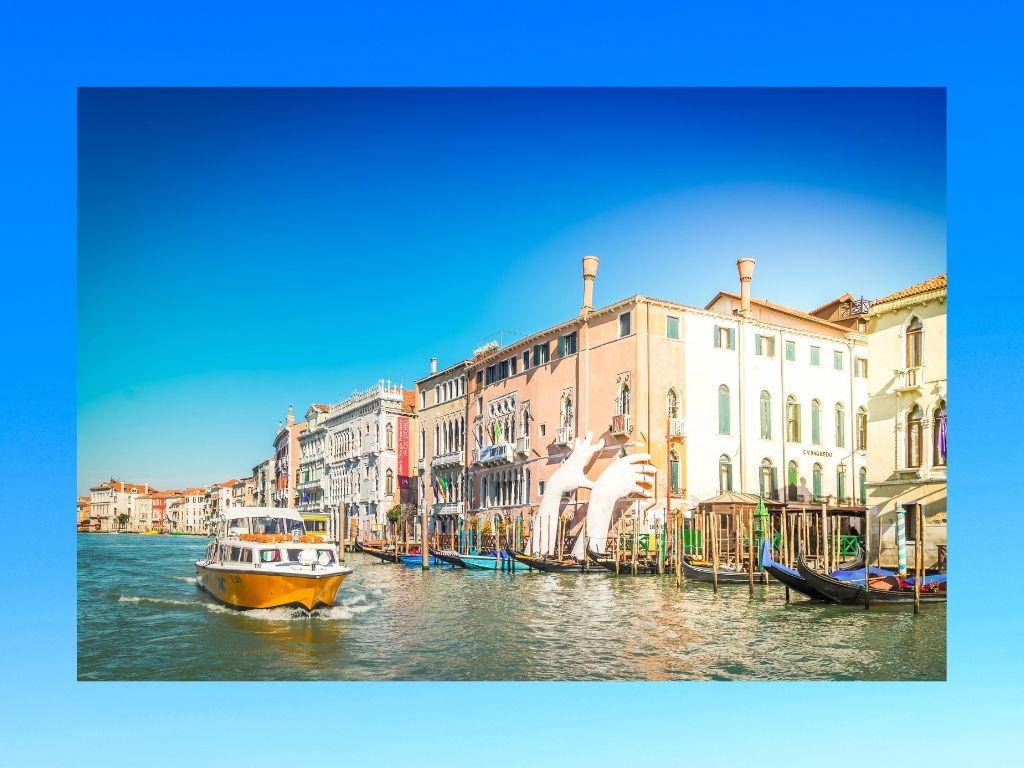
Nel bellissimo museo di Ca’ Rezzonico di Venezia, che potete vedere nella mappa nel link seguente, (https://maps.app.goo.gl/ABGLrmJ1Z1YfbZcL7) , oltre alla stupenda mostra sul Rinascimento in bianco e nero. L’arte dell’incisione a Venezia 1494-1615 ,è possibile ammirare una serie di meravigliose sculture ad opera del famoso artista internazionale Lorenzo Quinn, che si intitola “Anime di Venezia – Souls of Venice“, visibile dal 19 aprile al 15 settembre del 2024. Di lui vi ho già un po’ parlato per via della sua opera presente a Palazzo Ducale nella mostra dedicata a Marco Polo . Ma da ‘altronde chi non lo conosce già, visto la sua iconica opera di alcuni anni fa, presente nel canal grande, a fianco dell’albergo Ca’ Sagredo ?
Lorenzo Quinn, figlio dell’attore Anthony Quinn, è nato a Roma nel 1966. Inizialmente attore, ha poi trovato la sua vocazione nella scultura, creando opere di grandi dimensioni che spesso raffigurano mani. Le sue creazioni trasmettono messaggi potenti su temi come la pace, la speranza, l’unità e il rispetto per la natura, con l’obiettivo di sensibilizzare e ispirare il pubblico. Le sue sculture sono esposte in tutto il mondo, ottenendo grande successo. Tra le sue opere più iconiche troviamo “Building Bridges” a Venezia, con mani colossali che emergono dal Canal Grande. https://lorenzoquinn.com/https://www.soulsofvenice.com/
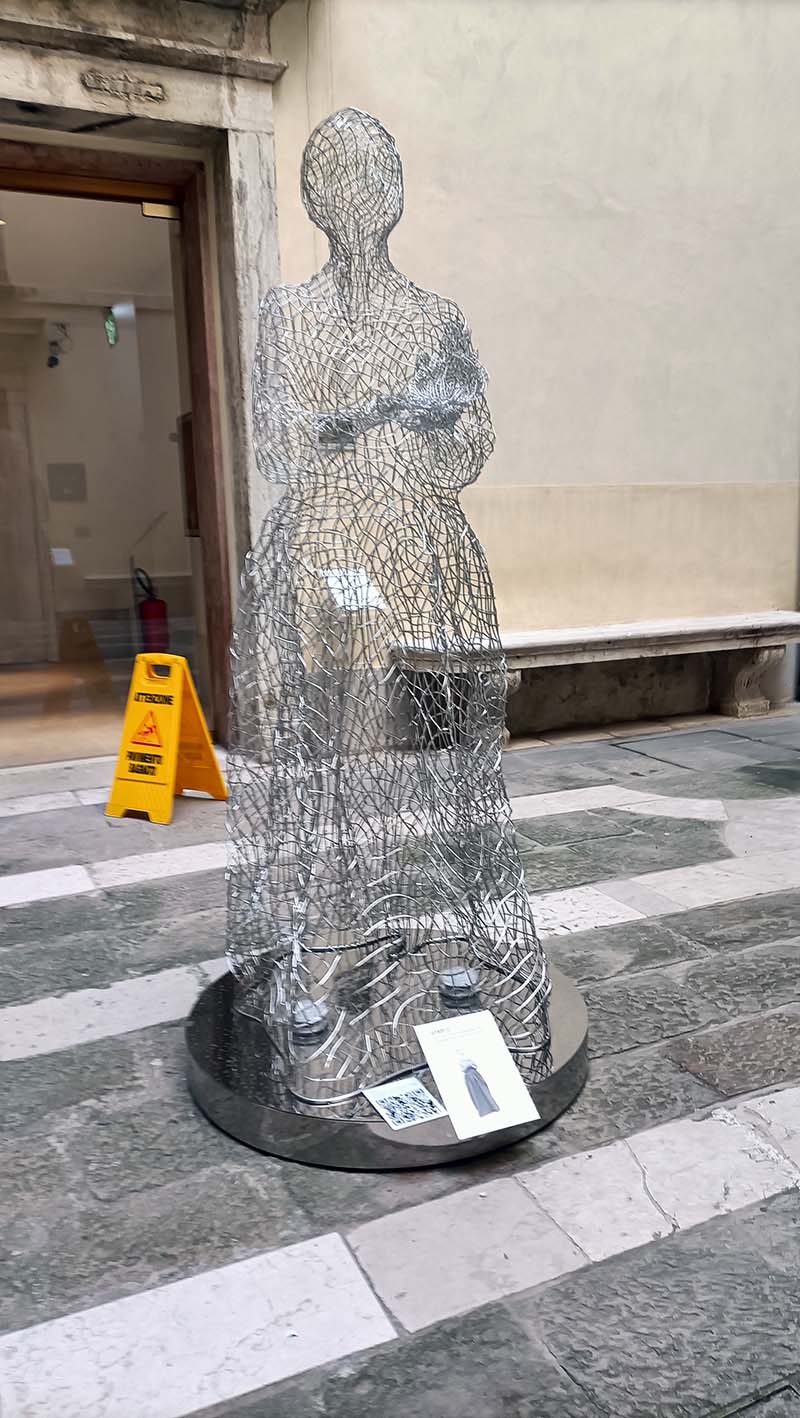
Questa mostra, è composta da 15 statue a maglie, distribuite a piano terra nell’androne del museo. Quest’opere simbolegianno gli importanti personaggi che hanno plasmato la storia della Serenissima nel corso dei secoli, consolidando il legame inscindibile tra la città e le sue diverse espressioni artistiche, immortalate per sempre dai creatori veneziani. Tra questi personaggi storici troviamo:
Lorenzo Tiepolo: nato in una famiglia di abili mercanti in ascesa politica, ricoprì importanti incarichi governativi prima di essere eletto doge della Repubblica di Venezia nel 1268. Durante il suo dogato, durato sette anni fino alla sua morte nel 1275, Tiepolo si impegnò nell’espansione territoriale della Serenissima, consolidando il suo potere e il prestigio della Repubblica
Marco Polo: nato a Venezia nel 1254, fu un celebre esploratore e mercante italiano. Insieme al padre Niccolò e allo zio Matteo, intraprese un epico viaggio lungo la Via della Seta, raggiungendo la Cina nel 1271. Per ben 17 anni rimase alla corte del Gran Khan Kublai, ricoprendo incarichi diplomatici e commerciali. Al suo ritorno a Venezia nel 1295, raccontò le sue straordinarie avventure nel libro “Il Milione”, divenendo una figura leggendaria e contribuendo ad aprire le porte dell’Occidente all’Oriente. Esplorate di più questo personaggio, andando a Palazzo Ducale, e a maggio anche a Palazzo Mocenigo, dove verranno, esposti i costumi di scena della omonima serie televisiva degli anni 80.
Caterina Corner è stata la regina consorte di Cipro e l’ultima sovrana indipendente dell’isola. Nata in una nobile famiglia veneziana, sposò il re Giacomo II di Cipro nel 1472. Rimasta vedova in giovane età con un figlio neonato, assunse la reggenza e poi il pieno regno, governando con saggezza e abilità politica. Il suo regno è stato segnato da intrighi politici e lotte di potere, tra le ambizioni espansionistiche di Venezia e le pressioni delle potenze straniere. Nonostante le difficoltà, Caterina Corner riuscì a mantenere l’autonomia di Cipro per quasi due decenni. Tuttavia, nel 1489, sotto la crescente influenza veneziana, fu costretta ad abdicare e cedere il regno alla Serenissima Repubblica. Tornata a Venezia, Caterina Corner ricevette in cambio il dominio di Asolo, dove creò una raffinata corte frequentata da scrittori e artisti. Trascorse gli ultimi anni della sua vita dedicandosi ad atti di mecenatismo e carità, spegnendosi nel 1510.
Veronica Franco fu una figura emblematica della Venezia rinascimentale, conosciuta come poetessa, cortigiana e donna d’affari di grande successo. Nata da una famiglia modesta, si distinse per la sua intelligenza, bellezza e talento letterario. Diventò una cortigiana di alto livello, frequentando i circoli intellettuali e aristocratici della città. Veronica Franco era anche una donna d’affari abile, gestendo il proprio patrimonio e investendo in diverse attività. Nonostante gli ostacoli e controversie, la sua posizione di cortigiana e i processi legali, difese la sua indipendenza e libertà di scelta. La sua opera letteraria e la sua storia personale offrono uno spaccato suggestivo sulla società e la cultura del tempo, e continuano ad ispirare studiosi e appassionati di storia e letteratura.
Elena Lucrezia Cornaro Piscopia (1646-1684): è stata un’erudita e filosofa italiana, considerata da alcune fonti come la prima donna al mondo ad aver ottenuto una laurea. Nata a Venezia da una nobile famiglia, dimostrò fin da giovane un grande interesse per la cultura e lo studio. Nonostante le resistenze dell’epoca legate al genere femminile, ottenne il permesso di sostenere l’esame di laurea in filosofia all’Università di Padova nel 1678, suscitando grande scalpore e acceso dibattito. La sua laurea rappresentò un evento storico di grande importanza, aprendo la strada all’istruzione superiore alle donne e sfidando i pregiudizi secolari, non si limitò ad essere una pioniera dell’istruzione femminile, ma si distinse anche per la sua profonda conoscenza in diverse discipline, tra cui la filosofia, la teologia, la matematica e le lingue antiche. Scrisse diverse opere letterarie e filosofiche, divenendo una figura di riferimento per gli intellettuali del suo tempo. Morì a Padova nel 1684 all’età di 38 anni, lasciando un’eredità duratura come simbolo di emancipazione femminile e di tenacia intellettuale. La sua storia e il suo impegno per l’istruzione rappresentano ancora oggi un’ispirazione per le donne di tutto il mondo.
Carlo Goldoni è stato un drammaturgo italiano noto come il “padre della commedia moderna”. Nato a Venezia, inizialmente intraprese la carriera legale, ma la sua passione per il teatro lo portò a diventare scrittore. Goldoni rivoluzionò il teatro italiano del XVIII secolo abbandonando la commedia dell’arte per creare opere più realistiche e borghesi. Le sue commedie si concentravano sulla vita quotidiana delle persone comuni, affrontando temi sociali e psicologici con arguzia e sottigliezza. Tra le sue opere più famose si annoverano “La locandiera”, “Gli amori delle dame”, “Arlecchino servitore di due padroni” e “I rusteghi”. Queste commedie, caratterizzate da trame brillanti, personaggi ben definiti e dialoghi vivaci, ottennero un grande successo sia tra il pubblico che tra la critica, consacrando Goldoni come uno dei più importanti drammaturghi europei del suo tempo.
Antonio Vivaldi fu un compositore, violinista e insegnante italiano noto per il suo significativo contributo all’era barocca. Nato a Venezia, mostrò un talento musicale fin da giovane e inizialmente intraprese una carriera nella chiesa, venendo ordinato sacerdote nel 1703. Chiamato il “Prete Rosso” a causa dei suoi capelli rossi, Vivaldi si dedicò con passione alla musica, componendo oltre 500 concerti, 90 opere liriche e numerose composizioni sacre e da camera. La sua musica si distingue per la sua inventiva melodica, la ricchezza armonica e il virtuosismo strumentale. Opere note includono “Le Quattro Stagioni,” un ciclo di concerti per violino che rappresentano le diverse stagioni dell’anno, e i “Concerti per Mandolino,” evidenziando le sue abilità come violinista e compositore. Vivaldi fu anche un innovatore nella musica strumentale, contribuendo allo sviluppo del concerto solistico e dell’orchestrazione. Il suo profondo e duraturo influsso sulla musica barocca ha ispirato generazioni di compositori successivi.
Marietta Barovier : fu una figura rivoluzionaria nella storia dell’arte vetraria veneziana. Nata da una famiglia di rinomati maestri vetrai, Marietta apprese fin da piccola i segreti di quest’arte affascinante. In un’epoca in cui il mestiere vetraio era prevalentemente maschile, Marietta si distinse per la sua abilità e la sua tenacia, diventando una delle prime donne ad assumere un ruolo di primo piano nella fornace di famiglia.
Andrea Palladio, un architetto italiano, è celebrato come una figura di spicco del Rinascimento e il pioniere dell’architettura palladiana. Nato a Padova, ha sviluppato le sue competenze a Vicenza, dove si è immerso nell’architettura classica e ha stabilito contatti con importanti intellettuali e mecenati. Lo stile architettonico di Palladio, noto come “palladianesimo”, ha influenzato profondamente l’architettura occidentale per secoli, diffondendosi in Europa, in America del Nord e ispirando innumerevoli edifici neoclassici. Considerato uno dei più grandi architetti di tutti i tempi, il suo lavoro ha lasciato un’impronta duratura nel settore e continua ad essere venerato e studiato da architetti e appassionati di tutto il mondo.
Elisabetta Caminer Turra (1751-1824) fu una scrittrice, traduttrice e intellettuale italiana, considerata una pioniera dell’istruzione femminile. Nata a Venezia da una famiglia ebrea, dimostrò fin da giovane un grande interesse per la cultura e lo studio. In un’epoca in cui l’istruzione era spesso preclusa alle donne, Elisabetta ebbe la possibilità di seguire un percorso formativo completo, approfondendo la conoscenza di diverse lingue e discipline. Elisabetta Caminer Turra rimane un esempio di donna colta, impegnata e visionaria che ha contribuito a promuovere l’istruzione femminile e l’emancipazione delle donne.
Tiziano Vecellio (1488/1490-1576), noto semplicemente come Tiziano, fu un pittore italiano, cittadino della Repubblica di Venezia e importante esponente della scuola veneziana. Considerato uno dei più grandi artisti di tutti i tempi, Tiziano rivoluzionò la pittura sacra e ritrattistica con la sua maestria nel colore, l’uso innovativo della luce e la sua profonda comprensione della psicologia umana.
Rosalba Carriera (1673-1757) è stata una pittrice italiana nota per la sua maestria nella pittura di ritratti in miniatura e pastello durante il diciottesimo secolo. Nata a Venezia, apprese l’arte nel laboratorio di suo padre, perfezionando le sue capacità nel ritrarre membri dell’alta società veneziana ed europea. Il lavoro di Carriera ebbe una profonda influenza sulla pittura di ritratti nel diciottesimo secolo, con il suo stile morbido e delicato che venne imitato da numerosi artisti. È considerata una delle più grandi pittrici di ritratti di tutti i tempi, e il suo lascito continua ad essere ammirato e studiato in tutto il mondo.
Infine l’opera del gondoliere e della gondola che più di ogni altra cosa, rappresenta Venezia !
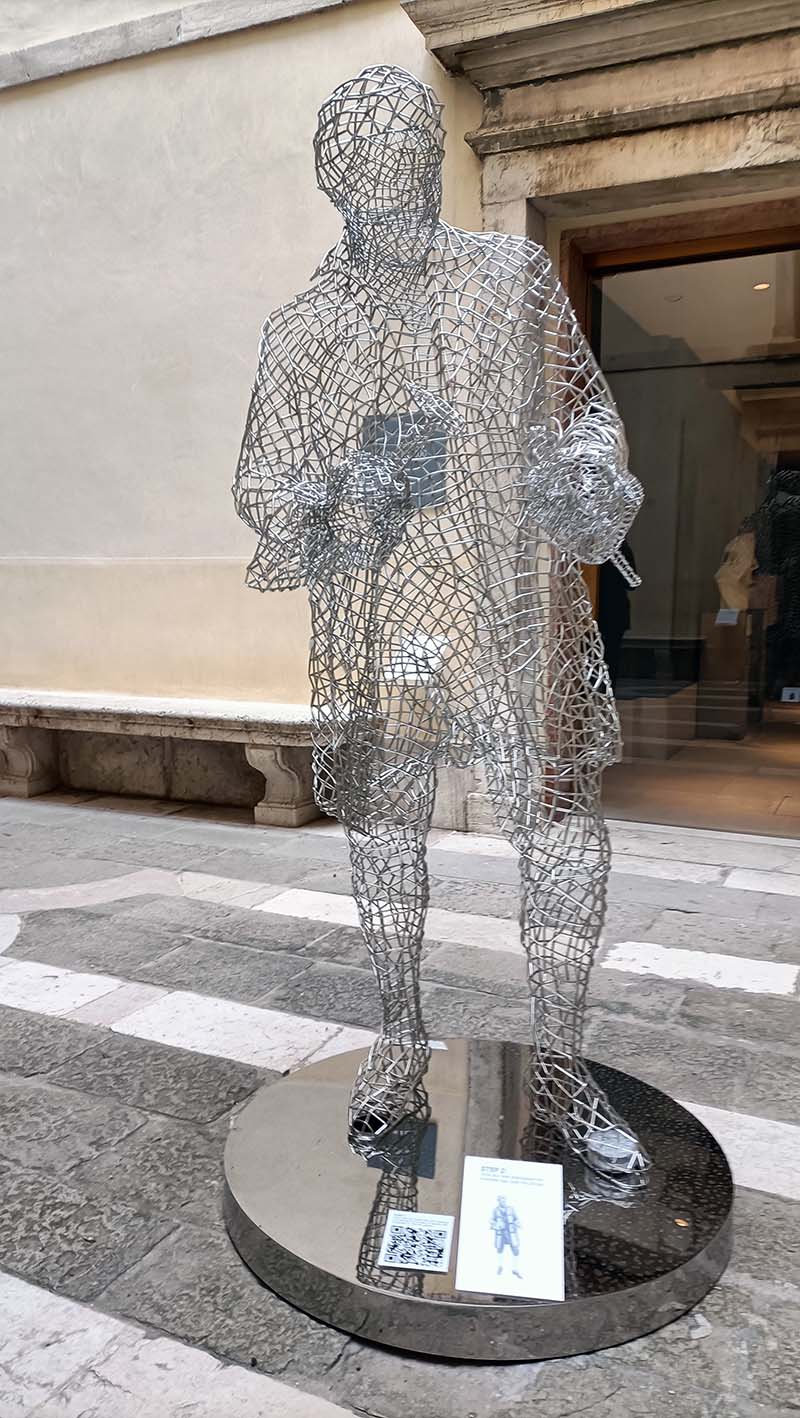
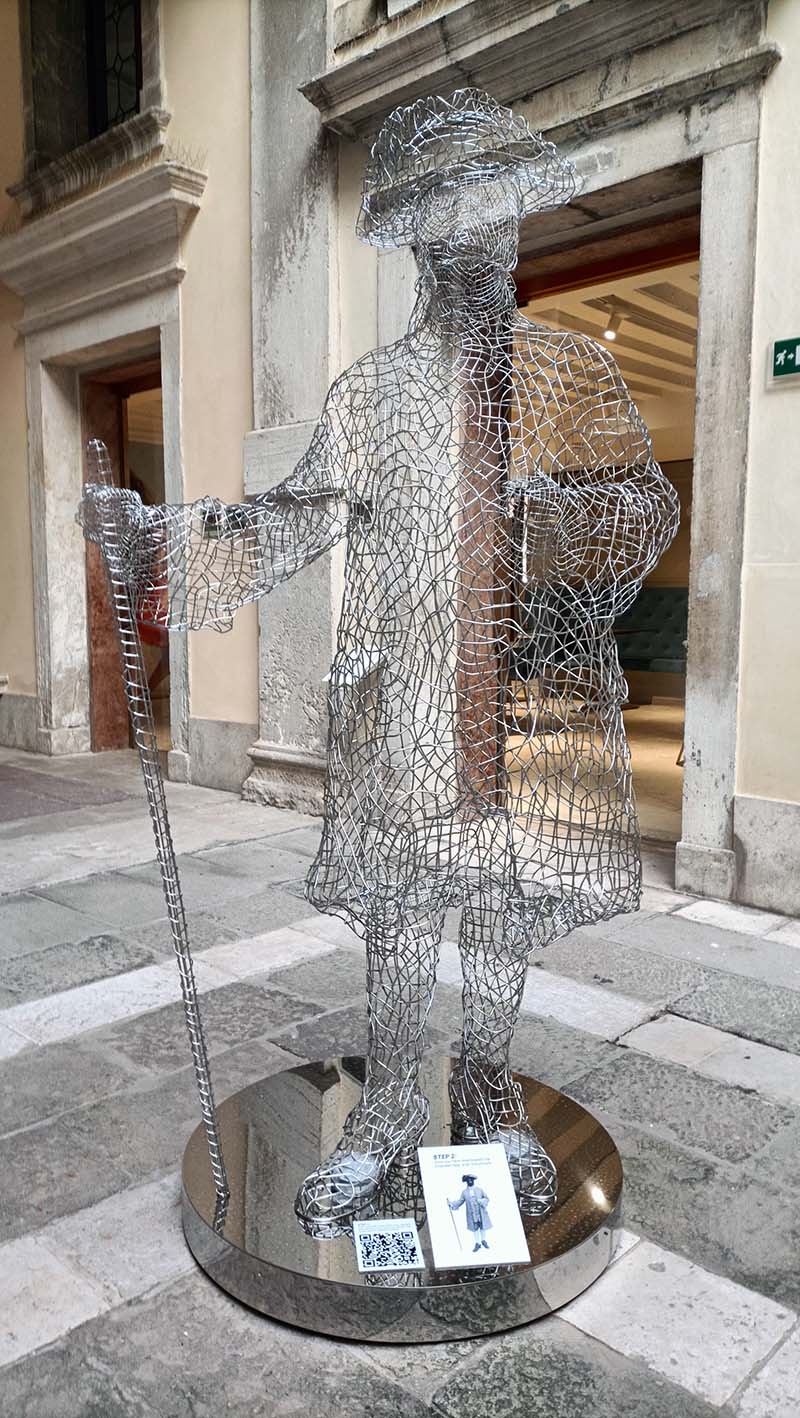
Tutte le opere sono dotate di un codice QR code che si trova alla base della scultura. Inquadrandola con il cellulare, si apre il link che permette di esplorare di più uno dei personaggi storici di Venezia, che ho descritto sopra. All’apertura del link, bisogna inquadrare l’opera, e comparirà un personaggio in carne e ossa, che ci parlerà, raccontando i dettagli della sua storia. Un vero colpo di genio, che regala al visitatore una vera esperienza immersiva. Una mostra che parla del passato, con le tecnologie del futuro.
Una mostra da non perdere !! Invito tutta la cittadinanza e i turisti presenti in città di venire a vederla ! La mostra è presente a piano terra e, quindi non soggetta a biglietto, ma incoraggio tutti voi a visitare il magnifico museo di Ca’ Rezzonico ! Ne vale veramente la pena !! Non ve ne pentirete !
Dal 01 aprile al 31 ottobre: 10.00 – 18.00 (ultimo ingresso ore 17.00)
Dal 01 novembre al 31 marzo: 10.00 – 17.00 (ultimo ingresso ore 16.00)
Le operazioni di chiusura del museo iniziano 20 minuti prima dell’orario indicato.
Chiuso il martedì
Lorenzo Quinn at Ca’ Rezzonico Museum ! Souls of Venice
Ca’ Rezzonico (Venice)
In the beautiful Ca’ Rezzonico museum in Venice, which you can see on the map in the following link, (https://maps.app.goo.gl/ABGLrmJ1Z1YfbZcL7), in addition to the wonderful exhibition on the Renaissance in black and white. The art of engraving in Venice 1494-1615, it is possible to admire a series of wonderful sculptures by the famous international artist Lorenzo Quinn, which is entitled “Anime of Venice – Souls of Venice“, visible from 19 April to 15 September 2024. I have already spoken to you a little about him because of his work present at Doge’s Palace, in the exhibition dedicated to Marco Polo . But who doesn’t already know him, given his iconic work from a few years ago, present in the Grand Canal, next to the Ca’ Sagredo hotel?
Lorenzo Quinn, son of the actor Anthony Quinn, was born in Rome in 1966. Initially an actor, he then found his vocation in sculpture, creating large-scale works that often depict hands. His creations convey powerful messages on themes such as peace, hope, unity and respect for nature, with the aim of raising awareness and inspiring the public. His sculptures are exhibited all over the world, achieving great success. Among his most iconic works we find “Building Bridges” in Venice, with colossal hands emerging from the Grand Canal. https://lorenzoquinn.com/ https://www.soulsofvenice.com/
This exhibition is made up of 15 mesh statues, distributed on the ground floor in the museum’s entrance hall. These works symbolize the important characters who have shaped the history of the Serenissima over the centuries, consolidating the inseparable link between the city and its various artistic expressions, immortalized forever by Venetian creators. Among these historical figures we find:
Lorenzo Tiepolo: born into a family of skilled merchants on the political rise, he held important government positions before being elected doge of the Republic of Venice in 1268 During his reign, which lasted seven years until his death in 1275, Tiepolo committed himself to the territorial expansion of the Serenissima, consolidating his power and the prestige of the Republic.
Marco Polo: born in Venice in 1254, he was a famous Italian explorer and merchant. Together with his father Niccolò and his uncle Matteo, he undertook an epic journey along the Silk Road, reaching China in 1271. For 17 years he remained at the court of the Great Khan Kublai, holding diplomatic and commercial roles. Upon his return to Venice in 1295, he recounted his extraordinary adventures in the book “Il Milione”, becoming a legendary figure and helping to open the doors of the West to the East. Explore this character more by going to Doge’s Palace, and in May also to Mocenigo Palace, where the stage costumes from the 1980s television series of the same name will be on display.
Caterina Corner was the queen consort of Cyprus and the last independent ruler of the island. Born into a noble Venetian family, she married King James II of Cyprus in 1472. Widowed at a young age with an infant son, she assumed the regency and then full reign, governing with wisdom and political skill. His reign was marked by political intrigues and power struggles, between the expansionist ambitions of Venice and pressure from foreign powers. Despite the difficulties, Caterina Corner managed to maintain the autonomy of Cyprus for almost two decades. However, in 1489, under the growing Venetian influence, she was forced to abdicate and cede the kingdom to the Serenissima Republic. Returning to Venice, Caterina Corner received in exchange the dominion of Asolo, where she created a refined court frequented by writers and artists. He spent the last years of his life dedicating himself to acts of patronage and charity, dying in 1510.
Veronica Franco was an emblematic figure of Renaissance Venice, known as a highly successful poet, courtesan and businesswoman. Born to a modest family, she stood out for her intelligence, beauty and literary talent. She became a high-class courtesan, frequenting the city’s intellectual and aristocratic circles. Veronica Franco was also a skilled businesswoman, managing her own wealth and investing in several businesses. Despite obstacles and controversies, her position as a courtesan and legal processes, she defended her independence and freedom of choice. His literary work and his personal story offer a suggestive insight into the society and culture of the time, and continue to inspire scholars and enthusiasts of history and literature.
Elena Lucrezia Cornaro Piscopia (1646-1684): was an Italian scholar and philosopher, considered by some sources to be the first woman in the world to have obtained a degree. Born in Venice to a noble family, she demonstrated a great interest in culture and study from a young age. Despite the resistance of the time related to the female gender, she obtained permission to take the degree exam in philosophy at the University of Padua in 1678, causing a great stir and heated debate. Her graduation represented a historical event of great importance, paving the way for higher education for women and challenging age-old prejudices. She was not limited to being a pioneer of women’s education, but also distinguished herself for her profound knowledge in various disciplines. , including philosophy, theology, mathematics and ancient languages. He wrote several literary and philosophical works, becoming a reference figure for the intellectuals of his time. She died in Padua in 1684 at the age of 38, leaving a lasting legacy as a symbol of female empowerment and intellectual tenacity. Her story and commitment to education remain an inspiration to women around the world today.
Carlo Goldoni was an Italian playwright known as the “father of modern comedy”. Born in Venice, he initially pursued a legal career, but his passion for theater led him to become a writer. Goldoni revolutionized 18th-century Italian theater by abandoning the art comedy to create more realistic and bourgeois works. His plays focused on the daily lives of ordinary people, tackling social and psychological issues with wit and subtlety. Among his most famous works are “The innkeeper”, “The loves of the ladies”, “Harlequin servant of two masters” and “I rusteghi”. These comedies, characterized by brilliant plots, well-defined characters and lively dialogues, achieved great success among both the public and critics, establishing Goldoni as one of the most important European playwrights of his time.
Antonio Vivaldi was an Italian composer, violinist and teacher known for his significant contributions to the Baroque era. Born in Venice, he showed musical talent from a young age and initially pursued a career in the church, being ordained a priest in 1703. Called the “Red Priest” due to his red hair, Vivaldi devoted himself passionately to music, composing over 500 concertos , 90 operas and numerous sacred and chamber compositions. His music is distinguished by its melodic inventiveness, harmonic richness and instrumental virtuosity. Known works include “The Four Seasons,” a cycle of violin concertos representing the different seasons of the year, and the “Mandolin Concertos,” highlighting his skills as a violinist and composer. Vivaldi was also an innovator in instrumental music, contributing to the development of the solo concert and orchestration. His profound and lasting influence on Baroque music inspired generations of subsequent composers.
Marietta Barovier: she was a revolutionary figure in the history of Venetian glass art. Born to a family of renowned glass masters, Marietta learned the secrets of this fascinating art from an early age. In an era in which the glass-making profession was predominantly male, Marietta stood out for her skill and tenacity, becoming one of the first women to take on a leading role in the family furnace.
Andrea Palladio, an Italian architect, is celebrated as a leading figure of the Renaissance and the pioneer of Palladian architecture. Born in Padua, he developed his skills in Vicenza, where he immersed himself in classical architecture and established contacts with important intellectuals and patrons. Palladio’s architectural style, known as “Palladianism”, has profoundly influenced Western architecture for centuries, spreading across Europe, North America and inspiring countless neoclassical buildings. Considered one of the greatest architects of all time, his work has left a lasting imprint on the industry and continues to be revered and studied by architects and enthusiasts around the world.
Elisabetta Caminer Turra (1751-1824) was an Italian writer, translator and intellectual, considered a pioneer of female education. Born in Venice to a Jewish family, she demonstrated a great interest in culture and study from a young age. In an era in which education was often closed to women, Elisabetta had the opportunity to follow a complete educational path, deepening her knowledge of different languages and disciplines. Elisabetta Caminer Turra remains an example of a cultured, committed and visionary woman who contributed to promoting female education and the emancipation of women.
Tiziano Vecellio (1488/1490-1576), known simply as Titian, was an Italian painter, citizen of the Republic of Venice and an important exponent of Venetian school. Considered one of the greatest artists of all time, Titian revolutionized sacred and portrait painting with his mastery of color, innovative use of light and his profound understanding of human psychology.
Rosalba Carriera (1673-1757) was an Italian painter known for her mastery of miniature and pastel portrait painting during the eighteenth century . Born in Venice, she learned the art in her father’s workshop, perfecting her skills in portraying members of Venetian and European high society. Carriera’s work had a profound influence on portrait painting in the eighteenth century, with his soft and delicate style being imitated by numerous artists. She is considered one of the greatest portrait painters of all time, and her legacy continues to be admired and studied around the world.
Finally, the work of the gondolier and the gondola that, more than anything else, represents Venice!
All works are equipped with a QR code located at the base of the sculpture. Framing it with your mobile phone opens the link that allows you to explore more one of the historical figures of Venice, which I described above. When you open the link, you need to frame the work, and a real character will appear and speak to you, telling you the details of his/her story. A true stroke of genius, which gives the visitor a truly immersive experience. An exhibition that talks about the past, with the technologies of the future.
An exhibition not to be missed!! I invite all citizens and tourists in the city to come and see it! The exhibition is on the ground floor and therefore not subject to a ticket, but I encourage all of you to visit the magnificent Ca’ Rezzonico museum! It’s really worth it!! You will not regret it !
From 01 April to 31 October: 10.00 – 18.00 (Last entrance at 17.00)
From 01 November to 31 March: 10.00 – 17.00 (Last entrance at 16.00)
The closing operations of the museum begin 20 minutes before the closing time.
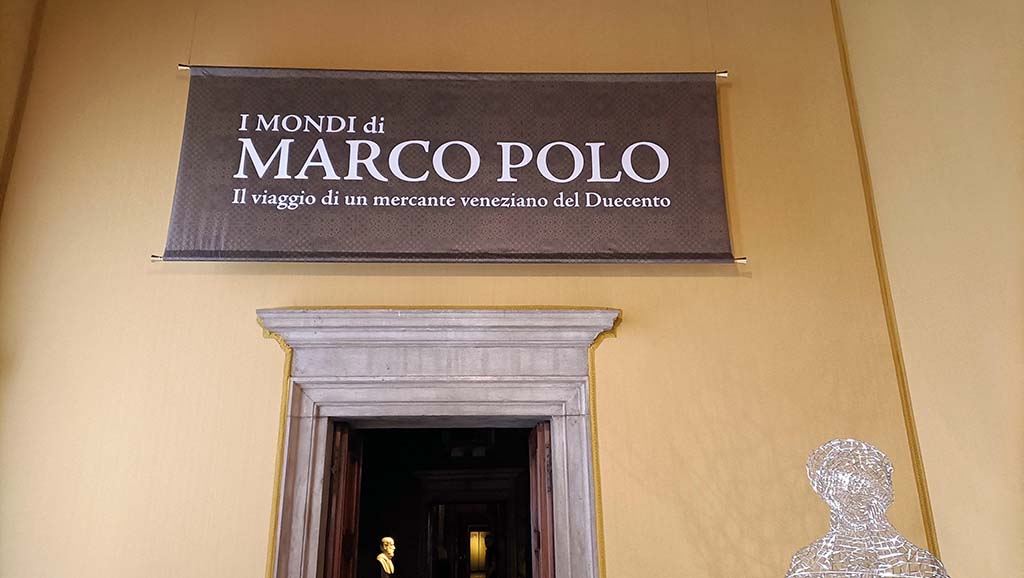
Finalmente sono andato a vedere la mostra su Marco Polo inaugurata a Palazzo Ducale Venerdì scorso. Prima di cominciare a descrivervi questa bellissima mostra, vi invito cortesemente a leggervi per bene questa pagina del sito web della Fondazione Musei Civici di Venezia: https://palazzoducale.visitmuve.it/it/pianifica-la-tua-visita/biglietti/ In quanto ci sono diverse tipologie di biglietto, e vi consiglio caldamente, di chiamare prima e farvi dare qualche informazione, o di passare per la biglietteria.
La mostra è localizzata dentro a Palazzo Ducale di Venezia, nell’area degli appartamenti privati del doge, luogo dove si sono tenute in passato, le altre stupende mostre di successo. All’ingresso della mostra ci saluta un’opera del famoso artista Lorenzo Quinn, che rappresenta il viaggiatore Veneziano. Sul piedestallo e anche sulla didascalia a muro è presente un QR code, da inquadrare con la telecamera del proprio cellulare / tablet, che consente di capire meglio l’opera. Vi lascio il link di questo grande artista https://www.soulsofvenice.com/souls-of-venice-4/ e vi ricordo che a breve, altre sue opere saranno visibili presso il meraviglioso museo di Ca’ Rezzonico https://carezzonico.visitmuve.it/it/mostre/mostre-in-corso/lorenzo-quinn-anime-di-venezia-souls-of-venice/2024/03/20187/mostra-lorenzo-quinn/ Non perdetevela !!
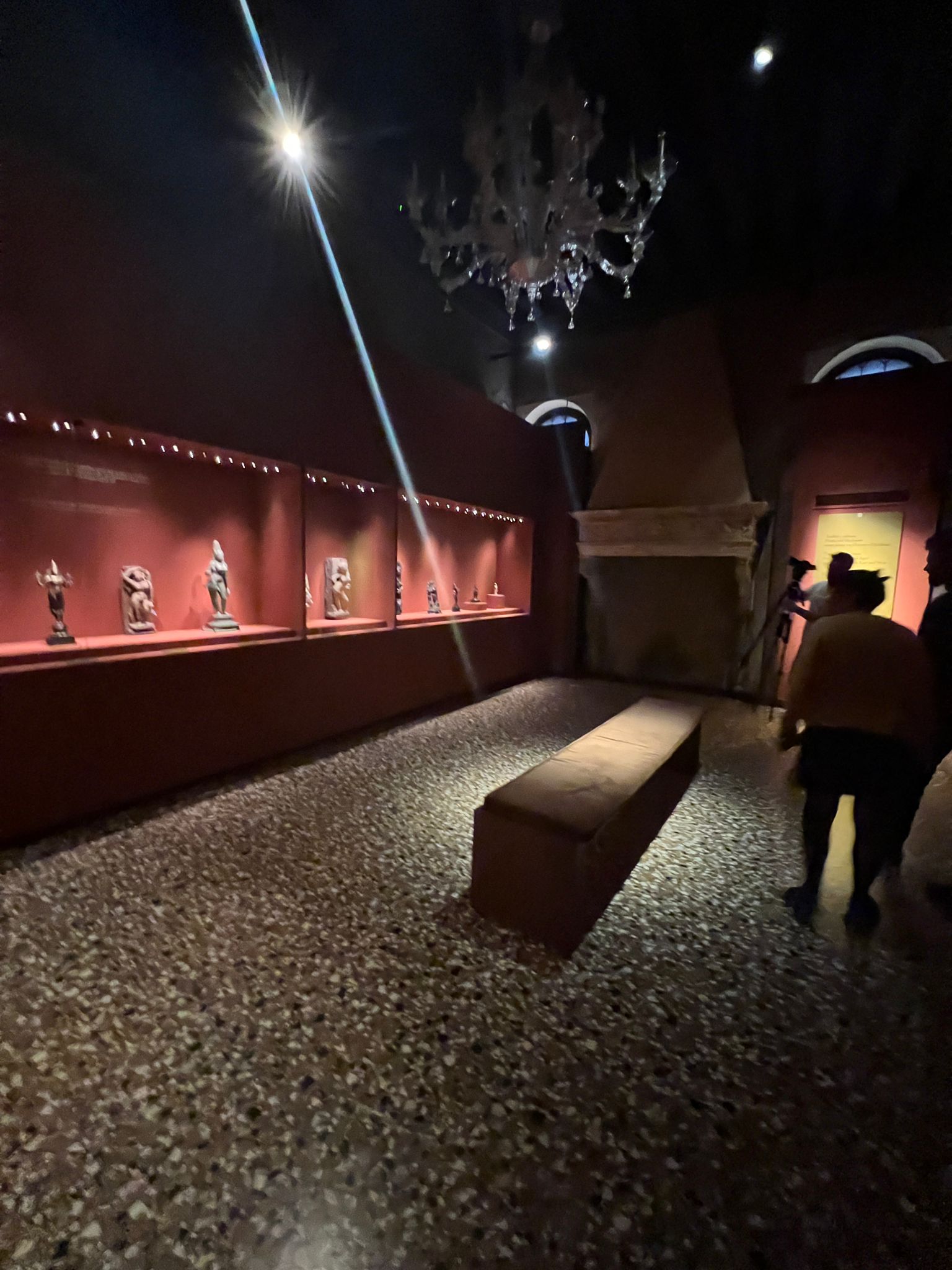
La mostra copre circa 10 sale, ognuna con una specifica area relativa a Marco Polo: Armenia, Mongolia, Iran, Cina, India, Korean ect. dove possiamo trovare di tutto, dalle mappe dove ci mostra tutte le sue tappe, e non solo; mappe originali dell’epoca, come il mappamondo borgiano, un planisfero di Tolomeo II, un astrolabio, il testamento redatto dal notaio Giovanni Giustinian, ceramiche, bassorilievi, manoscritti originali, vangeli, bibbie del 12/13 secolo, libri in lingua francese del milione, monete, tessuti e molto altro ancora.
Ma chi era Marco Polo ? Marco Polo nacque a Venezia nel 1254, in una famiglia di mercanti già orientata verso l’Est. Poco si sa della sua infanzia, ma la sua vita prese una svolta significativa all’età di 15 anni. Suo padre Niccolò e suo zio Matteo, già impegnati in commerci con l’Oriente, partirono per un lungo viaggio. Sorprendentemente, il giovane Marco li accompagnò. Questo viaggio segnò il destino di Marco Polo. Si trattava di un percorso lungo e pericoloso, la famosa Via della Seta, che collegava l’Europa all’Asia. Attraversarono deserti, montagne e steppe, impiegando ben tre anni e mezzo prima di giungere alla corte del sovrano mongolo Kublai Khan in Cina. Kublai Khan, impressionato dall’intelligenza e dall’intraprendenza di Marco, lo prese al suo servizio. Per ben 17 anni, Marco Polo viaggiò in lungo e in largo per l’immenso impero mongolo. Visitò città come Pechino, Hangzhou e Quanzhou, immergendosi in culture diverse e osservando meraviglie. Nel 1292, finalmente, Marco Polo fece ritorno a Venezia. Il viaggio di ritorno durò due anni e lo portò attraverso l’India, il Medio Oriente e l’Europa. Al suo arrivo a Venezia, era ormai un uomo adulto, ricco e famoso per le sue avventure orientali. Durante la sua prigionia dopo una battaglia navale (probabilmente la battaglia della Curzola), Marco Polo dettò le sue esperienze di viaggio a uno scrittore: Rustichello da Pisa. Nacque così “Il Milione”, un libro che descriveva in modo dettagliato le terre lontane visitate, le culture incontrate e le meraviglie dell’Oriente. Il Milione ebbe un successo immediato, aprendo gli occhi dell’Europa su un mondo sconosciuto e stimolando la curiosità per l’Est. Marco Polo morì a Venezia nel 1324. Nonostante alcuni dubbi sulla veridicità di alcuni racconti nel Milione, la sua eredità è indiscutibile. È considerato uno dei più grandi esploratori di tutti i tempi. Il suo viaggio aprì nuove rotte commerciali e contribuì a diffondere la conoscenza dell’Oriente in Europa. Il Milione rimane un’opera letteraria fondamentale e una fonte di ispirazione per viaggiatori e avventurieri ancora oggi.
I finally went to see the Marco Polo exhibition inaugurated at Palazzo Ducale last Friday. Before starting to describe this beautiful exhibition, I kindly invite you to carefully read this page on the website of the Fondazione Musei Civici di Venezia: https://palazzoducale.visitmuve.it/it/pianifica-la-tua-visita/biglietti/ As there are different types of tickets, and I strongly advise you to call first and have them give you some information, or to go to the ticket office.
The exhibition is located inside the Doge’s Palace of Venice in the area of the Doge’s private apartments, the place where other wonderful, successful exhibitions were held in the past. At the entrance to the exhibition we are greeted by a work by the famous artist Lorenzo Quinn, representing the Venetian traveller. On the pedestal and also on the caption on the wall there is a QR code, to be framed with the camera of your mobile phone / tablet, which allows you to better understand the work. I leave you the link of this great artist https://www.soulsofvenice.com/souls-of-venice-4 / and I remind you that soon, other of his works will be visible at the wonderful Ca’ Rezzonico museum https://carezzonico.visitmuve.it/it/mostre/mostre-in-corso/ lorenzo-quinn-anime-di-venezia-souls-of-venice/2024/03/20187/mostra-lorenzo-quinn/ Don’t miss it!!
The exhibition is “illustrated” in approximately 10 rooms, each one covering a specific area of Marco Polo’s journey: Armenia, Mongolia, Iran, China, India, Korean ect. where we can find everything, from maps where it shows us all its stages, and not only that; original maps of the time, such as the Borgian globe, a planisphere of Ptolemy II, an astrolabe, the will drawn up by the notary Giovanni Giustinian, ceramics, bas-reliefs, original manuscripts, gospels, 12/13 century Bibles, millions of French-language books, coins, fabrics and much more.
But who was Marco Polo? Marco Polo was born in Venice in 1254, into a family of merchants already oriented towards the East. Little is known about his childhood, but his life took a significant turn at the age of 15. His father Niccolò and his uncle Matteo, already engaged in trade with the East, left for a long journey. Surprisingly, young Marco accompanied them. This journey marked the fate of Marco Polo. It was a long and dangerous route, the famous Silk Road, which connected Europe to Asia. They crossed deserts, mountains and steppes, taking three and a half years to reach the court of the Mongol ruler Kublai Khan in China. Kublai Khan, impressed by Marco’s intelligence and resourcefulness, took him into his service. For 17 years, Marco Polo traveled far and wide across the immense Mongol empire. He visited cities such as Beijing, Hangzhou and Quanzhou, immersing himself in different cultures and observing wonders. In 1292, Marco Polo finally returned to Venice. The return journey took two years and took him through India, the Middle East and Europe. Upon his arrival in Venice, he was now an adult man, rich and famous for his oriental adventures. During his imprisonment after a naval battle, Marco Polo dictated his travel experiences to a writer: “Rustichello da Pisa”. Thus “Il Milione” was born, a book that described in detail the distant lands visited, the cultures encountered and the wonders of the East. Il Milione was an immediate success, opening Europe’s eyes to an unknown world and stimulating curiosity about the East. Marco Polo died in Venice in 1324. Despite some doubts about the veracity of some stories in the Milione, his legacy is indisputable. He is considered one of the greatest explorers of all time. His voyage opened new trade routes and helped spread knowledge of the East to Europe. Il Milione remains a fundamental literary work and a source of inspiration for travelers and adventurers today.
For the English translation please scroll down the page, thank you !
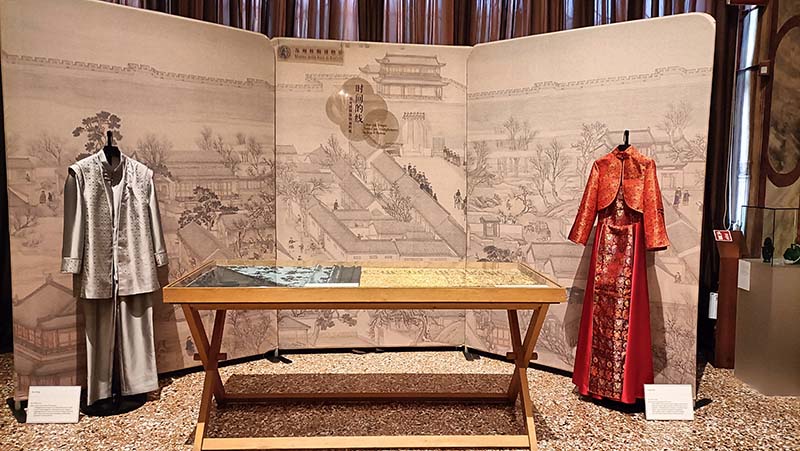
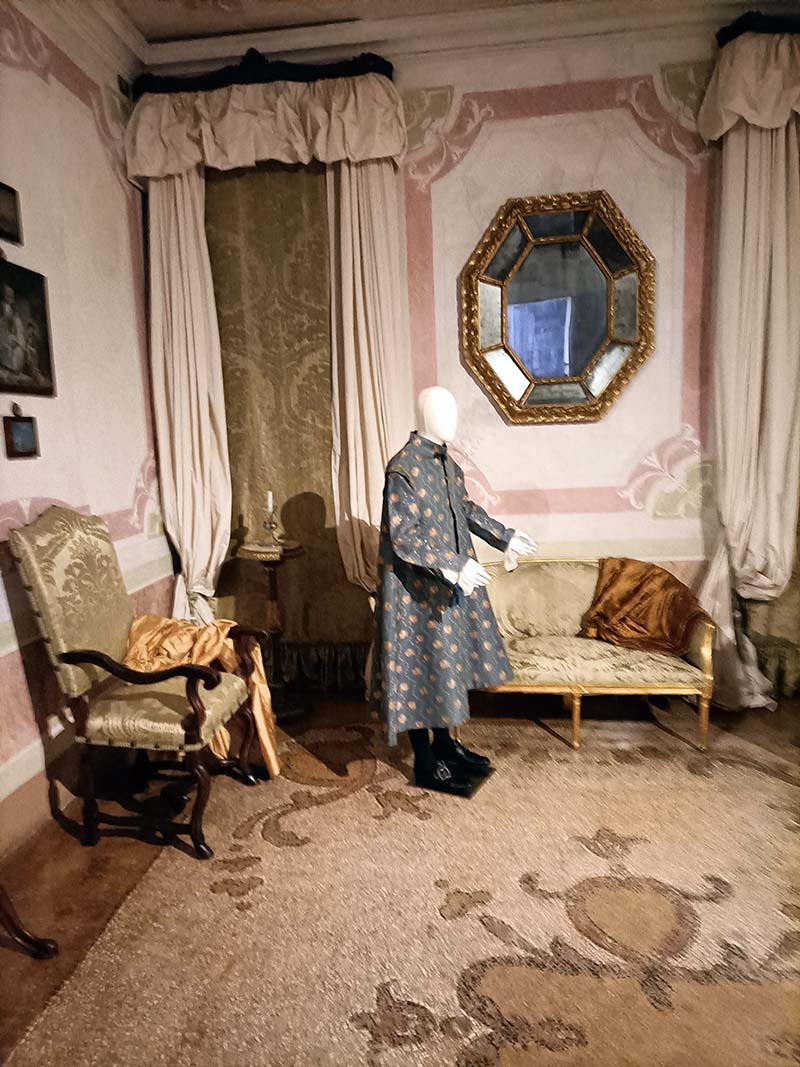
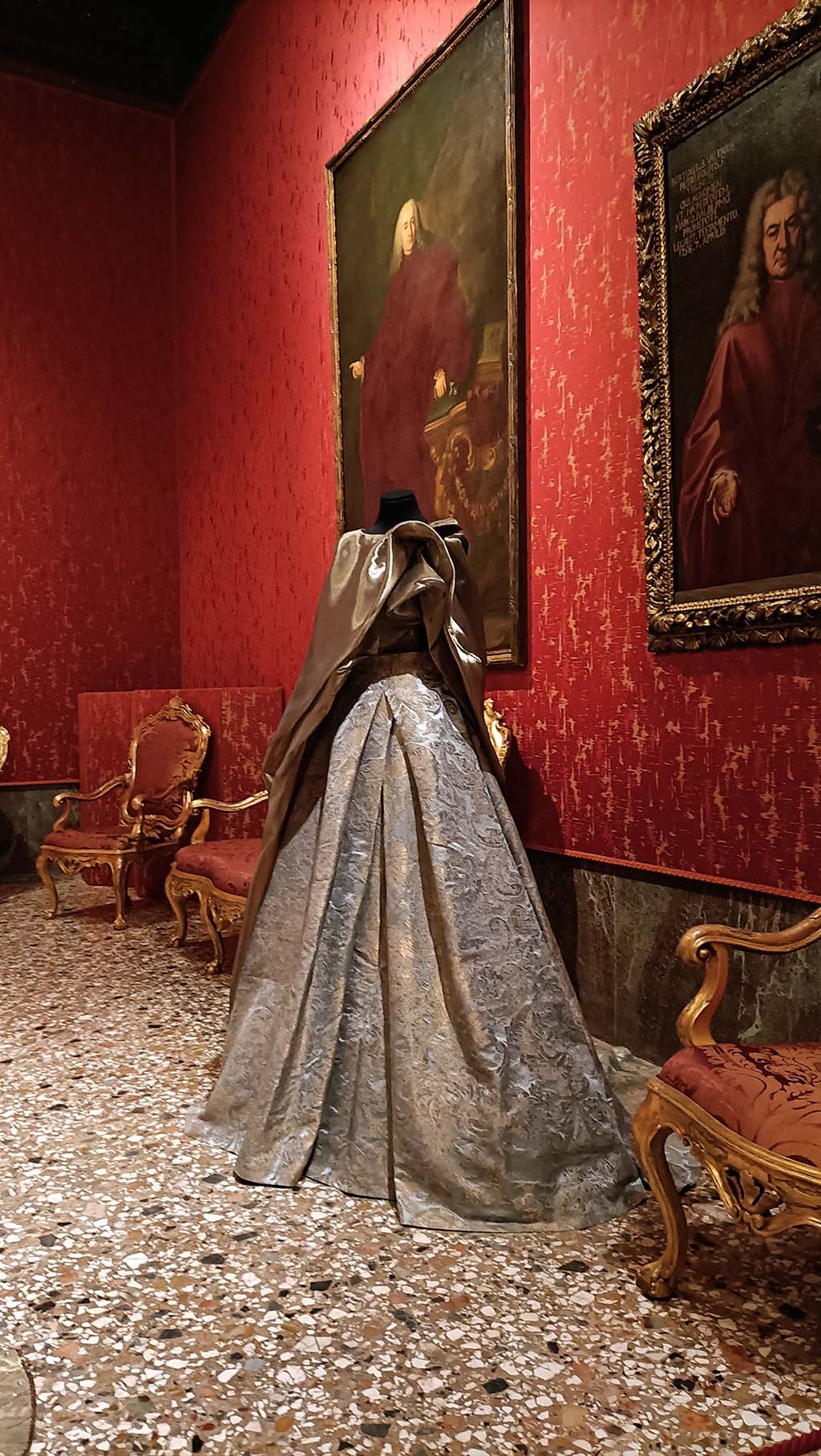
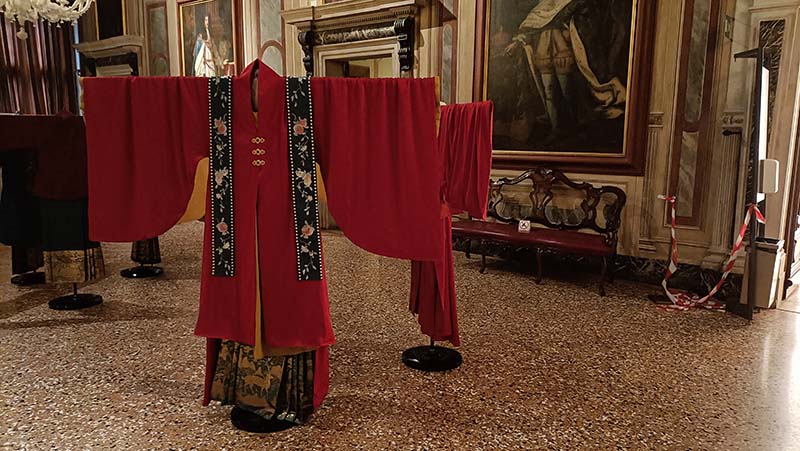
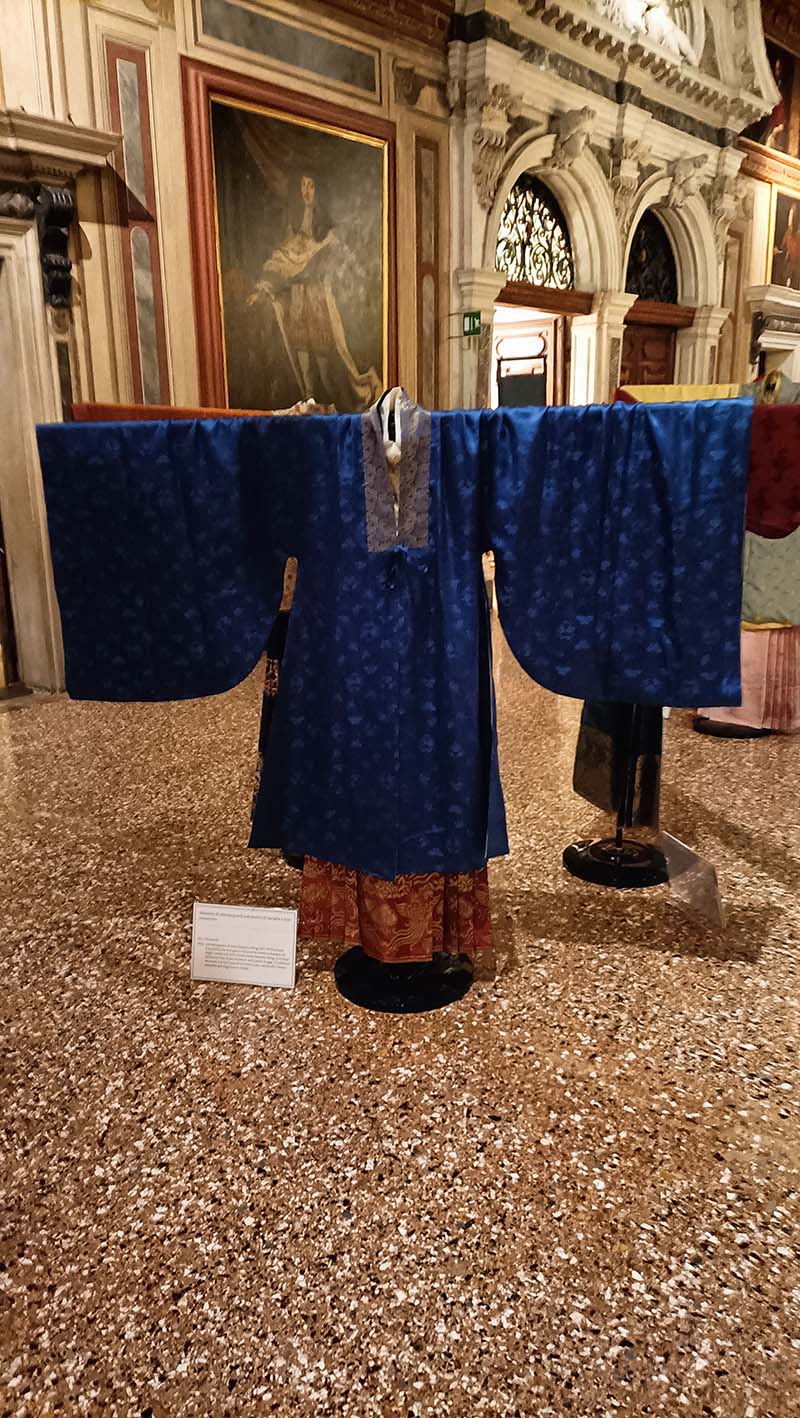
Palazzo Mocenigo si fa in tre e offre al suo pubblico tre diversi stili di costumi di diverse epoche. Proprio oggi (10/01/2024) si è inaugurata la mostra “L’asse del tempo” che è la prima iniziativa da parte della Fondazione Musei Civici di Venezia per festeggiare i 700 anni della morte di Marco Polo. Nella sala del Portego al primo piano (si possono vedere i due costumi nella foto in basso, mentre gli altri sono stati spostati in sala 8) si possono vedere dei costumi che provengono dal Museo della Seta di Suzhou, che ci portano a sognare la Cina ai tempi del famoso esploratore Veneziano. La mostra durerà dall’11 gennaio al 29 febbraio 2024.
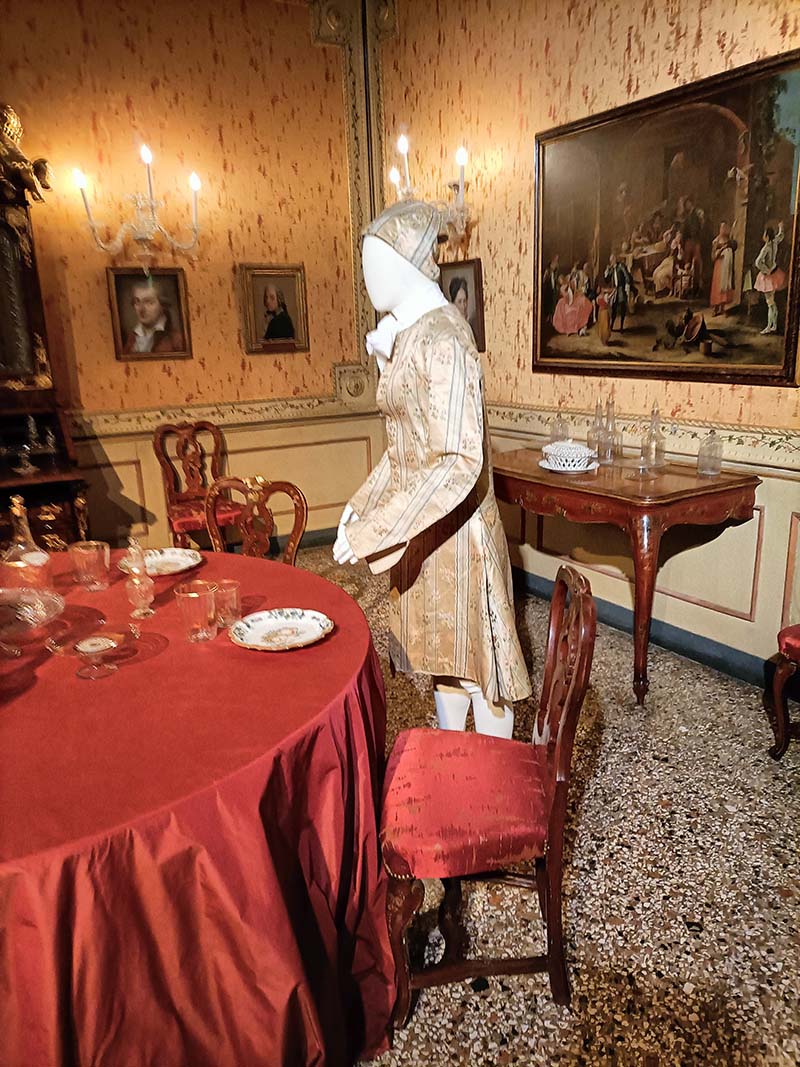
A partire dalla sala 1 fino alla sala 6, seguendo il percorso museale troverete invece una serie di costumi del 700 Veneziano, sarà come fare un salto nel tempo, ai tempi della Serenissima, e vedere com’era una volta il Palazzo Mocenigo.
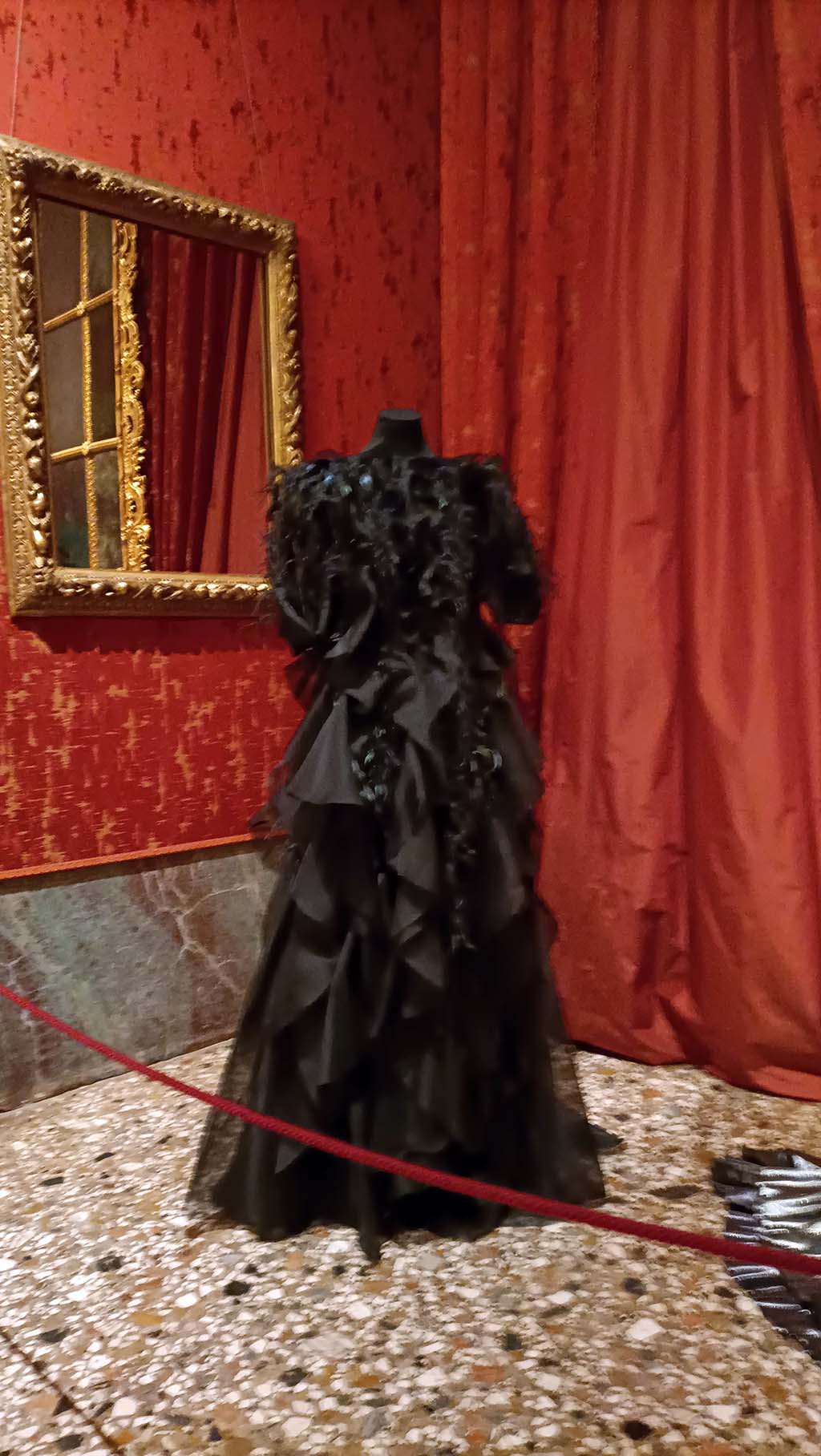
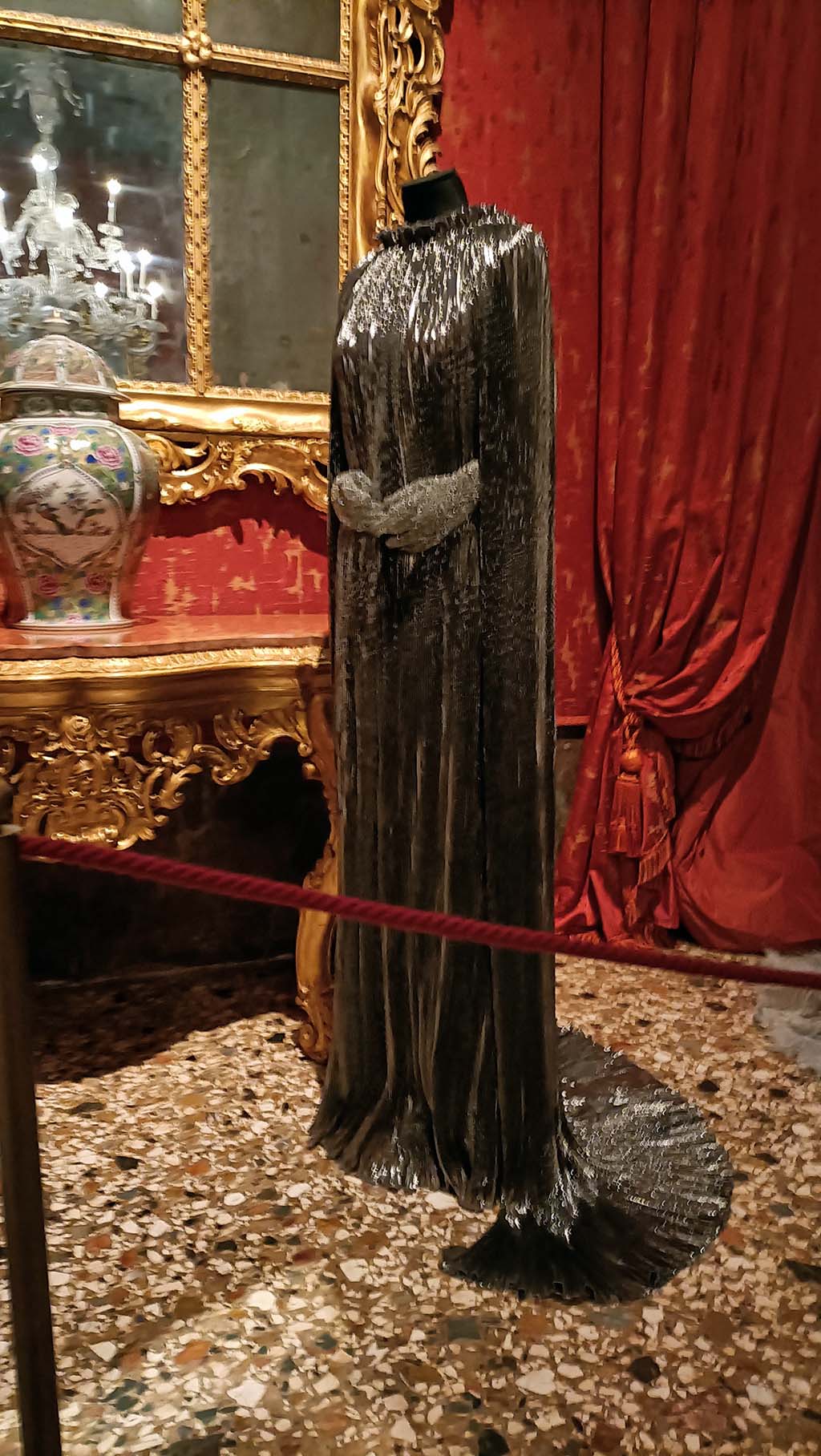
E infine nell’altra ala del percorso museale, nella sala 9, troverete dei vestiti della Collezione di Alba Ferretti. La stilista Alberta Ferretti ha donato alcuni abiti al Museo di Palazzo Mocenigo di Venezia. Gli abiti, protagonisti di una sfilata della stilista tenutasi a settembre 2021 a Ca’ Rezzonico, sono ora esposti al pubblico, un’opportunità unica per i visitatori, che potranno rivederli, o vederli per la prima , nel caso non fossero potuti venire durante la prima esposizione (sempre a Palazzo Mocenigo) nel 2022.
Non potete perdere questa occasione di vedere in un unico posto e nello stesso periodo di tempo, 3 diversi stili di costumi, in aggiunta alla sezione del profumo, e al sontuoso palazzo della famiglia Mocenigo. Vi aspettiamo !
Dal 01 novembre al 31 marzo: 10.00 – 17.00 (ultimo ingresso ore 16.00) Dal 01 aprile al 31 ottobre: 10.00 – 18.00 (ultimo ingresso ore 17.00) Le operazioni di chiusura del museo iniziano 20 minuti prima dell’orario indicato.
Chiuso il lunedì
Mocenigo Palace multiplied by three
The Mocenigo Palace multiply, and offers its audience, three different styles of costumes from different eras. Just today (10/01/2024) the exhibition “The axis of time” was inaugurated, which is the first initiative by the Civic Museums Foundation of Venice to celebrate the 700th anniversary of Marco Polo’s death. In the Portego room on the first floor, (you can see the two costumes in the photo below, while the others have been moved to room 8) we can see some costumes that come from the Suzhou Silk Museum, which lead us to dream of China at the time of the famous Venetian explorer. The exhibition will last from January 11th to February 29th 2024.
Starting from room 1 up to room 6, following the museum itinerary you will instead find a series of 18th century Venetian costumes, where you can take a leap in time, to the times of the Serenissima, and see how it was once the Mocenigo Palace.
And finally in the other wing of the museum itinerary, in room 9, you will find some clothes from the Alba Ferretti Collection. Fashion designer, Alberta Ferretti has donated some unique dresses to the Palazzo Mocenigo Museum in Venice. The dresses, protagonists of a fashion show by the designer held in September 2021 at Ca’ Rezzonico, are now on display to the public, a unique opportunity for visitors, who will be able to see them again or see them for the first time, in case they were not able to come during the premiere exhibition (also at Palazzo Mocenigo) in 2022.
You can’t miss this opportunity to see in one place and at the same time, 3 different styles of costumes, in addition to the perfume section, and the family’s sumptuous palace Mocenigo. We are waiting for you!
From 01 November to 31 March: 10.00 – 17.00 (last entry 16.00) From 01 April to 31 October: 10.00 – 18.00 (last entry 17.00) Museum closing operations begin 20 minutes before the indicated time.
For the English translation please scroll down the page, thank you !
In occasione delle celebrazioni per i settecento anni della morte di Marco Polo, i Musei Civici di Venezia ospitano a Palazzo Mocenigo la mostra “L’Asse del Tempo: Tessuti per l’Abbigliamento in Seta di Suzhou”. La mostra, aperta dall’11 gennaio al 29 febbraio 2024, presenta una ricca selezione di abiti e tessuti provenienti dal Museo della Seta di Suzhou.
Venezia e Suzhou sono due città molto simili. Entrambe sono costruite sull’acqua e sono Patrimonio dell’Umanità dell’UNESCO. Sono anche legate da un gemellaggio ufficiale che dura dal 1980. Questa mostra vuole celebrare l’amicizia tra le due città e la loro comune passione per la seta, ed espone creazioni originali, tessuti e repliche di antichi abiti che raccontano la storia della seta, dalla sua nascita in Cina fino ai giorni nostri.
I visitatori potranno fare un viaggio nel tempo, seguendo abito dopo abito, tessuto dopo tessuto, l’evoluzione della moda tra Occidente ed Estremo Oriente. Potranno anche confrontare lo stile dell’abbigliamento durante la Repubblica Serenissima con quello delle principali dinastie regnanti nell’antico impero cinese. La mostra è un modo per celebrare l’eredità di Marco Polo, che fu uno dei primi a portare la seta europea in Cina, e di promuovere la comprensione e la cooperazione tra le due culture.
La mostra è un’occasione imperdibile per conoscere la storia della seta e l’amicizia tra Venezia e Suzhou. Invito tutta la cittadinanza e i turisti presenti nella città lagunare a visitare questa stupenda mostra, sono sicuro che vi piacerà moltissimo, e inoltre, avrete la possibilità di vedere questo magnifico palazzo che è stata la dimora di una importantissima famiglia Veneziana, ed anche museo del costume e del profumo. Non si può, non visitare Palazzo Mocenigo !! Vi aspettiamo !
Orari di visita:
Dal 01 novembre al 31 marzo: 10.00 – 17.00 (ultimo ingresso ore 16.00)
Dal 01 aprile al 31 ottobre: 10.00 – 18.00 (ultimo ingresso ore 17.00)
Le operazioni di chiusura del museo iniziano 20 minuti prima dell’orario indicato Chiuso il lunedì
The silk that unites Venice and Suzhou
On the occasion of the celebrations for the seven hundredth anniversary of Marco Polo’s death, the Civic Museums of Venice are hosting at Mocenigo Palace, the exhibition “The Axis of Time: Silk Clothing Fabrics of Suzhou”. The exhibition, open from 11 January to 29 February 2024, presents a rich selection of clothes and fabrics from the Suzhou Silk Museum.
Venice and Suzhou are two very similar cities. Both are built on water and are UNESCO World Heritage Sites. They are also linked by an official twinning that has lasted since 1980. This exhibition aims to celebrate the friendship between the two cities and their shared passion for silk. It exhibits original creations, fabrics and replicas of ancient clothes that tell the story of silk, from its birth in China to the present day.
Visitors will be able to take a journey through time, following dress after dress, fabric after fabric, the evolution of fashion between the West and the Far East. They will also be able to compare the style of clothing during the Serenissima Republic with that of the main ruling dynasties in the ancient Chinese empire. The exhibition is a way to celebrate the legacy of Marco Polo, who was one of the first to bring European silk to China, and a way to promote understanding and cooperation between the two cultures.
The exhibition is an unmissable opportunity to learn about the history of silk and the friendship between Venice and Suzhou. I invite all citizens and tourists present in the lagoon city to visit this wonderful exhibition, I am sure you will like it very much, and furthermore, you will have the opportunity to see this magnificent palace which was the home of a very important Venetian family, and also a museum of costume and perfume. You can’t not visit Palazzo Mocenigo!! We are waiting for you!!!
Timetable:
From November 1st to March 31st: 10.00am – 5.00pm (last entry 4.00pm)
From 01 April to 31 October: 10.00 – 18.00 (last entry 17.00)
The museum closing operations begin 20 minutes before the indicated time. Closed on Mondays


 Not everyone knows of the great difficulties that arose in filming this wonderful TV series, some of the main challenges faced by Stefano Nicolao during the production of the television series: for example the setting up of a mobile tailor’s shop at high altitude. For filming in Nepal, Nicolao had to set up a mobile tailor’s shop at three thousand five hundred meters above sea level, facing the logistical challenges of working in a remote environment with no infrastructure. Sourcing authentic materials and fabrics, Nicolao had to research and source authentic materials, fabrics and accessories locally in Nepal to make the historical costumes. Many items were not readily available, making the process similar to the experience of Marco Polo himself.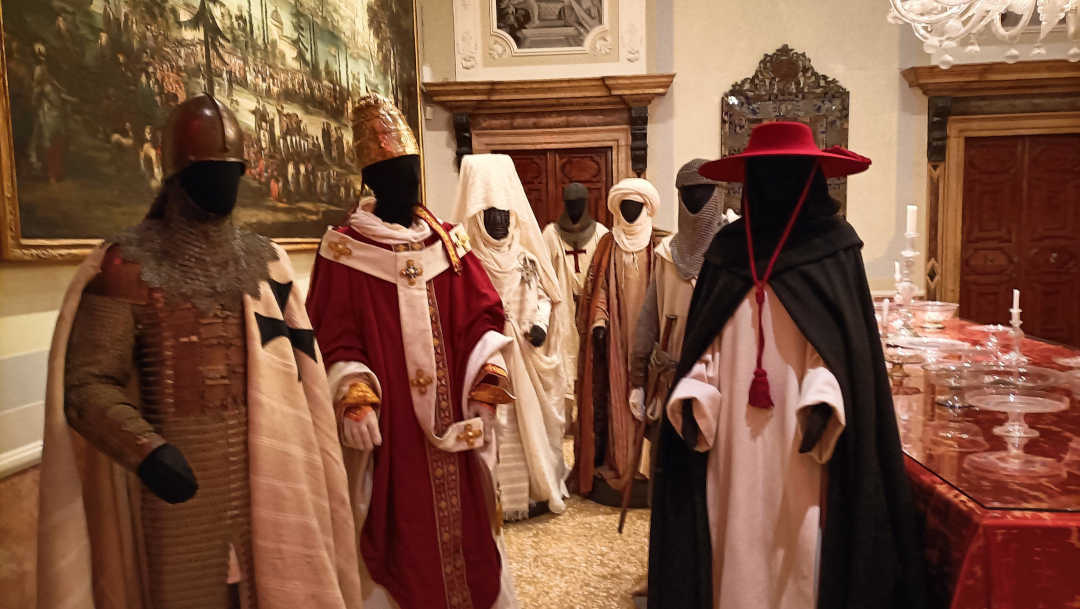









 Marco Polo at the Doge’s Palace in Venice !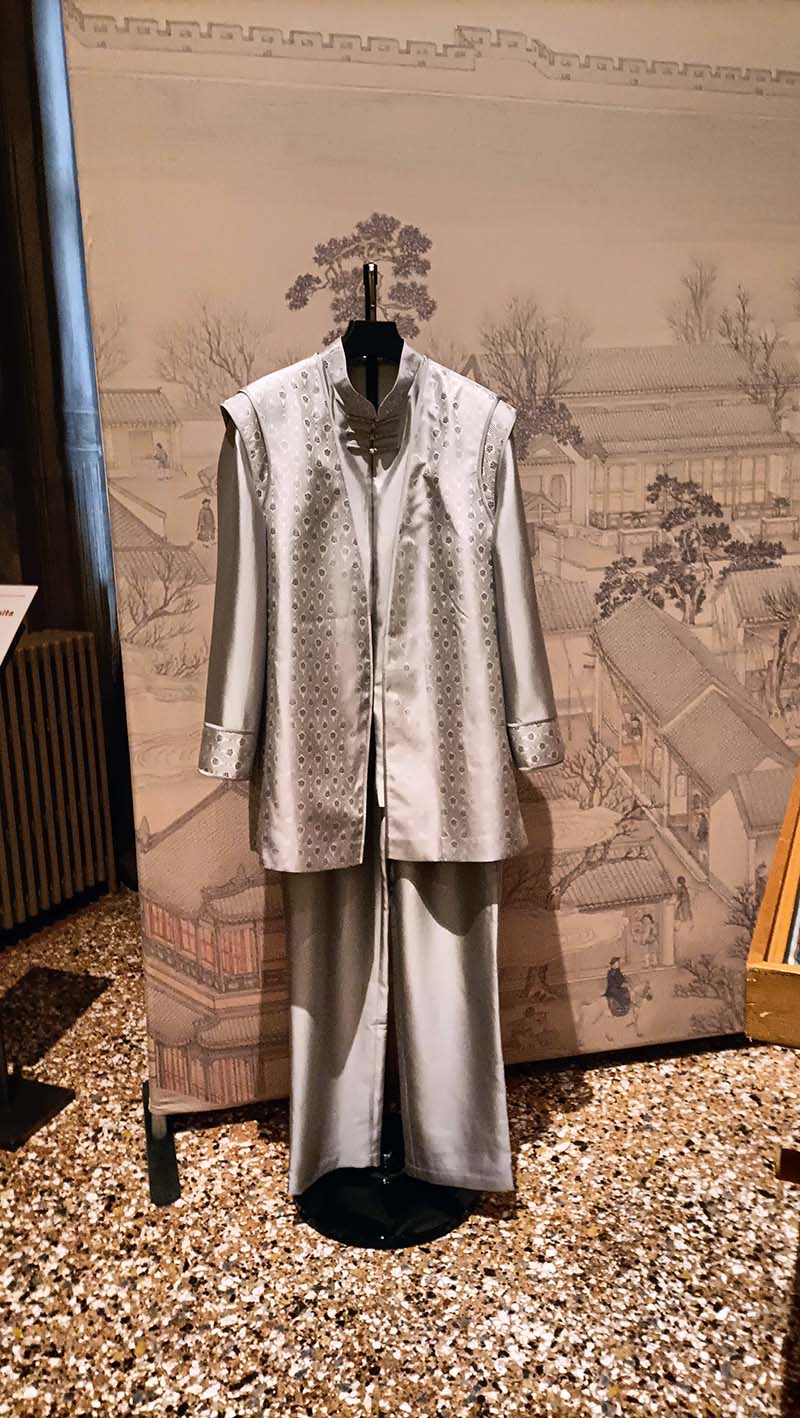








 Diario di un operatore museale
