Fiori di ciliegio a Palazzo Mocenigo

For the English translation please scroll down the page, thank you !

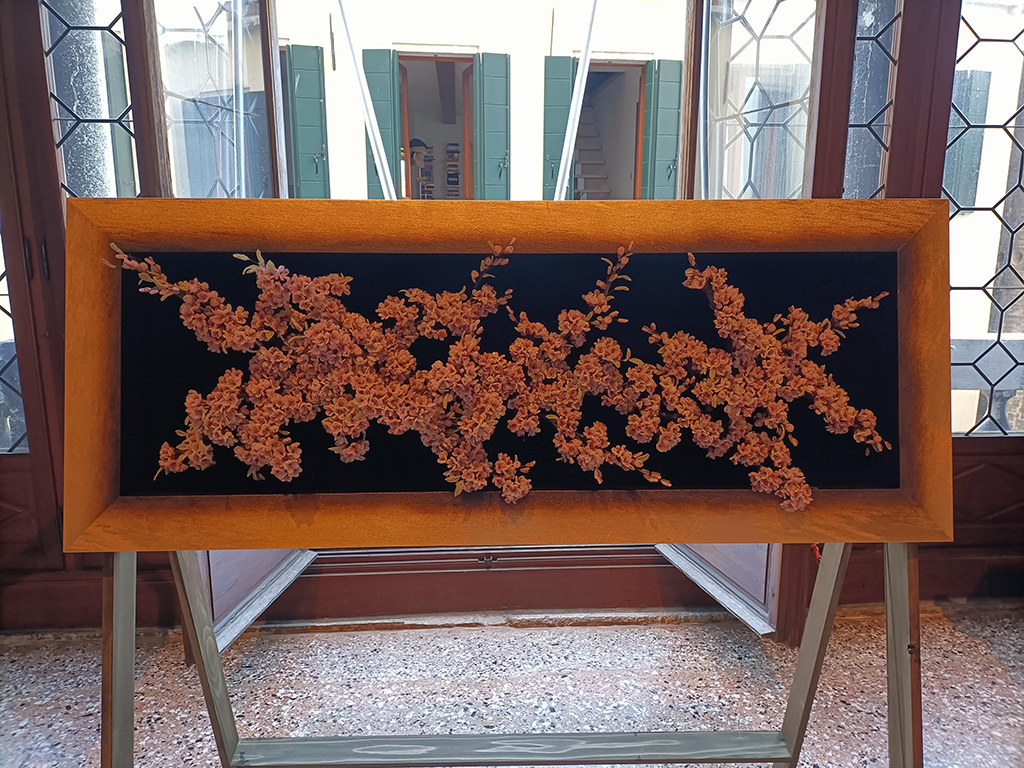
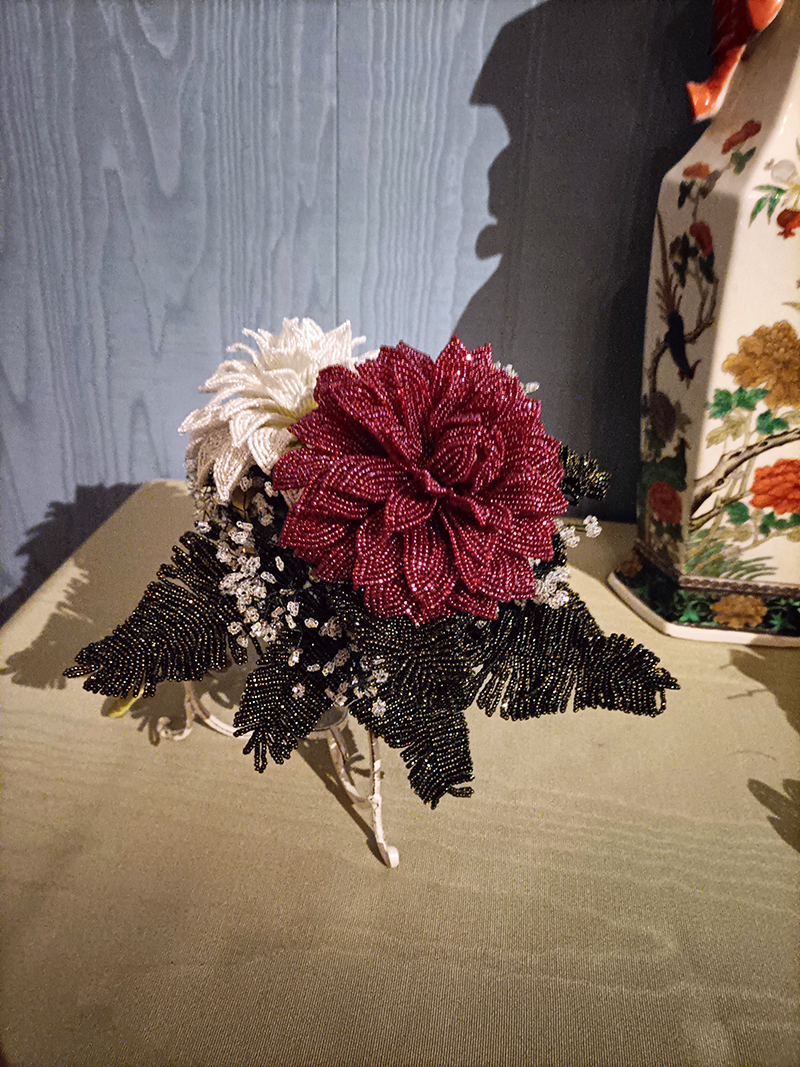
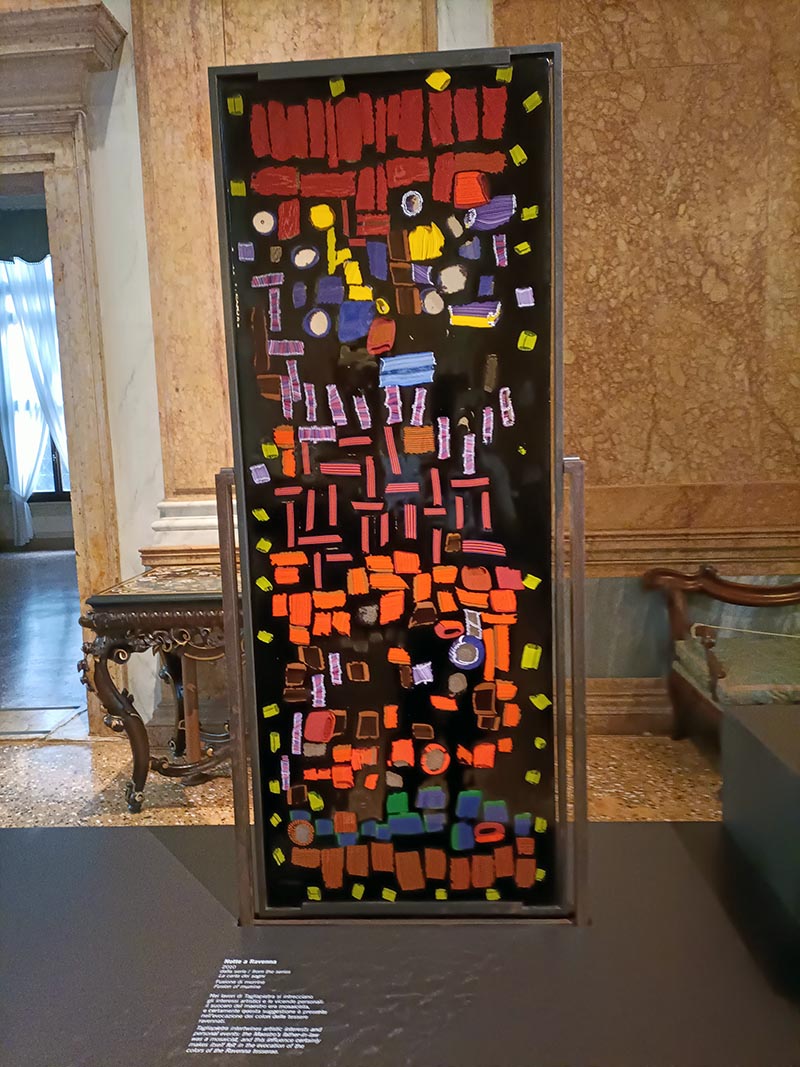
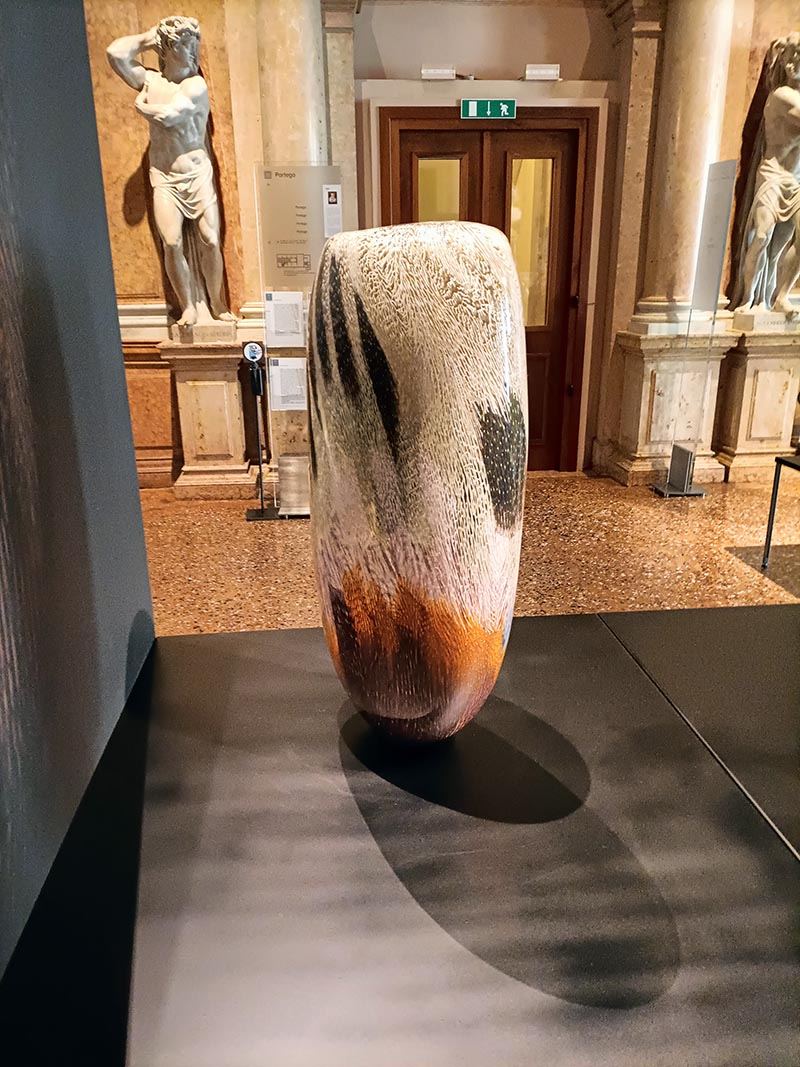
Oggi parliamo di un’opera molto interessante, forse la principale di tutta la mostra appena inaugurata a Palazzo Mocenigo, della Fondazione Musei Civici di Venezia. Una mostra della famosa artista Minako Shimonagase, che fin dal primo giorno sta avendo molto successo. L’opera in questione, la si può vedere nella fotografia all’inizio del paragrafo e si intitola per l’appunto “fiori di ciliegio”.

Gli alberi di ciliegio, in giapponese Sakura, sono una parte fondamentale della cultura giapponese. Sono considerati un simbolo di bellezza, fragilità, e rinascita.

I ciliegi sono originari dell’Asia orientale, ma sono stati introdotti in Giappone già in epoca pre-storica. Nel corso dei secoli, gli alberi di ciliegio sono diventati sempre più diffusi nel paese, e oggi si trovano in tutto il Giappone, da grandi città come Tokyo e Kyoto a piccoli villaggi di campagna.

La fioritura dei ciliegi, chiamata hanami, è un evento molto importante in Giappone. Ogni anno, milioni di persone si riuniscono per ammirare la bellezza dei fiori di ciliegio. L’hanami è un’occasione per celebrare la primavera, la natura, e la vita stessa.

I ciliegi hanno un significato profondo nella cultura giapponese. Sono un simbolo di bellezza, perché i loro fiori sono delicati e affascinanti. Sono anche un simbolo di fragilità, perché i fiori di ciliegio vivono solo per pochi giorni. Infine, sono un simbolo di rinascita, perché la fioritura dei ciliegi segna l’inizio della primavera.

Ecco alcuni dei significati simbolici dei ciliegi nella cultura giapponese:

Bellezza: I ciliegi sono considerati un simbolo di bellezza, perché i loro fiori sono delicati e affascinanti.
Fragilità: I ciliegi sono anche un simbolo di fragilità, perché i fiori di ciliegio vivono solo per pochi giorni.
Rinascita: La fioritura dei ciliegi segna l’inizio della primavera, che è un periodo di rinascita per la natura.
Tempo fuggevole: La breve durata della fioritura dei ciliegi è un simbolo del tempo fuggevole.
Passione: I ciliegi sono anche associati alla passione, perché i loro petali rossi sono spesso associati all’amore.
Dolcezza: I ciliegi sono anche associati alla dolcezza, perché i loro frutti, le ciliegie, sono un alimento popolare in Giappone.
I ciliegi sono una parte importante della cultura giapponese, e la loro bellezza è ammirata da persone di tutto il mondo.

Alcuni dettagli significativi:

La stagione della fioritura dei ciliegi in Giappone dura in genere circa due settimane, da fine marzo a inizio aprile.
Esistono molte varietà diverse di ciliegi in Giappone, ciascuna con le sue caratteristiche uniche.
L’Hanami è un’attività popolare tra persone di tutte le età in Giappone.
I fiori di ciliegio sono spesso usati nell’arte, nella musica e nella letteratura giapponese.

Cherry blossoms at Mocenigo Palace

Today we are talking about a very interesting work, perhaps the main one of the entire exhibition just inaugurated at Mocenigo Palace, from the Civic Museums Foundation of Venice. An exhibition by the famous artist Minako Shimonagase, which has been very successful since day one. The work in question can be seen in the photograph at the beginning of the paragraph and is entitled “cherry blossoms”.

Cherry blossoms, known in Japanese as Sakura, are a fundamental part of Japanese culture. They are considered a symbol of beauty, fragility, and rebirth.

Cherry trees are native to East Asia, but were introduced to Japan in prehistoric times. Over the centuries, cherry trees have become increasingly widespread in the country, and today they can be found all over Japan, from major cities like Tokyo and Kyoto to small rural villages.

The cherry blossom season, called hanami, is a very important event in Japan. Every year, millions of people gather to admire the beauty of cherry blossoms. Hanami is an occasion to celebrate spring, nature, and life itself.

Cherry blossoms have a deep meaning in Japanese culture. They are a symbol of beauty, because their flowers are delicate and fascinating. They are also a symbol of fragility, because cherry blossoms only live for a few days. Finally, they are a symbol of rebirth, because the cherry blossom season marks the beginning of spring.

Here are some of the symbolic meanings of cherry blossoms in Japanese culture:

Beauty: Cherry blossoms are considered a symbol of beauty, because their flowers are delicate and fascinating.
Fragility: Cherry blossoms are also a symbol of fragility, because cherry blossoms only live for a few days.
Rebirth: The cherry blossom season marks the beginning of spring, which is a time of rebirth for nature.
Fleeting time: The short duration of the cherry blossom season is a symbol of fleeting time.
Passion: Cherry blossoms are also associated with passion, because their red petals are often associated with love.
Sweetness: Cherry blossoms are also associated with sweetness, because their fruits, cherries, are a popular food in Japan.
Cherry blossoms are an important part of Japanese culture, and their beauty is admired by people all over the world.

Some additional details:

The cherry blossom season in Japan typically lasts for about two weeks, from late March to early April.
There are many different varieties of cherry trees in Japan, each with its own unique characteristics.
Hanami is a popular activity for people of all ages in Japan.
Cherry blossoms are often used in Japanese art, music, and literature.

Il Sol Levante a Palazzo Mocenigo

For the English translation please scroll down the page, thank you !

Una nuova mostra proveniente dal Sol Levante si può ammirare nel bellissimo Museo di Palazzo Mocenigo, della Fondazione Musei Civici di Venezia in occasione della Glass Week. Si intitola : “Fiori di Vetro” dell’artista Giapponese Minako Shimonagase, e sarà aperta al pubblico dal 9 settembre fino al 1 di ottobre 2023, tutti i giorni tranne il lunedì dalle 10.00 alle 18.00 (ultima ingresso ore 17.00) e nelle giornata di Venerdì e Sabato dalle 10.00 alle 20.00 (ultimo ingresso ore 19.00)

Minako Shimonagase: l’artista delle perle

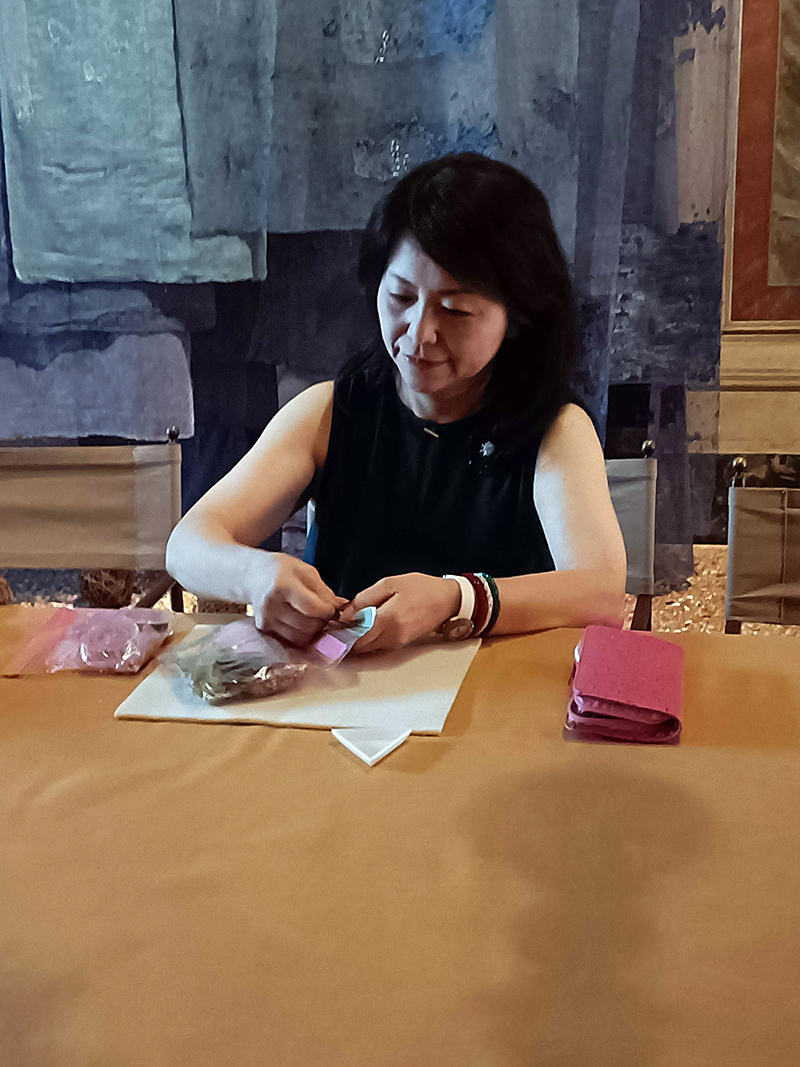
Minako Shimonagase è una giovane artista giapponese che crea bellissime opere d’arte utilizzando perle di vetro. I suoi lavori sono caratterizzati da una delicatezza e una raffinatezza che li rendono unici. Shimonagase è nata a Tokyo nel 1995. Ha iniziato a lavorare con le perle di vetro all’età di 12 anni, quando ha partecipato a un corso di arte presso una scuola locale. Da allora, ha perfezionato la sua tecnica e ha iniziato a creare opere d’arte sempre più complesse e affascinanti.

I lavori di Shimonagase sono ispirati alla natura e alla cultura giapponese. Utilizza spesso perle di vetro di diversi colori e dimensioni per creare immagini di fiori, animali e paesaggi. I suoi lavori sono esposti in gallerie d’arte di tutto il mondo e sono stati apprezzati da critici e collezionisti. Nel 2023, Shimonagase ha pubblicato il suo primo libro, “Bead Flowers”, che raccoglie una selezione dei suoi lavori più recenti. Il libro è stato un successo editoriale e ha contribuito a far conoscere l’opera dell’artista a un pubblico più vasto. Nel 2011 fonda la Japan Beaded Flowers Association e assume il ruolo di presidente. Nello stesso anno Minako, aiutata da un centinaio di studenti giapponesi, realizza un enorme albero di ciliegio con tre milioni di perle, in ricordo delle vittime del terremoto di Fukushima e come sostegno alla ricostruzione.

I lavori di Minako Shimonagase

I lavori di Minako Shimonagase sono caratterizzati da una grande delicatezza e raffinatezza. L’artista utilizza perle di vetro di diversi colori e dimensioni per creare immagini di fiori, animali e paesaggi. Le sue opere sono spesso ispirate alla natura e alla cultura giapponese.

Alcuni esempi di lavori di Minako Shimonagase:

“Fiori di perle” è una serie di opere che raffigurano diversi tipi di fiori, tra cui rose, tulipani e ciliegi. Le opere sono realizzate utilizzando perle di vetro di diversi colori e dimensioni. “Animali di perle” è una serie di opere che raffigurano diversi tipi di animali, tra cui gatti, cani e uccelli. Le opere sono realizzate utilizzando perle di vetro di diverse dimensioni. “Paesaggi di perle” è una serie di opere che raffigurano diversi tipi di paesaggi, tra cui montagne, fiumi e foreste. Le opere sono realizzate utilizzando perle di vetro di diverse dimensioni e colori.

Minako Shimonagase è una giovane artista di grande talento che crea bellissime opere d’arte utilizzando perle di vetro. I suoi lavori sono caratterizzati da una delicatezza e una raffinatezza che li rendono unici. Se siete interessati all’arte contemporanea, vi invito a visitare il sito web di Minako Shimonagase o a seguire i suoi canali social per saperne di più sui suoi lavori, e di venire a visitare il stupendo Museo di Palazzo Mocenigo, per vederli !!

https://minakoshimonagase.com

https://www.instagram.com/minako_shimonagase/

Minako Shimonagase: the pearl artist

A new exhibition from the Land of the Rising Sun can be admired in the beautiful Museum of Mocenigo Palace, of the Civic Museums Foundation of Venice on the occasion of glass week. It is titled: “Glass Flowers” by the Japanese artist Minako Shimonagase, and will be open to the public from 9 September until 1 October 2023, every day except Mondays from 10.00 am to 18.00 pm (last entry at 17.00) and on Friday and Saturday from 10.00 am to 8.00 pm (last entry 7.00pm)

Minako Shimonagase is a young Japanese artist who creates beautiful works of art using glass beads. Her works are characterized by a delicacy and refinement that make them unique. Shimonagase was born in Tokyo in 1995. She began working with glass beads at the age of 12, when she took an art class at a local school. Since then, she has perfected her technique and began to create increasingly complex and fascinating works of art.

Shimonagase’s works are inspired by Japanese nature and culture. He often uses glass beads of different colors and sizes to create images of flowers, animals and landscapes. Her works are exhibited in art galleries around the world and have been appreciated by critics and collectors. In 2023, Shimonagase published her first book, “Bead Flowers”, which collects a selection of her most recent works. The book was a publishing success and helped make the artist’s work known to a wider audience. In 2011 she founded the Japan Beaded Flowers Association and assumed the role of president. In the same year Minako, helped by a hundred Japanese students, creates an enormous cherry tree with three million pearls, in remembrance of the victims of the Fukushima earthquake and as support for reconstruction.

The works of Minako Shimonagase

Some examples of Minako Shimonagase’s work:

“Pearl Flowers” is a series of works depicting different types of flowers, including roses, tulips and cherry trees. The works are made using glass beads of different colors and sizes. “Pearl Animals” is a series of works depicting different types of animals, including cats, dogs and birds. The works are made using glass beads of different sizes. “Landscapes of Pearls” is a series of works that depict different types of landscapes, including mountains, rivers and forests. The works are made using glass beads of different sizes and colors.

Minako Shimonagase is a very talented young artist who creates beautiful works of art using glass beads. Her works are characterized by a delicacy and refinement that make them unique. If you are interested in contemporary art, I invite you to visit Minako Shimonagase’s website or follow her social channels to find out more about her works, and to come and visit the wonderful Palazzo Mocenigo Museum to see them!!

https://minakoshimonagase.com

https://www.instagram.com/minako_shimonagase/

Il quadro del mistero

For the English translation please scroll down the page, thank you !

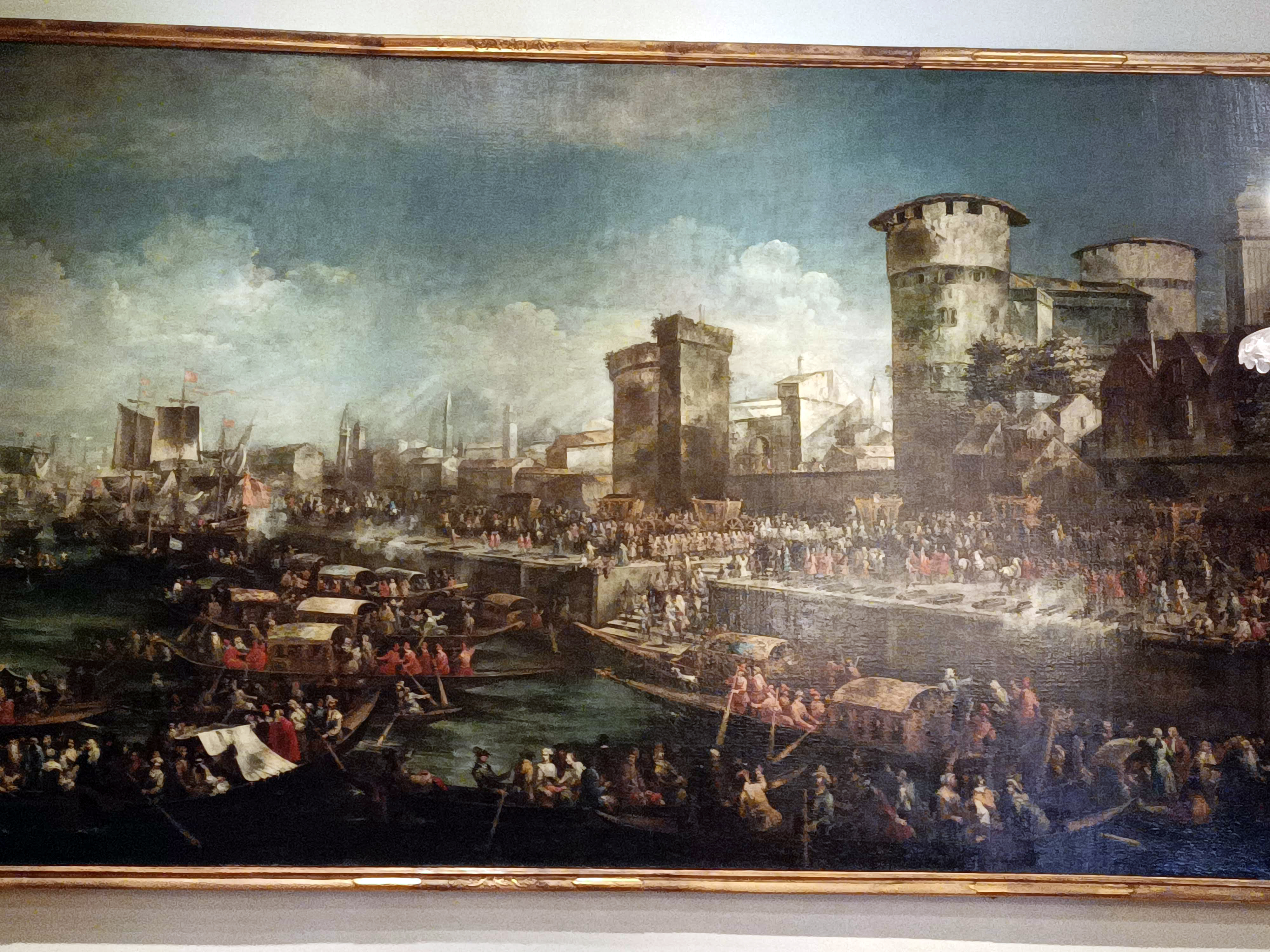
C’è un quadro all’interno di Palazzo Mocenigo, stupendo museo della Fondazione Musei Civici di Venezia, che mi affascina molto, perché esso cela un mistero. Se ci si reca alla sala 7 del primo piano, possiamo ammirare questo quadro di Antonio Stom (1688 – Venezia, 1734), dal titolo “Arrivo a Chioggia del principe di Svezia ricevuto dal doge Mocenigo.

Ebbene c’è un quadro molto simile dipinto dal “L’arrivo degli ambasciatori veneziani Nicolò Erizzo e Alvise Pisani” II a Londra il 30 maggio, 1707, di Luca Carlevarijs”.

Come potete vedere ci sono molte similitudini, il modo posizionato sulla destra, l’accesso, sempre nello stesso punto, il fatto che vengono sparate delle cannonate a salve le barche che accostano sulla scalinata.

Molto probabilmente l’artista Antonio Stom, si è lasciato ispirare dal Carlevaris, e tuttavia la somiglianza tra i due quadri è qualcosa di affascinante.

Volete vedere il quadro di Antonio Stom ? Venite a Palazzo Mocenigo, vi aspettiamo !

The Mysterious Picture

There is a painting inside Mocenigo Palace, the wonderful museum of the Civic Museums Foundation of Venice, which fascinates me a lot, because it hides a mystery. If we go to room 7 on the first floor, we can admire this painting by Antonio Stom (1688 – Venice, 1734), entitled “Arrival in Chioggia of the Prince of Sweden received by Doge Mocenigo.

Well there is a very similar picture painted by Luca Carlevarijs “The Arrival of the Venetian Ambassadors Nicolò Erizzo and Alvise Pisani” II in London on May 30, 1707″ .

As you can see there are many similarities, the quay positioned on the right, the access, always in the same spot, the fact that cannon shots are fired blanks at the boats that approach on the steps.

Most likely the artist Antonio Stom was inspired by Carlevaris, and yet the similarity between the two paintings is something fascinating.

Do you want to see the painting by Antonio Stom ? Come to Palazzo Mocenigo, we are waiting for you!

I più bei lampadari della Fondazione Musei Civici di Venezia

For the English translation please scroll down the page, thank you !

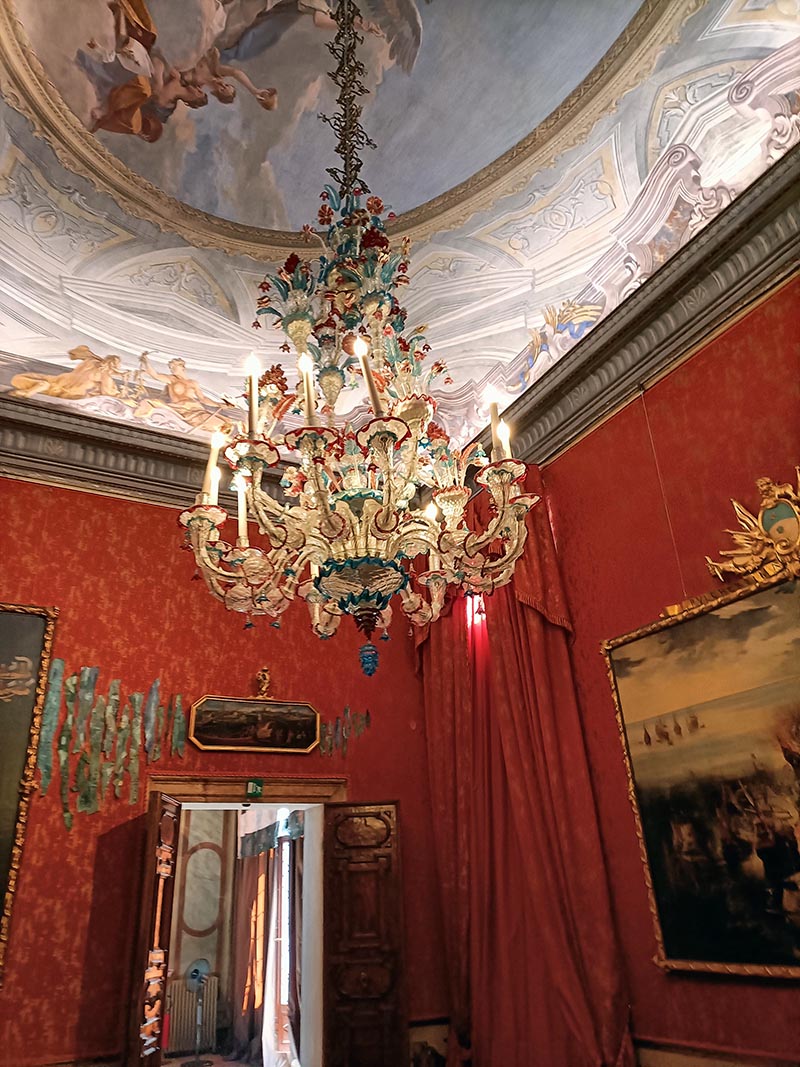
Nel stupendo Museo di Palazzo Mocenigo, e nel meraviglioso Museo di Ca’ Rezzonico, entrambi della Fondazione Musei Civici di Venezia, al suo interno, in molte sale, ci sono dei lampadari che sono a dir poco dei veri capolavori di arte vetraria. Volete saperne un po’ di più ?

La loro storia, inizia più o meno quando, nel 1291 un decreto della Serenissima ordinò che tutte le Vetrerie di Venezia, per evitare il rischio di incendi, fossero trasferite nella vicina isola di Murano. A quella data si fa risalire l’inizio della leggendaria attività vetraria muranese e da allora l’arte del vetro resterà indissolubilmente legata al nome di Murano. Dalle “murrine” alla “filigrana”, ai “reticelli”, ai calici soffiati che sono espressione dell’arte muranese del 400 e del ‘500, attraverso l’esuberanza barocca, la breve fioritura neoclassica e i “revivals” dell’800, si sviluppa questa lunga e affascinante storia. Ai giorni nostri vengono ancora riprodotte le opere più significative delle varie epoche, mentre lo spirito creativo della tradizione dà impulso alla ricerca di nuove forme che sono espressione del nostro tempo.

Si dice che i lampadari più belli di questi due musei, siano quelli di Briati, specialmente il modello Rezzonico: è un lampadario a sospensione in vetro di Murano realizzato a mano. È caratterizzato da una forma a cascata, con una serie di pendenti in vetro di Murano che si irradiano da un centro centrale. I pendenti sono realizzati in una varietà di colori e forme, e possono essere personalizzati per adattarsi a qualsiasi ambiente.

Briati fu una figura di spicco nella vetreria artistica veneziana del Settecento. Fu un abile maestro vetraio che sostenne con originalità le prerogative della tradizione muranese, contrastando l’invadente concorrenza del neonato cristallo di Boemia. Briati introdusse un nuovo tipo di vetro “uso cristallo” e inventò nuove tecniche decorative, che gli permisero di creare manufatti in vetro di grande bellezza e raffinatezza. Nel 1739 Briati aprì a Venezia una vetreria nella quale realizzò una varietà di manufatti in vetro, tra cui specchi, lampadari e altri oggetti in vetro decorato. La sua produzione fu vastissima e varia, spaziando dalle cornici ai lampadari (quelli detti “a pagoda” o “alla cinese”, con bracci decorati con fiori policromi), dalle lampade da parete (dette “lumiere” che diverranno l’incontrastata specialità della vetreria veneziana dell’epoca) alle suppellettili da tavola. Moltissimi degli oggetti da lui creati sono ora conservati presso il Museo del vetro di Murano. Briati è considerato uno dei più importanti maestri vetrai del Settecento veneziano. Il suo lavoro ha contribuito a preservare la tradizione muranese e a diffondere il vetro di Murano in tutto il mondo.

Che altro dire ? Io vi consiglio di andare a vederli , nei musei che vi ho accennato sopra: Ca’ Rezzonico e Palazzo Mocenigo . Vi aspettiamo !!

The most beautiful chandeliers of the Civic Museums Foundation of Venice

In the stupendous Museum of Palazzo Mocenigo, and in the marvelous Museum of Ca’ Rezzonico, both of the Civic Museums Foundation of Venice, inside, in many rooms, there are chandeliers which are nothing short of true masterpieces of glass art. Do you want to know a little more?

Their story begins more or less when, in 1291, a decree of the Serenissima ordered that all the Glassworks of Venice, to avoid the risk of fires, be transferred to the nearby island of Murano. The beginning of the legendary Murano glassmaking activity dates back to that date and since then the art of glass will remain inextricably linked to the name of Murano. From the “murrine” to the “filigree”, to the “reticelli”, to the blown goblets which are an expression of the Murano art of the 1400s and 1500s, through the Baroque exuberance, the brief neoclassical flowering and the “revivals” of the 19th century, develops this long and fascinating story. Nowadays the most significant works of the various eras are still reproduced, while the creative spirit of tradition gives impetus to the search for new forms that are an expression of our time.

It is said that the most beautiful chandeliers in these two museums are those of Briati, especially the Rezzonico model: it is a handmade Murano glass suspension chandelier. It features a cascading shape, with a series of Murano glass pendants radiating from a central center. The pendants are made in a variety of colors and shapes, and can be customized to fit any setting.

Briati was a leading figure in eighteenth-century Venetian artistic glassmaking. He was a skilled master glassmaker who supported the prerogatives of the Murano tradition with originality, contrasting the invasive competition of the newborn Bohemian crystal. Briati introduced a new type of glass “using crystal” and invented new decorative techniques, which allowed him to create glass objects of great beauty and refinement. In 1739 Briati opened a glass factory in Venice in which he created a variety of glass artefacts, including mirrors, chandeliers and other decorated glass objects. Its production was vast and varied, ranging from frames to chandeliers (those called “pagoda” or “Chinese-style”, with arms decorated with polychrome flowers), from wall lamps (called “lumiere” which would become the undisputed specialty of Venetian glassware of the time) to table furnishings. Many of the objects he created are now kept in the Murano Glass Museum. Briati is considered one of the most important glass masters of eighteenth-century Venice. His work has helped to preserve the Murano tradition and to spread Murano glass all over the world.

What else to say? I advise you to go and see them in the museums I mentioned above: Ca’ Rezzonico and Palazzo Mocenigo. We are waiting for you !!

Esperienza Olfattiva a Palazzo Mocenigo

For the English translation please scroll down the page, thank you !

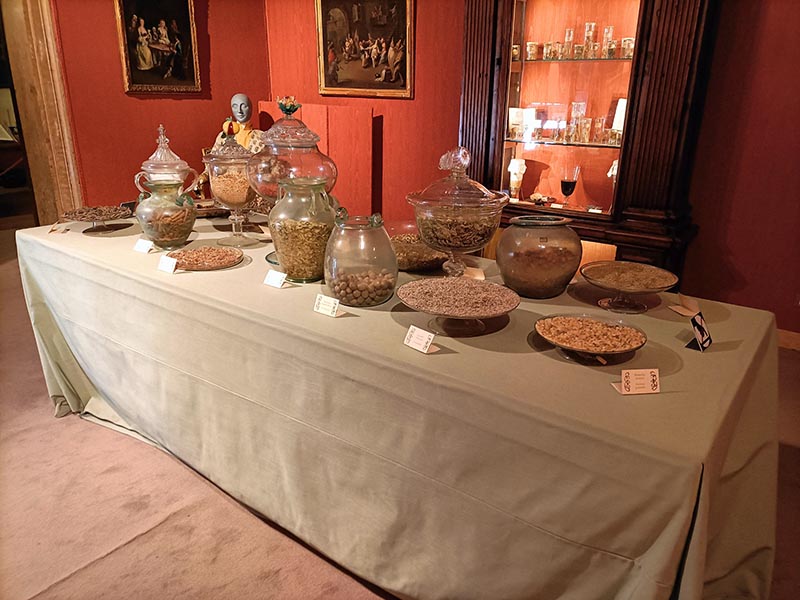
Il museo di Palazzo Mocenigo, oltre ad essere stata la casa di una delle famiglie più importanti di Venezia, e anche museo del costume, è anche Museo del profumo. Da un po’ di tempo, è stata allestita una sezione dedicata al profumo, che in aggiunta a delle altre “sorprese”, offre un esperienza olfattiva del tutto straordinaria.

Non tutti sanno, che all’interno di alcune sale, del Museo, sono posizionati dei diffusori, che ad intervalli di tempo, diffondono delle fragranze aromatiche, che, da delle piacevoli emozioni, a chi visita il palazzo. Per esempio: in sala 4: Blue TeaBlue Tea è una fragranza ispirata ai profumi e alle materie pregiate delle terre asiatiche. È una fragranza femminile, delicata ed elegante, che combina le note fresche e fruttate del tè blu con le note floreali della rosa, della magnolia e del neroli. Il cuore della fragranza è avvolto da varie note fresche, soavi e leggermente fruttate, mentre la base è composta da un vetiver corposo avvolto da muschio. Il tè blu è un tè cinese appartenente alla specie Oolong. È originario del sud-est asiatico e dell’India. Il tè blu è caratterizzato da un colore blu intenso e da un aroma delicato e floreale. La rosa è un fiore simbolo di amore, bellezza e passione. La magnolia è un fiore simbolo di eleganza, raffinatezza e purezza. Il neroli è un fiore simbolo di giovinezza, innocenza e felicità. Il vetiver è un’erba aromatica originaria dell’India. È nota per il suo aroma legnoso e muschiato. Il muschio è una resina vegetale che emana un aroma caldo e avvolgente..

In sala 8: La Rosa Moceniga è caratterizzata da un colore rosa seta leggermente sfumato ed emana un profumo delizioso, fruttato e femminile. È un fiore unico che incarna un mistero ancora tutto da svelare. Ecco alcuni dettagli aggiuntivi sulla Rosa Moceniga:

  • È una rosa molto profumata, con un aroma che ricorda la frutta e i fiori.
  • È una rosa molto bella, con petali delicati e un colore rosa tenue.
  • È una rosa molto resistente, può crescere in una varietà di condizioni climatiche.
  • È una rosa molto rara, è difficile da trovare in commercio.
  • La Rosa Moceniga è un fiore unico e prezioso che è stato apprezzato per secoli. È un simbolo di bellezza, femminilità e raffinatezza.  

In sala 10: La Colonia Veneziana. La fragranza si apre con un’esplosione di agrumi, con note di bergamotto, arancio e limone. Il bergamotto è una nota fresca e agrumata, l’arancio è una nota dolce e solare, mentre il limone è una nota acidula e pungente. Queste note sono unite alle nuances aromatiche del rosmarino, una nota speziata e pungente.Il cuore della fragranza è composto da zenzero, salvia sclarea e iris. Lo zenzero è una nota piccante e stimolante, la salvia sclarea è una nota fresca e aromatica, mentre l’iris è una nota delicata e femminile. Queste note si fondono insieme creando una fragranza complessa e affascinante.Il fondo della fragranza è composto da un accordo legnoso, con note di sandalo, cedro e muschio. Il sandalo è una nota calda e avvolgente, il cedro è una nota legnosa e decisa, mentre il muschio è una nota sensuale e misteriosa. Queste note creano una base solida e persistente per la fragranza, che dura a lungo sulla pelle.

La prossima volta vi parlerò delle altre stanze dell’esperienza olfattiva. Aggiungo anche, che accanto alla biglietteria, c’è un’area dove, se volete potete acquistare i profumi che avete sentito, e altri ancora. Spero intanto di avervi incoraggiato a venire a visitare questo bellissimo museo, che è aperto tutti i giorni tranne il lunedì. Vi aspettiamo !!

Olfactory Experience at Palazzo Mocenigo

The Palazzo Mocenigo museum, in addition to having been the home of one of the most important families in Venice, and also a costume museum, is also a perfume museum. For some time now, a section dedicated to perfume has been set up, which, in addition to other “surprises”, offers a completely extraordinary olfactory experience.

Not everyone knows that diffusers are positioned inside some rooms of the Museum, which at intervals of time, spread aromatic fragrances, which give pleasant emotions to those who visit the building. For example: in room 4: Blue TeaBlue Tea is a fragrance inspired by the scents and precious materials of Asian lands. It is a feminine, delicate and elegant fragrance that combines the fresh and fruity notes of blue tea with the floral notes of rose, magnolia and neroli. The heart of the fragrance is wrapped in various fresh, sweet and slightly fruity notes, while the base is composed of full-bodied vetiver wrapped in musk. Blue tea is a Chinese tea belonging to the Oolong species. It is native to Southeast Asia and India. Blue tea is characterized by a deep blue color and a delicate, floral aroma. The rose is a symbol of love, beauty and passion. Magnolia is a symbol of elegance, refinement and purity. Neroli is a flower symbol of youth, innocence and happiness. Vetiver is an aromatic herb native to India. It is known for its woody and musky aroma. Musk is a plant resin that gives off a warm and enveloping aroma..

In room 8: Rosa Moceniga is characterized by a slightly nuanced silky pink color and exudes a delicious, fruity and feminine scent. It is a unique flower that embodies a mystery yet to be revealed. Here are some additional details on Rosa Moceniga:

  • It is a very fragrant rose, with an aroma reminiscent of fruit and flowers.
  • It is a very beautiful rose, with delicate petals and a soft pink colour.
  • It is a very resistant rose, it can grow in a variety of climatic conditions.
  • It is a very rare rose, it is difficult to find on the market.
  • The Rosa Moceniga is a unique and precious flower that has been treasured for centuries. It is a symbol of beauty, femininity and sophistication.  

In room 10: La Colonia Veneziana. The fragrance opens with a citrus explosion, with notes of bergamot, orange and lemon. The bergamot has a fresh and citrusy note, the orange is a sweet and sunny note, while the lemon is a sour and pungent note. These notes are combined with the aromatic nuances of rosemary, a spicy and pungent note. The heart of the fragrance is composed of ginger, clary sage and iris. Ginger is a spicy and stimulating note, clary sage is a fresh and aromatic note, while iris is a delicate and feminine note. These notes blend together creating a complex and fascinating fragrance. The base of the fragrance is composed of a woody accord, with notes of sandalwood, cedar and musk. Sandalwood is a warm and enveloping note, cedar is a woody and decisive note, while musk is a sensual and mysterious note. These notes create a solid and persistent base for the fragrance, which lasts long on the skin.

Next time I’ll tell you about the other rooms of the olfactory experience. I would also add that next to the ticket office, there is an area where, if you want, you can buy the perfumes you have smelled, and more. In the meantime, I hope I have encouraged you to come and visit this beautiful museum, which is open every day except Monday. We are waiting for you !!

Il Profumo a Venezia

Venezia ha una lunga e ricca storia nella produzione di profumi. Il primo profumo veneziano è stato creato nel XII secolo da un monaco bizantino di nome Angelo Musachio. Il profumo, chiamato “Acqua di Venezia”, era fatto con ingredienti provenienti da tutto il mondo, tra cui rose, gelsomino, iris e sandalo. Nel XVI secolo, Venezia divenne il centro mondiale della produzione di profumi. La città era in una posizione strategica per il commercio con l’Oriente, e gli ingredienti per i profumi arrivavano da tutto il mondo. I profumieri veneziani erano anche molto creativi, e creavano profumi con aromi nuovi e originali.

Nel XVII e XVIII secolo, i profumi veneziani erano molto popolari in tutta Europa. Le donne e gli uomini indossavano profumi per occasioni speciali, come matrimoni, balli e feste. I profumi veneziani erano anche utilizzati come rimedi naturali per la salute e la bellezza.

Nel XIX secolo, la produzione di profumi a Venezia iniziò a declinare. La città perse la sua posizione di centro mondiale del commercio, e gli ingredienti per i profumi divennero più costosi. Tuttavia, alcuni profumieri veneziani continuarono a produrre profumi di alta qualità, e alcuni di questi profumi sono ancora in vendita oggi.

Il processo di creazione del profumo a Venezia nel passato era un processo lungo e laborioso. Ha coinvolto diverse fasi, tra cui:

  • Raccogliere gli ingredienti. Il primo passo è stato raccogliere gli ingredienti per il profumo. Questi ingredienti potevano essere fiori, erbe, spezie, resine e oli. I profumieri spesso viaggiavano in terre lontane per raccogliere gli ingredienti più rari ed esotici.
  • Distillare gli ingredienti. Una volta raccolti gli ingredienti, venivano distillati per estrarre gli oli essenziali. Questo è stato fatto riscaldando gli ingredienti in un alambicco e raccogliendo i vapori rilasciati. I vapori sarebbero quindi condensati nuovamente in forma liquida e gli oli essenziali sarebbero stati separati dall’acqua.
  • Mescolare gli oli essenziali. Gli oli essenziali sarebbero quindi stati mescolati insieme per creare la fragranza desiderata. I profumieri avrebbero miscelato accuratamente gli oli insieme, usando i loro nasi per giudicare le proporzioni.
  • Aggiunta di un fissativo. Un fissativo è una sostanza che aiuta a impedire al profumo di evaporare troppo rapidamente. I profumieri spesso aggiungevano un fissativo, come ambra grigia, muschio o vaniglia, ai loro profumi.
  • Imbottigliamento del profumo. Una volta pronto il profumo, veniva imbottigliato. Le bottiglie erano spesso fatte di vetro o cristallo e decorate con elaborate decorazioni.
  • Il processo di creazione del profumo a Venezia era un processo complesso e che richiedeva tempo, ma i risultati erano profumi che erano noti per la loro bellezza, complessità e longevità.

Oggi, Venezia è ancora una città importante per la produzione di profumi. Ci sono molte aziende che producono profumi a Venezia, come la Mavive per esempio, e alcuni di questi profumi sono esportati in tutto il mondo. I profumi veneziani sono apprezzati per la loro qualità, la loro creatività e il loro legame con la storia della città.

Per capire meglio la storia del profumo a Venezia, consiglio di visitare Palazzo Mocenigo, è un palazzo storico situato a Venezia, nel sestiere di Santa Croce. Il palazzo fu costruito nel XVI secolo dalla famiglia Mocenigo, una delle più importanti famiglie patrizie veneziane. Il palazzo è oggi sede del Museo del Profumo, che racconta la storia del profumo a Venezia. Il museo ospita una collezione di oltre 5.000 oggetti legati al mondo del profumo, tra cui bottiglie, flaconi, strumenti per la produzione del profumo e libri antichi.

Il museo è diviso in cinque sezioni:

  • Storia del profumo a Venezia
  • La produzione del profumo
  • Gli ingredienti del profumo
  • I profumi del mondo
  • Il profumo nell’arte e nella cultura

Il museo è aperto al pubblico tutti i giorni, tranne il Lunedì. Il Museo del Profumo è un luogo unico per scoprire la storia del profumo a Venezia. Il museo è anche un luogo suggestivo, dove è possibile immergersi nell’atmosfera raffinata e elegante della Serenissima.

Perfume in Venice

Venice has a long and rich history in perfume production. The first Venetian perfume was created in the 12th century by a Byzantine monk named Angelo Musachio. The perfume, called “Acqua di Venezia”, was made with ingredients from all over the world, including roses, jasmine, iris, and sandalwood.

In the 16th century, Venice became the world center of perfume production. The city was in a strategic location for trade with the East, and the ingredients for perfumes came from all over the world. Venetian perfumers were also very creative, and they created perfumes with new and original aromas.

In the 17th and 18th centuries, Venetian perfumes were very popular throughout Europe. Women and men wore perfumes for special occasions, such as weddings, balls, and parties. Venetian perfumes were also used as natural remedies for health and beauty.

In the 19th century, perfume production in Venice began to decline. The city lost its position as the world center of trade, and the ingredients for perfumes became more expensive. However, some Venetian perfumers continued to produce high-quality perfumes, and some of these perfumes are still on sale today.

The process of creating perfume in Venice in the past was a long and labor-intensive process. It involved several steps, including:

  • Gathering the ingredients. The first step was to gather the ingredients for the perfume. These ingredients could be flowers, herbs, spices, resins, and oils. The perfumers would often travel to far-off lands to gather the most rare and exotic ingredients.
  • Distilling the ingredients. Once the ingredients were gathered, they would be distilled to extract the essential oils. This was done by heating the ingredients in a still and collecting the vapors that were released. The vapors would then be condensed back into liquid form, and the essential oils would be separated from the water.
  • Mixing the essential oils. The essential oils would then be mixed together to create the desired fragrance. The perfumers would carefully blend the oils together, using their noses to judge the proportions.
  • Adding a fixative. A fixative is a substance that helps to keep the perfume from evaporating too quickly. Perfumers would often add a fixative, such as ambergris, musk, or vanilla, to their perfumes.
  • Bottling the perfume. Once the perfume was ready, it would be bottled. The bottles were often made of glass or crystal, and they were decorated with elaborate designs.
  • The process of creating perfume in Venice was a complex and time-consuming process, but the results were perfumes that were known for their beauty, complexity, and longevity.

Today, Venice is still an important city for perfume production. There are many companies that produce perfumes in Venice, like Mavive for instance, and some of these perfumes are exported all over the world. Venetian perfumes are appreciated for their quality, their creativity, and their ties to the city’s history.

To better understand the history of perfume in Venice, I recommend visiting Palazzo Mocenigo, is a historic palace located in Venice, in the sestiere of Santa Croce. The palace was built in the 16th century by the Mocenigo family, one of the most important patrician families in Venice.

The palace is now home to the Museum of Perfume, which tells the story of perfume in Venice. The museum houses a collection of over 5,000 objects related to the world of perfume, including bottles, vials, perfume-making tools and ancient books.

The museum is divided into five sections:

  • History of perfume in Venice
  • Perfume production
  • Perfume ingredients
  • Perfumes of the world
  • Perfume in art and culture


The museum is open to the public every day except Tuesday. The Museum of Perfume is a unique place to discover the history of perfume in Venice. The museum is also a charming place, where you can immerse yourself in the refined and elegant atmosphere of the Serenissima.

Nuova mostra a Ca’ Rezzonico sul vetro !

For the English translation please scroll down the page, thank you !

LINO TAGLIAPIETRA
L’origine del viaggio
Dal 14 luglio al 25 settembre 2023
Venezia, Ca’ Rezzonico – Museo del Settecento Veneziano
Mostra a cura di Fondazione Lino Tagliapietra e della Fondazione Musei Civici di Venezia

C’è una nuova mostra nel bellissimo Museo di Ca’ Rezzonico, della Fondazione Musei Civici di Venezia, che si può ammirare nella sala del Portego al primo e secondo piano. Insieme la fondazione Musei Civici di Venezia e la Fondazione Lino Tagliapietra, hanno voluto rendere omaggio a Lino Tagliapietra, un personaggio poliedrico: artista viaggiatore, sperimentatore, sempre alla costante ricerca di stimoli da inserire nelle sue creazioni, vere e proprie opere d’arte in vetro.

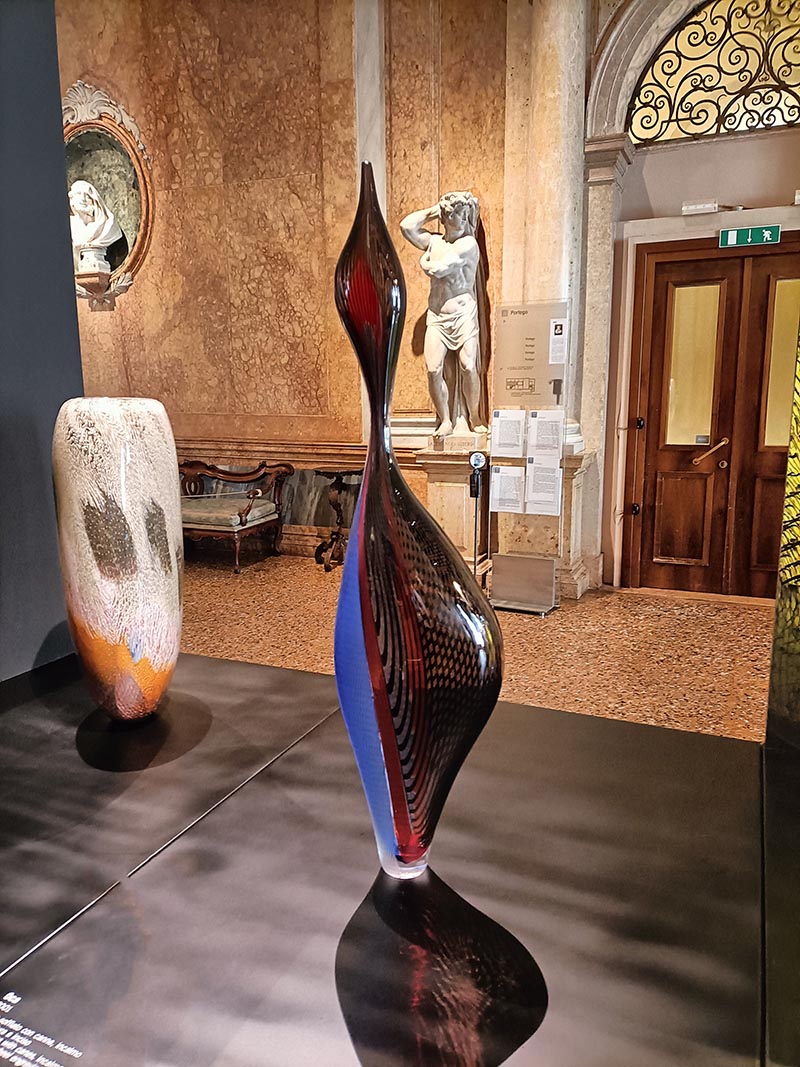
Oltre a opere fantasmagoriche come “Il dinosauro dal collo lungo”, “Fuji”, “Asola”, “Neomea”, “Oka”, “Africa”, “Hopi” ci sono tante altri capolavori che raccontano le antiche tecniche tradizionali muranesi , veri processi tipici utilizzati per la lavorazione, come vetro soffiato a bacchetta, filamento, topo, incalmo, e doppio soffiaggio o ri-soffiaggio, battitura, molatura, ecc. Il lavoro scultoreo ha permesso a Lino Tagliapietra di affermarsi come artista indipendente, un pioniere, un vero ricercatore di nuove stagioni e generazioni di artisti del vetro.

Nato a Venezia nel 1934, Lino Tagliapietra lavora nel vetro da quando era apprendista all’età di 11 anni. Si distinse a Murano fin dalla tenera età, e all’età di ventuno anni fu insignito del titolo di Maestro, padroneggiando l’arte della soffiatura del vetro. Il suo prolifico talento sulle isole di vetro della Laguna di Venezia, unito alla sua costante curiosità, lo porta presto a viaggiare così tanto che nel 1979 si reca negli Stati Uniti e visita per la prima volta Seattle. Fu qui che introdusse la tradizione della soffiatura del vetro veneziano agli studenti della Pilchuck School, consolidando così la sua reputazione nella storia delle tradizioni americane della soffiatura del vetro. Attraverso i suoi insegnamenti, Tagliapietra ha cambiato irreversibilmente l’uso del vetro in America, costruendo un nuovo futuro con il mezzo, intriso di conoscenze e abilità tradizionali italiane interpretate attraverso nuove vibranti energie.

La mostra è molto bella e interessante, durerà fino al 25 di settembre, per cui c’è ancora tempo per andare a visitarla, cogliete questa doppia opportunità, per vedere una mostra particolare, che vi incanterà e vi farà venire voglia di visitare il Museo del Vetro di Murano. Inoltre potrete visitare questo stupendo Museo, che ha riaperto da poco, e che è diventato più bello che mai ! Vi aspettiamo !

New exhibition on glass at Ca’ Rezzonico!

LINO TAGLIAPIETRA
The origin of the journey
From 14 July to 25 September 2023
Venice, Ca’ Rezzonico – Museum of the 18th century Venice
Exhibition curated by Lino Tagliapietra Foundation and the Civic Museums Foundation of Venice

There is a new exhibition in the beautiful Museum of Ca’ Rezzonico, of the Fondazione Musei Civici di Venezia, which can be admired in the Portego room on the first and second floors. Together the Fondazione Musei Civici di Venezia and the Fondazione Lino Tagliapietra wanted to pay homage to Lino Tagliapietra, a multifaceted character: traveling artist, experimenter, always on the constant search for stimuli to insert in his creations, real works of art in glass.

In addition to phantasmagorical works such as “The long-necked dinosaur”, “Fuji”, “Asola”, “Neomea”, “Oka”, “Africa”, “Hopi” there are many other masterpieces that tell the ancient traditional Murano techniques, true typical processes used for crafting, such as rod-blowing, filament, topo, incalmo, and double- or re-blowing, beating, grinding, etc. The sculptural work has allowed Lino Tagliapietra to establish himself as an independent artist, a pioneer, a truly researcher of new seasons and generations of glass artists.

Born in Venice in 1934, Lino Tagliapietra has worked in glass since he was an apprentice at the age of 11. He distinguished himself in Murano from an early age, and at the age of twenty-one he was awarded the title of Maestro, mastering the art of glassblowing. His prolific talent on the glass islands of the Venice Lagoon, combined with his constant curiosity, soon led him to travel so much that in 1979 he went to the United States and visited Seattle for the first time. It was here that he introduced the tradition of Venetian glassblowing to the students of the Pilchuck School, thus cementing his reputation in the history of American glassblowing traditions. Through his teachings, Tagliapietra irreversibly changed the use of glass in America, forging a new future for the medium, imbued with traditional Italian knowledge and skills interpreted through vibrant new energies.

The exhibition is very beautiful and interesting, it will last until September 25th, so there is still time to go and visit it, take this double opportunity, to see a particular exhibition, which will enchant you and make you want to visit the Museum of Murano glass. You can also visit this wonderful museum, which has recently reopened, and which has become more beautiful than ever! We are waiting for you!

Finalmente riapre Ca’ Rezzonico !!!

For the English translation please scroll down the page, thank you !

E finalmente ci siamo ! Dal 28 di giugno finalmente Ca’ Rezzonico museo del 700 Veneziano, riapre al pubblico, dopo mesi di chiusura per importanti restauri. Nella mattinata del 26, di corsa tra le calli di Venezia, dopo aver visitato le varie mostre già descritte nei miei due blog precedenti, mi sono recato presso Ca’ Rezzonico, il museo più bello della Fondazione Musei Civici di Venezia, per la conferenza stampa.

La conferenza stampa si è tenuta nella sala portego al 1° piano del museo, con una sala gremita di gente, tanto che è stato difficile trovare un posto libero. Il convegno è stato aperto dal Direttore del Museo Alberto Craievich, che ha subito dato la parola alla Presidente della Fondazione Musei Civici di Venezia, Maria Cristina Gribaudi, seguita dal Sindaco di Venezia Luigi Brugnaro e poi dal Presidente di Ancc-Coop Marco Pedroni e dal Vicepresidente di Coop Alleanza 3.0 Andrea Volta.

I lavori al Pian terreno sono stati realizzati con le importanti donazioni di 450.000 euro circa da parte di Coop e di tutte le cooperative di consumatori, erogata attraverso la piattaforma dell’art bonus. In sostanza sono stati fatti dei lavori di restauro a livello strutturale, che non sono ancora terminati, ma che proseguiranno nel 2024 a museo aperto. Si è provveduto alla totale sostituzione degli impianti di illuminazione, con l’impiego di faretti LED ad altissima resa cromatica, una politica voluta per garantire la conservazione e la valorizzazione delle opere. Altri lavori hanno visto la messa in sicurezza del giardino, dove finalmente i giochi potranno tornare ad essere disponibili dei bambini di tutto il mondo.

Si segnala anche la presenza di locali nuovi, ideati per i turisti, che possono accedere a titolo gratuito, che offre una preview di quello che possono vedere all’interno del museo, una novità molto importante, che non si riscontra in nessun altro museo. L’unione del bookshop e della biglietteria, che ora sono tutti nella stessa stanza. Un bar, del tutto riallestito, nuove opere già installate nei piani, e altre in arrivo.

Ca’ Rezzonico si conferma ancora una volta, come il più bel museo della Fondazione, vera punta di diamante. Al visitatore che vuole conoscere com’era Venezia nel 1700, non può non visitare Ca’ Rezzonico, il Museo di Casa di Carlo Goldoni e il museo di Palazzo Mocenigo. Due sono gli artisti che ritraggono Venezia: Canaletto e Pietro Longhi. Il primo ci fa vedere i palazzi dall’esterno, il secondo invece, ci porta al suo interno. Un must, un qualcosa da non perdere !

Si ringrazia, tutti coloro che hanno realizzato questo progetto, la Fondazione Musei Civici di Venezia, I vari operari che hanno lavorato durante i lavori nei cantieri, le donne di pulizie, e i dipendenti della cooperativa Socio Culturale, che hanno presidiato i cantieri, con grande professionalità.

Finally Ca’ Rezzonico reopens!!!

And finally here we are! Finally, from 28 June Ca’ Rezzonico museum of the 18th century Venice reopens to the public, after months of closure for major restorations. On the morning of the 26th, running through the narrow streets of Venice, after visiting the various exhibitions already described in my two previous blogs, I went to Ca’ Rezzonico, the most beautiful museum of Civic Museums Foundation of Venice, for the press conference .

The press conference was held in the portego room on the 1st floor of the museum, with the room packed with people, so much so that it was difficult to find a free seat. The conference was opened by the Director of the Museum Alberto Craievich, who immediately gave the floor to the President of Civic Museums Foundation of Venice, Maria Cristina Gribaudi, followed by the Mayor of Venice Luigi Brugnaro and then by the President of Ancc-Coop Marco Pedroni and by Vice-President of Coop Alleanza 3.0 Andrea Volta.

The works on the ground floor were carried out with the important donations of around 450,000 euros from Coop and all the consumer cooperatives, disbursed through the art bonus platform. In essence, structural restoration work has been carried out, which has not yet been completed, but which will continue in 2024 when the museum is open. The lighting systems were completely replaced, with the use of LED spotlights with very high color rendering, a policy aimed at guaranteeing the conservation and enhancement of the works. Other works have seen the safety of the garden, where games will finally be available again for children from all over the world.

We also note the presence of new premises, designed for tourists, which can be accessed free of charge, offering a preview of what they can see inside the museum, a very important novelty which is not found in any other museum. The union of the bookshop and the ticket office, which are now all in the same room. A bar, completely rearranged, new works already installed on the floors, and more on the way.

Ca’ Rezzonico is once again confirmed as the most beautiful museum of the Foundation, the true diamond tip. The visitor who wants to know what Venice was like in the 1700s cannot fail to visit Ca’ Rezzonico, the Carlo Goldoni House Museum and the Palazzo Mocenigo museum. There are two artists who portray Venice: Canaletto and Pietro Longhi. The former shows us the buildings from the outside, while the latter takes us inside. A must, something not to be missed!

We thank all those who carried out this project, the Fondazione Musei Civici di Venezia, the various workers who worked during the work on the construction sites, the cleaning ladies, and the employees of the Socio Culturale cooperative, who supervised the construction sites, with great professionalism.

Maschere nel museo di Casa di Carlo Goldoni

For the English translation please scroll down the page, thank you !

La mattinata di ieri è stata molto frenetica, dopo aver visitato l’albergo Ca’Sagredo, dove ho visto delle opere molto interessanti, di cui ho fatto la recensione: Mappamondi a Ca’Sagredo mi sono recato nel museo di Casa di Carlo Goldoni per vedere le opere dell’ultima mostra, che è abbastanza intrigante. La mostra si intitola “Impronte di un Mascarer : Luogo, spazio e tempo del gesto.

La mostra è collocata tra piano terra e primo piano, e ospita una serie di maschere molto originali.

La mostra è a cura della Direttrice Chiara Squarcina e Tobia dall’Osto, e sarà visibile dal 15 di Aprile fino al 1 di Ottobre 2023. La mostra non è altro che un percorso espositivo, di maschere -impronte che presentano dei piccoli calchi negativi in alabastro, e dei grandi mascheroni (positivi) fatti di cartapesta e resina, visibili si a piano terra che al piano superiore.

Questa mostra di maschere, trova la sua giusta collocazione, in questo museo, visto che nell’arte teatrale sia di Carlo Goldoni ma anche di altri esponenti del teatro, si fa molto uso di maschere, e non dimentichiamo che le maschere a Venezia erano indossate anche per forma di anonimato, come la Bauta o la moretta. Maschere che permettevano di essere chiunque, in quanto non si poteva identificare chi la portava. Le maschere, ci portano a non essere più noi stessi, seppur per un tempo limitato.

L’artista Gualtiero Dall’Osto, propone numerosi significati della “maschera”, vera o virtuale, non ultimo quello strettamente collegato a colui che la crea, il Mascarer. Infatti, proprio grazie all’intuizione di questo artista, si presenta questa inedita esposizione di sue creazioni, dove si possono analizzare i significati nascosti, connessi sia alla maschera che al suo fautore.

Al piano superiore si possono ammirare, oltre alle creazioni originali, alcune maschere a noi note, in quanto rappresentano i personaggi di molte commedie, quali : Pulcinella, Balanzone, Colombina, Arlecchino, sempre ad opera dell’artista Gualtiero Dall’Osto.

Una mostra molto interessante, alcune maschere mi hanno molto colpito, ad esempio le due maschere sul cosmo infinito, dove si rimane quasi ipnotizzati, a fissarle per ore e ore, provando proprio la sensazione, dell’assenza di tempo. Una mostra originale, intrigante, che consiglio a tutti di andare a vederla !!

Masks in the museum of the House of Carlo Goldoni

Yesterday morning was very hectic, after visiting the Ca’Sagredo hotel, where I saw some very interesting works, which I reviewed: Mappamondi a Ca’Sagredo I went to the Casa di Carlo Goldoni museum to see the works of the last show, which is quite intriguing. The exhibition is titled “Footprints of a Mascarer: Place, space and time of the gesture. The exhibition is located between the ground and first floors, and hosts a series of very original masks.

The exhibition is curated by the Director Chiara Squarcina and Tobia dall’Osto, and will be visible from April 15th until October 1st 2023. The exhibition is nothing more than an exhibition itinerary of masks – footprints that present small negative casts in alabaster, and large (positive) masks made of papier-mâché and resin, visible both on the ground floor and on the upper floor.

This exhibition of masks finds its rightful place in this museum, given that in the theatrical art both of Carlo Goldoni but also of other exponents of the theater, masks are widely used, and let us not forget that masks in Venice were worn even in the form of anonymity, like the Bauta or the moretta. Masks that allowed you to be anyone, as you couldn’t identify who wore it. Masks lead us to no longer be ourselves, albeit for a limited time.

The artist Gualtiero Dall’Osto proposes numerous meanings of the “mask”, real or virtual, not least the one closely connected to the one who creates it: the Mascarer. In fact, thanks to the intuition of this artist, this unprecedented exhibition of his creations is presented, where it is possible to analyze the hidden meanings, connected both to the mask and to his supporter.

Upstairs you can admire, in addition to the original creations, some masks known to us, as they represent the characters of many comedies, such as: Pulcinella, Balanzone, Colombina, Arlecchino, always by the artist Gualtiero Dall’Osto.

A very interesting exhibition, some masks struck me a lot, for example the two masks on the infinite cosmos, where one remains almost hypnotized, staring at them for hours and hours, experiencing the sensation of the absence of time. An original, intriguing exhibition that I recommend to everyone to go and see it!!

Un’altra mostra di Soccol nei musei civici di Venezia

For the English translation please scroll down the page, thank you !

Una nuova mostra, è stata inugurata da pochi giorni presso il Palazzo Fortuny della Fondazione Musei civici di Venezia, ched si intitola : “SOCCOL RIFLESSIONI NOTTURNE” che durerà dal 5 maggio – fin al 1 ottobre 2023, una mostra a cura di Chiara Squarcina, direttrice del splendido museo di Palazzo Mocenigo, che invito a visitare perché è veramente molto bello !

Se il nome “Soccol” vi sembra familiare, è perché l’artista aveva già fatto una precedente mostra nei musei civici Veneziani, e di cui avevo fatto la recensione anche quella volta, potete leggerla, seguendo il link sotto:

https://diariodiunoperatoremuseale.co/2019/02/11/maree-teatri-e-labirinti/

Giovanni Soccol ha iniziato a dipingere nel 1952 nello studio del pittore viennese Ilse Bernheimer. Tra gli anni ’50 e ’60, l’elemento caratterizzante del suo lavoro giovanile sono i primi studi sulle qualità figurative, sostituiti negli anni ’70 da studi nel campo dell’astrazione, che caratterizzano l’intero ciclo Presenze-Asenze, Visioni e mese degli anni ’80. Dalla metà degli anni ’80, dopo varie esperienze nel campo della scenografia, lavora in vari teatri, tra cui la Royal Opera House di Stoccolma nel 1986 e il Palazzo dei Diamanti di Ferrara nello stesso anno. Dopo una grande mostra antologica, Soccol decide di concentrarsi sulla pittura. Inizierà così il ciclo di Saudade e delle Isole. Dall’inizio degli anni ’90 le esperienze precedenti continueranno ad arricchirsi ea svilupparsi in nuovi temi che prenderanno forma in cattedrali, cisterne, labirinti. Nel 2017 un’ampia selezione sarà presentata al Museo del Paesaggio Torre di Mosto, dove presenterà una mostra che ripercorre cinquant’anni di attività e, nello stesso anno, una mostra personale alla galleria BOA di Parigi sul tema del invenzione del labirinto. Nel 2019 la Galleria Internazionale d’Arte Moderna di Pesaro a Venezia ha ospitato una sua mostra personale incentrata sul teatro e sui labirinti dell’invenzione.

I soggetti di questa serie di dipinti comprendono dieci edifici emblematici affacciati sul Canal Grande, dalla Dogana da Mar alla Chiesa di San Simeone, ognuno dei quali suscitò un particolare interesse di Soccol, sfociando in dialogo formale e spiritualità. Le tele, alte più o meno 200 cm e lare 150 cm, sono state dipinte con tecniche miste, vale a dire tempera sottile, emulsione acqua in olio, smalto oleoresina, tutte preparate dall’artista direttamente in studio, seguendo una ricerca sulle metodologie storiche tradizionali.

Mi sono praticamente innamorato di questi dipinti, sono stupendi, tutti quanti, uno più bello dell’altro, non siete d’accordo ? Invito tutti i visitatori, stranieri e non, di visitare questa bellissima mostra, e naturalmente i stupendi due piani del museo, che di recente è stato restaurato, e riallestito in maniera del tutto affascinante !

5 maggio – 1 ottobre 2023

Venezia, Museo Fortuny

Another exhibition by Soccol in the civic museums of Venice

A new exhibition was inaugurated few days ago at the palazzo fortuny of civic museums foundation of Venice, entitled: “Soccol, night reflections” which will last from 5 May – until 1 October 2023, an exibition curated by Chiara Squarcina, director of many museums, among them, the splendid museum of Mocenigo Palace which I invite you to visit because it is truly very beautiful!

If the name Soccol seems familiar to you, it is because the artist had already had a previous exhibition at Ca’ Pesaro, another museum of the Fondation civic museums, one which I reviewed that time too, and you can read it, following the link below:

https://diariodiunoperatoremuseale.co/2019/02/11/maree-teatri-e-labirinti/

Giovanni Soccol was born in Venice 1938. he began studying painting 1952, the studio of Viennese painter Ilse Bernheimer. Between the 1950s and 1960s, the main feature of his youthful work were his first figurative studies, replaced in the 1970s by studies in the field of abstraction, which would mark the “Presenze-Asenze”, “Visioni e mese” cycle throughout the 1980s. From the mid-80s, after various experiences in the field of scenography, he worked in various theaters, including the Royal Opera House in Stockholm in 1986, and after a major anthological exhibition for him at Palazzo dei Diamanti in the same year in Ferrara, Soccol he decided to focus on painting. Thus he will begin the cycle of Saudade and the Islands. From the beginning of the 90s the previous experiences will continue to be enriched, developing into new themes that will take shape in cathedrals, cisterns, labyrinths. In 2017 the Torre di Mosto Landscape Museum will present a wide selection that will present him with an exhibition that traces fifty years of activity, and in the same year a solo exhibition at the BOA gallery in Paris on the theme of the Labyrinth of Inventions. In 2019 the International Gallery of Modern Art of Pesaro in Venice hosted a personal exhibition of his focused on the theater and the labyrinths of invention.

The subjects of this series of paintings include ten emblematic buildings overlooking the Grand Canal, from the Dogana da Mar to the Church of San Simeone, each of which aroused a particular interest for Soccol, resulting in formal dialogue and spirituality. The canvases, more or less 200 cm high and 150 cm wide, were painted with mixed techniques, i.e. thin tempera, water-in-oil emulsion, oleoresin enamel, all prepared by the artist directly in the studio, following research on historical methodologies traditional.

I practically fell in love with these paintings, they are all wonderful, one more beautiful than the other, don’t you agree? I invite all visitors, foreigners and not, to visit this beautiful exhibition, and of course the wonderful two floors of the museum, which has recently been restored and rearranged in a completely fascinating way!

5 May – 1 October 2023

Venice, Museo Fortuny