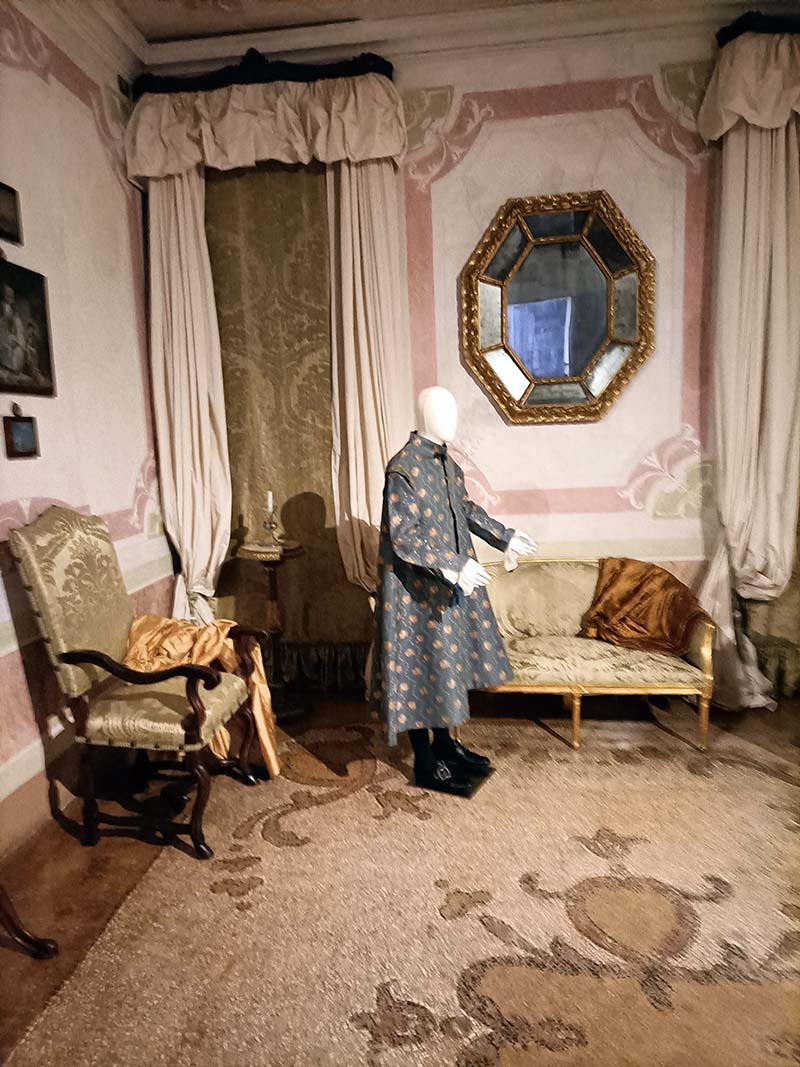
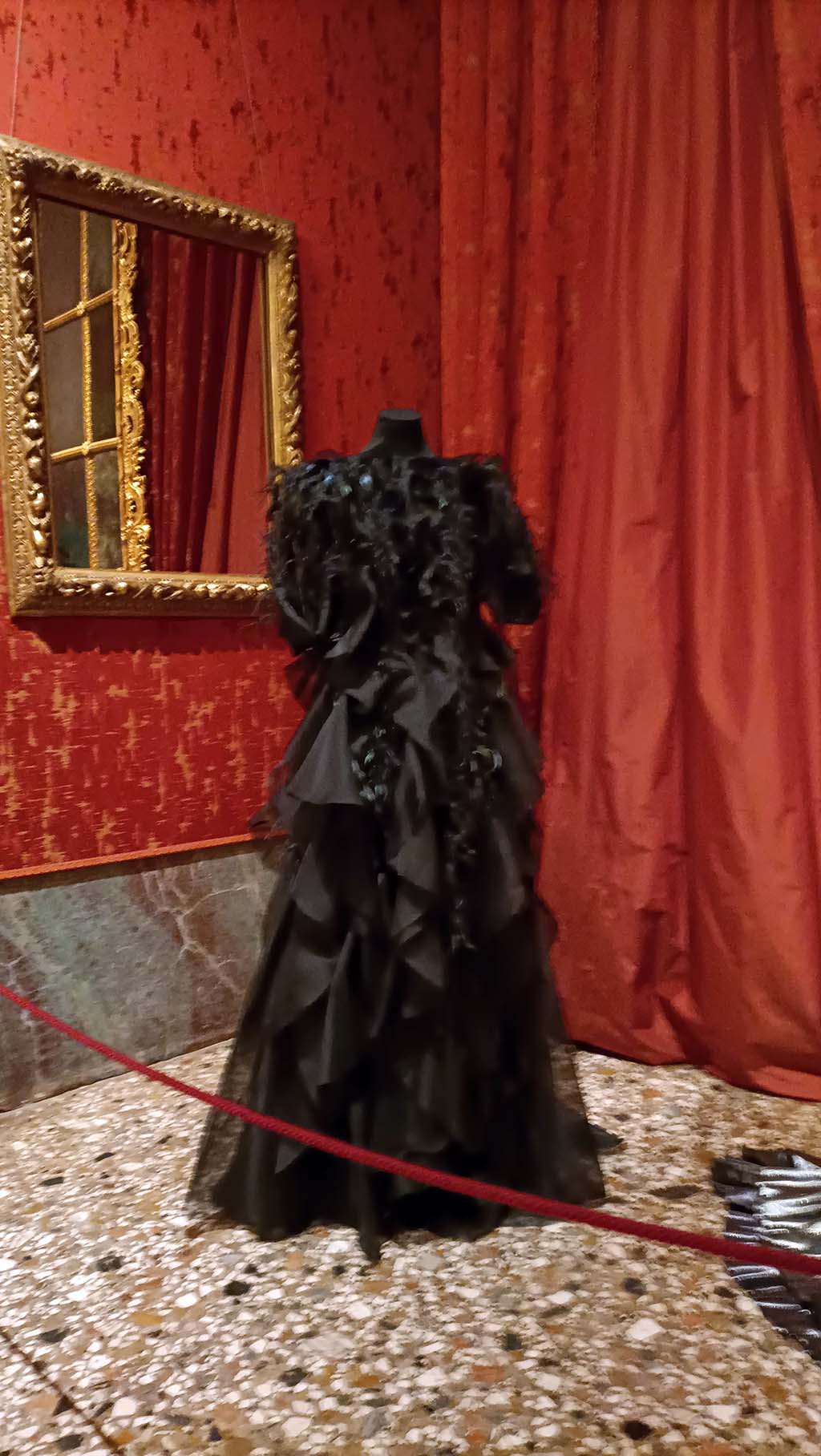
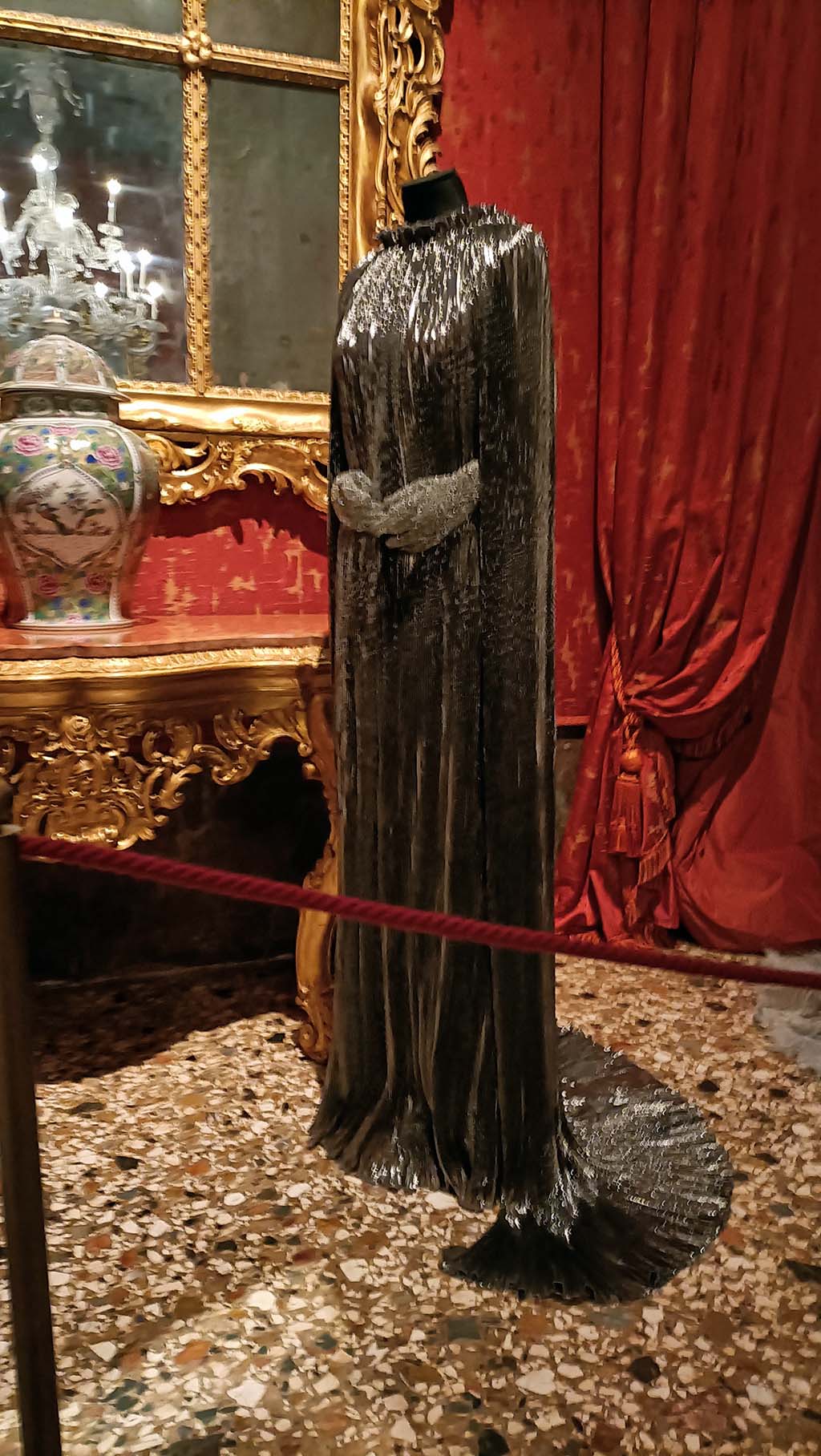
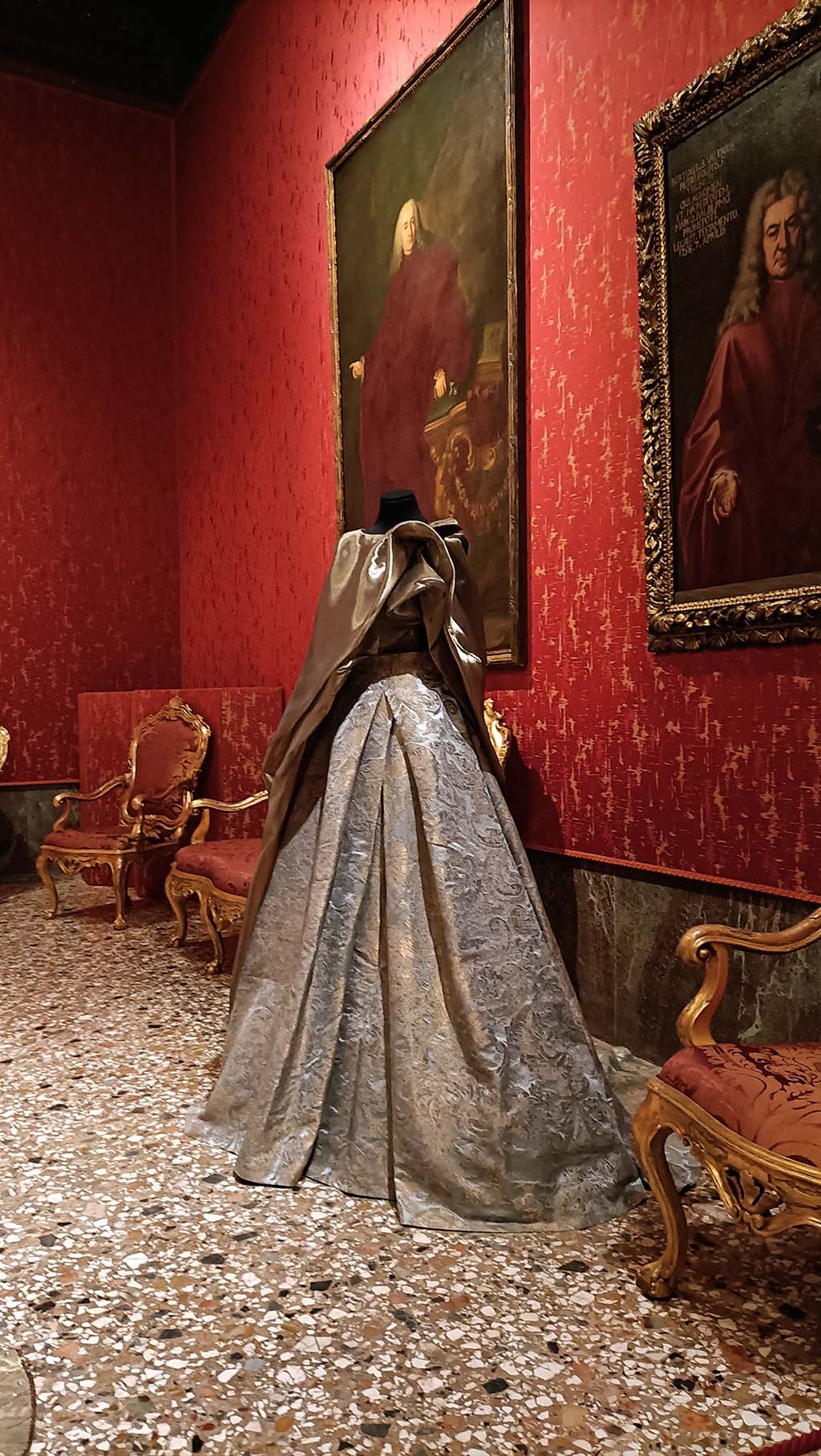
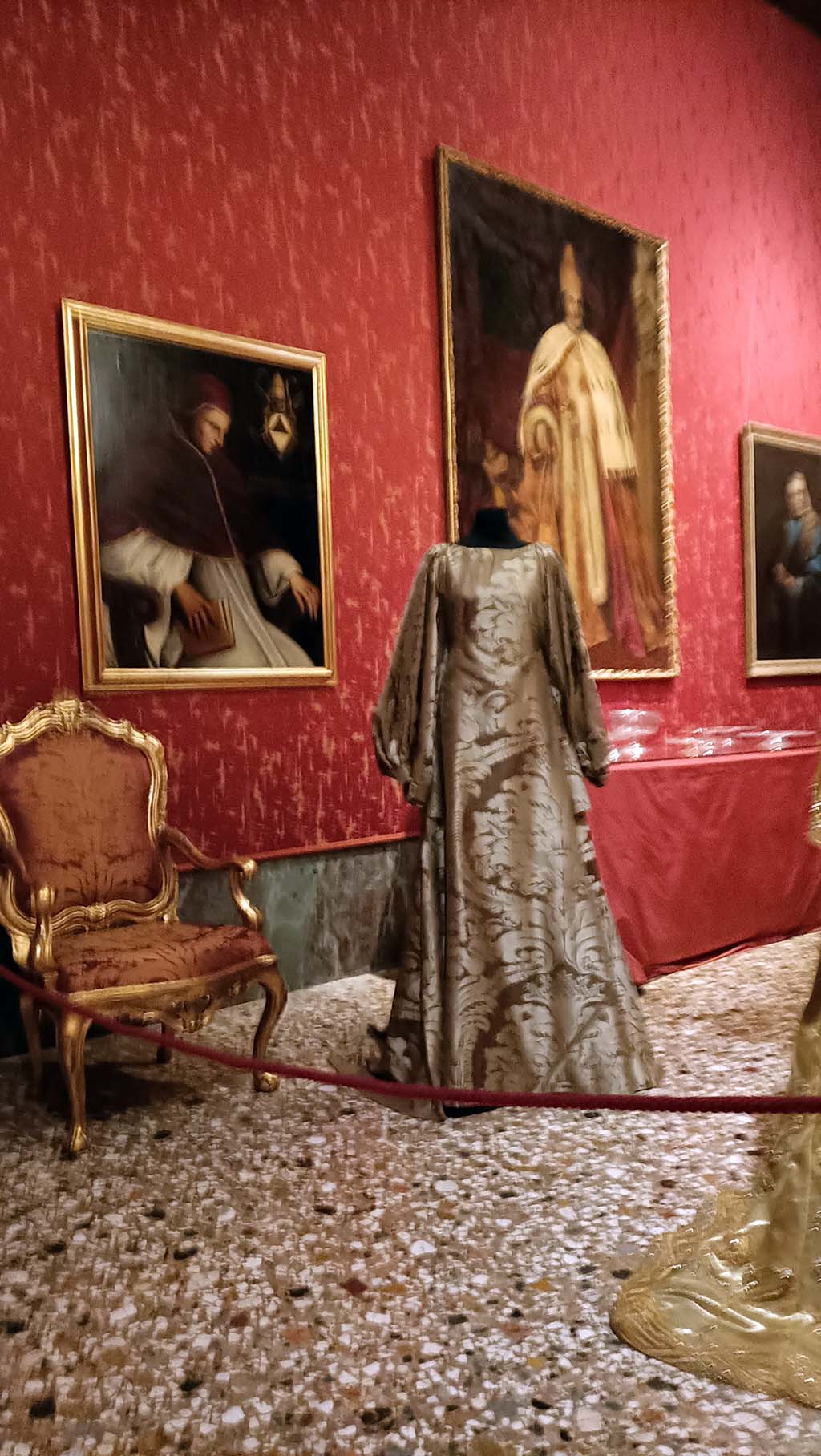
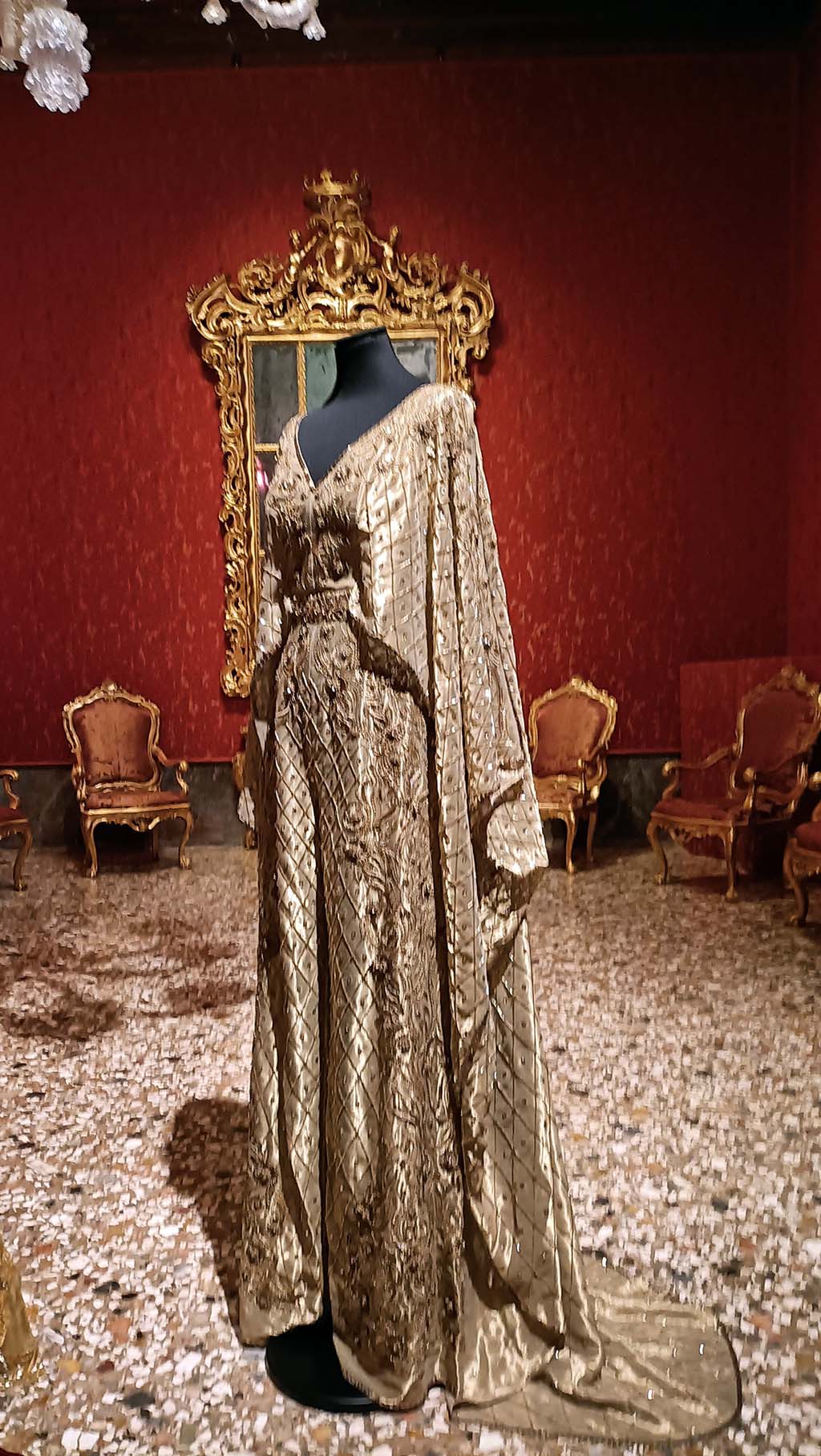
I costumi di Marco Polo a Palazzo Mocenigo !

For the English translation please scroll down the page, thank you !

Nel 1982, gli schermi televisivi di ben 46 nazioni vennero rapiti da un’avventura epica: la miniserie “Marco Polo”. Co-produzione italo-statunitense-britannica-francese, questa serie in otto puntate ha ripercorso le vicende del celebre esploratore veneziano, interpretato da un giovane e magnetico Kenneth Marshall.

La serie, diretta dal maestro Giuliano Montaldo, si distingueva per la sua imponenza e la sua cura per i dettagli. Le riprese si svolsero in luoghi mozzafiato come la Cina, la Mongolia e l’Uzbekistan, contribuendo a creare un’atmosfera autentica e coinvolgente. Accanto a Marshall, un cast stellare di attori internazionali ha dato vita a personaggi indimenticabili, tra cui Burt Lancaster, Denholm Elliott, Tony Vogel, Leonar Nimoy, Anne Bancroft, con molti altri con le musiche del grande Ennio Morricone, e soprattutto i costumi di Enrico Sabatini.

Ma il vero protagonista era senza dubbio Marco Polo. La serie ha saputo catturare lo spirito di avventura e la sete di conoscenza che spinsero il giovane veneziano ad attraversare il mondo e ad immergersi in culture lontane. Nonostante la sua fedeltà storica, “Marco Polo” non era un semplice documentario. La serie si è presa alcune licenze creative per rendere la storia più avvincente e appassionante. Il risultato è stato un’opera che ha saputo conquistare il pubblico di tutte le età.

Ancora oggi, a distanza di quasi quarant’anni, “Marco Polo” rimane una pietra miliare della televisione. La serie ha aperto la strada ad altre produzioni epiche e ha contribuito a far conoscere al grande pubblico la figura di Marco Polo e la sua straordinaria avventura. Se siete alla ricerca di una serie TV che vi trasporti in un’epoca lontana e vi faccia vivere emozioni indimenticabili, “Marco Polo” è un titolo da non perdere. Oltre alla sua valenza storica e culturale, la serie offre anche uno spunto di riflessione sulla diversità e sull’importanza del dialogo interculturale. In un mondo sempre più globalizzato, il messaggio di “Marco Polo” è più attuale che mai.

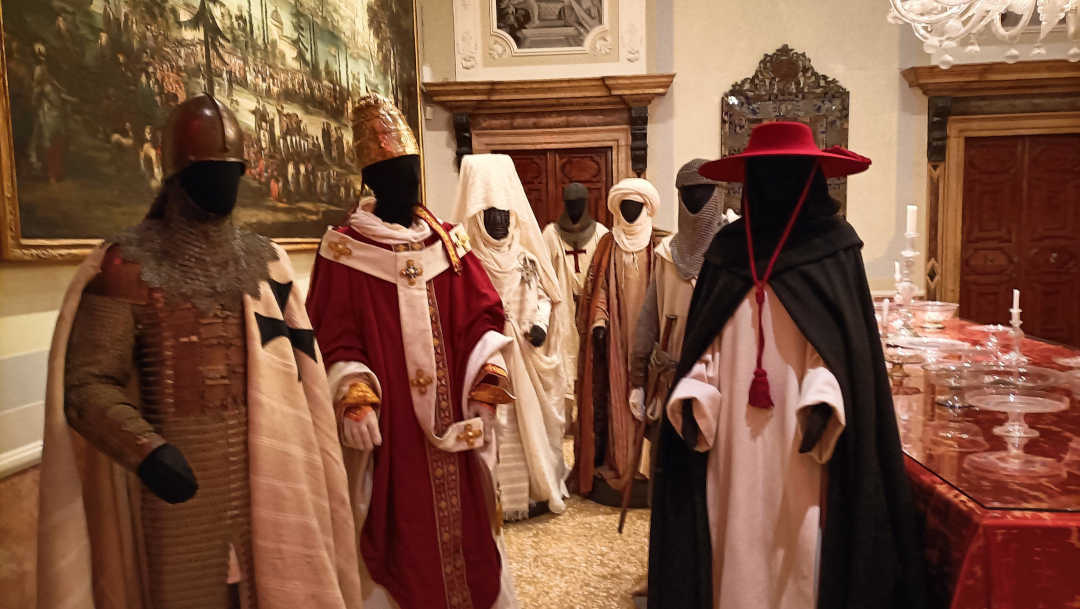
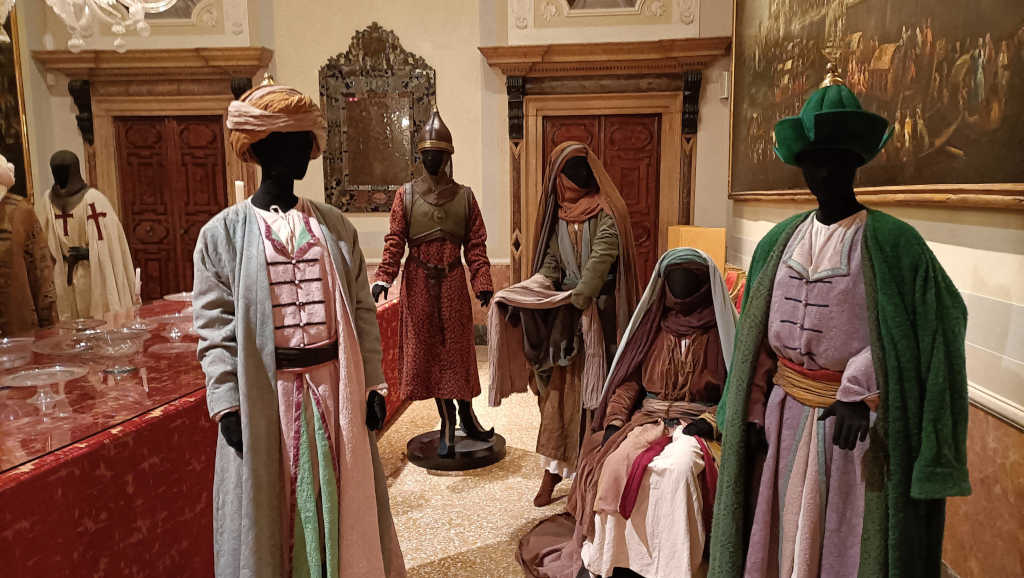
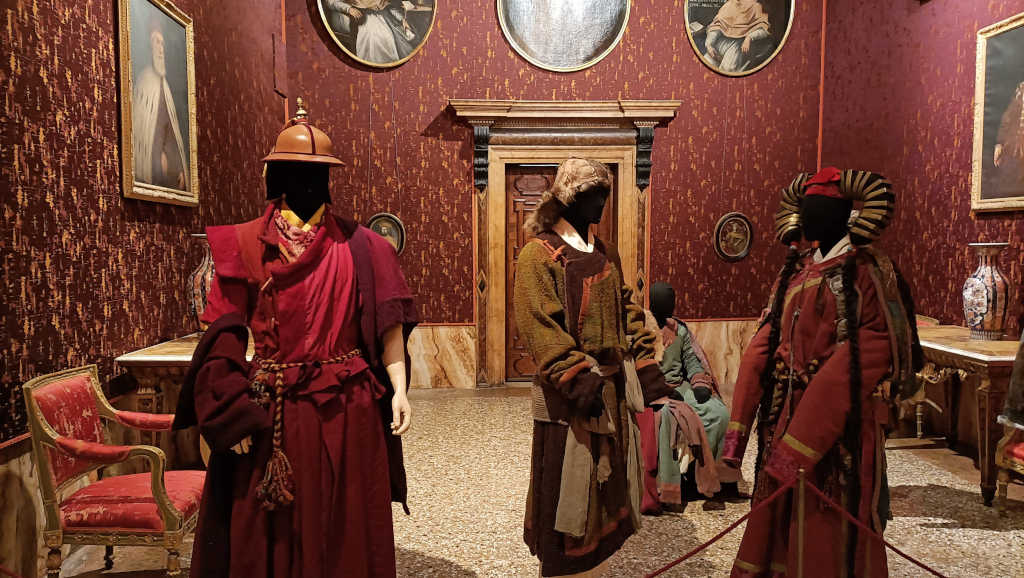
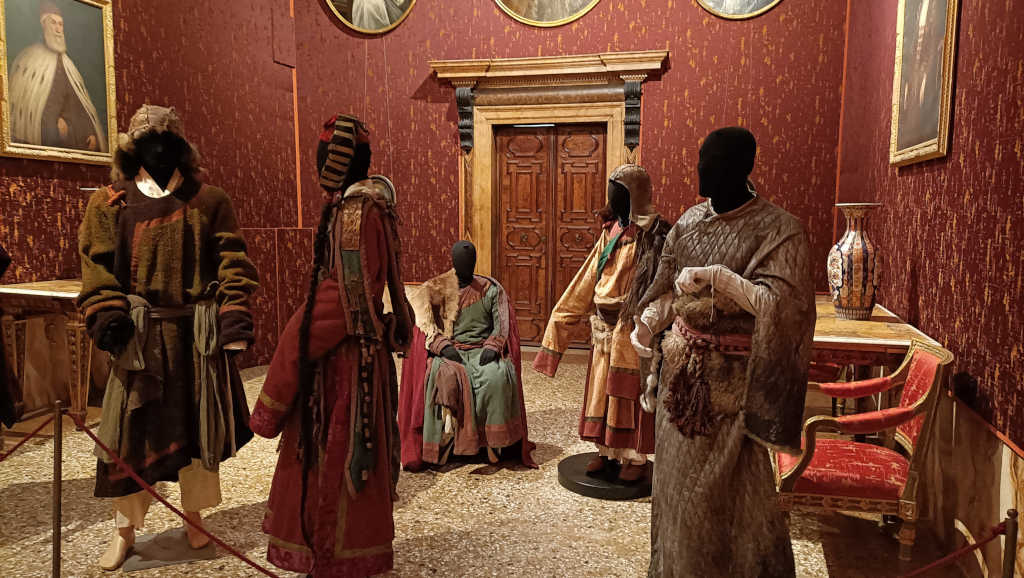
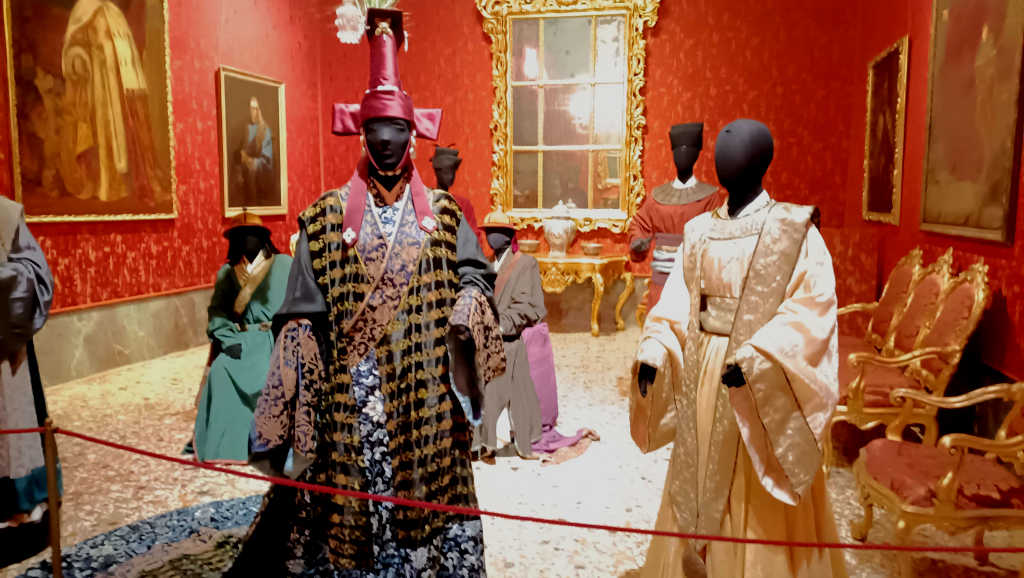
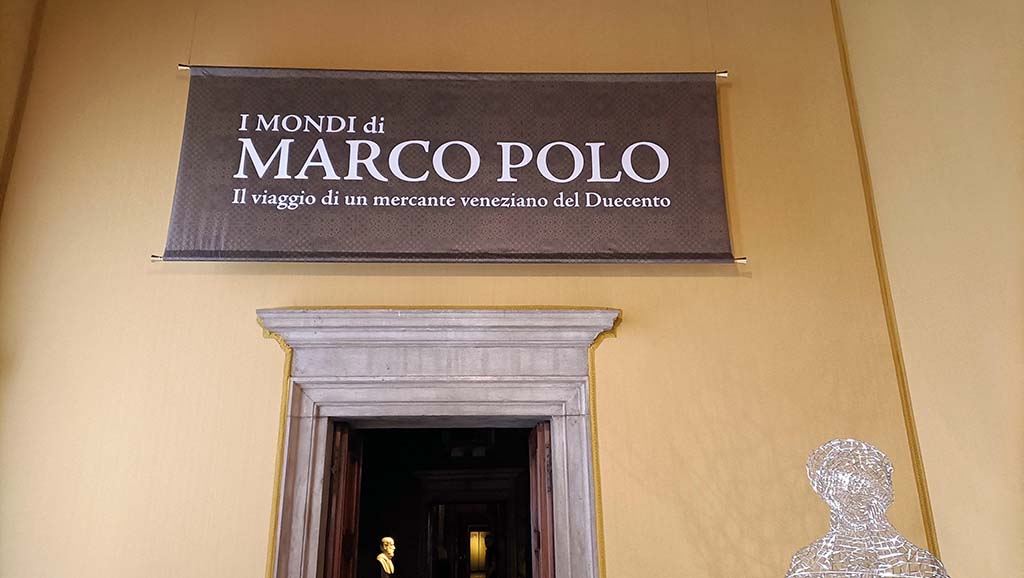
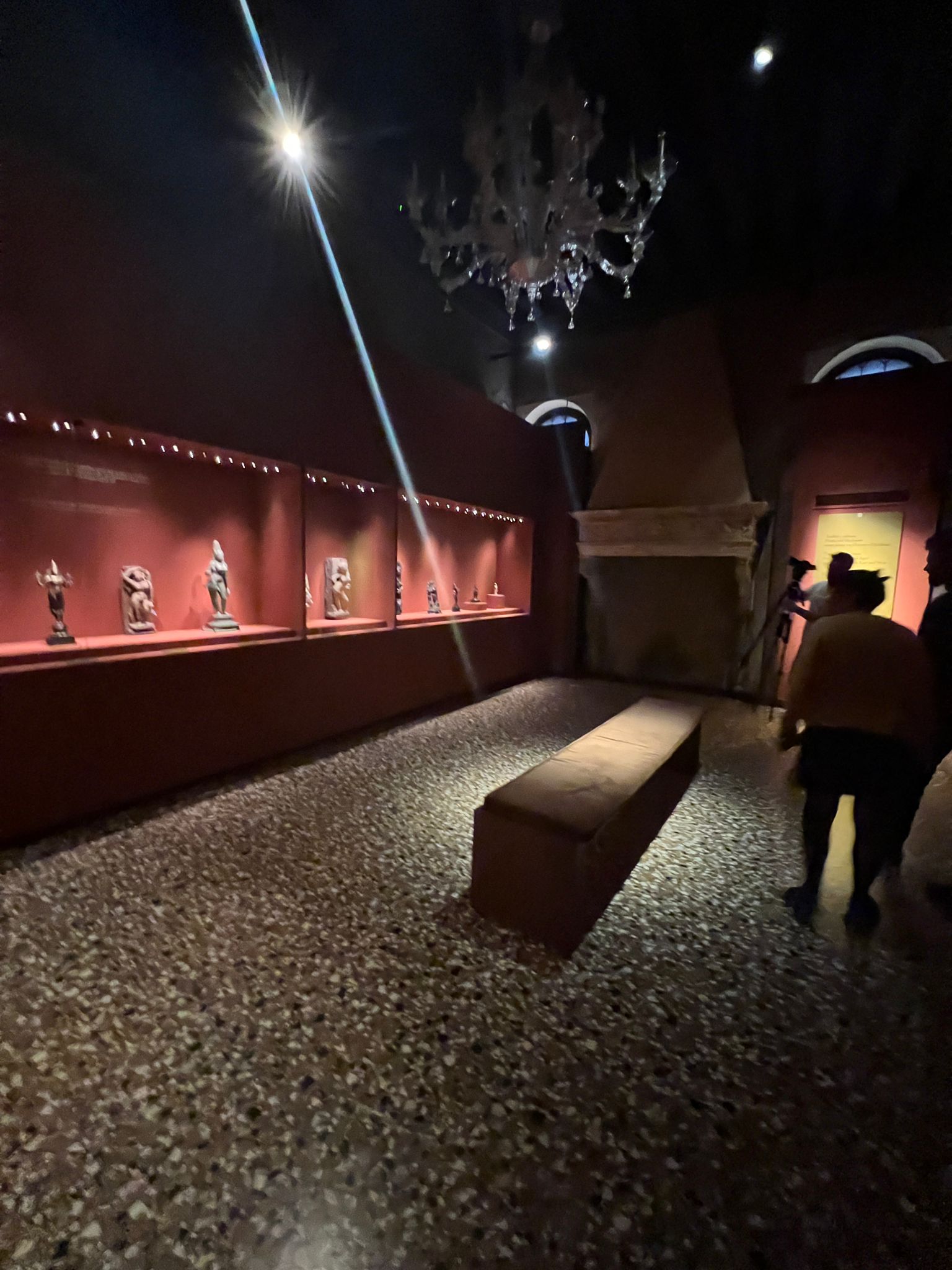
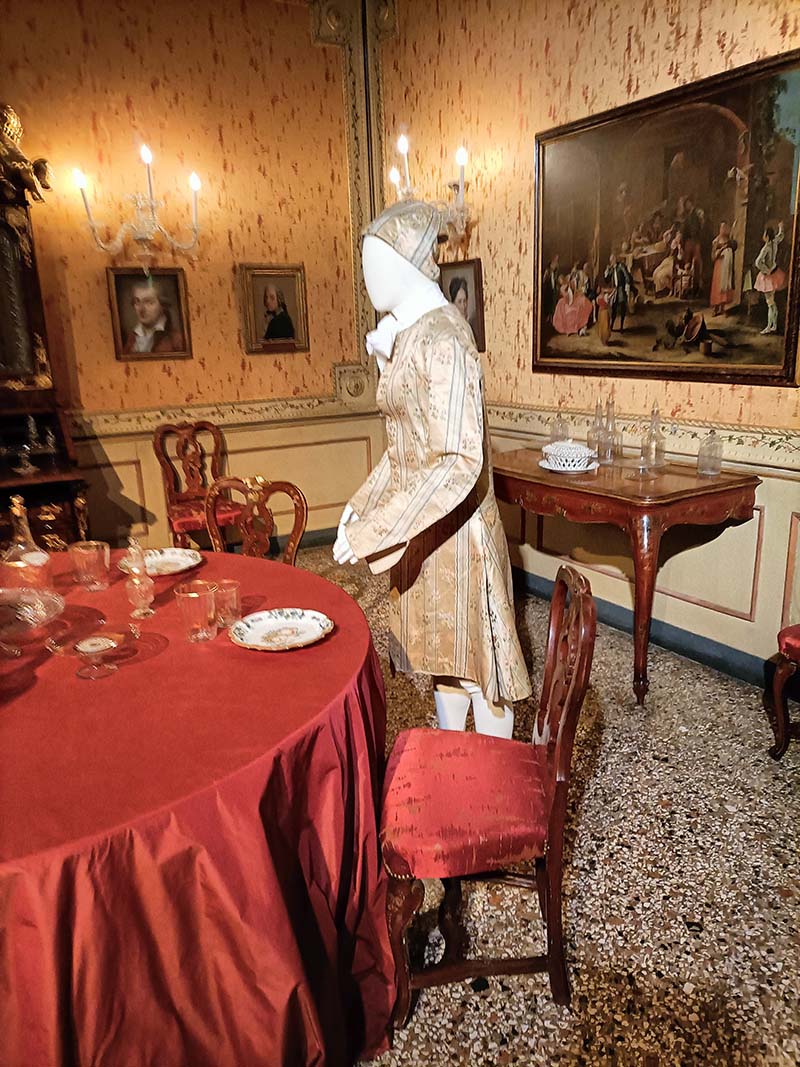
Come avete potuto vedere dalle foto, Palazzo Mocenigo ospita i costumi usati nella serie televisiva, per questo bisogna ringraziare Stefano Nicolao che ha organizzato l’allestimento di questa mostra. Questa è un’opportunità per vederli da vicino, ed essere catapultati indietro nel tempo, nei luoghi dove Marco Polo è stato. Questa mostra durerà dal 14 maggio fino al 30 settembre 2024, nel stupendo Museo di Palazzo Mocenigo di Venezia. Invito tutti i cittadini e i turisti a venire a vederla, vi piacerà di sicuro !

Marco Polo’s costumes at Palazzo Mocenigo

In 1982, the television screens of 46 nations were captivated by an epic adventure: the miniseries “Marco Polo”. An Italian-American-British-French co-production, this eight-part series retraced the events of the famous Venetian explorer, played by a young and magnetic Kenneth Marshall.

The series, directed by maestro Giuliano Montaldo, stood out for its grandeur and its attention to detail. Filming took place in breathtaking locations such as China, Mongolia and Uzbekistan, helping to create an authentic and immersive atmosphere. Alongside Marshall, a stellar cast of international actors brought to life unforgettable characters, including Burt Lancaster, Denholm Elliott, Tony Vogel, Leonard Nimoy, Anne Bancroft, and many others, with the music of the great Ennio Morricone, and above all the costumes by Enrico Sabatini.

But the real protagonist was undoubtedly Marco Polo. The series was able to capture the spirit of adventure and the thirst for knowledge that pushed the young Venetian to cross the world and immerse himself in distant cultures. Despite its historical fidelity, “Marco Polo” was not a simple documentary. The series has taken some creative license to make the story more compelling and engaging. The result was a work that was able to conquer audiences of all ages.

Even today, almost forty years later, “Marco Polo” remains a milestone in television. The series paved the way for other epic productions and contributed to making the figure of Marco Polo and his extraordinary adventure known to the general public. If you are looking for a TV series that transports you to a distant era and makes you experience unforgettable emotions, “Marco Polo” is a title not to be missed. In addition to its historical and cultural value, the series also offers food for thought on diversity and the importance of intercultural dialogue. In an increasingly globalized world, the message of “Marco Polo” is more relevant than ever.

As you can see from the pics, the Mocenigo Palace houses the costumes used in the television series, For this we must thank Stefano Nicolao who organized the staging of this exhibition. This is an opportunity to see them up close, and be transported back in time to the places where Marco Polo has been. This exhibition will last from 14 May until 30 September 2024, in the beautiful Mocenigo Palace Museum in Venice. I invite all citizens and tourists to come and see it, you will certainly like it!

Marco Polo a palazzo Ducale

Finalmente sono andato a vedere la mostra su Marco Polo inaugurata a Palazzo Ducale Venerdì scorso. Prima di cominciare a descrivervi questa bellissima mostra, vi invito cortesemente a leggervi per bene questa pagina del sito web della Fondazione Musei Civici di Venezia: https://palazzoducale.visitmuve.it/it/pianifica-la-tua-visita/biglietti/ In quanto ci sono diverse tipologie di biglietto, e vi consiglio caldamente, di chiamare prima e farvi dare qualche informazione, o di passare per la biglietteria.

La mostra è localizzata dentro a Palazzo Ducale di Venezia, nell’area degli appartamenti privati del doge, luogo dove si sono tenute in passato, le altre stupende mostre di successo. All’ingresso della mostra ci saluta un’opera del famoso artista Lorenzo Quinn, che rappresenta il viaggiatore Veneziano. Sul piedestallo e anche sulla didascalia a muro è presente un QR code, da inquadrare con la telecamera del proprio cellulare / tablet, che consente di capire meglio l’opera. Vi lascio il link di questo grande artista https://www.soulsofvenice.com/souls-of-venice-4/ e vi ricordo che a breve, altre sue opere saranno visibili presso il meraviglioso museo di Ca’ Rezzonico https://carezzonico.visitmuve.it/it/mostre/mostre-in-corso/lorenzo-quinn-anime-di-venezia-souls-of-venice/2024/03/20187/mostra-lorenzo-quinn/ Non perdetevela !!

La mostra copre circa 10 sale, ognuna con una specifica area relativa a Marco Polo: Armenia, Mongolia, Iran, Cina, India, Korean ect. dove possiamo trovare di tutto, dalle mappe dove ci mostra tutte le sue tappe, e non solo; mappe originali dell’epoca, come il mappamondo borgiano, un planisfero di Tolomeo II, un astrolabio, il testamento redatto dal notaio Giovanni Giustinian, ceramiche, bassorilievi, manoscritti originali, vangeli, bibbie del 12/13 secolo, libri in lingua francese del milione, monete, tessuti e molto altro ancora.

https://it.wikipedia.org/wiki/Marco_Polo#/media/File:Travels_of_Marco_Polo_it.svg

Ma chi era Marco Polo ? Marco Polo nacque a Venezia nel 1254, in una famiglia di mercanti già orientata verso l’Est. Poco si sa della sua infanzia, ma la sua vita prese una svolta significativa all’età di 15 anni. Suo padre Niccolò e suo zio Matteo, già impegnati in commerci con l’Oriente, partirono per un lungo viaggio. Sorprendentemente, il giovane Marco li accompagnò. Questo viaggio segnò il destino di Marco Polo. Si trattava di un percorso lungo e pericoloso, la famosa Via della Seta, che collegava l’Europa all’Asia. Attraversarono deserti, montagne e steppe, impiegando ben tre anni e mezzo prima di giungere alla corte del sovrano mongolo Kublai Khan in Cina. Kublai Khan, impressionato dall’intelligenza e dall’intraprendenza di Marco, lo prese al suo servizio. Per ben 17 anni, Marco Polo viaggiò in lungo e in largo per l’immenso impero mongolo. Visitò città come Pechino, Hangzhou e Quanzhou, immergendosi in culture diverse e osservando meraviglie. Nel 1292, finalmente, Marco Polo fece ritorno a Venezia. Il viaggio di ritorno durò due anni e lo portò attraverso l’India, il Medio Oriente e l’Europa. Al suo arrivo a Venezia, era ormai un uomo adulto, ricco e famoso per le sue avventure orientali. Durante la sua prigionia dopo una battaglia navale (probabilmente la battaglia della Curzola), Marco Polo dettò le sue esperienze di viaggio a uno scrittore: Rustichello da Pisa. Nacque così “Il Milione”, un libro che descriveva in modo dettagliato le terre lontane visitate, le culture incontrate e le meraviglie dell’Oriente. Il Milione ebbe un successo immediato, aprendo gli occhi dell’Europa su un mondo sconosciuto e stimolando la curiosità per l’Est. Marco Polo morì a Venezia nel 1324. Nonostante alcuni dubbi sulla veridicità di alcuni racconti nel Milione, la sua eredità è indiscutibile. È considerato uno dei più grandi esploratori di tutti i tempi. Il suo viaggio aprì nuove rotte commerciali e contribuì a diffondere la conoscenza dell’Oriente in Europa. Il Milione rimane un’opera letteraria fondamentale e una fonte di ispirazione per viaggiatori e avventurieri ancora oggi.

Che altro dire ancora ? Io invito tutta la cittadinanza e i visitatori stranieri presenti in città , a visitare questa bellissima mostra, e per approfondire di più la storia di questo famoso mercante Veneziano, consiglio di restare sintonizzati sul sito della Fondazione Musei Civici di Venezia per la prossima grande mostra presente a Palazzo Mocenigo : https://mocenigo.visitmuve.it/it/mostre/mostre-in-corso/marco-polo-i-costumi-di-enrico-sabbatini/2024/01/20455/mostra-marco-polo-i-costumi-di-enrico-sabbatini/ e inoltre, potete rivedere le vecchie puntate del sceneggiato di Marco Polo, quello della Rai, con Ken Marshall, su Rai Play: https://www.raiplay.it/programmi/marcopolo

Marco Polo at the Doge’s Palace in Venice !
I finally went to see the Marco Polo exhibition inaugurated at Palazzo Ducale last Friday. Before starting to describe this beautiful exhibition, I kindly invite you to carefully read this page on the website of the Fondazione Musei Civici di Venezia: https://palazzoducale.visitmuve.it/it/pianifica-la-tua-visita/biglietti/ As there are different types of tickets, and I strongly advise you to call first and have them give you some information, or to go to the ticket office.

The exhibition is located inside the Doge’s Palace of Venice in the area of the Doge’s private apartments, the place where other wonderful, successful exhibitions were held in the past. At the entrance to the exhibition we are greeted by a work by the famous artist Lorenzo Quinn, representing the Venetian traveller. On the pedestal and also on the caption on the wall there is a QR code, to be framed with the camera of your mobile phone / tablet, which allows you to better understand the work. I leave you the link of this great artist https://www.soulsofvenice.com/souls-of-venice-4 / and I remind you that soon, other of his works will be visible at the wonderful Ca’ Rezzonico museum https://carezzonico.visitmuve.it/it/mostre/mostre-in-corso/ lorenzo-quinn-anime-di-venezia-souls-of-venice/2024/03/20187/mostra-lorenzo-quinn/ Don’t miss it!!

The exhibition is “illustrated” in approximately 10 rooms, each one covering a specific area of Marco Polo’s journey: Armenia, Mongolia, Iran, China, India, Korean ect. where we can find everything, from maps where it shows us all its stages, and not only that; original maps of the time, such as the Borgian globe, a planisphere of Ptolemy II, an astrolabe, the will drawn up by the notary Giovanni Giustinian, ceramics, bas-reliefs, original manuscripts, gospels, 12/13 century Bibles, millions of French-language books, coins, fabrics and much more.

https://it.wikipedia.org/wiki/Marco_Polo#/media/File:Travels_of_Marco_Polo_it.svg

But who was Marco Polo? Marco Polo was born in Venice in 1254, into a family of merchants already oriented towards the East. Little is known about his childhood, but his life took a significant turn at the age of 15. His father Niccolò and his uncle Matteo, already engaged in trade with the East, left for a long journey. Surprisingly, young Marco accompanied them. This journey marked the fate of Marco Polo. It was a long and dangerous route, the famous Silk Road, which connected Europe to Asia. They crossed deserts, mountains and steppes, taking three and a half years to reach the court of the Mongol ruler Kublai Khan in China. Kublai Khan, impressed by Marco’s intelligence and resourcefulness, took him into his service. For 17 years, Marco Polo traveled far and wide across the immense Mongol empire. He visited cities such as Beijing, Hangzhou and Quanzhou, immersing himself in different cultures and observing wonders. In 1292, Marco Polo finally returned to Venice. The return journey took two years and took him through India, the Middle East and Europe. Upon his arrival in Venice, he was now an adult man, rich and famous for his oriental adventures. During his imprisonment after a naval battle, Marco Polo dictated his travel experiences to a writer: “Rustichello da Pisa”. Thus “Il Milione” was born, a book that described in detail the distant lands visited, the cultures encountered and the wonders of the East. Il Milione was an immediate success, opening Europe’s eyes to an unknown world and stimulating curiosity about the East. Marco Polo died in Venice in 1324. Despite some doubts about the veracity of some stories in the Milione, his legacy is indisputable. He is considered one of the greatest explorers of all time. His voyage opened new trade routes and helped spread knowledge of the East to Europe. Il Milione remains a fundamental literary work and a source of inspiration for travelers and adventurers today.

What else can I say? I invite all citizens and foreign visitors present in the city to visit this beautiful exhibition, and to learn more about the history of this famous Venetian merchant, I recommend staying tuned to the website of the Civic Museums Foundation of Venice for the next major exhibition in Mocenigo Palace : https://mocenigo.visitmuve.it/it/mostre/mostre-in-corso/marco-polo-i-costumi-di-enrico-sabbatini/ 2024/01/20455/mostra-marco-polo-i-costumi-di-enrico-sabbatini/ and also, you can watch the old episodes of Marco Polo’s drama, the one from Rai, with Ken Marshall, on Rai Play: https://www.raiplay.it/programmi/marcopolo

Palazzo Mocenigo si fa’ in tre !
For the English translation please scroll down the page, thank you !

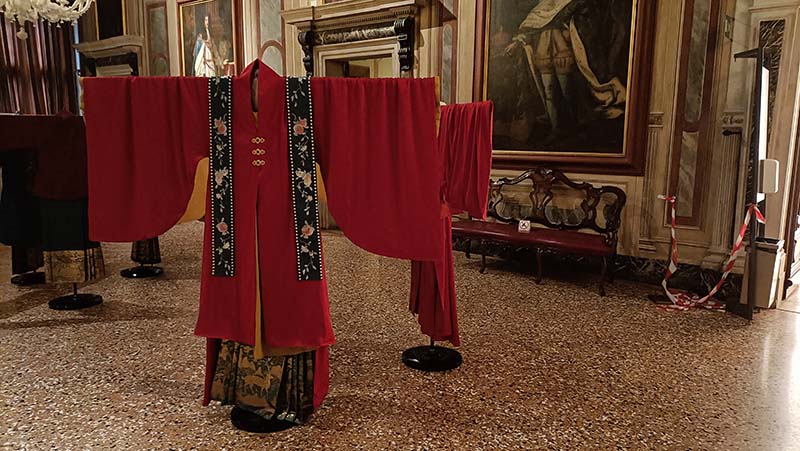
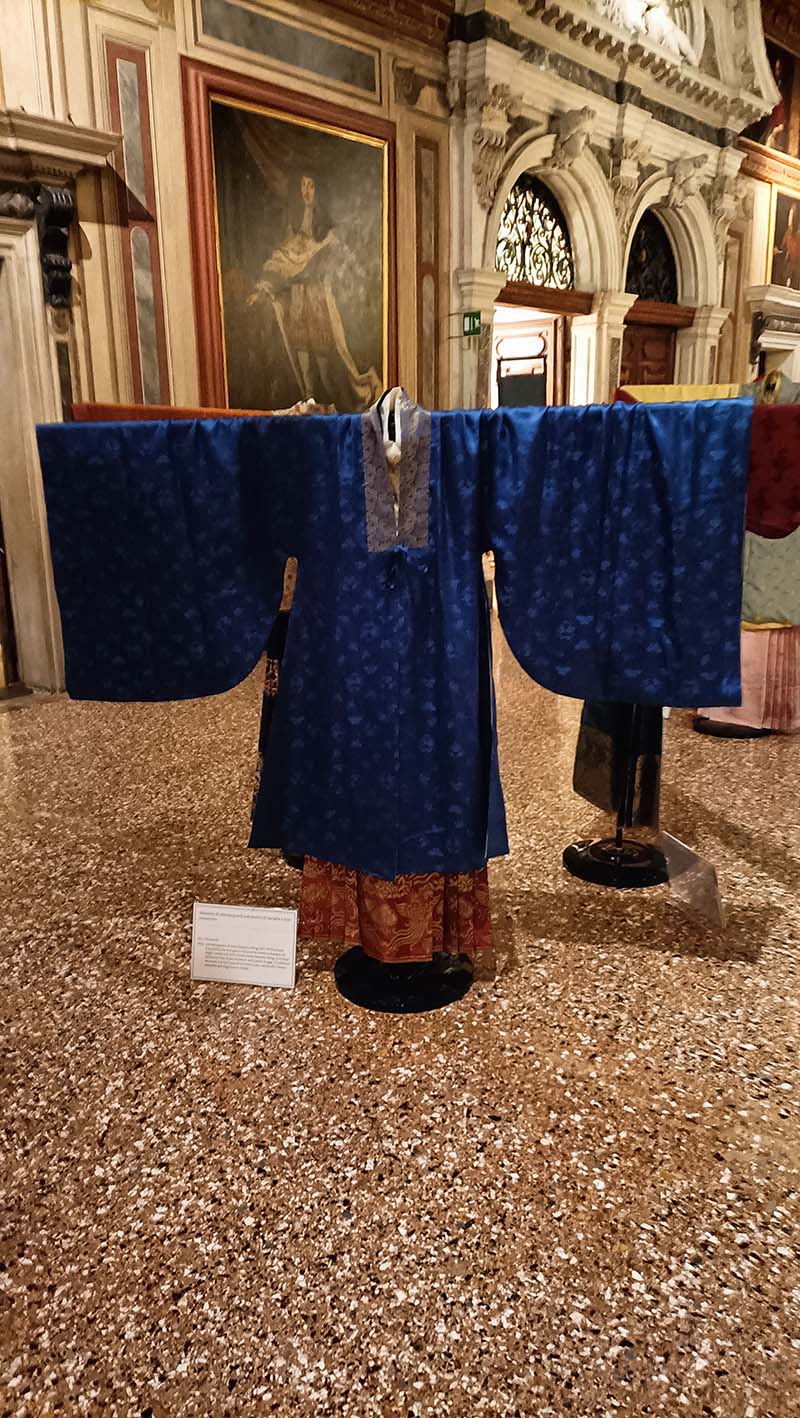
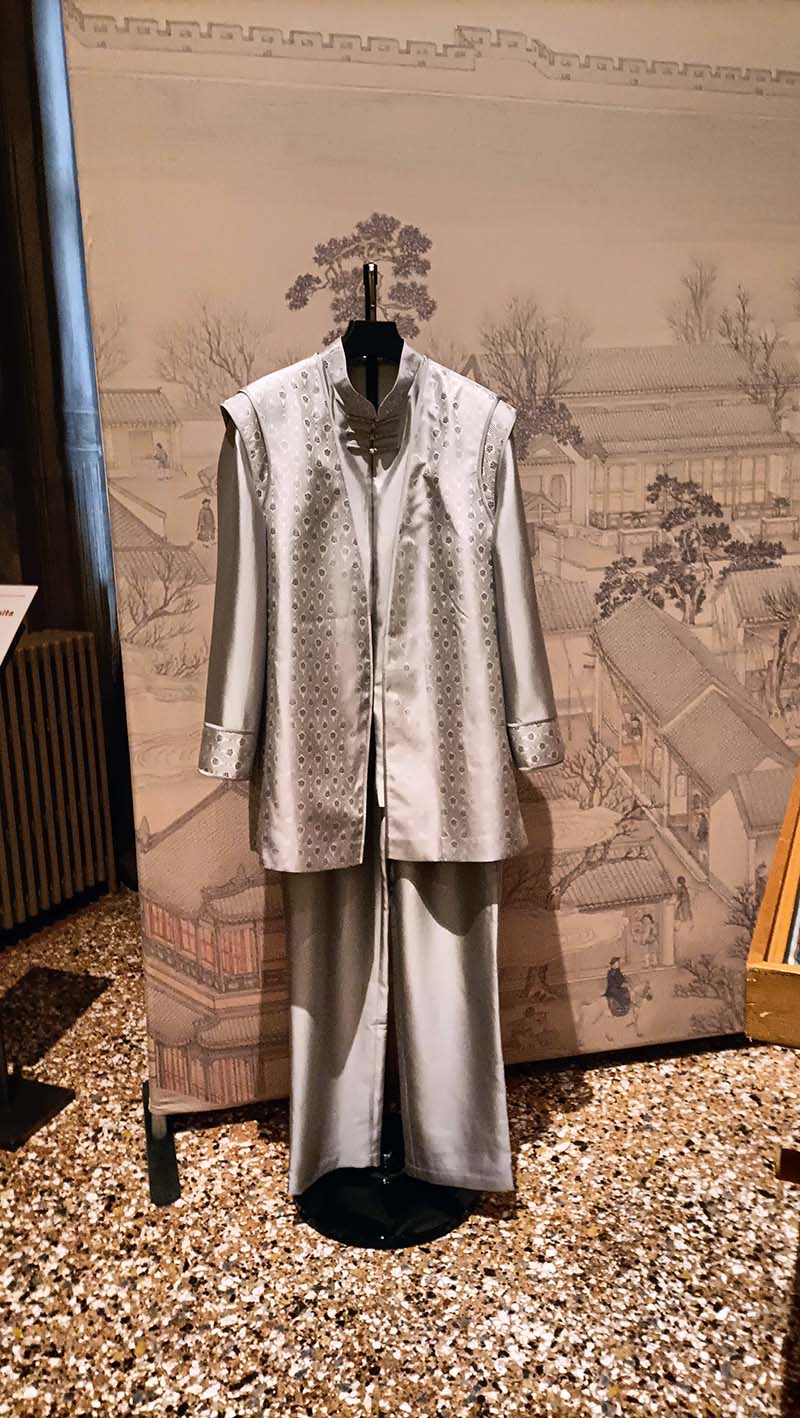
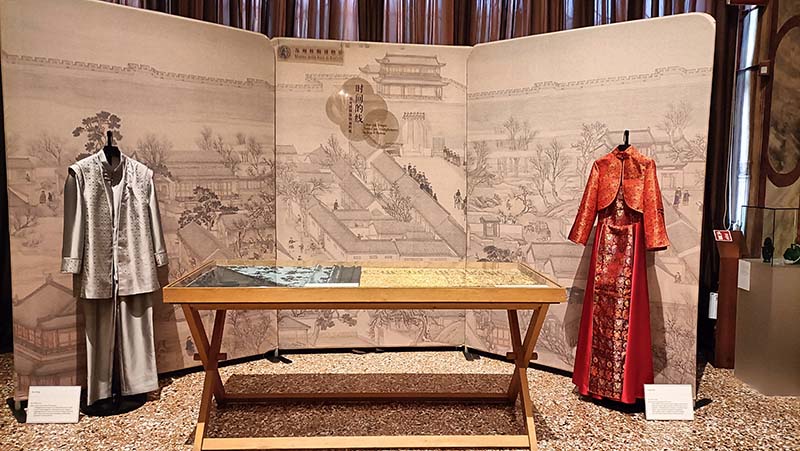
Palazzo Mocenigo si fa in tre e offre al suo pubblico tre diversi stili di costumi di diverse epoche. Proprio oggi (10/01/2024) si è inaugurata la mostra “L’asse del tempo” che è la prima iniziativa da parte della Fondazione Musei Civici di Venezia per festeggiare i 700 anni della morte di Marco Polo. Nella sala del Portego al primo piano (si possono vedere i due costumi nella foto in basso, mentre gli altri sono stati spostati in sala 8) si possono vedere dei costumi che provengono dal Museo della Seta di Suzhou, che ci portano a sognare la Cina ai tempi del famoso esploratore Veneziano. La mostra durerà dall’11 gennaio al 29 febbraio 2024.

A partire dalla sala 1 fino alla sala 6, seguendo il percorso museale troverete invece una serie di costumi del 700 Veneziano, sarà come fare un salto nel tempo, ai tempi della Serenissima, e vedere com’era una volta il Palazzo Mocenigo.

E infine nell’altra ala del percorso museale, nella sala 9, troverete dei vestiti della Collezione di Alba Ferretti. La stilista Alberta Ferretti ha donato alcuni abiti al Museo di Palazzo Mocenigo di Venezia. Gli abiti, protagonisti di una sfilata della stilista tenutasi a settembre 2021 a Ca’ Rezzonico, sono ora esposti al pubblico, un’opportunità unica per i visitatori, che potranno rivederli, o vederli per la prima , nel caso non fossero potuti venire durante la prima esposizione (sempre a Palazzo Mocenigo) nel 2022.

Non potete perdere questa occasione di vedere in un unico posto e nello stesso periodo di tempo, 3 diversi stili di costumi, in aggiunta alla sezione del profumo, e al sontuoso palazzo della famiglia Mocenigo. Vi aspettiamo !

Dal 01 novembre al 31 marzo: 10.00 – 17.00 (ultimo ingresso ore 16.00)
Dal 01 aprile al 31 ottobre: 10.00 – 18.00 (ultimo ingresso ore 17.00)
Le operazioni di chiusura del museo iniziano 20 minuti prima dell’orario indicato.

Chiuso il lunedì

Mocenigo Palace multiplied by three

The Mocenigo Palace multiply, and offers its audience, three different styles of costumes from different eras. Just today (10/01/2024) the exhibition “The axis of time” was inaugurated, which is the first initiative by the Civic Museums Foundation of Venice to celebrate the 700th anniversary of Marco Polo’s death. In the Portego room on the first floor, (you can see the two costumes in the photo below, while the others have been moved to room 8) we can see some costumes that come from the Suzhou Silk Museum, which lead us to dream of China at the time of the famous Venetian explorer. The exhibition will last from January 11th to February 29th 2024.

Starting from room 1 up to room 6, following the museum itinerary you will instead find a series of 18th century Venetian costumes, where you can take a leap in time, to the times of the Serenissima, and see how it was once the Mocenigo Palace.

And finally in the other wing of the museum itinerary, in room 9, you will find some clothes from the Alba Ferretti Collection. Fashion designer, Alberta Ferretti has donated some unique dresses to the Palazzo Mocenigo Museum in Venice. The dresses, protagonists of a fashion show by the designer held in September 2021 at Ca’ Rezzonico, are now on display to the public, a unique opportunity for visitors, who will be able to see them again or see them for the first time, in case they were not able to come during the premiere exhibition (also at Palazzo Mocenigo) in 2022.

You can’t miss this opportunity to see in one place and at the same time, 3 different styles of costumes, in addition to the perfume section, and the family’s sumptuous palace Mocenigo. We are waiting for you!

From 01 November to 31 March: 10.00 – 17.00 (last entry 16.00)
From 01 April to 31 October: 10.00 – 18.00 (last entry 17.00)
Museum closing operations begin 20 minutes before the indicated time.

Closed on Mondays

La seta che unisce Venezia e Suzhou

For the English translation please scroll down the page, thank you !

In occasione delle celebrazioni per i settecento anni della morte di Marco Polo, i Musei Civici di Venezia ospitano a Palazzo Mocenigo la mostra “L’Asse del Tempo: Tessuti per l’Abbigliamento in Seta di Suzhou”. La mostra, aperta dall’11 gennaio al 29 febbraio 2024, presenta una ricca selezione di abiti e tessuti provenienti dal Museo della Seta di Suzhou.

Venezia e Suzhou sono due città molto simili. Entrambe sono costruite sull’acqua e sono Patrimonio dell’Umanità dell’UNESCO. Sono anche legate da un gemellaggio ufficiale che dura dal 1980. Questa mostra vuole celebrare l’amicizia tra le due città e la loro comune passione per la seta, ed espone creazioni originali, tessuti e repliche di antichi abiti che raccontano la storia della seta, dalla sua nascita in Cina fino ai giorni nostri.

I visitatori potranno fare un viaggio nel tempo, seguendo abito dopo abito, tessuto dopo tessuto, l’evoluzione della moda tra Occidente ed Estremo Oriente. Potranno anche confrontare lo stile dell’abbigliamento durante la Repubblica Serenissima con quello delle principali dinastie regnanti nell’antico impero cinese. La mostra è un modo per celebrare l’eredità di Marco Polo, che fu uno dei primi a portare la seta europea in Cina, e di promuovere la comprensione e la cooperazione tra le due culture.

La mostra è un’occasione imperdibile per conoscere la storia della seta e l’amicizia tra Venezia e Suzhou. Invito tutta la cittadinanza e i turisti presenti nella città lagunare a visitare questa stupenda mostra, sono sicuro che vi piacerà moltissimo, e inoltre, avrete la possibilità di vedere questo magnifico palazzo che è stata la dimora di una importantissima famiglia Veneziana, ed anche museo del costume e del profumo. Non si può, non visitare Palazzo Mocenigo !! Vi aspettiamo !

Orari di visita:

Dal 01 novembre al 31 marzo: 10.00 – 17.00 (ultimo ingresso ore 16.00)

Dal 01 aprile al 31 ottobre: 10.00 – 18.00 (ultimo ingresso ore 17.00)

Le operazioni di chiusura del museo iniziano 20 minuti prima dell’orario indicato Chiuso il lunedì

The silk that unites Venice and Suzhou

On the occasion of the celebrations for the seven hundredth anniversary of Marco Polo’s death, the Civic Museums of Venice are hosting at Mocenigo Palace, the exhibition “The Axis of Time: Silk Clothing Fabrics of Suzhou”. The exhibition, open from 11 January to 29 February 2024, presents a rich selection of clothes and fabrics from the Suzhou Silk Museum.

Venice and Suzhou are two very similar cities. Both are built on water and are UNESCO World Heritage Sites. They are also linked by an official twinning that has lasted since 1980. This exhibition aims to celebrate the friendship between the two cities and their shared passion for silk. It exhibits original creations, fabrics and replicas of ancient clothes that tell the story of silk, from its birth in China to the present day.

Visitors will be able to take a journey through time, following dress after dress, fabric after fabric, the evolution of fashion between the West and the Far East. They will also be able to compare the style of clothing during the Serenissima Republic with that of the main ruling dynasties in the ancient Chinese empire. The exhibition is a way to celebrate the legacy of Marco Polo, who was one of the first to bring European silk to China, and a way to promote understanding and cooperation between the two cultures.

The exhibition is an unmissable opportunity to learn about the history of silk and the friendship between Venice and Suzhou. I invite all citizens and tourists present in the lagoon city to visit this wonderful exhibition, I am sure you will like it very much, and furthermore, you will have the opportunity to see this magnificent palace which was the home of a very important Venetian family, and also a museum of costume and perfume. You can’t not visit Palazzo Mocenigo!! We are waiting for you!!!

Timetable:

From November 1st to March 31st: 10.00am – 5.00pm (last entry 4.00pm)

From 01 April to 31 October: 10.00 – 18.00 (last entry 17.00)

The museum closing operations begin 20 minutes before the indicated time. Closed on Mondays

Women on board a Palazzo Mocenigo

For the English translation please scroll down the page, thank you !

Donne a bordo: un appello all’azione per l’uguaglianza di genere nei consigli di amministrazione delle imprese

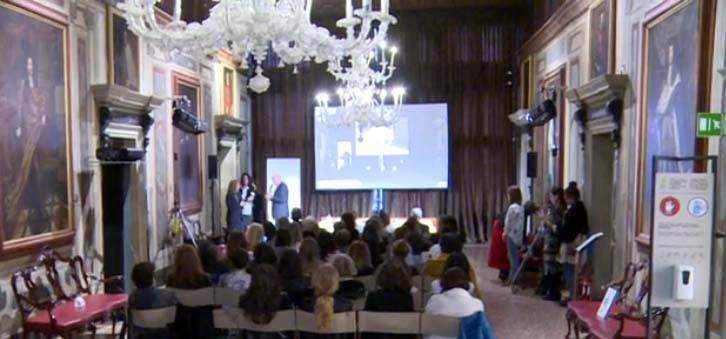
Giovedì 26 novembre 2023 , si è tenuto presso il bellissimo Museo di Palazzo Mocenigo della Fondazione Musei Civici di Venezia, un evento alquanto interessante : “Women on board”, dove oltre 60 donne manager da tutte Italia hanno partecipato. Un evento presenziato da importanti imprenditrici e altre personalità della politica, tra cui Francesca Torelli, Consigliera Parità Regione Veneto e Lorenza Lain, Consigliera Manager Italia Veneto, Elena Donazzan Assessore dell’istruzione – Formazione – Lavoro del Veneto, Chiara Squarcina, Direttrice del museo di Palazzo Mocenigo, la Presidente della Fondazione Musei Civici di Venezia Maria Cristina Gribaudi in remoto, e molte altre.

L’incontro si è concentrato sulla seguente realtà: l’uguaglianza di genere è una questione urgente in molti settori, compreso quello aziendale. Nell’ultimo decennio, il numero delle donne nei consigli di amministrazione è aumentato in modo significativo, ma continuano ad essere sottorappresentate rispetto ai loro colleghi maschi. Per promuovere ulteriormente la parità di genere nel mondo aziendale, si è tenuto presso Palazzo Mocenigo di Venezia la seconda edizione di “Women on Board”.

Immagine 21

Organizzato da Manager Italia, l’evento aveva l’obiettivo di incoraggiare un maggior numero di donne a prendere parte ai processi decisionali delle aziende. Il programma era composto da 14 incontri, la maggior parte dei quali si sono svolti online, e la partecipazione era gratuita. I partecipanti hanno ricevuto un attestato di partecipazione e sono stati aggiunti a un elenco di candidati qualificati che le aziende alla ricerca della persona giusta da inserire nei loro consigli di amministrazione potranno consultare.

L’evento è stato accolto molto bene, con moltissime partecipanti sia di persona che online. Si tratta di un grande passo nella giusta direzione, poiché lo studio “Rapporto Manager 2023” ha dimostrato che tra il 2021 e il 2018 il numero delle donne manager in Veneto è aumentato del 23,5%.

L’evento è stato un importante promemoria del fatto che il mondo aziendale deve sforzarsi di portare più donne in ruoli di leadership. Le donne portano sul tavolo un insieme unico di competenze e prospettive e dovrebbero avere le stesse opportunità dei loro colleghi maschi. Eventi come “Women on Board” contribuiscono ad aumentare la consapevolezza su questo problema e porteranno, in ultima analisi, a un panorama aziendale più equo e diversificato.

Women on board at Mocenigo Palace

Women on board: A call to action for gender equality in corporate boardrooms


On Thursday 26 November 2023, a rather interesting event was held at the beautiful Mocenigo Palace, of the Civic Museums Foundation of Venice: “Women on board”, where over 60 women managers from all over Italy participated. An event attended by important businesswomen and other political personalities, including Francesca Torelli, Councilor for Equality of the Veneto Region and Lorenza Lain, Councilor for Manager of Italy Veneto, Elena Donazzan Councilor for Education – Training – Work, of the Veneto, Chiara Squarcina, Director of the Mocenigo Palace museum, the President of the Civic Museums Foundation of Venice, Maria Cristina Gribaudi remotely, and many others.

The congress was about this: gender equality is a pressing issue in many industries, including in the corporate world. In the last decade, the number of women in corporate boards has increased significantly, but they still remain underrepresented in comparison to their male counterparts. To further promote gender equality in the corporate world, the second edition of “Women on Board” was recently held at the Mocenigo Palace in Venice.

Immagine 21

Organized by Manager Italia, the event was aimed at encouraging more women to take part in the decision-making of companies. The program was made up of 14 meetings, most of which were held online, and was free to attend. Attendees received an attendance certificate and were added to a list of qualified candidates to be consulted by companies looking for the right person to join their boards.

The event was very well received, with a lot of women attending both in person and online. This was a great step in the right direction, as the “Report Manager 2023” study showed that there was a 23.5% increase in the number of female managers in the Veneto region between 2021 and 2018.

The event was an important reminder that the corporate world must strive to bring more women into leadership roles. Women bring a unique set of skills and perspectives to the table and should be given the same opportunities as their male counterparts. Events like “Women on Board” help to raise awareness of this issue and will ultimately lead to a more equitable and diverse corporate landscape.

Venice Design Week a Palazzo Mocenigo

For the English translation please scroll down the page, thank you !

La decima edizione del concorso ospitata dal Museo di Palazzo Mocenigo

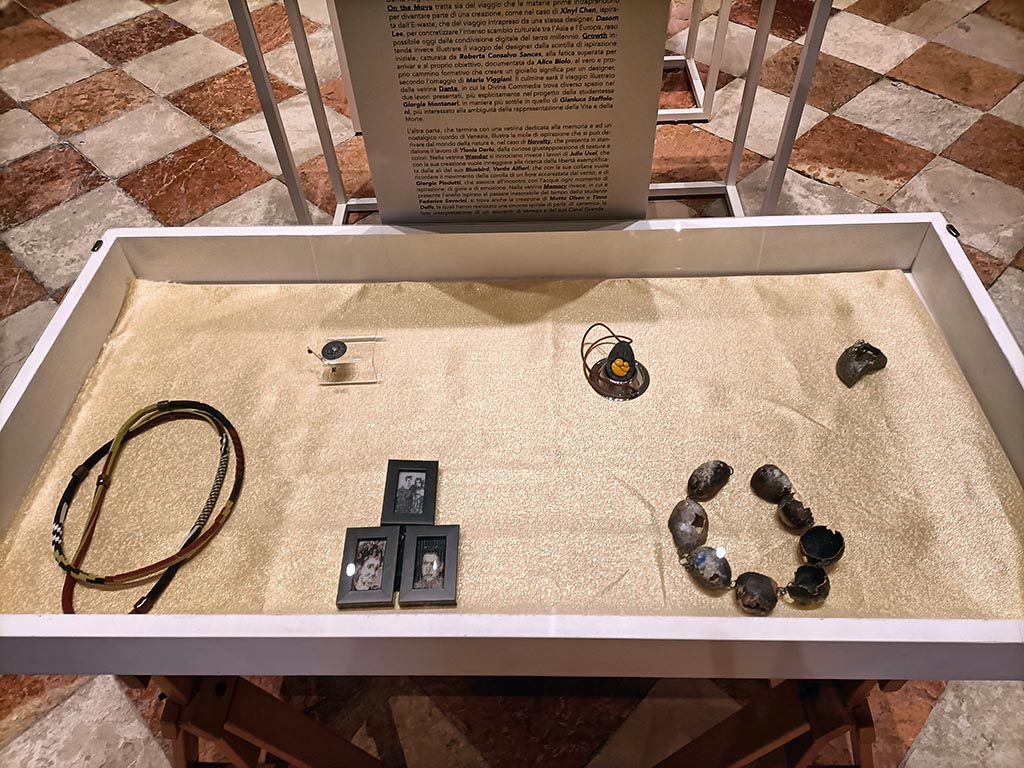
La Venice Design Week, il festival internazionale dedicato al design e all’innovazione, ospita anche un percorso interamente dedicato al gioiello. La Jewelry Selection, giunta alla sua decima edizione, è ospitata dal Museo di Palazzo Mocenigo, la sede che custodisce la storia della moda e del profumo.

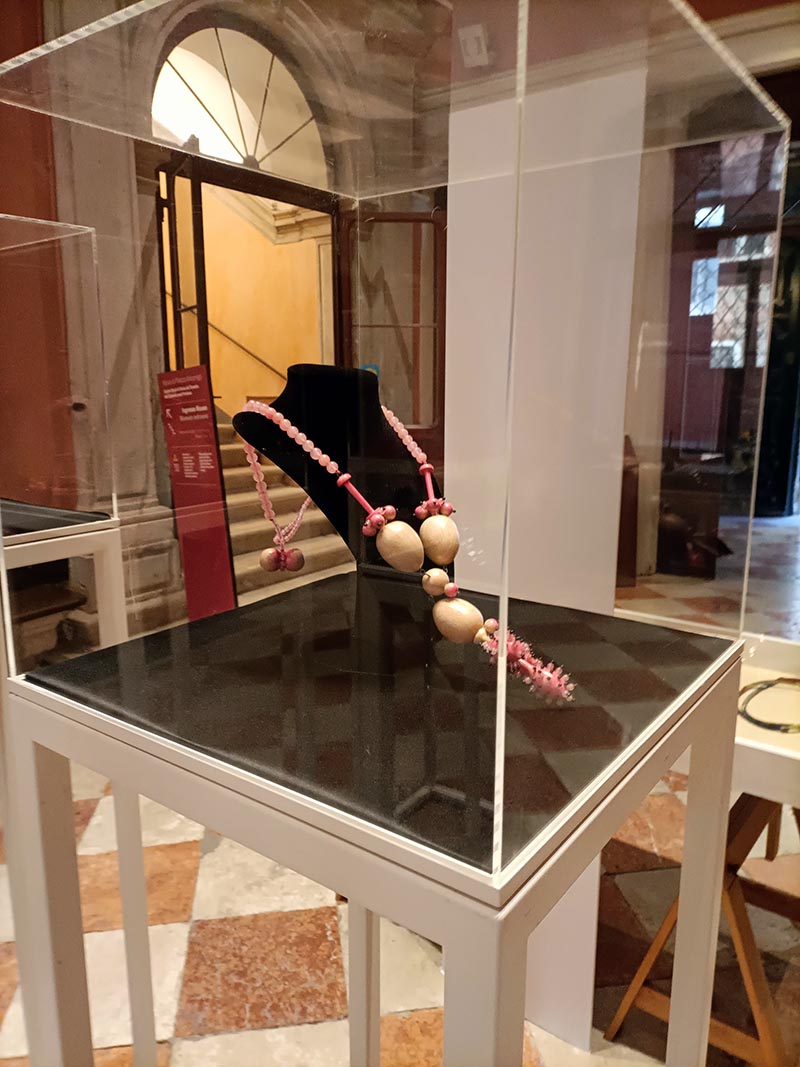
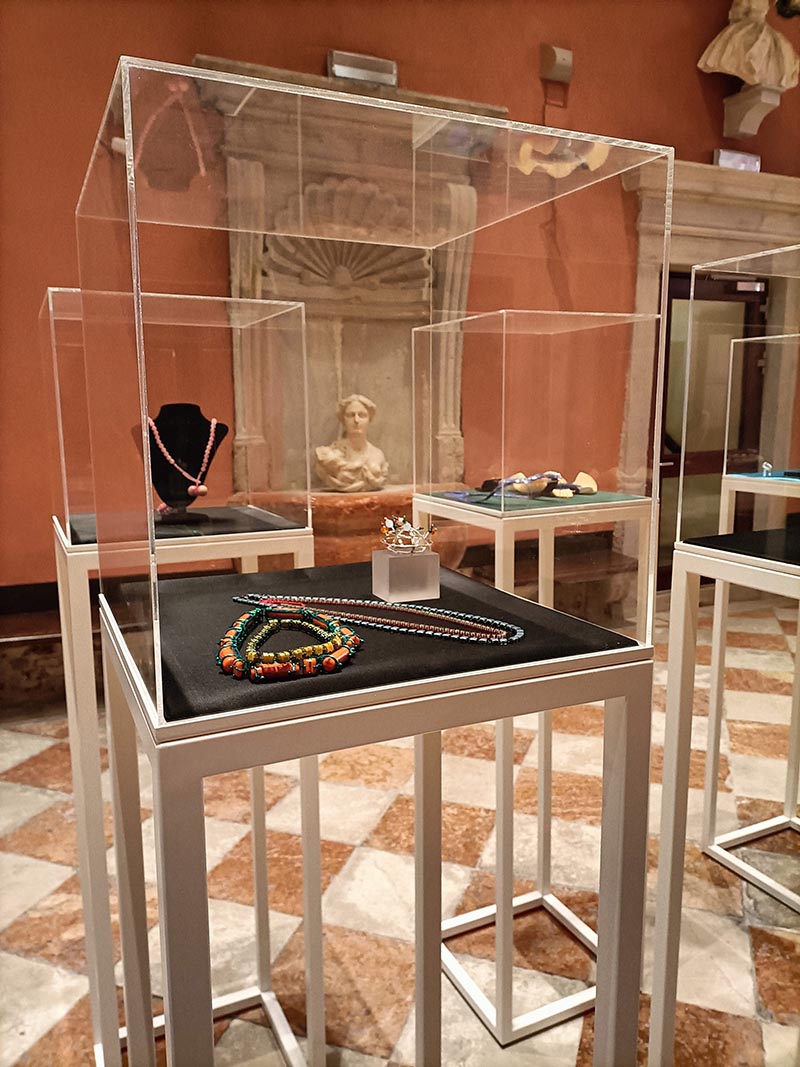
La Jewelry Selection è un concorso che mira a promuovere e valorizzare il gioiello contemporaneo. Quest’anno, la giuria ha selezionato 20 progetti provenienti da tutto il mondo, che saranno esposti al Museo di Palazzo Mocenigo dal 7 al 15 ottobre 2023. I gioielli in mostra sono realizzati con materiali e tecniche innovative, e riflettono le diverse sensibilità e visioni artistiche dei designer. La Jewelry Selection è un’occasione unica per scoprire le ultime tendenze nel mondo del gioiello e per ammirare opere d’arte uniche e preziose.

I selezionati sono:

  • Ylenia Deriu (Italia)
  • Yasuko Kanno (Giappone)
  • Xinyi Chen (Cina)
  • Verde Alfieri (Italia)
  • Mette Olsen e Tinne Delfs (Danimarca)
  • Sita Pagehgiri (Indonesia)
  • Roberta Consalvo Sances (Italia)
  • Maria Viggiani (Italia)
  • Lital Mendel (Israele)
  • Laura Zecchini (Italia)
  • Julie Usel (Francia)
  • Giorgia Pisciutti (Italia)
  • Giorgia Montanari (Italia)
  • Gianluca Staffolani (Italia)
  • Federico Severini (Italia)
  • Dasom Lee (Corea del Sud)
  • Costanza D’Alpaos (Italia)
  • Alice Biolo (Italia)
  • Alessia Prati (Italia)

L’evento è patrocinato dal Ministero dei Beni Culturali, dalla Regione Veneto, dalla Città di Venezia, dalla Camera di Commercio Industria Artigianato e Agricoltura di Venezia Rovigo e dalla Fondazione Musei Civici Venezia. Fa inoltre parte della rete delle Design Week italiane e del network mondiale delle Settimane del Design.

In conclusione, la Venice Design Week è un’occasione unica per scoprire le ultime tendenze del design, incontrare i migliori designer del mondo e ammirare opere d’arte uniche e innovative. L’evento ospita una serie di eventi, mostre, conferenze e workshop che si svolgono in tutta la città. Invito tutta la cittadinanza e i turisti presenti nella città lagunare a visitare presso Il museo di Palazzo Mocenigo, questa sezione, della Venice Design Week, dove oltre ad ammirare questi capolavori, possono approfittare dell’occasione per visitare anche questo stupendo museo!

Venice Design Week

Palazzo Mocenigo

Venice Design Week at Palazzo Mocenigo

The tenth edition of the competition hosted by the Palazzo Mocenigo Museum

The Venice Design Week, the international festival dedicated to design and innovation, also hosts an itinerary entirely dedicated to jewellery. The Jewelry Selection, now in its tenth edition, is hosted by the Palazzo Mocenigo Museum, the venue that preserves the history of fashion and perfume.

The Jewelry Selection is a competition that aims to promote and enhance contemporary jewellery. This year, the jury has selected 20 projects from all over the world, which will be exhibited at the Museum of Palazzo Mocenigo from 7 to 15 October 2023. The jewels on display are made with innovative materials and techniques, and reflect the different sensibilities and visions artistic creations of the designers. The Jewelry Selection is a unique opportunity to discover the latest trends in the world of jewelery and to admire unique and precious works of art.

The selected ones are:

  • Ylenia Deriu (Italy)
  • Yasuko Kanno (Japan)
  • Xinyi Chen (China)
  • Verde Alfieri (Italy)
  • Mette Olsen and Tinne Delfs (Denmark)
  • Sita Pagehgiri (Indonesia)
  • Roberta Consalvo Sances (Italy)
  • Maria Viggiani (Italy)
  • Lital Mendel (Israel)
  • Laura Zecchini (Italy)
  • Julie Usel (France)
  • Giorgia Pisciutti (Italy)
  • Giorgia Montanari (Italy)
  • Gianluca Staffolani (Italy)
  • Federico Severini (Italy)
  • Dasom Lee (South Korea)
  • Costanza D’Alpaos (Italy)
  • Alice Biolo (Italy)
  • Alessia Prati (Italy)

The event is sponsored by the Ministry of Cultural Heritage, the Veneto Region, the City of Venice, the Chamber of Commerce, Industry, Crafts and Agriculture of Venice Rovigo and the Civic Museums Foundation of Venice. It is also part of the Italian Design Week network and the global Design Week network.

In conclusion, Venice Design Week is a unique opportunity to discover the latest design trends, meet the best designers in the world and admire unique and innovative works of art. The event hosts a series of events, exhibitions, conferences and workshops taking place across the city. I invite all citizens and tourists present in the lagoon city to visit this section of the Venice Design Week at the Palazzo Mocenigo museum, where in addition to admiring these masterpieces, they can take advantage of the opportunity to also visit this wonderful museum!

Venice Design Week

Mocenigo Palace

Fiori di ciliegio a Palazzo Mocenigo

For the English translation please scroll down the page, thank you !

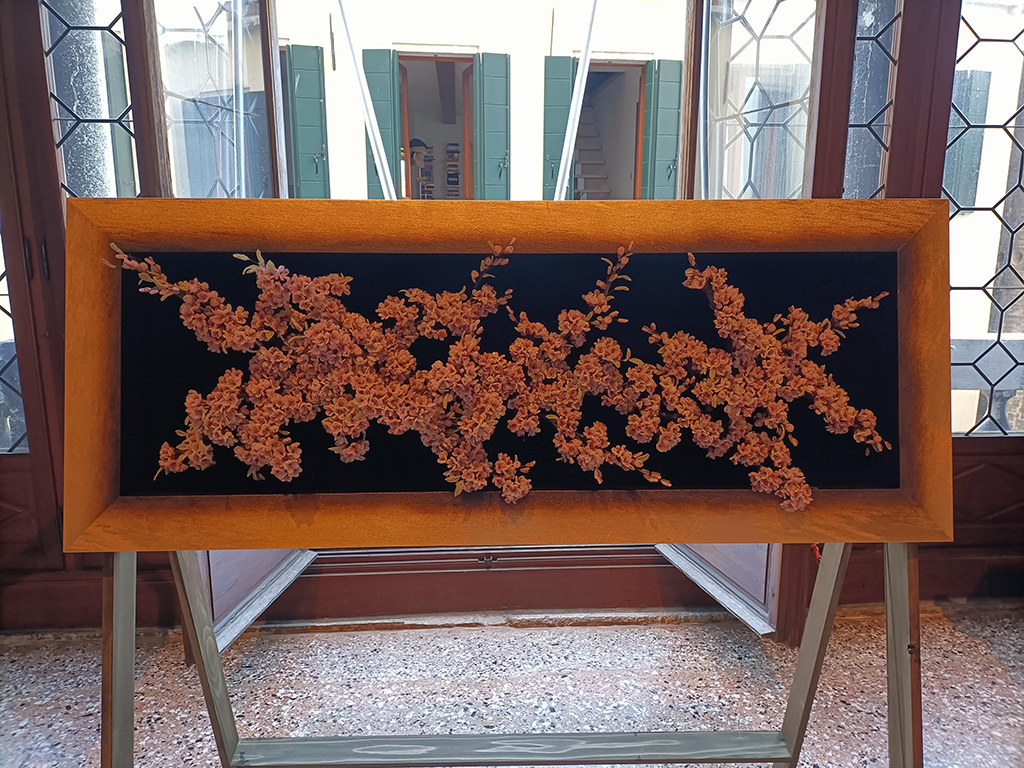
Oggi parliamo di un’opera molto interessante, forse la principale di tutta la mostra appena inaugurata a Palazzo Mocenigo, della Fondazione Musei Civici di Venezia. Una mostra della famosa artista Minako Shimonagase, che fin dal primo giorno sta avendo molto successo. L’opera in questione, la si può vedere nella fotografia all’inizio del paragrafo e si intitola per l’appunto “fiori di ciliegio”.

Gli alberi di ciliegio, in giapponese Sakura, sono una parte fondamentale della cultura giapponese. Sono considerati un simbolo di bellezza, fragilità, e rinascita.

I ciliegi sono originari dell’Asia orientale, ma sono stati introdotti in Giappone già in epoca pre-storica. Nel corso dei secoli, gli alberi di ciliegio sono diventati sempre più diffusi nel paese, e oggi si trovano in tutto il Giappone, da grandi città come Tokyo e Kyoto a piccoli villaggi di campagna.

La fioritura dei ciliegi, chiamata hanami, è un evento molto importante in Giappone. Ogni anno, milioni di persone si riuniscono per ammirare la bellezza dei fiori di ciliegio. L’hanami è un’occasione per celebrare la primavera, la natura, e la vita stessa.

I ciliegi hanno un significato profondo nella cultura giapponese. Sono un simbolo di bellezza, perché i loro fiori sono delicati e affascinanti. Sono anche un simbolo di fragilità, perché i fiori di ciliegio vivono solo per pochi giorni. Infine, sono un simbolo di rinascita, perché la fioritura dei ciliegi segna l’inizio della primavera.

Ecco alcuni dei significati simbolici dei ciliegi nella cultura giapponese:

Bellezza: I ciliegi sono considerati un simbolo di bellezza, perché i loro fiori sono delicati e affascinanti.
Fragilità: I ciliegi sono anche un simbolo di fragilità, perché i fiori di ciliegio vivono solo per pochi giorni.
Rinascita: La fioritura dei ciliegi segna l’inizio della primavera, che è un periodo di rinascita per la natura.
Tempo fuggevole: La breve durata della fioritura dei ciliegi è un simbolo del tempo fuggevole.
Passione: I ciliegi sono anche associati alla passione, perché i loro petali rossi sono spesso associati all’amore.
Dolcezza: I ciliegi sono anche associati alla dolcezza, perché i loro frutti, le ciliegie, sono un alimento popolare in Giappone.
I ciliegi sono una parte importante della cultura giapponese, e la loro bellezza è ammirata da persone di tutto il mondo.

Alcuni dettagli significativi:

La stagione della fioritura dei ciliegi in Giappone dura in genere circa due settimane, da fine marzo a inizio aprile.
Esistono molte varietà diverse di ciliegi in Giappone, ciascuna con le sue caratteristiche uniche.
L’Hanami è un’attività popolare tra persone di tutte le età in Giappone.
I fiori di ciliegio sono spesso usati nell’arte, nella musica e nella letteratura giapponese.

Cherry blossoms at Mocenigo Palace

Today we are talking about a very interesting work, perhaps the main one of the entire exhibition just inaugurated at Mocenigo Palace, from the Civic Museums Foundation of Venice. An exhibition by the famous artist Minako Shimonagase, which has been very successful since day one. The work in question can be seen in the photograph at the beginning of the paragraph and is entitled “cherry blossoms”.

Cherry blossoms, known in Japanese as Sakura, are a fundamental part of Japanese culture. They are considered a symbol of beauty, fragility, and rebirth.

Cherry trees are native to East Asia, but were introduced to Japan in prehistoric times. Over the centuries, cherry trees have become increasingly widespread in the country, and today they can be found all over Japan, from major cities like Tokyo and Kyoto to small rural villages.

The cherry blossom season, called hanami, is a very important event in Japan. Every year, millions of people gather to admire the beauty of cherry blossoms. Hanami is an occasion to celebrate spring, nature, and life itself.

Cherry blossoms have a deep meaning in Japanese culture. They are a symbol of beauty, because their flowers are delicate and fascinating. They are also a symbol of fragility, because cherry blossoms only live for a few days. Finally, they are a symbol of rebirth, because the cherry blossom season marks the beginning of spring.

Here are some of the symbolic meanings of cherry blossoms in Japanese culture:

Beauty: Cherry blossoms are considered a symbol of beauty, because their flowers are delicate and fascinating.
Fragility: Cherry blossoms are also a symbol of fragility, because cherry blossoms only live for a few days.
Rebirth: The cherry blossom season marks the beginning of spring, which is a time of rebirth for nature.
Fleeting time: The short duration of the cherry blossom season is a symbol of fleeting time.
Passion: Cherry blossoms are also associated with passion, because their red petals are often associated with love.
Sweetness: Cherry blossoms are also associated with sweetness, because their fruits, cherries, are a popular food in Japan.
Cherry blossoms are an important part of Japanese culture, and their beauty is admired by people all over the world.

Some additional details:

The cherry blossom season in Japan typically lasts for about two weeks, from late March to early April.
There are many different varieties of cherry trees in Japan, each with its own unique characteristics.
Hanami is a popular activity for people of all ages in Japan.
Cherry blossoms are often used in Japanese art, music, and literature.

Il Sol Levante a Palazzo Mocenigo

For the English translation please scroll down the page, thank you !

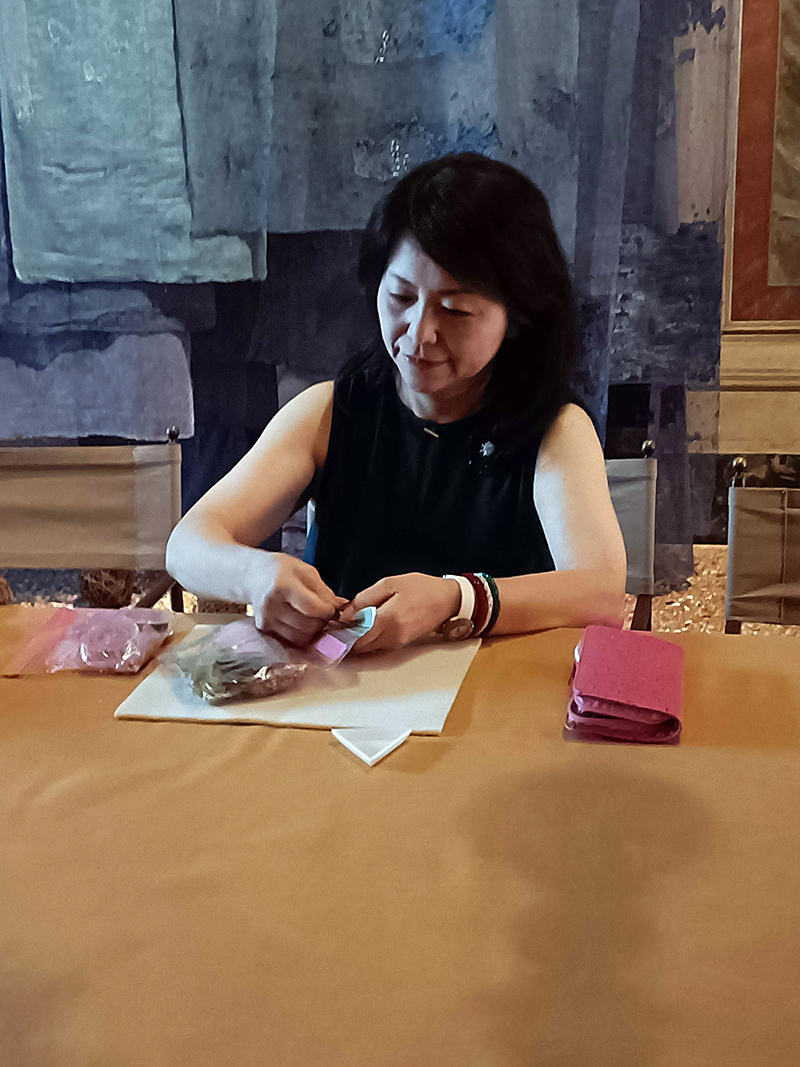
Una nuova mostra proveniente dal Sol Levante si può ammirare nel bellissimo Museo di Palazzo Mocenigo, della Fondazione Musei Civici di Venezia in occasione della Glass Week. Si intitola : “Fiori di Vetro” dell’artista Giapponese Minako Shimonagase, e sarà aperta al pubblico dal 9 settembre fino al 1 di ottobre 2023, tutti i giorni tranne il lunedì dalle 10.00 alle 18.00 (ultima ingresso ore 17.00) e nelle giornata di Venerdì e Sabato dalle 10.00 alle 20.00 (ultimo ingresso ore 19.00)

Minako Shimonagase: l’artista delle perle

Minako Shimonagase è una giovane artista giapponese che crea bellissime opere d’arte utilizzando perle di vetro. I suoi lavori sono caratterizzati da una delicatezza e una raffinatezza che li rendono unici. Shimonagase è nata a Tokyo nel 1995. Ha iniziato a lavorare con le perle di vetro all’età di 12 anni, quando ha partecipato a un corso di arte presso una scuola locale. Da allora, ha perfezionato la sua tecnica e ha iniziato a creare opere d’arte sempre più complesse e affascinanti.

I lavori di Shimonagase sono ispirati alla natura e alla cultura giapponese. Utilizza spesso perle di vetro di diversi colori e dimensioni per creare immagini di fiori, animali e paesaggi. I suoi lavori sono esposti in gallerie d’arte di tutto il mondo e sono stati apprezzati da critici e collezionisti. Nel 2023, Shimonagase ha pubblicato il suo primo libro, “Bead Flowers”, che raccoglie una selezione dei suoi lavori più recenti. Il libro è stato un successo editoriale e ha contribuito a far conoscere l’opera dell’artista a un pubblico più vasto. Nel 2011 fonda la Japan Beaded Flowers Association e assume il ruolo di presidente. Nello stesso anno Minako, aiutata da un centinaio di studenti giapponesi, realizza un enorme albero di ciliegio con tre milioni di perle, in ricordo delle vittime del terremoto di Fukushima e come sostegno alla ricostruzione.

I lavori di Minako Shimonagase

I lavori di Minako Shimonagase sono caratterizzati da una grande delicatezza e raffinatezza. L’artista utilizza perle di vetro di diversi colori e dimensioni per creare immagini di fiori, animali e paesaggi. Le sue opere sono spesso ispirate alla natura e alla cultura giapponese.

Alcuni esempi di lavori di Minako Shimonagase:

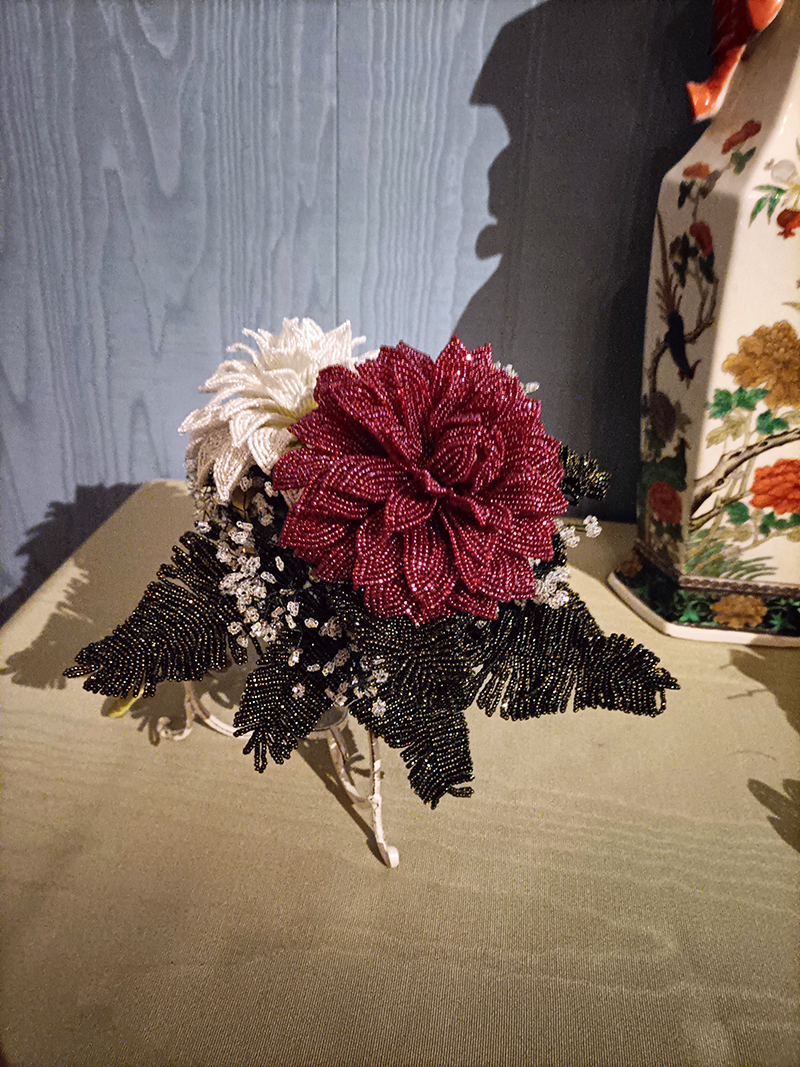
“Fiori di perle” è una serie di opere che raffigurano diversi tipi di fiori, tra cui rose, tulipani e ciliegi. Le opere sono realizzate utilizzando perle di vetro di diversi colori e dimensioni. “Animali di perle” è una serie di opere che raffigurano diversi tipi di animali, tra cui gatti, cani e uccelli. Le opere sono realizzate utilizzando perle di vetro di diverse dimensioni. “Paesaggi di perle” è una serie di opere che raffigurano diversi tipi di paesaggi, tra cui montagne, fiumi e foreste. Le opere sono realizzate utilizzando perle di vetro di diverse dimensioni e colori.

Minako Shimonagase è una giovane artista di grande talento che crea bellissime opere d’arte utilizzando perle di vetro. I suoi lavori sono caratterizzati da una delicatezza e una raffinatezza che li rendono unici. Se siete interessati all’arte contemporanea, vi invito a visitare il sito web di Minako Shimonagase o a seguire i suoi canali social per saperne di più sui suoi lavori, e di venire a visitare il stupendo Museo di Palazzo Mocenigo, per vederli !!

https://minakoshimonagase.com

https://www.instagram.com/minako_shimonagase/

Minako Shimonagase: the pearl artist

A new exhibition from the Land of the Rising Sun can be admired in the beautiful Museum of Mocenigo Palace, of the Civic Museums Foundation of Venice on the occasion of glass week. It is titled: “Glass Flowers” by the Japanese artist Minako Shimonagase, and will be open to the public from 9 September until 1 October 2023, every day except Mondays from 10.00 am to 18.00 pm (last entry at 17.00) and on Friday and Saturday from 10.00 am to 8.00 pm (last entry 7.00pm)

Minako Shimonagase is a young Japanese artist who creates beautiful works of art using glass beads. Her works are characterized by a delicacy and refinement that make them unique. Shimonagase was born in Tokyo in 1995. She began working with glass beads at the age of 12, when she took an art class at a local school. Since then, she has perfected her technique and began to create increasingly complex and fascinating works of art.

Shimonagase’s works are inspired by Japanese nature and culture. He often uses glass beads of different colors and sizes to create images of flowers, animals and landscapes. Her works are exhibited in art galleries around the world and have been appreciated by critics and collectors. In 2023, Shimonagase published her first book, “Bead Flowers”, which collects a selection of her most recent works. The book was a publishing success and helped make the artist’s work known to a wider audience. In 2011 she founded the Japan Beaded Flowers Association and assumed the role of president. In the same year Minako, helped by a hundred Japanese students, creates an enormous cherry tree with three million pearls, in remembrance of the victims of the Fukushima earthquake and as support for reconstruction.

The works of Minako Shimonagase

Some examples of Minako Shimonagase’s work:

“Pearl Flowers” is a series of works depicting different types of flowers, including roses, tulips and cherry trees. The works are made using glass beads of different colors and sizes. “Pearl Animals” is a series of works depicting different types of animals, including cats, dogs and birds. The works are made using glass beads of different sizes. “Landscapes of Pearls” is a series of works that depict different types of landscapes, including mountains, rivers and forests. The works are made using glass beads of different sizes and colors.

Minako Shimonagase is a very talented young artist who creates beautiful works of art using glass beads. Her works are characterized by a delicacy and refinement that make them unique. If you are interested in contemporary art, I invite you to visit Minako Shimonagase’s website or follow her social channels to find out more about her works, and to come and visit the wonderful Palazzo Mocenigo Museum to see them!!

https://minakoshimonagase.com

https://www.instagram.com/minako_shimonagase/

Il quadro del mistero

For the English translation please scroll down the page, thank you !

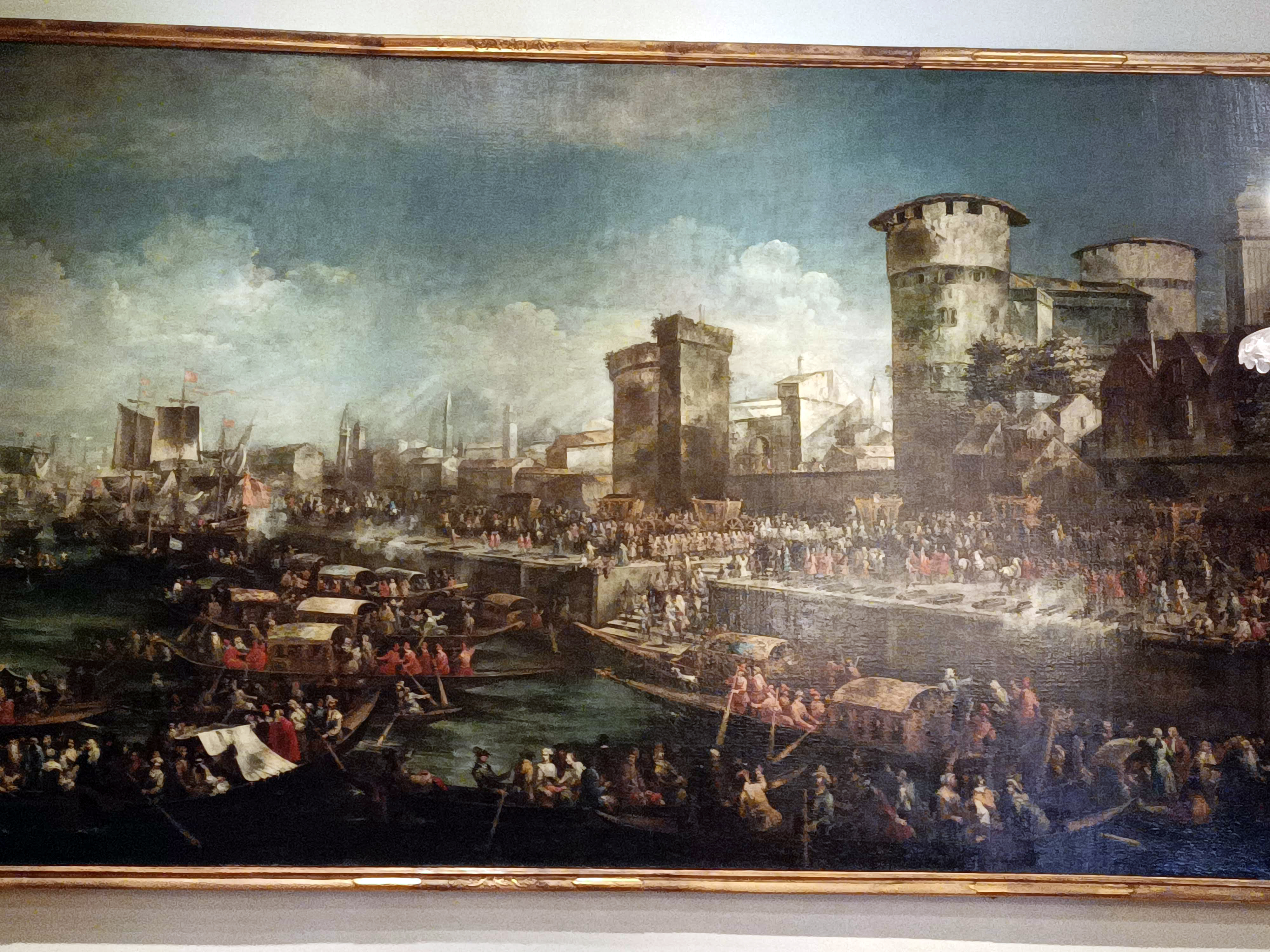
C’è un quadro all’interno di Palazzo Mocenigo, stupendo museo della Fondazione Musei Civici di Venezia, che mi affascina molto, perché esso cela un mistero. Se ci si reca alla sala 7 del primo piano, possiamo ammirare questo quadro di Antonio Stom (1688 – Venezia, 1734), dal titolo “Arrivo a Chioggia del principe di Svezia ricevuto dal doge Mocenigo.

Ebbene c’è un quadro molto simile dipinto dal “L’arrivo degli ambasciatori veneziani Nicolò Erizzo e Alvise Pisani” II a Londra il 30 maggio, 1707, di Luca Carlevarijs”.

Come potete vedere ci sono molte similitudini, il modo posizionato sulla destra, l’accesso, sempre nello stesso punto, il fatto che vengono sparate delle cannonate a salve le barche che accostano sulla scalinata.

Molto probabilmente l’artista Antonio Stom, si è lasciato ispirare dal Carlevaris, e tuttavia la somiglianza tra i due quadri è qualcosa di affascinante.

Volete vedere il quadro di Antonio Stom ? Venite a Palazzo Mocenigo, vi aspettiamo !

The Mysterious Picture

There is a painting inside Mocenigo Palace, the wonderful museum of the Civic Museums Foundation of Venice, which fascinates me a lot, because it hides a mystery. If we go to room 7 on the first floor, we can admire this painting by Antonio Stom (1688 – Venice, 1734), entitled “Arrival in Chioggia of the Prince of Sweden received by Doge Mocenigo.

Well there is a very similar picture painted by Luca Carlevarijs “The Arrival of the Venetian Ambassadors Nicolò Erizzo and Alvise Pisani” II in London on May 30, 1707″ .

As you can see there are many similarities, the quay positioned on the right, the access, always in the same spot, the fact that cannon shots are fired blanks at the boats that approach on the steps.

Most likely the artist Antonio Stom was inspired by Carlevaris, and yet the similarity between the two paintings is something fascinating.

Do you want to see the painting by Antonio Stom ? Come to Palazzo Mocenigo, we are waiting for you!

MATTHIAS SCHALLER a Palazzo Mocenigo

For the English translation please scroll down the page, thank you !

La Fondazione Musei Civici di Venezia presenta al piano terra di Palazzo Mocenigo, nella “white room”, l’ultima sala alla vostra sinistra, un’installazione di Matthias Schaller, composta da due distinte serie fotografiche “Tessuto Urbano” (2022) e “Lagunenwalzer” (2012). Attraverso 53 fotografie in mostra, il fotografo tedesco riassume la sua visione della città contemporanea, ispirata ai celebri paesaggi cinquecenteschi di De Barbari. La serie “Tessuto Urbano” ritrae i sei Sestieri (i 6 più la Giudecca) di Venezia attraverso una serie di sette fotografie tratte dallo stesso merletto seicentesco appartenente alla collezione del Museo di Burano. Ridotta in scala, ogni fotografia riproduce il Sestiere di Venezia, conducendo lo spettatore attraverso le intricate finiture che diventano il tessuto delle calli e dei campielli della città lagunare. Il pizzo, simbolo della manifattura passata e presente della produzione tessile lagunare, ispira l’anima storica dell’artista ed è una metafora della dimensione urbana.

Matthias Schaller è nato nel 1965 a Dillingen an der Donau, in Germania. Ha conseguito master in Antropologia Culturale presso le Università di Göttingen, Amburgo e Siena. Vive e lavora tra Vienna e New York.

La raccolta accompagna “Lagunenwalzer”, una selezione di 46 tracce in vinile provenienti dagli Archivi Punk Veneziani. Strettamente connessi, i dischi diventano correlati dell’acqua che penetra in Venezia, costituendone l’unicità. La superficie scolpita del vinile delinea l’orizzonte della vista e il suo titolo provocatorio suggerisce una potenziale rivoluzione nello spirito della città. Affascinato dalla realtà di Venezia, alla quale ha dedicato finora sette progetti, Matthias Schaller utilizza la strategia della ritrattistica indiretta per proporre un’immagine alternativa di Venezia per le mappe della città. In questa mostra, pizzo e vinile sono immagini di metafore immersive per l’ambiente urbano che riflettono il passato della città esprimendolo anche all’osservatore, attivando la nostra immaginazione piuttosto che imporre la topografia al nostro limite spaziale.

Dal 24 marzo al 26 novembre 2023 Venezia

Museo di Palazzo Mocenigo – “White Room” piano terra

In collaborazione con Sonnabend Gallery, New York City

Sito ufficiale di Palazzo Mocenigo

Matthias Schaller at Mocenigo Palace

The Civic Museums Foundation of Venice presents an installation by Matthias Schaller on the ground floor, on the last room on the left side, “the white room” at Mocenigo Palace, made up of two distinct photographic series “Urban fabric” (2022) and “Lagunenwalzer” (2012). Through 53 photographs on display, the German photographer summarizes his vision of the contemporary city, inspired by the famous sixteenth-century landscapes of De Barbari. The “Urban fabric” series portrays the six Sestieri of Venice (six plus the Giudecca Island) through a series of seven photographs taken from the same seventeenth-century lace belonging to the collection of the Burano Museum. Reduced to scale, each photograph reproduces the Sestiere of Venice, leading the viewer through the intricate finishes that become the fabric of the city’s calli and campielli. The lace, symbol of the past and present manufacturing of the lagoon textile production, inspires the historical soul of the artist, and it is a metaphor of the urban dimension.

Matthias Schaller was born in 1965 in Dillingen an der Donau, Germany. He holds masters in Cultural Anthropology at the Universities of Göttingen, Hamburg and Siena. He lives and works between Vienna and New York.

The collection accompanies “Lagunenwalzer”, a selection of 46 vinyl tracks from the Venetian Punk Archives. Closely connected, the disks become correlates of the water that penetrates Venice, constituting its uniqueness. The sculpted surface of the vinyl outlines the horizon of the view and its provocative title suggests a potential revolution in the spirit of the city. Fascinated by the reality of Venice, to which he has dedicated seven projects so far, Matthias Schaller uses the strategy of indirect portraiture to propose an alternative image of Venice for city maps. In this exhibition, lace and vinyl are images of immersive metaphors for the urban environment that reflect the city’s past, while also expressing it to the observer, activating our imagination rather than imposing topography on our spatial limit.

From 24 March to 26 November 2023 Venice

Museo di Palazzo Mocenigo – “White Room” on the ground floor

In collaboration with Sonnabend Gallery, New York City

Official Web site of Mocenigo Palace