Chagall al Candiani di Mestre

For the English translation please scroll down the page, thank you !

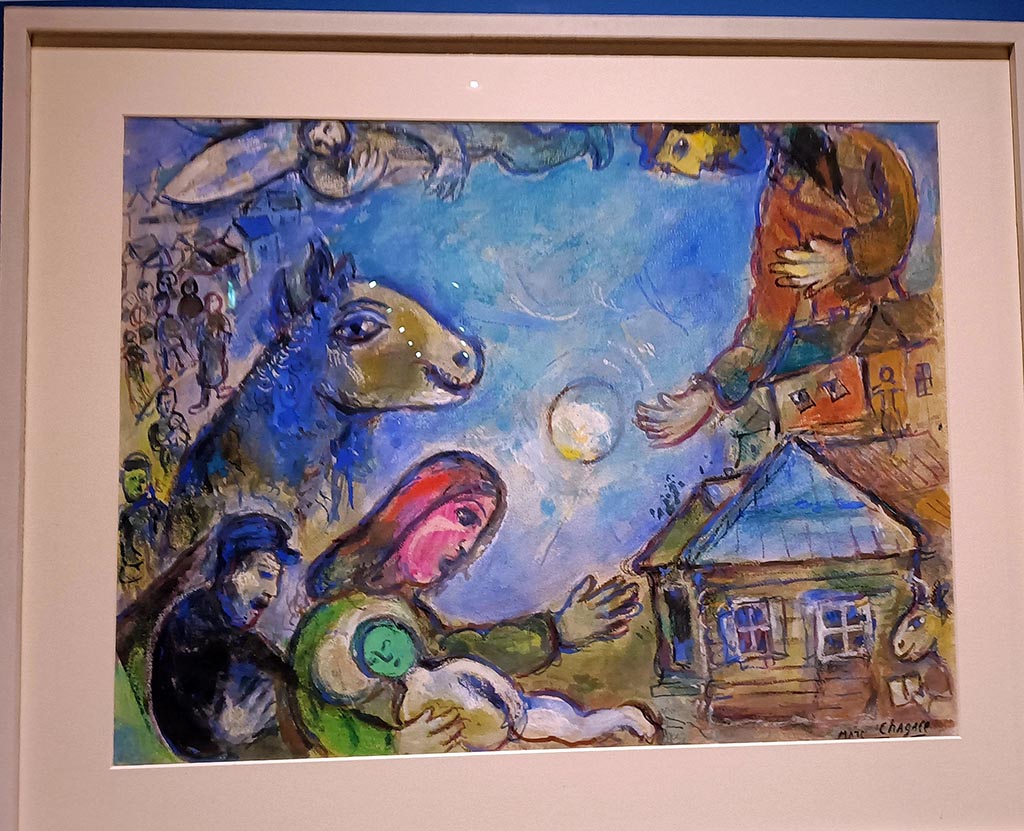
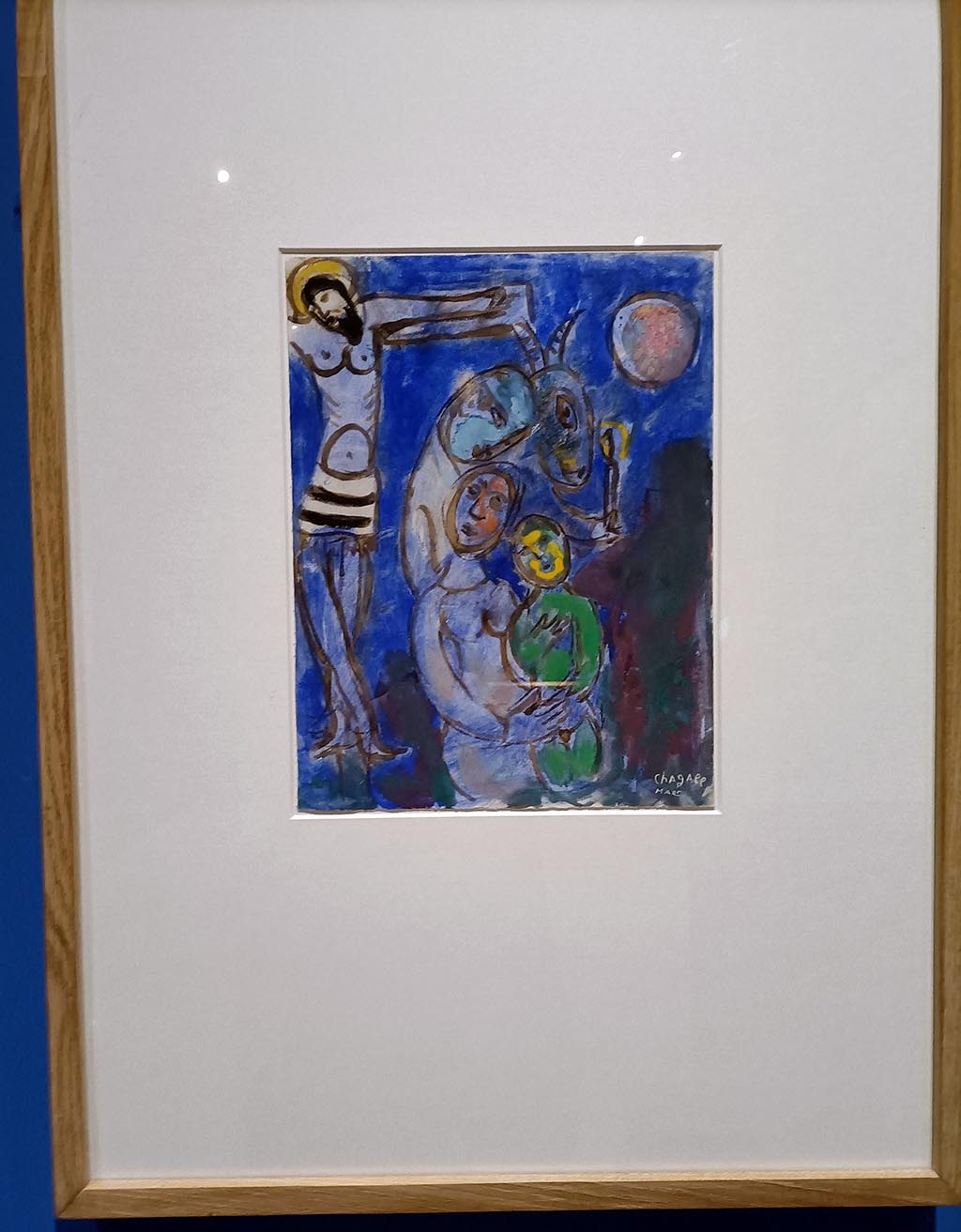
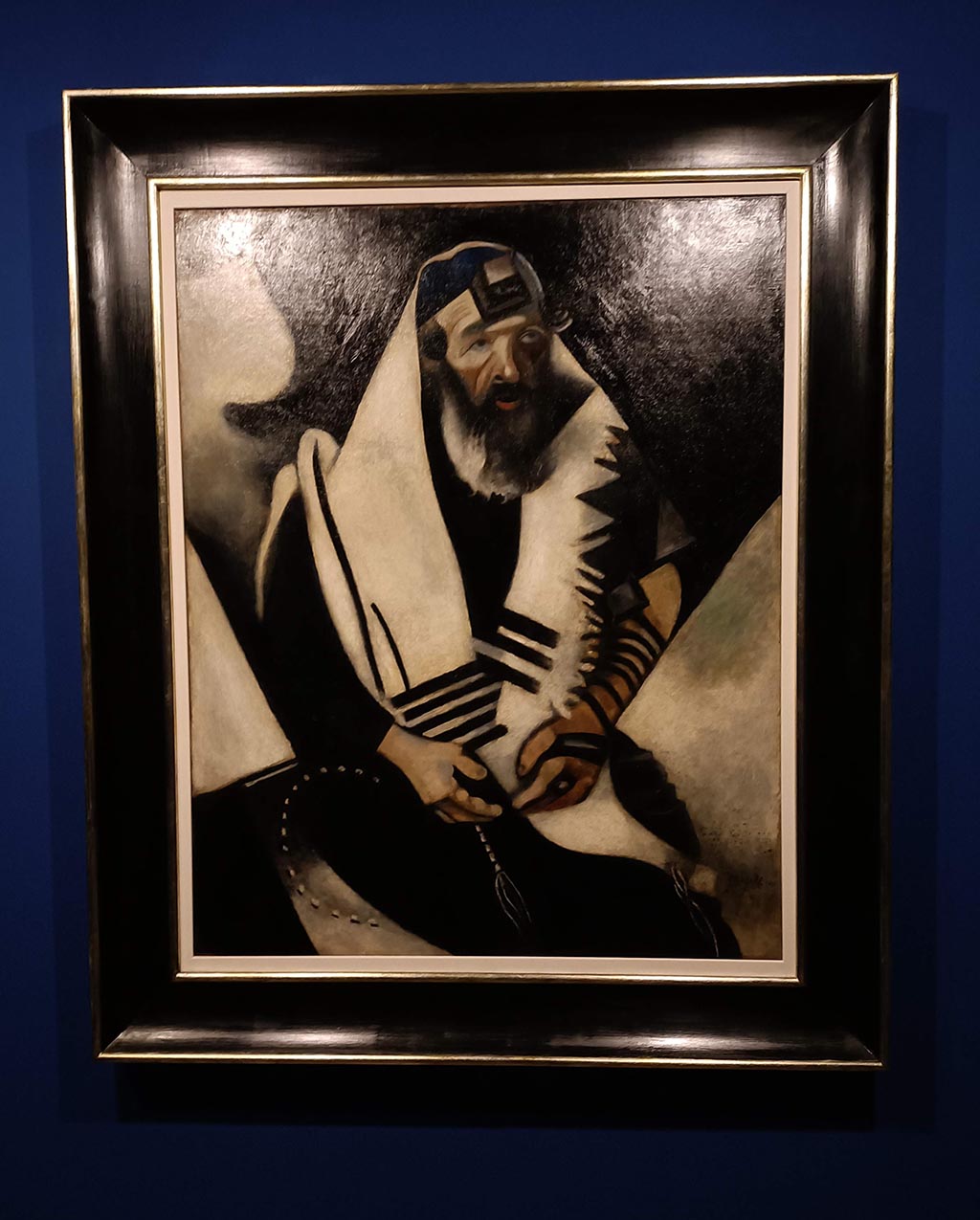
In questo articolo vi voglio parlare della mostra che si terrà dal 30 settembre 2023 al 13 febbraio 2024 su Mar Chagall al Centro Culturale Candiani di Mestre. Una mostra realizzata dalla Fondazione Musei Civici di Venezia.

Marc Chagall: un pittore tra tradizione e avanguardia
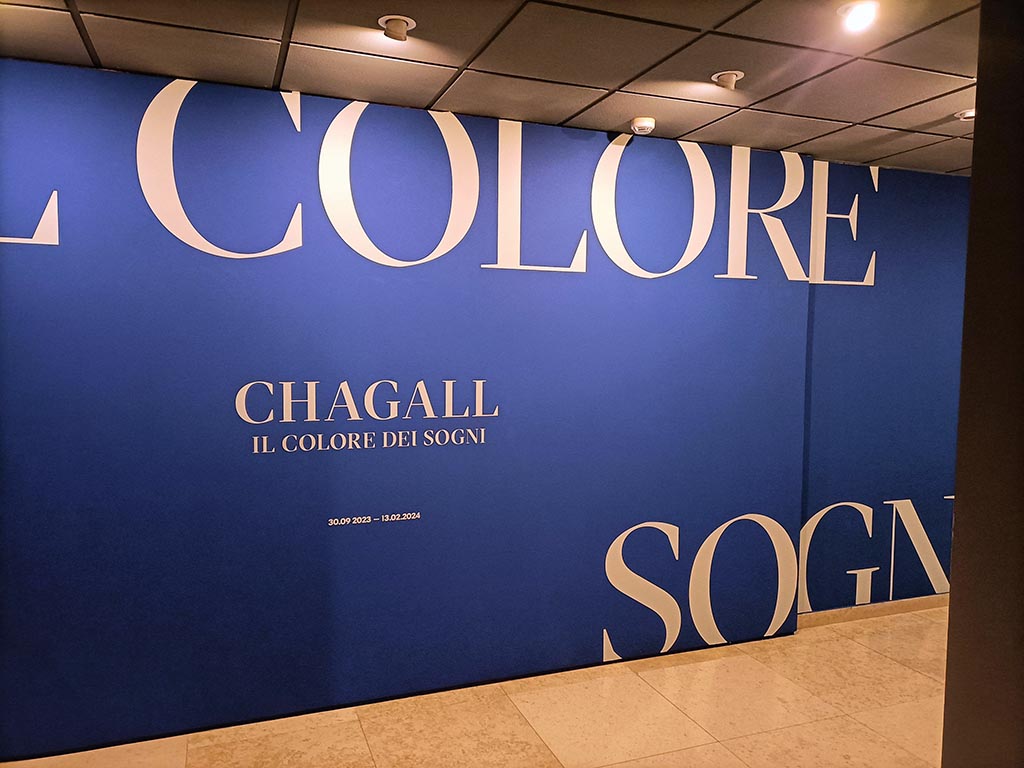
Marc Chagall è stato uno dei più importanti pittori del XX secolo. Nato a Vitebsk, in Russia, nel 1887, ha vissuto e lavorato in Francia, Stati Uniti e Israele. La sua arte è caratterizzata da un’originale fusione di elementi tradizionali e avanguardisti, che ha dato vita a un universo poetico e fantastico.

I primi anni

Chagall nasce in una famiglia ebrea di modeste condizioni. Il suo primo approccio all’arte avviene attraverso l’iconografia religiosa, che influenzerà profondamente il suo lavoro. Nel 1906 si trasferisce a San Pietroburgo per studiare all’Accademia di Belle Arti. Qui entra in contatto con le correnti avanguardiste dell’epoca, come il fauvismo e il cubismo.

La stagione parigina

Nel 1910 Chagall si trasferisce a Parigi, dove entra in contatto con artisti come Pablo Picasso, Henri Matisse e Marcel Duchamp. La sua pittura si evolve in una direzione sempre più personale, caratterizzata da un uso vivace del colore e da immagini oniriche e surreali.

Il ritorno in Russia

Nel 1914 Chagall torna in Russia, dove partecipa alla rivoluzione bolscevica. Viene nominato direttore dell’Accademia di Belle Arti di Vitebsk, ma la sua visione artistica si scontra con la linea ufficiale del regime. Nel 1922 Chagall si trasferisce nuovamente a Parigi, dove resta fino al 1941.

L’esilio

Allo scoppio della seconda guerra mondiale, Chagall si rifugia negli Stati Uniti. Qui continua a lavorare e a esporre, anche se la sua produzione è influenzata dalla tragedia della guerra. Nel 1947 torna in Europa, stabilendosi a Saint-Paul-de-Vence, in Francia.

Gli ultimi anni

Negli anni successivi, Chagall continua a lavorare instancabilmente, realizzando dipinti, vetrate, ceramiche e scenografie. Muore a Saint-Paul-de-Vence nel 1985, all’età di 97 anni.

L’arte di Chagall

L’arte di Chagall è caratterizzata da un’originale fusione di elementi tradizionali e avanguardisti. Le sue opere sono spesso ispirate alla sua vita personale, alla sua infanzia in Russia e alla sua fede ebraica.

Chagall utilizza un linguaggio visivo ricco di metafore e simbolismi. I suoi dipinti sono spesso popolati da figure oniriche e surreali, che fluttuano in atmosfere sospese. Il colore è un elemento fondamentale nella sua arte, utilizzato per creare un’atmosfera magica e poetica.

I temi ricorrenti

Alcuni dei temi ricorrenti nell’arte di Chagall sono:

  • La nostalgia per la sua infanzia in Russia
  • La sua fede ebraica
  • L’amore e la vita familiare
  • La natura
  • La musica

Le opere più famose

  • L’ebreo in volo (1911)
  • Il violinista blu (1912)
  • Il matrimonio (1918)
  • Gli amanti sopra Vitebsk (1921)
  • La danza (1922)
  • Le nozze di Cana (1950)
  • Le vetrate del Metropolitan Museum of Art di New York (1960-1966)

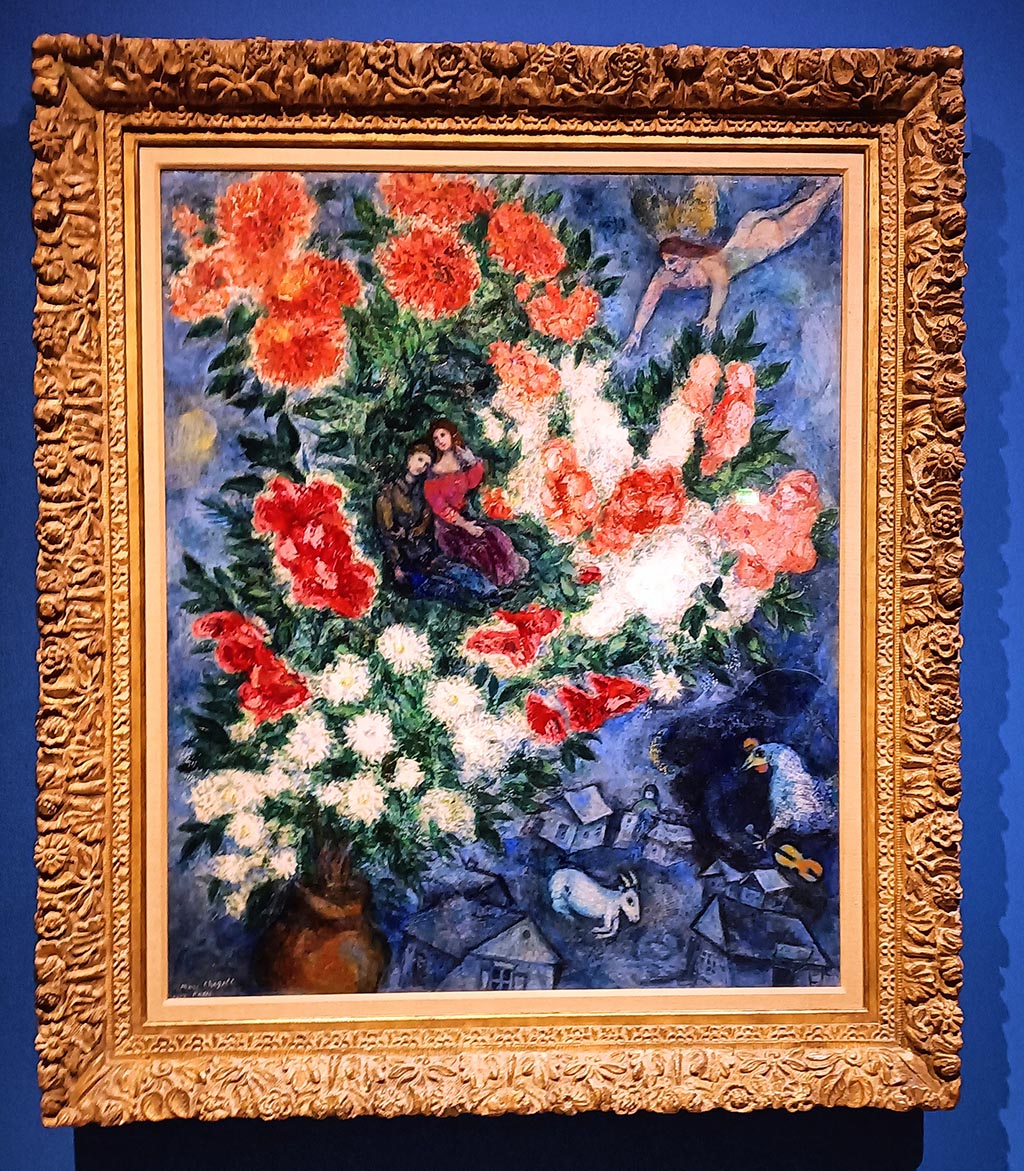
Alcune opere presenti nella mostra
Altri artisti presenti nella mostra

  • Emil nolde
  • Augusto Giacometti
  • Ossip zadkine
  • Maz ernst
  • Odilon redon
  • Adolfo wildt
  • Cesare Laurenti
  • Gaetano previati

Il valore artistico

Chagall è uno degli artisti più importanti del XX secolo. La sua arte, unica e originale, ha avuto un profondo impatto sulla pittura contemporanea. Le sue opere sono esposte nei più importanti musei del mondo e sono state ammirate da generazioni di appassionati d’arte.

Una mostra molto importante che viene offerta ai cittadini di Mestre e dintorni, da parte della Fondazione Musei Civici di Venezia, che possono ammirarla senza recarsi nella città lagunare. Ricordiamo che alcune opere provengono dal Museo di arte moderna di Ca’ Pesaro. Per tutti i dettagli su questa bellissima mostra che invito tutti i cittadini e turisti presenti negli alberghi della terraferma, vi rimando al seguente link:

https://muvemestre.visitmuve.it/it/mostre/mostre-in-corso/chagall-il-colore-dei-sogni/2023/07/22336/chagall/

Marc Chagall: A Painter Between Tradition and Avant-Garde

In this article I want to tell you about the exhibition to be held from 30 September 2023 to 13 February 2024 on Mar Chagall at the Candiani Cultural Center in Mestre. An exhibition created by the Civic Museums Foundation of Venice.

Marc Chagall was one of the most important painters of the 20th century. Born in Vitebsk, Russia, in 1887, he lived and worked in France, the United States, and Israel. His art is characterized by an original fusion of traditional and avant-garde elements, which has given rise to a poetic and fantastic universe.

Early Years

Chagall was born into a modest Jewish family. His first approach to art came through religious iconography, which would profoundly influence his work. In 1906, he moved to Saint Petersburg to study at the Academy of Fine Arts. There, he came into contact with the avant-garde movements of the time, such as Fauvism and Cubism.

The Parisian Period

In 1910, Chagall moved to Paris, where he came into contact with artists such as Pablo Picasso, Henri Matisse, and Marcel Duchamp. His painting evolved in an increasingly personal direction, characterized by a vibrant use of color and dreamlike and surreal images.

Return to Russia

In 1914, Chagall returned to Russia, where he participated in the Bolshevik Revolution. He was appointed director of the Academy of Fine Arts in Vitebsk, but his artistic vision clashed with the official line of the regime. In 1922, Chagall moved back to Paris, where he remained until 1941.

Exile

At the outbreak of World War II, Chagall fled to the United States. There, he continued to work and exhibit, although his production was influenced by the tragedy of the war. In 1947, he returned to Europe, settling in Saint-Paul-de-Vence, France.

Later Years

In the years that followed, Chagall continued to work tirelessly, creating paintings, stained glass, ceramics, and stage sets. He died in Saint-Paul-de-Vence in 1985, at the age of 97.

Chagall’s Art

Chagall’s art is characterized by an original fusion of traditional and avant-garde elements. His works are often inspired by his personal life, his childhood in Russia, and his Jewish faith.

Chagall uses a visual language rich in metaphors and symbolisms. His paintings are often populated by dreamlike and surreal figures, floating in suspended atmospheres. Color is a fundamental element in his art, used to create a magical and poetic atmosphere.

Recurring Themes

Some of the recurring themes in Chagall’s art are:

  • Nostalgia for his childhood in Russia
  • His Jewish faith
  • Love and family life
  • Nature
  • Music

Famous Works

Among Chagall’s most famous works are:

  • The Flying Jew (1911)
  • The Blue Violinist (1912)
  • The Marriage (1918)
  • The Lovers Above Vitebsk (1921)
  • The Dance (1922)
  • The Wedding at Cana (1950)
  • The Stained Glass Windows of the Metropolitan Museum of Art in New York (1960-1966)

Here you are some works present in this exhibition

Other artists present in this exhibition

  • Emil nolde
  • Augusto Giacometti
  • Ossip zadkine
  • Maz ernst
  • Odilon redon
  • Adolfo wildt
  • Cesare Laurenti
  • Gaetano previati

Artistic Value

Chagall is one of the most important artists of the 20th century. His unique and original art has had a profound impact on contemporary painting. His works are exhibited in the most important museums in the world and have been admired by generations of art lovers.

Additional Information

In addition to his paintings, Chagall was also a prolific artist in other media, including stained glass, ceramics, and stage sets. He created stained glass windows for the Hadassah-Hebrew University Medical Center in Jerusalem, the Cathedral of Metz, and the Metropolitan Museum of Art in New York. He also created ceramic sculptures and murals for public spaces. Chagall’s art is a celebration of life and love. It is a world of imagination and fantasy, where anything is possible.

A very important exhibition that is offered to the citizens of Mestre and the surrounding area by the Civic Museums Foundation of Venice, who can admire it without going to the lagoon city. We remind you that some works come from the Ca’ Pesaro Museum of Modern Art. For all the details on this beautiful exhibition which I invite all citizens and tourists present in the hotels on the mainland, I refer you to the following link:

Detail about the exhibition

Ritorna Mestre Premio Pittura !

For the English translation please scroll down the page, thank you !

Il Premio Mestre di Pittura: un concorso annuale per valorizzare la pittura contemporanea

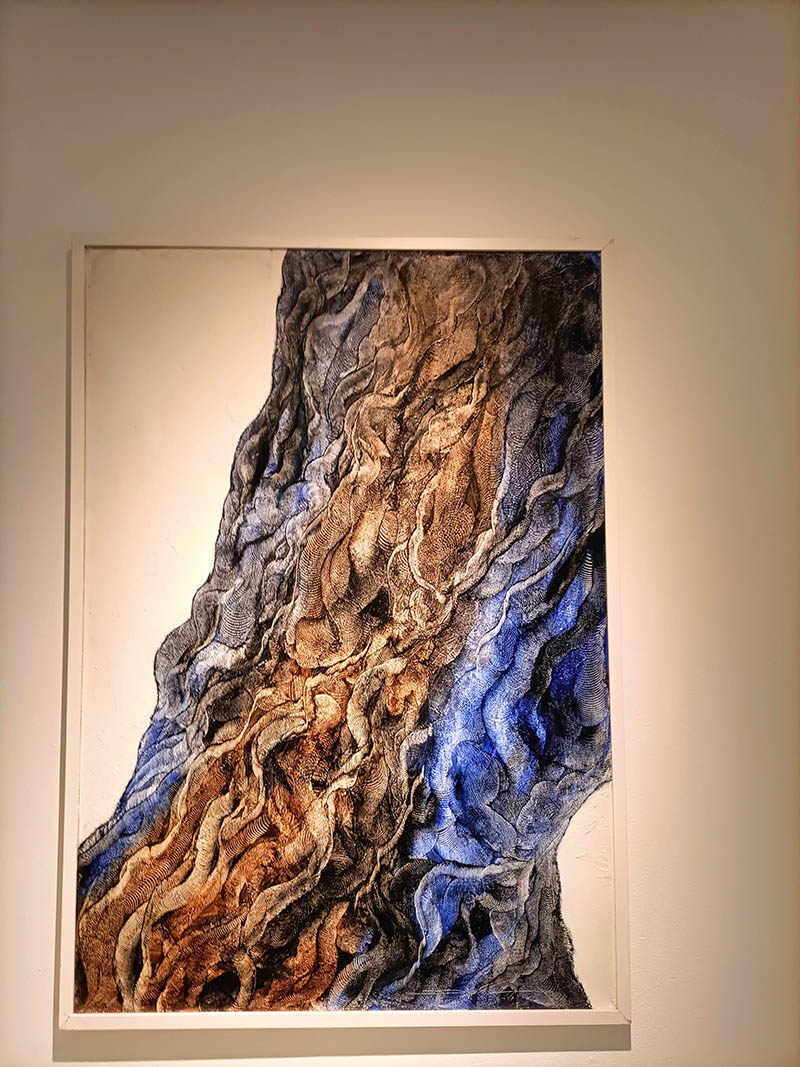
Il Premio Mestre di Pittura è un concorso annuale di pittura contemporanea che si tiene a Mestre, in Veneto, Italia. La prima edizione si è tenuta nel 2019, e siamo arrivati all’edizione di quest’anno. Il concorso è aperto a artisti di tutte le nazionalità, e prevede la selezione di 60 opere che vengono esposte in una mostra collettiva presso il Centro Culturale Candiani di Mestre. Le opere sono selezionate da una giuria composta da esperti di arte contemporanea.

Il Premio Mestre di Pittura è un evento importante per la promozione della pittura contemporanea in Veneto e in Italia. Il concorso contribuisce a valorizzare il talento degli artisti emergenti e a sostenere la produzione artistica contemporanea.

Eccovi alcune opere di questa edizione:

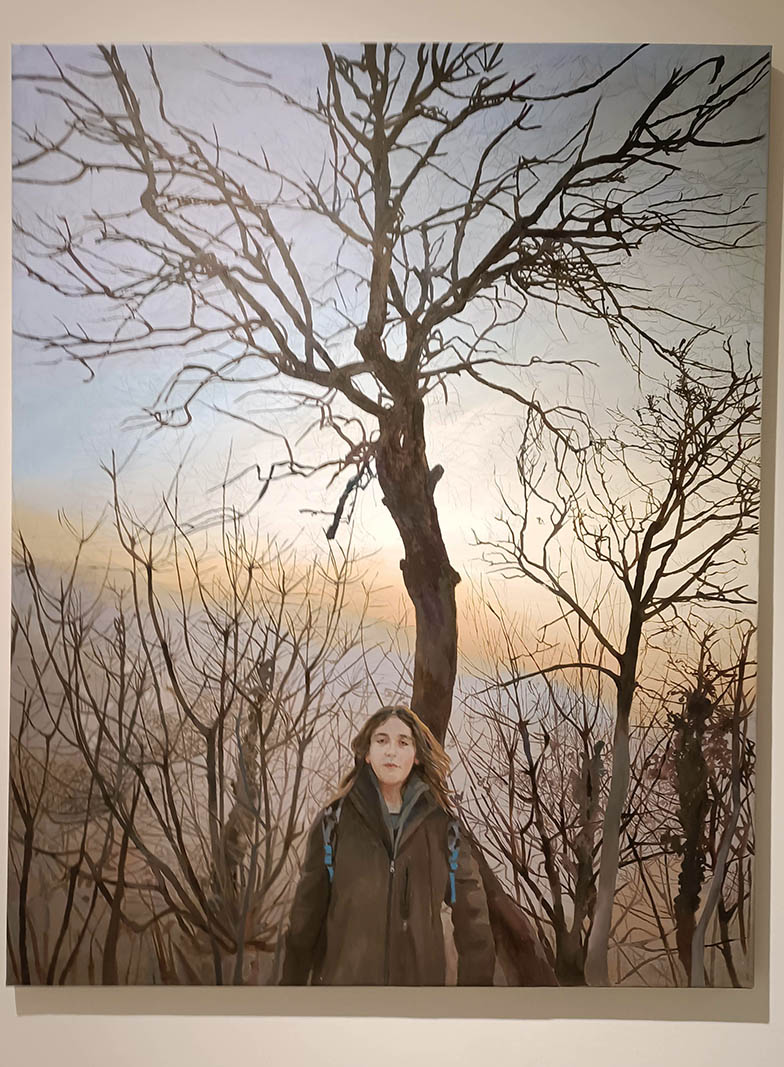
Quest’anno, devo confessare che ci sono moltissime opere molto interessanti, molte di più, rispetto alle passate edizioni, non sarà facile decretare il vincitore. Molte sono le opere che mi sono piaciute, ma una in particolare, colpisce direttamente. Il primo dipinto in alto a sinistra si intitola “Come è andata la festa? Uno schianto!” dell’artista Rafaele Bovo. Non si può fare a meno di pensare a tutte le stragi del sabato sera, quando i giovani tornano a casa tardi dalla discoteca e muoiono negli incidenti stradali mortali. Purtroppo continuano a succedere.

Sarà molto interessante vedere chi vincerà quest’edizione, non vedo l’ora di saperlo. Invito tutta la cittadinanza e i turisti presenti negli alberghi di Mestre di andare a vederla !

Mestre Painting Prize: An annual Competition to Promote Contemporary Painting

The Mestre Painting Prize is a annual contemporary painting competition held in Mestre, Veneto, Italy. The first edition was held in 2019, and we arrived to the edition of this year. The competition is open to artists of all nationalities, and it selects 60 works that are exhibited in a collective exhibition at the Centro Culturale Candiani in Mestre. The works are selected by a jury of experts in contemporary art.

The Mestre Painting Prize is an important event for the promotion of contemporary painting in Veneto and Italy. The competition helps to showcase the talent of emerging artists and to support contemporary art production.

Here you are some works of this edition:

This year, I must confess that there are many very interesting works, many more than in past editions, it will not be easy to decide the winner. There are many works that I liked, but one in particular strikes me directly. The first painting at the top left is titled “How did the party go? A blast!” by the artist Rafaele Bovo. You can’t help but think of all the Saturday night massacres, when young people come home late from the disco, and die ‘cause of car accidents. Unfortunately they keep happening.

It will be very interesting to see who wins this edition, I can’t wait to find out. I invite all citizens and tourists present in the hotels of Mestre to go and see it!

Aspettando Rosalba Carriera

Ca’ Rezzonico (Venice)

For the English translation please scroll down the page, thank you !

Rosalba Carriera: la signora del pastello

Rosalba Carriera, miniature su avorio, è la mostra che si terrà dal 13 ottobre 2023 al 09 gennaio 2024 presso il stupendo museo di Ca’ Rezzonico – Museo del Settecento Veneziano, a cura di Alberto Craievich Direttore del museo. In occasione del trecentesimo anniversario della nascita di Rosalba Carriera, la Fondazione Musei Civici di Venezia presenta una retrospettiva dedicata alla sua attività di miniaturista. La mostra, esporrà 36 opere della pittrice, tra cui ritratti, scene mitologiche e religiose. Carriera è stata una delle più grandi miniature del Settecento. I suoi lavori, caratterizzati da una delicatezza e una raffinatezza senza pari, sono considerati dei capolavori dell’arte rococò. La mostra offre un’occasione unica per ammirare le opere di questa straordinaria artista.

Rosalba Carriera (Venezia, 12 gennaio 1673 – Venezia, 15 aprile 1757) è stata una pittrice e miniaturista italiana, considerata una delle più grandi artiste del Settecento. È nota soprattutto per i suoi ritratti a pastello, una tecnica che lei stessa ha contribuito a diffondere in Europa.

Carriera nacque a Venezia in una famiglia benestante. Fin da piccola manifestò un grande talento per il disegno e la pittura. A 16 anni entrò nella bottega del pittore Giuseppe Diamantini, dove studiò i principi del disegno e della prospettiva. Successivamente, si perfezionò con Antonio Balestra, uno dei più importanti pittori veneziani del tempo.

Carriera iniziò la sua carriera artistica dipingendo miniature su avorio. Le sue opere, caratterizzate da una delicatezza e una raffinatezza senza pari, furono subito apprezzate dalla nobiltà veneziana. In breve tempo, Carriera divenne una delle pittrici più richieste della città.

Nel 1716, Carriera fu invitata a Parigi. L’artista fu accolta con grande entusiasmo e divenne presto una delle personalità più in vista della capitale francese. A Parigi, Carriera espose i suoi ritratti a pastello, una tecnica che all’epoca era ancora poco utilizzata. Le sue opere, caratterizzate da una luminosità e una morbidezza che ricordavano la pittura ad olio, furono un grande successo.

Carriera rimase a Parigi per tre anni, durante i quali dipinse ritratti di alcuni dei personaggi più importanti dell’epoca. Dopo il suo ritorno a Venezia, Carriera continuò a lavorare come ritrattista. Le sue opere furono apprezzate da tutta Europa e la sua fama si diffuse anche negli Stati Uniti. Carriera morì a Venezia nel 1757, all’età di 84 anni.

La tecnica dei pastelli

Carriera è stata una pioniera nell’utilizzo dei pastelli per i ritratti. Questa tecnica, che permette di ottenere effetti di luce e colore molto delicati, era stata utilizzata in precedenza solo per la pittura di paesaggi e nature morte. Carriera era molto abile nell’utilizzare i pastelli e riusciva a ottenere effetti di grande realismo. I suoi ritratti sono caratterizzati da una grande espressività e da una raffinatezza senza pari.

Rosalba Carriera è stata una delle più grandi artiste del Settecento. I suoi ritratti a pastello sono considerati dei capolavori e hanno contribuito a diffondere questa tecnica in tutta Europa. Carriera è stata un’artista di grande talento e creatività, che ha lasciato un’impronta indelebile nella storia dell’arte.

Waiting for Rosalba Carriera

Rosalba Carriera: The Lady of Pastels

Rosalba Carriera, miniatures on ivory, is the exhibition to be held from 13 October 2023 to 09 January 2024 at the stupendous museum of Ca’ Rezzonico – Museo del Settecento Veneziano, curated by Alberto Craievich Director of the museum. In celebration of the 350th anniversary of Rosalba Carriera’s birth, the Civic Museums Foundation of Venice will present a retrospective of her work as a miniaturist. The exhibition, will feature 36 of the painter’s works, including portraits, mythological scenes, and religious works. Carriera was one of the greatest miniaturists of the 18th century. Her works, characterized by a delicacy and refinement without equal, are considered masterpieces of Rococo art. The exhibition offers a unique opportunity to admire the works of this extraordinary artist.

Rosalba Carriera (Venice, January 12, 1673 – Venice, April 15, 1757) was an Italian painter and miniaturist, considered one of the greatest artists of the 18th century. She is best known for her pastel portraits, a technique that she herself helped to popularize in Europe.

Carriera was born in Venice to a wealthy family. She showed a great talent for drawing and painting from a young age. At the age of 16, she entered the workshop of the painter Giuseppe Diamantini, where she studied the principles of drawing and perspective. She later perfected her skills with Antonio Balestra, one of the most important Venetian painters of the time.

Carriera began her artistic career painting miniatures on ivory. Her works, characterized by a delicacy and refinement without equal, were immediately appreciated by the Venetian nobility. In a short time, Carriera became one of the most sought-after painters in the city.

In 1716, Carriera was invited to Paris. The artist was greeted with great enthusiasm and soon became one of the most prominent figures in the French capital. In Paris, Carriera exhibited her pastel portraits, a technique that was still little used at the time. Her works, characterized by a luminosity and softness that recalled oil painting, were a great success.

Carriera remained in Paris for three years, during which she painted portraits of some of the most important figures of the time. After her return to Venice, Carriera continued to work as a portraitist. Her works were appreciated throughout Europe and her fame spread to the United States. Carriera died in Venice in 1757, at the age of 84.

The technique of pastels

Carriera was a pioneer in the use of pastels for portraits. This technique, which allows for very delicate effects of light and color, had previously been used only for painting landscapes and still lifes. Carriera was very skilled in using pastels and was able to achieve effects of great realism. Her portraits are characterized by a great expressiveness and a refinement without equal.

Conclusion

Rosalba Carriera was one of the greatest artists of the 18th century. Her pastel portraits are considered masterpieces and have helped to popularize this technique throughout Europe. Carriera was an artist of great talent and creativity, who left an indelible mark on the history of art.

Carriera was a member of the Accademia Clementina of Bologna and the Académie Royale de Peinture et de Sculpture of Paris. She was a friend of many of the leading figures of the Italian and French Enlightenment, including Voltaire, Montesquieu, and Madame de Pompadour. Her work was praised by many of her contemporaries, including Giambattista Tiepolo, Johann Joachim Winckelmann, and Denis Diderot.

Fiori di ciliegio a Palazzo Mocenigo

For the English translation please scroll down the page, thank you !

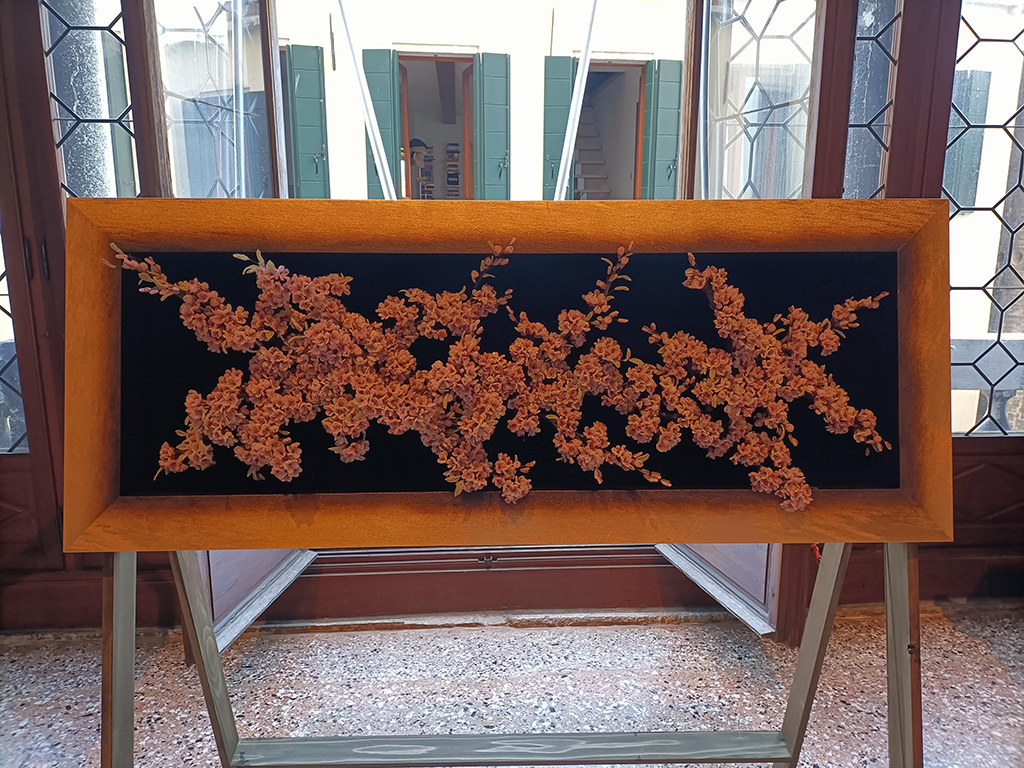
Oggi parliamo di un’opera molto interessante, forse la principale di tutta la mostra appena inaugurata a Palazzo Mocenigo, della Fondazione Musei Civici di Venezia. Una mostra della famosa artista Minako Shimonagase, che fin dal primo giorno sta avendo molto successo. L’opera in questione, la si può vedere nella fotografia all’inizio del paragrafo e si intitola per l’appunto “fiori di ciliegio”.

Gli alberi di ciliegio, in giapponese Sakura, sono una parte fondamentale della cultura giapponese. Sono considerati un simbolo di bellezza, fragilità, e rinascita.

I ciliegi sono originari dell’Asia orientale, ma sono stati introdotti in Giappone già in epoca pre-storica. Nel corso dei secoli, gli alberi di ciliegio sono diventati sempre più diffusi nel paese, e oggi si trovano in tutto il Giappone, da grandi città come Tokyo e Kyoto a piccoli villaggi di campagna.

La fioritura dei ciliegi, chiamata hanami, è un evento molto importante in Giappone. Ogni anno, milioni di persone si riuniscono per ammirare la bellezza dei fiori di ciliegio. L’hanami è un’occasione per celebrare la primavera, la natura, e la vita stessa.

I ciliegi hanno un significato profondo nella cultura giapponese. Sono un simbolo di bellezza, perché i loro fiori sono delicati e affascinanti. Sono anche un simbolo di fragilità, perché i fiori di ciliegio vivono solo per pochi giorni. Infine, sono un simbolo di rinascita, perché la fioritura dei ciliegi segna l’inizio della primavera.

Ecco alcuni dei significati simbolici dei ciliegi nella cultura giapponese:

Bellezza: I ciliegi sono considerati un simbolo di bellezza, perché i loro fiori sono delicati e affascinanti.
Fragilità: I ciliegi sono anche un simbolo di fragilità, perché i fiori di ciliegio vivono solo per pochi giorni.
Rinascita: La fioritura dei ciliegi segna l’inizio della primavera, che è un periodo di rinascita per la natura.
Tempo fuggevole: La breve durata della fioritura dei ciliegi è un simbolo del tempo fuggevole.
Passione: I ciliegi sono anche associati alla passione, perché i loro petali rossi sono spesso associati all’amore.
Dolcezza: I ciliegi sono anche associati alla dolcezza, perché i loro frutti, le ciliegie, sono un alimento popolare in Giappone.
I ciliegi sono una parte importante della cultura giapponese, e la loro bellezza è ammirata da persone di tutto il mondo.

Alcuni dettagli significativi:

La stagione della fioritura dei ciliegi in Giappone dura in genere circa due settimane, da fine marzo a inizio aprile.
Esistono molte varietà diverse di ciliegi in Giappone, ciascuna con le sue caratteristiche uniche.
L’Hanami è un’attività popolare tra persone di tutte le età in Giappone.
I fiori di ciliegio sono spesso usati nell’arte, nella musica e nella letteratura giapponese.

Cherry blossoms at Mocenigo Palace

Today we are talking about a very interesting work, perhaps the main one of the entire exhibition just inaugurated at Mocenigo Palace, from the Civic Museums Foundation of Venice. An exhibition by the famous artist Minako Shimonagase, which has been very successful since day one. The work in question can be seen in the photograph at the beginning of the paragraph and is entitled “cherry blossoms”.

Cherry blossoms, known in Japanese as Sakura, are a fundamental part of Japanese culture. They are considered a symbol of beauty, fragility, and rebirth.

Cherry trees are native to East Asia, but were introduced to Japan in prehistoric times. Over the centuries, cherry trees have become increasingly widespread in the country, and today they can be found all over Japan, from major cities like Tokyo and Kyoto to small rural villages.

The cherry blossom season, called hanami, is a very important event in Japan. Every year, millions of people gather to admire the beauty of cherry blossoms. Hanami is an occasion to celebrate spring, nature, and life itself.

Cherry blossoms have a deep meaning in Japanese culture. They are a symbol of beauty, because their flowers are delicate and fascinating. They are also a symbol of fragility, because cherry blossoms only live for a few days. Finally, they are a symbol of rebirth, because the cherry blossom season marks the beginning of spring.

Here are some of the symbolic meanings of cherry blossoms in Japanese culture:

Beauty: Cherry blossoms are considered a symbol of beauty, because their flowers are delicate and fascinating.
Fragility: Cherry blossoms are also a symbol of fragility, because cherry blossoms only live for a few days.
Rebirth: The cherry blossom season marks the beginning of spring, which is a time of rebirth for nature.
Fleeting time: The short duration of the cherry blossom season is a symbol of fleeting time.
Passion: Cherry blossoms are also associated with passion, because their red petals are often associated with love.
Sweetness: Cherry blossoms are also associated with sweetness, because their fruits, cherries, are a popular food in Japan.
Cherry blossoms are an important part of Japanese culture, and their beauty is admired by people all over the world.

Some additional details:

The cherry blossom season in Japan typically lasts for about two weeks, from late March to early April.
There are many different varieties of cherry trees in Japan, each with its own unique characteristics.
Hanami is a popular activity for people of all ages in Japan.
Cherry blossoms are often used in Japanese art, music, and literature.

Il Sol Levante a Palazzo Mocenigo

For the English translation please scroll down the page, thank you !

Una nuova mostra proveniente dal Sol Levante si può ammirare nel bellissimo Museo di Palazzo Mocenigo, della Fondazione Musei Civici di Venezia in occasione della Glass Week. Si intitola : “Fiori di Vetro” dell’artista Giapponese Minako Shimonagase, e sarà aperta al pubblico dal 9 settembre fino al 1 di ottobre 2023, tutti i giorni tranne il lunedì dalle 10.00 alle 18.00 (ultima ingresso ore 17.00) e nelle giornata di Venerdì e Sabato dalle 10.00 alle 20.00 (ultimo ingresso ore 19.00)

Minako Shimonagase: l’artista delle perle

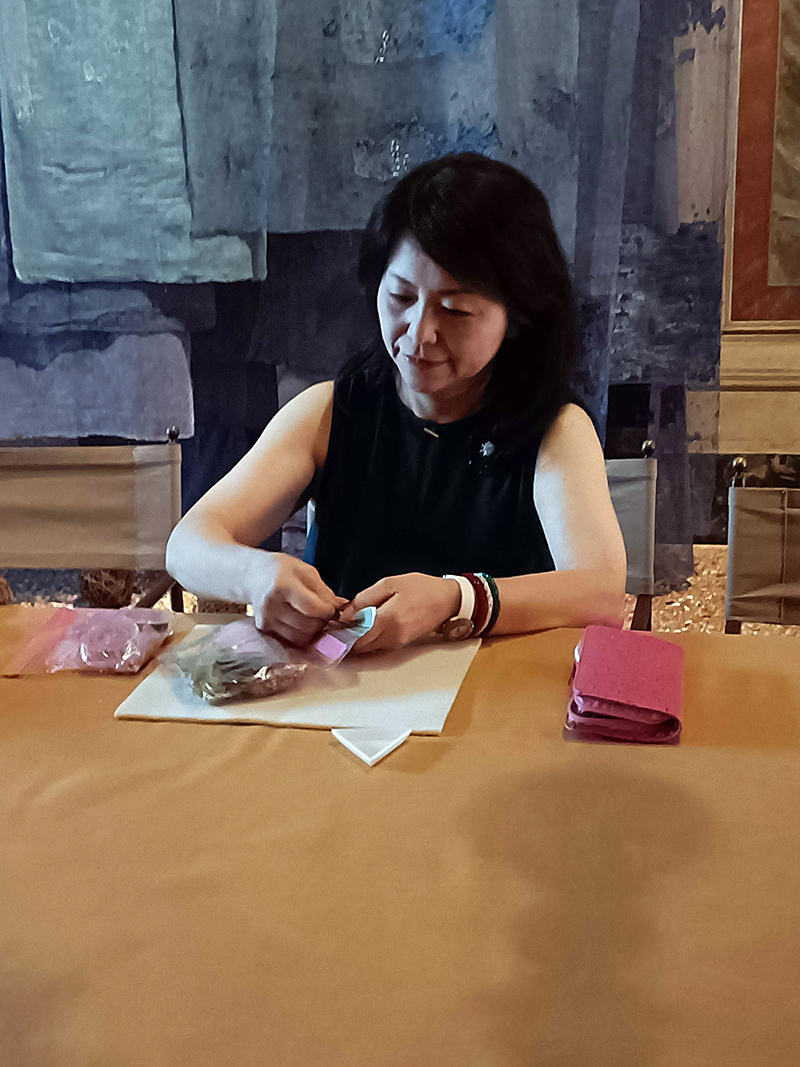
Minako Shimonagase è una giovane artista giapponese che crea bellissime opere d’arte utilizzando perle di vetro. I suoi lavori sono caratterizzati da una delicatezza e una raffinatezza che li rendono unici. Shimonagase è nata a Tokyo nel 1995. Ha iniziato a lavorare con le perle di vetro all’età di 12 anni, quando ha partecipato a un corso di arte presso una scuola locale. Da allora, ha perfezionato la sua tecnica e ha iniziato a creare opere d’arte sempre più complesse e affascinanti.

I lavori di Shimonagase sono ispirati alla natura e alla cultura giapponese. Utilizza spesso perle di vetro di diversi colori e dimensioni per creare immagini di fiori, animali e paesaggi. I suoi lavori sono esposti in gallerie d’arte di tutto il mondo e sono stati apprezzati da critici e collezionisti. Nel 2023, Shimonagase ha pubblicato il suo primo libro, “Bead Flowers”, che raccoglie una selezione dei suoi lavori più recenti. Il libro è stato un successo editoriale e ha contribuito a far conoscere l’opera dell’artista a un pubblico più vasto. Nel 2011 fonda la Japan Beaded Flowers Association e assume il ruolo di presidente. Nello stesso anno Minako, aiutata da un centinaio di studenti giapponesi, realizza un enorme albero di ciliegio con tre milioni di perle, in ricordo delle vittime del terremoto di Fukushima e come sostegno alla ricostruzione.

I lavori di Minako Shimonagase

I lavori di Minako Shimonagase sono caratterizzati da una grande delicatezza e raffinatezza. L’artista utilizza perle di vetro di diversi colori e dimensioni per creare immagini di fiori, animali e paesaggi. Le sue opere sono spesso ispirate alla natura e alla cultura giapponese.

Alcuni esempi di lavori di Minako Shimonagase:

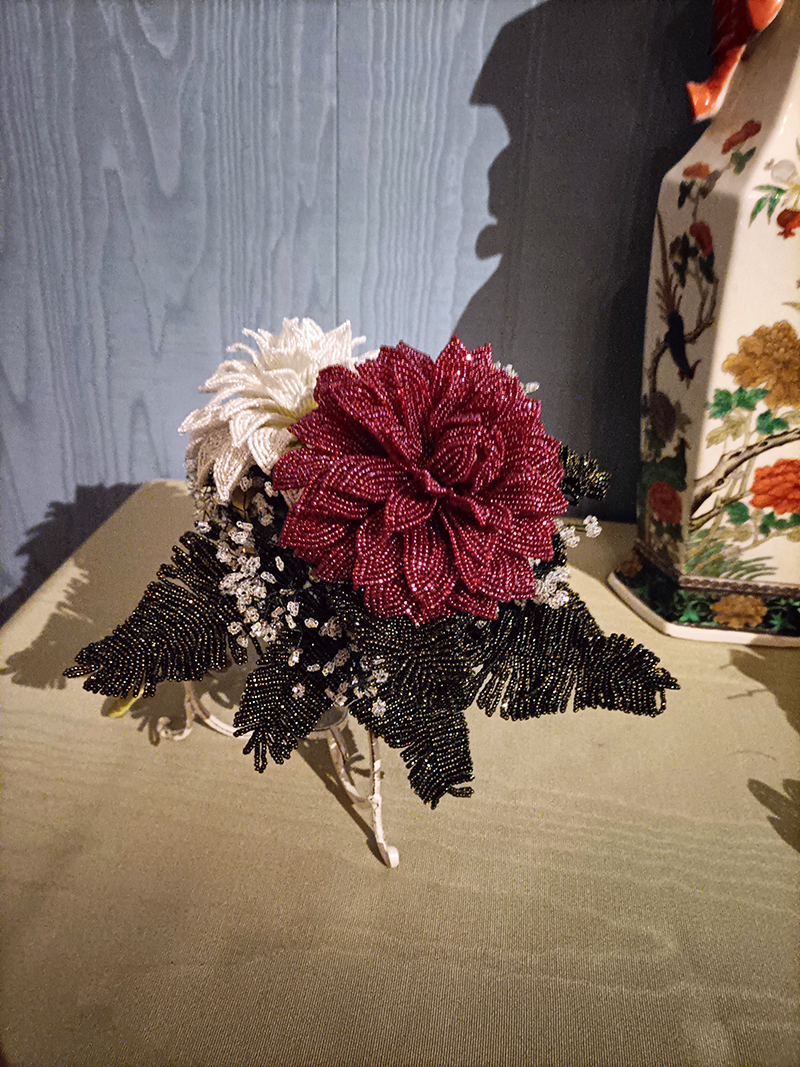
“Fiori di perle” è una serie di opere che raffigurano diversi tipi di fiori, tra cui rose, tulipani e ciliegi. Le opere sono realizzate utilizzando perle di vetro di diversi colori e dimensioni. “Animali di perle” è una serie di opere che raffigurano diversi tipi di animali, tra cui gatti, cani e uccelli. Le opere sono realizzate utilizzando perle di vetro di diverse dimensioni. “Paesaggi di perle” è una serie di opere che raffigurano diversi tipi di paesaggi, tra cui montagne, fiumi e foreste. Le opere sono realizzate utilizzando perle di vetro di diverse dimensioni e colori.

Minako Shimonagase è una giovane artista di grande talento che crea bellissime opere d’arte utilizzando perle di vetro. I suoi lavori sono caratterizzati da una delicatezza e una raffinatezza che li rendono unici. Se siete interessati all’arte contemporanea, vi invito a visitare il sito web di Minako Shimonagase o a seguire i suoi canali social per saperne di più sui suoi lavori, e di venire a visitare il stupendo Museo di Palazzo Mocenigo, per vederli !!

https://minakoshimonagase.com

https://www.instagram.com/minako_shimonagase/

Minako Shimonagase: the pearl artist

A new exhibition from the Land of the Rising Sun can be admired in the beautiful Museum of Mocenigo Palace, of the Civic Museums Foundation of Venice on the occasion of glass week. It is titled: “Glass Flowers” by the Japanese artist Minako Shimonagase, and will be open to the public from 9 September until 1 October 2023, every day except Mondays from 10.00 am to 18.00 pm (last entry at 17.00) and on Friday and Saturday from 10.00 am to 8.00 pm (last entry 7.00pm)

Minako Shimonagase is a young Japanese artist who creates beautiful works of art using glass beads. Her works are characterized by a delicacy and refinement that make them unique. Shimonagase was born in Tokyo in 1995. She began working with glass beads at the age of 12, when she took an art class at a local school. Since then, she has perfected her technique and began to create increasingly complex and fascinating works of art.

Shimonagase’s works are inspired by Japanese nature and culture. He often uses glass beads of different colors and sizes to create images of flowers, animals and landscapes. Her works are exhibited in art galleries around the world and have been appreciated by critics and collectors. In 2023, Shimonagase published her first book, “Bead Flowers”, which collects a selection of her most recent works. The book was a publishing success and helped make the artist’s work known to a wider audience. In 2011 she founded the Japan Beaded Flowers Association and assumed the role of president. In the same year Minako, helped by a hundred Japanese students, creates an enormous cherry tree with three million pearls, in remembrance of the victims of the Fukushima earthquake and as support for reconstruction.

The works of Minako Shimonagase

Some examples of Minako Shimonagase’s work:

“Pearl Flowers” is a series of works depicting different types of flowers, including roses, tulips and cherry trees. The works are made using glass beads of different colors and sizes. “Pearl Animals” is a series of works depicting different types of animals, including cats, dogs and birds. The works are made using glass beads of different sizes. “Landscapes of Pearls” is a series of works that depict different types of landscapes, including mountains, rivers and forests. The works are made using glass beads of different sizes and colors.

Minako Shimonagase is a very talented young artist who creates beautiful works of art using glass beads. Her works are characterized by a delicacy and refinement that make them unique. If you are interested in contemporary art, I invite you to visit Minako Shimonagase’s website or follow her social channels to find out more about her works, and to come and visit the wonderful Palazzo Mocenigo Museum to see them!!

https://minakoshimonagase.com

https://www.instagram.com/minako_shimonagase/

Il quadro del mistero

For the English translation please scroll down the page, thank you !

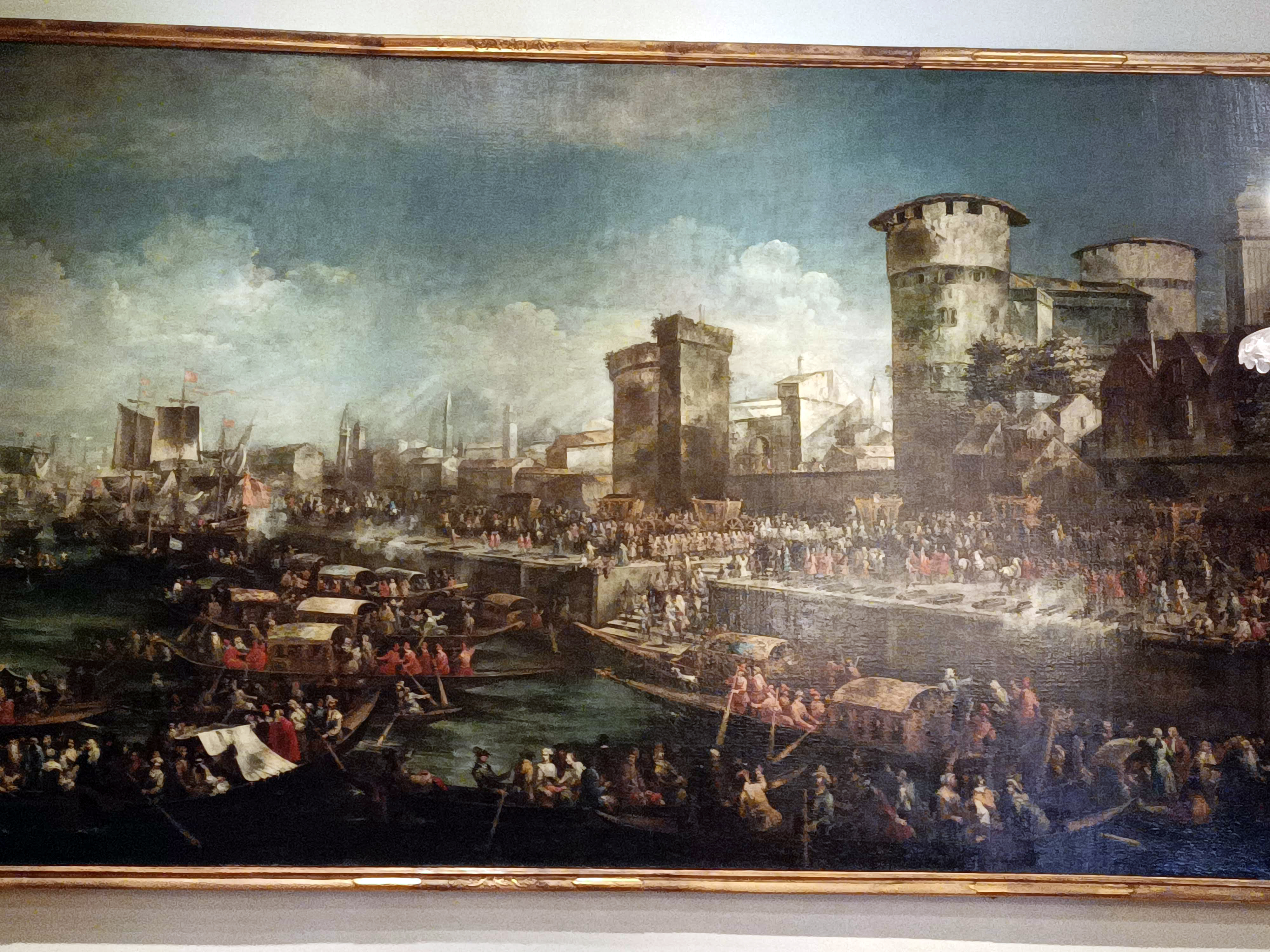
C’è un quadro all’interno di Palazzo Mocenigo, stupendo museo della Fondazione Musei Civici di Venezia, che mi affascina molto, perché esso cela un mistero. Se ci si reca alla sala 7 del primo piano, possiamo ammirare questo quadro di Antonio Stom (1688 – Venezia, 1734), dal titolo “Arrivo a Chioggia del principe di Svezia ricevuto dal doge Mocenigo.

Ebbene c’è un quadro molto simile dipinto dal “L’arrivo degli ambasciatori veneziani Nicolò Erizzo e Alvise Pisani” II a Londra il 30 maggio, 1707, di Luca Carlevarijs”.

Come potete vedere ci sono molte similitudini, il modo posizionato sulla destra, l’accesso, sempre nello stesso punto, il fatto che vengono sparate delle cannonate a salve le barche che accostano sulla scalinata.

Molto probabilmente l’artista Antonio Stom, si è lasciato ispirare dal Carlevaris, e tuttavia la somiglianza tra i due quadri è qualcosa di affascinante.

Volete vedere il quadro di Antonio Stom ? Venite a Palazzo Mocenigo, vi aspettiamo !

The Mysterious Picture

There is a painting inside Mocenigo Palace, the wonderful museum of the Civic Museums Foundation of Venice, which fascinates me a lot, because it hides a mystery. If we go to room 7 on the first floor, we can admire this painting by Antonio Stom (1688 – Venice, 1734), entitled “Arrival in Chioggia of the Prince of Sweden received by Doge Mocenigo.

Well there is a very similar picture painted by Luca Carlevarijs “The Arrival of the Venetian Ambassadors Nicolò Erizzo and Alvise Pisani” II in London on May 30, 1707″ .

As you can see there are many similarities, the quay positioned on the right, the access, always in the same spot, the fact that cannon shots are fired blanks at the boats that approach on the steps.

Most likely the artist Antonio Stom was inspired by Carlevaris, and yet the similarity between the two paintings is something fascinating.

Do you want to see the painting by Antonio Stom ? Come to Palazzo Mocenigo, we are waiting for you!