For the English translation please scroll down the page, thank you !
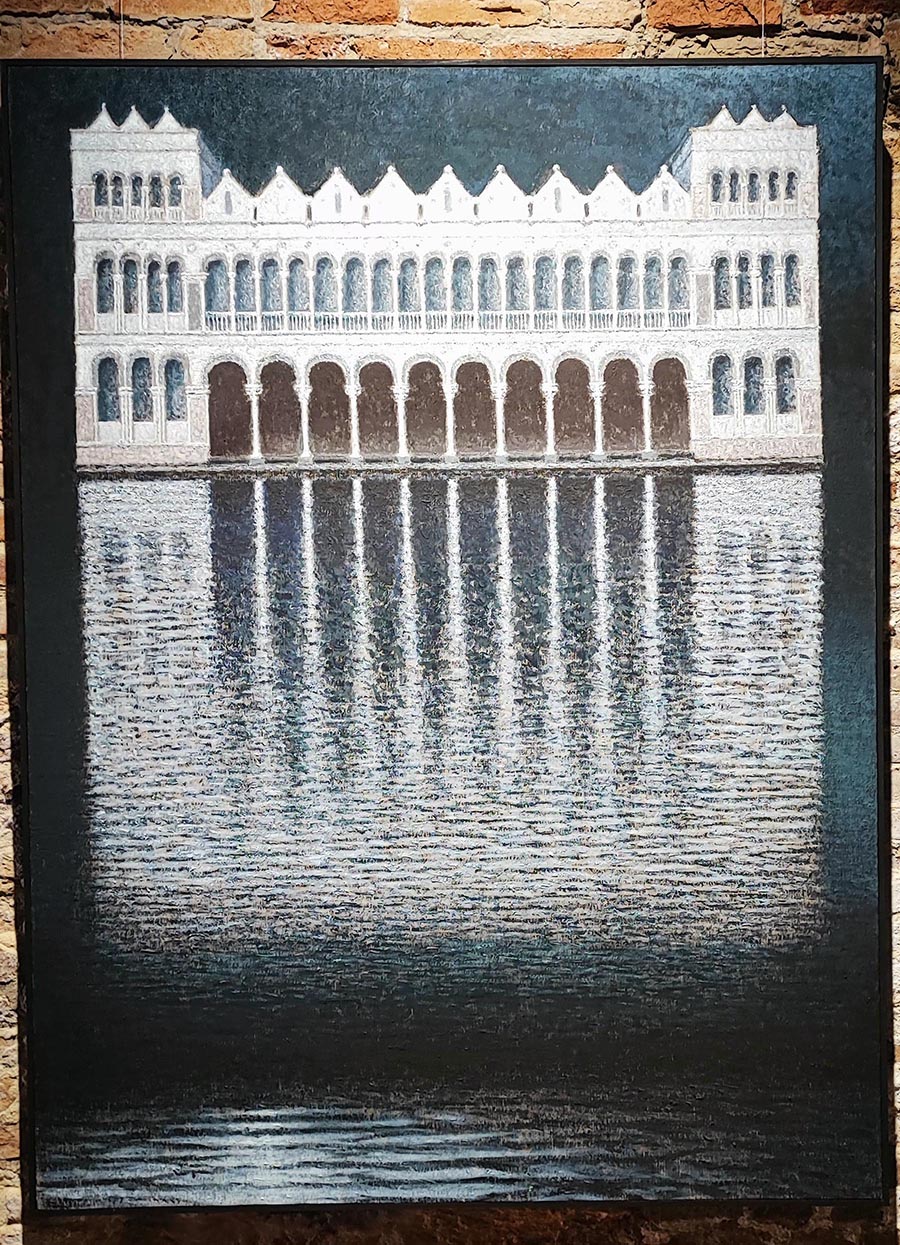
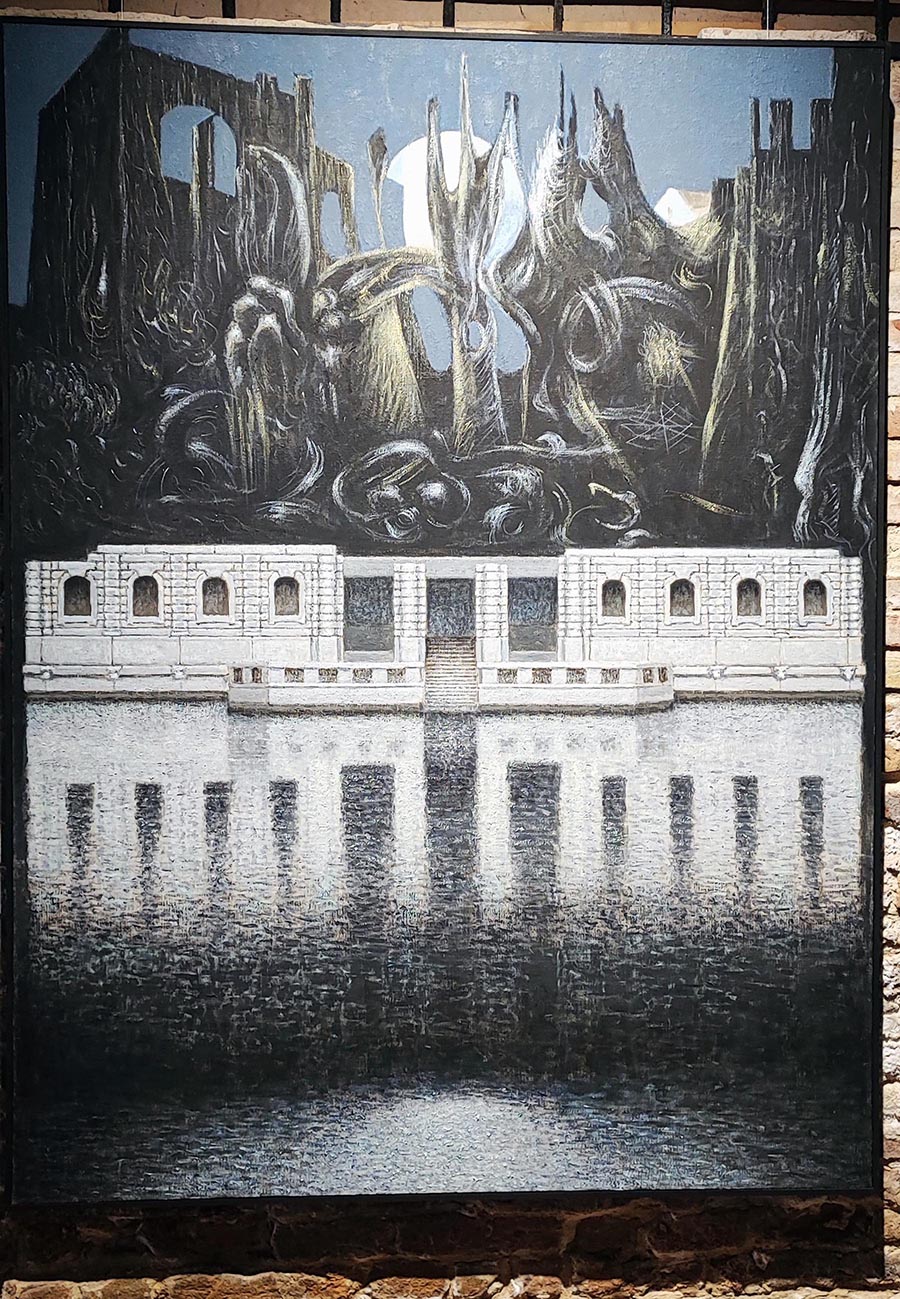
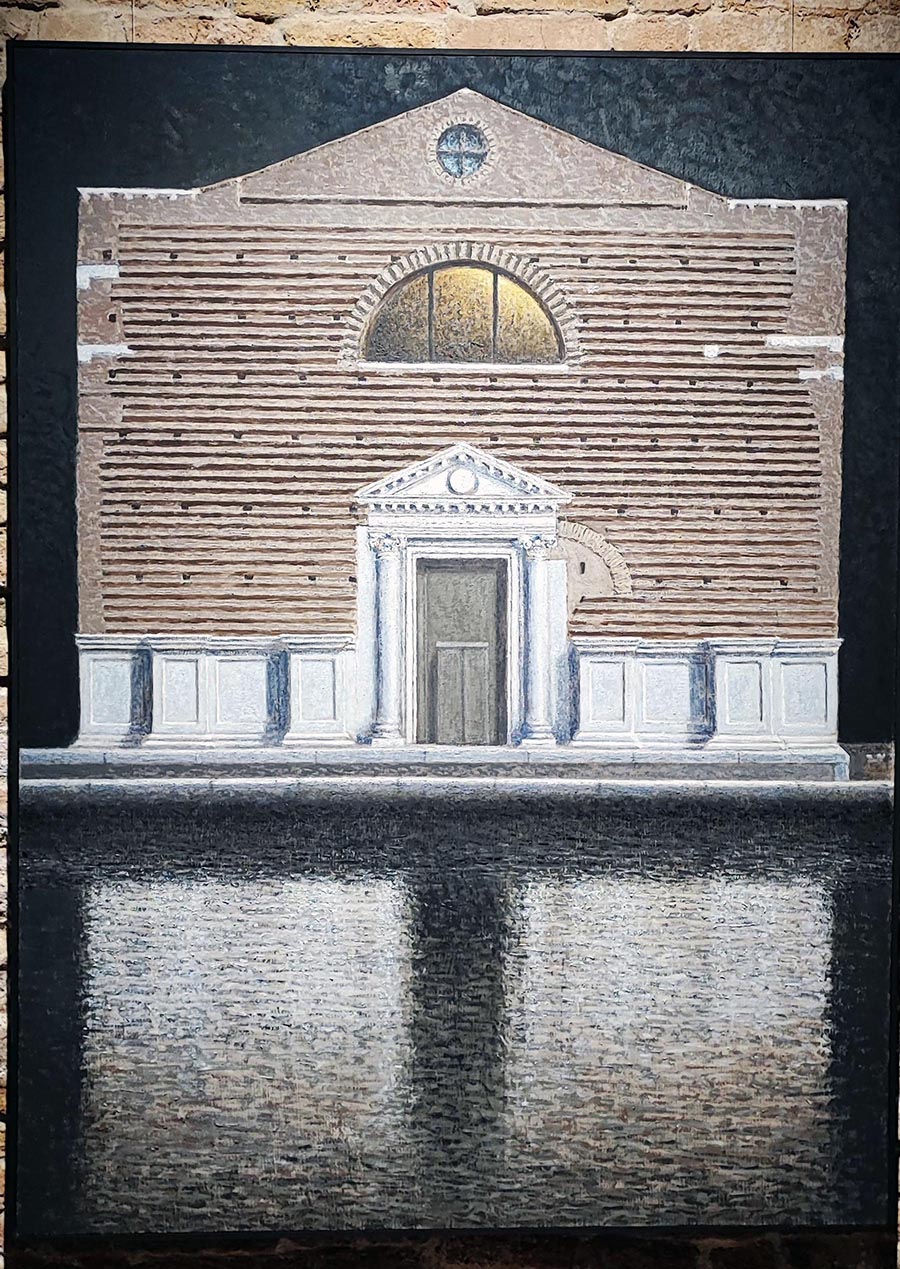
Una nuova mostra, è stata inugurata da pochi giorni presso il Palazzo Fortuny della Fondazione Musei civici di Venezia, ched si intitola : “SOCCOL RIFLESSIONI NOTTURNE” che durerà dal 5 maggio – fin al 1 ottobre 2023, una mostra a cura di Chiara Squarcina, direttrice del splendido museo di Palazzo Mocenigo, che invito a visitare perché è veramente molto bello !
Se il nome “Soccol” vi sembra familiare, è perché l’artista aveva già fatto una precedente mostra nei musei civici Veneziani, e di cui avevo fatto la recensione anche quella volta, potete leggerla, seguendo il link sotto:
Giovanni Soccol ha iniziato a dipingere nel 1952 nello studio del pittore viennese Ilse Bernheimer. Tra gli anni ’50 e ’60, l’elemento caratterizzante del suo lavoro giovanile sono i primi studi sulle qualità figurative, sostituiti negli anni ’70 da studi nel campo dell’astrazione, che caratterizzano l’intero ciclo Presenze-Asenze, Visioni e mese degli anni ’80. Dalla metà degli anni ’80, dopo varie esperienze nel campo della scenografia, lavora in vari teatri, tra cui la Royal Opera House di Stoccolma nel 1986 e il Palazzo dei Diamanti di Ferrara nello stesso anno. Dopo una grande mostra antologica, Soccol decide di concentrarsi sulla pittura. Inizierà così il ciclo di Saudade e delle Isole. Dall’inizio degli anni ’90 le esperienze precedenti continueranno ad arricchirsi ea svilupparsi in nuovi temi che prenderanno forma in cattedrali, cisterne, labirinti. Nel 2017 un’ampia selezione sarà presentata al Museo del Paesaggio Torre di Mosto, dove presenterà una mostra che ripercorre cinquant’anni di attività e, nello stesso anno, una mostra personale alla galleria BOA di Parigi sul tema del invenzione del labirinto. Nel 2019 la Galleria Internazionale d’Arte Moderna di Pesaro a Venezia ha ospitato una sua mostra personale incentrata sul teatro e sui labirinti dell’invenzione.
I soggetti di questa serie di dipinti comprendono dieci edifici emblematici affacciati sul Canal Grande, dalla Dogana da Mar alla Chiesa di San Simeone, ognuno dei quali suscitò un particolare interesse di Soccol, sfociando in dialogo formale e spiritualità. Le tele, alte più o meno 200 cm e lare 150 cm, sono state dipinte con tecniche miste, vale a dire tempera sottile, emulsione acqua in olio, smalto oleoresina, tutte preparate dall’artista direttamente in studio, seguendo una ricerca sulle metodologie storiche tradizionali.
Mi sono praticamente innamorato di questi dipinti, sono stupendi, tutti quanti, uno più bello dell’altro, non siete d’accordo ? Invito tutti i visitatori, stranieri e non, di visitare questa bellissima mostra, e naturalmente i stupendi due piani del museo, che di recente è stato restaurato, e riallestito in maniera del tutto affascinante !
5 maggio – 1 ottobre 2023
Venezia, Museo Fortuny
Another exhibition by Soccol in the civic museums of Venice
A new exhibition was inaugurated few days ago at the palazzo fortuny of civic museums foundation of Venice, entitled: “Soccol, night reflections” which will last from 5 May – until 1 October 2023, an exibition curated by Chiara Squarcina, director of many museums, among them, the splendid museum of Mocenigo Palace which I invite you to visit because it is truly very beautiful!
If the name Soccol seems familiar to you, it is because the artist had already had a previous exhibition at Ca’ Pesaro, another museum of the Fondation civic museums, one which I reviewed that time too, and you can read it, following the link below:
Giovanni Soccol was born in Venice 1938. he began studying painting 1952, the studio of Viennese painter Ilse Bernheimer. Between the 1950s and 1960s, the main feature of his youthful work were his first figurative studies, replaced in the 1970s by studies in the field of abstraction, which would mark the “Presenze-Asenze”, “Visioni e mese” cycle throughout the 1980s. From the mid-80s, after various experiences in the field of scenography, he worked in various theaters, including the Royal Opera House in Stockholm in 1986, and after a major anthological exhibition for him at Palazzo dei Diamanti in the same year in Ferrara, Soccol he decided to focus on painting. Thus he will begin the cycle of Saudade and the Islands. From the beginning of the 90s the previous experiences will continue to be enriched, developing into new themes that will take shape in cathedrals, cisterns, labyrinths. In 2017 the Torre di Mosto Landscape Museum will present a wide selection that will present him with an exhibition that traces fifty years of activity, and in the same year a solo exhibition at the BOA gallery in Paris on the theme of the Labyrinth of Inventions. In 2019 the International Gallery of Modern Art of Pesaro in Venice hosted a personal exhibition of his focused on the theater and the labyrinths of invention.
The subjects of this series of paintings include ten emblematic buildings overlooking the Grand Canal, from the Dogana da Mar to the Church of San Simeone, each of which aroused a particular interest for Soccol, resulting in formal dialogue and spirituality. The canvases, more or less 200 cm high and 150 cm wide, were painted with mixed techniques, i.e. thin tempera, water-in-oil emulsion, oleoresin enamel, all prepared by the artist directly in the studio, following research on historical methodologies traditional.
I practically fell in love with these paintings, they are all wonderful, one more beautiful than the other, don’t you agree? I invite all visitors, foreigners and not, to visit this beautiful exhibition, and of course the wonderful two floors of the museum, which has recently been restored and rearranged in a completely fascinating way!
For the English translation please scroll down the page, thank you !
Da poco è circolata la notizia che Palazzo Fortuny aveva riaperto il secondo piano, e sono andato a vederlo ! Come tutti sapete, questo stupendo museo è rimasto chiuso per un bel po’ a causa dei danni riportati dall’acqua alta eccezionale di alcuni anni fa. Da poco il museo aveva riaperto i battenti, ma si poteva solo ammirare il piano terra e il primo piano. Ora finalmente, da pochi giorni, hanno riaperto il secondo piano, che è diventato ancora più bello di prima !
Come potete vedere dalle immagini, anche il secondo piano è cambiato drasticamente da com’era prima, in meglio naturalmente ! Ci sono molte stoffe, tessuti, e vestiti. Inoltre lo studio privato di Mariano Fortuny che prima era chiuso al pubblico, ora, anche se transennato, ci si può entrare, e avere un’idea della vasta cultura che aveva, dei suoi progetti, delle sue idee.
Quello che mi è piaciuto di più, sono state le foto nella piccola sala, dedicata alla Marchesa Luisa Casati, che molto tempo fa, proprio in questo museo, le avevano dedicato una mostra, molto ma molto interessante !
Per dirla breve, sono rimasto molto contento, entusiasto di come hanno allestito il secondo piano ! Merita di esser visto, ecco perché consiglio a tutti quanti di venire a vederlo, vi piacerà di sicuro !
Palazzo Fortuny reopens the second floor
There were the news that Fortuny Palace had reopened the second floor, and I went to see it! As you all know, this stunning museum has been closed for quite a while due to damage from exceptional high tide a few years ago. The museum had recently reopened its doors, but one could only admire the ground floor and the first floor. Now finally, a few days ago, they have reopened the second floor, which has become even more beautiful than before!
As you can see from the pictures, the second floor has changed drastically from how it was before, for the better of course! There are many fabrics, tissues, and costumes. In addition, the private studio of Mariano Fortuny that was previously closed to the public, now, even if cordoned off, you can enter it, and get an idea of the vast culture he had, of his projects, of his ideas.
What I liked the most were the photos in the small room, dedicated to the Marchesa Luisa Casati, who a long time ago, right in this museum, had dedicated an exhibition to her, very, very interesting!
To put it short, I was very happy, thrilled with how they set up the second floor! It deserves to be seen, that’s why I recommend everyone to come and see it, you will love it for sure!
For the English translation, scroll down the page, thank you !
Di recente ho voluto aggiungere nuovi spunti per il mio piano editoriale del mio blog “diariodiunoperatoremuseale.co”, e mi è venuto in mente di fare una serie di interviste sui vari personaggi noti e non del mondo dell’arte e dei beni culturali. Nel primo articolo vi voglio parlare di una donna assolutamente eccezionale, che mi ha colpito molto per la sua resilienza. Una donna che, per raggiungere il suo sogno, si è molto impegnata, non si è mai arresa, non ha mai mollato, e alla fine c’è la fatta.
Patrizia Pierazzo, è un’archeologa che si è laureata presso l’Università di Ca’ Foscari con il punteggio di 110 e lode! E’ un grosso punteggio, non c’è che dire, ma nonostante ciò, non è riuscita a trovare degli sbocchi per la sua professione nel nostro paese. E cosa ha fatto ? E’ partita per Londra !!
Io: Ciao e grazie per questa intervista, Patrizia, raccontaci come sei approdata nel Regno Unito.
Patrizia: Mi laureai nel 2004 a Ca’ Foscari e mi misi subito in moto per cercare lavoro. Tutti i miei tentativi, purtroppo, furono inutili e cosi alla fine presi l’importante decisione di trasferirmi a Londra. Fu un cambiamento grande e per certi versi faticoso e impegnativo: non è facile lasciare un ambiente che conosci per qualcosa di sconosciuto senza sapere che cosa trovi e come potrebbe andare.
Io: Ma poi è arrivato il primo impiego, quali sono state le difficoltà?
Patrizia: Trovai un posto come volontario assistente Curatore presso il Museum Of London, dopo aver contattato il Museo via email ed essermi offerta di lavorare gratuitamente per un breve periodo. Di sicuro la difficoltà più rilevante fu la mia scarsa conoscenza del sistema Inglese e dell’archeologia di Londra. Per questo dovetti tirarmi su le maniche, studiare molto e darmi da fare: un po’ come prendere una seconda laurea.
Io: Ma questo fu solo il primo passo vero ?
Patrizia: Dopo l’esperienza presso il Museo, mi fu offerto un impiego come archeologa per il MOLA, la compagnia archeologica affiliata al Museum of London. Il mio lavoro li’ durò circa 8 anni, durante i quali ebbi la fortuna di lavorare nei cantieri più importanti della capitale inglese con la conseguente possibilità di imparare tanto. Poi ci fu un altro cambiamento: venni contattata per una nuova opportunità lavorativa, dalla compagnia Alan Baxter, per la quale tuttora lavoro. Ci occupiamo di ingegneria integrata alla conservazione di beni culturali.
Io: In sostanza di cosa ti occupi ?
Patrizia: Mi occupo di analisi storiche di edifici vincolati, ovvero siti culturali, storico-architettonici e siti archeologici, tramite l’osservazione delle evidenze materiali e lo studio delle fonti documentarie. Mi occupo di strategie di gestioni di beni e siti culturali, sia nell’ambito della pianificazione edilizia, che nella fase esplorativa e preparatoria di un progetto.
Io: Di recente, sei stata anche chiamata a partecipare ad alcune conferenze giusto ?
Patrizia: Sì. L’anno scorso ho parlato all’Arsenale a Venezia di archeologia industriale Inglese, a febbraio 2019 ho tenuto una lezione proprio a Ca’ Foscari e ho parlato di William Morris e del movimento Arts and Crafts, mentre a fine marzo sono stata invitata ad una conferenza dalla Society for the Protection of Ancient Buildings (SPAB, Londra) per parlare dei criteri e dei metodi di restauro nella città di Venezia.
Io: Aspetta, se non mi sbaglio William Morris, fu tra i principali fondatori del movimento Arts and Crafts, insieme a John Ruskin vero?
Patrizia: Si esatto, William Morris da molti è considerato il padre del Movimento Moderno, sebbene non fosse architetto egli stesso, ha dato anche un importante contributo al rilancio delle arti tessili tradizionali e degli annessi metodi di produzione. Ha fondato inoltre la Society for the Protection of Ancient Buildings, tuttora un’importante istituzione per la conservazione degli edifici storici in Regno Unito. Anche Ruskin è visto da molti come l’ideatore del movimento Arts & Crafts in Inghilterra, durante la seconda metà del 19° secolo. I contributi di Ruskin includevano la sua antipatia dichiarata per le opere classiche negli edifici e nell’arte e la sua sostituzione del gotico con la sua asimmetria e asprezza come l’ideale per la nuova arte. Insieme a William Morris, fu critico nei confronti della nuova industrializzazione in corso in Europa e in America. L’idea più radicale di Ruskin era il rifiuto totale di qualsiasi prodotto frutto dalla meccanizzazione, infatti giudicava tutti gli oggetti fatti a macchina come “disonesti”. Credeva, insieme a Morris, che l’attività manuale e l’artigianato portassero dignità al lavoro. Ruskin è famoso per i suoi due libri; “The seven lamps of architecture” (1849) e “The stones of Venice” (1853).
Io: Wow, parlaci allora di come è andato il tuo intervento alla conferenza !
Patrizia: L’evento, il quarto di una serie su Ruskin, era incentrato su Venezia e su come l’attivismo in laguna di Ruskin (e in effetti di Morris) alla fine del 19 ° secolo abbia influenzato le attuali pratiche di conservazione nella città storica. La mia conoscenza delle pratiche di conservazione a Venezia era, prima della conferenza, limitata a ciò che avevo appreso come studente all’Università Ca’ Foscari, in quanto non ho esperienza di lavoro professionale sul campo, in Italia. Quando mi e’ stato chiesto di contribuire alla conferenza ero un po’ riluttante, ma ho colto al volo l’occasione e ho fatto del mio meglio per raccogliere le conoscenze utili per soddisfare le richieste. Mi sono assicurata di coinvolgere tutti i miei contatti nella ricerca e, laddove avevo un gap, ho creato nuove connessioni.
Prima di tutto, ho studiato le leggi e le linee guida che regolano il sistema e ho immediatamente capito che la protezione degli edifici storici è intrapresa in modo diverso a Venezia, rispetto al resto dell’Italia. In linea di massima, si può affermare che le pratiche di conservazione sono molto più conservative in laguna e vi sono regole rigide non dette che sono seguite da professionisti, insieme alla legislazione vigente.
Dopo aver compreso questo aspetto essenziale, ho proceduto a raccogliere prove di progetti specifici di conservazione e mi sono messa in contatto con alcuni professionisti che mi hanno aiutata attraverso i dettagli più specifici del loro approccio al trattamento degli edifici storici. I risultati della mia indagine sono stati sorprendenti. Le regole in vigore, ufficiali e non ufficiali, sono incredibilmente simili ai principi di conservazione sostenuti da Ruskin e Morris durante il diciannovesimo secolo: rispetto dei materiali da costruzione esistenti, approccio minimalista agli interventi, rifiuto di nuove aggiunte (oltre a quei casi in cui le questioni strutturali richiedono interventi intrusivi), uso di tecniche e materiali da costruzione il più possibile simili per caratteristiche a quelli originali.
Per la mia presentazione ho usato disegni e fotografie dal restauro di Palazzo Orfei – Museo Fortuny, un grande esempio di un progetto di restauro intrapreso con manovalanze e metodi della migliore qualità. Sebbene abbia trovato solide prove di “conservazione conservativa” a Venezia, non potevo ancora confermare con sicurezza che l’influenza di Ruskin avesse avuto un effetto a catena durato oltre un secolo. Così ho chiesto ad alcune persone selezionate di darmi una risposta e la risposta è stata la seguente: gli accademici non hanno dubbi sulla connessione e concordano nel dire che Ruskin è stato il primo a preoccuparsi per la conservazione del patrimonio costruito a Venezia. Hanno anche concordato nel dire che il suo forte interesse ha creato una catena di eventi e sviluppato un approccio filosofico che influenza ancora il modo in cui viene intrapresa la conservazione.
Dall’altro lato, i professionisti della conservazione con cui ho parlato hanno respinto l’idea di basare le loro pratiche su una filosofia vittoriana e sembravano generalmente più preoccupati di alzare l’asticella sulla qualità della loro lavorazione, piuttosto che scavare in profondità per comprendere le cause delle loro azioni. Entrambi gli approcci sono comprensibili e sono solo due lati opposti della stessa medaglia. Per quanto ne so, anche se la conoscenza della campagna vittoriana sta lentamente svanendo, i suoi effetti non mostrano segni di indebolimento.
Io: Wow sono molto colpito, lo confesso, complimenti!!! Non mi resta che farti i miei migliori auguri per tutto quanto Patrizia, ti ringrazio molto per aver partecipato a questa intervista.
Interview with an incredible Italian woman archaeologist who made it in London !
Recently I was looking for new ideas for my editorial plan of my blog “diariodiunoperatoremuseale.co”, and it occurred to me, to do a series of interviews on the various well-known (and not) characters of the world of art and cultural heritage. In this my first article I want to talk about an absolutely exceptional woman, who impressed me a lot for her resilience. A woman who, to achieve her dream, has fight a lot, has never given up, and in the end she made it!
Patrizia Pierazzo, is an archaeologist who graduated from the Ca ’Foscari University with a score of 110 cum laude! It is a big score, no doubt about that, but nevertheless, it was not enough to find the profession she studied for so many years, at least, not in our country. And what did she do? She left for London !!
Me: Hi and thanks for this interview, Patrizia, tell us how you arrived in the United Kingdom.
Patrizia: I graduated from Ca ’Foscari in 2004 and immediately got in motion to look for a job. All my attempts, unfortunately, were useless and so in the end I made the important decision to move to London. It was a great change and in some ways tiring and demanding: it is not easy to leave an environment that you know for something unknown without knowing what you find and how it could go.
Me: But then came the first job, what were the difficulties?
Patrizia: I found a job as a volunteer assistant curator at the Museum of London, after contacting the museum via e-mail and offering to work for a short time for free. Certainly the most significant difficulty was my lack of knowledge of the English system and the archaeology of London. This is why I had to roll up my sleeves, study a lot and get busy: a bit like taking a second degree.
Me: But this was only the first step, right?
Patrizia: After the experience at the Museum, I was offered a job as an archaeologist for the MOLA, the archaeological company affiliated to the Museum of London. My job there lasted about 8 years, during which I was lucky enough to work in the most important construction sites of the English capital with the consequent possibility of learning a lot. Then there was another change: I was contacted for a new job opportunity, by the company Alan Baxter, for which I still work. We deal with integrated engineering for cultural heritage conservation.
Me: Basically what do you do?
Patrizia: I deal with historical analyzes of restricted buildings, that is cultural, historical-architectural sites and archaeological sites, through the observation of material evidences and the study of documentary sources. I deal with asset management strategies and cultural sites, both in the context of building planning, and in the exploratory and preparatory phase of a project.
Me: Recently, you were also invited to attend some conferences, right?
Patrizia: Yes. Last year I spoke at the Arsenale in Venice of English industrial archaeology; in February 2019 I gave a lecture at Ca ‘Foscari and I talked about William Morris and the Arts and Crafts movement, while at the end of March I was invited to a conference by the Society for the Protection of Ancient Buildings (SPAB, London) to talk about restoration criteria and methods in the city of Venice.
Me: Wait, if I’m not mistaken William Morris, was the one of the main founders of the Arts and Crafts movement, along with John Ruskin right?
Patrizia: Yes, William Morris is considered by many to be the father of the Modern Movement, although he was not an architect himself, he also made an important contribution to the revival of traditional textile arts and related production methods. He also founded the Society for the Protection of Ancient Buildings, still an important institution for the conservation of historic buildings in the United Kingdom. Ruskin is also seen by many as the creator of the Arts & Crafts movement in England during the second half of the 19th century. Ruskin’s contributions included his declared dislike of classical works in buildings and art and his replacement of Gothic with its asymmetry and harshness as the ideal for the new art. Together with William Morris, he was critical of the new industrialization underway in Europe and America. Ruskin’s most radical idea was the total refusal of any product resulting from mechanization, in fact he judged all machine-made objects as “dishonest”. Together with Morris, he believed that manual work and craftsmanship brought dignity to work. Ruskin is famous for his two books; “The seven lamps of architecture” (1849) and “The stones of Venice” (1853).
Me: Wow, tell us about how your speech at the conference went!
Patrizia: The event, the fourth in a series on Ruskin, was focused on Venice and how Ruskin’s lagoon activism (and indeed Morris) at the end of the 19th century influenced current conservation practices in the historical city. My knowledge of conservation practices in Venice was, before the conference, limited to what I had learned as a student at the Ca ‘Foscari University, as I have no experience of professional work in the field, in Italy. When I was asked to contribute to the conference, I was a bit reluctant, but I jumped at the chance and did my best to gather useful knowledge to meet the demands. I made sure to involve all my contacts in the research and, where I had a gap, I created new connections.
First of all, I studied the laws and guidelines that govern the system and I immediately understood that the protection of historic buildings is undertaken differently in Venice than in the rest of Italy. In principle, it can be said that conservation practices are much more conservative in the lagoon and there are rigid unspoken rules that are followed by professionals, together with current legislation.
After understanding this essential aspect, I proceeded to collect evidence of specific conservation projects and got in touch with some professionals who helped me through the more specific details of their approach to treating historic buildings. The results of my investigation were surprising. The official and unofficial rules in force are incredibly similar to the conservation principles advocated by Ruskin and Morris during the nineteenth century: respect for existing building materials, a minimalist approach to interventions, rejection of new additions (in addition to those cases where structural issues require intrusive interventions), use of construction techniques and materials as similar as possible to the original ones.
For my presentation I used drawings and photographs from the restoration of Palazzo Orfei – Museo Fortuny, a great example of a restoration project undertaken with the best quality manpower and methods. Although I found solid evidence of “conservative conservation” in Venice, I still could not confirm with certainty that Ruskin’s influence had a chain effect that lasted over a century. So I asked some selected people to give me an answer and the answer was the following: the academics have no doubts about the connection and agree in saying that Ruskin was the first to worry about the conservation of the heritage built in Venice. They also agreed that his strong interest created a chain of events and developed a philosophical approach that still influences the way in which conservation is undertaken.
On the other hand, the conservation professionals I spoke to rejected the idea of basing their practices on a Victorian philosophy and generally seemed more concerned about raising the bar on the quality of their work, rather than digging deep to understand the causes of their actions. Both approaches are understandable and are just two opposite sides of the same coin. As far as I know, even though the knowledge of the Victorian countryside is slowly fading, its effects show no signs of weakening.
Me: Wow I’m very impressed I confess, congratulations !!! Patrizia, thank you very much for accepting this interview, I wish you the best of the best for everything !
A Palazzo Fortuny c’è una nuova mostra che è stata inaugurata il 17 dicembre 2018 e durerà fino al 24 marzo 2019. La mostra si intitola “Futuruins” ed è stata realizzata in collaborazione tra La fondazione Civici musei di Venezia e il Museo Statale Ermitage di S. Pietroburgo.
La mostra con tutti i suoi pezzi, riempie tutti i 3 piani: piano terra, primo piano e secondo piano. Ma di cosa parla ?
Rovine, questo è il tema che viene proposto attraverso le varie opere di molti artisti. Le rovine, che noi pensiamo come ai resti di grandi civiltà decadute, che non esistono più, rovine del passato, eppure, le rovine fanno parte del nostro ciclo temporale. Se ci pensiamo, ogni società, ogni impero della storia, ha prodotto delle rovine. Viene pertanto ovvio pensare: causeremo anche noi a nostra volta, delle rovine, a cui i nostri successori, in un tempo lontano guarderanno con punto interrogativo ?
Rovine, che sono state create da eventi disastrosi o dalla mano dell’uomo. Si pensi ai primi, ai disastri naturali come è accaduto alla città di Pompei, oppure agli eventi mitologici il diluvio universale, o la distruzione di Sodoma e Gomorra. Mentre per i secondi, basta guardare una foto dell’immane tragedia della distruzione delle torri gemelle di New York o del terremoto di Amatrice.
Ma in queste terribili immagini, seppure fanno parte della mostra, possiamo dire che non sono rovine, ma cumuli di macerie, e c’è differenza tra questi due termini. Rovine, lascia intendere che c’è qualcosa che ancora è rimasto della costruzione originaria, mentre la seconda, significa che non è rimasto niente.
Ma le macerie sono anche cumuli di pietre, e proprio nelle pietre, troviamo dei riferimenti nelle opere presenti nella mostra. Dai cataclismi che creano rovine, viene poi il tempo della ricostruzione, della rinascita. Dopo il diluvio universale si narra che Deucalione e Pirra danno vita alla nuova umanità, lanciando dietro le spalle delle pietre, che diventano uomini e donne. Altri esempi sulle pietre vengono descritte in questa mostra, com le immagini di Medusa che con lo sguardo pietrificava le sue vittime, oppure della leggenda di Orfeo ed Euridice, dove il mito narra che quando Orfeo esce dagli inferi, incautamente si volta verso la sua amata che si trasforma in pietra ? Nei tempi antichi si credeva che gli Dei fossero nelle pietre, non fu Afrodite che animò la statua che aveva scolpito Pigmalione, re di Cipro ? Statue, templi, pietre, rovine…
Molto raramente una mostra mi ha fatto riflettere come questa. Futuruins offre parecchi messaggi su molti livelli, infatti, in fondo al Portego del primo piano, a destra, c’è una sala dove viene proiettato un filmato. Le rovine non sono fatte solo di pietre, ma sono anche dentro di noi, il filmato in questione parla degli hikikomori, che significa in giapponese “stare in disparte, isolarsi”, dalle parole hiku “tirare” e komoru “ritirarsi”) è una parola giapponese usata per descrivere coloro che hanno scelto di ritirarsi dalla vita sociale, spesso cercando livelli estremi di isolamento e confinamento. Tali scelte sono dovute da fattori personali e sociali di varia genere. Tra questi la situazione del contesto familiare in Giappone, marcato dalla mancanza di una figura paterna e da un’eccessiva iperprotettività materna, la grande pressione della società giapponese verso auto-realizzazione e il successo personale, cui l’individuo viene sottoposto fin da giovane. Quindi con l’auto isolamento, stando sempre dentro, e non frequentando mai il mondo esterno, diventiamo noi stessi delle rovine di quello che eravamo un tempo. Tristemente, ormai non è più un fenomeno legato al Giappone. Si registrano casi anche in America e in Europa.
Futuruins è una mostra piena di bellissime stupefacenti opere, ecco alcune che mi sono piaciute un sacco !!
Un’immagine di Robert Gligorov, intitolato “boom” che assomiglia molto ad un fungo nucleare, ma che molto probabilmente, è una nuvola generata dall’eruzione di un vulcano. La seconda invece è un opera di Giacomo Costa, che si intitola “Acqua n° 10″un’opera che veramente lascia senza fiato ! Sembra di vedere un frammento di un possibile nostro futuro: rovine del nostro mondo, in fondo all’acqua, forse causato dai vari mutamenti climatici, a cui stiamo lentamente andando incontro.
Credetemi, Futuruins, è veramente una mostra molto interessante, non perdetela !
Ruins at Fortuny Museum in Venice !
At Palazzo Fortuny there is a new exhibition that was inaugurated on December 17, 2018 and will last until March 24, 2019. The exhibition is titled “Futuruins” and was made in collaboration between The Civic Museums Foundation of Venice and the State Hermitage Museum of St. Petersburg.
The exhibition with all its pieces, fills all 3 floors: ground floor, first floor and second floor. what is it about?
Ruins, this is the theme that is proposed through the various works of many artists. The ruins, which we think of as the remains of great fallen civilizations, which no longer exist; ruins of the past, yet the ruins are part of our time cycle. If we think about it, every society, every empire of history, has produced ruins. It is therefore obvious to think: will we also cause ourselves, in our turn, ruins, to which our successors, in a distant time, will look with a question mark?
Ruins, which were created by disastrous events or by the hand of man. Think of the former, the natural disasters as happened to the city of Pompeii, or the mythological events such as the universal flood, or the destruction of Sodom and Gomorrah. While for the latter, just look at a picture of the huge tragedy of the destruction of the twin towers of New York or the earthquake of Amatrice.
But in these terrible images, even if they are part of the exhibition, we can say that they are not ruins, but heaps of rubble, and there is a difference between these two terms. Ruins, suggests that there is still something left of the original construction, while the latter means that nothing is left.
But the rubble are heaps of stones, and right in the stones, we find references in the works in this exhibition. From the cataclysms that create ruins, then comes the time of reconstruction, of rebirth. After the universal flood it is said that Deucalione and Pirra gave life to the new humanity, throwing behind the shoulders some stones, which become men and women. Other examples on the stones are described in this exhibition, the many images of Medusa that with her look petrified her victims, and what about Orpheus and Eurydice, where the myth tells that when Orpheus comes out of the underworld, recklessly turns to his beloved who turns into stone? In ancient times it was believed that the gods were in the stones, it was not Aphrodite that animated the statue that had carved Pygmalion, king of Cyprus? Statues, temples, stones, ruins …
Very rarely an exhibition made me think like this. Futuruins offers several messages on many levels, in fact, near the end of the first floor, on the right, there is a room where a film is projected. The ruins are not made only of stones, but they are also within us, the film in question talks about the hikikomori, which means in Japanese “stand aside, isolate yourself”, from the words hiku “pull” and komoru “withdraw”) is a Japanese word used to describe those who chose to retire from social life, often seeking extreme levels of isolation and confinement. These choices are due to personal and social factors of various kinds. Among these the situation of the family in Japan, marked by the lack of a father figure and excessive maternal overprotectiveness, the great pressure of Japanese society towards self-realization and personal success, to which the individual is subjected from a young age. So with self-isolation, always staying inside, and never dating the outside world, we become ourselves the ruins of what we once were. Sadly, it is no longer a phenomenon related to Japan. Cases are also reported in America and Europe.
Futuruins is an exhibition full of beautiful amazing works, here are some that I liked a lot !!
An image of Robert Gligorov, entitled “boom” that looks very much like a nuclear mushroom, but most likely, it is a cloud generated by the eruption of a volcano. The second one is a work by Giacomo Costa, which is titled “Acqua n ° 10” a work that truly leaves you breathless! It seems to see a fragment of a possible future: ruins of our world, at the bottom of the water, perhaps caused by the various climate change, which we are slowly going towards.
Believe me, Futuruins, it’s really a very interesting show, do not miss it!
For the English Translation, please scroll down the page, thank you .
Recensione della nuova mostra a Palazzo Fortuny
Finalmente ha riaperto il Palazzo Fortuny, con due stupende mostre che si estende da piano terra fino al secondo piano. A piano terra possiamo ammirare un tributo rivolto all’artista Zoran Music, mentre nei piani superiori è focalizzato un estratto della collezione di Giuseppe Merlini.
Come tutti sappiamo Zoran Music era un pittore e incisore sloveno. Mušič nacque nel villaggio di Boccavizza in Slovenia. Dopo aver terminato gli studi all’Accademia dell’Arte di Zagabria nel 1934, Mušič cominciò la sua carriera, viaggiano tra Madrid, Curzola, Maribor, e Lubiana prima di stabilirsi a Trieste e a Venezia (1943) dove sposa Ida Barbarigo Cadorin che considera per tutta la vita la sua unica musa ispiratrice.
Nel novembre 1944, durante la seconda guerra mondiale, fu deportato nel campo di concentramento di Dachau, dove riuscì a ritrarre segretamente la vita del campo in circostanze estremamente difficili e pericolose. Ventiquattro sono i disegni di Mušič firmati e datati Dachau 1945, che testimoniano la vita e la morte nel campo di concentramento.
La cosa più interessante di questa mostra è la ricreazione perfetta della stanza del seminterrato della sua villa a Zollikon, che egli decorò per conto delle sorelle. Una stanza, che da sola è un’opera d’arte; oltre alle pitture presenti nell’intonaco, Zoran, disegnò i motivi sulle tende e sulla tovaglia. Anche i mobili seppur non realizzati da lui, sono però stati scelti dall’artista. Finalmente dopo tantissimi anni, questa stanza, è stata recuperata grazie all’artista Paolo Cadorin, che era suo cognato. Ora la possiamo ammirare all’interno di Palazzo Fortuny.
Al primo e secondo piano, possiamo ammirare la maestosa collezione di Giuseppe Merlini, una collezione che spazia varie correnti pittoriche di tutto il 900. Tanto per citare alcuni nomi, ci sono dei bellissimi dipinti di Renato Guttuso, Roberto Crippa, Bruno Munari, Lucio Fontana, Fausto Melotti, Turi Simetti, Vincenzo Agnetti, grandi artisti di cui, molti ne ho sentito parlare molto nelle trasmissioni d’arte su Arte TV.
La mostra prosegue al secondo piano, dove troviamo capolavori di Sergio Romiti, Giulio Turcato, Pompilio Mandelli, Enzo Cacciola, Valentino Vago, Claudio Olivieri, ect.
Sono rimasto molto impressionato sia dalla grande quantità di opere, sia dalla loro bellezza. Il primo e secondo piano, ospitano delle opere veramente straordinarie.
Consiglio a tutti, di andare a vedere queste bellissime mostre, ospitate in uno dei più bei musei di Venezia, non ve ne pentirete !!
Spring at Fortuny Palace !
Recensione della nuova mostra a Palazzo Fortuny
Finally the Palazzo Fortuny has reopened, with two wonderful exhibitions that extend from the ground floor to the second floor. On the ground floor we can admire a tribute to the artist Zoran Music, while in the upper floors we can see an extract from the collection of Giuseppe Merlini.
As we all know, Zoran Music was a Slovenian painter and engraver. Mušič was born in 1909, in the village of Boccavizza in Slovenia. After finishing his studies at the Zagreb Academy of Art in 1934, Mušič began his career, traveling between Madrid, Korčula, Maribor, and Ljubljana before settling in Trieste and Venice (1943) where he married Ida Barbarigo Cadorin, who considered his whole life his only inspiring muse.
In November 1944, during the Second World War, he was deported to the Dachau concentration camp, where he managed to secretly portray the life of the camp in extremely difficult and dangerous circumstances. Twenty-four are the drawings by Mušič signed and dated Dachau 1945, which testify the life and death in the concentration camp.
The most interesting thing about this exhibition is the perfect recreation of the basement room of his villa in Zollikon, which he decorated on behalf of the sisters. A room, which alone is a work of art; in addition to the paintings in the plaster, Zoran designed the patterns on the curtains and the tablecloth. Even the furniture, although not made by him, have however been chosen by the artist. Finally, after many years, this room has been recovered thanks to the artist Paolo Cadorin, who was his brother-in-law. Now we can admire it inside Fortuny Palace.
On the first and second floor, we can admire the majestic collection of Giuseppe Merlini, a collection that spans various painting currents from around the 900. Just to mention some names, there are some beautiful paintings by Renato Guttuso, Roberto Crippa, Bruno Munari, Lucio Fontana , Fausto Melotti, Turi Simetti, Vincenzo Agnetti, great artists of whom, many I have heard a lot in the art broadcasts on Arte TV.
The exhibition continues on the second floor, where we find masterpieces by Sergio Romiti, Giulio Turcato, Pompilio Mandelli, Enzo Cacciola, Valentino Vago, Claudio Olivieri, ect.
I was very impressed by both the large amount of works and their beauty. The first and second floors are home to truly extraordinary works.
I recommend everyone, to go and see these beautiful exhibitions, hosted in one of the most beautiful museums in Venice, you will not regret!
For the English translation, please scroll down the page, thank you.
Giorni fa, ho avuto la fortuna di avere un turno nel bellissimo Museo Fortuny, il quale in questo momento, ospita la mostra “LA BOTTEGA CADORIN. Una dinastia di artisti veneziani” che si terrà dal 26 novembre fino al 27 marzo del prossimo anno. La mostra occupa il piano terra, il primo e il secondo piano, e contiene un gran numero di splendide opere d’arte: dai disegni, fotografie, sculture, tutte ad opera della famiglia Cadorin.
Voglio anche rendervi noto, che al primo piano sono esposti dei ulteriori quadri di Mariano Fortuny, che precedentemente erano stati tolti, per fare spazio alle opere delle varie mostre precedenti. Alcuni dei quali, sono i magnifici quadri a tema Wagneriano, che sono molto affascinanti !
I Cadorin, una famiglia di artisti, provenienti da Pieve di Cadore, hanno rappresentato per Venezia, un capitolo nella storia dell’arte durata quasi tre secoli. Da Vincenzo, fino a Guido, Livia, e poi Paolo e Ida Barbarigo, si possono ammirare questi loro capolavori, all’interno di questo bellissimo museo.
Personalmente, mi sono piaciute molto le foto in tonalità seppia, che sono al secondo piano, di Augusto Tivoli che rappresentano Livia o Maria.. Anche i disegni e i quadri di Guido Cadorin, sono molto belli.
Mi ha fatto piacere rivedere alcuni quadri di Ida Barbarigo.. alcuni erano già presenti in una precedente mostra dedicata a quattro splendide donne: Henriette Fortuny, Ida Barbarigo, Sarah Moon, e Romain Brooks, dell’anno scorso. In più ci sono dei quadri di Zoran Music, il marito di Ida Barbarigo, che sebbene, possano sembrare un po difficili da capire, ci appaiono subito dopo comprensibili, una volta letta la sua biografia, in quanto egli fu scosso dal suo periodo di prigionia durante la seconda guerra mondiale nel campo di concentramento di Dachu.
Invito tutti voi, ad andare a vedere questa bellissima mostra. Avrete l’occasione di vedere nuovi capolavori, di rivedere quelli già presenti: Palazzo Fortuny, non è solo un museo, è un’ambiente magico, affascinante, pieno di atmosfera, pieno di incredibili tesori d’arte; e visto che tale museo, apre solo per mostre, è un peccato perdere questa occasione !
Cadorin at Fortuny Museum
Days ago, I was lucky enough to have a shift of work in the beautiful Fortuny Museum, which at this moment, is hosting the exhibition “LA BOTTEGA CADORIN. A dynasty of Venetian artists” to be held from November 26 until March 27 next year. The exhibition occupies the ground floor, the first and second floors, and contains a large number of beautiful works of art: drawings, photographs, sculptures, all by the Cadorin family.
I also want to let you know that on the first floor are the other paintings by Mariano Fortuny, which had previously been removed, to make room for works of several previous exhibitions. Some of which, are the magnificent paintings themed Wagner, which are very fascinating!
The Cadorin, a family of artists, from Pieve di Cadore, they represent for Venice, a chapter in art history lasted almost three centuries. From Vincenzo, until Guido, Livia, and then Paul and Ida Barbarigo, you can admire these masterpieces , within this beautiful museum.
Personally, I loved the photos in sepia colours, which are on the second floor, by Augusto Tivoli representing Livia and Mary .. Even the drawings and paintings by Guido Cadorin, are very beautiful.
I was pleased to see some pictures of Ida Barbarigo .. some were already present in a previous exhibition dedicated to four beautiful women: Henriette Fortuny, Ida Barbarigo, Sarah Moon, and Romain Brooks, last year. In addition there are the paintings of Zoran Music, the husband of Ida Barbarigo, that although, they may seem a bit difficult to understand, they appear soon after understandable once you read his biography, because he was shaken from his period of captivity during World war II in the concentration camp of Dachu.
I invite all of you to go and see this beautiful exhibition. You will have the opportunity to see new masterpieces, to revise existing ones: Palazzo Fortuny, is not just a museum, it is a magical environment, charming, full of atmosphere, full of amazing art treasures; and given that this museum, is open only for exhibitions, it is a shame to miss this opportunity!
For the English version, please scroll down the page
In occasione della festa della donna, nella giornata di martedì 8 marzo i musei Civici Veneziani offrono l’accesso gratuito TUTTE LE DONNE dei comuni della Città Metropolitana di Venezia, e l’orario di visita sarà prolungato fino alle ore 19.00. I musei della Fondazione che aderiscono a questa iniziativa sono:
Museo Correr – Museo di Cà Pesaro – Museo di Palazzo Mocenigo – Museo di Casa Goldoni – Museo di Storia Naturale – Museo del vetro di Murano – Museo del Merletto di Burano – Palazzo Fortuny.
E’ una splendida iniziativa, e sono il primo ad esserne felice. Ritengo purtroppo che adesso come adesso, la festa della donna, sia diventata solo un evento commerciale, e si rischia di dimenticare l’origine di questa celebrazione, e di cosa voglia significare.
Il 25 marzo del 1911 scoppio il più devastante incendio che New York abbia mai conosciuto, in soli 18 minuti la fabbrica Triangle divenne una trappola mortale dove perirono 146 persone, tra cui 123 donne. Le cause furono dovute alla totale assenza di regole di prevenzione di incendi, per cui tessuti infiammabili immagazzinati per tutta la fabbrica, scarti di tessuto sparsi per il pavimento, gli uomini che lavoravano come tagliatori a volte fumavano, l’illuminazione era fornita da luci a gas aperte e c’erano pochi secchi d’acqua per spegnere gli incendi.
Questi sono i nomi delle vittime, per non dimenticare:
Non dobbiamo dimenticarci di loro, come non dobbiamo dimenticare del ruolo che le donne occupano nella vita di oggi, delle donne che combattono,che soffrono. Sembra una coincidenza che in questo periodo, si trova nelle sale cinematografiche questo film :
Con il termine suffragette si indicavano le appartenenti a un movimento di emancipazione femminile nato per ottenere il diritto di voto per le donne. In seguito la parola “suffragetta” ha finito per indicare, la donna che lotta o si adopera per ottenere il riconoscimento della piena dignità delle donne, coincidendo con il termine femminista. Insieme a loro, ci sono state tante altre donne, che hanno lottato per i loro diritti, o farsi strada in un mondo di uomini, ecco qui alcuni nomi, che ho trovato :
Maria Skłodowska, conosciuta come Marie Curie, è stata una chimica e fisica polacca e in seguito francese. Nel 1903 fu insignita del premio Nobel per la fisica (assieme al marito Pierre Curie e ad Antoine Henri Becquerel) per i loro studi sulle radiazioni e, nel 1911, del premio Nobel per la chimica per la sua scoperta del radio e del polonio. Marie Curie è stata l’unica donna tra i quattro vincitori di più di un Nobel e, insieme a Linus Pauling, l’unica ad averlo vinto in due aree distinte. Marie Curie crebbe nella Polonia russa; poiché qui le donne non potevano essere ammesse agli studi superiori, si trasferì a Parigi e nel 1891 iniziò a frequentare la Sorbona, dove si laureò in fisica e matematica. Nel dicembre del 1897 iniziò a compiere degli studi sulle sostanze radioattive, che da allora rimasero al centro dei suoi interessi. Dopo la morte accidentale del marito Pierre Curie, avvenuta nel 1906, le fu concesso di insegnare nella prestigiosa università della Sorbona. Due anni più tardi le venne assegnata la cattedra di fisica generale, diventando la prima donna ad insegnare alla Sorbona.
Ipàzia di Alessandria: è stata una matematica, astronoma e filosofa greca antica. Rappresentante della filosofia neo-platonica, la sua uccisione da parte di una folla di cristiani in tumulto, per alcuni autori composta di monaci detti parabolani, l’ha resa una «martire della libertà di pensiero».
George Sand, pseudonimo di Amantine, è stata una scrittrice e drammaturga francese. Considerata tra le autrici più prolifiche della storia della letteratura, è autrice di numerosi romanzi, novelle e drammi teatrali; tra i suoi scritti più illustri vi sono Indiana, Lélia, Consuelo, La palude del diavolo, La piccola Fadette, François le Champi e l’autobiografia Storia della mia vita (Histoire de ma vie).Femminista molto moderata, fu attiva nel dibattito politico e partecipò, senza assumere una posizione di primo piano, al governo provvisorio del 1848, esprimendo posizioni vicine al socialismo, che abbandonò alla fine della sua vita per un moderato repubblicanesimo. La sua opposizione alla politica temporalistica e illiberale del papato le costò la messa all’Indice di tutti i suoi scritti nel dicembre del 1863. Sand è inoltre ricordata anche per il suo anticonformismo e per le relazioni sentimentali avute con lo scrittore Alfred de Mussete con il musicista Fryderyk Chopin.
Anna Maria Mozzoni è stata una giornalista italiana, attivista dei diritti civili e pioniera del femminismo in Italia.
Amelia Mary Earhart scomparsa nell’Oceano Pacifico presso l’isola Howland il 2 luglio 1937) è stata un’aviatrice statunitense. Sedici primati mondiali, ha ispirato libri, serie tv e film, come Star Trek, Il Corvo, Amelia, Una notte al museo. A fermarla è stato un incidente, ancora avvolto nel mistero, accaduto mentre stava per concludere il suo sogno più grande: il giro del mondo. Dopo 22.000 miglia, quando le mancava un terzo del tragitto per finire, è scomparsa. “Nelle spedizioni future le donne si assumeranno responsabilità sempre più grandi e il genere a cui appartengono inciderà sempre meno sul riconoscimento del loro valore, che avverrà alla luce dei risultati raggiunti”, di questo, Amalia era profondamente convinta.
Maria Tecla Artemisia Montessori fu un’educatrice, pedagogista,filosofa, medico e scienziata italiana, internazionalmente nota per il metodo educativo che prende il suo nome, adottato in migliaia di scuole materne, primarie, secondarie e superiori in tutto il mondo; fu tra le prime donne a laurearsi in medicina in Italia.
Wangari Muta Maathai è stata un’ambientalista, attivista politica e biologa keniota. Nel 2004 è diventata la prima donna africana ad aver ricevuto il Premio Nobel per la Pace per «il suo contributo alle cause dello sviluppo sostenibile, della democrazia e della pace». È stata membro del parlamento keniota e Assistente Ministro per l’Ambiente e le Risorse Naturali nel governo del presidente Mwai Kibaki, fra il gennaio 2003 e il novembre 2005. Apparteneva all’etnia kikuyu.
Vorrei spendere anche qualche parola, per tutte le ragazze madri, che si trovano da sole a far crescere i figli, o alle donne perseguitate dai stalker. Finalmente sembra che ci sia la legge per gli incidenti stradali, possibile che non si riesca a fare di più per queste donne che vengono tormentate, picchiate, dobbiamo sempre aspettare, fino a quando è troppo tardi ??
Desidero finire questo blog dicendovi questo: che questa festa, sia ricordata per quello che è, e non si festeggi la donna, solo l’8 marzo, ma ogni giorno !
Gli operatori Museali della Fondazione Civici Musei augurano Felice 8 marzo a tutte le donne. Vi aspettiamo nei nostri musei !
English Version
8 March in Venice
On the occasion of Women’s Day, Tuesday March 8, the Venetians civic museums offer free access to all women of the municipalities of the Metropolitan City of Venice, and visiting hours will be extended until 19.00 hours. The Foundation’s museums participating in this initiative are:
Correr Museum – Cà Pesaro Museum – Mocenigo Palace – Carlo Goldoni’s house – Natural History Museum – Glass Museum in Murano – Lace Museum in Burano – Fortuny Palace.
It ‘a wonderful initiative, and I am very happy about this. I think, unfortunately, that right now, Women’s Day, has become just a commercial event, and that we may forget the origin of this celebration, and what it means.
On March 25, 1911 happened the most devastating fire that New York has ever known; in only 18 minutes the Triangle factory became a death trap, and 146 people perished, including 123 women. The causes were due to the total absence of fire prevention rules, flammable fabrics stored for the whole factory, fabric scraps scattered around the floor, the men working as cutters sometimes smoked, the lighting was provided by lights open gas and there were a few buckets of water to put out fires.
These are the names of the victims, not to forget:
We must not forget them, as we must not forget the role that women occupy in today’s life, women who fight, who suffer. It seems a coincidence that in this period, is in theaters this film:
The term suffragettes were indicated belonging to a female emancipation movement started to gain the right to vote for women. Later the word “suffragette” has come to indicate, the woman who struggles or strives to achieve recognition of the full dignity of women, coinciding with the term feminist. Along with them, there were many other women, who have fought for their rights, or make their way in a man’s world, here are some names that I found:
Maria Sklodowska, known as Marie Curie, was a chemistry and physics Polish and French followed. In 1903 he was awarded the Nobel Prize in Physics (together with her husband Pierre Curie and Henri Becquerel) for their studies on radiation and, in 1911, the Nobel Prize for Chemistry for her discovery of radium and polonium. Marie Curie was the only woman among the four winners of the Nobel and, along with Linus Pauling, the only one to have won it in two distinct areas. Marie Curie grew in Russian Poland; because here women could not be admitted to higher education, he moved to Paris and in 1891 he attended the Sorbonne, where he graduated in physics and mathematics. In December of 1897 he began making studies of the radioactive substances, which has since remained the center of his interests. After the accidental death of her husband Pierre Curie, in 1906, she was allowed to teach at the prestigious Sorbonne University. Two years later she accepted the chair of general physics, becoming the first woman to teach at the Sorbonne.
Hypatia of Alexandria was a mathematician, astronomer and ancient Greek philosopher. Representative of the neo-Platonic philosophy, she’s killing by a mob of Christians in turmoil, for some authors composed of such parabolani monks, has made a “martyr of the freedom of thought.”
George Sand, pseudonym of Amantine, was a French writer and playwright. Considered one of the most prolific authors of the history of literature, she is the author of numerous novels, short stories and dramas; among her most illustrious include Indiana, Lélia, Consuelo, The Swamp Devil, Little Fadette, François le Champi and autobiography The Story of My Life (Histoire de ma vie). Feminist very moderate, was active in the political debate and participated, without assuming a leading position, the Provisional Government of 1848, expressing positions close to socialism, who left at the end of his life to a moderate republicanism. Her opposition to temporalistic illiberal politics and the papacy cost her placed on the Index of all his writings in December 1863. Sand is also remembered for her unconventionality and romantic relationships she had with the writer Alfred de Mussete, and with the composer Fryderyk Chopin.
Anna Maria Mozzoni was an Italian journalist, a civil rights activist and a pioneer of feminism in Italy.
Amelia Mary Earhart disappeared in the Pacific Ocean near the island Howland July 2, 1937. She was an American aviator. Sixteen world records, she has inspired books, TV series and films, such as Star Trek, The Crow, Amelia, Night at the Museum. What stop her, was an accident, still shrouded in mystery, it happened while she was about to finish her biggest dream: travel around the world. After 22,000 miles, when she missed a third of the way to finish, she has disappeared. “In future shipments women will take on increasingly important responsibilities, and gender to which they belong will impact less on the recognition of their value, which will take place in the light of the results achieved,” of this, Amalia was deeply convinced.
Maria Tecla Artemisia Montessori was a teacher, educator, philosopher, doctor and Italian scientist, internationally known for hers educational method that takes hers name, adopted in thousands of kindergartens, primary schools, secondary and higher around the world; She was among the first women to graduate in medicine in Italy.
Wangari Muta Maathai was an environmentalist, political activist and Kenyan biologist. In 2004 she became the first African woman to receive the Nobel Peace Prize for “her contribution to the cause of sustainable development, democracy and peace”. She was a member of parliament and the Kenyan Assistant Minister for Environment and Natural Resources in the government of President Mwai Kibaki between January 2003 and November 2005. She belonged to ethnic Kikuyu.
And after these important women of history, I wish to say a few words, for all single mothers, who are on their own to bring up their children, or for the women who are harassed by stalkers. Finally there seems to be a law for traffic accidents, but why we may not be able to do more for these women who are harassed, beaten, why we always have to wait until it is too late ??
I wish to end this blog saying this: Let this day, be remembered for what it is, and do not celebrate the women, only on March 8, but every day!
The Attendants Museums of the Foundation Civic Museums wish Happy March 8 to all women! We will be waiting for you all in our museums!
For the english version, please scroll down the page
E dopo Carnevale, ecco un’altra splendida occasione per voi tutti che venite a visitare Venezia ! Quale magnifica occasione di visitare una città romantica come Venezia, proprio nel giorno di S. Valentino ! E perché non farlo dentro ai Musei Civici ?
Una leggenda, dice che il ponte dei sospiri di Palazzo Ducale, è il ponte degli innamorati, ma purtroppo devo confessarvi che non è così. I sospiri non erano di innamorati , ma di condannati alle prigioni del Palazzo, e quando attraversavano il ponte, attraverso le inferiate, potevano vedere per l’ultima volta il mondo esterno, ecco il perché dei sospiri.
Ma leggenda a parte, tutta la città di Venezia è romantica e meta ideale per il vostro S. Valentino, e potete prendere due piccioni con una fava e visitare i magnifici Musei Civici ! Palazzo Ducale, Museo di Cà Rezzonico, Museo Correr, Palazzo Fortuny, Casa Goldoni, Palazzo Mocenigo, Museo di Cà Pesaro ! Sono tutte mete speciali per passare un week end (o più giorni) per le coppie innamorate.. Vi aspettiamo !!
S. Valentine’s day in Venice !
And after the Carnival, you have another wonderful opportunity to visit Venice! What a unique occasion to visit a romantic city like Venice, right in the Valentine’s Day! And why not do it visiting the beautiful Civic Museums?
A legend says that the bridge of sighs of the Doge’s Palace, is the bridge of lovers, but unfortunately I have to confess that it is not true! The sighs were not from men in love, but from the sentenced criminals to the prisons of the palace, when they crossed the bridge, through the bars, they could see for the last time the outside world, that’s why they sighed.
But legends aside, the whole city of Venice is romantic and ideal destination for your S.Valentine’s day and you can kill two birds with one stone choosing to visit the magnificent Civic Museums while you are there! The Doge’s Palace, the Museum of Ca ‘Rezzonico, Correr Museum, Fortuny’s Palace, Goldoni’s House, Mocenigo’s Palace, the Museum of Cà Pesaro! They are all special places to spend a weekend (or more days) for couples in love .. Come, we will welcome all of you with open arms !!
For the english version, please scroll down the page.
Di recente sono stato di turno al Museo Fortuny di Venezia. Per chi non lo sapesse, il Museo Fortuny, a differenza di tutti gli altri musei della Fondazione Civici di Venezia, è particolare per almeno due ragioni:
Ospita per la maggior parte, mostre ispirate alle donne, o create da artiste donne, anche se sono state ospiti mostre di ogni artista, ma ognuna stupenda nel suo genere.
Apre solo quando c’è una mostra da esporre, altrimenti rimane chiuso. Ecco perché non bisogna lasciarsi scappare l’opportunità di vedere questo stupendo museo quando è aperto.
In questo periodo il museo Fortuny, non ospita una mostra, ma bensì quattro ! Si avete capito bene, ci sono quattro stupende mostre, che attendono solo voi. Queste mostre fanno parte del ciclo “inverno a Palazzo Fortuny” e ospitano su tre piani (dal piano terra fino al secondo – il terzo è chiuso) le mostre dedicate a quattro stupende donne:
Henriette Fortuny
Romaine Brooks
Sarah Moon
Ida Barbarigo
A piano terra, è ospitato la mostra dedicata a Ida Barbarigo: “Erme e Saturni” questo è il titolo di questa sua mostra. Sebbene io non avessi lavorato a quel piano, mi ci sono recato nel mio giorno libero, per avere un’idea più chiara su queste intriganti artiste. Ebbene si, intriganti, ho usato questa parola, diciamo che sono piene di fascino, mistero queste donne, e i loro capolavori sono meravigliosi, enigmatici a volte, ma sempre stupendi e ricchi di significato, di domande.
Ammetto che le opere di Ida Barbarigo non sono di facile interpretazione, il che mi fa pensare se è necessario un maggior studio delle sue opere. Ella è una discendente di una famiglia di artisti, le opere presenti, sono state concepite tra il 1980 e la fine degli anni novanta. Le Erme e i Saturni, sono delle enigmatiche opere che rappresentano il difficile percorso dell’artista, tramite la pittura, la tela, i colori ect.
Rimango alcuni minuti a guardare le sue opere mentre le memorizzo nella memory card della mia macchina fotografica. Faraoni, sfingi, erme, saturni.. Tutti quadri con forte tinte di rosso, personaggi che si coprono il volto con le mani, o appena distinguibili, come fossero trasparenti, o circondati dalla nebbia.. questa è l’impressione che ho avuto, anche se ripeto, è solo un’opinione dettata dalla mia scarsa preparazione pittorica.
Mi reco all’accesso per i piani superiori, passo il bookshop dove più tardi comprerò i libri su queste donne che mi hanno tanto colpito. Come giungo in cima, mi colpisce, mi lascia del tutto senza fiato il splendido quadro di Romaine Brooks “primavera”. Non ho mai visto niente del genere, niente di così bello !
Romaine Brooks, era una donna straordinaria, mi sarebbe piaciuto tanto averla conosciuta. Una donna fragile, dall’anima un po tormentata, a causa della madre che ricopriva di più attenzioni il figlio afflitto da una malattia mentale, sentendosi così rifiutata.
Tornando al dipinto, esso vede come protagonista una donna nuda di cui una metà coperta da un mantello nero, mentre tiene una lunga ghirlanda di fiori, mentre un cervo solitario sembra allontanarsi dalla scena. Chi è costei ? Questa splendida creatura dallo sguardo rivolto verso il basso, quasi chiuso? Ella è Persephone, la Dea mitologica rapita da Ade e portata negli inferi. In che contesto temporale è qui inquadrata ? Prima del suo rapimento, o durante uno dei suoi temporanei ritorni nella sfera terreste ?
La Dea non è proprio collocata al centro del quadro, eppure lei è la figura dominante, tutto il resto passa in secondo piano, come se tutto il resto fosse inghiottito dalla nebbia. L’espressione del viso è quella che colpisce più di tutto.. sembra quasi tristezza, ma di chi ? Di Persephone o dell’artista ?
Altri suoi quadri sono altrettanto belli e significativi, il secondo più bello direi che è la “Venere piangente” le cui sembianze sembrano siano state prese dalla modella Ida Rubinstein, che senz’altro si può affermare, sia stata una dei personaggi che ha ispirato l’artista e che sono stati importanti nella sua vita. Altri suoi lavori importanti sono stati il ritratto di Gabriele D’Annunzio, di Jean Cocteau, di Paul Morand; I suoi disegni sono semplici ma ricchi di signicato.. eppure mi torna sempre in mente l’immagine della “primavera” !
Il primo piano però non è incentrato solo su di lei, ci sono molte opere che ricordano Henriette Fortuny l’unica vera musa di Fortuny stesso. Mi viene il mente il detto che dietro un grande uomo c’è sempre una grande donna. Bè è il suo caso. Almeno è questo che traspare dalle foto, dai piccoli frammenti di vecchi filmini delle vacanze . La storia di una coppia semplice, di due parti che si sono trovate, e che insieme hanno fatto la storia del tessuto. E’ lo stesso Mariano Fortuny a rivelare che dietro il successo del Delphos c’è proprio Henriette, infatti la si nota in molte foto mentre indossa l’abito. Esso non è altro che una tunica in taffetà di seta con una plissettatura che si rifà ad Auriga, la statua di bronzo scoperta a Delfi. Anche il knossos ebbe molto sucesso: un telo fatto in raso di seta, stampato in nero e avorio su sfondo chiaro con motivi greci tra l’ellenico e il minoico. Fortuny fu molto conosciuto all’estero, specialmente negli Stati Uniti, quando Elsie McNeil, lo convinse ad aprire un negozio da lei gestito a New york, sarà proprio a lei che Henriette affiderà il destino della fabbrica della giudecca dopo la morte di Fortuny avvenuta nel 1949.
E’ stupefacente poter ammirare tutte queste fotografie, quadri dove Henriette viene ritratta, è per noi un’opportunità di conoscere questa donna straordinaria, che fino adesso non avevo sentito parlare tanto. Ovviamente di Mariano Fortuny si è detto, si è scritto tanto, ma grazie a questa mostra, si può finalmente conoscere, ammirare questa grande donna !
Sarah Moon è presente al secondo piano. Quarta donna ospite in questo museo, ella ha voluto offrire un omaggio a Mariano Fortuny con le sue foto, le sue stampe a getto d’inchiostro e ai sali d’argento. Il bianco e nero, delle sue opere, è volutamente scelto perché comunica un punto di vista totalmente differente. Il bianco e nero rievoca il passato, i ricordi , sottolinea i dettagli, evoca nuovi sfondi di luci e ombre. Sarah Moon, con le sue opere ci offre una visione, uno sguardo ai capolavori di Fortuny in maniera diversa; questo ci appare quando ci soffermiamo a guardare i suoi scatti, le pieghe dei tessuti ci appaiono come pieghe dello spazio tempo.. a ogni singola piega, ci si avvicina per guardare meglio, per poi arretrare di qualche passo per guardare l’opera nel suo insieme.
Sono tutte delle mostre stupende, confesso che rimarrei ore ad osservare i quadri di Romaine Brooks e le foto di Henriette Fortuny. Consiglio a tutti di andare a vedere queste mostre, è un’opportunità unica !!
Four great women
Recently I was on duty at the Fortuny Museum in Venice. For thosewho do not know, the Fortuny Museum, unlike all the other museums of the Civic Museums Foundation of Venice, it’s particular for at least two reasons:
Houses for the most part, exhibitions inspired by the women, or created by them, even if, from time to time there has been exibitions of different kind but always beautiful.
It’s opens only when there is an exhibition to be displayed, otherwise the palace is closed. That’s why we should not pass up the opportunity to see this wonderful museum when it opened.
In this period the Fortuny Museum, it does not host an exhibition, but rather four! Yes you heard right, there are four wonderful exhibitions, waiting for you inside. These exhibitions are part of the cycle “Winter at Fortuny Palace”, they are placed all over three floors (from the ground floor up to the second – the third is closed), exhibitions dedicated to four beautiful women:
Henriette Fortuny
Romaine Brooks
Sarah Moon
Ida Barbarigo
On the ground floor, there is an exhibition dedicated to Ida Barbarigo: “Erme and Saturns” this is the title of her exhibition. Although I had not worked on that floor, I went there on my day off, to get a better idea about these intriguing artists. Yes, intriguing, I used that word, let’s say they are full of charm, mysterious, and their masterpieces are wonderful, enigmatic at times, but always beautiful, full of deep meanings, and questions.
I admit that the works of Ida Barbarigo are not easy to interpret, that makes me think if I need a much larger time to study her works. She is a descendant of a family of artists, the artworks were designed between 1980 and the end of the nineties. The Erme and Saturns, are enigmatic works representing the difficult path of the artist, through painting, canvas, color ect.
I stayed a some minutes to look at each of her works while I memorize them on the memory card of my camera. Pharaohs, sphinxes, Herms, Saturnian .. All paintings with strong colors of red, characters who cover their faces with their hands, or barely discernible, as if they were transparent, or surrounded by the fog .. this is the impression I got, although I repeat, it’s just an opinion dictated by my lack of preparation pictorial.
I went to the access to the upper floors, passed the bookshop where later I bought books about these women that I was so impressed. As I reach the top, it striked me, left me complety breathless as I saw the splendid picture of Romaine Brooks “Spring”. I’ve never seen anything like that, anything so beautiful!
Romaine Brooks, was an extraordinary woman, I would have loved to have met her. A fragile woman, tormented soul, because of the mother that gaved more attentions to her brother afflicted with a mental illness, making her feeling rejected and unloved.
Returning to the painting, it represents a naked woman, one half of her body covered by a black cloak, holding a long garland of flowers, while a deer seems lonely going away from the scene. Who is she? This beautiful creature with her eyes face down, almost closed? She is Persephone, the mythological Goddess abducted by Hades and taken to the underworld. In which context, in what time is she framed? Before her kidnapping, or during one of her temporary return to the terrestrial sphere?
The Goddess is not just set in the center of the picture, and yet she is the dominant figure, everything else fades into the background, as if all that was swallowed by the fog. The facial expression is one that affects most of all .. it seems almost sad, but whose? Persephone or the artist?
Her other paintings are just as beautiful and meaningful; the second one most beautiful I would daresay is the “The Weeping Venus”, whose features seem to have been inspired by Ida Rubinstein, a model, that certainly we can say, she was one of the characters that inspired the artist and that were important in her life. Other famous paintins were the portrait of Gabriele D’Annunzio, Jean Cocteau, Paul Morand; her drawings are simple but rich of meaning .. and yet I keep thinking at the painting of the “Spring”!
The first floor, however, is not focused only on her, there are many works that recall the only one real muse Henriette Fortuny of Mariano Fortuny himself. I seem to remember the saying that behind every great man there is a great woman. Well this is the case. At least that’s what transpires from the photos, from small fragments of old holiday movies. The simple story of a couple, the two half parts of a soul that had found themselves, and together they made the history of fabrics. It’s Mariano Fortuny himself to reveal that behind the success of Delphos’s was Henriette; this fact is noted in many pictures where she is wearing the dress. The Delpho is nothing but a tunic in silk taffetà with a pleat that remind Auriga, the bronze statue discovered in Delphi. The Knossos had also great sucess: a cloth made of silk satin, printed in black and ivory on a light background with Greek motifs between the Greek and Minoan. Fortuny was well known abroad, especially in the US, when Elsie McNeil, convinced him to open a shop run by her in New York, It will be her that Henriette entrust to lead the destiny of the Giudecca factory after the death of Fortuny which took place in 1949.
It ‘amazing to admire all these photographs, paintings where Henriette is portrayed, it’s an opportunity for us to know this remarkable woman, who until now has not been talked about much. Obviously about Mariano Fortuny much has been said, much has been written, but thanks to this exhibition, we can finally know, and admire this great woman!
Sarah Moon is on the second floor. Fourth woman guest at this museum, she wanted to offer a tribute to Mariano Fortuny with her photos, her prints inkjet and silver salts. The black and white of her works, is deliberately chosen because it conveys a totally different point of view. The black and white evokes the past, memories, emphasizes the details, evokes new background of light and shadow. Sarah Moon, with her works gives us a vision, a look to the masterpieces of Fortuny totally different; this is clear to us when we stop to look at her photos, the folds of tissue appear as folds of space and time .. every single fold, you get closer for a better look, and then move back a few steps to watch the work in its together.
They are all wonderful exhibitions, I confess that I would stay hours observing the paintings of Romaine Brooks and photos of Henriette Fortuny. I recommend everyone to go and see these exhibitions, it is a unique opportunity !!
For the english version, please scroll down the page.
Dopo circa un’anno, sono stato chiamato a coprire un turno nel bellissimo Museo di Casa Goldoni. Avevo già scritto qualcosa in merito a questo bellissimo palazzo, ma un giorno solo, è troppo poco tempo per imparare le tante cose che si dovrebbe sapere per visitarlo bene !
Carlo Goldoni, insieme all’artista Pietro Longhi, sono stati i due massimi esponenti che hanno saputo ricreare, uno con carta e penna, e l’altro con penelli e colori, le scene quotidiane di una Venezia popolare.
Nel palazzo stesso, possiamo ammirare dei bellissimi quadri del Longhi, quali “la furlana” o “la veditrice di fritelle” e molti altri; mentre Goldoni affronta le tematiche delle trasformazioni a livello culturale, i conflitti tra classi, come era vissuta all’epoca la figura della donna, nuovi figure, che si affacciano nella nuova epoca. Ricordiamo che si assiste ad un cambiamento: la fine della Serenissima; tutto questo non fa che ricordarmi gli affreschi del Tiepolo del secondo piano di Cà Rezzonico: “il mondo nuovo” e altri, che stanno appunto a rappresentare la fine di un epoca, l’inizio di una “nuova vita”. Non si rappresenta più la nobiltà, ma la classe popolare, le persone comuni, la scena quotidiana.
Quello che mi affascina di più di questo museo, è il secondo piano, dove presto solitamente servizio. Mi piace perché le stanze sono state arredate, ricreate seguendo le ambientazioni di alcune commedie dello scrittore.
La portantina
La finta ammalata: la storia narra della giovane Rosaura che ama un dottore, ma non è ricambiata, o meglio, lei è innamorata di lui, ma il giovane dottore, non ne è a conoscenza. Per cercare di incontrarlo più volte possibili, ella si finge ammalata, inventandosi i disturbi quali difficoltà di respirazione, e rifiutandosi di mangiare. Tuttavia ella mangia eccome! Di nascosto piazza sotto una portantina dov’era solita distendersi, un piatto di fichi, e non vista mangia di gusto ! La storia potrebbe andare avanti a lungo, ma viene scoperta dalla serva Colombina e l’amica beatrice, a causa di uno specchio, che cattura i suoi furtivi pasti. A loro confessa di esser innamorata del dottor Onesti. La situazione sembra precipitare, quando il padre Pantalone, non vedendo alcun miglioramento, incarica un diverso dottore di prendersi cura della figlia, e quando egli pensa che un rimedio si possa trovare nel sposare un giovane pretendente. Ma poi alla fine tutto finisce con il lieto fine.
La portantina collocata nella sala principale è stupenda! Accanto si possono ammirare dei bellissimi vasi che mi ricordano tanto quelli usati anticamente nelle farmacie dell’epoca che preparavano i rimedi con erbe curative, e pozioni. C’è inoltre un bellissimo separè che per lo stile mi ricorda il mobilio del secondo piano di Cà Rezzonico, nella sala delle lacche verdi.
Nella commedia “L’avvocato veneziano“, Carlo Goldoni, fa uso dei suoi ricordi e dell’esperienza acquisita nella professione da lui esercitata a Pisa, egli racconta, porta sulla scena, in contrasto con altre commedie e altri suoi colleghi che rappresentavano gli uomini di legge come cavillosi e intriganti, il carattere gaio e positivo di un avvocato veneziano che non ci pensa due volte a sacrificare la passione e i sentimenti per difendere l’onore della suo mestiere.
La scena che viene descritta dal racconto, è rappresentata nel museo da una bellissima scrivania con poltroncine, da alcune specchiere, un manichino che indossa una vestaglia da camera, il mobilio tutto originale della seconda metà del 18 secolo.
Il giocatore: questa è una commedia molto interessante, perché parla del personaggio di Florindo che a causa del gioco, rischia di perdere tutto, infatti perderà la fidanzata Rosaura, i suoi amici, e si ritroverà col rischio di sposare una donna che non fa per lui, fortunatamente viene salvato da Pantalone. E’ una commedia importante, in quanto trattano i temi quali la dipendenza dal gioco, le preoccupazioni per le perdite subite, l’ansia e la frenesia per la rivincita, sperando sempre che la volta prossima sia quella buona con cui rifarsi. Questa commedia mi ricorda molto un film dallo stesso titolo e interpretato da Matt Damon Edward Norton, John Malkowich, Martin Landau.
Nella commedia la “La conversazione” si narra di un pranzo in casa di Madame Lindora. E’ un occasione per rappresentare i vari personaggi, i giochi, i divertimenti che andavano di moda all’epoca, infatti la scena che si presenta al museo, è rappresentata da un tavolo da gioco, con delle carte poste su di esso, insieme a delle biglie e a dei dadi, che si usavano nel gioco chiamato “il biribisso”: Gioco d’azzardo simile alla roulette o alla tombola. Si gioca tra un banchiere e un numero illimitato di giocatori. Questi puntano una somma di danaro su una casella figurata e numerata di uno scacchiere che ne conta 36 (in Francia 70); il banchiere estrae allora un numero da un sacchetto e i giocatori che hanno puntato sul numero estratto vincono trentadue volte (o 64 in Francia) la propria posta, mentre il banchiere incamera le altre puntate.
E infine, la commedia “chi la fa l’aspetta” è ricreata nella sala da pranzo, dove sono presenti un tavolo, sedie, una credenza, tutto arredato,come se si fosse nell’intento di sparecchiare
Il secondo piano, non è grandissimo, conta poche sale, ma sono tutte molto interessantissime, se si sa cosa guardare, o se si fa la connessione tra le opere scritte da Goldoni, e la scena che si è cercato di ricreare nel modo più fedele possibile. Invito tutti a venire a vedere questo bellissimo museo.. credetemi ne vale veramente la pena !
English version:
After about a year, I was asked to cover a shift in the beautiful Museum of Casa Goldoni. I wrote something about this beautiful building, but one day, it is too little time to learn the many things you should know to visit it well!
Carlo Goldoni, with the artist Pietro Longhi, were the two leading exponents who have been able to recreate, with a pen and paper, and the other with brushes and colors, the daily scenes of a popular Venice.
In the same building, we can admire the beautiful paintings of Longhi, such as “the furlana” or “the saleswoman of pancakes” and many others, while Goldoni addresses the issues of change at the cultural level, conflicts between classes, and the role of women in that time. We recall that there was a change: the end of the Serenissima; All this only serves to remind me of Tiepolo frescoes on the second floor of Ca ‘Rezzonico, “the new world” and others, which are precisely to represent the end of an era, the beginning of a “new life”. Not longer they represents the nobility, but the popular classes, the ordinary people, the daily scene.
What fascinates me most about this museum is the second floor, where usually I work. I like it because the rooms are furnished, created following the histories of some comedies.
La portantina
“The fake sick“: the story tells of the young Rosaura who loves a doctor, but it is not reciprocated, or rather, she is in love with him, but the young doctor, doesn’t know. To try to meet him several times as possible, she pretends to be sick, inventing symptoms such as difficulty to breath, and refusing to eat. However she eats with gusto! She used to hide under a sedan chair, a plate of figs, and unseen she ate them ! The story could go on and on, but is discovered by the maidservant Colombina and her friend Beatrice, due to a mirror that captures his furtive meals. She confessed to being in love with Dr. Onesti. The situation seems to fall when his father’s Pantalone, not seeing any improvement, instructs a different doctor to take care of his daughter, and when he thinks that a remedy can be found in marrying a young man. But in the end it all ends with a happy ending.
The sedan chair is placed in the main room, is amazing! Next, you can see the beautiful vases that remind me so much those used in ancient times in the pharmacies, when they prepared remedies with healing herbs and potions. There is also a beautiful booth that the style reminds me of the furniture on the second floor of Ca ‘Rezzonico, in the green lacquers room.
In the comedy “The Venetian lawyer,” Carlo Goldoni, makes use of his memories and the experience gained in the profession which he exercised in Pisa, he tells, in contrast to other comedies and other colleagues representing the lawyers as quirky and intriguing, instead he tell about a character cheerful and positive of a Venetian lawyer who does not think twice about sacrificing the passion and feelings to defend the honor of his profession.
The scene is described by the story, it is represented in the museum by a beautiful desk with chairs, some mirrors, a dummy wearing a dressing gown, all the original furniture from the second half of the 18th century.
The cards player: this play is very interesting, because it speaks of the character of Florindo that because of the game, he may lose everything, in fact, he lose the girlfriend Rosaura, his friends, and he’ll end up with the risk of marrying a woman who is not for him, fortunately he’s been saved from Pantalone. This comedy is important, as it address issues such as gambling addiction, the concerns for their losses, anxiety and frenzy for revenge, always hoping that the next time will be better. This reminds me of a comedy film of the same title starring Matt Damon and Edward Norton, John Malkowich, Martin Landau.
In the play the “conversation” tells of a lunch in the home of Madame Lindora. It’s an opportunity to represent the various characters, games, amusements that were fashionable at the time, in fact the scene that is presented to the museum, is represented by a table, with the cards put it together with dices, which were used in the game called “biribisso”. Gambling like roulette or bingo. It is played between a banker and an unlimited number of players. These pointing a sum of money on a box of a figurative and numbered chessboard that has 36 (70 in France); then the banker draws a number from a bag and the players who bet on the winning number drawn thirty-two times (or 64 in France) their mail, while the banker appropriates other bets.
And finally, the comedy “who does the waiting” is recreated in the dining room, where there are a table, chairs, a dresser, all furnished, as if he had the intention to clear the table
The second floor is not large, it has a few rooms, but they are all very interesting, if you know what to look for, or if you make the connection between the works written by Goldoni, and the scene they tried to recreate as closely as possible. I invite everyone to come and see this beautiful museum .. believe me it is really worth!