Lorenzo Quinn a Ca’ Rezzonico !

Ca’ Rezzonico (Venice)

For the English translation please scroll down the page, thank you !

Nel bellissimo museo di Ca’ Rezzonico di Venezia, che potete vedere nella mappa nel link seguente, (https://maps.app.goo.gl/ABGLrmJ1Z1YfbZcL7) , oltre alla stupenda mostra sul Rinascimento in bianco e nero. L’arte dell’incisione a Venezia 1494-1615 ,è possibile ammirare una serie di meravigliose sculture ad opera del famoso artista internazionale Lorenzo Quinn, che si intitola “Anime di Venezia – Souls of Venice“, visibile dal 19 aprile al 15 settembre del 2024. Di lui vi ho già un po’ parlato per via della sua opera presente a Palazzo Ducale nella mostra dedicata a Marco Polo . Ma da ‘altronde chi non lo conosce già, visto la sua iconica opera di alcuni anni fa, presente nel canal grande, a fianco dell’albergo Ca’ Sagredo ?
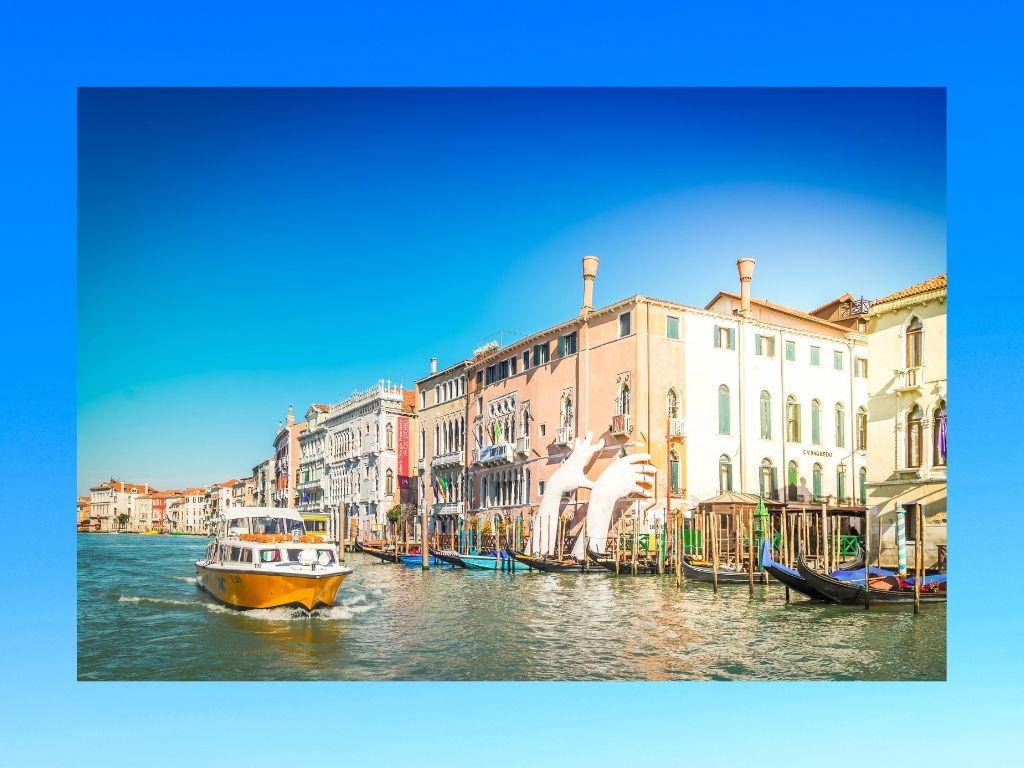
Lorenzo Quinn, figlio dell’attore Anthony Quinn, è nato a Roma nel 1966. Inizialmente attore, ha poi trovato la sua vocazione nella scultura, creando opere di grandi dimensioni che spesso raffigurano mani. Le sue creazioni trasmettono messaggi potenti su temi come la pace, la speranza, l’unità e il rispetto per la natura, con l’obiettivo di sensibilizzare e ispirare il pubblico. Le sue sculture sono esposte in tutto il mondo, ottenendo grande successo. Tra le sue opere più iconiche troviamo “Building Bridges” a Venezia, con mani colossali che emergono dal Canal Grande. https://lorenzoquinn.com/ https://www.soulsofvenice.com/

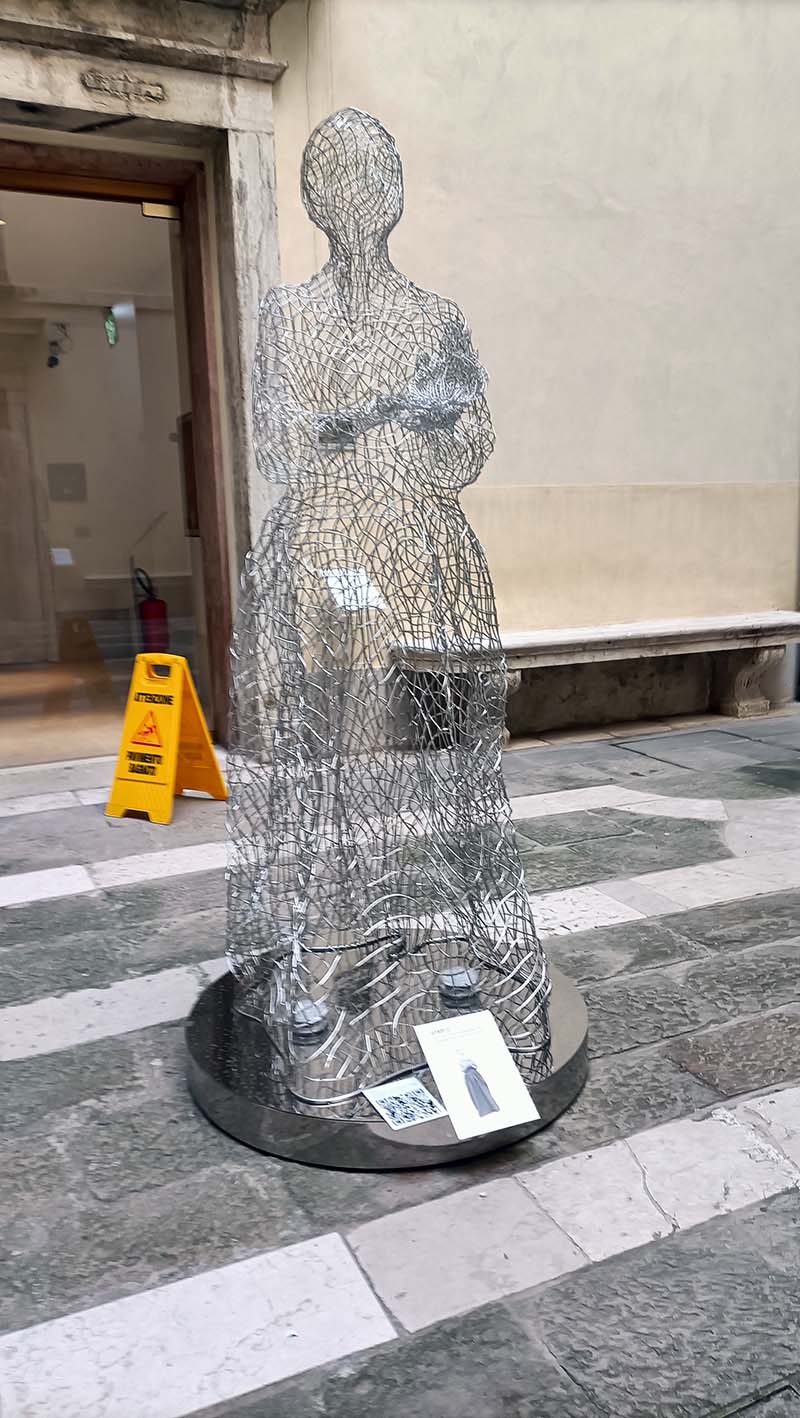
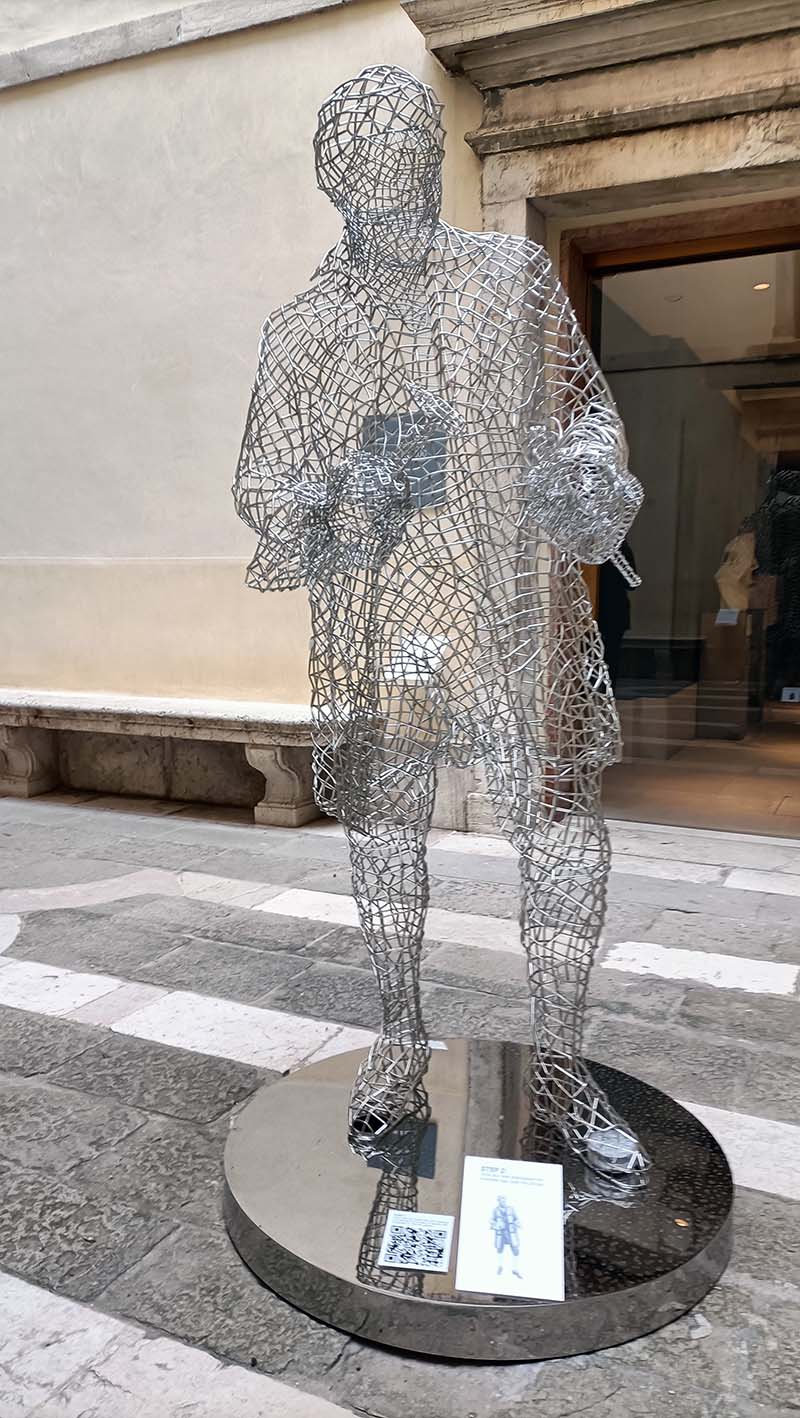
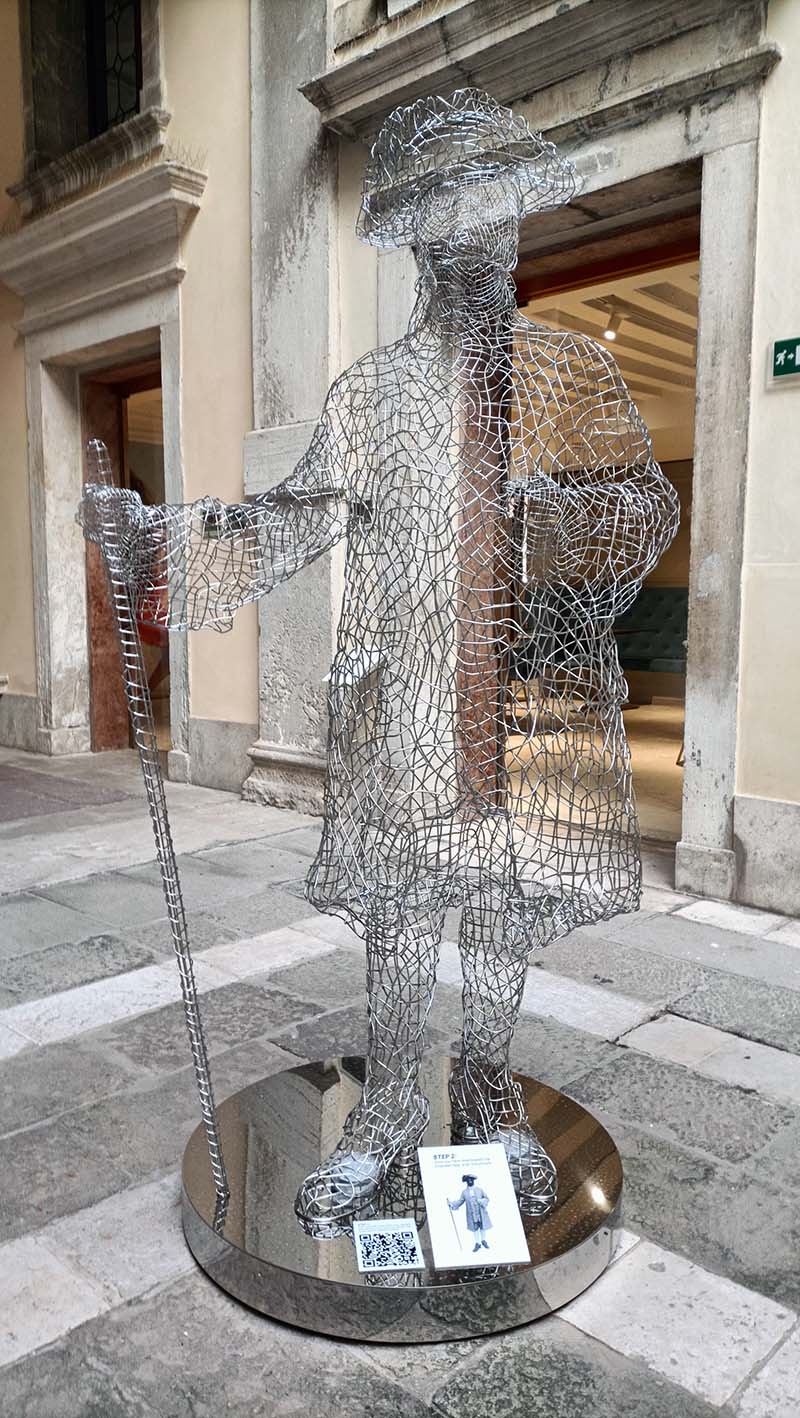
Questa mostra, è composta da 15 statue a maglie, distribuite a piano terra nell’androne del museo. Quest’opere simbolegianno gli importanti personaggi che hanno plasmato la storia della Serenissima nel corso dei secoli, consolidando il legame inscindibile tra la città e le sue diverse espressioni artistiche, immortalate per sempre dai creatori veneziani. Tra questi personaggi storici troviamo:

Lorenzo Tiepolo: nato in una famiglia di abili mercanti in ascesa politica, ricoprì importanti incarichi governativi prima di essere eletto doge della Repubblica di Venezia nel 1268. Durante il suo dogato, durato sette anni fino alla sua morte nel 1275, Tiepolo si impegnò nell’espansione territoriale della Serenissima, consolidando il suo potere e il prestigio della Repubblica

Marco Polo: nato a Venezia nel 1254, fu un celebre esploratore e mercante italiano. Insieme al padre Niccolò e allo zio Matteo, intraprese un epico viaggio lungo la Via della Seta, raggiungendo la Cina nel 1271. Per ben 17 anni rimase alla corte del Gran Khan Kublai, ricoprendo incarichi diplomatici e commerciali. Al suo ritorno a Venezia nel 1295, raccontò le sue straordinarie avventure nel libro “Il Milione”, divenendo una figura leggendaria e contribuendo ad aprire le porte dell’Occidente all’Oriente. Esplorate di più questo personaggio, andando a Palazzo Ducale, e a maggio anche a Palazzo Mocenigo, dove verranno, esposti i costumi di scena della omonima serie televisiva degli anni 80.

Caterina Corner è stata la regina consorte di Cipro e l’ultima sovrana indipendente dell’isola. Nata in una nobile famiglia veneziana, sposò il re Giacomo II di Cipro nel 1472. Rimasta vedova in giovane età con un figlio neonato, assunse la reggenza e poi il pieno regno, governando con saggezza e abilità politica. Il suo regno è stato segnato da intrighi politici e lotte di potere, tra le ambizioni espansionistiche di Venezia e le pressioni delle potenze straniere. Nonostante le difficoltà, Caterina Corner riuscì a mantenere l’autonomia di Cipro per quasi due decenni. Tuttavia, nel 1489, sotto la crescente influenza veneziana, fu costretta ad abdicare e cedere il regno alla Serenissima Repubblica. Tornata a Venezia, Caterina Corner ricevette in cambio il dominio di Asolo, dove creò una raffinata corte frequentata da scrittori e artisti. Trascorse gli ultimi anni della sua vita dedicandosi ad atti di mecenatismo e carità, spegnendosi nel 1510.

Veronica Franco fu una figura emblematica della Venezia rinascimentale, conosciuta come poetessa, cortigiana e donna d’affari di grande successo. Nata da una famiglia modesta, si distinse per la sua intelligenza, bellezza e talento letterario. Diventò una cortigiana di alto livello, frequentando i circoli intellettuali e aristocratici della città. Veronica Franco era anche una donna d’affari abile, gestendo il proprio patrimonio e investendo in diverse attività. Nonostante gli ostacoli e controversie, la sua posizione di cortigiana e i processi legali, difese la sua indipendenza e libertà di scelta. La sua opera letteraria e la sua storia personale offrono uno spaccato suggestivo sulla società e la cultura del tempo, e continuano ad ispirare studiosi e appassionati di storia e letteratura.

Elena Lucrezia Cornaro Piscopia (1646-1684): è stata un’erudita e filosofa italiana, considerata da alcune fonti come la prima donna al mondo ad aver ottenuto una laurea. Nata a Venezia da una nobile famiglia, dimostrò fin da giovane un grande interesse per la cultura e lo studio. Nonostante le resistenze dell’epoca legate al genere femminile, ottenne il permesso di sostenere l’esame di laurea in filosofia all’Università di Padova nel 1678, suscitando grande scalpore e acceso dibattito. La sua laurea rappresentò un evento storico di grande importanza, aprendo la strada all’istruzione superiore alle donne e sfidando i pregiudizi secolari, non si limitò ad essere una pioniera dell’istruzione femminile, ma si distinse anche per la sua profonda conoscenza in diverse discipline, tra cui la filosofia, la teologia, la matematica e le lingue antiche. Scrisse diverse opere letterarie e filosofiche, divenendo una figura di riferimento per gli intellettuali del suo tempo. Morì a Padova nel 1684 all’età di 38 anni, lasciando un’eredità duratura come simbolo di emancipazione femminile e di tenacia intellettuale. La sua storia e il suo impegno per l’istruzione rappresentano ancora oggi un’ispirazione per le donne di tutto il mondo.

Carlo Goldoni è stato un drammaturgo italiano noto come il “padre della commedia moderna”. Nato a Venezia, inizialmente intraprese la carriera legale, ma la sua passione per il teatro lo portò a diventare scrittore. Goldoni rivoluzionò il teatro italiano del XVIII secolo abbandonando la commedia dell’arte per creare opere più realistiche e borghesi. Le sue commedie si concentravano sulla vita quotidiana delle persone comuni, affrontando temi sociali e psicologici con arguzia e sottigliezza. Tra le sue opere più famose si annoverano “La locandiera”, “Gli amori delle dame”, “Arlecchino servitore di due padroni” e “I rusteghi”. Queste commedie, caratterizzate da trame brillanti, personaggi ben definiti e dialoghi vivaci, ottennero un grande successo sia tra il pubblico che tra la critica, consacrando Goldoni come uno dei più importanti drammaturghi europei del suo tempo.

Antonio Vivaldi fu un compositore, violinista e insegnante italiano noto per il suo significativo contributo all’era barocca. Nato a Venezia, mostrò un talento musicale fin da giovane e inizialmente intraprese una carriera nella chiesa, venendo ordinato sacerdote nel 1703. Chiamato il “Prete Rosso” a causa dei suoi capelli rossi, Vivaldi si dedicò con passione alla musica, componendo oltre 500 concerti, 90 opere liriche e numerose composizioni sacre e da camera. La sua musica si distingue per la sua inventiva melodica, la ricchezza armonica e il virtuosismo strumentale. Opere note includono “Le Quattro Stagioni,” un ciclo di concerti per violino che rappresentano le diverse stagioni dell’anno, e i “Concerti per Mandolino,” evidenziando le sue abilità come violinista e compositore. Vivaldi fu anche un innovatore nella musica strumentale, contribuendo allo sviluppo del concerto solistico e dell’orchestrazione. Il suo profondo e duraturo influsso sulla musica barocca ha ispirato generazioni di compositori successivi.

Marietta Barovier : fu una figura rivoluzionaria nella storia dell’arte vetraria veneziana. Nata da una famiglia di rinomati maestri vetrai, Marietta apprese fin da piccola i segreti di quest’arte affascinante. In un’epoca in cui il mestiere vetraio era prevalentemente maschile, Marietta si distinse per la sua abilità e la sua tenacia, diventando una delle prime donne ad assumere un ruolo di primo piano nella fornace di famiglia.

Andrea Palladio, un architetto italiano, è celebrato come una figura di spicco del Rinascimento e il pioniere dell’architettura palladiana. Nato a Padova, ha sviluppato le sue competenze a Vicenza, dove si è immerso nell’architettura classica e ha stabilito contatti con importanti intellettuali e mecenati. Lo stile architettonico di Palladio, noto come “palladianesimo”, ha influenzato profondamente l’architettura occidentale per secoli, diffondendosi in Europa, in America del Nord e ispirando innumerevoli edifici neoclassici. Considerato uno dei più grandi architetti di tutti i tempi, il suo lavoro ha lasciato un’impronta duratura nel settore e continua ad essere venerato e studiato da architetti e appassionati di tutto il mondo.

Elisabetta Caminer Turra (1751-1824) fu una scrittrice, traduttrice e intellettuale italiana, considerata una pioniera dell’istruzione femminile. Nata a Venezia da una famiglia ebrea, dimostrò fin da giovane un grande interesse per la cultura e lo studio. In un’epoca in cui l’istruzione era spesso preclusa alle donne, Elisabetta ebbe la possibilità di seguire un percorso formativo completo, approfondendo la conoscenza di diverse lingue e discipline. Elisabetta Caminer Turra rimane un esempio di donna colta, impegnata e visionaria che ha contribuito a promuovere l’istruzione femminile e l’emancipazione delle donne.

Tiziano Vecellio (1488/1490-1576), noto semplicemente come Tiziano, fu un pittore italiano, cittadino della Repubblica di Venezia e importante esponente della scuola veneziana. Considerato uno dei più grandi artisti di tutti i tempi, Tiziano rivoluzionò la pittura sacra e ritrattistica con la sua maestria nel colore, l’uso innovativo della luce e la sua profonda comprensione della psicologia umana.

Rosalba Carriera (1673-1757) è stata una pittrice italiana nota per la sua maestria nella pittura di ritratti in miniatura e pastello durante il diciottesimo secolo. Nata a Venezia, apprese l’arte nel laboratorio di suo padre, perfezionando le sue capacità nel ritrarre membri dell’alta società veneziana ed europea. Il lavoro di Carriera ebbe una profonda influenza sulla pittura di ritratti nel diciottesimo secolo, con il suo stile morbido e delicato che venne imitato da numerosi artisti. È considerata una delle più grandi pittrici di ritratti di tutti i tempi, e il suo lascito continua ad essere ammirato e studiato in tutto il mondo.

Infine l’opera del gondoliere e della gondola che più di ogni altra cosa, rappresenta Venezia !

Tutte le opere sono dotate di un codice QR code che si trova alla base della scultura. Inquadrandola con il cellulare, si apre il link che permette di esplorare di più uno dei personaggi storici di Venezia, che ho descritto sopra. All’apertura del link, bisogna inquadrare l’opera, e comparirà un personaggio in carne e ossa, che ci parlerà, raccontando i dettagli della sua storia. Un vero colpo di genio, che regala al visitatore una vera esperienza immersiva. Una mostra che parla del passato, con le tecnologie del futuro.

Una mostra da non perdere !! Invito tutta la cittadinanza e i turisti presenti in città di venire a vederla ! La mostra è presente a piano terra e, quindi non soggetta a biglietto, ma incoraggio tutti voi a visitare il magnifico museo di Ca’ Rezzonico ! Ne vale veramente la pena !! Non ve ne pentirete !

Dal 01 aprile al 31 ottobre: 10.00 – 18.00 (ultimo ingresso ore 17.00)

Dal 01 novembre al 31 marzo: 10.00 – 17.00 (ultimo ingresso ore 16.00)

Le operazioni di chiusura del museo iniziano 20 minuti prima dell’orario indicato.

Chiuso il martedì

Lorenzo Quinn at Ca’ Rezzonico Museum ! Souls of Venice

Ca’ Rezzonico (Venice)

In the beautiful Ca’ Rezzonico museum in Venice, which you can see on the map in the following link, (https://maps.app.goo.gl/ABGLrmJ1Z1YfbZcL7), in addition to the wonderful exhibition on the Renaissance in black and white. The art of engraving in Venice 1494-1615, it is possible to admire a series of wonderful sculptures by the famous international artist Lorenzo Quinn, which is entitled “Anime of Venice – Souls of Venice“, visible from 19 April to 15 September 2024. I have already spoken to you a little about him because of his work present at Doge’s Palace, in the exhibition dedicated to Marco Polo . But who doesn’t already know him, given his iconic work from a few years ago, present in the Grand Canal, next to the Ca’ Sagredo hotel?

Lorenzo Quinn, son of the actor Anthony Quinn, was born in Rome in 1966. Initially an actor, he then found his vocation in sculpture, creating large-scale works that often depict hands. His creations convey powerful messages on themes such as peace, hope, unity and respect for nature, with the aim of raising awareness and inspiring the public. His sculptures are exhibited all over the world, achieving great success. Among his most iconic works we find “Building Bridges” in Venice, with colossal hands emerging from the Grand Canal. https://lorenzoquinn.com/ https://www.soulsofvenice.com/

This exhibition is made up of 15 mesh statues, distributed on the ground floor in the museum’s entrance hall. These works symbolize the important characters who have shaped the history of the Serenissima over the centuries, consolidating the inseparable link between the city and its various artistic expressions, immortalized forever by Venetian creators. Among these historical figures we find:

Lorenzo Tiepolo: born into a family of skilled merchants on the political rise, he held important government positions before being elected doge of the Republic of Venice in 1268 During his reign, which lasted seven years until his death in 1275, Tiepolo committed himself to the territorial expansion of the Serenissima, consolidating his power and the prestige of the Republic.

Marco Polo: born in Venice in 1254, he was a famous Italian explorer and merchant. Together with his father Niccolò and his uncle Matteo, he undertook an epic journey along the Silk Road, reaching China in 1271. For 17 years he remained at the court of the Great Khan Kublai, holding diplomatic and commercial roles. Upon his return to Venice in 1295, he recounted his extraordinary adventures in the book “Il Milione”, becoming a legendary figure and helping to open the doors of the West to the East. Explore this character more by going to Doge’s Palace, and in May also to Mocenigo Palace, where the stage costumes from the 1980s television series of the same name will be on display.

Caterina Corner was the queen consort of Cyprus and the last independent ruler of the island. Born into a noble Venetian family, she married King James II of Cyprus in 1472. Widowed at a young age with an infant son, she assumed the regency and then full reign, governing with wisdom and political skill. His reign was marked by political intrigues and power struggles, between the expansionist ambitions of Venice and pressure from foreign powers. Despite the difficulties, Caterina Corner managed to maintain the autonomy of Cyprus for almost two decades. However, in 1489, under the growing Venetian influence, she was forced to abdicate and cede the kingdom to the Serenissima Republic. Returning to Venice, Caterina Corner received in exchange the dominion of Asolo, where she created a refined court frequented by writers and artists. He spent the last years of his life dedicating himself to acts of patronage and charity, dying in 1510.

Veronica Franco was an emblematic figure of Renaissance Venice, known as a highly successful poet, courtesan and businesswoman. Born to a modest family, she stood out for her intelligence, beauty and literary talent. She became a high-class courtesan, frequenting the city’s intellectual and aristocratic circles. Veronica Franco was also a skilled businesswoman, managing her own wealth and investing in several businesses. Despite obstacles and controversies, her position as a courtesan and legal processes, she defended her independence and freedom of choice. His literary work and his personal story offer a suggestive insight into the society and culture of the time, and continue to inspire scholars and enthusiasts of history and literature.

Elena Lucrezia Cornaro Piscopia (1646-1684): was an Italian scholar and philosopher, considered by some sources to be the first woman in the world to have obtained a degree. Born in Venice to a noble family, she demonstrated a great interest in culture and study from a young age. Despite the resistance of the time related to the female gender, she obtained permission to take the degree exam in philosophy at the University of Padua in 1678, causing a great stir and heated debate. Her graduation represented a historical event of great importance, paving the way for higher education for women and challenging age-old prejudices. She was not limited to being a pioneer of women’s education, but also distinguished herself for her profound knowledge in various disciplines. , including philosophy, theology, mathematics and ancient languages. He wrote several literary and philosophical works, becoming a reference figure for the intellectuals of his time. She died in Padua in 1684 at the age of 38, leaving a lasting legacy as a symbol of female empowerment and intellectual tenacity. Her story and commitment to education remain an inspiration to women around the world today.

Carlo Goldoni was an Italian playwright known as the “father of modern comedy”. Born in Venice, he initially pursued a legal career, but his passion for theater led him to become a writer. Goldoni revolutionized 18th-century Italian theater by abandoning the art comedy to create more realistic and bourgeois works. His plays focused on the daily lives of ordinary people, tackling social and psychological issues with wit and subtlety. Among his most famous works are “The innkeeper”, “The loves of the ladies”, “Harlequin servant of two masters” and “I rusteghi”. These comedies, characterized by brilliant plots, well-defined characters and lively dialogues, achieved great success among both the public and critics, establishing Goldoni as one of the most important European playwrights of his time.

Antonio Vivaldi was an Italian composer, violinist and teacher known for his significant contributions to the Baroque era. Born in Venice, he showed musical talent from a young age and initially pursued a career in the church, being ordained a priest in 1703. Called the “Red Priest” due to his red hair, Vivaldi devoted himself passionately to music, composing over 500 concertos , 90 operas and numerous sacred and chamber compositions. His music is distinguished by its melodic inventiveness, harmonic richness and instrumental virtuosity. Known works include “The Four Seasons,” a cycle of violin concertos representing the different seasons of the year, and the “Mandolin Concertos,” highlighting his skills as a violinist and composer. Vivaldi was also an innovator in instrumental music, contributing to the development of the solo concert and orchestration. His profound and lasting influence on Baroque music inspired generations of subsequent composers.

Marietta Barovier: she was a revolutionary figure in the history of Venetian glass art. Born to a family of renowned glass masters, Marietta learned the secrets of this fascinating art from an early age. In an era in which the glass-making profession was predominantly male, Marietta stood out for her skill and tenacity, becoming one of the first women to take on a leading role in the family furnace.

Andrea Palladio, an Italian architect, is celebrated as a leading figure of the Renaissance and the pioneer of Palladian architecture. Born in Padua, he developed his skills in Vicenza, where he immersed himself in classical architecture and established contacts with important intellectuals and patrons. Palladio’s architectural style, known as “Palladianism”, has profoundly influenced Western architecture for centuries, spreading across Europe, North America and inspiring countless neoclassical buildings. Considered one of the greatest architects of all time, his work has left a lasting imprint on the industry and continues to be revered and studied by architects and enthusiasts around the world.

Elisabetta Caminer Turra (1751-1824) was an Italian writer, translator and intellectual, considered a pioneer of female education. Born in Venice to a Jewish family, she demonstrated a great interest in culture and study from a young age. In an era in which education was often closed to women, Elisabetta had the opportunity to follow a complete educational path, deepening her knowledge of different languages ​​and disciplines. Elisabetta Caminer Turra remains an example of a cultured, committed and visionary woman who contributed to promoting female education and the emancipation of women.

Tiziano Vecellio (1488/1490-1576), known simply as Titian, was an Italian painter, citizen of the Republic of Venice and an important exponent of Venetian school. Considered one of the greatest artists of all time, Titian revolutionized sacred and portrait painting with his mastery of color, innovative use of light and his profound understanding of human psychology.

Rosalba Carriera (1673-1757) was an Italian painter known for her mastery of miniature and pastel portrait painting during the eighteenth century . Born in Venice, she learned the art in her father’s workshop, perfecting her skills in portraying members of Venetian and European high society. Carriera’s work had a profound influence on portrait painting in the eighteenth century, with his soft and delicate style being imitated by numerous artists. She is considered one of the greatest portrait painters of all time, and her legacy continues to be admired and studied around the world.

Finally, the work of the gondolier and the gondola that, more than anything else, represents Venice!

All works are equipped with a QR code located at the base of the sculpture. Framing it with your mobile phone opens the link that allows you to explore more one of the historical figures of Venice, which I described above. When you open the link, you need to frame the work, and a real character will appear and speak to you, telling you the details of his/her story. A true stroke of genius, which gives the visitor a truly immersive experience. An exhibition that talks about the past, with the technologies of the future.

An exhibition not to be missed!! I invite all citizens and tourists in the city to come and see it! The exhibition is on the ground floor and therefore not subject to a ticket, but I encourage all of you to visit the magnificent Ca’ Rezzonico museum! It’s really worth it!! You will not regret it !

From 01 April to 31 October: 10.00 – 18.00 (Last entrance at 17.00)

From 01 November to 31 March: 10.00 – 17.00 (Last entrance at 16.00)

The closing operations of the museum begin 20 minutes before the closing time.

Closed on Tuesdays

Vetro e Opera Lirica

For The English Translation, please scroll down the page, thank you !

Una nuova mostra è stata inaugurata presso il museo di Casa di Carlo Goldoni a Venezia, uno dei musei più intriganti della Fondazione Musei Civici di Venezia. La mostra che sarà visibile al pubblico dal 1 luglio fino al 27 novembre, si intitola “Vetro e Opera Lirica” in quanto cerca di mostrare al visitatore cosa hanno in comune queste due arti.

Mostra collettiva, perché vari e tanti sono gli artisti che sono presenti, è nata con dall’idea di un progetto di Sandro Pezzoli e dei suoi collaboratori Maria Luisa Martinez Garcia, e Fiorella Mattio, e Margherita Tirelli. Cosa unisce il vetro e l’Opera Lirica ? Ebbene se ci pensiamo, penso siamo tutti concordi che il fiato del cantante e il soffio del maestro vetraio sono quell’elemento in comune, questa energia che viene usata per realizzare arte sublime e bellezza senza fine.


Come dicevo, molti sono gli artisti presenti in questa mostra, tanto per citarne alcuni: Joan Crous, Montserrat Duràn Muntadas, Gala Carlota Fernandez Montero, Pasquale Gadaleta, Maria Christina Hamel, Silvia Levenson, Silvia Listorti, Aristide Najean, Laura Panno, Lucio Perna, Maria Grazia Rosin, Natalia Saurin, Matteo Seguso, Marina e Susanna Sent, Giovanni Soccol, Yolanda Tabanera, Lino Tagliapietra, Camillo Triulzi, Violetta Uboldi, Andrea Zepponi.

La mostra dopo Novembre riprenderà il suo giro itinerante e sarà visibile a Milano, Napoli, Madrid-Alcorcón e Segovia. Ma perché perdere questa occasione di vederla a Venezia, città dai mille stupendi musei ? Ricordo che oltre a questa interessante mostra, Il museo di Casa di Carlo Goldoni, è forse uno dei più intriganti, perché ci illustra la vita e le opere del celebre commediografo. Inoltre a poca distanza c’è il bellissimo museo di Ca’ Rezzonico, e a chi piace molto le opere in vetro, come si fa, a non visitare il museo del vetro di Murano ?


Casa di Carlo Goldoni San Polo 2794, 30125 Venezia

T +39 041 2759325

Glass and Opera

A new exhibition has been inaugurated at the Carlo Goldoni’s house museum in Venice, one of the most intriguing museums of the Venice Civic Museums Foundation. The exhibition, which will be visible to the public from 1 July until 27 November, is called “Glass and Opera” as it tries to show the visitor what these two arts have in common.

It’s a collective exhibition, because there are many artists who are present, the idea was born  by Sandro Pezzoli’s project and his collaborators Maria Luisa Martinez Garcia, and Fiorella Mattio, and margherita Tirelli. What has in common glass and Opera? Well if we think about it, we may all agree that the breath of the singer and the breath of the master glass maker are that element in common, I mean this energy that is used to create sublime art and endless beauty.


As I said, there are many artists present in this exhibition, just to name a few: Joan Crous, Montserrat Duràn Muntadas, Gala Carlota Fernandez Montero, Pasquale Gadaleta, Maria Christina Hamel, Silvia Levenson, Silvia Listorti, Aristide Najean, Laura Panno, Lucio Perna , Maria Grazia Rosin, Natalia Saurin, Matteo Seguso, Marina and Susanna Sent, Giovanni Soccol, Yolanda Tabanera, Lino Tagliapietra, Camillo Triulzi, Violetta Uboldi, Andrea Zepponi.

The exhibition after November will continue its traveling tour and will be visible in Milan, Naples, Madrid-Alcorcón and Segovia. But why miss this opportunity to see it in Venice, a city with a thousand wonderful museums? I remember that in addition to this interesting exhibition, the museum of Carlo Goldoni’s House, is perhaps one of the most intriguing, because it illustrates the life and works of the famous playwright. Also a short distance away there is the beautiful museum of Ca ‘Rezzonico, and to whose people who really likes glass works, how can you not visit the Murano glass museum?


Carlo Goldoni’s House San Polo 2794, 30125 Venezia

T +39 041 2759325


Riaprono i musei di Venezia !!

Riaprono i musei di Venezia ! Visitiamoli, o facciamo uso delle visite esclusive su prenotazione. Facciamo ripartire il turismo e la nostra economia !!!


8 marzo a Venezia

mimosarezzonico

For the English version, please scroll down the page

In occasione della festa della donna, nella giornata di martedì 8 marzo i musei Civici Veneziani offrono l’accesso gratuito TUTTE LE DONNE dei comuni della Città Metropolitana di Venezia, e l’orario di visita sarà prolungato fino alle ore 19.00. I musei della Fondazione che aderiscono a questa iniziativa sono:

Museo Correr – Museo di Cà Pesaro – Museo di Palazzo Mocenigo – Museo di Casa Goldoni – Museo di Storia Naturale – Museo del vetro di Murano – Museo del Merletto di Burano – Palazzo Fortuny.

E’ una splendida iniziativa, e sono il primo ad esserne felice. Ritengo purtroppo che adesso come adesso, la festa della donna, sia diventata solo un evento commerciale, e si rischia di dimenticare l’origine di questa celebrazione, e di cosa voglia significare.

Il 25 marzo del 1911 scoppio il più devastante incendio che New York abbia mai conosciuto, in soli 18 minuti la fabbrica Triangle divenne una trappola mortale dove perirono 146 persone, tra cui 123 donne. Le cause furono dovute alla totale assenza di regole di prevenzione di incendi, per cui  tessuti infiammabili immagazzinati per tutta la fabbrica, scarti di tessuto sparsi per il pavimento, gli uomini che lavoravano come tagliatori a volte fumavano, l’illuminazione era fornita da luci a gas aperte e c’erano pochi secchi d’acqua per spegnere gli incendi.

Questi sono i nomi delle vittime, per non dimenticare:

Adler, Lizzie, 24 – Altman Anna 16 – Ardito, Annina, 25 – Bassino, Rose, 31 – Benanti, Vincenza, 22 – Berger, Yetta, 18 – Bernstein, Essie, 19 – Bernstein, Jacob, 38 – Bernstein, Morris, 19 – Billota, Vincenza, 16 – Binowitz, Abraham, 30 – Birman, Gussie, 22 – Brenman, Rosie, 23 – Brenman, Sarah, 17 – Brodsky, Ida, 15 – Brodsky, Sarah, 21 – Brucks, Ada, 18 – Brunetti, Laura, 17 – Cammarata, Josephine, 17 – Caputo, Francesca, 17 – Carlisi,  – osephine, 31 – Caruso, Albina, 20 – Ciminello, Annie, 36 – Cirrito, Rosina, 18 – Cohen,  – nna, 25 – Colletti, Annie, 30 – Cooper, Sarah, 16 – Cordiano , Michelina, 25 – Dashefsky, Bessie, 25 – Del Castillo, Josie, 21 – Dockman, Clara, 19 – Donick, Kalman, 24 – Driansky, Nettie, 21 – Eisenberg, Celia, 17 – Evans, Dora, 18 – Feibisch, Rebecca, 20 – Fichtenholtz, Yetta, 18 – Fitze, Daisy Lopez, 26 – Floresta, Mary, 26 – Florin, Max, 23 – Franco, Jenne, 16 – Friedman, Rose, 18 – Gerjuoy, Diana, 18 – Gerstein, Molly, 17 – Giannattasio, Catherine, 22 – Gitlin, Celia, 17 – Goldstein, Esther, 20 – Goldstein, Lena, 22 – Goldstein, Mary, 18 – Goldstein, Yetta, 20 – Grasso, Rosie, 16 – Greb, Bertha, 25 – Grossman, Rachel, 18 – Herman, Mary, 40 – Hochfeld, Esther, 21 – Hollander, Fannie, 18 -Horowitz, Pauline, 19 – Jukofsky, Ida, 19 -Kanowitz, Ida, 18 -Kaplan, Tessie, 18 -Kessler, Beckie, 19 -Klein, Jacob, 23 -Koppelman, Beckie, 16 -Kula, Bertha, 19 -Kupferschmidt, Tillie, 16 -Kurtz, Benjamin, 19 -L’Abbate, Annie, 16 -Lansner, Fannie, 21 -Lauletti, Maria Giuseppa, 33

Lederman, Jennie, 21 -Lehrer, Max, 18 -Lehrer, Sam, 19 -Leone, Kate, 14 -Leventhal, Mary, 22 – Levin, Jennie, 19 -Levine, Pauline, 19 – Liebowitz, Nettie, 23 -Liermark, Rose, 19 -Maiale, Bettina, 18 -Maiale, Frances, 21 -Maltese, Catherine, 39 -Maltese, Lucia, 20 -Maltese, Rosaria, 14 -Manaria, Maria, 27 -Mankofsky, Rose, 22 – Mehl, Rose, 15 – Meyers, Yetta, 19 – Midolo, Gaetana, 16 – Miller, Annie, 16 – Neubauer, Beckie, 19 – Nicholas,  – nnie, 18 – Nicolosi, Michelina, 21 – Nussbaum, Sadie, 18 – Oberstein, Julia, 19 – Oringer, Rose, 19 – Ostrovsky , Beckie, 20 – Pack, Annie, 18 – Panno, Provindenza, 43, Pasqualicchio, Antonietta, 16 – Pearl, Ida, 20 – Pildescu, Jennie, 18 – Pinelli, Vincenza, 30 – Prato, Emilia, 21 – Prestifilippo, Concetta, 22 – Reines, Beckie, 18 – Rosen (Loeb), Louis, 33 – Rosen, Fannie, 21 – Rosen, Israel, 17 – Rosen, Julia, 35 – Rosenbaum, Yetta, 22 – Rosenberg, Jennie, 21 – Rosenfeld, Gussie, 22 – Rothstein, Emma, 22 – Rotner, Theodore, 22 – Sabasowitz, Sarah, 17 – Salemi, Santina, 24 – Saracino, Sarafina, 25 – Saracino, Teresina, 20 – Schiffman, Gussie, 18 – Schmidt, Theresa, 32 – Schneider, Ethel, 20 – Schochet, Violet, 21 – Schpunt, Golda, 19 – Schwartz, Margaret, 24 – Seltzer, Jacob, 33 – Shapiro, Rosie, 17 – Sklover, Ben, 25 – Sorkin, Rose, 18 – Starr, Annie, 30 – Stein, Jennie, 18 – Stellino, Jennie, 16 – Stiglitz, Jennie, 22 – Taback, Sam, 20 – Terranova, Clotilde, 22  Tortorelli, Isabella, 17 – Utal, Meyer, 23 – Uzzo, Catherine, 22 – Velakofsky, Frieda, 20 – Viviano, Bessie, 15 – Weiner, Rosie, 20 – Weintraub, Sarah, 17 – Weisner, Tessie, 21 – Welfowitz, Dora, 21 – Wendroff, Bertha, 18 – Wilson, Joseph, 22 – Wisotsky, Sonia, 17.


Non dobbiamo dimenticarci di loro, come non dobbiamo dimenticare del ruolo che le donne occupano nella vita di oggi, delle donne che combattono,che soffrono. Sembra una coincidenza che in questo periodo, si trova nelle sale cinematografiche questo film :


Con il termine suffragette si indicavano le appartenenti a un movimento di emancipazione femminile nato per ottenere il diritto di voto per le donne. In seguito la parola “suffragetta” ha finito per indicare,  la donna che lotta o si adopera per ottenere il riconoscimento della piena dignità delle donne, coincidendo con il termine femminista. Insieme a loro, ci sono state tante altre donne, che hanno lottato per i loro diritti, o farsi strada in un mondo di uomini, ecco qui alcuni nomi, che ho trovato :

Maria Skłodowska, conosciuta come Marie Curie, è stata una chimica e fisica polacca e in seguito francese. Nel 1903 fu insignita del premio Nobel per la fisica (assieme al marito Pierre Curie e ad Antoine Henri Becquerel) per i loro studi sulle radiazioni e, nel 1911, del premio Nobel per la chimica per la sua scoperta del radio e del polonio. Marie Curie è stata l’unica donna tra i quattro vincitori di più di un Nobel e, insieme a Linus Pauling, l’unica ad averlo vinto in due aree distinte. Marie Curie crebbe nella Polonia russa; poiché qui le donne non potevano essere ammesse agli studi superiori, si trasferì a Parigi e nel 1891 iniziò a frequentare la Sorbona, dove si laureò in fisica e matematica. Nel dicembre del 1897 iniziò a compiere degli studi sulle sostanze radioattive, che da allora rimasero al centro dei suoi interessi. Dopo la morte accidentale del marito Pierre Curie, avvenuta nel 1906, le fu concesso di insegnare nella prestigiosa università della Sorbona. Due anni più tardi le venne assegnata la cattedra di fisica generale, diventando la prima donna ad insegnare alla Sorbona.

Ipàzia di Alessandria: è stata una matematica, astronoma e filosofa greca antica. Rappresentante della filosofia neo-platonica, la sua uccisione da parte di una folla di cristiani in tumulto, per alcuni autori composta di monaci detti parabolani, l’ha resa una «martire della libertà di pensiero».

George Sand, pseudonimo di Amantine, è stata una scrittrice e drammaturga francese. Considerata tra le autrici più prolifiche della storia della letteratura, è autrice di numerosi romanzi, novelle e drammi teatrali; tra i suoi scritti più illustri vi sono Indiana, Lélia, Consuelo, La palude del diavolo, La piccola Fadette, François le Champi e l’autobiografia Storia della mia vita (Histoire de ma vie).  Femminista molto moderata, fu attiva nel dibattito politico e partecipò, senza assumere una posizione di primo piano, al governo provvisorio del 1848, esprimendo posizioni vicine al socialismo, che abbandonò alla fine della sua vita per un moderato repubblicanesimo. La sua opposizione alla politica temporalistica e illiberale del papato le costò la messa all’Indice di tutti i suoi scritti nel dicembre del 1863. Sand è inoltre ricordata anche per il suo anticonformismo e per le relazioni sentimentali avute con lo scrittore Alfred de Mussete con il musicista Fryderyk Chopin.

Anna Maria Mozzoni è stata una giornalista italiana, attivista dei diritti civili e pioniera del femminismo in Italia.

Amelia Mary Earhart scomparsa nell’Oceano Pacifico presso l’isola Howland il 2 luglio 1937) è stata un’aviatrice statunitense. Sedici primati mondiali, ha ispirato libri, serie tv e film, come Star Trek, Il Corvo, Amelia, Una notte al museo. A fermarla è stato un incidente, ancora avvolto nel mistero, accaduto mentre stava per concludere il suo sogno più grande: il giro del mondo. Dopo 22.000 miglia, quando le mancava un terzo del tragitto per finire, è scomparsa. “Nelle spedizioni future le donne si assumeranno responsabilità sempre più grandi e il genere a cui appartengono inciderà sempre meno sul riconoscimento del loro valore, che avverrà alla luce dei risultati raggiunti”, di questo, Amalia era profondamente convinta.

Maria Tecla Artemisia Montessori fu un’educatrice, pedagogista,filosofa, medico e scienziata italiana, internazionalmente nota per il metodo educativo che prende il suo nome, adottato in migliaia di scuole materne, primarie, secondarie e superiori in tutto il mondo; fu tra le prime donne a laurearsi in medicina in Italia.

Wangari Muta Maathai  è stata un’ambientalista, attivista politica e biologa keniota. Nel 2004 è diventata la prima donna africana ad aver ricevuto il Premio Nobel per la Pace per «il suo contributo alle cause dello sviluppo sostenibile, della democrazia e della pace». È stata membro del parlamento keniota e Assistente Ministro per l’Ambiente e le Risorse Naturali nel governo del presidente Mwai Kibaki, fra il gennaio 2003 e il novembre 2005. Apparteneva all’etnia kikuyu.

Vorrei spendere anche qualche parola, per tutte le ragazze madri, che si trovano da sole a far crescere i figli, o alle donne perseguitate dai stalker. Finalmente sembra che ci sia la legge per gli incidenti stradali, possibile che non si riesca a fare di più per queste donne che vengono tormentate, picchiate, dobbiamo sempre aspettare, fino a quando è troppo tardi ??

Desidero finire questo blog dicendovi questo: che questa festa, sia ricordata per quello che è, e non si festeggi la donna, solo l’8 marzo, ma ogni giorno !

Gli operatori Museali della Fondazione Civici Musei augurano Felice 8 marzo a tutte le donne. Vi aspettiamo nei nostri musei !

English Version

8 March in Venice

mimosarezzonico

On the occasion of Women’s Day, Tuesday March 8, the Venetians civic museums offer free access to all women of the municipalities of the Metropolitan City of Venice, and visiting hours will be extended until 19.00 hours. The Foundation’s museums participating in this initiative are:

Correr Museum – Cà Pesaro Museum – Mocenigo Palace – Carlo Goldoni’s house – Natural History Museum – Glass Museum in Murano – Lace Museum in Burano – Fortuny Palace.

It ‘a wonderful initiative, and I am very happy about this. I think, unfortunately, that right now, Women’s Day, has become just a commercial event, and that we may forget the origin of this celebration, and what it means.

On March 25, 1911 happened the most devastating fire that New York has ever known; in only 18 minutes the Triangle factory became a death trap, and 146 people perished, including 123 women. The causes were due to the total absence of fire prevention rules, flammable fabrics stored for the whole factory, fabric scraps scattered around the floor, the men working as cutters sometimes smoked, the lighting was provided by lights open gas and there were a few buckets of water to put out fires.

These are the names of the victims, not to forget:

Adler, Lizzie, 24 – Altman Anna 16 – Ardito, Annina, 25 – Bassino, Rose, 31 – Benanti, Vincenza, 22 – Berger, Yetta, 18 – Bernstein, Essie, 19 – Bernstein, Jacob, 38 – Bernstein, Morris, 19 – Billota, Vincenza, 16 – Binowitz, Abraham, 30 – Birman, Gussie, 22 – Brenman, Rosie, 23 – Brenman, Sarah, 17 – Brodsky, Ida, 15 – Brodsky, Sarah, 21 – Brucks, Ada, 18 – Brunetti, Laura, 17 – Cammarata, Josephine, 17 – Caputo, Francesca, 17 – Carlisi,  – osephine, 31 – Caruso, Albina, 20 – Ciminello, Annie, 36 – Cirrito, Rosina, 18 – Cohen,  – nna, 25 – Colletti, Annie, 30 – Cooper, Sarah, 16 – Cordiano , Michelina, 25 – Dashefsky, Bessie, 25 – Del Castillo, Josie, 21 – Dockman, Clara, 19 – Donick, Kalman, 24 – Driansky, Nettie, 21 – Eisenberg, Celia, 17 – Evans, Dora, 18 – Feibisch, Rebecca, 20 – Fichtenholtz, Yetta, 18 – Fitze, Daisy Lopez, 26 – Floresta, Mary, 26 – Florin, Max, 23 – Franco, Jenne, 16 – Friedman, Rose, 18 – Gerjuoy, Diana, 18 – Gerstein, Molly, 17 – Giannattasio, Catherine, 22 – Gitlin, Celia, 17 – Goldstein, Esther, 20 – Goldstein, Lena, 22 – Goldstein, Mary, 18 – Goldstein, Yetta, 20 – Grasso, Rosie, 16 – Greb, Bertha, 25 – Grossman, Rachel, 18 – Herman, Mary, 40 – Hochfeld, Esther, 21 – Hollander, Fannie, 18 -Horowitz, Pauline, 19 – Jukofsky, Ida, 19 -Kanowitz, Ida, 18 -Kaplan, Tessie, 18 -Kessler, Beckie, 19 -Klein, Jacob, 23 -Koppelman, Beckie, 16 -Kula, Bertha, 19 -Kupferschmidt, Tillie, 16 -Kurtz, Benjamin, 19 -L’Abbate, Annie, 16 -Lansner, Fannie, 21 -Lauletti, Maria Giuseppa, 33

Lederman, Jennie, 21 -Lehrer, Max, 18 -Lehrer, Sam, 19 -Leone, Kate, 14 -Leventhal, Mary, 22 – Levin, Jennie, 19 -Levine, Pauline, 19 – Liebowitz, Nettie, 23 -Liermark, Rose, 19 -Maiale, Bettina, 18 -Maiale, Frances, 21 -Maltese, Catherine, 39 -Maltese, Lucia, 20 -Maltese, Rosaria, 14 -Manaria, Maria, 27 -Mankofsky, Rose, 22 – Mehl, Rose, 15 – Meyers, Yetta, 19 – Midolo, Gaetana, 16 – Miller, Annie, 16 – Neubauer, Beckie, 19 – Nicholas,  – nnie, 18 – Nicolosi, Michelina, 21 – Nussbaum, Sadie, 18 – Oberstein, Julia, 19 – Oringer, Rose, 19 – Ostrovsky , Beckie, 20 – Pack, Annie, 18 – Panno, Provindenza, 43, Pasqualicchio, Antonietta, 16 – Pearl, Ida, 20 – Pildescu, Jennie, 18 – Pinelli, Vincenza, 30 – Prato, Emilia, 21 – Prestifilippo, Concetta, 22 – Reines, Beckie, 18 – Rosen (Loeb), Louis, 33 – Rosen, Fannie, 21 – Rosen, Israel, 17 – Rosen, Julia, 35 – Rosenbaum, Yetta, 22 – Rosenberg, Jennie, 21 – Rosenfeld, Gussie, 22 – Rothstein, Emma, 22 – Rotner, Theodore, 22 – Sabasowitz, Sarah, 17 – Salemi, Santina, 24 – Saracino, Sarafina, 25 – Saracino, Teresina, 20 – Schiffman, Gussie, 18 – Schmidt, Theresa, 32 – Schneider, Ethel, 20 – Schochet, Violet, 21 – Schpunt, Golda, 19 – Schwartz, Margaret, 24 – Seltzer, Jacob, 33 – Shapiro, Rosie, 17 – Sklover, Ben, 25 – Sorkin, Rose, 18 – Starr, Annie, 30 – Stein, Jennie, 18 – Stellino, Jennie, 16 – Stiglitz, Jennie, 22 – Taback, Sam, 20 – Terranova, Clotilde, 22  Tortorelli, Isabella, 17 – Utal, Meyer, 23 – Uzzo, Catherine, 22 – Velakofsky, Frieda, 20 – Viviano, Bessie, 15 – Weiner, Rosie, 20 – Weintraub, Sarah, 17 – Weisner, Tessie, 21 – Welfowitz, Dora, 21 – Wendroff, Bertha, 18 – Wilson, Joseph, 22 – Wisotsky, Sonia, 17.

We must not forget them, as we must not forget the role that women occupy in today’s life, women who fight, who suffer. It seems a coincidence that in this period, is in theaters this film:


The term suffragettes were indicated belonging to a female emancipation movement started to gain the right to vote for women. Later the word “suffragette” has come to indicate, the woman who struggles or strives to achieve recognition of the full dignity of women, coinciding with the term feminist. Along with them, there were many other women, who have fought for their rights, or make their way in a man’s world, here are some names that I found:

Maria Sklodowska, known as Marie Curie, was a chemistry and physics Polish and French followed. In 1903 he was awarded the Nobel Prize in Physics (together with her husband Pierre Curie and Henri Becquerel) for their studies on radiation and, in 1911, the Nobel Prize for Chemistry for her discovery of radium and polonium. Marie Curie was the only woman among the four winners of the Nobel and, along with Linus Pauling, the only one to have won it in two distinct areas. Marie Curie grew in Russian Poland; because here women could not be admitted to higher education, he moved to Paris and in 1891 he attended the Sorbonne, where he graduated in physics and mathematics. In December of 1897 he began making studies of the radioactive substances, which has since remained the center of his interests. After the accidental death of her husband Pierre Curie, in 1906, she was allowed to teach at the prestigious Sorbonne University. Two years later she accepted the chair of general physics, becoming the first woman to teach at the Sorbonne.

Hypatia of Alexandria was a mathematician, astronomer and ancient Greek philosopher. Representative of the neo-Platonic philosophy, she’s killing by a mob of Christians in turmoil, for some authors composed of such parabolani monks, has made a “martyr of the freedom of thought.”

George Sand, pseudonym of Amantine, was a French writer and playwright. Considered one of the most prolific authors of the history of literature, she is the author of numerous novels, short stories and dramas; among her most illustrious include Indiana, Lélia, Consuelo, The Swamp Devil, Little Fadette, François le Champi and autobiography The Story of My Life (Histoire de ma vie). Feminist very moderate, was active in the political debate and participated, without assuming a leading position, the Provisional Government of 1848, expressing positions close to socialism, who left at the end of his life to a moderate republicanism. Her opposition to temporalistic illiberal politics and the papacy cost her placed on the Index of all his writings in December 1863. Sand  is also remembered for her unconventionality and romantic relationships she had with the writer Alfred de Mussete, and with the composer Fryderyk Chopin.

Anna Maria Mozzoni was an Italian journalist, a civil rights activist and a pioneer of feminism in Italy.

Amelia Mary Earhart disappeared in the Pacific Ocean near the island Howland July 2, 1937. She was an American aviator. Sixteen world records, she has inspired books, TV series and films, such as Star Trek, The Crow, Amelia, Night at the Museum. What stop her, was an accident, still shrouded in mystery, it happened while she was about to finish her biggest dream: travel around the world. After 22,000 miles, when she missed a third of the way to finish, she has disappeared. “In future shipments women will take on increasingly important responsibilities, and gender to which they belong will impact less on the recognition of their value, which will take place in the light of the results achieved,” of this, Amalia was deeply convinced.

Maria Tecla Artemisia Montessori was a teacher, educator, philosopher, doctor and Italian scientist, internationally known for hers educational method that takes hers name, adopted in thousands of kindergartens, primary schools, secondary and higher around the world; She was among the first women to graduate in medicine in Italy.

Wangari Muta Maathai was an environmentalist, political activist and Kenyan biologist. In 2004 she became the first African woman to receive the Nobel Peace Prize for “her contribution to the cause of sustainable development, democracy and peace”. She was a member of parliament and the Kenyan Assistant Minister for Environment and Natural Resources in the government of President Mwai Kibaki between January 2003 and November 2005. She belonged to ethnic Kikuyu.

And after these important  women of history, I wish to say a few words, for all single mothers, who are on their own to bring up their children, or for the women who are harassed by stalkers. Finally there seems to be a law for traffic accidents,  but why we may not be able to do more for these women who are harassed, beaten, why we always have to wait until it is too late ??

I wish to end this blog  saying this: Let  this day, be remembered for what it is, and  do not celebrate the women, only on March 8, but every day!

The Attendants Museums of the  Foundation Civic Museums wish Happy March 8 to all women! We will be waiting for you all in our museums!

S. Valentino

carezzonico s.valentino copy.jpg

For the english version, please scroll down the page

E dopo Carnevale, ecco un’altra splendida occasione per voi tutti che venite a visitare Venezia ! Quale magnifica occasione di visitare una città romantica come Venezia, proprio nel giorno di S. Valentino ! E perché non farlo dentro ai Musei Civici ?

Una leggenda, dice che il ponte dei sospiri di Palazzo Ducale, è il ponte degli innamorati, ma purtroppo devo confessarvi che non è così. I sospiri non erano di innamorati , ma di condannati alle prigioni del Palazzo, e quando attraversavano il ponte, attraverso le inferiate, potevano vedere per l’ultima volta il mondo esterno, ecco il perché dei sospiri.

Ma leggenda a parte, tutta la città di Venezia è romantica e meta ideale per il vostro S. Valentino, e potete prendere due piccioni con una fava e visitare i magnifici Musei Civici ! Palazzo Ducale, Museo di Cà Rezzonico, Museo Correr, Palazzo Fortuny, Casa Goldoni, Palazzo Mocenigo, Museo di Cà Pesaro ! Sono tutte mete speciali per passare un week end (o più giorni) per le coppie innamorate.. Vi aspettiamo !!

S. Valentine’s day in Venice !

Valentine's day copy.jpg

And after the Carnival, you have another wonderful opportunity  to visit Venice! What a unique occasion to visit a romantic city like Venice, right in the Valentine’s Day! And why not do it visiting the beautiful Civic Museums?

A legend says that the bridge of sighs of the Doge’s Palace, is the bridge of lovers, but unfortunately I have to confess that it is not true! The sighs were not from men in love, but from the sentenced criminals to the prisons of the palace, when they crossed the bridge, through the bars, they could see for the last time the outside world, that’s why they sighed.

But legends aside, the whole city of Venice is romantic and ideal destination for your S.Valentine’s day and  you can kill two birds with one stone choosing to visit the magnificent Civic Museums while you are there! The Doge’s Palace, the Museum of Ca ‘Rezzonico, Correr Museum, Fortuny’s Palace, Goldoni’s House, Mocenigo’s Palace, the Museum of Cà Pesaro! They are all special places to spend a weekend (or more days) for couples in love .. Come, we will welcome all of you with open arms !!

Carnevale a Venezia

Grandi occasioni per chi viene a Venezia in questo periodo. Eh si, finalmente è arrivato il carnevale, e quindi tutti quelli che verranno, potranno godersi il carnevale, vedere le maschere e andare a vedere gli eventi organizzati dalla Fondazione Civici Musei.

Quest’anno, gli eventi si terranno nel bellissimo Museo di Cà Rezzonico, e nella magnifica Casa di Carlo Goldoni. Visto il grande successo che si è riscosso l’anno scorso, si è deciso di far rappresentare alcune commedie teatrali all’interno dei Musei.

entrata


Nel 400° anniversario della morte di William Shakespeare (1616-2016) Ca’ Rezzonico diventa il luogo dove verranno rappresentate le sue opere “Women in love – ovvero le donne di Shakespeare”, la famosa commedia che vede i personaggi di Otello, Desdemona e Jago, ad opera del Teatro Stabile del Veneto con: Susanna Costaglione, Marta Richeldi. Tali recite saranno ripetuti in 3 diversi cicli di serate.

Eccovi la lista degli eventi:


Casa Goldoni è il luogo ideale per ospitare gli eventi teatrali, tre sono gli eventi rappresentati in questa sede:

casa goldoni


Ritorno a Casa Goldoni

For the english version, please scroll down the page.

Dopo circa un’anno, sono stato chiamato a coprire un turno nel bellissimo Museo di Casa Goldoni.  Avevo già scritto qualcosa in merito a questo bellissimo palazzo, ma un giorno solo, è troppo poco tempo per imparare le tante cose che si dovrebbe sapere per visitarlo bene !

Carlo Goldoni, insieme all’artista Pietro Longhi, sono stati i due massimi esponenti che hanno saputo ricreare, uno con carta e penna, e l’altro con penelli e colori, le scene quotidiane  di una Venezia popolare.

Nel palazzo stesso, possiamo ammirare dei bellissimi quadri del Longhi, quali “la furlana” o “la veditrice di fritelle” e molti altri; mentre Goldoni affronta le tematiche delle trasformazioni a livello culturale, i conflitti tra classi, come era vissuta all’epoca la figura della donna, nuovi figure, che si affacciano nella nuova epoca. Ricordiamo che si assiste ad un cambiamento: la fine della Serenissima; tutto questo non fa che ricordarmi gli affreschi del Tiepolo del secondo piano di Cà Rezzonico: “il mondo nuovo” e altri, che stanno appunto a rappresentare la fine di un epoca, l’inizio di una “nuova vita”. Non si rappresenta più la nobiltà, ma la classe popolare, le persone comuni, la scena quotidiana.

Quello che mi affascina di più di questo museo, è il secondo piano, dove presto solitamente servizio. Mi piace perché le stanze sono state arredate, ricreate seguendo le ambientazioni di alcune commedie dello scrittore.

La portantina
La portantina

La finta ammalata: la storia narra della giovane Rosaura che ama un dottore, ma non è ricambiata, o meglio, lei è innamorata di lui, ma il giovane dottore, non ne è a conoscenza. Per cercare di incontrarlo più volte possibili, ella si finge ammalata, inventandosi i disturbi quali difficoltà di respirazione, e rifiutandosi di mangiare. Tuttavia ella mangia eccome! Di nascosto piazza sotto una portantina dov’era solita distendersi, un piatto di fichi, e non vista mangia di gusto ! La storia potrebbe andare avanti a lungo, ma viene scoperta dalla serva Colombina e l’amica beatrice, a causa di uno specchio, che cattura i suoi furtivi pasti. A loro confessa di esser innamorata del dottor Onesti. La situazione sembra precipitare, quando il padre Pantalone, non vedendo alcun miglioramento, incarica un diverso dottore di prendersi cura della figlia, e quando egli pensa che un rimedio si possa trovare nel sposare un giovane pretendente. Ma poi alla fine tutto finisce con il lieto fine.

La portantina collocata nella sala principale è stupenda! Accanto si possono ammirare dei bellissimi vasi che mi ricordano tanto quelli usati anticamente nelle farmacie dell’epoca che preparavano i rimedi con erbe curative, e pozioni. C’è inoltre un bellissimo separè che per lo stile mi ricorda il mobilio del secondo piano di Cà Rezzonico, nella sala delle lacche verdi.

L'avvocato veneziano

Nella commedia  “L’avvocato veneziano, Carlo Goldoni, fa uso dei suoi ricordi e dell’esperienza acquisita nella professione da lui esercitata a Pisa, egli racconta, porta sulla scena, in contrasto con altre commedie e altri suoi colleghi che rappresentavano gli uomini di legge come cavillosi e intriganti, il carattere gaio e positivo di un avvocato veneziano che non ci pensa due volte  a sacrificare la passione e i sentimenti per difendere l’onore della suo mestiere.

La scena che viene descritta dal racconto, è rappresentata nel museo da una bellissima scrivania con poltroncine, da alcune specchiere, un manichino che indossa una vestaglia da camera, il mobilio tutto originale della seconda metà del 18 secolo.

Il giocatore

Il giocatore: questa è una commedia molto interessante, perché parla del personaggio di Florindo che a causa del gioco, rischia di perdere tutto, infatti perderà la fidanzata Rosaura, i suoi amici, e si ritroverà col rischio di sposare una donna che non fa per lui, fortunatamente viene salvato da Pantalone. E’ una commedia importante, in quanto trattano i temi quali la dipendenza dal gioco, le preoccupazioni per le perdite subite, l’ansia e la frenesia per la rivincita, sperando sempre che la volta prossima sia quella buona con cui rifarsi. Questa commedia mi ricorda molto un film dallo stesso titolo e interpretato da Matt Damon Edward Norton, John Malkowich, Martin Landau.

La conversazione

Nella commedia la  “La conversazione” si narra di un pranzo in casa di Madame Lindora. E’ un occasione per rappresentare i vari personaggi, i giochi, i divertimenti che andavano di moda all’epoca, infatti la scena che si presenta al museo, è rappresentata da un tavolo da gioco, con delle carte poste su di esso, insieme a delle biglie e a dei dadi, che si usavano nel gioco chiamato “il biribisso”: Gioco d’azzardo simile alla roulette o alla tombola. Si gioca tra un banchiere e un numero illimitato di giocatori. Questi puntano una somma di danaro su una casella figurata e numerata di uno scacchiere che ne conta 36 (in Francia 70); il banchiere estrae allora un numero da un sacchetto e i giocatori che hanno puntato sul numero estratto vincono trentadue volte (o 64 in Francia) la propria posta, mentre il banchiere incamera le altre puntate.

Chi la fa l'aspetta

E infine, la commedia “chi la fa l’aspetta” è ricreata nella sala da pranzo, dove sono presenti un tavolo, sedie, una credenza, tutto arredato,come se si fosse nell’intento di sparecchiare

Il secondo piano, non è grandissimo, conta poche sale, ma sono tutte molto interessantissime, se si sa cosa guardare, o se si fa la connessione tra le opere scritte da Goldoni, e la scena che si è cercato di ricreare nel modo più fedele possibile. Invito tutti a venire a vedere questo bellissimo museo.. credetemi ne vale veramente la pena !

English version: 

After about a year, I was asked to cover a shift in the beautiful Museum of Casa Goldoni. I wrote something about this beautiful building, but one day, it is too little time to learn the many things you should know to visit it well!

Carlo Goldoni, with the artist Pietro Longhi, were the two leading exponents who have been able to recreate, with a pen and paper, and the other with brushes and colors, the daily scenes of a popular Venice.

In the same building, we can admire the beautiful paintings of Longhi, such as “the furlana” or “the saleswoman of pancakes” and many others, while Goldoni addresses the issues of change at the cultural level, conflicts between classes, and the role of women in that time. We recall that there was a change: the end of the Serenissima; All this only serves to remind me of Tiepolo frescoes on the second floor of Ca ‘Rezzonico, “the new world” and others, which are precisely to represent the end of an era, the beginning of a “new life”. Not longer they represents the nobility, but the popular classes, the ordinary people, the daily scene.

What fascinates me most about this museum is the second floor, where usually I work. I like it because the rooms are furnished, created following the histories of some comedies.

La portantina
La portantina

The fake sick“: the story tells of the young Rosaura who loves a doctor, but it is not reciprocated, or rather, she is in love with him, but the young doctor, doesn’t know. To try to meet him several times as possible, she pretends to be sick, inventing symptoms such as difficulty to breath, and refusing to eat. However she eats with gusto! She used to hide under a sedan chair, a plate of figs, and unseen she ate them ! The story could go on and on, but is discovered by the maidservant Colombina and her friend Beatrice, due to a mirror that captures his furtive meals. She confessed to being in love with Dr. Onesti. The situation seems to fall when his father’s Pantalone, not seeing any improvement, instructs a different doctor to take care of his daughter, and when he thinks that a remedy can be found in marrying a young man. But in the end it all ends with a happy ending.

The sedan chair is placed in the main room, is amazing! Next, you can see the beautiful vases that remind me so much those used in ancient times in the pharmacies, when they prepared remedies with healing herbs and potions. There is also a beautiful booth that the style reminds me of the furniture on the second floor of Ca ‘Rezzonico, in the green  lacquers room.

L'avvocato veneziano

In the comedy “The Venetian lawyer,” Carlo Goldoni, makes use of his memories and the experience gained in the profession which he exercised in Pisa, he tells, in contrast to other comedies and other colleagues representing the lawyers as quirky and intriguing, instead he tell about a character cheerful and positive of a Venetian lawyer who does not think twice about sacrificing the passion and feelings to defend the honor of his profession.
The scene is described by the story, it is represented in the museum by a beautiful desk with chairs, some mirrors, a dummy wearing a dressing gown, all the original furniture from the second half of the 18th century.

Il giocatore

The cards player: this play is very interesting, because it speaks of the character of Florindo that because of the game, he may lose everything, in fact, he lose the girlfriend Rosaura, his friends, and he’ll end up with the risk of marrying a woman who is not for him, fortunately  he’s been saved from Pantalone. This comedy is important, as it address issues such as gambling addiction, the concerns for their losses, anxiety and frenzy for revenge, always hoping that the next time will be better. This reminds me of a comedy film of the same title starring Matt Damon and Edward Norton, John Malkowich, Martin Landau.

La conversazione

In the play the “conversation” tells of a lunch in the home of Madame Lindora. It’s an opportunity to represent the various characters, games, amusements that were fashionable at the time, in fact the scene that is presented to the museum, is represented by a table, with the cards put it together  with dices, which were used in the game called “biribisso”. Gambling like roulette or bingo. It is played between a banker and an unlimited number of players. These pointing a sum of money on a box of a figurative and numbered chessboard that has 36 (70 in France); then the banker draws a number from a bag and the players who bet on the winning number drawn thirty-two times (or 64 in France) their mail, while the banker appropriates other bets.

Chi la fa l'aspetta

And finally, the comedy “who does the waiting” is recreated in the dining room, where there are a table, chairs, a dresser, all furnished, as if he had the intention to clear the table

The second floor is not large, it has a few rooms, but they are all very interesting, if you know what to look for, or if you make the connection between the works written by Goldoni, and the scene they tried to recreate as closely as possible. I invite everyone to come and see this beautiful museum .. believe me it is really worth!