For the English translation please scroll down the page, thank you !
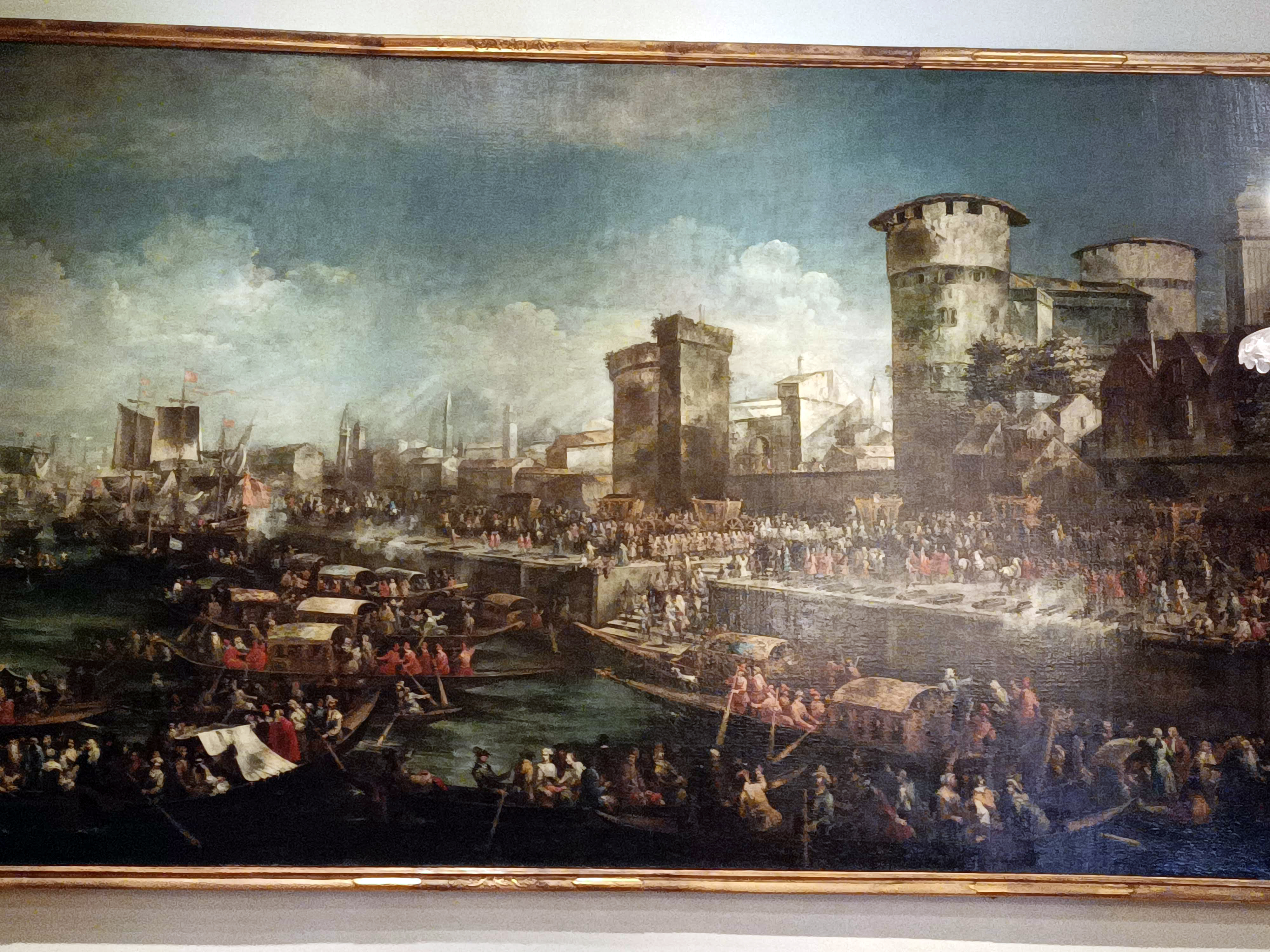
C’è un quadro all’interno di Palazzo Mocenigo, stupendo museo della Fondazione Musei Civici di Venezia, che mi affascina molto, perché esso cela un mistero. Se ci si reca alla sala 7 del primo piano, possiamo ammirare questo quadro di Antonio Stom (1688 – Venezia, 1734), dal titolo “Arrivo a Chioggia del principe di Svezia ricevuto dal doge Mocenigo.
Ebbene c’è un quadro molto simile dipinto dal “L’arrivo degli ambasciatori veneziani Nicolò Erizzo e Alvise Pisani” II a Londra il 30 maggio, 1707, di Luca Carlevarijs”.
Come potete vedere ci sono molte similitudini, il modo posizionato sulla destra, l’accesso, sempre nello stesso punto, il fatto che vengono sparate delle cannonate a salve le barche che accostano sulla scalinata.
Molto probabilmente l’artista Antonio Stom, si è lasciato ispirare dal Carlevaris, e tuttavia la somiglianza tra i due quadri è qualcosa di affascinante.
Volete vedere il quadro di Antonio Stom ? Venite a Palazzo Mocenigo, vi aspettiamo !
The Mysterious Picture
There is a painting inside Mocenigo Palace, the wonderful museum of the Civic Museums Foundation of Venice, which fascinates me a lot, because it hides a mystery. If we go to room 7 on the first floor, we can admire this painting by Antonio Stom (1688 – Venice, 1734), entitled “Arrival in Chioggia of the Prince of Sweden received by Doge Mocenigo.
Well there is a very similar picture painted by Luca Carlevarijs “The Arrival of the Venetian Ambassadors Nicolò Erizzo and Alvise Pisani” II in London on May 30, 1707″ .
As you can see there are many similarities, the quay positioned on the right, the access, always in the same spot, the fact that cannon shots are fired blanks at the boats that approach on the steps.
Most likely the artist Antonio Stom was inspired by Carlevaris, and yet the similarity between the two paintings is something fascinating.
Do you want to see the painting by Antonio Stom ? Come to Palazzo Mocenigo, we are waiting for you!
For the English translation please scroll down the page, thank you !
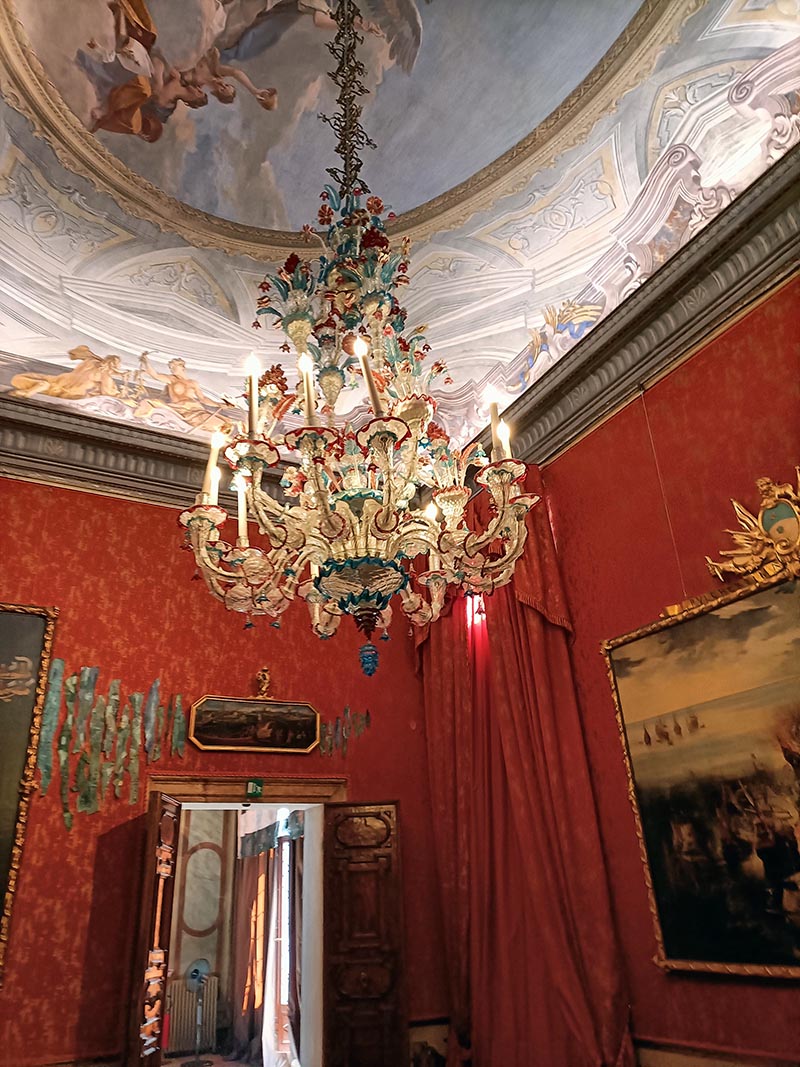
Nel stupendo Museo di Palazzo Mocenigo, e nel meraviglioso Museo di Ca’ Rezzonico, entrambi della Fondazione Musei Civici di Venezia, al suo interno, in molte sale, ci sono dei lampadari che sono a dir poco dei veri capolavori di arte vetraria. Volete saperne un po’ di più ?
La loro storia, inizia più o meno quando, nel 1291 un decreto della Serenissima ordinò che tutte le Vetrerie di Venezia, per evitare il rischio di incendi, fossero trasferite nella vicina isola di Murano. A quella data si fa risalire l’inizio della leggendaria attività vetraria muranese e da allora l’arte del vetro resterà indissolubilmente legata al nome di Murano. Dalle “murrine” alla “filigrana”, ai “reticelli”, ai calici soffiati che sono espressione dell’arte muranese del 400 e del ‘500, attraverso l’esuberanza barocca, la breve fioritura neoclassica e i “revivals” dell’800, si sviluppa questa lunga e affascinante storia. Ai giorni nostri vengono ancora riprodotte le opere più significative delle varie epoche, mentre lo spirito creativo della tradizione dà impulso alla ricerca di nuove forme che sono espressione del nostro tempo.
Si dice che i lampadari più belli di questi due musei, siano quelli di Briati, specialmente il modello Rezzonico: è un lampadario a sospensione in vetro di Murano realizzato a mano. È caratterizzato da una forma a cascata, con una serie di pendenti in vetro di Murano che si irradiano da un centro centrale. I pendenti sono realizzati in una varietà di colori e forme, e possono essere personalizzati per adattarsi a qualsiasi ambiente.
Briati fu una figura di spicco nella vetreria artistica veneziana del Settecento. Fu un abile maestro vetraio che sostenne con originalità le prerogative della tradizione muranese, contrastando l’invadente concorrenza del neonato cristallo di Boemia. Briati introdusse un nuovo tipo di vetro “uso cristallo” e inventò nuove tecniche decorative, che gli permisero di creare manufatti in vetro di grande bellezza e raffinatezza. Nel 1739 Briati aprì a Venezia una vetreria nella quale realizzò una varietà di manufatti in vetro, tra cui specchi, lampadari e altri oggetti in vetro decorato. La sua produzione fu vastissima e varia, spaziando dalle cornici ai lampadari (quelli detti “a pagoda” o “alla cinese”, con bracci decorati con fiori policromi), dalle lampade da parete (dette “lumiere” che diverranno l’incontrastata specialità della vetreria veneziana dell’epoca) alle suppellettili da tavola. Moltissimi degli oggetti da lui creati sono ora conservati presso il Museo del vetro di Murano. Briati è considerato uno dei più importanti maestri vetrai del Settecento veneziano. Il suo lavoro ha contribuito a preservare la tradizione muranese e a diffondere il vetro di Murano in tutto il mondo.
Che altro dire ? Io vi consiglio di andare a vederli , nei musei che vi ho accennato sopra: Ca’ Rezzonico e Palazzo Mocenigo . Vi aspettiamo !!
The most beautiful chandeliers of the Civic Museums Foundation of Venice
In the stupendous Museum of Palazzo Mocenigo, and in the marvelous Museum of Ca’ Rezzonico, both of the Civic Museums Foundation of Venice, inside, in many rooms, there are chandeliers which are nothing short of true masterpieces of glass art. Do you want to know a little more?
Their story begins more or less when, in 1291, a decree of the Serenissima ordered that all the Glassworks of Venice, to avoid the risk of fires, be transferred to the nearby island of Murano. The beginning of the legendary Murano glassmaking activity dates back to that date and since then the art of glass will remain inextricably linked to the name of Murano. From the “murrine” to the “filigree”, to the “reticelli”, to the blown goblets which are an expression of the Murano art of the 1400s and 1500s, through the Baroque exuberance, the brief neoclassical flowering and the “revivals” of the 19th century, develops this long and fascinating story. Nowadays the most significant works of the various eras are still reproduced, while the creative spirit of tradition gives impetus to the search for new forms that are an expression of our time.
It is said that the most beautiful chandeliers in these two museums are those of Briati, especially the Rezzonico model: it is a handmade Murano glass suspension chandelier. It features a cascading shape, with a series of Murano glass pendants radiating from a central center. The pendants are made in a variety of colors and shapes, and can be customized to fit any setting.
Briati was a leading figure in eighteenth-century Venetian artistic glassmaking. He was a skilled master glassmaker who supported the prerogatives of the Murano tradition with originality, contrasting the invasive competition of the newborn Bohemian crystal. Briati introduced a new type of glass “using crystal” and invented new decorative techniques, which allowed him to create glass objects of great beauty and refinement. In 1739 Briati opened a glass factory in Venice in which he created a variety of glass artefacts, including mirrors, chandeliers and other decorated glass objects. Its production was vast and varied, ranging from frames to chandeliers (those called “pagoda” or “Chinese-style”, with arms decorated with polychrome flowers), from wall lamps (called “lumiere” which would become the undisputed specialty of Venetian glassware of the time) to table furnishings. Many of the objects he created are now kept in the Murano Glass Museum. Briati is considered one of the most important glass masters of eighteenth-century Venice. His work has helped to preserve the Murano tradition and to spread Murano glass all over the world.
What else to say? I advise you to go and see them in the museums I mentioned above: Ca’ Rezzonico and Palazzo Mocenigo. We are waiting for you !!
For the English translation please scroll down the page, thank you !
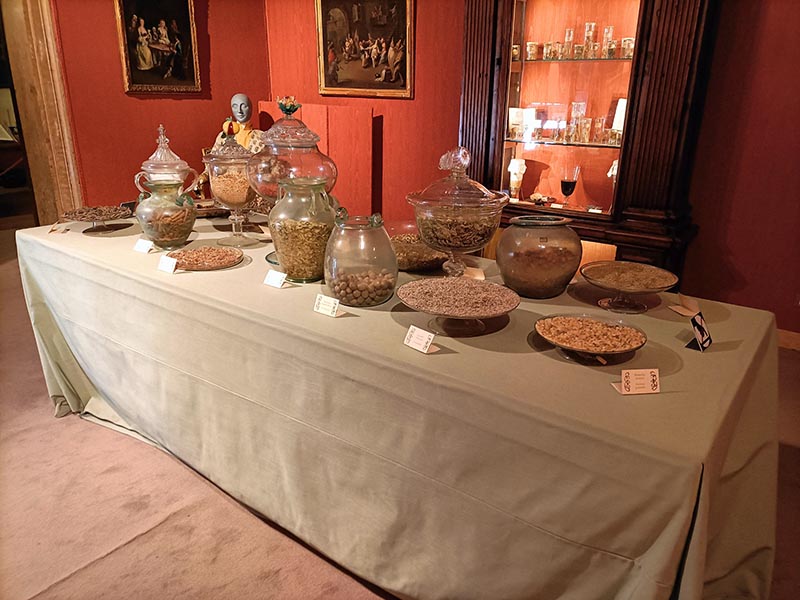
Il museo di Palazzo Mocenigo, oltre ad essere stata la casa di una delle famiglie più importanti di Venezia, e anche museo del costume, è anche Museo del profumo. Da un po’ di tempo, è stata allestita una sezione dedicata al profumo, che in aggiunta a delle altre “sorprese”, offre un esperienza olfattiva del tutto straordinaria.
Non tutti sanno, che all’interno di alcune sale, del Museo, sono posizionati dei diffusori, che ad intervalli di tempo, diffondono delle fragranze aromatiche, che, da delle piacevoli emozioni, a chi visita il palazzo. Per esempio: in sala 4: Blue TeaBlue Tea è una fragranza ispirata ai profumi e alle materie pregiate delle terre asiatiche. È una fragranza femminile, delicata ed elegante, che combina le note fresche e fruttate del tè blu con le note floreali della rosa, della magnolia e del neroli. Il cuore della fragranza è avvolto da varie note fresche, soavi e leggermente fruttate, mentre la base è composta da un vetiver corposo avvolto da muschio. Il tè blu è un tè cinese appartenente alla specie Oolong. È originario del sud-est asiatico e dell’India. Il tè blu è caratterizzato da un colore blu intenso e da un aroma delicato e floreale. La rosa è un fiore simbolo di amore, bellezza e passione. La magnolia è un fiore simbolo di eleganza, raffinatezza e purezza. Il neroli è un fiore simbolo di giovinezza, innocenza e felicità. Il vetiver è un’erba aromatica originaria dell’India. È nota per il suo aroma legnoso e muschiato. Il muschio è una resina vegetale che emana un aroma caldo e avvolgente..
In sala 8: La Rosa Moceniga è caratterizzata da un colore rosa seta leggermente sfumato ed emana un profumo delizioso, fruttato e femminile. È un fiore unico che incarna un mistero ancora tutto da svelare. Ecco alcuni dettagli aggiuntivi sulla Rosa Moceniga:
È una rosa molto profumata, con un aroma che ricorda la frutta e i fiori.
È una rosa molto bella, con petali delicati e un colore rosa tenue.
È una rosa molto resistente, può crescere in una varietà di condizioni climatiche.
È una rosa molto rara, è difficile da trovare in commercio.
La Rosa Moceniga è un fiore unico e prezioso che è stato apprezzato per secoli. È un simbolo di bellezza, femminilità e raffinatezza.
In sala 10: La Colonia Veneziana. La fragranza si apre con un’esplosione di agrumi, con note di bergamotto, arancio e limone. Il bergamotto è una nota fresca e agrumata, l’arancio è una nota dolce e solare, mentre il limone è una nota acidula e pungente. Queste note sono unite alle nuances aromatiche del rosmarino, una nota speziata e pungente.Il cuore della fragranza è composto da zenzero, salvia sclarea e iris. Lo zenzero è una nota piccante e stimolante, la salvia sclarea è una nota fresca e aromatica, mentre l’iris è una nota delicata e femminile. Queste note si fondono insieme creando una fragranza complessa e affascinante.Il fondo della fragranza è composto da un accordo legnoso, con note di sandalo, cedro e muschio. Il sandalo è una nota calda e avvolgente, il cedro è una nota legnosa e decisa, mentre il muschio è una nota sensuale e misteriosa. Queste note creano una base solida e persistente per la fragranza, che dura a lungo sulla pelle.
La prossima volta vi parlerò delle altre stanze dell’esperienza olfattiva. Aggiungo anche, che accanto alla biglietteria, c’è un’area dove, se volete potete acquistare i profumi che avete sentito, e altri ancora. Spero intanto di avervi incoraggiato a venire a visitare questo bellissimo museo, che è aperto tutti i giorni tranne il lunedì. Vi aspettiamo !!
Olfactory Experience at Palazzo Mocenigo
The Palazzo Mocenigo museum, in addition to having been the home of one of the most important families in Venice, and also a costume museum, is also a perfume museum. For some time now, a section dedicated to perfume has been set up, which, in addition to other “surprises”, offers a completely extraordinary olfactory experience.
Not everyone knows that diffusers are positioned inside some rooms of the Museum, which at intervals of time, spread aromatic fragrances, which give pleasant emotions to those who visit the building. For example: in room 4: Blue TeaBlue Tea is a fragrance inspired by the scents and precious materials of Asian lands. It is a feminine, delicate and elegant fragrance that combines the fresh and fruity notes of blue tea with the floral notes of rose, magnolia and neroli. The heart of the fragrance is wrapped in various fresh, sweet and slightly fruity notes, while the base is composed of full-bodied vetiver wrapped in musk. Blue tea is a Chinese tea belonging to the Oolong species. It is native to Southeast Asia and India. Blue tea is characterized by a deep blue color and a delicate, floral aroma. The rose is a symbol of love, beauty and passion. Magnolia is a symbol of elegance, refinement and purity. Neroli is a flower symbol of youth, innocence and happiness. Vetiver is an aromatic herb native to India. It is known for its woody and musky aroma. Musk is a plant resin that gives off a warm and enveloping aroma..
In room 8: Rosa Moceniga is characterized by a slightly nuanced silky pink color and exudes a delicious, fruity and feminine scent. It is a unique flower that embodies a mystery yet to be revealed. Here are some additional details on Rosa Moceniga:
It is a very fragrant rose, with an aroma reminiscent of fruit and flowers.
It is a very beautiful rose, with delicate petals and a soft pink colour.
It is a very resistant rose, it can grow in a variety of climatic conditions.
It is a very rare rose, it is difficult to find on the market.
The Rosa Moceniga is a unique and precious flower that has been treasured for centuries. It is a symbol of beauty, femininity and sophistication.
In room 10: La Colonia Veneziana. The fragrance opens with a citrus explosion, with notes of bergamot, orange and lemon. The bergamot has a fresh and citrusy note, the orange is a sweet and sunny note, while the lemon is a sour and pungent note. These notes are combined with the aromatic nuances of rosemary, a spicy and pungent note. The heart of the fragrance is composed of ginger, clary sage and iris. Ginger is a spicy and stimulating note, clary sage is a fresh and aromatic note, while iris is a delicate and feminine note. These notes blend together creating a complex and fascinating fragrance. The base of the fragrance is composed of a woody accord, with notes of sandalwood, cedar and musk. Sandalwood is a warm and enveloping note, cedar is a woody and decisive note, while musk is a sensual and mysterious note. These notes create a solid and persistent base for the fragrance, which lasts long on the skin.
Next time I’ll tell you about the other rooms of the olfactory experience. I would also add that next to the ticket office, there is an area where, if you want, you can buy the perfumes you have smelled, and more. In the meantime, I hope I have encouraged you to come and visit this beautiful museum, which is open every day except Monday. We are waiting for you !!
Venezia ha una lunga e ricca storia nella produzione di profumi. Il primo profumo veneziano è stato creato nel XII secolo da un monaco bizantino di nome Angelo Musachio. Il profumo, chiamato “Acqua di Venezia”, era fatto con ingredienti provenienti da tutto il mondo, tra cui rose, gelsomino, iris e sandalo. Nel XVI secolo, Venezia divenne il centro mondiale della produzione di profumi. La città era in una posizione strategica per il commercio con l’Oriente, e gli ingredienti per i profumi arrivavano da tutto il mondo. I profumieri veneziani erano anche molto creativi, e creavano profumi con aromi nuovi e originali.
Nel XVII e XVIII secolo, i profumi veneziani erano molto popolari in tutta Europa. Le donne e gli uomini indossavano profumi per occasioni speciali, come matrimoni, balli e feste. I profumi veneziani erano anche utilizzati come rimedi naturali per la salute e la bellezza.
Nel XIX secolo, la produzione di profumi a Venezia iniziò a declinare. La città perse la sua posizione di centro mondiale del commercio, e gli ingredienti per i profumi divennero più costosi. Tuttavia, alcuni profumieri veneziani continuarono a produrre profumi di alta qualità, e alcuni di questi profumi sono ancora in vendita oggi.
Il processo di creazione del profumo a Venezia nel passato era un processo lungo e laborioso. Ha coinvolto diverse fasi, tra cui:
Raccogliere gli ingredienti. Il primo passo è stato raccogliere gli ingredienti per il profumo. Questi ingredienti potevano essere fiori, erbe, spezie, resine e oli. I profumieri spesso viaggiavano in terre lontane per raccogliere gli ingredienti più rari ed esotici.
Distillare gli ingredienti. Una volta raccolti gli ingredienti, venivano distillati per estrarre gli oli essenziali. Questo è stato fatto riscaldando gli ingredienti in un alambicco e raccogliendo i vapori rilasciati. I vapori sarebbero quindi condensati nuovamente in forma liquida e gli oli essenziali sarebbero stati separati dall’acqua.
Mescolare gli oli essenziali. Gli oli essenziali sarebbero quindi stati mescolati insieme per creare la fragranza desiderata. I profumieri avrebbero miscelato accuratamente gli oli insieme, usando i loro nasi per giudicare le proporzioni.
Aggiunta di un fissativo. Un fissativo è una sostanza che aiuta a impedire al profumo di evaporare troppo rapidamente. I profumieri spesso aggiungevano un fissativo, come ambra grigia, muschio o vaniglia, ai loro profumi.
Imbottigliamento del profumo. Una volta pronto il profumo, veniva imbottigliato. Le bottiglie erano spesso fatte di vetro o cristallo e decorate con elaborate decorazioni.
Il processo di creazione del profumo a Venezia era un processo complesso e che richiedeva tempo, ma i risultati erano profumi che erano noti per la loro bellezza, complessità e longevità.
Oggi, Venezia è ancora una città importante per la produzione di profumi. Ci sono molte aziende che producono profumi a Venezia, come la Mavive per esempio, e alcuni di questi profumi sono esportati in tutto il mondo. I profumi veneziani sono apprezzati per la loro qualità, la loro creatività e il loro legame con la storia della città.
Per capire meglio la storia del profumo a Venezia, consiglio di visitare Palazzo Mocenigo, è un palazzo storico situato a Venezia, nel sestiere di Santa Croce. Il palazzo fu costruito nel XVI secolo dalla famiglia Mocenigo, una delle più importanti famiglie patrizie veneziane. Il palazzo è oggi sede del Museo del Profumo, che racconta la storia del profumo a Venezia. Il museo ospita una collezione di oltre 5.000 oggetti legati al mondo del profumo, tra cui bottiglie, flaconi, strumenti per la produzione del profumo e libri antichi.
Il museo è diviso in cinque sezioni:
Storia del profumo a Venezia
La produzione del profumo
Gli ingredienti del profumo
I profumi del mondo
Il profumo nell’arte e nella cultura
Il museo è aperto al pubblico tutti i giorni, tranne il Lunedì. Il Museo del Profumo è un luogo unico per scoprire la storia del profumo a Venezia. Il museo è anche un luogo suggestivo, dove è possibile immergersi nell’atmosfera raffinata e elegante della Serenissima.
Perfume in Venice
Venice has a long and rich history in perfume production. The first Venetian perfume was created in the 12th century by a Byzantine monk named Angelo Musachio. The perfume, called “Acqua di Venezia”, was made with ingredients from all over the world, including roses, jasmine, iris, and sandalwood.
In the 16th century, Venice became the world center of perfume production. The city was in a strategic location for trade with the East, and the ingredients for perfumes came from all over the world. Venetian perfumers were also very creative, and they created perfumes with new and original aromas.
In the 17th and 18th centuries, Venetian perfumes were very popular throughout Europe. Women and men wore perfumes for special occasions, such as weddings, balls, and parties. Venetian perfumes were also used as natural remedies for health and beauty.
In the 19th century, perfume production in Venice began to decline. The city lost its position as the world center of trade, and the ingredients for perfumes became more expensive. However, some Venetian perfumers continued to produce high-quality perfumes, and some of these perfumes are still on sale today.
The process of creating perfume in Venice in the past was a long and labor-intensive process. It involved several steps, including:
Gathering the ingredients. The first step was to gather the ingredients for the perfume. These ingredients could be flowers, herbs, spices, resins, and oils. The perfumers would often travel to far-off lands to gather the most rare and exotic ingredients.
Distilling the ingredients. Once the ingredients were gathered, they would be distilled to extract the essential oils. This was done by heating the ingredients in a still and collecting the vapors that were released. The vapors would then be condensed back into liquid form, and the essential oils would be separated from the water.
Mixing the essential oils. The essential oils would then be mixed together to create the desired fragrance. The perfumers would carefully blend the oils together, using their noses to judge the proportions.
Adding a fixative. A fixative is a substance that helps to keep the perfume from evaporating too quickly. Perfumers would often add a fixative, such as ambergris, musk, or vanilla, to their perfumes.
Bottling the perfume. Once the perfume was ready, it would be bottled. The bottles were often made of glass or crystal, and they were decorated with elaborate designs.
The process of creating perfume in Venice was a complex and time-consuming process, but the results were perfumes that were known for their beauty, complexity, and longevity.
Today, Venice is still an important city for perfume production. There are many companies that produce perfumes in Venice, like Mavive for instance, and some of these perfumes are exported all over the world. Venetian perfumes are appreciated for their quality, their creativity, and their ties to the city’s history.
To better understand the history of perfume in Venice, I recommend visiting Palazzo Mocenigo, is a historic palace located in Venice, in the sestiere of Santa Croce. The palace was built in the 16th century by the Mocenigo family, one of the most important patrician families in Venice.
The palace is now home to the Museum of Perfume, which tells the story of perfume in Venice. The museum houses a collection of over 5,000 objects related to the world of perfume, including bottles, vials, perfume-making tools and ancient books.
The museum is divided into five sections:
History of perfume in Venice
Perfume production
Perfume ingredients
Perfumes of the world
Perfume in art and culture
The museum is open to the public every day except Tuesday. The Museum of Perfume is a unique place to discover the history of perfume in Venice. The museum is also a charming place, where you can immerse yourself in the refined and elegant atmosphere of the Serenissima.
For the English translation please scroll down the page, thank you !
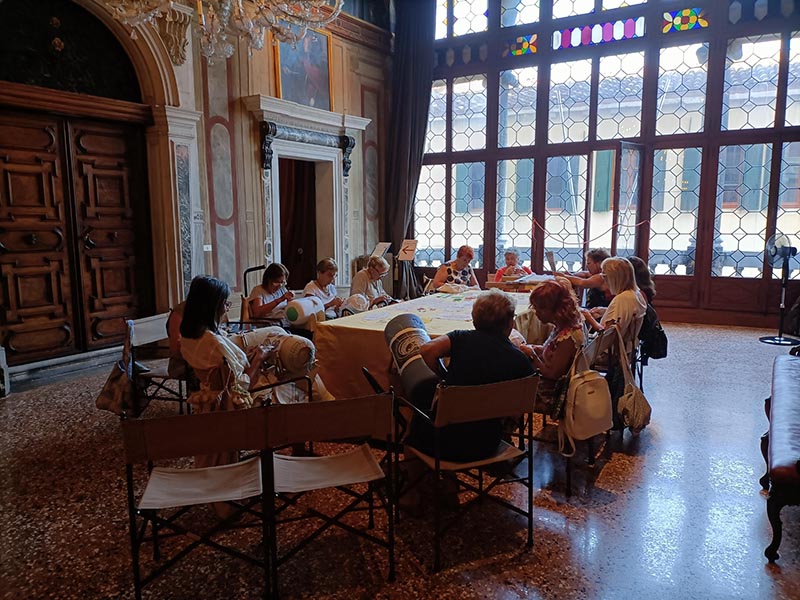
Nell’ambito del progetto “Fili di cuore”, riprendono “I venerdì a Museo di Palazzo Mocenigo” dalle 10.00 alle 12.00 che ospiterà i vari incontri del Merletto. Le maestre merlettaie di Burano e Pellestrina si alterneranno dimostrando il lavoro ad ago ea tombolo. Prossima data di luglio sarà Venerdì 21 luglio con l’ Associazione di Mestre “Sacolà e…ciacola ad ago” e il Venerdì 28 luglio con la ACS Murazzo di Pellestrina
Il merletto di Venezia è uno dei più famosi al mondo. È un’arte antica che ha avuto origine nel XVI secolo sull’isola di Burano, una delle isole della Laguna Veneta. Le prime testimonianze del merletto a Venezia risalgono al XVI secolo. In quel periodo, le monache veneziane iniziarono a ricamare merletti con ago e filo. Il merletto era un’attività molto popolare tra le donne veneziane, che lo usavano per decorare i loro vestiti e le loro case.
Nel XVII secolo, il merletto di Venezia iniziò a farsi conoscere in tutta Europa. Le merlettaie veneziane erano molto apprezzate per la loro abilità e la loro precisione. Il merletto di Venezia era un simbolo di ricchezza e di prestigio, e veniva indossato dalle donne più importanti dell’epoca. Nel XVIII secolo, il merletto di Venezia iniziò a perdere popolarità. Questo era dovuto a diversi fattori, tra cui l’arrivo di nuove tecniche di produzione del merletto, la Rivoluzione Francese e l’avvento della macchina da cucire.
Nonostante questo, il merletto di Venezia è ancora oggi un’arte molto apprezzata. È un simbolo della cultura veneziana e viene venduto in tutto il mondo. Le tecniche di lavorazione del merletto veneziano. Il merletto di Venezia viene lavorato con due tecniche principali: il punto a fuselli e il punto a tombolo. Il punto a fuselli è una tecnica che consiste nell’intrecciare i fili con gli aghi. Il punto a tombolo è una tecnica che consiste nell’intrecciare i fili con una macchina chiamata tombolo.
Il merletto di Venezia può essere lavorato con diversi tipi di filati, tra cui il cotone, la seta e l’oro. I merletti più antichi erano realizzati con fili di cotone o di seta. I merletti più recenti sono spesso realizzati con fili di oro o di argento. I merletti veneziani sono caratterizzati da motivi molto delicati e raffinati. I motivi più comuni sono i fiori, i frutti, gli animali e i simboli religiosi. I merletti veneziani vengono spesso utilizzati per decorare abiti, sciarpe, tovaglie, cuscini e altri oggetti. Sono anche molto apprezzati come oggetti da collezione.
Meetings with lace at Palazzo Mocenigo
As part of the “threads of the heart” project, “Fridays at Museo di Palazzo Mocenigo” from 10.00 until 12.00 am will resume, which will host the various meetings of the Merletto. The lace Mistress of Burano and Pellestrina will take turns demonstrating needle and pillow work. The next date in July will be Friday 21 July with the Mestre Association “Sacolà e…ciacola ad ago” and Friday 28 July with the ACS Murazzo di Pellestrina
Venetian lace is one of the most famous in the world. It is an ancient art that originated in the 16th century on the island of Burano, one of the islands of the Venetian Lagoon.The first evidence of lace in Venice dates back to the 16th century. At that time, Venetian nuns began to embroider lace with needle and thread. Lace was a very popular activity among Venetian women, who used it to decorate their clothes and their homes.
In the 17th century, Venetian lace began to become known throughout Europe. Venetian lacemakers were highly appreciated for their skill and precision. Venetian lace was a symbol of wealth and prestige, and was worn by the most important women of the time. In the 18th century, Venetian lace began to lose popularity. This was due to a number of factors, including the arrival of new lace-making techniques, the French Revolution, and the advent of the sewing machine.
Despite this, Venetian lace is still a highly appreciated art today. It is a symbol of Venetian culture and is sold all over the world. The Techniques of Venetian Lace Venetian lace is made with two main techniques: the bobbin lace and the pillow lace. Bobbin lace is a technique that consists of intertwining the threads with needles. Pillow lace is a technique that consists of intertwining the threads with a machine called a pillow.
Venetian lace can be made with different types of yarn, including cotton, silk, and gold. The oldest laces were made with cotton or silk threads. The most recent laces are often made with gold or silver threads.
The Patterns of Venetian Lace Venetian lace is characterized by very delicate and refined patterns. The most common patterns are flowers, fruits, animals, and religious symbols. Venetian lace is often used to decorate clothes, scarves, tablecloths, pillows, and other objects. They are also highly appreciated as collectible items.
For the English translation please scroll down the page, thank you !
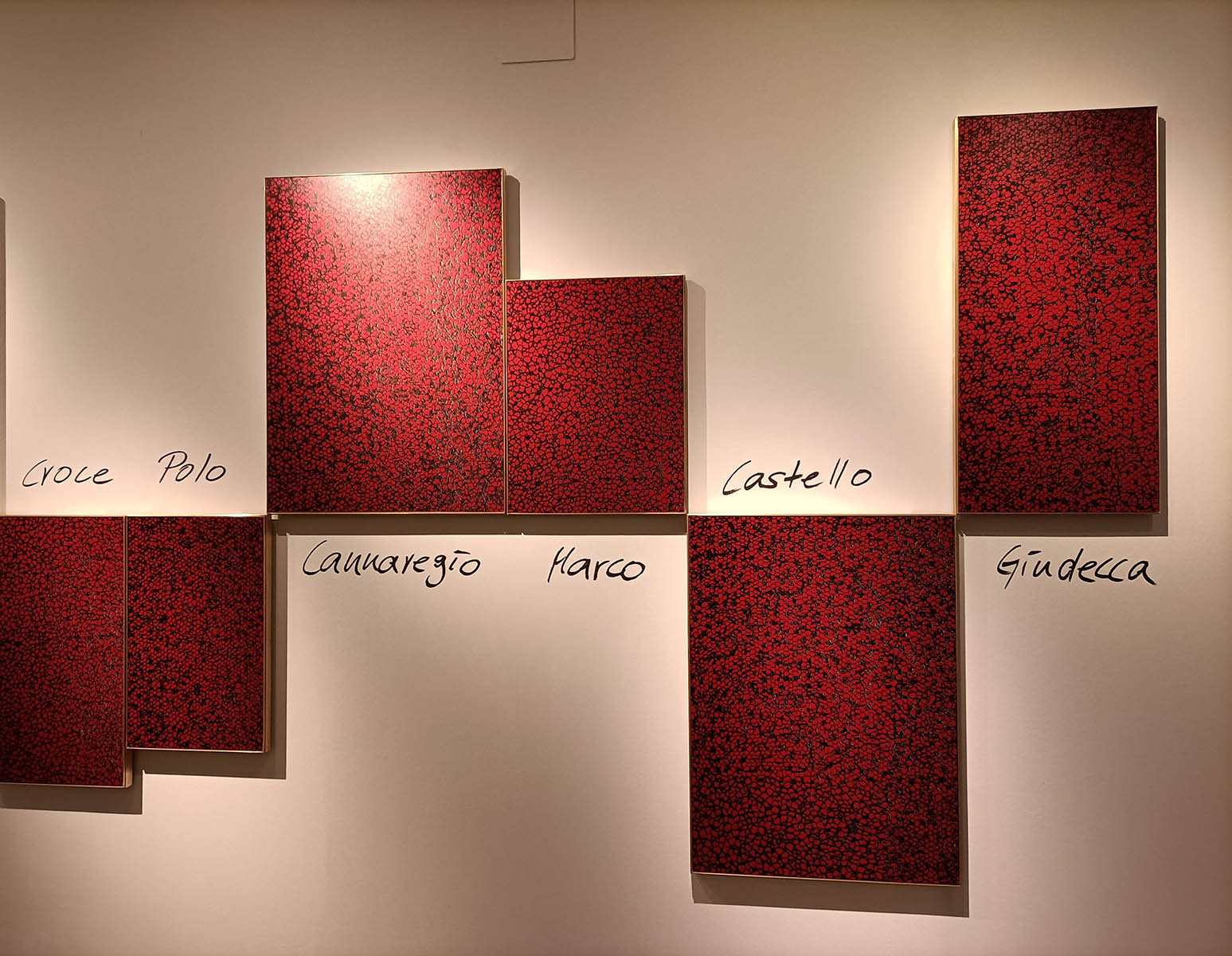
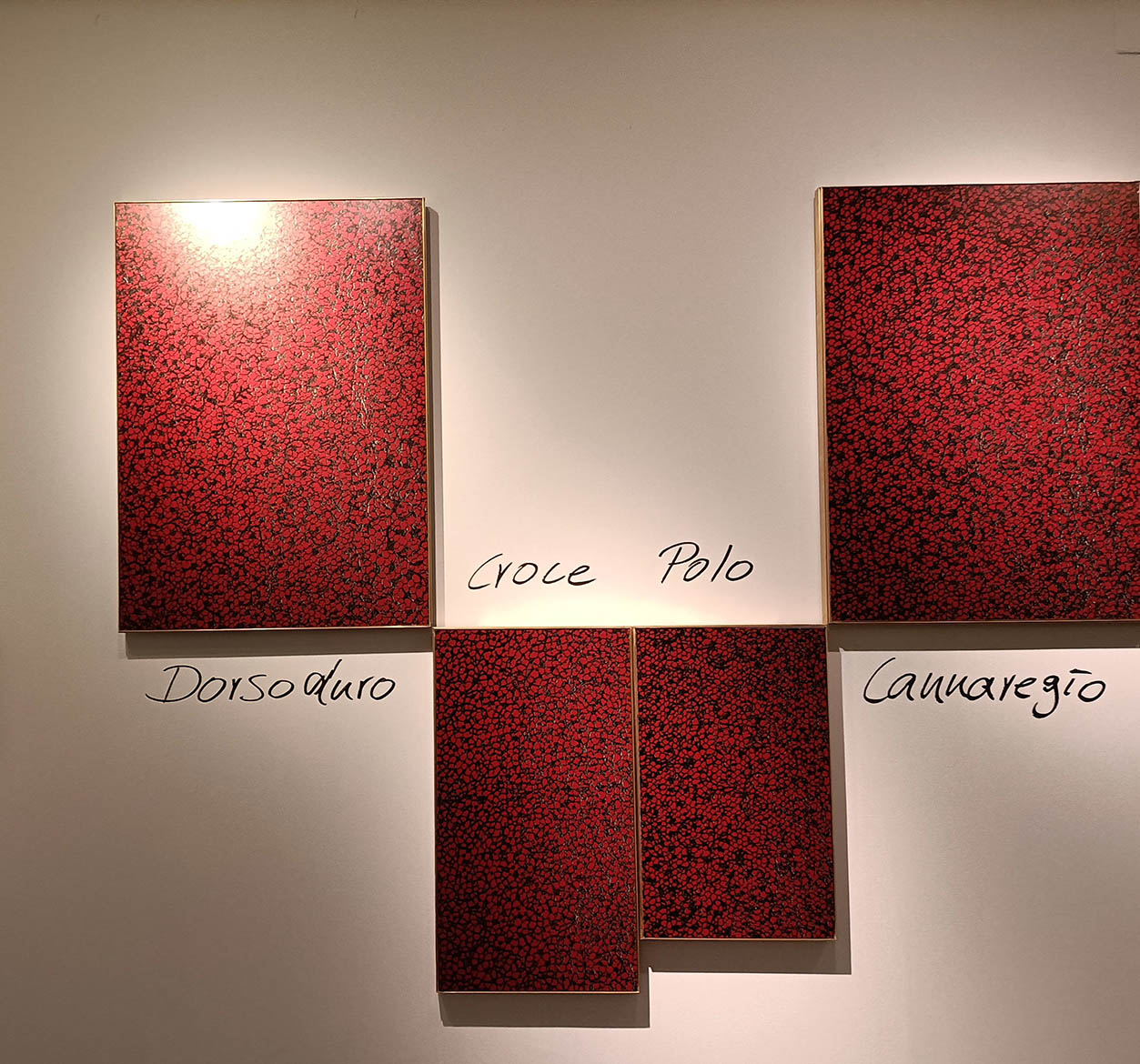
La Fondazione Musei Civici di Venezia presenta al piano terra di Palazzo Mocenigo, nella “white room”, l’ultima sala alla vostra sinistra, un’installazione di Matthias Schaller, composta da due distinte serie fotografiche “Tessuto Urbano” (2022) e “Lagunenwalzer” (2012). Attraverso 53 fotografie in mostra, il fotografo tedesco riassume la sua visione della città contemporanea, ispirata ai celebri paesaggi cinquecenteschi di De Barbari. La serie “Tessuto Urbano” ritrae i sei Sestieri (i 6 più la Giudecca) di Venezia attraverso una serie di sette fotografie tratte dallo stesso merletto seicentesco appartenente alla collezione del Museo di Burano. Ridotta in scala, ogni fotografia riproduce il Sestiere di Venezia, conducendo lo spettatore attraverso le intricate finiture che diventano il tessuto delle calli e dei campielli della città lagunare. Il pizzo, simbolo della manifattura passata e presente della produzione tessile lagunare, ispira l’anima storica dell’artista ed è una metafora della dimensione urbana.
Matthias Schaller è nato nel 1965 a Dillingen an der Donau, in Germania. Ha conseguito master in Antropologia Culturale presso le Università di Göttingen, Amburgo e Siena. Vive e lavora tra Vienna e New York.
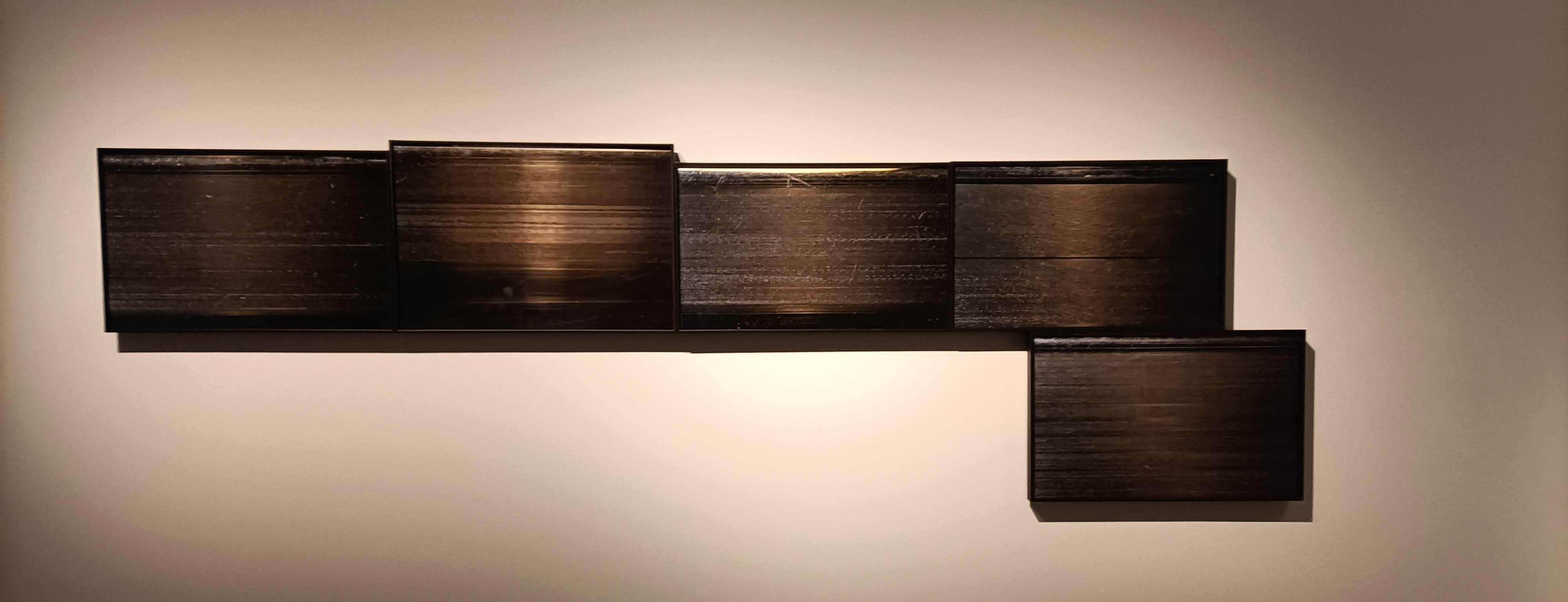
La raccolta accompagna “Lagunenwalzer”, una selezione di 46 tracce in vinile provenienti dagli Archivi Punk Veneziani. Strettamente connessi, i dischi diventano correlati dell’acqua che penetra in Venezia, costituendone l’unicità. La superficie scolpita del vinile delinea l’orizzonte della vista e il suo titolo provocatorio suggerisce una potenziale rivoluzione nello spirito della città. Affascinato dalla realtà di Venezia, alla quale ha dedicato finora sette progetti, Matthias Schaller utilizza la strategia della ritrattistica indiretta per proporre un’immagine alternativa di Venezia per le mappe della città. In questa mostra, pizzo e vinile sono immagini di metafore immersive per l’ambiente urbano che riflettono il passato della città esprimendolo anche all’osservatore, attivando la nostra immaginazione piuttosto che imporre la topografia al nostro limite spaziale.
Dal 24 marzo al 26 novembre 2023 Venezia
Museo di Palazzo Mocenigo – “White Room” piano terra
In collaborazione con Sonnabend Gallery, New York City
The Civic Museums Foundation of Venice presents an installation by Matthias Schaller on the ground floor, on the last room on the left side, “the white room” at Mocenigo Palace, made up of two distinct photographic series “Urban fabric” (2022) and “Lagunenwalzer” (2012). Through 53 photographs on display, the German photographer summarizes his vision of the contemporary city, inspired by the famous sixteenth-century landscapes of De Barbari. The “Urban fabric” series portrays the six Sestieri of Venice (six plus the Giudecca Island) through a series of seven photographs taken from the same seventeenth-century lace belonging to the collection of the Burano Museum. Reduced to scale, each photograph reproduces the Sestiere of Venice, leading the viewer through the intricate finishes that become the fabric of the city’s calli and campielli. The lace, symbol of the past and present manufacturing of the lagoon textile production, inspires the historical soul of the artist, and it is a metaphor of the urban dimension.
Matthias Schaller was born in 1965 in Dillingen an der Donau, Germany. He holds masters in Cultural Anthropology at the Universities of Göttingen, Hamburg and Siena. He lives and works between Vienna and New York.
The collection accompanies “Lagunenwalzer”, a selection of 46 vinyl tracks from the Venetian Punk Archives. Closely connected, the disks become correlates of the water that penetrates Venice, constituting its uniqueness. The sculpted surface of the vinyl outlines the horizon of the view and its provocative title suggests a potential revolution in the spirit of the city. Fascinated by the reality of Venice, to which he has dedicated seven projects so far, Matthias Schaller uses the strategy of indirect portraiture to propose an alternative image of Venice for city maps. In this exhibition, lace and vinyl are images of immersive metaphors for the urban environment that reflect the city’s past, while also expressing it to the observer, activating our imagination rather than imposing topography on our spatial limit.
From 24 March to 26 November 2023 Venice
Museo di Palazzo Mocenigo – “White Room” on the ground floor
In collaboration with Sonnabend Gallery, New York City
For the English translation please scroll down the page, thank you !
Numerose sono le iniziative organizzate dal MUVE per l’anno 2023, non solo quanto riguarda mostre, ma anche gli eventi, tra cui spicca l’iniziativa “Marzo Donna“, con oltre 100 appuntamenti, promossa anche quest’anno, nell’ambito di “Le Città in Festa“, grazie alla collaborazione tra Comune e numerose associazioni ed Istituzioni. La Fondazione Musei Civici di Venezia partecipa a questa iniziativa organizzando al Museo di Palazzo Mocenigo tre eventi legati al “saper fare” delle donne. In particolare il 9 marzo con le Maestre Merlettaie di Burano, e il 29 marzo con le Maestre Merlettaie di Pellestrina, omaggio all’arte millenaria e all’artigianato di fama mondiale. L’11 marzoAnna Marra presenterà sempre nel bellissimo Museo di Palazzo Mocenigo un nuovo abito decorato, in un chiaro omaggio allo spirito e al coraggio delle donne.
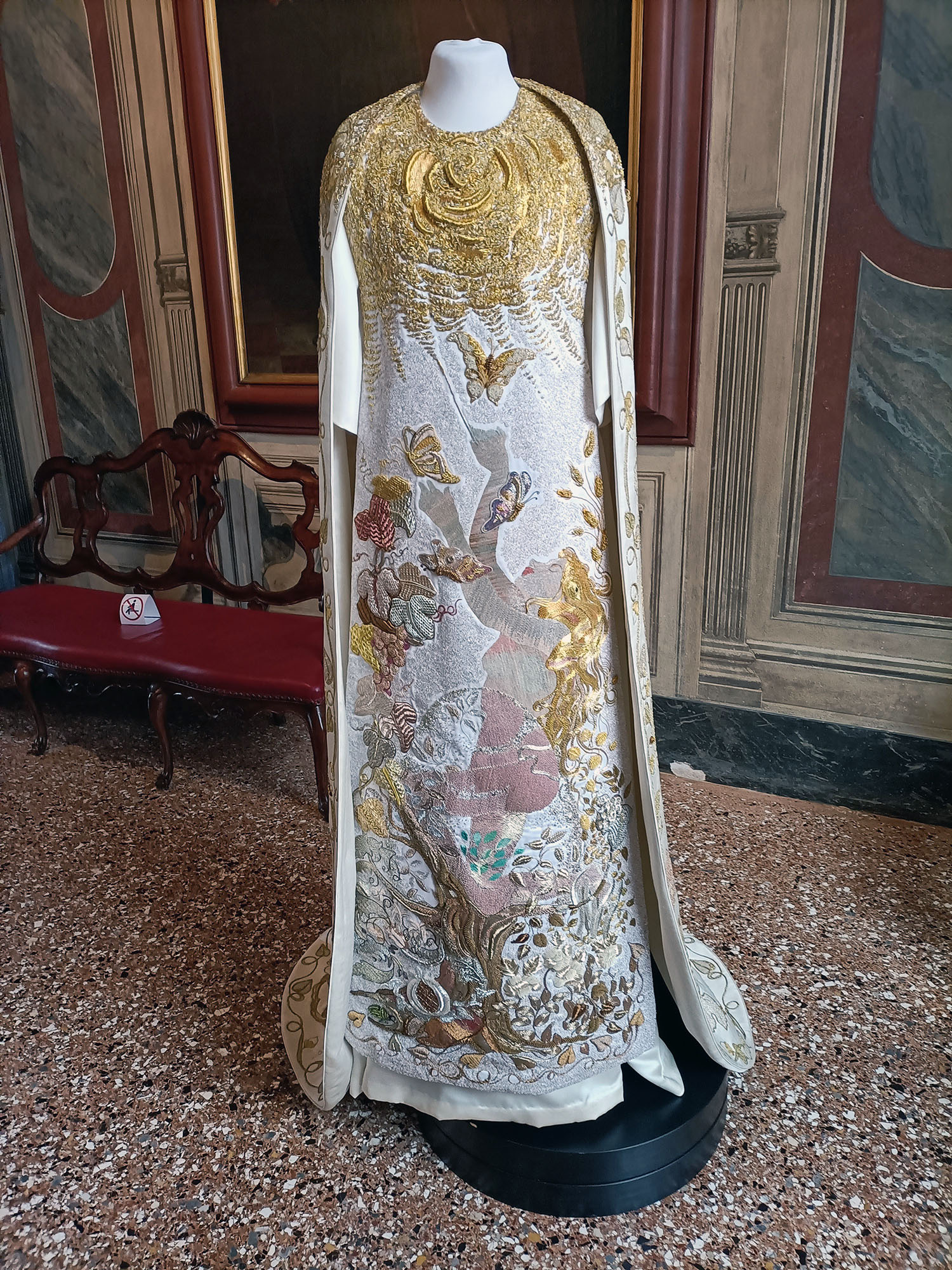
Oggi vi voglio parlare del secondo evento quello del 11 marzo scorso, a cui ho avuto il privilegio di poter assistere: “Anima” di Anna Marra, un progetto nato insieme alla collaborazione di Angelo Poretti e Enrica Biscossi.
Anna Marra è una collezionista, una conoscitrice della storia del costume, appassionata nel ricercare, collezionare e catalogare pezzi tessili unici fin dagli anni ’80, organizzando mostre di settore, dove tradizione e moda, arte e società si incontrano. Per Marra abiti, pizzi e ricami sono elementi che conoscono la storia, oggetti ordinari che riflettono l’universalità, un punto di contatto vivo e tangibile con il mondo alle nostre spalle. La sua fondazione, “La Scafa”, è un luogo dedicato ai risultati di decenni di ricerca, e un luogo dove le tradizioni manifatturiere si rafforzano e si rinnovano attraverso corsi, mostre e altri eventi.
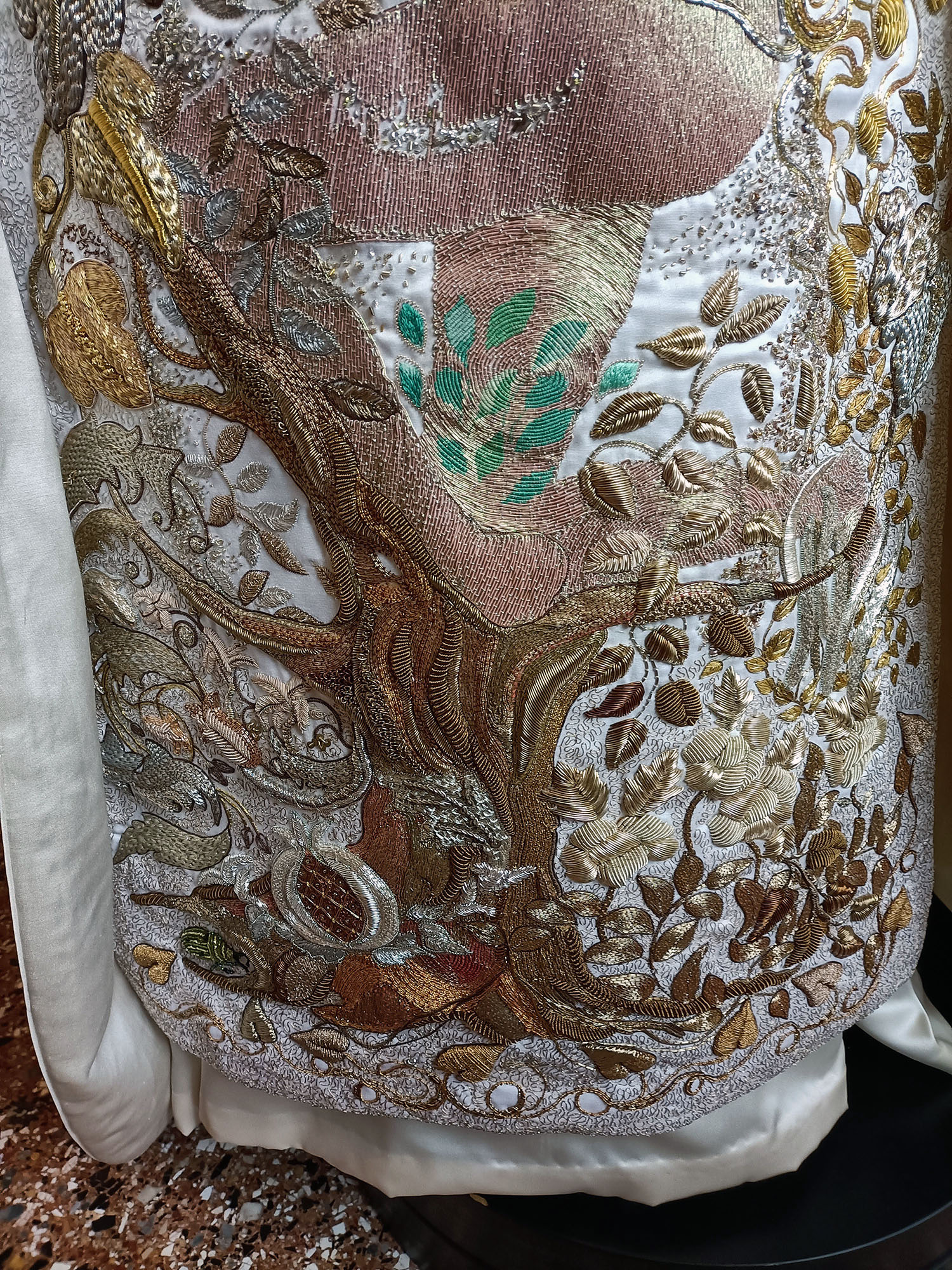
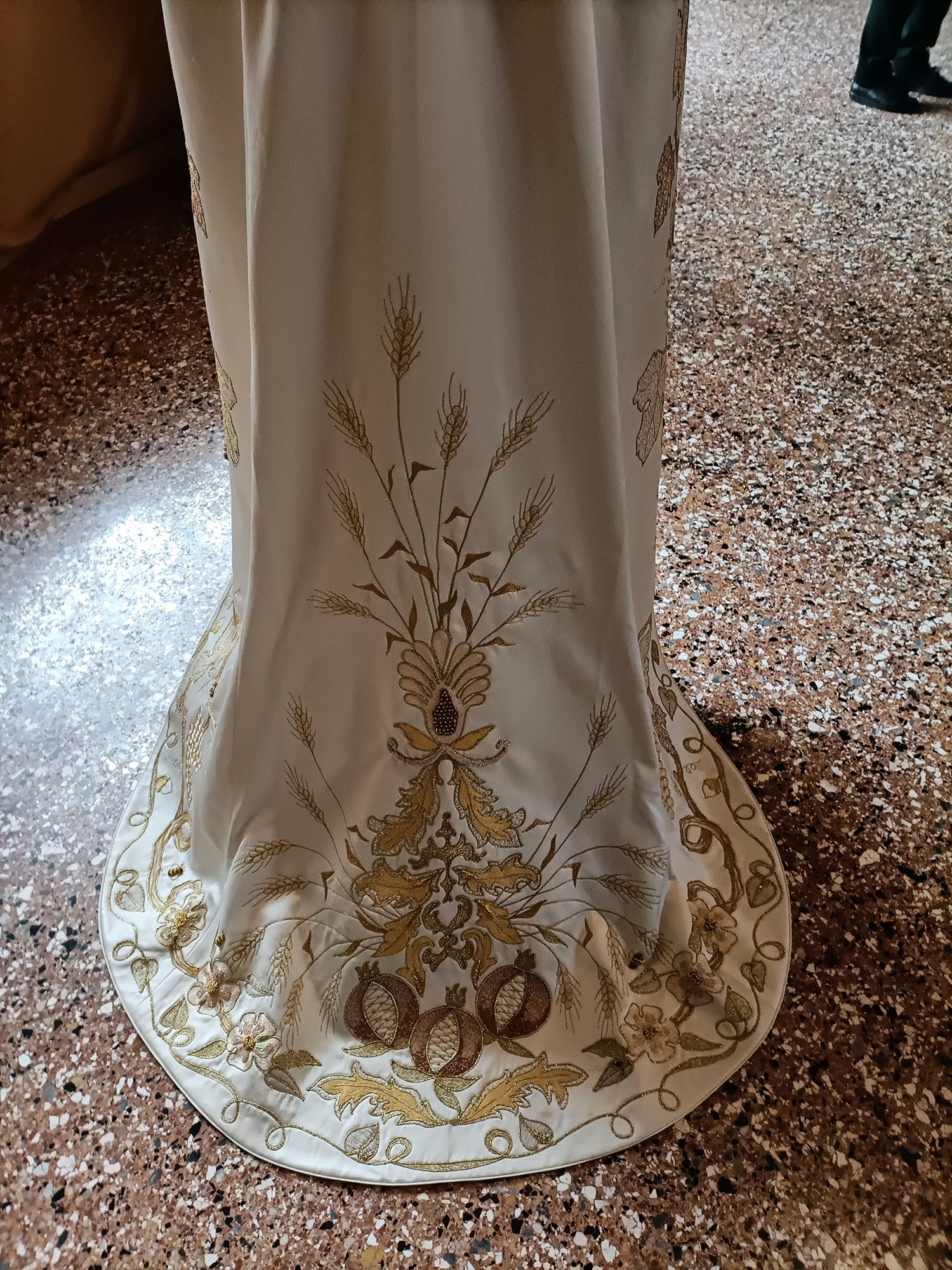
La “luce vibrante” questo è il nome dato allo splendido abito presentato a Palazzo Mocenigo, è un’abito lungo, completato da una mantella in gran parte ricamata a macchina, molti sono gli elementi presenti nella scena, un sole dorato alla base del collo, una donna che si protrae verso l’alto, un albero, e tante figure che sono presenti tutt’attorno, quali api, farfalle, grappoli d’uva. Si direbbe quasi un’allegoria dello spirito femminile, della rinascita, della vita, il sole l’elemento che genera calore, l’albero che mi ricorda il mitico albero della vita Yggdrasill, una Persephone che ritorna dagli inferi per celebrare la primavera. Un abito a dir poco stupendo, peccato che sia stato in esposizione solo per poche ore. Molti visitatori che sono venuti a vedere il museo si sono fermati meravigliati a vedere l’abito e a scattare infinite foto, come dar loro torto, eventi come questi sono unici e rari, meglio cogliere l’attimo ! Possiamo solo sperare che l’artista Anna Marra ritorni presto a Palazzo Mocenigo, per un altro incontro o per una futura mostra !
Per chi fosse interessato a questo genere di eventi, può trovare tutte le informazioni attraverso il sito ufficiale della Fondazione Musei Civici di Venezia.
“Anima” at Palazzo Mocenigo
There are numerous initiatives organized by MUVE for the year 2023, not only about exhibitions, but also about events, among the many, the “Marzo Donna“, an initiative with over 100 appointments, all promoted this year, thanks to the collaboration between the Municipality and numerous associations and institutions. The foundation of the Civic Museums of Venice participates in this initiative by organizing three events related to women’s “know-how” at the Mocenigo Palace Museum. In particular March 9 with the Master Lacemakers of Burano, and March 29 with the Master Lacemakers of Pellestrina, a tribute to the millenary art and world-famous craftsmanship. On 11 March, Anna Marra will present a new decorated dress always at the beautiful Museum of Palazzo Mocenigo, in a clear homage to the spirit and courage of women.
Today I want to tell you about the second event, that of last March 11, which I had the privilege of being able to attend: “Anima” by Anna Marra, a project born together with the collaboration of Angelo Poretti and Enrica Biscossi.
Anna Marra is a collector, a connoisseur of the history of costume, passionate about researching, collecting and cataloging unique textile pieces since the 80s, organizing sector exhibitions, where tradition and fashion, art and society meet. For Marra, clothes, lace and embroideries are elements that know history, ordinary objects that reflect universality, a living and tangible point of contact with the world behind us. Her foundation, “La Scafa”, is a place dedicated to the results of decades of research, and a place where manufacturing traditions are strengthened and renewed through courses, exhibitions and other events.
The “vibrating light” this is the name given to the magnificent dress presented at Palazzo Mocenigo, it is a long dress, completed by a largely machine-embroidered cape, there are many elements present in the scene, a golden sun at the base of the neck, a woman who extends upwards, a tree, and many figures that are present all around, such as bees, butterflies, bunches of grapes. One would almost say an allegory of the female spirit, of rebirth, of life, the sun the element that generates heat, the tree that reminds me of the mythical tree of life Yggdrasill, a Persephone returning from the underworld to celebrate spring. A beautiful dress to say the least, a pity that it was only on display for a few hours. Many visitors who have come to see the museum have stopped in amazement to see the dress and to take endless photos, how can you blame them, events like these are unique and rare, better to seize the moment! We can only hope that the artist Anna Marra will soon return to Palazzo Mocenigo, for another meeting or for a future exhibition!
For those interested in this kind of events, you can find all the information on the official website of the Civic Museums Foundation of Venice
For the English translation please scroll down the page, thank you !
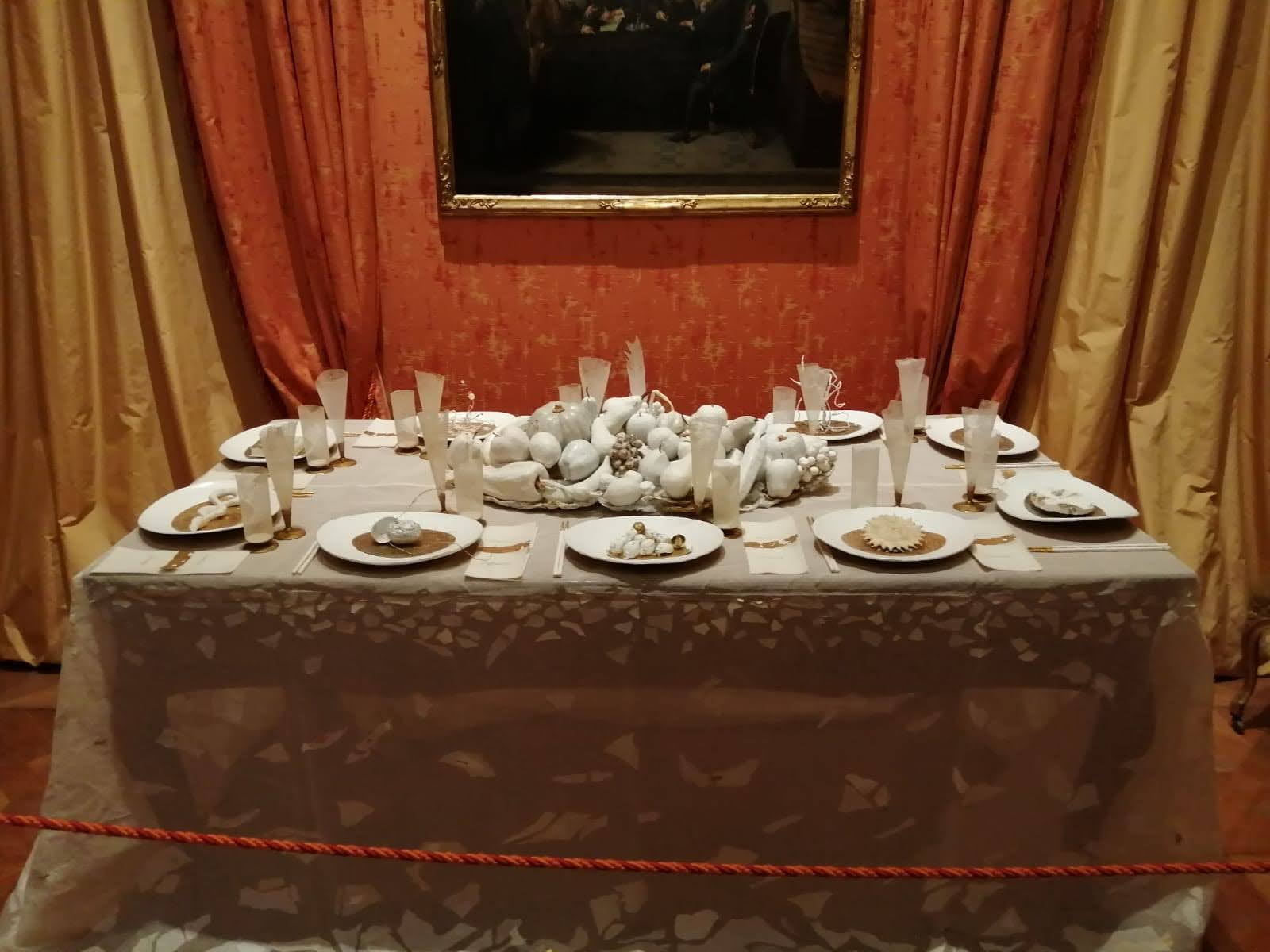
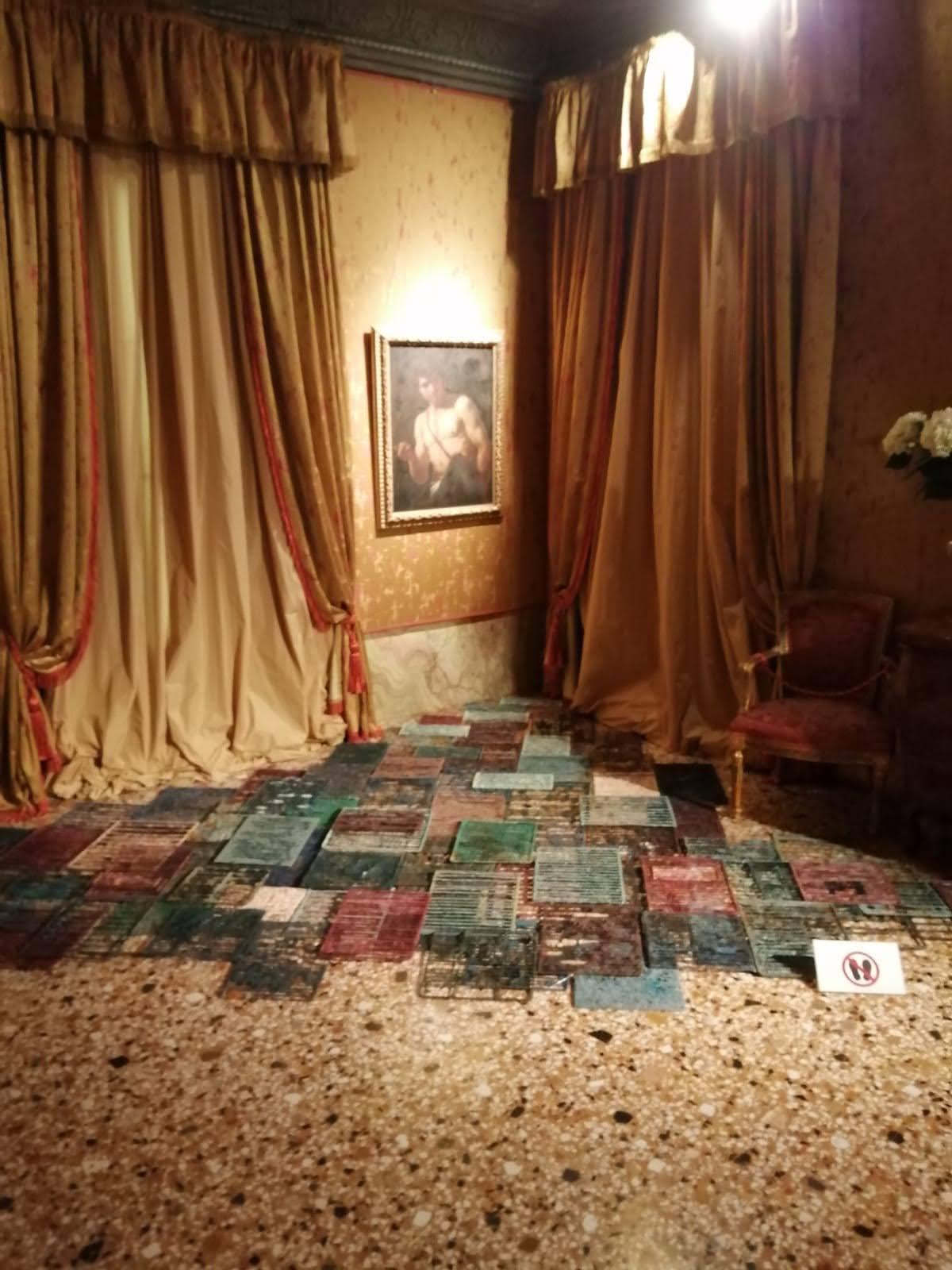
Dal 2 febbraio al 20 agosto presso il Museo di Palazzo Mocenigo – Centro di Ricerca per la Storia del Costume, dell’Abbigliamento e del Profumo ospiterà “Tramalogie”; una mostra che è stata donata da Ana Moro-Lin, recentemente scomparsa, e curata dalla Dott.ssa Chiara Squarcina e promossa dal Comune di Venezia e dalla Fondazione Musei Civici di Venezia. La mostra, composta da 20 opere fondamentali donate alla Città di Venezia da Anna Moro-Lin nel giugno 2020, offrirà l’occasione per comprendere l’importante capitolo che riguarda la fiber art.
La passione creativa di Anna Moro-Lin ci permette di cogliere il valore assoluto dei tessuti grazie alla Fiber Art, dopo aver studiato le tecniche tradizionali devia verso la ricerca di materiali nuovi primo fra tutti la pasta di carta abbinata a materie trasparenti di tela e carta con tecniche di collage e decollage dichiarando essa stessa di voler trasformare la tela del quadro materializzandola, e materializzare le pennellate di colore con veline pigmentate e quant’altro.
Da questa monografia è possibile esplorare non solo l’immagine creativa dell’artista, ma anche la sua evoluzione, intesa come superamento dei vincoli che limitano l’espressività associata alla fiber art. Negli anni il lavoro di Anna Moro Lin si è ampliato e sono emersi alcuni temi ricorrenti: il rispetto dell’ambiente attraverso il riciclo e l’utilizzo di materiali scadenti e di scarto, la rivalutazione degli spazi, la riflessione sulla funzione di vecchi e nuovi miti e riti, memorie nella laguna, il lavoro di anna moro-lin ci invita a trovare l’origine della bellezza e dell’autunno rivendicando la natura che vive in tutti noi e ricordando che le nostre origini vengono dal mare.
Le operazioni di chiusura del museo iniziano 20 minuti prima dell’orario indicato.
Chiuso il lunedì
Tramalogie – a new exhibition at Palazzo Mocenigo
From 2 February to 20 August at the Museum of Palazzo Mocenigo – Research Center for the History of Costume, Clothing and Perfume will host “Tramalogie”; an exhibition that was donated by Ana Moro-Lin, who recently passed away, and curated by Dr. Chiara Squarcina, and promoted by the Municipality of Venice, and the Civic Museums Foundation of Venice. The exhibition, includes 20 fundamental works donated to the City of Venice by Anna Moro-Lin in June 2020, will offer the opportunity to understand the important chapter concerning fiber art.
Anna Moro-Lin’s creative passion allows us to grasp the absolute value of fabrics thanks to Fiber Art, after studying traditional techniques she deviates towards the search for new materials, first of all paper pulp combined with transparent canvas and paper materials with collage and decollage techniques, declaring itself that it wants to transform the canvas of the painting by materializing it, and materializing the brushstrokes of color with pigmented tissue paper and so on.
From this monograph it is possible to explore not only the artist’s creative image, but also its evolution, understood as overcoming the constraints that limit the expressiveness associated with fiber art. Over the years, Anna Moro Lin’s work has expanded and some recurring themes have emerged: respect for the environment through recycling and the use of inferior and waste materials, the re-evaluation of spaces, reflection on the function of old and new myths and rituals, memories in the lagoon, the work of anna moro-lin invites us to find the origin of beauty and of the autumn, by reclaiming the nature that lives in all of us and remembering that our origins come from the sea.









 Diario di un operatore museale