Fiori di ciliegio a Palazzo Mocenigo

For the English translation please scroll down the page, thank you !
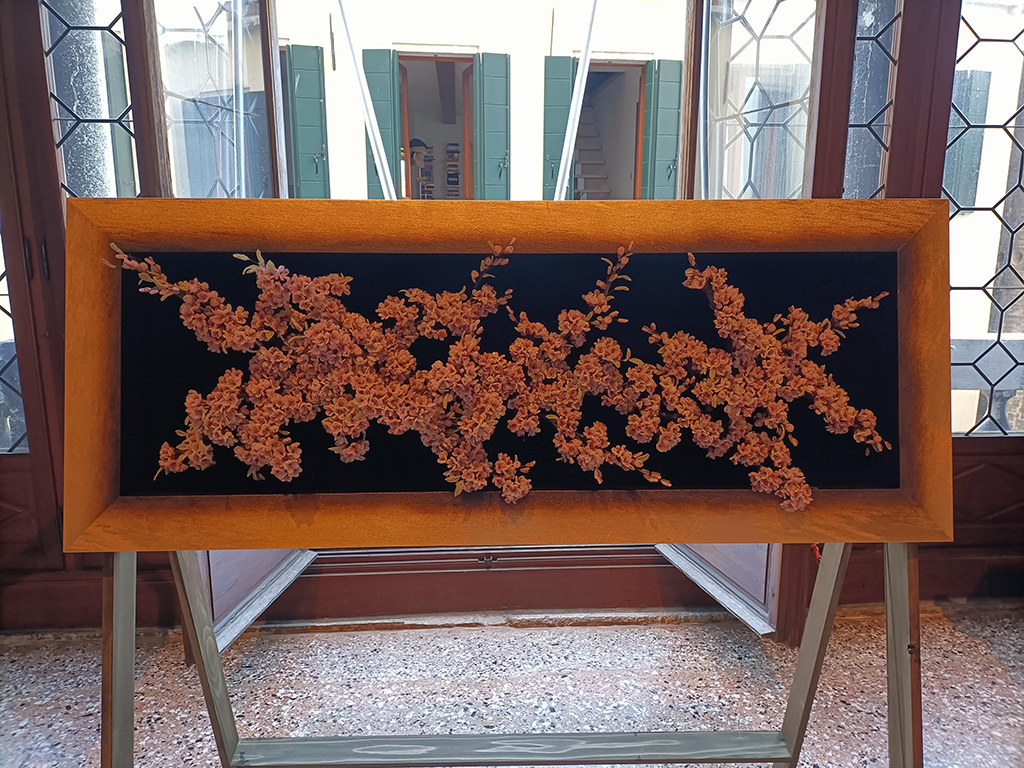
Oggi parliamo di un’opera molto interessante, forse la principale di tutta la mostra appena inaugurata a Palazzo Mocenigo, della Fondazione Musei Civici di Venezia. Una mostra della famosa artista Minako Shimonagase, che fin dal primo giorno sta avendo molto successo. L’opera in questione, la si può vedere nella fotografia all’inizio del paragrafo e si intitola per l’appunto “fiori di ciliegio”.
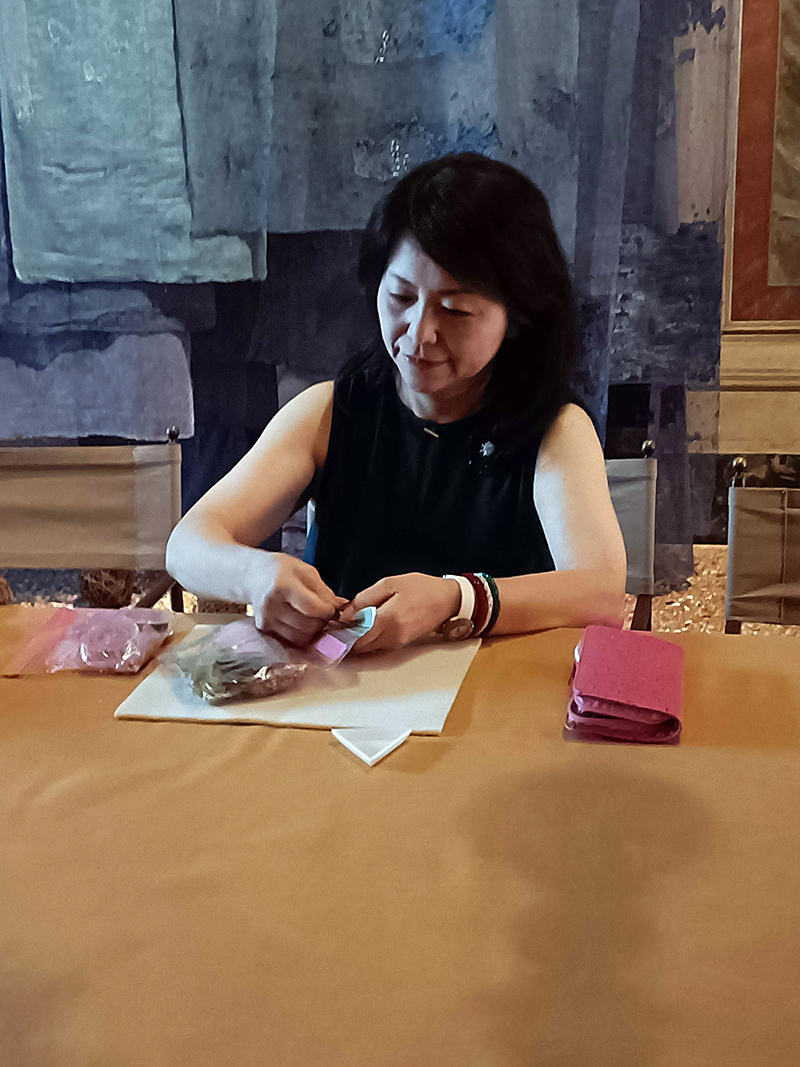
Gli alberi di ciliegio, in giapponese Sakura, sono una parte fondamentale della cultura giapponese. Sono considerati un simbolo di bellezza, fragilità, e rinascita.

I ciliegi sono originari dell’Asia orientale, ma sono stati introdotti in Giappone già in epoca pre-storica. Nel corso dei secoli, gli alberi di ciliegio sono diventati sempre più diffusi nel paese, e oggi si trovano in tutto il Giappone, da grandi città come Tokyo e Kyoto a piccoli villaggi di campagna.

La fioritura dei ciliegi, chiamata hanami, è un evento molto importante in Giappone. Ogni anno, milioni di persone si riuniscono per ammirare la bellezza dei fiori di ciliegio. L’hanami è un’occasione per celebrare la primavera, la natura, e la vita stessa.

I ciliegi hanno un significato profondo nella cultura giapponese. Sono un simbolo di bellezza, perché i loro fiori sono delicati e affascinanti. Sono anche un simbolo di fragilità, perché i fiori di ciliegio vivono solo per pochi giorni. Infine, sono un simbolo di rinascita, perché la fioritura dei ciliegi segna l’inizio della primavera.

Ecco alcuni dei significati simbolici dei ciliegi nella cultura giapponese:

Bellezza: I ciliegi sono considerati un simbolo di bellezza, perché i loro fiori sono delicati e affascinanti.
Fragilità: I ciliegi sono anche un simbolo di fragilità, perché i fiori di ciliegio vivono solo per pochi giorni.
Rinascita: La fioritura dei ciliegi segna l’inizio della primavera, che è un periodo di rinascita per la natura.
Tempo fuggevole: La breve durata della fioritura dei ciliegi è un simbolo del tempo fuggevole.
Passione: I ciliegi sono anche associati alla passione, perché i loro petali rossi sono spesso associati all’amore.
Dolcezza: I ciliegi sono anche associati alla dolcezza, perché i loro frutti, le ciliegie, sono un alimento popolare in Giappone.
I ciliegi sono una parte importante della cultura giapponese, e la loro bellezza è ammirata da persone di tutto il mondo.

Alcuni dettagli significativi:

La stagione della fioritura dei ciliegi in Giappone dura in genere circa due settimane, da fine marzo a inizio aprile.
Esistono molte varietà diverse di ciliegi in Giappone, ciascuna con le sue caratteristiche uniche.
L’Hanami è un’attività popolare tra persone di tutte le età in Giappone.
I fiori di ciliegio sono spesso usati nell’arte, nella musica e nella letteratura giapponese.

Cherry blossoms at Mocenigo Palace

Today we are talking about a very interesting work, perhaps the main one of the entire exhibition just inaugurated at Mocenigo Palace, from the Civic Museums Foundation of Venice. An exhibition by the famous artist Minako Shimonagase, which has been very successful since day one. The work in question can be seen in the photograph at the beginning of the paragraph and is entitled “cherry blossoms”.

Cherry blossoms, known in Japanese as Sakura, are a fundamental part of Japanese culture. They are considered a symbol of beauty, fragility, and rebirth.

Cherry trees are native to East Asia, but were introduced to Japan in prehistoric times. Over the centuries, cherry trees have become increasingly widespread in the country, and today they can be found all over Japan, from major cities like Tokyo and Kyoto to small rural villages.

The cherry blossom season, called hanami, is a very important event in Japan. Every year, millions of people gather to admire the beauty of cherry blossoms. Hanami is an occasion to celebrate spring, nature, and life itself.

Cherry blossoms have a deep meaning in Japanese culture. They are a symbol of beauty, because their flowers are delicate and fascinating. They are also a symbol of fragility, because cherry blossoms only live for a few days. Finally, they are a symbol of rebirth, because the cherry blossom season marks the beginning of spring.

Here are some of the symbolic meanings of cherry blossoms in Japanese culture:

Beauty: Cherry blossoms are considered a symbol of beauty, because their flowers are delicate and fascinating.
Fragility: Cherry blossoms are also a symbol of fragility, because cherry blossoms only live for a few days.
Rebirth: The cherry blossom season marks the beginning of spring, which is a time of rebirth for nature.
Fleeting time: The short duration of the cherry blossom season is a symbol of fleeting time.
Passion: Cherry blossoms are also associated with passion, because their red petals are often associated with love.
Sweetness: Cherry blossoms are also associated with sweetness, because their fruits, cherries, are a popular food in Japan.
Cherry blossoms are an important part of Japanese culture, and their beauty is admired by people all over the world.

Some additional details:

The cherry blossom season in Japan typically lasts for about two weeks, from late March to early April.
There are many different varieties of cherry trees in Japan, each with its own unique characteristics.
Hanami is a popular activity for people of all ages in Japan.
Cherry blossoms are often used in Japanese art, music, and literature.

Katagami & Katazome a Palazzo Mocenigo

For the English Translation, please scroll down the page, thank you .

Jpeg

A Palazzo Mocenigo, a San Stae, a Venezia, c’è una bellissima mostra sul Giappone, e precisamente su come realizzavano una volta i tessuti e decorazioni per i kimono. Katagami in lingua giapponese, è il nome degli stampi o matrici realizzati per i disegni nei tessuti.  Katazome invece, è il nome della tecnica usata.

Himeji_Castle_Keep_Tower_after_restoration_2015

Le origini di questa tecnica, risale a circa 1000 anni fa (anche se non si è sicuri), nella città di Suzuka, una delle città più importanti a sud di Tokyo. Si sa per certo che la produzione era in aumento nell’epoca Muromachi ( 1336 -1537), questo avvenne in quanto il luogo di origine era parte del castello feudale della famiglia / clan Kishu Tokugawa, parenti dello Shogun. Sotto la loro protezione, i commercianti di Katagami potevano viaggiare senza limiti, cosa inconsueta allora, infatti, in altre aree esistevano delle ferree regole per i spostamenti.

samurai-1176329_1280
Successivamente, fu durante il periodo Edo e Meiji che  si sviluppano come forma d’arte. Durante il periodo Edo, solo chi apparteneva a classi privilegiate, come i samurai, potevano indossare abiti ricamati in seta, mentre le altre, potevano usare solo capi in cotone e in fibre. Dopo il periodo Edo, venne il periodo Meiji, quando sale al potere imperiale il quindicenne Mutsuhito che diede inizio a vari riforme socio economiche, egli guidò l’impero in un contesto di grandi cambiamenti, vedendolo mutare da uno stato feudale a una potenza mondiale capitalista e imperialista attraverso la rivoluzione industriale giapponese.

Le tecniche usate per la tessitura prima del Katagami erano :

  • Tsutsugaki, un disegno realizzato a mano con la stesura della pasta di riserva.
  • Shibon, in cui il tessuto si stringe con ago e filo per impedire la tintura.
  • Itajime dove il tessuto si tinge più volte e poi ripiegato tramite due blocchi scolpiti.

Solo successivamente la tecnica Katagami consente la ripetibilità del disegno. La parola Katagami viene tradotta come kata cioè forma e kami = carta. Con essa si identificano le maschere di carta ritagliate a mano, per tingere i tessuti con la tecnica detta di riserva. La produzione delle carte si realizza sovrapponendo tra loro dei sottili fogli washi di carta prodotta con polpa di legno di albero di gelso, e si incollando tra di loro in tre o quattro strati usando il succo di kaki acerbi. Una volta essiccati, i fogli si tingono di colore marrone, vengono affumicati per un periodo di dieci giorni circa, diventando così impermeabili, poi rimangono a riposo per un anno, prima del suo impiego.

I soggetti usati per i disegni nei kimoni, erano vari, i più utilizzati, era la fioritura di ciliegi sakura che avviene durante i mesi di marzo e aprile un periodo in cui i giapponesi si riuniscono in parchi e giardini per l’hanami, una tradizione (poetica e suggestiva come molte cose in Giappone) dedicata all’osservazione dei fiori, in particolare dei ciliegi.

131223582_b54329fad6_n
Oppure un altro disegno molto usato è il crisantemo kiku, il fiore imperiale, esso simboleggia lo spirito del sole; conosciuto anche come Giorno dei crisantemi Kiku no sekku è una delle cinque festività maggiori del Giappone, celebrata il nono giorno del nono mese coincideva con l’inizio della stagione fredda e concludeva il periodo attivo e creativo dell’annata. La corolla stilizzata di un crisantemo a sedici petali è l’emblema della Casa imperiale giapponese, che secondo la tradizione deriva la propria legittimità dall’investitura ricevuta dalla dea del sole Amaterasu. La Paulownia kiri, un altro soggetto di stile imperiale, uno dei temi grafici più utilizzati sia sugli abiti sia sulle armature e/o come simbolo araldico di famiglie samurai.

405px-Tokugawa_family_crest.svg
La mostra è principalmente esposta nella white room a piano terra dove si possono trovare molti esemplari di tessuti, kimoni, e spiegazioni complete ed esaurienti. Al primo piano, troviamo in alcune sale dei manichini che indossano altri esempi di kimono. La mostra è interessantissima senza ombra di dubbio ! Sono un appassionato dell’epoca feudale giapponese, e la mostra mi è piaciuta tantissimo ! Invito tutti quanti a venire a vederla, ne vale veramente la pena ! Se poi volete completare la vostra visione su mondo orientale, potete anche visitare il Museo di Cà Pesaro, dove al terzo piano, c’è il Museo orientale, dove potrete vedere tanti interessantissimi oggetti, quali katane, armature, e tanto altro ancora !

P_20180126_150928.jpg

dal 20 Gennaio al 22 Aprile 2018

Museo di Palazzo Mocenigo

White Room

_____________________________________


Katagami & Katazome at Mocenigo Palace

Jpeg

At Palazzo Mocenigo at San Stae, in Venice, there is a beautiful exhibition of Japanese culture, about how they once made the kimono: fabrics and decorations. Katagami in Japanese language, is the name of the molds or matrices made for drawing the tissues. Katazome instead, is the name of the technique used.

The origins of this technique dates back to about 1000 years ago (even if we are not sure), in the city of Suzuka, one of the most important city south of Tokyo. It is well established that the production was increasing in the Muromachi era (1336 -1537), this happened because the place was originally part of the feudal castle of the Kishu Tokugawa family / clan, relatives of the Shogun. Under their protection, the Katagami traders could travel without limits, at the time, something unusual, in fact, in other areas there were strict rules for movements.

Himeji_Castle_Keep_Tower_after_restoration_2015

Subsequently, it was during the Edo period and Meiji that they develop them as an art form. During the Edo period, only those who belonged to the privileged classes, such the samurai could wear dresses embroidered in silk, while the others, they could use only cotton garments and fibers. After the Edo period, came the Meiji period, when it went to imperial power Mutsuhito, the fifteen boy that started various socio-economic reforms; he led the empire in a context of great change; seeing it change from astate feudal to a capitalist world power and imperialism with industrial Japanese revolution.

samurai-1176329_1280

The techniques used for weaving before Katagami were:

  • Tsutsugaki, a hand-drawing made with the drafting of the reserve paste.
  • Shibon, wherein the fabric is tightened with a needle and thread to prevent the dye.
  • Itajime where the fabric is dyed several times and then folded by means of two carved blocks.

Only afterwards the Katagami technique allows the repeatability of the drawing. The word is translated as Katagami: kata ie shape, and kami = paper. With it,  we identify the paper masks cut by hand, to dye fabrics with the reserve technique. The production of the cards is accomplished by overlapping between their thin sheets: washi of paper produced with mulberry tree wood pulp, and pasting between them in three or four layers using the khaki juice unripe. Once dried, the leaves are tinged with brown, are smoked for a period of ten days or so, making it waterproof, then remain at rest for a year, before to be used.

The subjects used for designs in kimonos were many, the most used, was blooming  cherry trees sakura that occurs during the months of March and April, a time when the Japanese gather in parks and gardens for the hanami, a tradition (poetic and evocative like many things in Japan) dedicated to the observation of flowers, especially cherry.

131223582_b54329fad6_b

Or another widely used design is the chrysanthemum, kiku the imperial flower, it symbolizes the spirit of the sun; also known as Day of chrysanthemums Kiku no sekku is one of five major festivals of Japan, celebrated on the ninth day of the ninth month coincided with the beginning of the cold season and concluded the active and creative period vintage. The stylized corolla of a chrysanthemum with sixteen petals is the emblem of the Japanese Imperial House, which according to tradition derives its legitimacy investiture received from god of the sun Amaterasu. The Paulownia kiri,another subject of imperial style, one of the most widely used graphic themes is on clothing or on the armours and / or as a heraldic symbol of samurai families.

405px-Tokugawa_family_crest.svg

The exhibition is mainly exposed in the white room on the ground floor where you can find many examples of fabrics, kimonos, and complete and thorough explanations. On the first floor, we find in some rooms some mannequins wearing some other examples of kimono. The exhibition is interesting without a doubt! I am an fan of Japanese feudal era, and I really loved this exibition!!! I invite everyone to come and see it, it’s really worth it! If you wish to complete your vision of the Eastern world, you can also visit the Museum of Cà Pesaro, where the on third floor, there is the Oriental Museum, where you can see so many interesting objects, such as katanas, armor, ect!

P_20180126_150928.jpg

from 20 of January until 22 of April 2018

Museo di Palazzo Mocenigo

White Room