Viaggio nella Storia del profumo a Palazzo Mocenigo

For the English translation please scroll down the page, thank you !
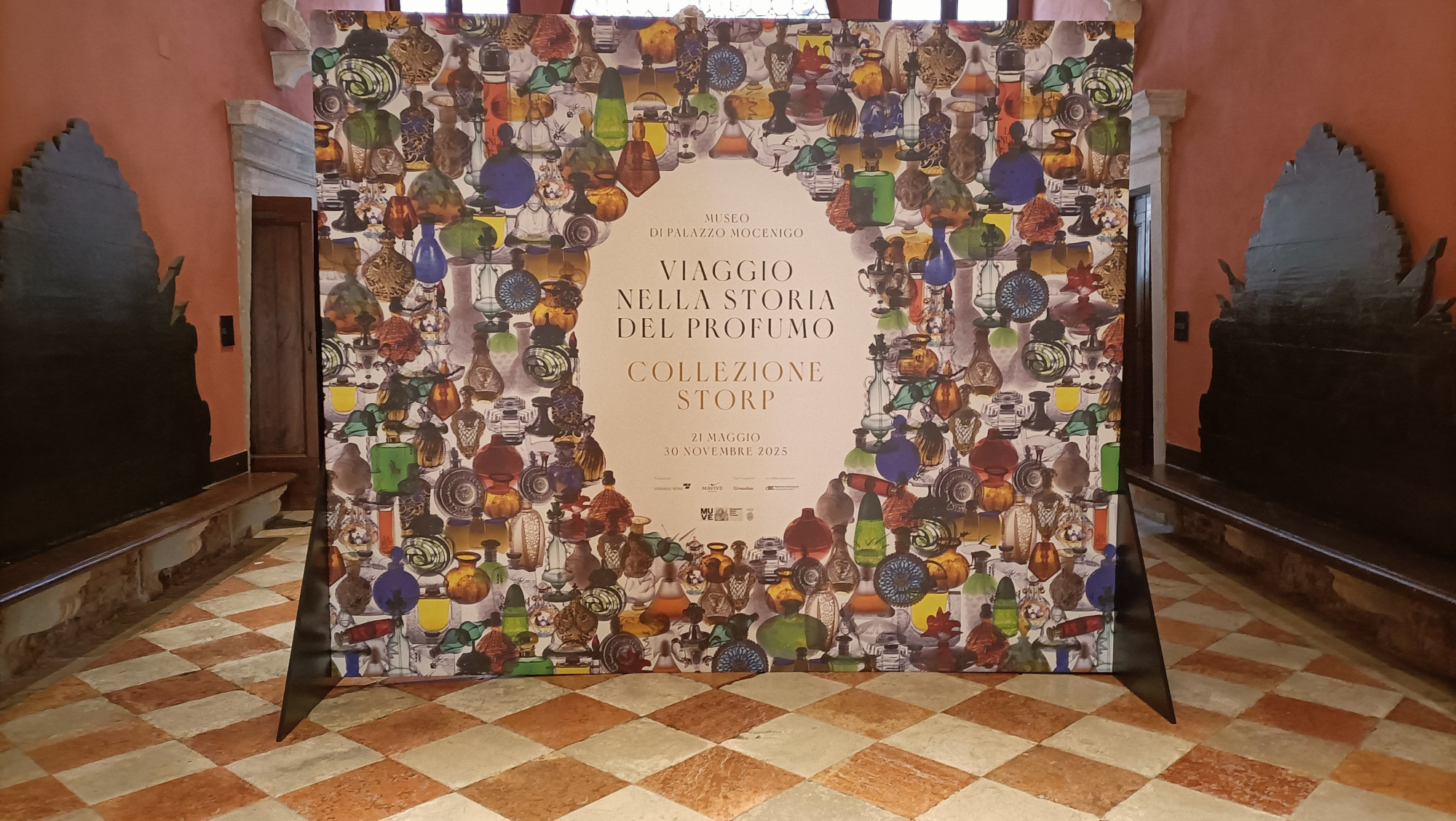
Un Viaggio Olfattivo Senza Tempo: La Mostra “Viaggio nella Storia del Profumo” al Museo di Palazzo Mocenigo. Dal 21 maggio al 30 novembre 2025, il Museo di Palazzo Mocenigo a Venezia apre le porte a un’esperienza sensoriale straordinaria: la mostra “Viaggio nella Storia del Profumo”, realizzata grazie alla collaborazione con la Collezione Storp. Un’occasione unica per immergersi in oltre 6.000 anni di storia olfattiva, esplorando l’evoluzione del profumo attraverso reperti antichi e moderni.

🏛️ Un Palazzo, una Storia

Palazzo Mocenigo, situato nel cuore pulsante di Venezia, è da sempre un punto di riferimento per la storia del tessuto e del costume. Con l’inaugurazione di questa mostra, il museo arricchisce il suo percorso con un capitolo dedicato all’arte della profumeria, grazie alla preziosa Collezione Storp.

🧴 La Collezione Storp: Un Tesoro Olfattivo

La Collezione Storp, fondata nel 1921 da Dora Storp, è una delle più importanti al mondo, con oltre 2.500 pezzi che spaziano dal 2000 a.C. al XXI secolo. Questa straordinaria raccolta comprende flaconi e contenitori per profumi provenienti da diverse epoche e culture, offrendo una panoramica unica sull’evoluzione del profumo nel corso dei secoli.
👃 Un Percorso Sensoriale Unico

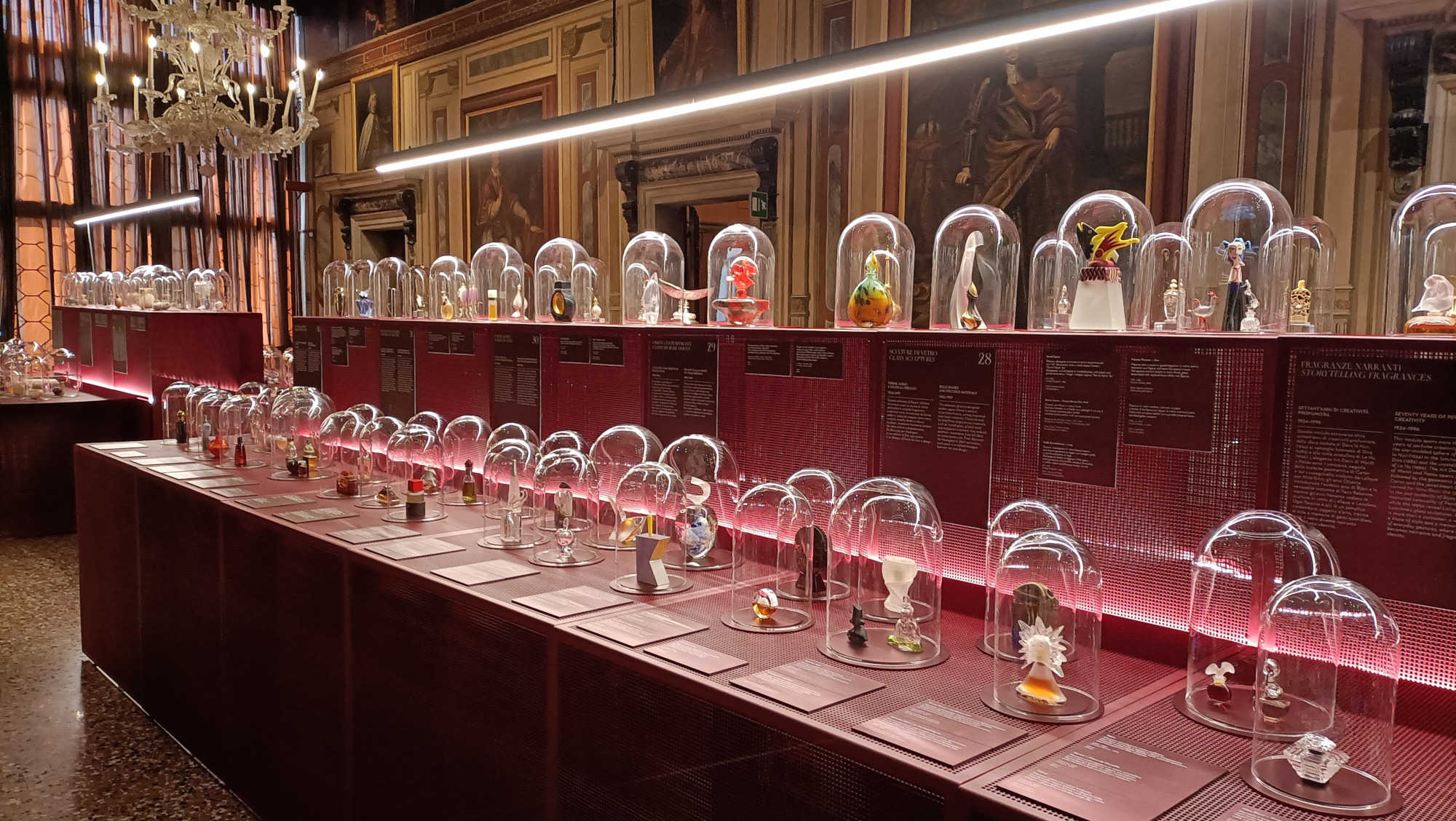
La mostra è organizzata in un percorso espositivo che guida il visitatore attraverso le diverse fasi della storia del profumo. Ogni sezione è arricchita da installazioni olfattive che permettono di immergersi completamente nell’esperienza sensoriale, accompagnando la vista con l’olfatto e l’immaginazione.

🧪 Collaborazioni d’Eccellenza

La realizzazione della mostra è stata possibile grazie alla collaborazione con Mavive e Drom Fragrances. Mavive, azienda leader nel settore della profumeria, ha contribuito con il suo expertise nella realizzazione delle installazioni olfattive, mentre Drom Fragrances ha messo a disposizione la sua preziosa Collezione Storp per arricchire il percorso espositivo.

Ma le meraviglie non finiscono qui! Preparatevi a un’esperienza davvero sensoriale e futuristica nella White Room al piano terra. Qui, la magia del profumo incontra l’innovazione grazie a un’installazione immersiva curata da Zignago Vetro, partner d’eccellenza di Mavive. Vi troverete avvolti in un ambiente unico, dove la luce, il suono e le suggestioni visive vi trasporteranno nel cuore dell’arte profumiera, esplorando la delicata e affascinante relazione tra la fragranza e i suoi preziosi contenitori in vetro. Sarà un’occasione imperdibile per vivere il profumo non solo con l’olfatto, ma con tutti i sensi!

🎟️ Dettagli della Mostra

  • Periodo: 21 maggio – 30 novembre 2025
  • Luogo: Museo di Palazzo Mocenigo, Venezia
  • Orari di apertura: Consultare il sito ufficiale per informazioni aggiornate
  • Biglietti: Disponibili sul sito del museo

🌟 Un’Esperienza da Non Perdere

“Viaggio nella Storia del Profumo” è un’opportunità imperdibile per tutti gli appassionati di storia, arte e profumeria. Un’occasione unica per scoprire l’evoluzione del profumo attraverso i secoli, immergersi in un mondo di fragranze e bellezza, e vivere un’esperienza sensoriale senza precedenti. Non perdere l’opportunità di vivere questa straordinaria esperienza al Museo di Palazzo Mocenigo. Vieni ad ammirare questa mostra e preparati a un viaggio nel tempo e nei sensi!


A Timeless Scented Journey: The Exhibition “A Journey Through the History of Perfume” at Palazzo Mocenigo

From May 21 to November 30, 2025, the Museo di Palazzo Mocenigo in Venice opens its doors to a truly extraordinary sensory experience: the exhibition “A Journey Through the History of Perfume”, created in collaboration with the Storp Collection. This is a unique opportunity to immerse yourself in over 6,000 years of olfactory history, exploring the evolution of perfume through ancient artifacts and modern masterpieces.

🏛️ A Palace Steeped in History

Palazzo Mocenigo, located in the beating heart of Venice, has long been a cultural landmark dedicated to the history of textiles and costume. With the opening of this new exhibition, the museum enriches its offerings with a dazzling chapter on the art of perfumery, thanks to the prestigious Storp Collection.

🧴 The Storp Collection: An Olfactory Treasure

Founded in 1921 by Dora Storp, the Storp Collection is one of the world’s most important archives of perfumery, featuring more than 2,500 pieces ranging from 2000 B.C. to the 21st century. This extraordinary collection includes perfume flacons and containers from various eras and cultures, offering an unparalleled overview of how perfume has evolved across civilizations.

👃 A Unique Sensory Journey

The exhibition is designed as a narrative pathway that guides visitors through different stages in the history of perfume. Each section is enriched with olfactory installations that engage all the senses—blending visual beauty with evocative scents and imagination.

🧪 Excellence in Collaboration

This remarkable exhibition was made possible through the collaboration with Mavive and Drom Fragrances.
Mavive, a leader in the fragrance industry, contributed its expertise to the creation of the sensory installations, while Drom Fragrances provided access to the invaluable Storp Collection to enhance the exhibition experience.

But the wonders don’t end there! Prepare for a truly sensory and futuristic experience in the White Room on the ground floor. Here, the magic of perfume meets innovation thanks to an immersive installation curated by Zignago Vetro, an excellent partner of Mavive. You’ll find yourself enveloped in a unique environment, where light, sound, and visual suggestions will transport you to the heart of perfumery art, exploring the delicate and fascinating relationship between fragrance and its precious glass containers. It will be an unmissable opportunity to experience perfume not only with your sense of smell but with all your senses!

🎟️ Exhibition Details

  • Dates: May 21 – November 30, 2025
  • Location: Museo di Palazzo Mocenigo, Venice
  • Opening Hours: Check the museum’s official website for current info
  • Tickets: Available on the museum’s website

🌟 An Experience Not to Be Missed

“A Journey Through the History of Perfume” is a must-see for lovers of history, art, and fragrance.
It’s a rare chance to explore the timeline of perfume, immerse yourself in a world of scent and beauty, and enjoy a truly unique multi-sensory experience. Don’t miss this extraordinary exhibition at Palazzo Mocenigo. Come to see this wonderful exibition and get ready for a journey through time—and through your senses!
Il Profumo a Venezia

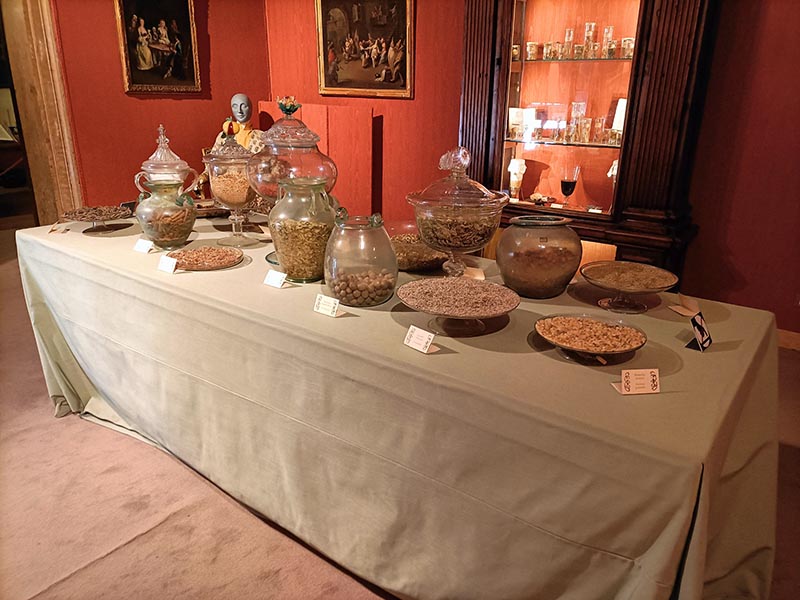
Venezia ha una lunga e ricca storia nella produzione di profumi. Il primo profumo veneziano è stato creato nel XII secolo da un monaco bizantino di nome Angelo Musachio. Il profumo, chiamato “Acqua di Venezia”, era fatto con ingredienti provenienti da tutto il mondo, tra cui rose, gelsomino, iris e sandalo. Nel XVI secolo, Venezia divenne il centro mondiale della produzione di profumi. La città era in una posizione strategica per il commercio con l’Oriente, e gli ingredienti per i profumi arrivavano da tutto il mondo. I profumieri veneziani erano anche molto creativi, e creavano profumi con aromi nuovi e originali.

Nel XVII e XVIII secolo, i profumi veneziani erano molto popolari in tutta Europa. Le donne e gli uomini indossavano profumi per occasioni speciali, come matrimoni, balli e feste. I profumi veneziani erano anche utilizzati come rimedi naturali per la salute e la bellezza.

Nel XIX secolo, la produzione di profumi a Venezia iniziò a declinare. La città perse la sua posizione di centro mondiale del commercio, e gli ingredienti per i profumi divennero più costosi. Tuttavia, alcuni profumieri veneziani continuarono a produrre profumi di alta qualità, e alcuni di questi profumi sono ancora in vendita oggi.

Il processo di creazione del profumo a Venezia nel passato era un processo lungo e laborioso. Ha coinvolto diverse fasi, tra cui:

  • Raccogliere gli ingredienti. Il primo passo è stato raccogliere gli ingredienti per il profumo. Questi ingredienti potevano essere fiori, erbe, spezie, resine e oli. I profumieri spesso viaggiavano in terre lontane per raccogliere gli ingredienti più rari ed esotici.
  • Distillare gli ingredienti. Una volta raccolti gli ingredienti, venivano distillati per estrarre gli oli essenziali. Questo è stato fatto riscaldando gli ingredienti in un alambicco e raccogliendo i vapori rilasciati. I vapori sarebbero quindi condensati nuovamente in forma liquida e gli oli essenziali sarebbero stati separati dall’acqua.
  • Mescolare gli oli essenziali. Gli oli essenziali sarebbero quindi stati mescolati insieme per creare la fragranza desiderata. I profumieri avrebbero miscelato accuratamente gli oli insieme, usando i loro nasi per giudicare le proporzioni.
  • Aggiunta di un fissativo. Un fissativo è una sostanza che aiuta a impedire al profumo di evaporare troppo rapidamente. I profumieri spesso aggiungevano un fissativo, come ambra grigia, muschio o vaniglia, ai loro profumi.
  • Imbottigliamento del profumo. Una volta pronto il profumo, veniva imbottigliato. Le bottiglie erano spesso fatte di vetro o cristallo e decorate con elaborate decorazioni.
  • Il processo di creazione del profumo a Venezia era un processo complesso e che richiedeva tempo, ma i risultati erano profumi che erano noti per la loro bellezza, complessità e longevità.

Oggi, Venezia è ancora una città importante per la produzione di profumi. Ci sono molte aziende che producono profumi a Venezia, come la Mavive per esempio, e alcuni di questi profumi sono esportati in tutto il mondo. I profumi veneziani sono apprezzati per la loro qualità, la loro creatività e il loro legame con la storia della città.

Per capire meglio la storia del profumo a Venezia, consiglio di visitare Palazzo Mocenigo, è un palazzo storico situato a Venezia, nel sestiere di Santa Croce. Il palazzo fu costruito nel XVI secolo dalla famiglia Mocenigo, una delle più importanti famiglie patrizie veneziane. Il palazzo è oggi sede del Museo del Profumo, che racconta la storia del profumo a Venezia. Il museo ospita una collezione di oltre 5.000 oggetti legati al mondo del profumo, tra cui bottiglie, flaconi, strumenti per la produzione del profumo e libri antichi.

Il museo è diviso in cinque sezioni:

  • Storia del profumo a Venezia
  • La produzione del profumo
  • Gli ingredienti del profumo
  • I profumi del mondo
  • Il profumo nell’arte e nella cultura

Il museo è aperto al pubblico tutti i giorni, tranne il Lunedì. Il Museo del Profumo è un luogo unico per scoprire la storia del profumo a Venezia. Il museo è anche un luogo suggestivo, dove è possibile immergersi nell’atmosfera raffinata e elegante della Serenissima.

Perfume in Venice

Venice has a long and rich history in perfume production. The first Venetian perfume was created in the 12th century by a Byzantine monk named Angelo Musachio. The perfume, called “Acqua di Venezia”, was made with ingredients from all over the world, including roses, jasmine, iris, and sandalwood.

In the 16th century, Venice became the world center of perfume production. The city was in a strategic location for trade with the East, and the ingredients for perfumes came from all over the world. Venetian perfumers were also very creative, and they created perfumes with new and original aromas.

In the 17th and 18th centuries, Venetian perfumes were very popular throughout Europe. Women and men wore perfumes for special occasions, such as weddings, balls, and parties. Venetian perfumes were also used as natural remedies for health and beauty.

In the 19th century, perfume production in Venice began to decline. The city lost its position as the world center of trade, and the ingredients for perfumes became more expensive. However, some Venetian perfumers continued to produce high-quality perfumes, and some of these perfumes are still on sale today.

The process of creating perfume in Venice in the past was a long and labor-intensive process. It involved several steps, including:

  • Gathering the ingredients. The first step was to gather the ingredients for the perfume. These ingredients could be flowers, herbs, spices, resins, and oils. The perfumers would often travel to far-off lands to gather the most rare and exotic ingredients.
  • Distilling the ingredients. Once the ingredients were gathered, they would be distilled to extract the essential oils. This was done by heating the ingredients in a still and collecting the vapors that were released. The vapors would then be condensed back into liquid form, and the essential oils would be separated from the water.
  • Mixing the essential oils. The essential oils would then be mixed together to create the desired fragrance. The perfumers would carefully blend the oils together, using their noses to judge the proportions.
  • Adding a fixative. A fixative is a substance that helps to keep the perfume from evaporating too quickly. Perfumers would often add a fixative, such as ambergris, musk, or vanilla, to their perfumes.
  • Bottling the perfume. Once the perfume was ready, it would be bottled. The bottles were often made of glass or crystal, and they were decorated with elaborate designs.
  • The process of creating perfume in Venice was a complex and time-consuming process, but the results were perfumes that were known for their beauty, complexity, and longevity.

Today, Venice is still an important city for perfume production. There are many companies that produce perfumes in Venice, like Mavive for instance, and some of these perfumes are exported all over the world. Venetian perfumes are appreciated for their quality, their creativity, and their ties to the city’s history.

To better understand the history of perfume in Venice, I recommend visiting Palazzo Mocenigo, is a historic palace located in Venice, in the sestiere of Santa Croce. The palace was built in the 16th century by the Mocenigo family, one of the most important patrician families in Venice.

The palace is now home to the Museum of Perfume, which tells the story of perfume in Venice. The museum houses a collection of over 5,000 objects related to the world of perfume, including bottles, vials, perfume-making tools and ancient books.

The museum is divided into five sections:

  • History of perfume in Venice
  • Perfume production
  • Perfume ingredients
  • Perfumes of the world
  • Perfume in art and culture


The museum is open to the public every day except Tuesday. The Museum of Perfume is a unique place to discover the history of perfume in Venice. The museum is also a charming place, where you can immerse yourself in the refined and elegant atmosphere of the Serenissima.

Profumo e vetro..

Vetro_di_murano,_bacinella_con_piede,_vetro_soffiato,_tardo_15mo_sec.,_02

For the english version, please scroll down the page, thank you.

Finalmente il destino ha voluto che fossi di turno nel bellissimo Museo di Palazzo Mocenigo. Da pochi giorni mi ero riproposto di andare a vedere la bellissima mostra situata a piano terra intitolata “Dialoghi inediti tra vetro e profumo”. La mia curiosità era stata solleticata, quando avevo visto le foto dell’inaugurazione, postate su facebook nella pagina ufficiale della Fondazione Civici Musei di Venezia.

Le foto erano abbastanza eloquenti, Palazzo Mocenigo, come sempre in passato, presenta al suo pubblico, un’altra strabiliante mostra, legata al tema del profumo, tematica che è già presente nelle sale espositive del piano superiore, solo che questa volta, la fragranza dei profumi è unita ai meravigliosi capolavori eseguiti dai Maestri vetrai di Murano, che hanno prodotto 12 strabilianti pezzi. Si avete capito bene ! 12 Maestri vetrai, 12 designer hanno realizzato questi 12 capolavori in vetro per ospitare 12 tipi di profumi, è assolutamente eccezionale !

Girando tra le bacheche, ho potuto ammirare degli autentichi capolavori: un robot vintage, una pistola in vetro, del periodo intorno al 1700, se non commetto errori, un contenitore tutto nero, intitolato “Dark side”, un altro chiamato bauta. E questo è solo l’inizio !

Su un tavolino rotondo, sono presenti i contenitori di vetro dove contengono le fragranze da poter annusare. Insomma, sono rimasto veramente entusiasto !

In breve, una visita al Palazzo Mocenigo, vale tre volte tanto ! Con un solo biglietto, vi vedete il palazzo, che una volta fù la dimora dei Mocenigo, vi vedete la parte dedicata al costume, la parte dedicata al profumo e in più la mostra, dove potete anche ammirare, i capolavori dei Maestri vetrai ! E se volete, perchè no, dopo che lo avete visto, potete andare a vedere il Museo del vetro a Murano ! Giusto per completare la visita ed espandere la vostra conoscenza.

Un pomeriggio trascorso a Palazzo Mocenigo, è un pomeriggio trascorso bene ! Venite, vi aspettiamo !!

English Version:

Perfumes and Glass

Vetro_di_murano,_bacinella_con_piede,_vetro_soffiato,_tardo_15mo_sec.,_02

Finally the fate wanted me to return to the beautiful Museum of Palazzo Mocenigo. A few days ago I was tempted  to go and see the wonderful exhibition located on the ground floor called “unpublished dialogues between glass and perfume.” My curiosity was piqued when I saw the inauguration photos, posted on the official facebook page of the Foundation Civic Museums of Venice.

The photos were quite eloquent, Palazzo Mocenigo, as always in the past, presents to its audience, another mind-blowing shows, related to the theme of the perfume theme, that is already present in the upper floor exhibition halls, only this time, the fragrance of the perfumes is combined with wonderful masterpieces created by Murano glass masters, who produced 12 amazing pieces. Yes you heard me right! 12 glass masters, with 12 designers have made these 12 glass masterpieces to accommodate 12 types of perfumes; it is absolutely outstanding!

Wandering through the glass showcases, I could see the authenticate masterpieces: a robot vintage, a glass gun, from the period around 1700, if I do not make mistakes, an all-black box, entitled “Dark Side”, another called Bauta. And this is only the beginning !

On a small round table, there are glass containers which contain fragrances which  you can smell. In short, I was really thrilled!

Listen to me, a visit to the Palazzo Mocenigo, worth three times as much! With just one ticket, you will see the palace, which once was the home of Mocenigo family, you see the part devoted to the costume, the part dedicated to the perfume plus the exhibition, where you can admire the masterpieces of glass masters! And if you want, why not, after you have seen it, you can go to see the Museum of Glass in Murano! Just to complete the tour and expand your knowledge.

An afternoon spent at Palazzo Mocenigo, is an afternoon well spent! Come, we are waiting !!