L’Ispirazione è in Partenza: Annalù Trasforma l’Aeroporto di Venezia nel Santuario delle Metamorfosi.

Questo articolo è stato scritto in italiano, in inglese e in francese. Per la traduzione, scorrere in basso, grazie !

This article was written in Italian, English, and French. For translations, scroll down. Thank you!

Cet article a été rédigé en italien, en anglais et en français. Pour les traductions, veuillez consulter la section ci-dessous. Merci !

L’Arte che ti Prende per Mano Prima di Volare: Annalù Incanta il Marco Polo

Ammettiamolo: l’aeroporto è il luogo delle grandi emozioni. C’è l’ansia dell’ultimo controllo, l’eccitazione per l’avventura che aspetta, la malinconia del saluto. Ma c’è un momento magico, quello in cui ti siedi nella hall delle partenze e, per un attimo, sei sospeso tra il “qui” e il “là”. Ebbene, proprio in questo limbo emotivo, l’Aeroporto Marco Polo di Venezia-Tessera ha deciso di farci un regalo, uno di quelli che nutrono l’anima: la mostra “Acchiappasogni. Metamorfosi Sospese” di Annalù.

Questa non è la solita esposizione da “guardare e passare oltre”. È un invito a fermarsi un istante, a respirare, a lasciarsi ispirare, ed è tutto merito di un’artista che, da veneziana DOC, sa bene cosa significhi l’acqua, la luce e l’effimero. Promossa dalla Galleria Ravagnan con la collaborazione di Gruppo SAVE, questa mostra è un abbraccio artistico proprio dove ne abbiamo più bisogno.

Gli “acchiappasogni” che Ti Riconnettono
(Con il consenso dell’artista e della galleria Ravagnan)

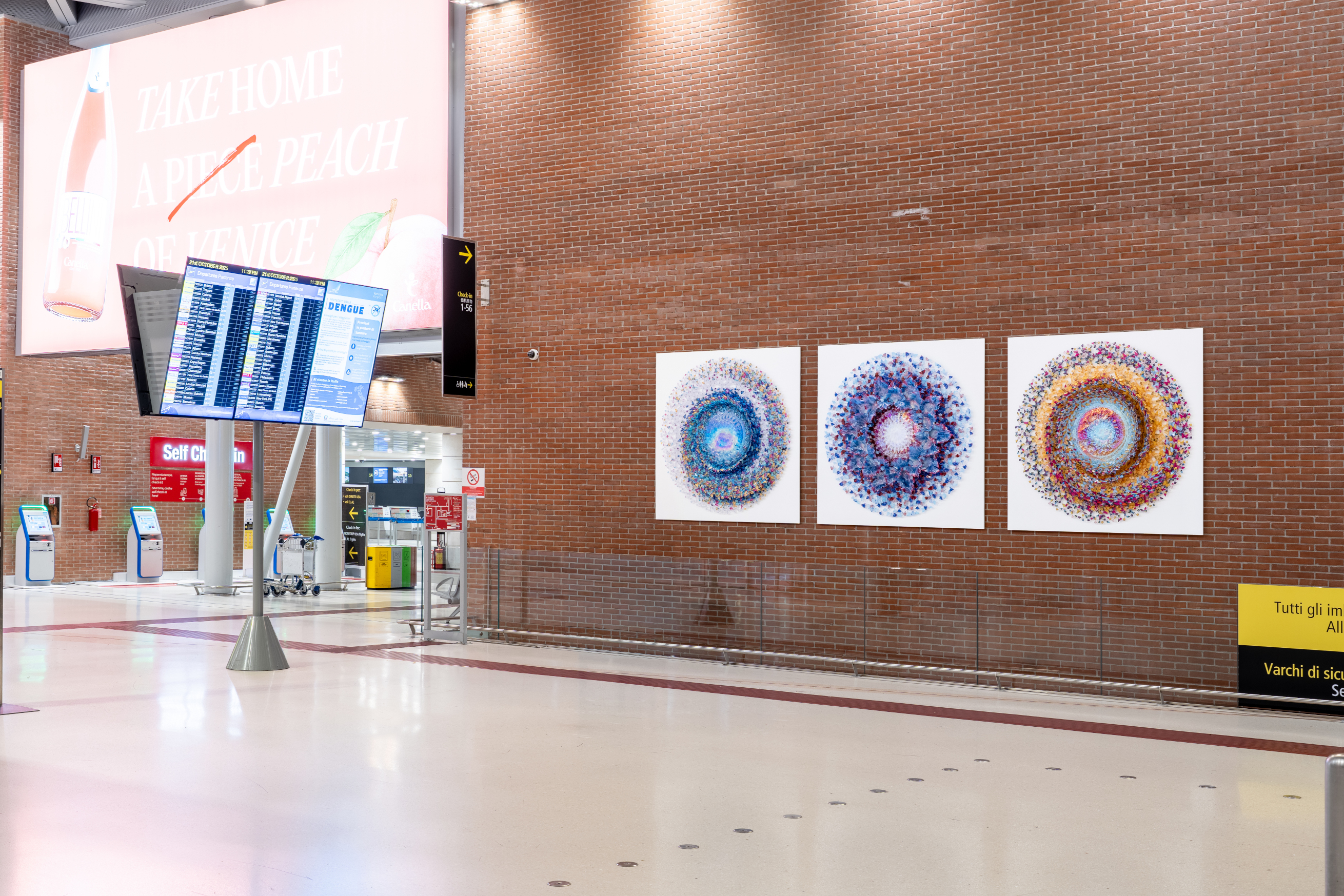
Al centro dell’esposizione, ci sono loro: i Dreamcatchers, gli acchiappasogni. Sono grandi sculture da parete che mi hanno subito fatto pensare: come è possibile che materiali così diversi convivano in un’armonia così eterea? Annalù usa il sacro vetro di Murano come un gioiello prezioso, lo combina con l’energia vibrante della resina, la delicatezza della carta e la fluidità degli inchiostri. Il risultato? Forme circolari che sembrano vortici, quasi fossero grandi occhi che guardano l’universo.

Ma la cosa più bella, quella che ti tocca nel profondo, è il loro significato. Al centro, il vetro soffiato ti parla delle tue radici, del tuo punto di partenza. E tutt’intorno, vedi questo turbinio di ali di farfalla e foglie di ginkgo che si muovono, si disgregano e si ricompongono. È il cambiamento fatto opera d’arte. È la vita che si trasforma in continuazione.

Annalù: L’Arte di Vivere Sospesi

Il lavoro di Annalù, che spesso gioca con la vetroresina per imprigionare il movimento e che, in altre serie, utilizza le radici per dare stabilità all’instabile, è un atto di fede nell’energia. Lei cerca quell’istante, quel “frammento sospeso” in cui tutto è possibile. Lei stessa lo dice in modo meraviglioso: vuole abitare l’attimo “prima del volo”, l’istante in cui “si sogna ad occhi aperti e si lascia che il cambiamento passi attraverso, come il battito d’ali prima del decollo, come l’istante preciso in cui si sogna e si vola.”

Quando guardi le sue opere, capisci che non si tratta solo di tecnica, ma di una filosofia di vita. Lei trasforma la materia per rendere visibile l’invisibile: il respiro del cosmo, la fragilità delle nostre speranze e la forza inarrestabile della metamorfosi.

Il Miglior Inizio per Ogni Viaggio

(Con il consenso dell’artista e della galleria Ravagnan)

Ed ecco perché avere questi capolavori proprio in un aeroporto è un’idea geniale e profondamente umana. Sei lì, magari con il cuore un po’ agitato, e all’improvviso gli acchiappasogni ti avvolgono. Sono lì per dirti: va bene essere in bilico. Va bene essere tra un capitolo e l’altro della tua vita. Lascia che il battito d’ali che vedi nell’opera diventi il tuo battito, una spinta gentile verso l’ignoto.

Prima di salire su quell’aereo, fermati. Fatti ispirare dalla luce che filtra nel vetro, dal movimento della resina. Cattura il tuo sogno, come suggerisce il titolo, e portalo con te. Non è solo un’attesa; è un preludio. È la tua arte personale del “pre-volo”, che ti insegna ad affrontare il viaggio (qualunque esso sia) con la leggerezza di chi sa che ogni decollo è una nuova, bellissima metamorfosi. Un’esperienza da non perdere, che trasforma la tensione del viaggio in ispirazione pura. Buona visione, e buon volo!

Inspiration is Departing: Annalù Transforms Venice Airport into the Sanctuary of Metamorphoses.


Art That Takes Your Hand Before You Fly: Annalù Enchants Marco Polo Airport

Let’s face it: the airport is a place of great emotions. There’s the anxiety of the final check, the excitement for the adventure that awaits, the melancholy of saying goodbye. But there’s a magical moment, the one where you sit down in the departure lounge and, for an instant, you are suspended between “here” and “there.” Well, it is precisely in this emotional limbo that the Marco Polo Airport in Venice-Tessera has decided to give us a gift, one of those that nourishes the soul: the exhibition “Dreamcatchers. Suspended Metamorphoses” by Annalù.

This is not your usual “look and walk by” exhibition. It’s an invitation to pause for a moment, to breathe, to be inspired, and it’s all thanks to an artist who, as a true Venetian, understands the significance of water, light, and the ephemeral. Promoted by the prestigious Ravagnan Gallery in collaboration with Gruppo SAVE, this exhibition is an artistic embrace right where we need it most.

The “Dreamcatchers” That Reconnect You

At the heart of the exhibition are the Dreamcatchers. They are large wall sculptures that immediately made me wonder: how is it possible that such different materials coexist in such an ethereal harmony? Annalù uses the sacred Murano glass like a precious jewel, combining it with the vibrant energy of resin, the delicacy of paper, and the fluidity of inks. The result? Circular shapes that look like vortices, almost like large eyes gazing into the universe.

But the most beautiful thing, the one that touches you deeply, is their meaning. In the center, the blown glass speaks to you of your roots, your starting point. And all around, you see this whirl of butterfly wings and ginkgo leaves moving, breaking apart, and reforming. It is change made into a work of art. It is life transforming continuously.

Annalù: The Art of Living Suspended

Annalù’s work, which often plays with resin-glass to imprison movement and, in other series, uses roots to give stability to the unstable, is an act of faith in energy. She seeks that single moment, that “suspended fragment” where everything is possible. She herself expresses it beautifully: she wants to inhabit the moment “before flight,” the instant when “one dreams with open eyes and lets change pass through, like the beat of wings before lift-off, like the precise instant in which one dreams and flies.”

When you look at her works, you understand that it’s not just about technique, but about a life philosophy. She transforms matter to make the invisible visible: the breath of the cosmos, the fragility of our hopes, and the unstoppable force of metamorphosis.

The Best Start to Any Journey

And that’s why placing these masterpieces in an airport is a stroke of genius and a deeply human gesture. You are there, perhaps with a slightly anxious heart, and suddenly the Dreamcatchers envelop you. They are there to tell you: it’s okay to be in limbo. It’s okay to be between one chapter and the next of your life. Let the wingbeat you see in the artwork become your own beat, a gentle push toward the unknown.

Before you step onto that plane, stop. Be inspired by the light filtering through the glass, by the movement of the resin. Catch your dream, as the title suggests, and take it with you. It is not just a wait; it is a prelude. It is your personal art of the “pre-flight,” which teaches you to face the journey (whatever it may be) with the lightness of one who knows that every takeoff is a new, beautiful metamorphosis. A must-see experience that transforms the tension of travel into pure inspiration. Happy viewing, and have a good flight!


L’art qui vous prend par la main avant de vous envoler : Annalù enchante Marco Polo

Soyons honnêtes : l’aéroport est un lieu d’émotions fortes. Il y a l’anxiété du dernier contrôle, l’excitation de l’aventure qui nous attend, la mélancolie des adieux. Mais il y a aussi un moment magique, celui où, assis dans le hall des départs, on est comme suspendu entre « ici » et « là-bas ». Eh bien, précisément dans ce moment d’incertitude, l’aéroport Marco Polo de Venise-Tessera a décidé de nous offrir un cadeau, un véritable baume pour l’âme : l’exposition « Attrape-rêves. Métamorphose suspendue » d’Annalù. Ce n’est pas une exposition classique où l’on se contente de regarder et de passer à autre chose. C’est une invitation à s’arrêter un instant, à respirer, à s’inspirer, et tout cela grâce à une artiste qui, en véritable Vénitienne, comprend la signification de l’eau, de la lumière et de l’éphémère. Organisée par la Galleria Ravagnan en collaboration avec le Gruppo SAVE, cette exposition est une bouffée d’air frais artistique là où nous en avons le plus besoin.

Les “Attrape-rêves” qui vous reconnectent

Au cœur de l’exposition, on les trouve : les Attrape-rêves, les capteurs de rêves. Ces grandes sculptures murales m’ont immédiatement interpellée : comment est-il possible que des matériaux si différents coexistent dans une harmonie si éthérée ? Annalù utilise le verre sacré de Murano comme un joyau précieux, l’associant à l’énergie vibrante de la résine, à la délicatesse du papier et à la fluidité des encres. Le résultat ? Des formes circulaires qui évoquent des vortex, presque comme de grands yeux contemplant l’univers. Mais le plus beau, ce qui vous touche profondément, c’est leur signification. Au centre, le verre soufflé vous parle de vos racines, de votre point de départ. Et tout autour, vous voyez ce tourbillon d’ailes de papillon et de feuilles de ginkgo qui s’animent, se brisent et se recomposent. C’est le changement érigé en œuvre d’art. C’est la vie en perpétuelle transformation. Annalù : L’art de vivre suspendu Annalù : L’art de vivre suspendu Annalù joue souvent avec la fibre de verre pour emprisonner le mouvement et, dans d’autres séries, utilise les racines pour stabiliser l’instable, est un acte de foi en l’énergie. Elle recherche cet instant, ce « fragment suspendu » où tout est possible. Elle l’exprime elle-même avec une grande beauté : elle souhaite habiter l’instant « avant l’envol », ce moment où « on rêve et où l’on laisse le changement nous traverser, comme le battement d’ailes avant le décollage, comme l’instant précis où l’on rêve et où l’on vole. »

Quand on observe ses œuvres, on comprend qu’il ne s’agit pas seulement de technique, mais d’une véritable philosophie de vie. Elle transforme la matière pour rendre visible l’invisible : le souffle du cosmos, la fragilité de nos espoirs et la force irrésistible de la métamorphose.

Le meilleur départ pour chaque voyage

Et c’est pourquoi avoir ces chefs-d’œuvre en plein aéroport est une idée brillante et profondément humaine. Vous êtes là, peut-être le cœur un peu battant, et soudain les attrape-rêves vous enveloppent. Ils sont là pour vous dire : c’est normal d’être dans l’équilibre. C’est normal d’être entre deux chapitres de votre vie. Laissez le battement d’ailes que vous voyez dans l’œuvre devenir votre propre battement de cœur, une douce impulsion vers l’inconnu.

Capturez votre rêve, comme le suggère le titre, et emportez-le avec vous. Ce n’est pas qu’une simple attente ; c’est un prélude. C’est votre art personnel de « l’avant-vol », qui vous apprend à aborder le voyage (quel qu’il soit) avec la légèreté de celui qui sait que chaque décollage est une nouvelle et magnifique métamorphose. Une expérience à ne pas manquer, qui transforme la tension du voyage en pure inspiration. Profitez du paysage et bon vol !

Venezia si trasforma in un sogno surrealista: le Galeries Bartoux inaugurano nell’ex Cinema Accademia la Gallerie Bartoux!

Il seguente articolo è scritto in Italiano, Inglese e francese, per le traduzioni scorrere la pagina

The following article is written in Italian, English and French, for translations scroll down the page

L’article suivant est écrit en italien, anglais et français, pour les traductions, faites défiler la page vers le bas

Venezia risorge nell’arte: Galeries Bartoux, Dalí e l’ex Cinema Accademia diventano magia

Se pensavate che Venezia avesse già mostrato tutte le sue meraviglie, preparatevi a restare a bocca aperta. È nata una nuova stella nel firmamento dell’arte contemporanea: “Galeries Bartoux” ha aperto la sua prima sede italiana nell’ex Cinema Accademia a Dorsoduro – un luogo che per decenni è stato il cuore pulsante del cinema d’essai veneziano – e lo ha trasformato in qualcosa di epico, di sensoriale, di profondamente emozionante.

Chi sono le Galeries Bartoux

Da più di trent’anni le Bartoux sono sinonimo di ricerca estetica, di audacia creativa, di spazi eleganti dove l’arte non è solo da guardare, ma da vivere. Fondate da Robert & Isabelle Bartoux nel 1993, hanno ampliato la loro presenza globale con gallerie a Parigi, Londra, Miami, New York, Monaco, Singapore… tutte accomunate dallo stile Bartoux: un mix raffinato fra grandi maestri consolidati (scultori, pittori, street‑artists) e giovani talenti emergenti. Bartoux non è solo esposizione: è esperienza. Realtà aumentata, spazi immersivi, dialogo fra arte, architettura, design. Ogni galleria è vetrina prestigiosa ma anche luogo d’innamoramento estetico.

Venezia: l’ex Cinema Accademia come palco di un sogno

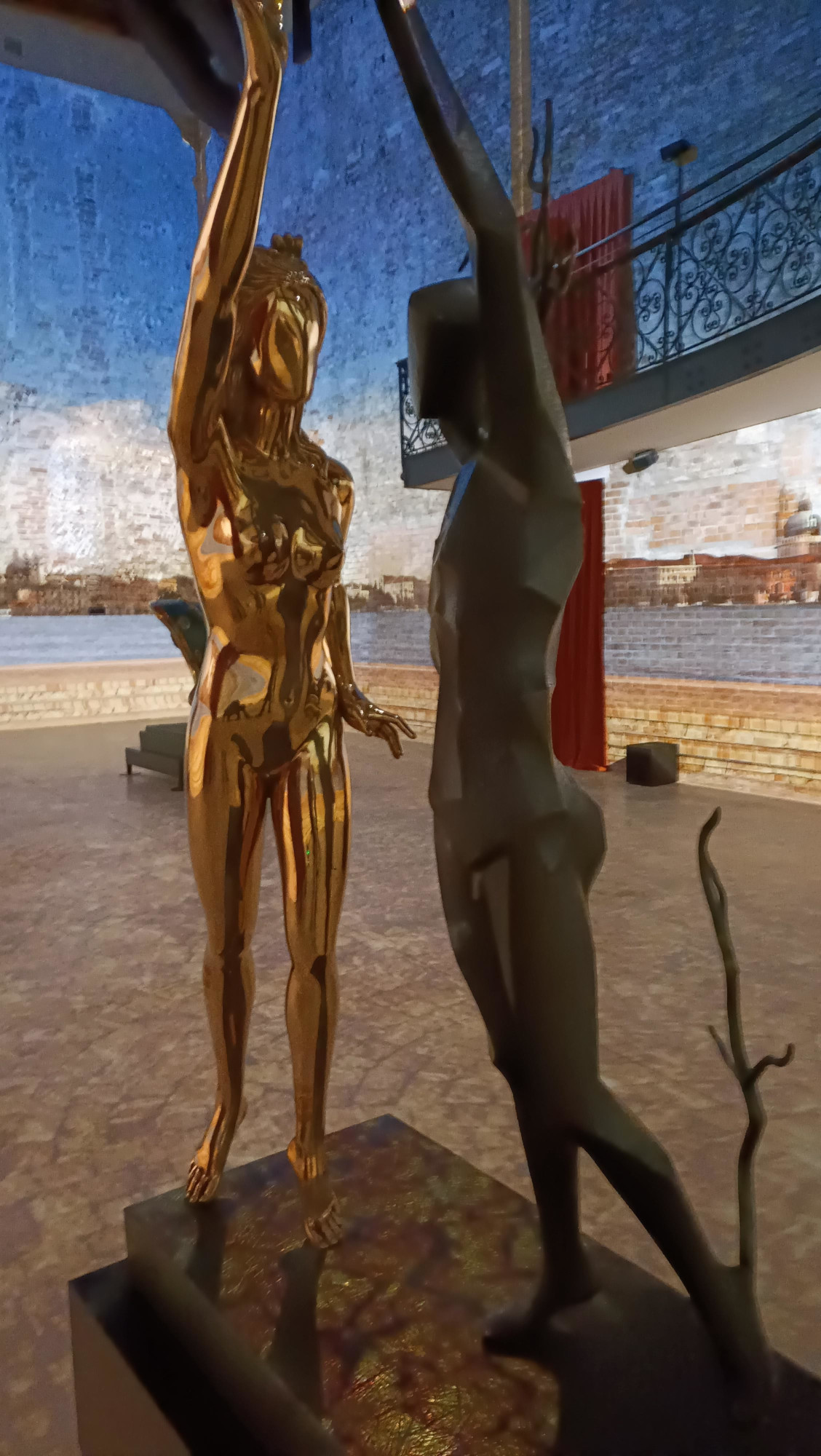
Immaginate: un cinema storico, chiuso nel 2002, con le sue sedute, il buio, il fascino retrò, che si risveglia in una veste nuova. Le pareti, il soffitto, le volte – perfino il pavimento – ora diventano tele immense, coinvolgenti, capaci di trasportare lo spettatore dentro un sogno. L’ex Cinema Accademia, attivo dal 1928, e costruito su un teatro del XVI secolo, è stato restaurato con grande attenzione al passato, ma proiettato verso il futuro. Lo spazio è di circa 1.200 m²: sale espositive, un cinema immersivo di 500 metri quadrati con un’altezza di circa 12 metri (cioè puoi guardare in alto, sentirti “avvolto” dal racconto), un “Café des Arts” curato da Le Marcandole, un giardino privato di sculture. Il concept si chiama Bartoux Experience: arte, design, tecnologia, comunità, emozione.

Dalí è Venezia: surrealismo in mostra, immersività e incanto

Il grande protagonista dell’apertura è Salvador Dalí. Bartoux collabora con Dalí Universe per presentare la mostra “Dalí è Venezia”. Sarà una selezione di sculture, dipinti, litografie del maestro del Surrealismo. Ma non è tutto: al contempo verrà inaugurato il cinema immersivo con una produzione video inedita, intitolata Una Serenissima come sogno surreale di Salvador Dalí. Un’esperienza che non si limita al contemplare, ma che avvolge lo spettatore, lo trasforma in protagonista. Dalí ebbe legami reali con Venezia: partecipò alla Biennale del 1954, creò un poster per Piazza San Marco nel 1976, dipinse “Othello rêvant de Venise” nel 1982. Questi riferimenti rendono l’omaggio “Dalí è Venezia” non solo bello, ma toccante, come se la città stessa fosse chiamata a dialogare con il suo visitatore attraverso il surrealismo.

🎶 Musica, magie, folla: una serata da sogno

E qui entra il cuore emozionale dell’evento: l’inaugurazione non è stata una semplice cerimonia, ma un’esperienza totale. Il locale gremito, un fermento nell’aria. Sulle terrazze o attici, violiniste in abito elegante che si librano sulle note, invitano l’udito a sposarsi con la vista, la pelle, il respiro. Immaginate: note dolci che risuonano mentre proiezioni immersive avvolgono le pareti, figure surreali che prendono vita e la città lagunare che si riflette in ogni quadro, ogni scultura. La folla? Decine, centinaia, fuori veneziani entusiasti, curiosi di passaggio, dentro appassionati d’arte, famiglie, influencers, critici. Un vero successo: applausi, ammirazione, commenti meravigliati. Tutto avvolto da luci, riflessi, texture, suoni di violini che sembravano sospesi nel cielo di Venezia.

🌟 Tecnologia già vista altrove, ma reinventata a Venezia

L’uso dell’esperienza immersiva (video, proiezioni, spazi che trasformano la percezione) non è del tutto nuovo per Bartoux: spiegazioni, anticipazioni parlano di realtà aumentata, virtual galleries, innovazioni similari. Ma la vera novità è come queste tecnologie siano integrate qui, nell’ex Cinema Accademia: l’altezza del soffitto, la grande volumetria, la storia dello spazio (cinema / teatro) rendono tutto perfetto per proiezioni immersive, suoni riverberanti, giochi fra luce e architettura.

✅ Risultato: un successo che promette continuità

L’inaugurazione è stata già segnata come una serata memorabile: ottima affluenza, entusiasmo vero, critica positiva. “Dalí è Venezia” non è solo una mostra, ma una promessa: che Bartoux abbia restituito alla città un luogo di cultura, ma anche di comunità, di gioia, di stupore. Che l’arte possa catturare non solo lo sguardo, ma il cuore. E che questa nuova casa dell’arte abbia già cominciato a vivere, a respirare, a emozionare.

Venice transforms into a surrealist dream: the Galeries Bartoux inaugurate the Gallerie Bartoux in the former Cinema Accademia!

Venice resurfaces in art: Galeries Bartoux, Dalí, and the former Cinema Accademia become magical

If you thought Venice had already shown all its wonders, prepare to be amazed. A new star has been born in the firmament of contemporary art: “Galeries Bartoux” has opened its first Italian location in the former Cinema Accademia in Dorsoduro—a place that for decades was the beating heart of Venetian arthouse cinema—and has transformed it into something epic, sensorial, and profoundly moving.

Who are Galeries Bartoux

For more than thirty years the Bartoux have been synonymous with aesthetic research, creative audacity, elegant spaces where art is not just to be looked at, but to be experienced. Founded by Robert & Isabelle Bartoux, founded in 1993, has expanded their global presence with galleries in Paris, London, Miami, New York, Monaco, and Singapore—all sharing the Bartoux style: a refined blend of established masters (sculptors, painters, and street artists) and emerging young talents. Bartoux isn’t just an exhibition: it’s an experience. Augmented reality, immersive spaces, and a dialogue between art, architecture, and design. Each gallery is a prestigious showcase but also a place of aesthetic romance.

Venice: the former Cinema Accademia as the stage for a dream

Imagine: a historic cinema, closed in 2002, with its seats, darkness, and retro charm, awakening in a new guise. The walls, the ceiling, the vaults—even the floor—now become immense, engaging canvases, capable of transporting the viewer into a dream. The former Cinema Accademia, open since 1928 and built on a 16th-century theater, has been restored with great attention to the past, but with a focus on the future. The space is approximately 1,200 m²: exhibition halls, a 500-square-meter immersive cinema about 12 meters high (so you can look up and feel “enveloped” by the story), a “Café des Arts” curated by Le Marcandole, and a private sculpture garden. The concept is called Bartoux Experience: art, design, technology, community, emotion.

Dalí is Venice: surrealism on display, immersion and enchantment

The star of the opening is Salvador Dalí. Bartoux collaborates with Dalí Universe to present the exhibition “Dalí is Venice.” It will feature a selection of sculptures, paintings, and lithographs by the master of Surrealism. But that’s not all: at the same time, the immersive cinema will be inaugurated with a new video production, entitled “A Serenissima as a Surreal Dream by Salvador Dalí.” An experience that isn’t limited to contemplation, but envelops the viewer, transforming them into protagonists. Dalí had real ties to Venice: he participated in the 1954 Biennale, created a poster for PiazZa San Marco in 1976, he painted “Othello rêvant de Venise” in 1982. These references make the homage “Dalí is Venice” not only beautiful, but touching, as if the city itself were called to dialogue with its visitor through surrealism.

🎶 Music, magic, crowd: a dream evening

And here comes the emotional heart of the event: the inauguration wasn’t just a simple ceremony, but a total experience. The venue was packed, a buzz in the air. On terraces or attics, elegantly dressed violinists soar to the music, inviting the ear to marry the sight, the skin, the breath. Imagine: sweet notes resonating while immersive projections envelop the walls, surreal figures coming to life, and the lagoon city reflected in every painting, every sculpture. The crowd? Dozens, hundreds, enthusiastic Venetians outside, curious passers-by, art lovers, families, influencers, and critics inside. A true success: applause, admiration, and amazed comments. All wrapped in lights, reflections, textures, and the sounds of violins that seemed suspended in the Venetian sky.

🌟 Technology already seen elsewhere, but reinvented in Venice

The use of immersive experiences (videos, projections, spaces that transform perception) is not entirely new to Bartoux: explanations and previews speak of augmented reality, virtual galleries, and similar innovations. But the real innovation is how these technologies are integrated here, in the former Cinema Accademia: the height of the ceiling, the large volume, the history of the space (cinema/theater) make everything perfect for immersive projections, reverberating sounds, and interplays of light and architecture.

✅ Result: a success that promises continuity

The inauguration has already been marked as a memorable evening: excellent A turnout, genuine enthusiasm, and positive reviews. “Dalí is Venice” isn’t just an exhibition, it’s a promise: that Bartoux has given the city a place of culture, but also of community, joy, and wonder. That art can capture not only the eye, but the heart. And that this new home of art has already begun to live, breathe, and excite.

Venise se transforme en rêve surréaliste : les Galeries Bartoux inaugurent la Gallerie Bartoux dans l’ancien Cinéma Accademia !

Venise refait surface dans l’art : les Galeries Bartoux, Dalí et l’ancien Cinéma Accademia deviennent magiques

Si vous pensiez que Venise avait déjà dévoilé toutes ses merveilles, préparez-vous à être émerveillé. Une nouvelle étoile est née au firmament de l’art contemporain : les Galeries Bartoux ont ouvert leur premier espace italien dans l’ancien Cinéma Accademia de Dorsoduro, un lieu qui fut pendant des décennies le cœur battant du cinéma d’art et d’essai vénitien, et l’ont transformé en un lieu épique, sensoriel et profondément émouvant.

Qui sont les Galeries Bartoux ?

Depuis plus de trente ans, la maison Bartoux est synonyme de recherche esthétique, d’audace créative et d’espaces élégants où l’art ne se contente pas d’être regardé, mais s’expérimente. Fondée par Robert & Fondée en 1993, Isabelle Bartoux a étendu sa présence internationale avec des galeries à Paris, Londres, Miami, New York, Monaco et Singapour, toutes partageant le style Bartoux : un mélange raffiné de maîtres reconnus (sculpteurs, peintres et street artistes) et de jeunes talents émergents. Bartoux n’est pas seulement une exposition : c’est une expérience. Réalité augmentée, espaces immersifs et dialogue entre art, architecture et design. Chaque galerie est une vitrine prestigieuse, mais aussi un lieu de romance esthétique.

Venise : l’ancien Cinéma Accademia, théâtre d’un rêve

Imaginez : un cinéma historique, fermé en 2002, avec ses fauteuils, son obscurité et son charme rétro, se réveille sous un nouveau jour. Les murs, le plafond, les voûtes, et même le sol, deviennent désormais d’immenses toiles captivantes, capables de transporter le spectateur dans un rêve. L’ancien Cinéma Accademia, ouvert depuis 1928 et construit sur un théâtre du XVIe siècle, a été restauré avec une grande attention portée au passé, mais avec une attention particulière portée à l’avenir. L’espace d’environ 1 200 m² comprend des salles d’exposition, un cinéma immersif de 500 m² à environ 12 mètres de hauteur (pour que vous puissiez lever les yeux et vous sentir enveloppé par l’histoire), un « Café des Arts » organisé par Le Marcandole, et un jardin de sculptures privé. Le concept s’appelle Bartoux Experience : art, design, technologie, communauté, émotion.

Dalí est Venise : le surréalisme exposé, immersion et enchantement

La star du vernissage est Salvador Dalí. Bartoux collabore avec Dalí Universe pour présenter l’exposition « Dalí is Venice ». Elle présentera une sélection de sculptures, de peintures et de lithographies du maître du surréalisme. Mais ce n’est pas tout : parallèlement, le cinéma immersif sera inauguré avec une nouvelle production vidéo intitulée « Une Sérénissime comme rêve surréaliste de Salvador Dalí ». Une expérience qui ne se limite pas à la contemplation, mais enveloppe le spectateur, le transformant en protagoniste. Dalí entretenait des liens étroits avec Venise : il a participé à la Biennale de 1954, créé une affiche pour la place Saint-Marc en 1976, peint « Othello rêvant de Veni » (Othello, le rêveur de Venise) la même année et créé « Le Secret de Venise ».Après avoir quitté San Marco en 1976, il peint « Othello rêvant de Venise » en 1982. Ces références rendent l’hommage « Dalí est Venise » non seulement beau, mais touchant, comme si la ville elle-même était appelée à dialoguer avec son visiteur à travers le surréalisme.

🎶 Musique, magie, foule : une soirée de rêve

Et voici le cœur émotionnel de l’événement : l’inauguration n’était pas une simple cérémonie, mais une expérience à part entière. La salle était pleine à craquer, l’ambiance était palpable. Sur les terrasses ou les greniers, des violonistes élégamment vêtus s’élancent au rythme de la musique, invitant l’oreille à épouser la vue, la peau, le souffle. Imaginez : de douces notes résonnent tandis que des projections immersives enveloppent les murs, des figures surréalistes prennent vie, et la ville lagunaire se reflète dans chaque tableau, chaque sculpture. La foule ? Des dizaines, des centaines : des Vénitiens enthousiastes à l’extérieur, des passants curieux, des amateurs d’art, des familles, des influenceurs et des critiques à l’intérieur. Un véritable succès : applaudissements, admiration et commentaires émerveillés. Le tout enveloppé de lumières, de reflets, de textures et du son des violons qui semblait suspendu dans le ciel vénitien.

🌟 Une technologie déjà vue ailleurs, mais réinventée à Venise

L’utilisation d’expériences immersives (vidéos, projections, espaces transformant la perception) n’est pas une nouveauté pour Bartoux : explications et aperçus évoquent la réalité augmentée, les galeries virtuelles et autres innovations similaires. Mais la véritable innovation réside dans la manière dont ces technologies sont intégrées ici, dans l’ancien Cinéma Accademia : la hauteur sous plafond, le volume important et l’histoire du lieu (cinéma/théâtre) se prêtent parfaitement aux projections immersives, aux sons réverbérants et aux jeux de lumière et d’architecture.

✅ Résultat : un succès qui promet la continuité

L’inauguration a déjà été marquée par une soirée mémorable : une excellente affluence, un enthousiasme sincère et des critiques positives. « Dalí est Venise » n’est pas seulement une exposition, c’est une promesse : Bartoux a offert à la ville un lieu de culture, mais aussi de convivialité, de joie et d’émerveillement. Que l’art puisse captiver non seulement les yeux, mais aussi le cœur. Et ce nouveau foyer de l’art a déjà commencé à vivre, à respirer et à s’animer.

L’oro della laguna

✨: la magia di Antonello Viola a Ca’ Pesaro

Antonello Viola: “L’oro della laguna” – Un dialogo poetico tra arte e Venezia

La luce di Venezia nei quadri di Antonello Viola: una mostra da vedere a Ca’ Pesaro

Dal 20 giugno al 28 settembre 2025, Ca’ Pesaro accoglie una mostra che parla sottovoce ma lascia il segno: L’oro della laguna, personale di Antonello Viola. Nelle eleganti sale Dom Pérignon della Galleria Internazionale d’Arte Moderna, l’artista romano presenta una serie di opere inedite realizzate negli ultimi quattro anni, tra vetri dipinti e carte giapponesi. A curare il progetto è Elisabetta Barisoni, direttrice del museo. Questa mostra è molto più di una raccolta di quadri: è un dialogo silenzioso e profondo tra l’artista e Venezia, città che da sempre riflette, cambia, assorbe. Proprio come i lavori di Viola.

Un artista in ascolto del mondo

Nato a Roma nel 1966, Antonello Viola ha una formazione solida: si è diplomato all’Accademia di Belle Arti sotto la guida di Enzo Brunori e ha conseguito un dottorato in Spagna, all’Università de La Laguna. Nel tempo ha sviluppato una pittura che unisce tecnica, riflessione e spiritualità. Il suo segno è sottile, le sue opere sono fatte di velature, cancellature, superfici che sembrano respirare. Nulla è lasciato al caso, ma nulla è rigido. Viola lavora per stratificazioni: applica il colore, poi lo rimuove, lo raschia, lo modifica. È un processo lento e meditativo, quasi rituale. E i materiali scelti — vetro, carta, oro — parlano di fragilità, luce e trascendenza.

Venezia come specchio interiore

Nella mostra, ogni opera sembra contenere un frammento della laguna. I titoli evocano isole vere e immaginate — Elba, Poveglia, Murano, Giudecca — ma non c’è geografia. C’è piuttosto una mappa emotiva, personale. Le superfici dipinte diventano paesaggi dell’anima, dove la luce cambia tutto e il tempo si ferma. Il vetro è il protagonista: lastre dipinte su entrambi i lati creano giochi di profondità e riflessi, come acque tranquille che nascondono correnti interiori. Le opere su carta giapponese, invece, sono più essenziali, verticali, quasi spirituali. L’oro, usato con misura e intelligenza, non è decorazione: è luce pura.

Un dialogo che attraversa i secoli

Un elemento interessante della mostra è il confronto silenzioso con Giulio Aristide Sartorio, pittore simbolista romano che un secolo fa realizzò per la Biennale il gigantesco ciclo Il poema della vita umana, esposto nelle sale adiacenti. Come Viola, anche Sartorio cercava l’essenza dell’esistenza attraverso strati di materia e luce.

Un invito al silenzio

In un’epoca veloce e rumorosa, le opere di Viola ci costringono a rallentare. A fermarci. A osservare. Il suo lavoro non urla, non cerca di colpire: piuttosto, accoglie. Ogni quadro è un piccolo universo che invita alla contemplazione. E alla fine, questa mostra non è solo un’esperienza visiva, ma anche un momento di pausa, di ascolto, di connessione con qualcosa di più profondo.

Informazioni utili

La mostra è visitabile con il normale biglietto di ingresso di Ca’ Pesaro, dal martedì alla domenica, dalle 10:00 alle 18:00. È realizzata in collaborazione con la Galleria Alessandro Casciaro di Bolzano-Venezia.

✨: The Magic of Antonello Viola at Ca’ Pesaro

Venice Reflected in Gold: Antonello Viola at Ca’ Pesaro

From June 20 to September 28, 2025, Ca’ Pesaro hosts a quiet yet powerful exhibition: The Gold of the Lagoon, a solo show by Roman artist Antonello Viola. Set in the elegant Dom Pérignon rooms of the Galleria Internazionale d’Arte Moderna, the exhibition presents a selection of works created over the past four years—glass paintings and Japanese paper pieces—many of which are on public display for the first time. Curated by the museum’s director, Elisabetta Barisoni, the show offers a poetic dialogue between the artist and the soul of Venice.

An Artist Who Listens to the World

Born in Rome in 1966, Antonello Viola studied at the Accademia di Belle Arti under Enzo Brunori and later earned a PhD from the University of La Laguna in Spain. Over the years, he has developed a deeply thoughtful and spiritual painting practice. His work is delicate yet dense, created through a slow process of layering, erasing, and reapplying. Each surface feels alive—something between a memory and a presence. Viola doesn’t paint with urgency, but with intention. He uses materials like gold leaf, glass, and fine paper not for their beauty alone, but for what they evoke: fragility, light, silence, transcendence.

Venice as an Inner Landscape

In this exhibition, each work seems to hold a fragment of the lagoon. Titles reference real and imagined islands—Elba, Poveglia, Murano, Giudecca—but these are not maps. They are emotional coordinates. The painted surfaces open up to inner landscapes, where light transforms everything and time seems to stretch. Glass plays a central role: painted on both sides, arranged in layers, it creates depth and transparency—like water capturing reflections. The works on Japanese paper are more minimal and vertical, almost meditative. Gold, used sparingly and purposefully, becomes a symbol of light rather than mere ornament.

A Silent Conversation Across Centuries

One of the more intriguing aspects of the show is its silent dialogue with Giulio Aristide Sartorio, another Roman artist who found inspiration in Venice over a century ago. His monumental cycle The Poem of Human Life, painted for the Venice Biennale in 1906–07, is displayed in the adjacent gallery. Like Viola, Sartorio explored layering, translucency, and spiritual themes through his technique.

The Power of Silence

In a time defined by speed and noise, Viola’s works invite us to slow down. To stop. To really look. His paintings don’t shout; they welcome. Each one is a quiet universe, offering space for contemplation and calm. This exhibition isn’t just visual—it’s emotional. It’s a moment of reflection in a world that rarely pauses.

Visitor Information

The Gold of the Lagoon is open from Tuesday to Sunday, 10:00 AM to 6:00 PM, with standard museum admission. The exhibition is presented in collaboration with Galleria Alessandro Casciaro (Bolzano–Venice).

BIAGIO GIBILTERRA. “Sono andato all’indietro seguendo i sogni. Dove i sogni finiscono”

For the English translation, please scroll down the page, thank you.

Jpeg

Una nuova mostra è stata inaugurata a Ca’Pesaro ! Scopriamo insieme di cosa si tratta !

La mostra “Biagio Gibilterra: Sono andato all’indietro seguendo i sogni dove i sogni finiscono” è attualmente in corso presso il Museo di Palazzo Cà Pesaro a Venezia. Questo evento espositivo offre un’opportunità unica per esplorare l’opera di Biagio Gibilterra, un artista che ha saputo unire la sua visione personale con elementi di riflessione sulla condizione umana e il significato dei sogni.

Chi è Biagio Gibilterra: Biagio Gibilterra è un artista contemporaneo nato nel 1950 a Carlentini, in provincia di Siracusa. Dopo aver conseguito la laurea in fisica all’Università di Catania, si trasferisce a Venezia nel 1979, dove inizia il suo percorso artistico. La sua formazione e la sua carriera si sviluppano in un contesto ricco di stimoli culturali e artistici, che influenzano profondamente il suo lavoro

Un Viaggio nell’Immaginario

La mostra si propone come un viaggio nell’immaginario di Gibilterra, dove i sogni diventano il filo conduttore delle sue opere. Attraverso una serie di installazioni e opere visive, l’artista invita il pubblico a immergersi in un mondo onirico, dove la realtà e la fantasia si intrecciano. Ogni opera è una finestra aperta su un universo ricco di simbolismi, emozioni e narrazioni personali.

Tematiche e Stile

Biagio Gibilterra utilizza una varietà di tecniche artistiche per esprimere le sue idee. Le sue opere spaziano dalla pittura alla scultura, fino all’installazione, creando un dialogo tra le diverse forme d’arte. Le tematiche affrontate includono la memoria, l’identità e la ricerca interiore, rendendo ogni pezzo non solo un’opera d’arte ma anche una riflessione profonda sulla vita e sull’esperienza umana.

Dettagli della Mostra

  • Luogo: Museo di Palazzo Cà Pesaro, Venezia
  • Data: 21 gennaio – 23 febbraio 2025
  • Orari: Consultare il sito ufficiale per informazioni aggiornate sugli orari di apertura

Conclusione

La mostra di Biagio Gibilterra rappresenta un’importante occasione per gli appassionati d’arte e per chi desidera esplorare nuove dimensioni creative. Non perdere l’opportunità di visitare questa esposizione che promette di stimolare la mente e toccare il cuore. Visita il sito ufficiale del museo per ulteriori dettagli e per pianificare la tua visita.

BIAGIO GIBILTERRA. “I went backwards following dreams. Where dreams end”

Jpeg

A new exhibition has opened at Ca’Pesaro Museum of Venice! Let’s find out together what it’s about!

The exhibition “Biagio Gibilterra: I Went Backward Following Dreams Where Dreams End” is currently underway at the Museo di Palazzo Cà Pesaro in Venice. This event provides a unique opportunity to explore the work of Biagio Gibilterra, an artist who has skillfully combined his personal vision with reflections on the human condition and the meaning of dreams.

Who is Biagio Gibilterra Biagio Gibilterra is a contemporary artist born in 1950 in Carlentini, in the province of Syracuse. After graduating in physics at the University of Catania, he moved to Venice in 1979, where he began his artistic career. His education and career developed in a context rich in cultural and artistic stimuli, which profoundly influenced his work

A Journey into the Imagination

The exhibition serves as a journey into Gibilterra’s imagination, where dreams become the guiding thread of his works. Through a series of installations and visual pieces, the artist invites the audience to immerse themselves in a dreamlike world where reality and fantasy intertwine. Each artwork is a window into a universe rich in symbolism, emotions, and personal narratives.

Themes and Style

Biagio Gibilterra employs a variety of artistic techniques to express his ideas. His works range from painting to sculpture and installation, creating a dialogue between different art forms. The themes addressed include memory, identity, and inner exploration, making each piece not only a work of art but also a profound reflection on life and human experience.

Exhibition Details

– Location: Museo di Palazzo Cà Pesaro, Venice
– Date: January 21 – February 23, 2025
– Hours: Check the official website for updated opening hours

Conclusion

Biagio Gibilterra’s exhibition represents an important opportunity for art enthusiasts and anyone looking to explore new creative dimensions. Don’t miss the chance to visit this exhibition that promises to stimulate the mind and touch the heart. Visit the museum’s official website for more details and to plan your visit.

Selen Kalaycı a Mestre

C’è una nuova mostra molto interessante in centro Mestre, che vale la pena di andare a vederla, ad opera di una giovane artista di nome Selen Kalayci.

Selen Kalaycı è un’artista nata a Smirne, Turchia, e attualmente residente in Italia, dove il suo lavoro esplora temi profondi legati alla memoria, all’esistenza e al rapporto con l’ambiente naturale. La sua arte è caratterizzata da un approccio multidisciplinare che integra pittura, disegno e fotografia, utilizzando spesso materiali e pigmenti simbolici, come il rosso veneziano. Kalaycı si ispira agli elementi naturali e all’ecosistema veneziano, con una forte attenzione al tema dell’acqua e al suo significato simbolico nella connessione tra identità e natura.

La mostra attuale Bruciando nel Riflesso, si trova al centro culturale Al Buso, in Piazza Ferretto a Mestre, fino al 12 gennaio 2025, rappresenta un tributo alla fragilità e alla resilienza della natura. Le sue opere si concentrano sull’intreccio tra paesaggi acquatici e architettura veneziana, creando una mappa visiva ed emotiva del rapporto tra uomo e ambiente. I suoi lavori includono fotografie, disegni a carboncino e lavori su carta, evidenziando l’interesse dell’artista per l’interazione tra arte e scienza.

Il lavoro di Kalaycı si distingue anche per l’esplorazione di forme decontestualizzate e astratte, spesso con texture spesse che evocano sensazioni di inquietudine e questioni sull’alienazione. Questo approccio la porta a riflettere sul subconscio e sull’alterità, rendendo la sua arte un ponte tra emozioni profonde e riflessioni filosofiche.

Invito pertanto tutta la cittadinanza a visitare i suoi capolavori, in questi giorni di festa, dove tutti affolliamo le vie del centro in cerca di un regalo di natale. Un giusto relax per lo stress natalizio !