For the English translation, please scroll down the page, thank you.
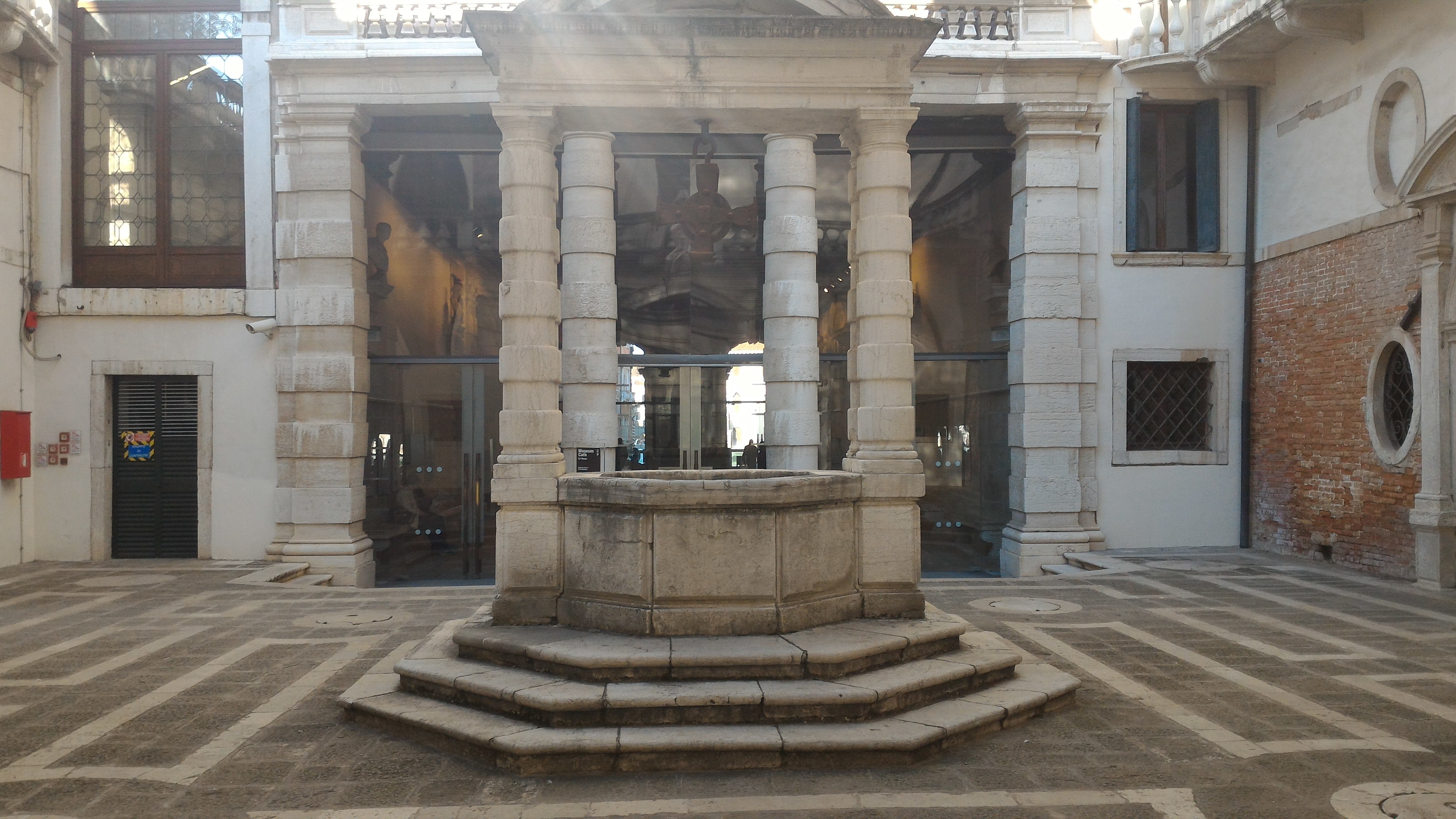
Giulio Aristide Sartorio e il suo “Poema della vita umana”: Un capolavoro simbolista ritrovato a Venezia
Amici appassionati d’arte (e anche voi che magari vi affacciate ora a questo mondo fantastico!), oggi vi portiamo alla scoperta di un artista italiano forse meno conosciuto al grande pubblico di quanto meriterebbe: Giulio Aristide Sartorio. Pittore, scultore, scrittore e persino regista cinematografico, Sartorio fu una figura eclettica e di successo a cavallo tra l’Ottocento e il Novecento.
Allievo del padre e del nonno, entrambi artisti, Sartorio sviluppò presto un talento indipendente, formandosi in gran parte da autodidatta e studiando le grandi opere nelle chiese e nei musei romani. Nonostante le sue radici classiche, fu attratto da nuove tendenze artistiche, come il Preraffaellismo e, in particolare, il Simbolismo.
Ma cos’è il Simbolismo? In parole semplici, è un movimento artistico (e culturale, che coinvolse anche letteratura e musica) nato alla fine dell’Ottocento. A differenza dell’Impressionismo che cercava di catturare l'”impressione” visiva della realtà, il Simbolismo andava oltre. Gli artisti simbolisti volevano esprimere idee profonde, sentimenti ed emozioni interiori, e le realtà misteriose e nascoste dietro l’apparenza visibile. Usavano quindi simboli, figure evocative e un linguaggio (visivo, nel caso della pittura) che suggerisse significati più complessi, puntando all’intuizione e alla spiritualità. Sartorio si inserisce perfettamente in questo contesto, entrando in contatto anche con i simbolisti tedeschi. Le sue opere “La Gorgone e gli Eroi” e “Sirena o Abisso verde” sono splendidi esempi del suo stile simbolista, cariche di mistero e drammaticità.
Il “Poema della vita umana”: Un’opera monumentale
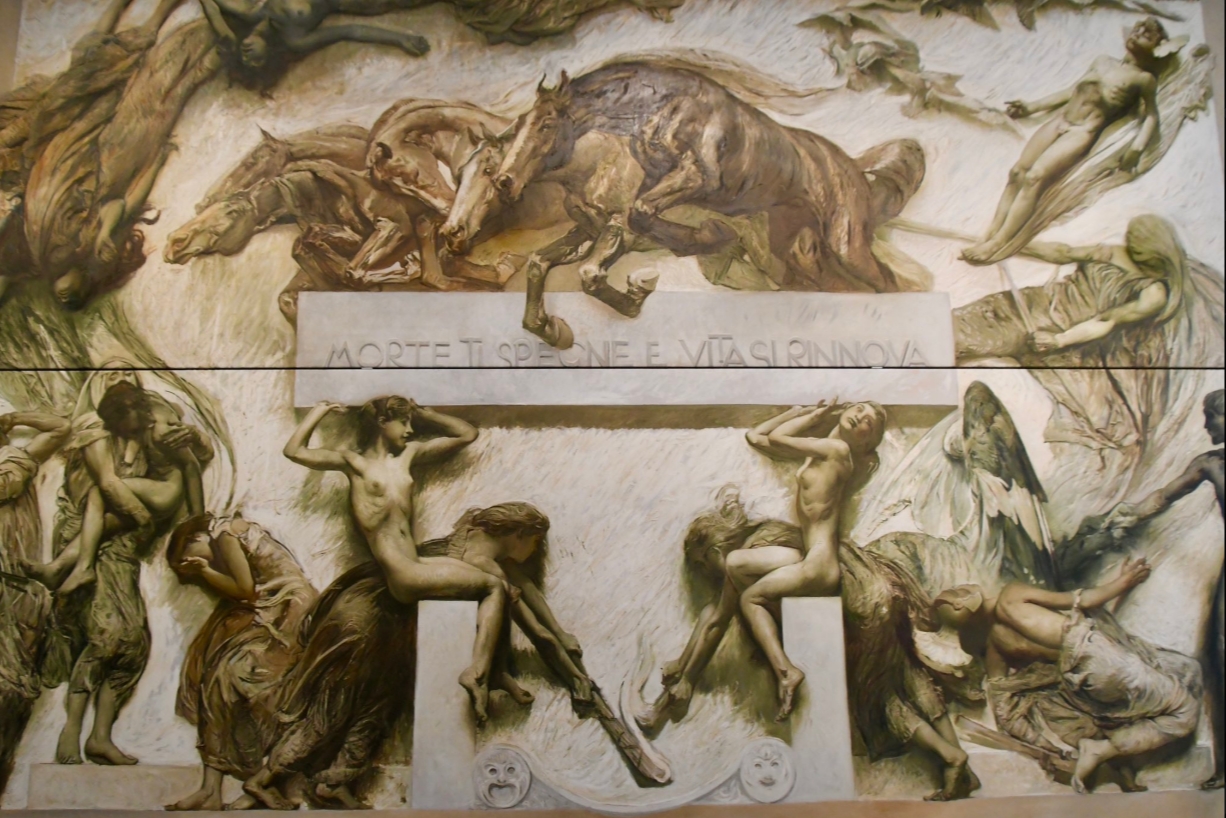
Una delle opere più importanti e affascinanti di Sartorio è un ciclo pittorico monumentale intitolato “Il poema della vita umana“. Quest’opera fu commissionata a Sartorio nel 1906 da Antonio Fradeletto, il segretario generale della Biennale di Venezia, per decorare il Salone centrale dell’Esposizione Internazionale del 1907. Il tema, basato sulla mitologia antica, intendeva illustrare la vita umana. Il ciclo è composto da quattro scene principali: La Luce, Le Tenebre, L’Amore, e La Morte, alternate a dieci pannelli verticali raffiguranti la Grazia, l’Arte e l’energia virile. Sartorio offrì una visione intensamente drammatica dell’esistenza, dalla nascita (simboleggiata dalla Luce, insidiata da forze avverse) fino alla morte. Tra questi estremi, troviamo le allegorie delle Tenebre e il contrasto tra l’amore buono (Eros) e quello cattivo (Himeros).
L’iconografia è complessa e fu persino approvata da Gabriele d’Annunzio. Visivamente, l’opera è priva di elementi architettonici e presenta una sostanziale monocromia, ma ciò che colpisce è l’eccezionale dispiegamento di figure in movimento, che in alcune scene arrivano ad assumere una forma rotante, sottolineando l’intento simbolico generale.
Pensate che Sartorio realizzò questo imponente ciclo, esteso per circa 240 metri quadrati, in soli nove mesi! Utilizzò una tecnica pittorica particolare, un mix di cera, acquaragia e olio di papavero, che gli permise di lavorare rapidamente.
Da Venezia a Ca’ Pesaro: La storia del ciclo
Dopo l’Esposizione del 1907, il ciclo rimase esposto anche per l’edizione successiva della Biennale. Nel 1909, il re Vittorio Emanuele III donò l’opera alla Galleria Internazionale d’Arte Moderna di Venezia, che ha sede a Ca’ Pesaro.
Le vicende e il tempo hanno lasciato il segno su questo grande lavoro. Le fonti ci dicono che la superficie dipinta presentava estese crepe, lacune di colore (alcune riparate in modo approssimativo in passato) e macchie scure dovute a degrado biologico. Fortunatamente, tra il 2018 e il 2019 è stato possibile realizzare un importante restauro. Questo intervento ha permesso di consolidare le aree danneggiate, rimuovere vecchie integrazioni non adeguate, pulire le superfici e ritoccare le cadute di colore. Si è anche prevista la sostituzione dei telai originali con altri più rigidi e leggeri, dotati di un sistema per regolare la tensione della tela, fondamentale per la conservazione di un’opera così grande. Attualmente, il ciclo è conservato in un deposito a Mestre, in attesa di essere nuovamente esposto. La buona notizia è che presto potremo ammirare nuovamente questo capolavoro!
Un’occasione da non perdere: La mostra a Ca’ Pesaro nel 2025
Il ciclo pittorico “Il poema della vita umana” di Giulio Aristide Sartorio sarà al centro di una mostra a Ca’ Pesaro – Galleria Internazionale d’Arte Moderna a Venezia. La mostra si terrà nelle sale espositive del secondo piano e sarà visitabile dal 16 maggio al 28 settembre 2025. Sarà un’occasione unica per vedere da vicino quest’opera restaurata e per comprendere meglio l’arte di Sartorio e il contesto del Simbolismo italiano all’inizio del XX secolo.
Saranno esposti l’intero ciclo e una ricca documentazione sul restauro, oltre a documenti d’archivio e opere di altri artisti esposte alle Biennali di quegli anni, per ricostruire il contesto storico-artistico. Se siete a Venezia in quel periodo, o state pensando a una gita, segnatevi questa data! Visitare Ca’ Pesaro è già di per sé un’esperienza splendida (il palazzo ospita una collezione permanente di arte moderna con opere di artisti come Munch, Ensor, Klimt, Kandinsky e Klee, oltre a mostre temporanee interessanti e un bellissimo Museo d’Arte Orientale), e avere l’opportunità di vedere questo monumentale ciclo di Sartorio renderà la visita ancora più speciale.
Ca’ Pesaro si trova nel sestiere Santa Croce e gli orari di apertura sono generalmente dal martedì alla domenica, ma per la mostra è sempre bene verificare sul sito ufficiale. Giulio Aristide Sartorio è un artista affascinante, capace di unire stili diversi e di esplorare temi profondi con grande forza espressiva. Il “Poema della vita umana” è una testimonianza straordinaria della sua visione e del Simbolismo in Italia. Non perdete l’occasione di scoprirlo o riscoprirlo nel 2025!
Giulio Aristide Sartorio and his “Poem of Human Life”: A Symbolist Masterpiece Rediscovered in Venice
Hello art lovers (and even those of you who are just starting to explore this fantastic world!), today we’re taking you to discover an Italian artist perhaps less known to the general public than he deserves: Giulio Aristide Sartorio. Painter, sculptor, writer, and even film director, Sartorio was an eclectic and successful figure spanning the late 19th and early 20th centuries.
A student of his father and grandfather, both artists, Sartorio quickly developed an independent talent, largely self-taught, studying the great works in Roman churches and museums. Despite his classical roots, he was drawn to new artistic trends, such as Pre-Raphaelitism and, particularly, Symbolism.
But what exactly is Symbolism? In simple terms, it’s an artistic movement (and cultural movement, also involving literature and music) that emerged at the end of the 19th century. Unlike Impressionism, which sought to capture the visual “impression” of reality, Symbolism went further. Symbolist artists wanted to express profound ideas, inner feelings and emotions, and the mysterious and hidden realities behind visible appearance. They therefore used symbols, evocative figures, and a language (visual, in the case of painting) that suggested more complex meanings, aiming for intuition and spirituality. Sartorio fits perfectly into this context, also coming into contact with German Symbolists. His works “La Gorgone e gli Eroi” (The Gorgon and the Heroes) and “Sirena o Abisso verde” (Siren or Green Abyss) are splendid examples of his Symbolist style, full of mystery and drama.
The “Poem of Human Life”: A Monumental Work
One of Sartorio’s most important and fascinating works is a monumental pictorial cycle titled “Il poema della vita umana” (The Poem of Human Life). This work was commissioned to Sartorio in 1906 by Antonio Fradeletto, the secretary general of the Venice Biennale, to decorate the Central Hall of the 1907 International Exhibition.
The theme, based on ancient mythology, aimed to illustrate human life. The cycle is composed of four main scenes: La Luce (The Light), Le Tenebre (The Darkness), L’Amore (Love), and La Morte (Death), alternated with ten vertical panels depicting Grazia (Grace), Arte (Art), and virile energy. Sartorio offered an intensely dramatic vision of existence, from birth (symbolized by The Light, threatened by adverse forces) to death (to which the final male figure, a self-portrait, poses a serene question, seemingly challenging the Sphinx). Between these extremes, we find the allegories of Darkness and the contrast between good love (Eros) and bad love (Himeros).
The iconography is complex and was even approved by Gabriele d’Annunzio. It appears as a synthesis between the Mediterranean world and Nordic culture, with clear references to Nietzsche’s concept of eternal return. Visually, the work is devoid of architectural elements and presents a substantial monochrome, but what is striking is the exceptional deployment of figures in motion, which in some scenes, like Le Tenebre and La Morte, take on a rotating form, emphasizing the overall symbolic intent. Consider that Sartorio created this imposing cycle, spanning approximately 240 square meters (or about 230 square meters), in just nine months! He used a particular painting technique, a mix of wax, turpentine, and poppy seed oil, which allowed him to work quickly. This composition was confirmed by recent analyses.
From Venice to Ca’ Pesaro: The History of the Cycle
After the 1907 Exhibition, the cycle remained on display for the subsequent edition of the Biennale in 1909. In 1909, King Vittorio Emanuele III donated the work to the Galleria Internazionale d’Arte Moderna di Venezia (International Gallery of Modern Art in Venice), which is housed in Ca’ Pesaro. The events and passage of time left their mark on this large work. Sources tell us that the painted surface showed extensive cracking, particularly in dark areas, paint lacunae (some repaired in an approximate manner in the past, covering more area than necessary), and dark stains due to biological degradation.
Fortunately, a significant restoration was carried out between 2018 and 2019. This intervention allowed for the consolidation of damaged areas, the removal of old and inadequate integrations, the cleaning of surfaces to remove dirt and incoherent materials, and the retouching of paint losses with filling and pictorial retouching to restore depth and surface continuity. The restoration also included the replacement of the original wooden frames, which had insufficient mechanical quality, with others having greater rigidity and lightness, equipped with elements for continuous tension adjustment of the canvas. A precise mapping of the cycle’s conservation status was also planned to monitor any changes. The restoration had an expected cost of €100,000.00, and funding was received from Chanel srl, among others. Currently, the cycle is stored in an external deposit located at the VEGA Science and Technology Park in Mestre, Edificio Cygnus, awaiting re-exhibition. This deposit is not open to the public. The good news is that soon we will be able to admire this masterpiece again!
An Opportunity Not to Be Missed: The Exhibition at Ca’ Pesaro in 2025
The pictorial cycle “Il poema della vita umana” by Giulio Aristide Sartorio will be the focus of an exhibition at Ca’ Pesaro – Galleria Internazionale d’Arte Moderna in Venice. The exhibition will be held in the exhibition rooms on the second floor and will be open from May 16 to September 28, 2025. It will be a unique opportunity to see this restored work up close and to better understand Sartorio’s art and the context of Italian Symbolism at the beginning of the 20th century.
The entire cycle will be exhibited, along with extensive documentation about the restoration, as well as archival documents and works by other artists exhibited at the Biennales in those years, to reconstruct the historical-artistic context. If you are in Venice during that period, or are planning a trip, mark this date! Visiting Ca’ Pesaro is already a splendid experience in itself (the palace houses a permanent collection of modern art with works by artists such as Klimt, Medardo Rosso, Rodin, Kandinsky, and Klee, in addition to interesting temporary exhibitions and a beautiful Oriental Art Museum with one of the most important collections of Japanese Edo Period art in Italy), and having the opportunity to see this monumental cycle by Sartorio will make the visit even more special.
Ca’ Pesaro is located in the Santa Croce sestiere, and opening hours are generally Tuesday to Sunday, from 10:00 AM to 6:00 PM (summer) and 10:00 AM to 5:00 PM (winter), with the ticket office closing one hour prior. However, for the exhibition, it is always best to check the official website. Guided tours are available, including in English. Giulio Aristide Sartorio is a fascinating artist, capable of combining different styles and exploring profound themes with great expressive power. The “Poem of Human Life” is an extraordinary testimony to his vision and to Symbolism in Italy. Don’t miss the chance to discover or rediscover it in 2025!
 Diario di un operatore museale