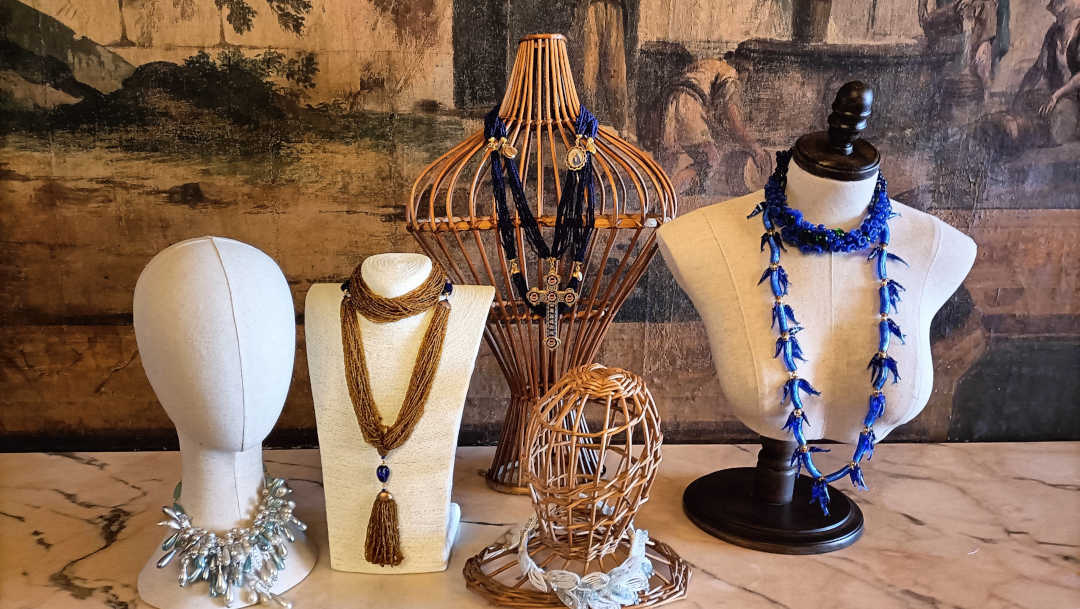
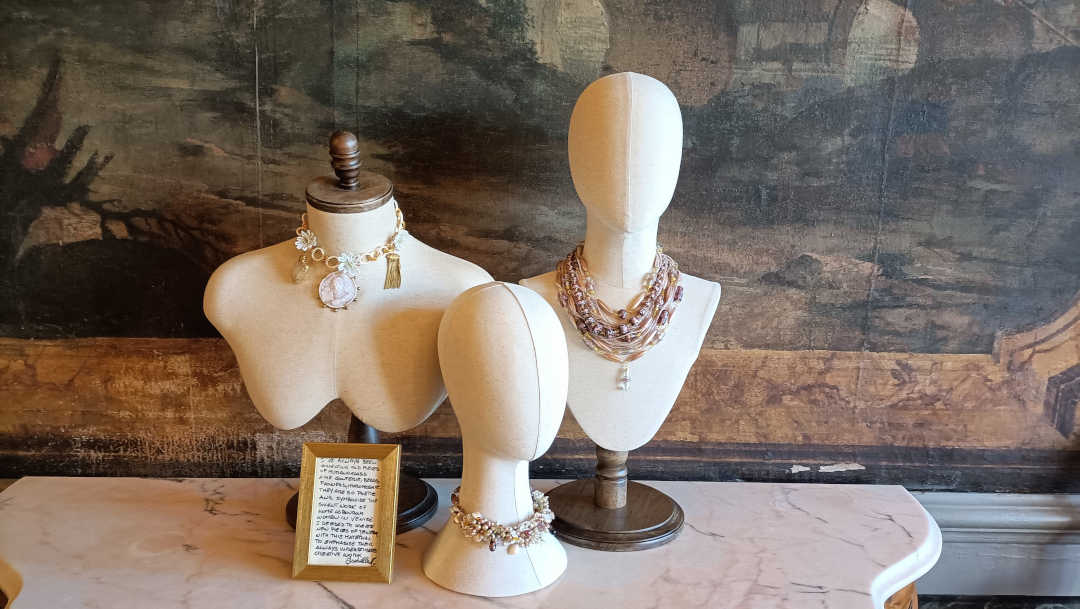
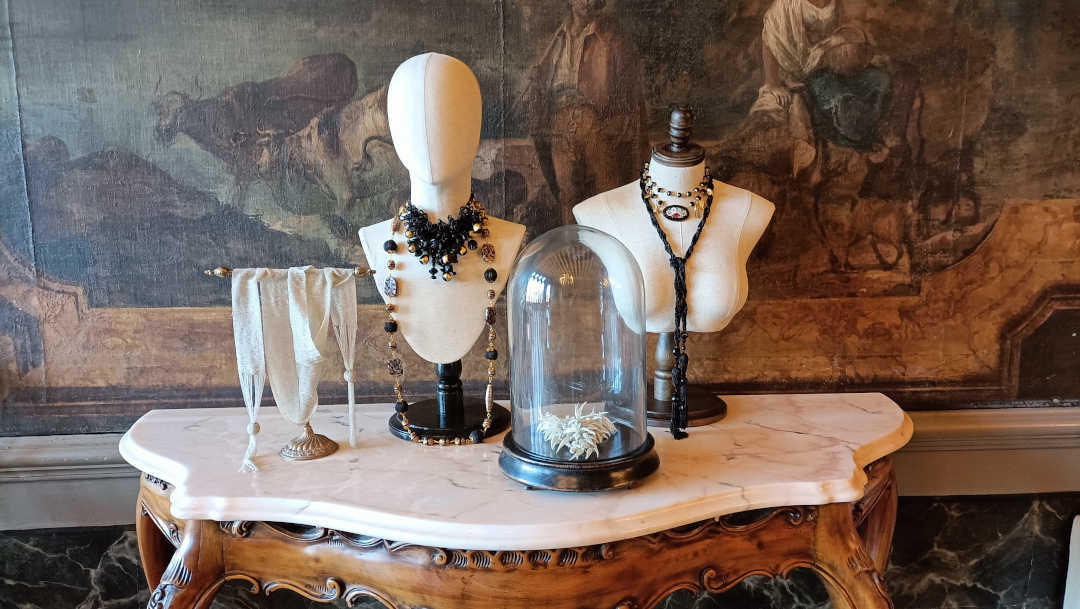
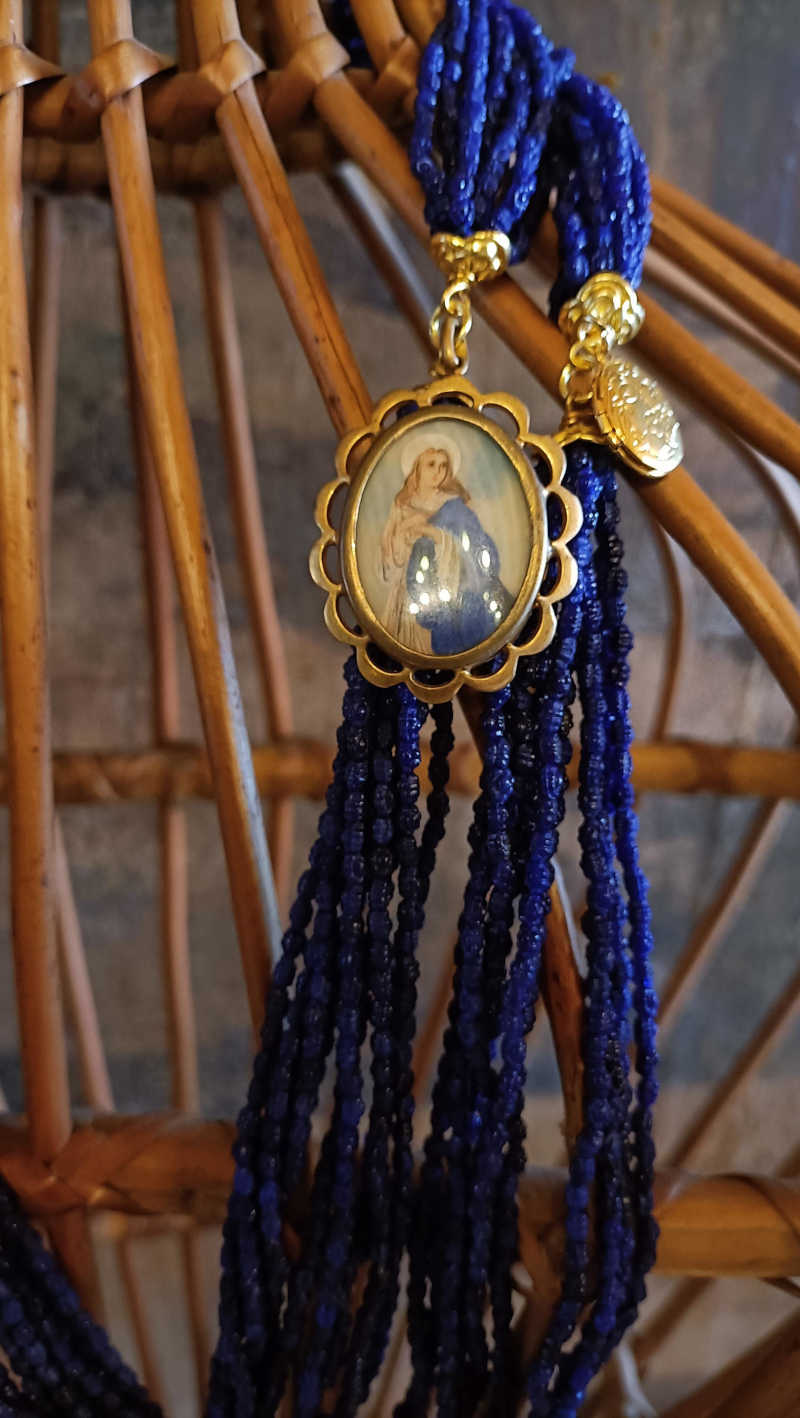
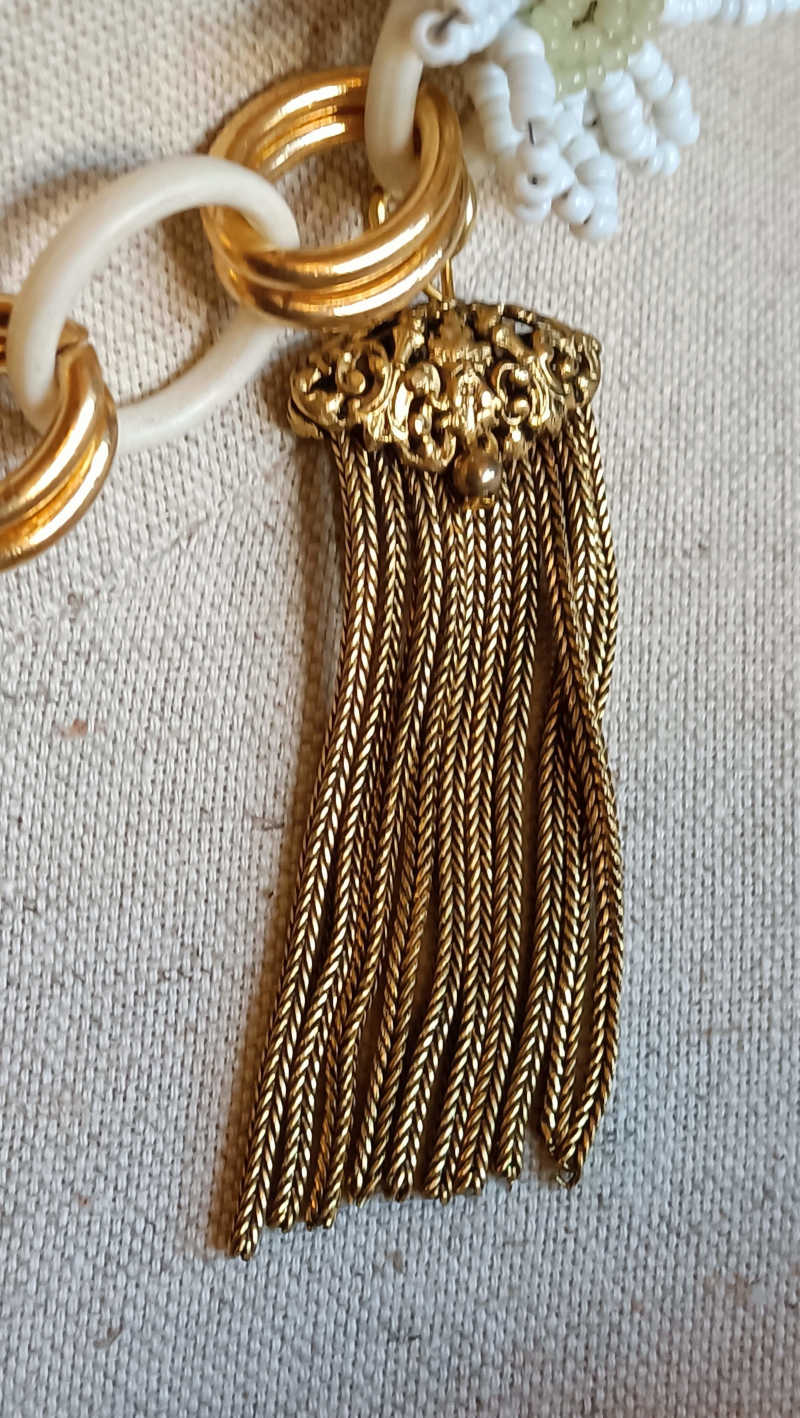
Anche il magnifico Ca’ Sagredo Hotel partecipa alla glass week con una mostra dell’artista e collezionista Isabella Muratori, una mostra esibita al primo piano nobile, aperta al pubblico dal 15 fino al 22 di settembre negli orari concessi dall’albergo. Diciamo che dalle 10 di mattina, potete andare e chiedere di vedere questa bellissima mostra, vi consiglio di visionare i seguenti siti web: https://www.casagredohotel.com/it/ – https://theveniceglassweek.com/
L’artista si chiama Isabella Muratori, è una stilista e designer di interni, specializzata in oggetti vintage e decorazioni d’epoca, collabora con architetti di tutto il mondo per progettare residenze, locali e hotel, curando la ricerca di materiali e lo styling degli spazi, ha una passione per il vetro di Murano, e ha deciso di creare in occasione della Glass Week questa mostra con delle opere molto interessanti. Questi oggetti non solo riflettono la bellezza artistica, ma simboleggiano anche il lavoro delle donne artigiane di Venezia. Questi gioielli sono progettati per valorizzare l’opera creativa delle donne che storicamente hanno lavorato con questo materiale. La sua visione del “vintage” è quella di rielaborare stili e atmosfere che spaziano dagli anni ’20 agli anni ’50, creando un nuovo progetto moderno che conserva la ricchezza degli oggetti d’epoca. In sintesi, Isabella Muratori si distingue per la sua capacità di unire tradizione e modernità nel design d’interni e nella creazione di gioielli, ponendo particolare attenzione alla valorizzazione del patrimonio artistico e culturale italiano.
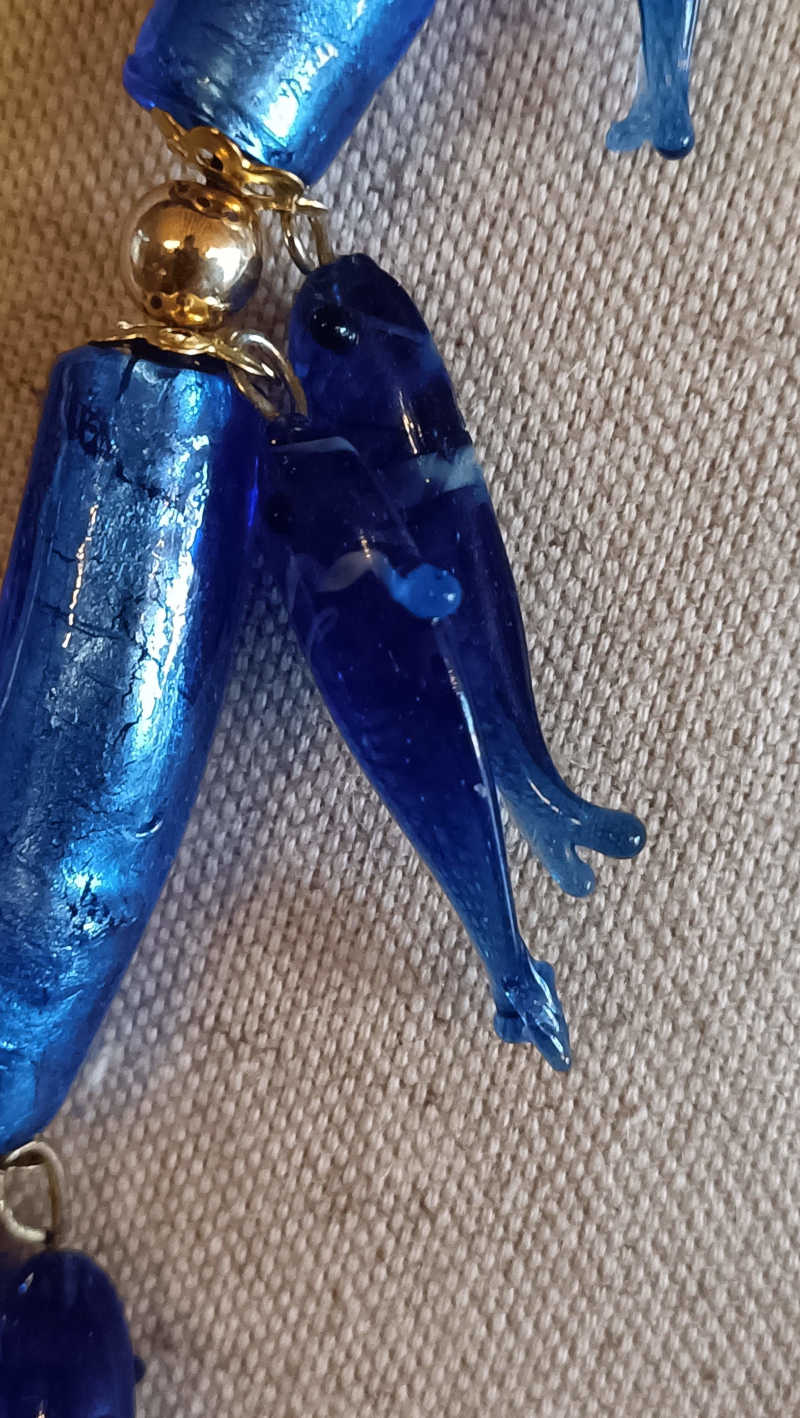
Personalmente, ho trovato molto interessante i dettagli delle sue opere, questa mattina, riuscendo ad arrivare molto presto, ho potuto godere della mostra, mi sono avvicinato più che potevo, senza rischio per le opere e trascorso il tempo, a scrutare i minimi dettagli. Non soffermatevi nella visione d’insieme, guardate meglio e andate oltre, vedrete delle cose molto interessanti.
Non perdere l’opportunità di immergerti in un affascinante viaggio nel tempo con la mostra di Isabella Muratori! Esplora una collezione unica di gioielli ornamentali realizzati con preziosi elementi in vetro di Murano, che raccontano storie di eleganza e artigianato femminile. Ogni pezzo è una scoperta, un connubio tra passato e presente, dove il fascino degli anni ’20-’50 si fonde con la modernità. Lasciati avvolgere dalle atmosfere poetiche e dall’arte che celebra il lavoro silenzioso delle donne veneziane. Un’esperienza che non solo arricchirà i tuoi sensi, ma ti porterà a riflettere sulla bellezza del patrimonio culturale.
Muranoglass Jewelry made by Women at Ca’ Sagredo Hotel !
The magnificent Ca’ Sagredo Hotel also participates in the glass week with an exhibition of the artist and collector Isabella Muratori, an exhibition exhibited on the first noble floor, open to the public from September 15th to 22nd during the hours granted by the hotel. Let’s say that from 10 in the morning, you can go and ask to see this beautiful exhibition, I recommend you to view the following websites: https://www.casagredohotel.com/it/ – https://theveniceglassweek.com/
The artist’s name is Isabella Muratori, she is a stylist and interior designer, specialized in vintage objects and period decorations, she collaborates with architects from all over the world to design residences, premises and hotels, taking care of the research of materials and the styling of the spaces, she has a passion for Murano glass, and has decided to create this exhibition with some very interesting works on the occasion of Glass Week. These objects not only reflect artistic beauty, but also symbolize the work of the women artisans of Venice. These jewels are designed to enhance the creative work of women who have historically worked with this material. Her vision of “vintage” is to rework styles and atmospheres that range from the 1920s to the 1950s, creating a new modern project that preserves the richness of vintage objects. In short, Isabella Muratori stands out for her ability to combine tradition and modernity in interior design and jewelry creation, paying particular attention to the enhancement of Italian artistic and cultural heritage.
Personally, I found the details of her works very interesting, this morning, managing to arrive very early, I was able to enjoy the exhibition, I got as close as I could, without risking the works and spent the time, scrutinizing the smallest details. Don’t stop at the overview, look better and go further, you will see very interesting things.
Don’t miss the opportunity to immerse yourself in a fascinating journey through time with the Isabella Muratori exhibition! Explore a unique collection of ornamental jewels made with precious Murano glass elements, which tell stories of elegance and feminine craftsmanship. Each piece is a discovery, a combination of past and present, where the charm of the 20s-50s merges with modernity. Let yourself be enveloped by the poetic atmospheres and art that celebrates the silent work of Venetian women. An experience that will not only enrich your senses, but will make you reflect on the beauty of cultural heritage.
For the English translation please scroll down the page, thank you !
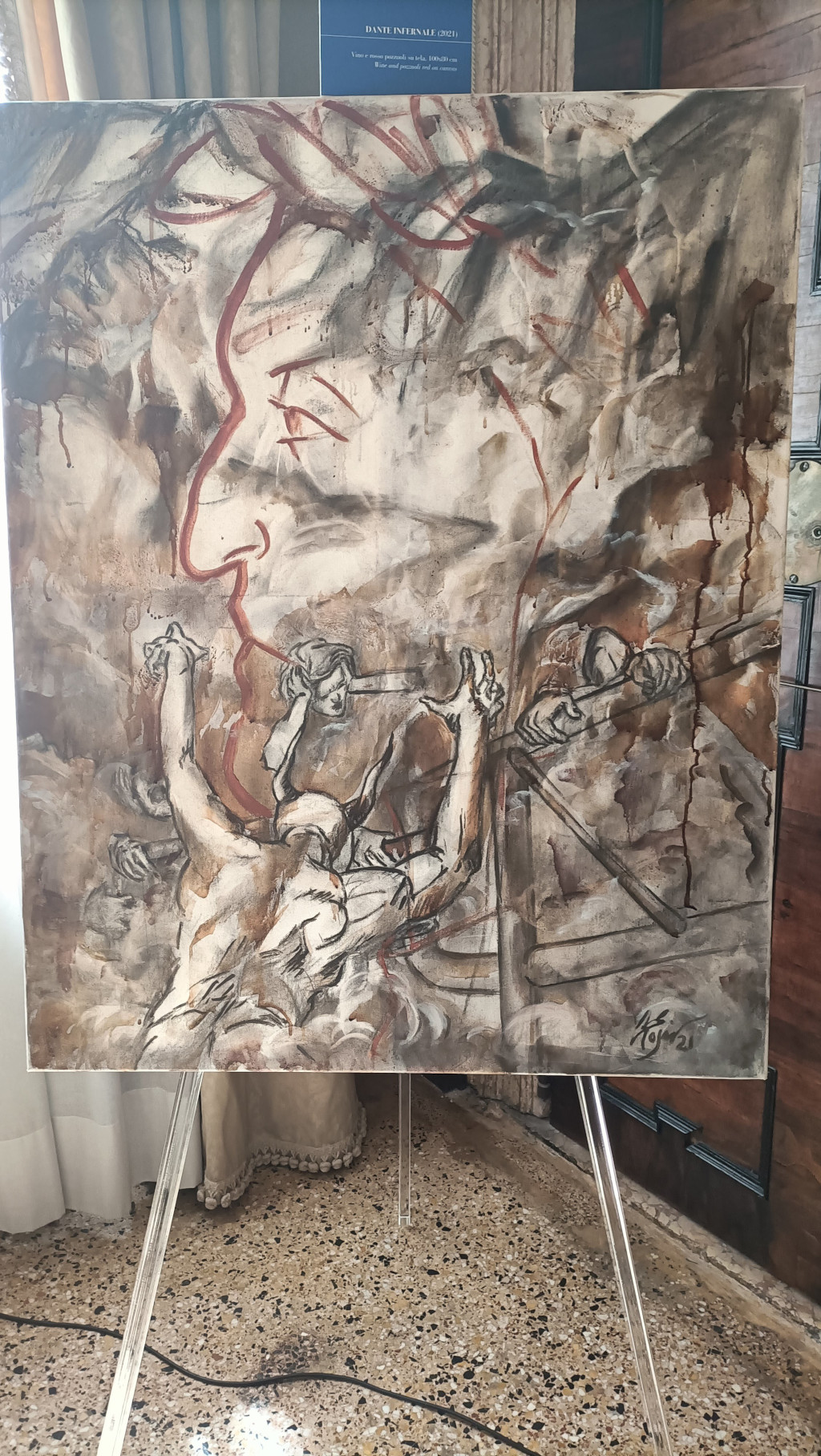
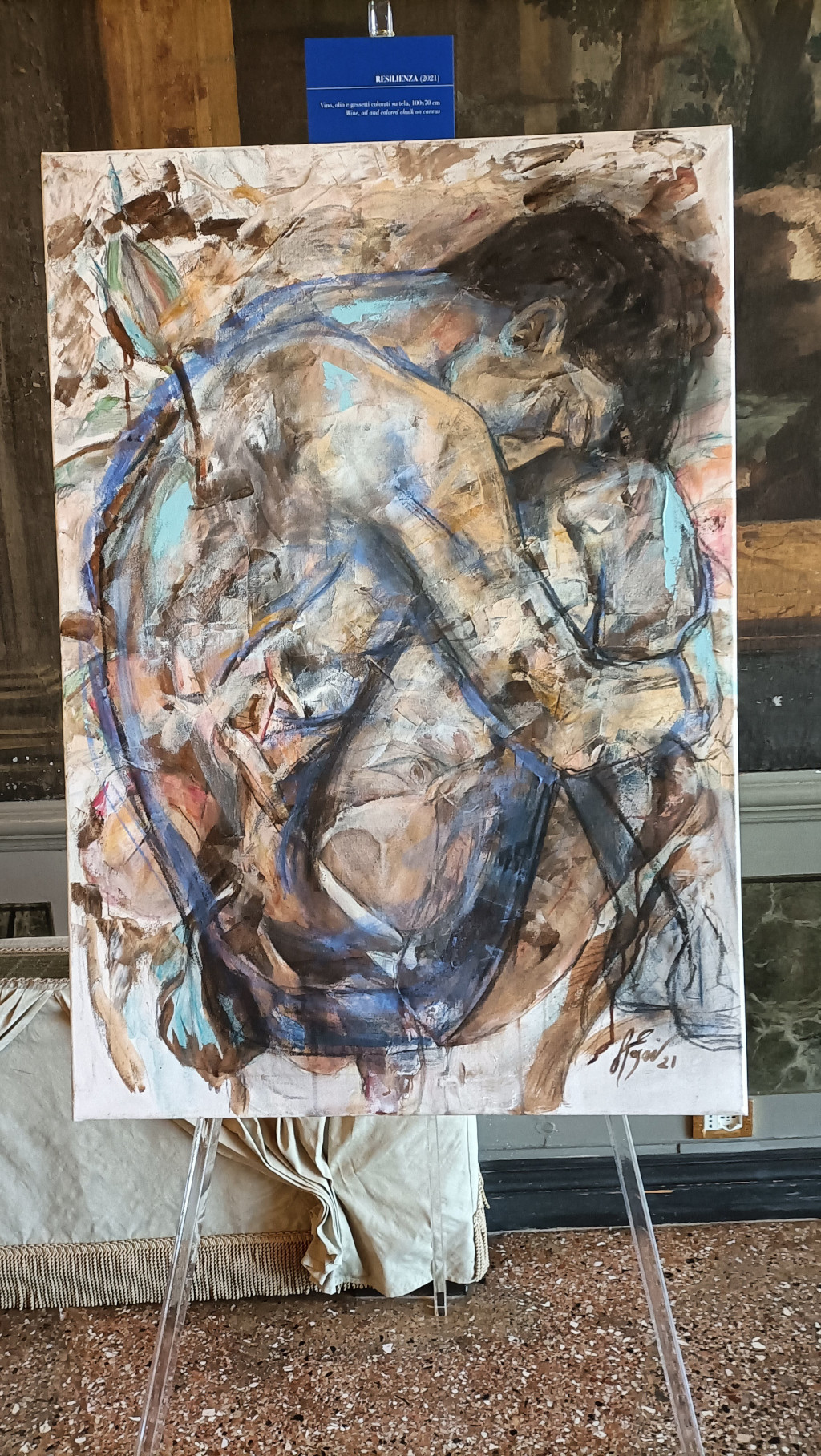
Troppi sono stati gli impegni che mi hanno impedito di sapere prima di questa bellissima mostra esposta a Ca’ Sagredo hotel, dal 6 di luglio fino al 11 di agosto del 2024, ad opera di una grande artista di nome Elisabetta Rogai. Alla fine, sotto un sole cocente ed infernale, poco prima di recarmi al lavoro, sono riuscito ad andare ad ammirarla, e mi è piaciuta moltissimo. Scopriamo insieme chi è Elisabetta Rogai.
Elisabetta Rogai è un’artista italiana di spicco, nota per la sua capacità di unire tradizione e modernità nelle sue opere. Fin dalla giovane età di nove anni, ha dedicato la sua vita all’arte, esplorando diverse tecniche tra cui la pittura, la scultura e l’installazione. La sua innovativa tecnica di “Enoarte”, che utilizza il vino come mezzo espressivo, ha catturato l’attenzione di critici e collezionisti, rendendo il suo lavoro unico nel panorama artistico contemporaneo. Rogai ha esposto in numerose gallerie e musei sia in Italia che all’estero, guadagnandosi riconoscimenti significativi, tra cui il Premio Nazionale delle Arti nel 2018. Le sue opere, caratterizzate da un uso audace dei colori e da una profonda esplorazione dei temi legati alla natura e all’umanità, invitano alla riflessione e all’emozione.
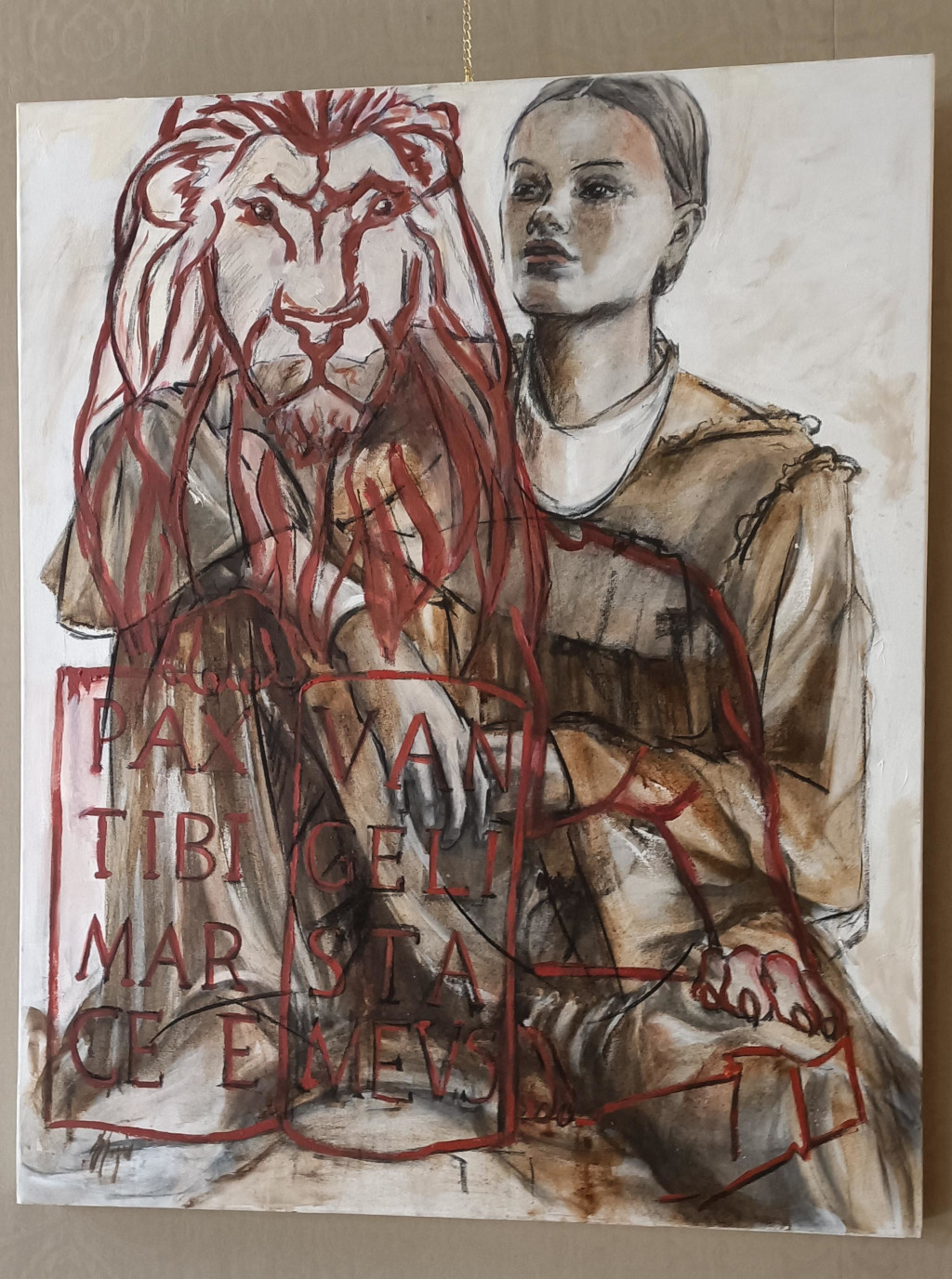
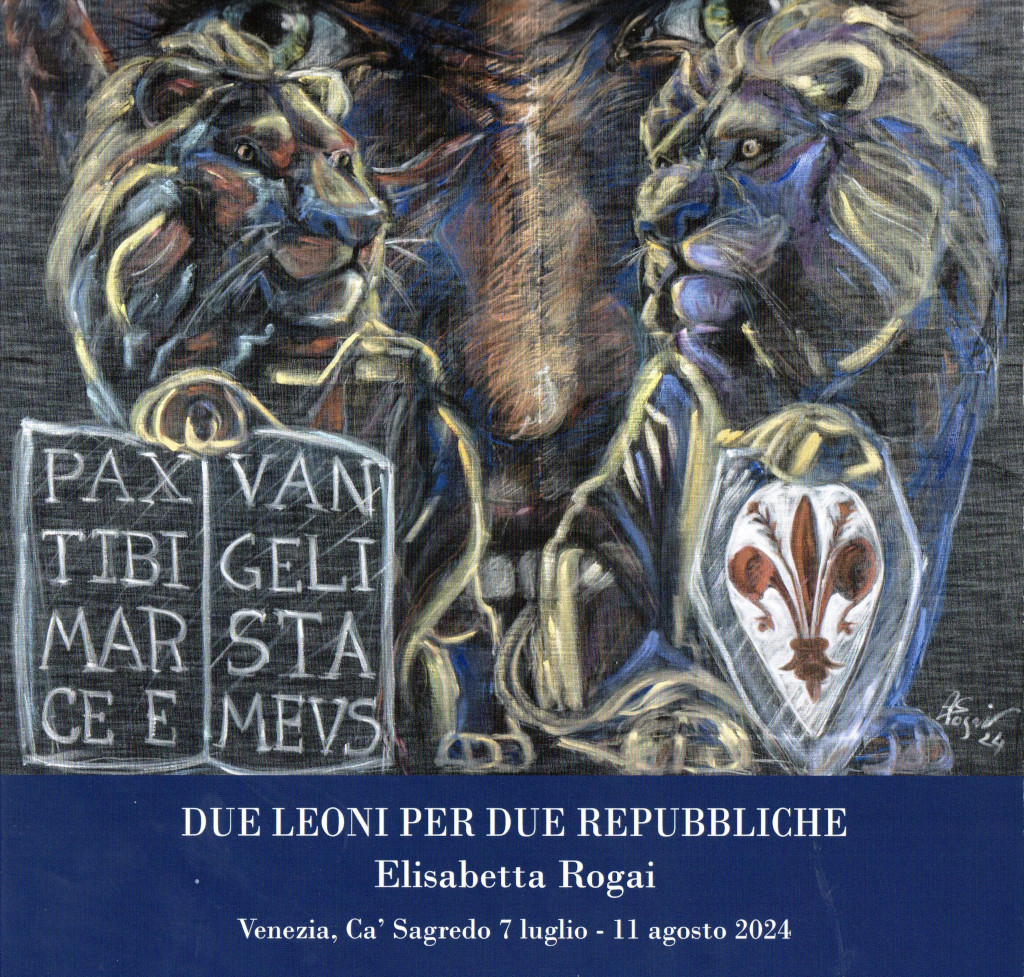
Un esempio significativo del suo lavoro è la mostra “Due Leoni per due Repubbliche”, esposta a Ca’ Sagredo a Venezia. In questa esposizione, Rogai ha celebrato il legame tra Venezia e Firenze attraverso la rappresentazione dei leoni, simboli storici delle due città.
Utilizzando tecniche innovative e materiali unici, ha creato opere che non solo riflettono la sua visione artistica, ma anche l’identità culturale italiana. La passione di Rogai per l’arte si riflette nel suo impegno a promuovere la cultura e la creatività, rendendola una figura influente nel panorama artistico contemporaneo. Per chi desidera approfondire il suo lavoro, il suo sito ufficiale offre una panoramica delle sue opere e delle esposizioni passate e future: https://www.elisabettarogai.it/ .
Sono rimasto favorevolmente impressionato, in quanto non avevo mai visto simili capolavori usando come tela il marmo di Carrara, o che si potessero usare come pennelli il vino e /o l’aceto balsamico. Una tecnica a dir poco all’avanguardia, e i soggetti dei quadri, molto emozionanti. Ricordo ancora una volta che la mostra sarà visibile fino al 11 di agosto. Invito tutta la cittadinanza e i turisti presenti nel hotel a soffermarsi per ammirare questi stupendi capolavori. Da non perdere !!
New ways to paint at Ca’ Sagredo !
Too many commitments prevented me from knowing in advance about this beautiful exhibition on display at Ca’ Sagredo hotel, from July 6th to August 11th 2024, by a great artist named Elisabetta Rogai. Finally, under a scorching and infernal sun, just before going to work, I managed to go and admire her exhibition, and I liked it very much. Let’s find out together who Elisabetta Rogai is.
Elisabetta Rogai is a prominent Italian artist, known for her ability to combine tradition and modernity in her works. Since the young age of nine, she has dedicated her life to art, exploring different techniques including painting, sculpture and installation. Her innovative technique of “Enoarte”, which uses wine as a means of expression, has captured the attention of critics and collectors, making her work unique in the contemporary art scene. Rogai has exhibited in numerous galleries and museums both in Italy and abroad, earning significant recognition, including the National Arts Award in 2018. Her works, characterized by a bold use of colors and a deep exploration of themes related to nature and humanity, invite reflection and emotion.
A significant example of his work is the exhibition “Two Lions for Two Republics”, exhibited at Ca’ Sagredo in Venice. In this exhibition, Rogai celebrated the bond between Venice and Florence through the representation of lions, historical symbols of the two cities.
Using innovative techniques and unique materials, he created works that not only reflect his artistic vision, but also the Italian cultural identity. Rogai’s passion for art is reflected in her commitment to promoting culture and creativity, making her an influential figure in the contemporary art scene. For those who wish to delve deeper into her work, her official website https://www.elisabettarogai.it/ offers an overview of her works and past and future exhibitions.
I was very impressed, as I had never seen such masterpieces using Carrara marble as a canvas, or that wine and/or balsamic vinegar could be used as brushes. A technique that is nothing short of cutting edge, and the subjects of the paintings, very exciting. I remind you once again that the exhibition will be visible until August 11th. I invite all citizens and tourists present in the hotel to stop and admire these wonderful masterpieces. Not to be missed !!
For the English translation please scroll down the page, thank you !
Prologo
E’ da parecchio tempo, che studio con passione le innumerevoli famiglie nobili della storia della Serenissima, una in particolare, è la mia preferita, la famiglia Sagredo. La ragione nasce dal fatto che abito a poca distanza da via Ca’ Sagredo a Mestre dove la famiglia, aveva la villa in terraferma. Quand’ero bambino, andavo a giocare presso una fattoria, che sorgeva su un tratto di terreno, dove per l’appunto risiedeva la famiglia. Probabilmente, la fattoria era dei contadini, che coltivavano i loro campi. Purtroppo, la loro dimora non esiste più, distrutta dalle guerre, l’unica cosa che si è salvata è il tempio di San Gerardo , che è all’interno della chiesa del Carmelo sempre nelle vicinanze della villa, e pensare che in quegli anni, avrò visto centinaia di volte la statua, mentre andavo a messa o a lezione di catechismo!
Inoltre, nel museo di Ca’ Rezzonico, che ho frequentato molto spesso, ci sono dei bellissimi affreschi a loro dedicati:
Nel primo riquadro “la nobiltà e la virtù vincono l’ignoranza” è un affresco di Giambattista Tiepolo, dipinto nel 1744-1745 per la sala del piano nobile di Ca’ Rezzonico, palazzo nobiliare di Venezia. L’affresco raffigura due figure alate, la Virtù e la Nobiltà, che sconfiggono l’Ignoranza. La Virtù è rappresentata da una giovane donna alata che impugna una lancia, mentre la Nobiltà è rappresentata da una donna riccamente vestita che sostiene una statuetta di Minerva. L’Ignoranza è rappresentata da una figura scomposta che precipita dal cielo, circondata da pipistrelli. L’affresco è un’allegoria della vittoria della conoscenza e della cultura sulla barbarie e l’ignoranza. L’immagine delle due figure alate che sconfiggono l’Ignoranza è un messaggio di speranza e di fiducia nel futuro. Mentre a fianco: in occasione del matrimonio tra Antonio Pesaro e Caterina Sagredo, fu commissionata a Giambattista Tiepolo una tela raffigurante Zefiro e Flora. La tela, attualmente esposta a Ca’ Rezzonico, mostra Flora, l’antica divinità della primavera, abbracciata a Zefiro, il caldo vento di ponente che fa rinascere la natura dopo i rigori dell’inverno. L’opera doveva essere intesa come un buon auspicio di fecondità per i novelli sposi.
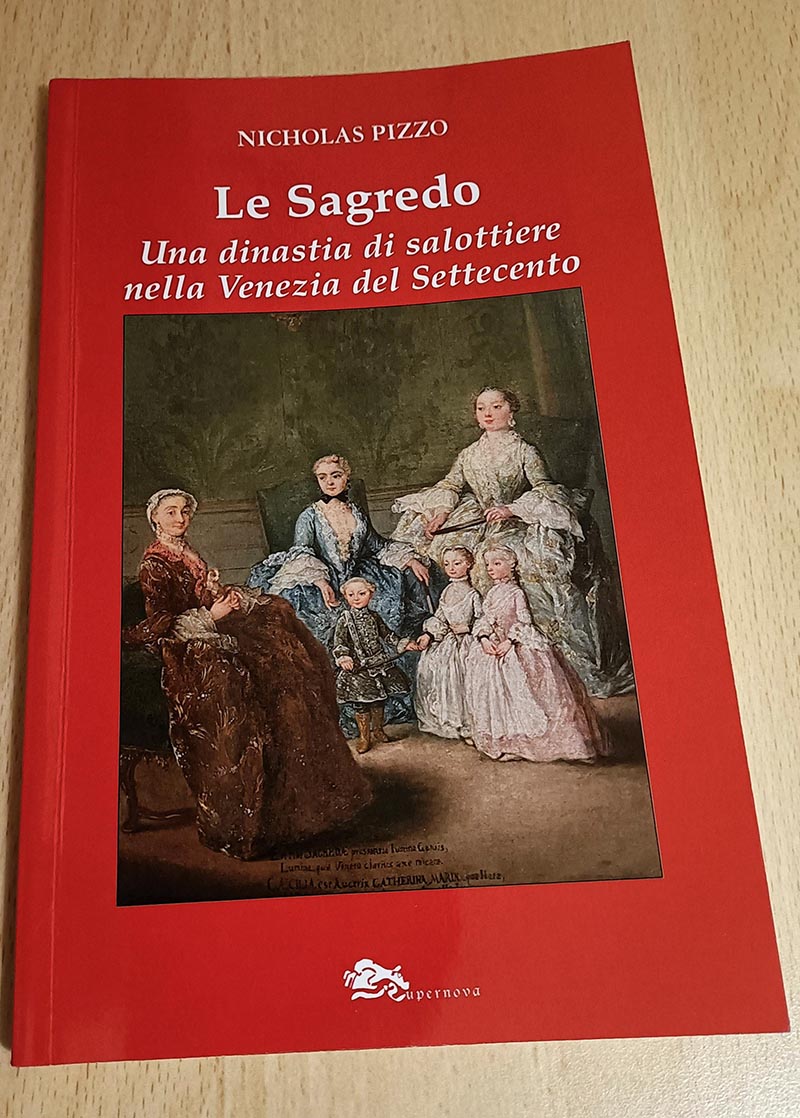
Di recente ho acquistato un libro che parla della famiglia Sagredo, molto ben fatto ad opera dello scrittore Nicholas Pizzo . Ho avuto il privilegio di mettermi in contatto con lui, e abbiamo realizzato questa piccola intervista in esclusiva per voi.
Intervista
Nicholas Pizzo: Sono uno storico settecentesco con una laurea in Storia presso l’Alma Mater Studiorum di Bologna, conseguita nel 2020. La mia tesi di laurea triennale si intitolava “Allegri alla Villeggiatura, vita in Villa nel Settecento veneziano”. Attualmente sono iscritto al corso di laurea magistrale in Storia dal Medioevo all’età Contemporanea presso l’Università Ca’ Foscari di Venezia. Sono anche una guida museale per l’ente Munus Srl (Roma) presso il Museo Nazionale di Villa Pisani e il creatore del podcast “Ritratti del Settecento”, disponibile su Spotify. Inoltre, collaboro con Fatti per la Storia attraverso la realizzazione di alcuni articoli. Sono appassionato di storia del Settecento e mi piace condividere la mia conoscenza con gli altri. Credo che la storia sia importante perché ci aiuta a capire il presente e a costruire un futuro migliore.
io: Come mai hai fatto questo libro sulla famiglia Sagredo?
Nicholas Pizzo: Il mio saggio “Le Sagredo. Una dinastia di salottiere nella Venezia del Settecento” nasce in quanto desiderio di approfondire, diffondere e conoscere le storie di queste quattro donne divenute protagoniste essenziali al tramonto della Serenissima. Salottiere, mecenati e protettrici di artisti e letterati, le Sagredo rappresentano una dinastia tutta la femminile di eleganza, sapienza e anticonformismo. Vissute all’interno di una società maschilista e patriarcale, evasero dall’anonimato e dal rigido ruolo di mogli e madri, tenendo conversazione disinvolta e licenziosa nei loro casini e creando non pochi problemi agli Inquisitori di Stato. Il mio interesse nei loro confronti è nato e si è sviluppato nel corso degli anni e la mancanza di un volume su di loro ha fatto nascere in me il desiderio di scoperta e di divulgazione.
io: Ti è stato difficile reperire informazioni?
Nicholas Pizzo: Non ho trovato difficoltà “insormontabili”. Attraverso una attenta e dettagliata ricerca d’archivio delle fonti inedite e una ricerca meticolosa di quelle edite, sono riuscito a costruire il saggio pezzo per pezzo. Conoscere le Sagredo attraverso i documenti cartacei dell’epoca è stato emozionante
io: Quale sarà il tuo prossimo progetto ?
Nicholas Pizzo: il mio prossimo saggio verterà sulla villeggiatura nella Milano del Settecento. Considerandola quale un fenomeno culturale, artistico e sociale, la voga della villeggiatura crebbe in modo progressivo ed esponenziale nel Settecento. Simboli delle grandi famiglie aristocratiche milanesi, le dimore bucoliche e i raffinati giardini diedero libertà ed ospitalità non concessi in città. Teatri della società d’Antico Regime, le ville di delizia divennero salotti di rappresentanza e di mondanità. Attraverso le fonti recuperate dagli archivi, dai carteggi e dai documenti bibliografici, il saggio andrà ad analizzare alcuni casi specifici come quelli delle famiglie Litta Visconti Arese, Barbiano di Belgiojoso, Clerici, Serbelloni e Dugnani. Importanza e rilievo verrà data alle nobildonne che, come già osservato con le Sagredo, ebbero un ruolo fondamentale nel Settecento.
io: Musei e artisti (pittori) preferiti ?
Nicholas Pizzo: Potrei elencare moltissimi luoghi in Italia fra musei, gallerie, palazzi, chiese, ville e regge a me preferiti, ma mi limiterò a citarne soltanto alcuni a mio avviso irrinunciabili: la Reggia di Colorno, la Reggia di Caserta, Palazzo Litta a Milano, la Palazzina di Caccia di Stupinigi, il Casino Venier a Venezia, Villa Nazionale Pisani a Stra, la Chiesa di San Michele Arcangelo ad Anacapri e la Chiesa dei Gesuiti a Venezia. Museo degno di nota per comprendere il XVIII secolo indubbiamente Ca’ Rezzonico Museo del Settecento Veneziano. Per quanto riguarda invece l’arte e i pittori, la corrente artistica a me preferita è senza alcun dubbio quella del ritratto quindi devo citare tra i preferiti Pietro e Alessandro Longhi.
Ti ringrazio molto per avermi concesso questa intervista, colgo l’occasione per informare i miei lettori, che il 16 settembre presso l’Hotel Ca’sagredo di Venezia si terrà la presentazione del tuo libro sulle Sagredo ! Invito tutti a leggere questo libro, come ho già detto sopra, è molto ben fatto, conciso, chiaro, espone tutti i fatti principali, si può portare in viaggio tranquillamente, e non occupa tanto spazio. Insomma è perfetto !
Interview with Nicholas Pizzo – Sagredo what a passion
Prologue
I have been passionately studying the countless noble families of the history of the Serenissima for a long time. One in particular is my favorite, the Sagredo family. The reason is that I live a short distance from Ca’ Sagredo street in Mestre, where the family had their villa on the mainland. When I was a child, I used to go and play at a farm that stood on a piece of land where the family lived. Probably, the farm was owned by the farmers who cultivated their fields. Unfortunately, their home no longer exists, destroyed by wars. The only thing that has survived is the temple of San Gerardo, which is inside the Carmelite church, always near the villa, and to think that in those years, I must have seen the statue hundreds of times, while going to mass or to catechism classes!
In addition, in the Ca’ Rezzonico Museum, which I have visited very often, there are some beautiful frescoes dedicated to them:
In the first panel, “Nobility and Virtue Defeat Ignorance” is a fresco by Giambattista Tiepolo, painted in 1744-1745 for the ballroom on the piano nobile of Ca’ Rezzonico, a noble palace in Venice. The fresco depicts two winged figures, Virtue and Nobility, defeating Ignorance. Virtue is represented by a young winged woman holding a spear, while Nobility is represented by a richly dressed woman holding a statuette of Minerva. Ignorance is represented by a disheveled figure falling from the sky, surrounded by bats. The fresco is an allegory of the victory of knowledge and culture over barbarity and ignorance. The image of the two winged figures defeating Ignorance is a message of hope and trust in the future. Next to it, on the occasion of the marriage between Antonio Pesaro and Caterina Sagredo, Giambattista Tiepolo was commissioned to paint a canvas depicting Zephyrus and Flora. The canvas, currently on display at Ca’ Rezzonico, shows Flora, the ancient goddess of spring, embracing Zephyrus, the warm west wind that makes nature reborn after the rigors of winter. The work was intended as a good omen of fertility for the newlyweds.
I recently purchased a book about the Sagredo family, very well-written by the author Nicholas Pizzo . I had the privilege of contacting him, and we made this small interview exclusive for you.
Interview
Nicholas Pizzo: I am an eighteenth-century historian with a degree in History from the Alma Mater Studiorum of Bologna, obtained in 2020. My three-year degree thesis was entitled “Allegri alla Villeggiatura, life in Villa in eighteenth-century Venice”. I am currently enrolled in the master’s degree course in History from the Middle Ages to the Contemporary Age at the Ca’ Foscari University of Venice. I am also a museum guide for Munus Srl (Rome) at the National Museum of Villa Pisani and the creator of the podcast “Ritratti del Settecento”, available on Spotify. Furthermore, I collaborate with “Fatti per la Storia” through the creation of some articles. I am passionate about eighteenth-century history and I like to share my knowledge with others. I think history is important because it helps us understand the present and build a better future.
me: How come you made this book about family Sagredo?
Nicholas Pizzo: My essay “Le Sagredo. A Dynasty of Salonnières in 18th Century Venice” was born out of a desire to deepen, spread, and learn more about the stories of these four women who became essential players at the sunset of the Serenissima. Salonnières, patrons, and protectors of artists and writers, the Sagredo represent a female dynasty of elegance, wisdom, and non-conformism. Living within a patriarchal and sexist society, they escaped from anonymity and the rigid role of wives and mothers, holding uninhibited and licentious conversations in their salons and causing no small problems for the State Inquisitors. My interest in them was born and developed over the years, and the lack of a volume on them made me want to discover and disseminate their stories.
me: Was it difficult to find information?
Nicholas Pizzo: I did not find any “insurmountable” difficulties. Through a careful and detailed archival research of unpublished sources and a meticulous research of published ones, I was able to build the essay piece by piece. Getting to know the Sagredo through the paper documents of the time was exciting.
me: Which will this be your next project?
Nicholas Pizzo: My next essay will focus on the 18th century villeggiatura in Milan. Considered a cultural, artistic, and social phenomenon, the fashion for holiday grew progressively and exponentially in the 18th century. Symbols of the great Milanese aristocratic families, the bucolic homes and the refined gardens gave freedom and hospitality that were not granted in the city. Theaters of the Antico Regime society, the ville di delizia became salons of representation and mundanity. Through the sources recovered from the archives, the correspondence, and the bibliographical documents, the essay will analyze some specific cases such as those of the Litta Visconti Arese, Barbiano di Belgiojoso, Clerici, Serbelloni, and Dugnani families. Importance and prominence will be given to the noblewomen who, as already observed with the Sagredo, played a fundamental role in the 18th century
me: Museums and favorite artists (painters)?
Nicholas Pizzo: I could list many places in Italy among my favorite museums, galleries, palaces, churches, villas and palaces, but I will limit myself to mentioning only a few that I believe are essential: the Reggia di Colorno, the Reggia di Caserta, Palazzo Litta in Milan, the Palazzina di Caccia di Stupinigi, the Casino Venier in Venice, Villa Nazionale Pisani in Stra, the Church of San Michele Arcangelo in Anacapri and the Church of the Jesuits in Venice. A museum worth noting to understand the 18th century is undoubtedly Ca’ Rezzonico Museum of Venetian 18th century art of Venice. As for art and painters, my favorite artistic movement is undoubtedly that of portraiture, so I must mention among my favorites Pietro and Alessandro Longhi.”
Thank you very much for granting me this interview, I would like to take this opportunity to inform my readers that your book on the Sagredo family will be presented at the Hotel Ca’sagredo in Venice on September 16th. I encourage everyone to read this book, as I have already said above, it is very well done, concise, clear, and exposes all the main facts. It can be easily taken on a trip and does not take up much space. In short, it is perfect!”
For the English translation please scroll down the page, thank you !
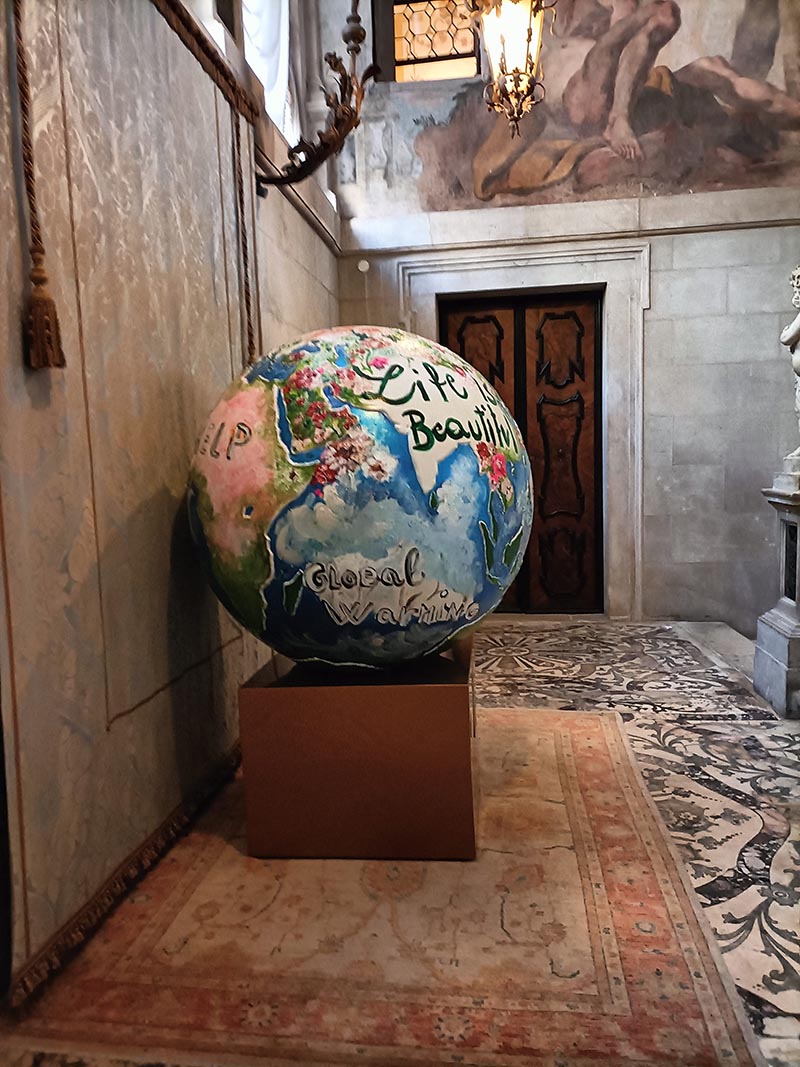
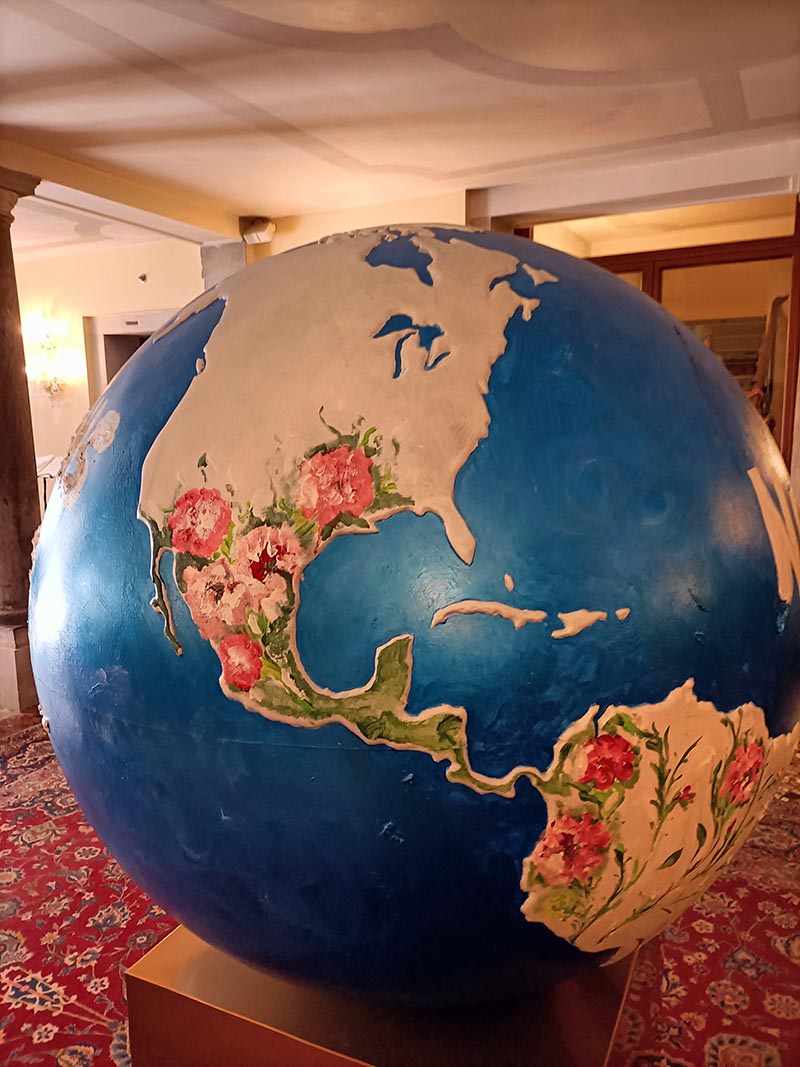
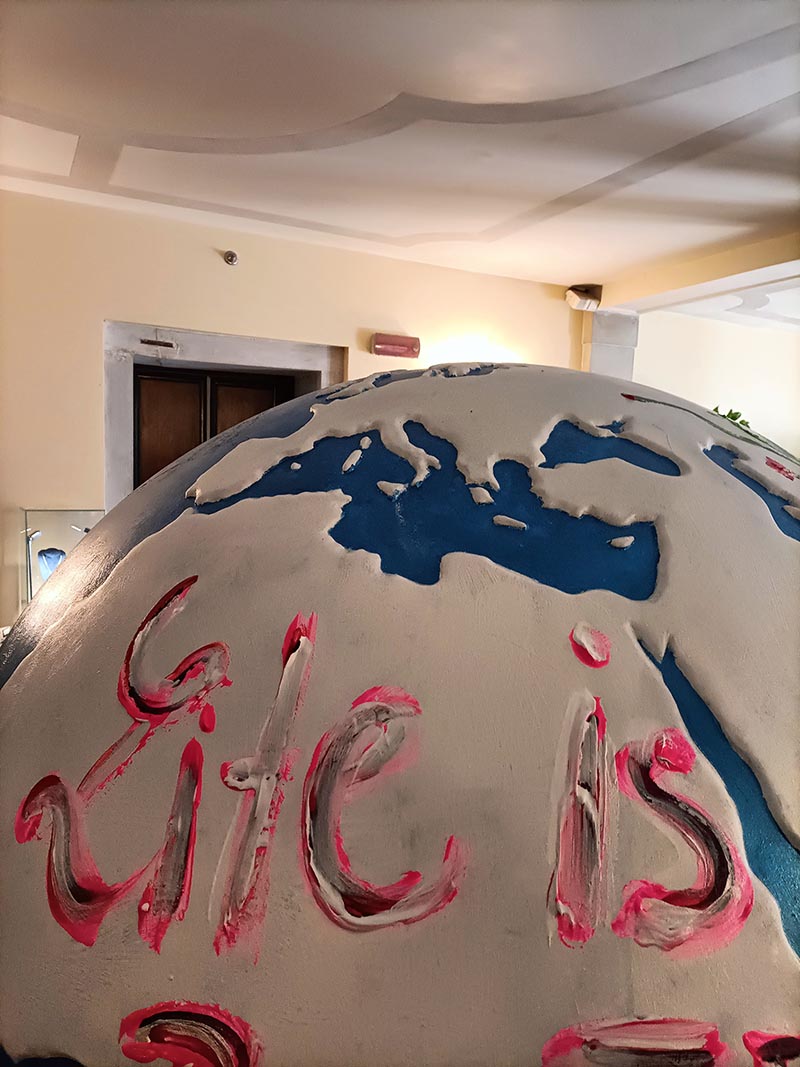
A Ca’ Sagredo Hotel sono esposte delle opere molto interessanti dell’artista Paola Buratto Caovilla . Sono visibili a piano terra e sull’ammezzato. Sono dei mappamondi, con delle scritte che riguardano il riscaldamento globale, e i problemi di cui soffre il nostro pianeta.
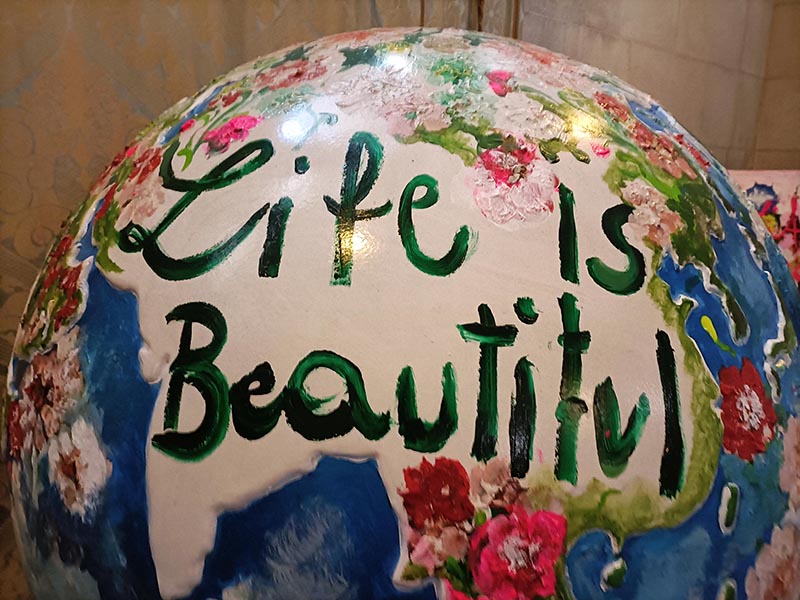
Sulla superficie di ogni mappamondo, ci sono delle scritte, degli appelli, delle grida che ci avvisano, che non c’è più tempo, che bisogna fare qualcosa prima che sia troppo tardi!
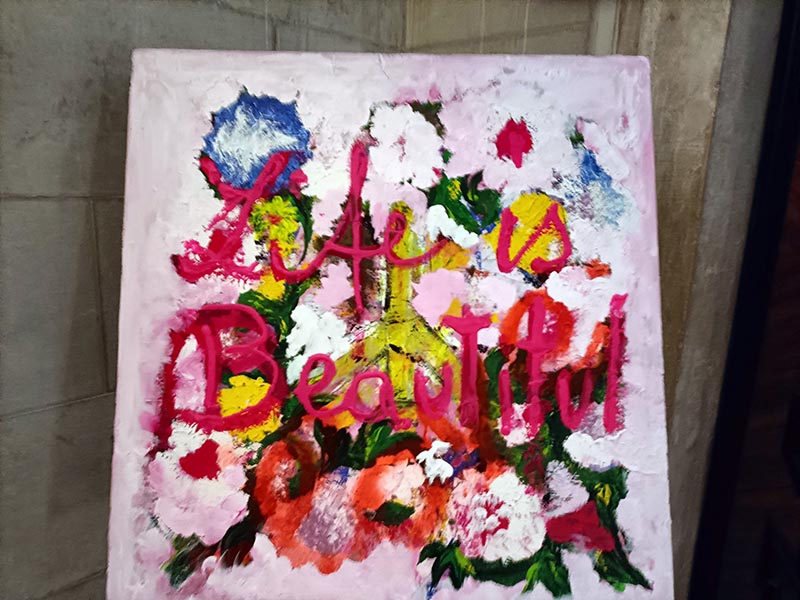
La vita è bella, a patto che non siamo noi stessi che ce la roviniamo con le nostre azioni, le cui conseguenze danneggiano la Terra. Gli oceani sono fonte di vita, così come le foreste. E’ giunto il momento di fare qualcosa.
Sono con questi messaggi che l’artista vuole dare al resto del mondo, e quale modo migliore per diffondere il messaggio del hotel Ca’ Sagredo ? Ca’ Sagredo è uno dei migliori alberghi di Venezia, e le posizioni strategiche dei mappamondi, sono perfettamente visibili a tutti i turisti che entrano, escono dall’albergo, in tutti i loro giorni della loro permanenza.
Arte e sostenibilità si fondono dentro le mura di Ca’ Sagredo, che lancia un messaggio in bottiglia, a chiunque voglia leggerlo, nella speranza di riuscire a salvare il nostro bellissimo pianeta azzurro.
Globes at Ca’ Sagredo Hotel !
At Ca’ Sagredo Hotel there are some very interesting works by the artist Paola Buratto Caovilla . They are visible on the ground floor and on the mezzanine. They are globes, with writings about global warming, and the problems our planet suffers from.
On the surface of every globe, there are writings, appeals, cries that warn us that there is no more time, that something must be done before it is too late!
Life is beautiful, as long as we don’t ruin it ourselves with our actions, the consequences of which damage the Earth. Oceans are a source of life, as are forests. The time has come to do something.
It is with these messages that the artist wants to give to the rest of the world, and what better way to spread the message then the Ca’ Sagredo hotel? Ca’ Sagredo is one of the best hotels in Venice, and the strategic positions of the globes make them perfectly visible to all tourists who enter and leave the hotel throughout their staying.
Art and sustainability come together within the walls of Ca’ Sagredo, which launches a message in a bottle, to anyone who wants to read it, in the hope of being able to save our beautiful blue planet.
For the English translation please scroll down the page, thank you !
C’è una nuova mostra di arte presso l’hotel Ca’Sagredo di Venezia, alquanto interessante, situata nel grande salone al primo piano, ad opera dell’artista Carola Castagna che si intitola “VOLTI DI TERRA E VETRO, che durerà dal 5 al 24 novembre di quest’anno.
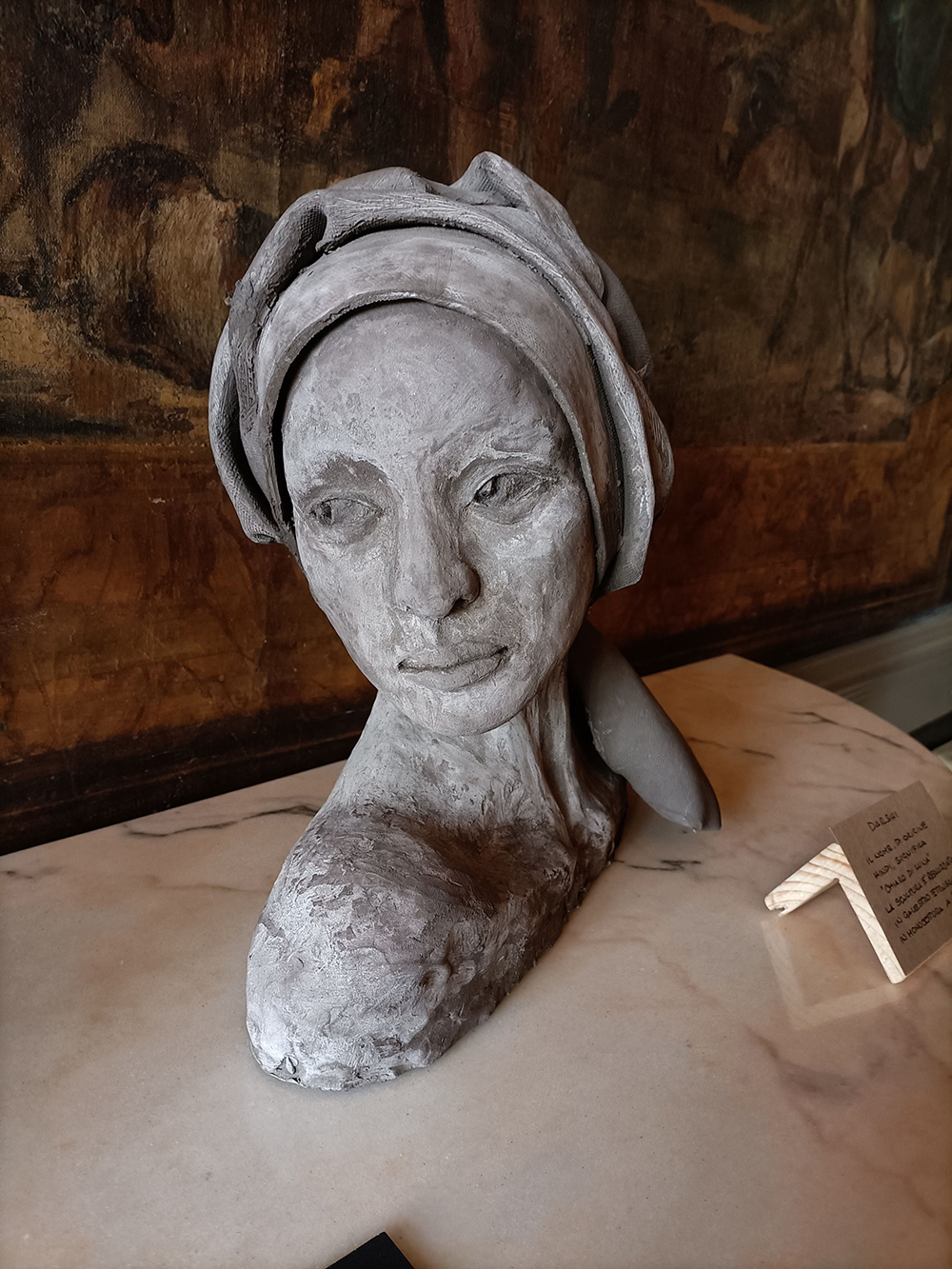
Questa mattina, tra le varie mostre che ho visitato a Venezia, mi son imbattuto in qualcosa di veramente interessante. Passo sempre a Ca’ Sagredo per rivedere il magnifico affresco di Pietro Longhi “La caduta dei giganti”, e oggi ci sono andato anche perché ero incuriosito dalla nuova mostra che ospita. Oltrepassato il scalone che porta al primo piano, ho potuto ammirare sei busti di donna, molto intriganti.
Esse raffigurano delle donne di origine hindi, ad eccezione della prima che è Birka, nome di un guerriero Vikingo, ritrovato in svezia intorno al 1800, ma che solo nel 2014, si scoprì essere una donna. Swati che nella loro lingua significa “la stella più luminosa“, Kajri che vuol dire “come una nuvola“, Zenobia “La Regina di Palmira“, Ashita significa “Orgoglio“, Darshi “Chiaro di luna“. Da sottolineare che alcune di queste opere, presentano anche alcuni elementi in vetro, molto singolari, creati da Simona Iacovazzi.
Devo dire che mi hanno impressionato molto, sono rimasto a guardarle una per una per parecchi minuti, ho parlato con l’artista che mi ha confidato che le sue opere vogliono rappresentare visione di un mondo dove le culture e le razze si fondono, dove non esiste il razzismo. Tuttavia, opinione mia personale, sento emanare da queste sculture, una singolare tristezza, le guardo, e i loro occhi, le loro labbra traspaiano una tristezza incredibile. Non posso non pensare alla condizione della donna, che è sempre stata bistrattata, emarginata, bullizzata, ferita, percossa e anche uccisa, in tutto l’arco temporale della nostra storia.
Una magnifica mostra, che raccomando a tutti di andarla a vedere. Affrettatevi perché durerà solo fino al 24 novembre !
Busts of a woman at Ca ‘Sagredo hotel
There is a new art exhibition at the Ca’Sagredo hotel in Venice, quite interesting, located in the large hall on the first floor, by the artist Carola Castagna which is entitled” FACES OF EARTH AND GLASS, which will last from 5 to 24 November this year.
This morning, among the various exhibitions I visited in Venice, I came across something really interesting. I always go to Ca ‘Sagredo to review Pietro Longhi’s magnificent fresco “The Fall of the Giants”, and today I also went there because I was intrigued by the new exhibition it hosts. Beyond the staircase leading to the first floor, I was able to admire six very intriguing busts of women.
They depict women of Hindi origin, with the exception of the first one which is Birka , the name of a Viking warrior, found in Sweden around 1800, but who was discovered to be a woman only in 2014 . Swati which in their language means “ the brightest star “, Kajri which means “ like a cloud ” , Zenobia “ The Queen of Palmyra “, Ashita means “ Pride “, Darshi “Moonlight “. It should be emphasized that some of these works also feature some very unique glass elements created by Simona Iacovazzi.
I must say that they impressed me a lot, I stood looking at them one by one for several minutes, I spoke to the artist who told me that his works want to represent a vision of a world where cultures and races merge, where no racism exists. However, in my personal opinion, I feel a singular sadness emanating from these sculptures, I look at them, at their eyes, their lips, they emanate an incredible sadness. I cannot help but think about the condition of women, who have always been mistreated, marginalized, bullied, hurt, beaten and even killed, throughout the time span of our history.
A magnificent exhibition, which I recommend everyone to go and see. Hurry up because it will only last until November 24th!


















 Diario di un operatore museale