For the English translation please scroll down the page, thank you !

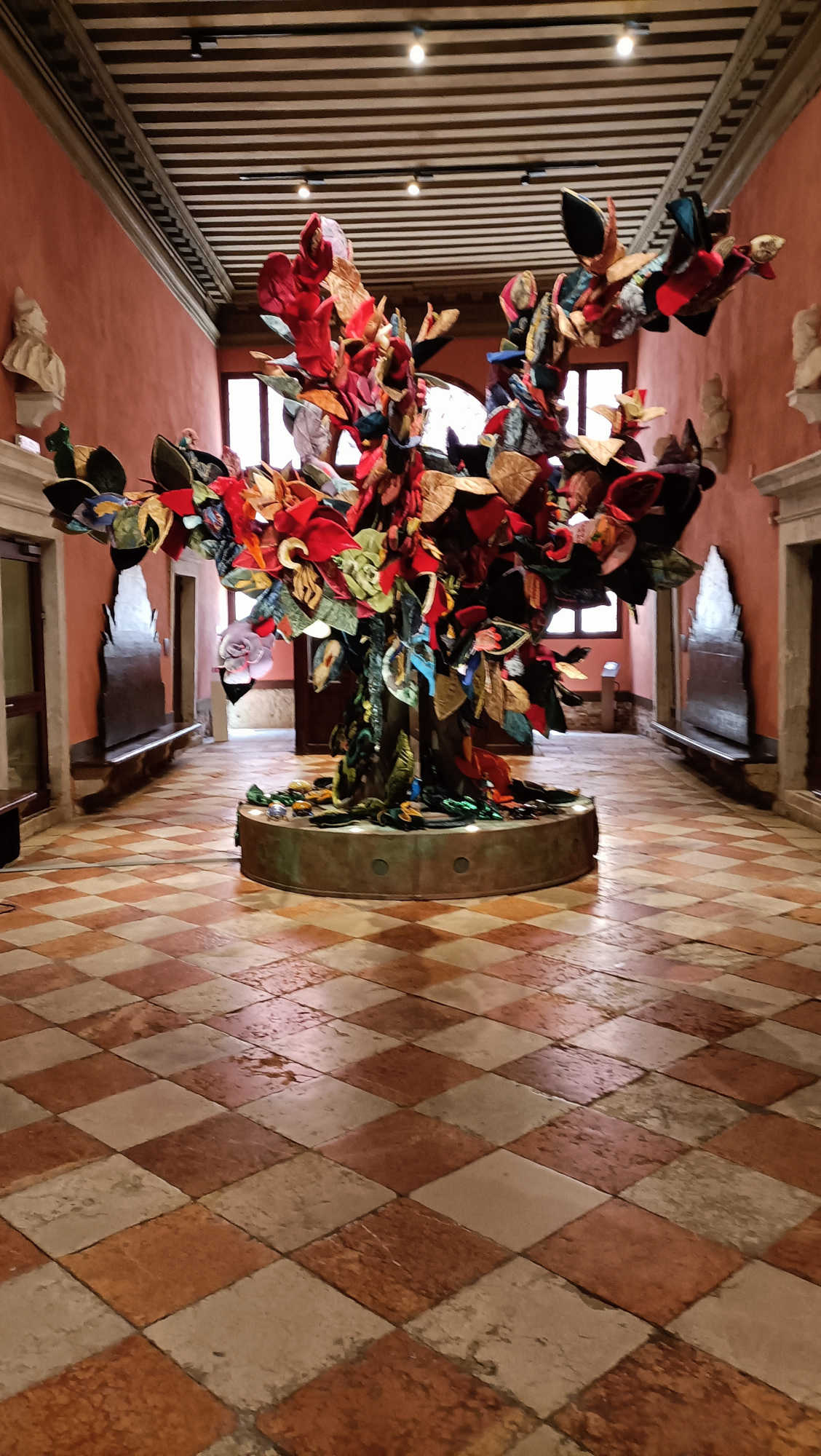 | Ci stiamo avvicinando alla fine della bellissima mostra temporanea dell’Artista Carla Tolomeo, dal titolo “L’albero della vita” di cui avevo già parlato in uno dei miei precedenti blog: https://diariodiunoperatoremuseale.co/2024/05/27/lalbero-della-vita-a-palazzo-mocenigo/ In tutto questo tempo, un grandissimo numero di visitatori, e non, si sono fermati ad ammirare questa bellissima “scultura”. Numerose volte l’artista ci ha tenuti compagnia, rispondendo alle domande di molti turisti, e molti ospiti sono venuti a trovarla. Così è stato anche nella giornata di ieri, quando è venuta a trovarla L’artista / danzatrice Francesca Ferah, che in un momento del tutto inaspettato, spontaneo, ci ha regalato una sua performance di danza sufi /dervisci , che è stata entusiasmante, ma che purtroppo è durata troppo poco. Lasciate che vi parli di questi pochi attimi, di questa grande artista e cosa tratta questo tipo di danza. |
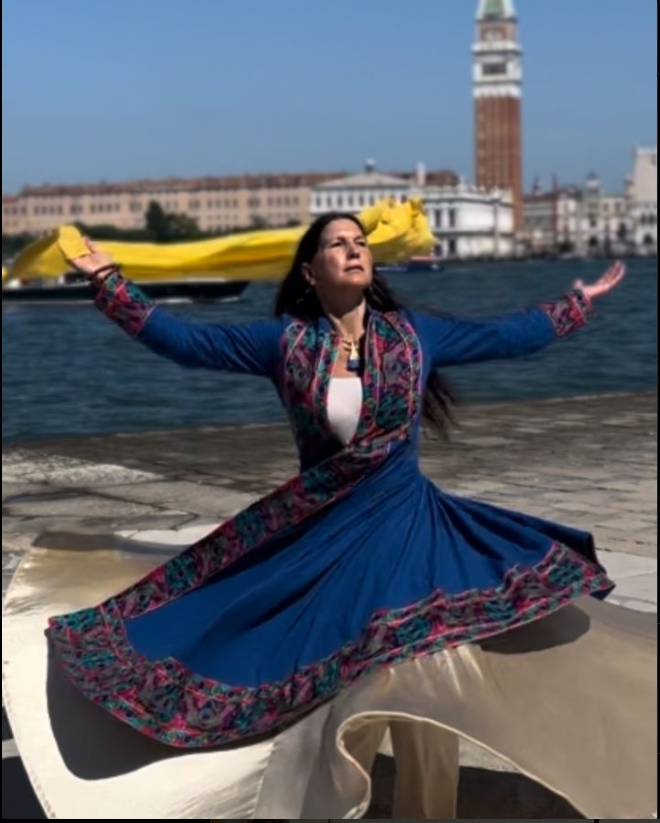
Francesca Ferah è una danzatrice e insegnante di danza Sufi, nota per il suo approccio innovativo e interculturale alla tradizione della danza dervisci. Con radici italiane e bosniache, Ferah ha sempre vissuto un incontro tra Oriente e Occidente, che ha influenzato profondamente il suo percorso artistico e spirituale. Francesca Ferah ha iniziato il suo viaggio nella danza Sufi in un contesto di ricerca spirituale e personale. Nel 2014, ha ricevuto il nome Sufi “Ferah”, che significa “tranquillità”, dal maestro Sufi Dr. Rahmi Orüç Güvenç durante un intenso periodo di pratica noto come “99 giorni e 99 notti di Semâ” in Turchia. Questo evento ha segnato un punto di svolta nella sua vita, portandola a immergersi completamente nella pratica della danza dervisci. La sua passione per la danza e la spiritualità l’hanno spinta a intraprendere un percorso, che combina arte, meditazione e insegnamento. Oggi, è anche ideatrice e direttrice artistica di Soul Circle, dove tiene seminari di danza e meditazione Sufi in Italia e all’estero. La sua missione è quella di promuovere il benessere emotivo e l’intelligenza emotiva attraverso pratiche artistiche.
Origini e Storia
Le origini precise della danza dei dervisci sono avvolte nel mistero, ma si ritiene che abbia radici profonde nel sufismo, una corrente mistica islamica nata nel IX secolo. La danza, come la conosciamo oggi, è strettamente legata all’ordine dei Mevlevi, fondato da Jalal al-Din Rumi, un grande poeta e mistico persiano. Rumi, con la sua profonda spiritualità, ha contribuito a dare forma e diffondere questa pratica.
Caratteristiche Principali
- Rotazione: Il movimento in senso anti orario, centrale della danza è la rotazione su se stessi. Questa rotazione simboleggia il viaggio dell’anima verso Dio, la ricerca della perfezione divina e l’unione con l’universo.
- Abbigliamento: I dervisci indossano un abito bianco, simbolo di purezza, e un lungo mantello nero, che rappresenta la tomba egoistica. I neri mantelli, chiamati thirqua, di cui i partecipanti si liberano prima della danza, indicano la morte e l’oscurità, la gonna bianca con cui danzano, tennure, è simbolo di purezza, i copricapi a forma di cono, sikke, rappresentano la pietra tombale dell’ego.
- Musica: La musica utilizzata durante la danza è composta da strumenti tradizionali come il ney (flauto), il rebab (violino) e il bendir (tamburo). I canti sono spesso basati sui versi di Rumi e hanno un profondo significato spirituale.
- Sema: La cerimonia completa, chiamata sema, è composta da diverse fasi, ognuna delle quali ha un significato simbolico.
- Spiritualità: La danza dei dervisci non è una semplice performance, ma un’esperienza mistica profonda. Attraverso la rotazione, i dervisci cercano di raggiungere un’estasi mistica e di connettersi con il divino.
Significato Simbolico

- Rotazione come simbolo dell’universo: La rotazione dei dervisci rappresenta il movimento dei pianeti intorno al sole, simboleggiando l’armonia dell’universo, inoltre i danzatori non solo girano attorno a sé stessi, ma anche attorno al maestro, che si trova al centro della sala. Questo movimento simboleggia una sfera cosmica in cui i pianeti orbitano attorno al sole. La danza vorticosa assume così un carattere astrale ed è considerata la forma più pura di abbandono alla danza, esprimendo l’estasi mistica e la connessione con l’universo.
- Braccio destro verso il cielo, sinistro verso la terra: Questa posizione delle braccia simboleggia la ricezione della benedizione divina e la sua diffusione sulla terra. Le braccia, dapprima incrociate sul petto, si aprono poi verso il cielo e la terra, canale attraverso cui fluisce l’energia cosmica. Ruotando su se stessi, i danzatori si trasformano in vortici viventi, perdendo ogni riferimento spaziale e temporale, in un’estasi mistica che li proietta in una dimensione ultraterrena.
La Danza dei Dervisci Oggi
La danza dei dervisci è oggi riconosciuta a livello internazionale come un patrimonio dell’umanità e viene praticata e insegnata in molti paesi. È diventata un simbolo di tolleranza, spiritualità e unità tra i popoli.
Per chi volesse approfondire di più questo tema, vi lascio alcuni link qui sotto. Desidero ringraziare ancora Francesca Ferah, per questo breve ma entusiasmante momento che ci ha regalato, e che ha aperto una finestra su un mondo prima sconosciuto.
Dervish / Sufi Dance at Palazzo Mocenigo
| We are approaching the end of the beautiful temporary exhibition of the Artist Carla Tolomeo, entitled “The Tree of Life” which I had already talked about in one of my previous blogs: https://diariodiunoperatoremuseale.co/2024/05/27/lalbero-della-vita-a-palazzo-mocenigo/ In all this time, a huge number of visitors, and others, have stopped to admire this beautiful “sculpture”. The artist has kept us company on numerous occasions, answering questions from many tourists, and many guests have come to visit her. This was also the case yesterday, when the artist / dancer Francesca Ferah came to visit her, who in a completely unexpected, spontaneous moment, gave us her Sufi / dervish dance performance, which was exciting, but unfortunately lasted too short. Let me tell you about these few moments, about this great artist and what this kind of dance is about. |
Francesca Ferah is a Sufi dancer and teacher, known for her innovative and intercultural approach to the dervish dance tradition. With Italian and Bosnian roots, Ferah has always experienced an encounter between East and West, which has deeply influenced her artistic and spiritual path. Francesca Ferah began her journey in Sufi dance in a context of spiritual and personal research. In 2014, she received the Sufi name “Ferah”, meaning “tranquility”, from Sufi master Dr. Rahmi Orüç Güvenç during an intense period of practice known as “99 days and 99 nights of Semâ” in Turkey. This event marked a turning point in her life, leading her to fully immerse herself in the practice of dervish dance. Her passion for dance and spirituality led her to take a path, which combines art, meditation and teaching. Today, she is also the creator and artistic director of Soul Circle, where she holds Sufi dance and meditation workshops in Italy and abroad. Its mission is to promote emotional well-being and emotional intelligence through artistic practices.
Origins and History
The precise origins of the dervish dance are shrouded in mystery, but it is believed to have deep roots in Sufism, a mystical Islamic movement that arose in the 9th century. The dance, as we know it today, is closely linked to the Mevlevi order, founded by Jalal al-Din Rumi, a great Persian poet and mystic. Rumi, with his deep spirituality, helped shape and spread this practice.
Main Features
- Rotation: The counterclockwise, central movement of the dance is the rotation on oneself. This rotation symbolizes the soul’s journey towards God, the search for divine perfection and union with the universe.
- Clothing: The dervishes wear a white dress, a symbol of purity, and a long black cloak, which represents the egoistic tomb. The black cloaks, called thirqua, which the participants throw off before the dance, indicate death and darkness, the white skirt they dance in, tennure, is a symbol of purity, the cone-shaped headdresses, sikke, represent the tombstone of the ego.
- Music: The music used during the dance is composed of traditional instruments such as the ney (flute), the rebab (violin) and the bendir (drum). The chants are often based on Rumi’s verses and have deep spiritual meaning.
- Sema: The complete ceremony, called sema, is composed of several stages, each of which has a symbolic meaningo.
- Spirituality: The dance of the dervishes is not a simple performance, but a deep mystical experience. Through rotation, dervishes seek to achieve mystical ecstasy and connect with the divine.
Symbolic Meaning

- Rotation as a symbol of the universe: The rotation of the dervishes represents the movement of the planets around the sun, symbolizing the harmony of the universe, moreover the dancers not only spin around themselves, but also around the master, who is in the center of the hall. This movement symbolizes a cosmic sphere in which the planets orbit around the sun. The whirling dance thus takes on an astral character and is considered the purest form of surrender to the dance, expressing mystical ecstasy and connection with the universe.
- Right arm towards the sky, left towards the earth: This position of the arms symbolizes the reception of divine blessing and its diffusion on the earth. The arms, first crossed on the chest, then open towards the sky and the earth, the channel through which cosmic energy flows. Rotating on themselves, the dancers transform themselves into living vortices, losing all spatial and temporal references, in a mystical ecstasy that projects them into an otherworldly dimension.
The Dance of the Dervishes Today
The dance of the dervishes is today recognized internationally as a heritage of humanity and is practiced and taught in many countries. It has become a symbol of tolerance, spirituality and unity among peoples.
For those who would like to delve deeper into this topic, I leave some links below. I would like to thank Francesca Ferah again, for this brief but exciting moment she gave us, and that opened a window on a previously unknown world.
 Diario di un operatore museale