For the English translation please scroll down the page, thank you !
Prologo
E’ da parecchio tempo, che studio con passione le innumerevoli famiglie nobili della storia della Serenissima, una in particolare, è la mia preferita, la famiglia Sagredo. La ragione nasce dal fatto che abito a poca distanza da via Ca’ Sagredo a Mestre dove la famiglia, aveva la villa in terraferma. Quand’ero bambino, andavo a giocare presso una fattoria, che sorgeva su un tratto di terreno, dove per l’appunto risiedeva la famiglia. Probabilmente, la fattoria era dei contadini, che coltivavano i loro campi. Purtroppo, la loro dimora non esiste più, distrutta dalle guerre, l’unica cosa che si è salvata è il tempio di San Gerardo , che è all’interno della chiesa del Carmelo sempre nelle vicinanze della villa, e pensare che in quegli anni, avrò visto centinaia di volte la statua, mentre andavo a messa o a lezione di catechismo!
 |  |
Inoltre, nel museo di Ca’ Rezzonico, che ho frequentato molto spesso, ci sono dei bellissimi affreschi a loro dedicati:
 |  |
Nel primo riquadro “la nobiltà e la virtù vincono l’ignoranza” è un affresco di Giambattista Tiepolo, dipinto nel 1744-1745 per la sala del piano nobile di Ca’ Rezzonico, palazzo nobiliare di Venezia. L’affresco raffigura due figure alate, la Virtù e la Nobiltà, che sconfiggono l’Ignoranza. La Virtù è rappresentata da una giovane donna alata che impugna una lancia, mentre la Nobiltà è rappresentata da una donna riccamente vestita che sostiene una statuetta di Minerva. L’Ignoranza è rappresentata da una figura scomposta che precipita dal cielo, circondata da pipistrelli. L’affresco è un’allegoria della vittoria della conoscenza e della cultura sulla barbarie e l’ignoranza. L’immagine delle due figure alate che sconfiggono l’Ignoranza è un messaggio di speranza e di fiducia nel futuro. Mentre a fianco: in occasione del matrimonio tra Antonio Pesaro e Caterina Sagredo, fu commissionata a Giambattista Tiepolo una tela raffigurante Zefiro e Flora. La tela, attualmente esposta a Ca’ Rezzonico, mostra Flora, l’antica divinità della primavera, abbracciata a Zefiro, il caldo vento di ponente che fa rinascere la natura dopo i rigori dell’inverno. L’opera doveva essere intesa come un buon auspicio di fecondità per i novelli sposi.
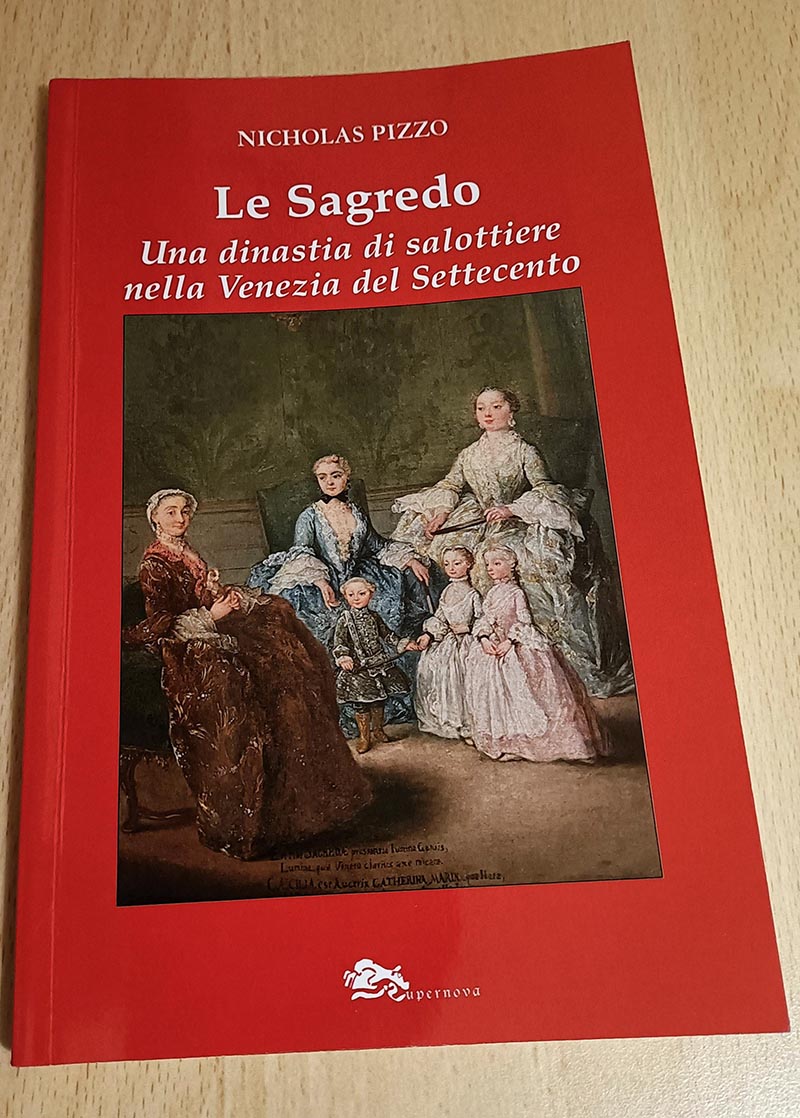
Di recente ho acquistato un libro che parla della famiglia Sagredo, molto ben fatto ad opera dello scrittore Nicholas Pizzo . Ho avuto il privilegio di mettermi in contatto con lui, e abbiamo realizzato questa piccola intervista in esclusiva per voi.
Intervista
Nicholas Pizzo: Sono uno storico settecentesco con una laurea in Storia presso l’Alma Mater Studiorum di Bologna, conseguita nel 2020. La mia tesi di laurea triennale si intitolava “Allegri alla Villeggiatura, vita in Villa nel Settecento veneziano”. Attualmente sono iscritto al corso di laurea magistrale in Storia dal Medioevo all’età Contemporanea presso l’Università Ca’ Foscari di Venezia. Sono anche una guida museale per l’ente Munus Srl (Roma) presso il Museo Nazionale di Villa Pisani e il creatore del podcast “Ritratti del Settecento”, disponibile su Spotify. Inoltre, collaboro con Fatti per la Storia attraverso la realizzazione di alcuni articoli. Sono appassionato di storia del Settecento e mi piace condividere la mia conoscenza con gli altri. Credo che la storia sia importante perché ci aiuta a capire il presente e a costruire un futuro migliore.
io: Come mai hai fatto questo libro sulla famiglia Sagredo?
Nicholas Pizzo: Il mio saggio “Le Sagredo. Una dinastia di salottiere nella Venezia del Settecento” nasce in quanto desiderio di approfondire, diffondere e conoscere le storie di queste quattro donne divenute protagoniste essenziali al tramonto della Serenissima. Salottiere, mecenati e protettrici di artisti e letterati, le Sagredo rappresentano una dinastia tutta la femminile di eleganza, sapienza e anticonformismo. Vissute all’interno di una società maschilista e patriarcale, evasero dall’anonimato e dal rigido ruolo di mogli e madri, tenendo conversazione disinvolta e licenziosa nei loro casini e creando non pochi problemi agli Inquisitori di Stato. Il mio interesse nei loro confronti è nato e si è sviluppato nel corso degli anni e la mancanza di un volume su di loro ha fatto nascere in me il desiderio di scoperta e di divulgazione.
io: Ti è stato difficile reperire informazioni?
Nicholas Pizzo: Non ho trovato difficoltà “insormontabili”. Attraverso una attenta e dettagliata ricerca d’archivio delle fonti inedite e una ricerca meticolosa di quelle edite, sono riuscito a costruire il saggio pezzo per pezzo. Conoscere le Sagredo attraverso i documenti cartacei dell’epoca è stato emozionante
io: Quale sarà il tuo prossimo progetto ?
Nicholas Pizzo: il mio prossimo saggio verterà sulla villeggiatura nella Milano del Settecento. Considerandola quale un fenomeno culturale, artistico e sociale, la voga della villeggiatura crebbe in modo progressivo ed esponenziale nel Settecento. Simboli delle grandi famiglie aristocratiche milanesi, le dimore bucoliche e i raffinati giardini diedero libertà ed ospitalità non concessi in città. Teatri della società d’Antico Regime, le ville di delizia divennero salotti di rappresentanza e di mondanità. Attraverso le fonti recuperate dagli archivi, dai carteggi e dai documenti bibliografici, il saggio andrà ad analizzare alcuni casi specifici come quelli delle famiglie Litta Visconti Arese, Barbiano di Belgiojoso, Clerici, Serbelloni e Dugnani. Importanza e rilievo verrà data alle nobildonne che, come già osservato con le Sagredo, ebbero un ruolo fondamentale nel Settecento.
io: Musei e artisti (pittori) preferiti ?
Nicholas Pizzo: Potrei elencare moltissimi luoghi in Italia fra musei, gallerie, palazzi, chiese, ville e regge a me preferiti, ma mi limiterò a citarne soltanto alcuni a mio avviso irrinunciabili: la Reggia di Colorno, la Reggia di Caserta, Palazzo Litta a Milano, la Palazzina di Caccia di Stupinigi, il Casino Venier a Venezia, Villa Nazionale Pisani a Stra, la Chiesa di San Michele Arcangelo ad Anacapri e la Chiesa dei Gesuiti a Venezia. Museo degno di nota per comprendere il XVIII secolo indubbiamente Ca’ Rezzonico Museo del Settecento Veneziano. Per quanto riguarda invece l’arte e i pittori, la corrente artistica a me preferita è senza alcun dubbio quella del ritratto quindi devo citare tra i preferiti Pietro e Alessandro Longhi.
Ti ringrazio molto per avermi concesso questa intervista, colgo l’occasione per informare i miei lettori, che il 16 settembre presso l’Hotel Ca’sagredo di Venezia si terrà la presentazione del tuo libro sulle Sagredo ! Invito tutti a leggere questo libro, come ho già detto sopra, è molto ben fatto, conciso, chiaro, espone tutti i fatti principali, si può portare in viaggio tranquillamente, e non occupa tanto spazio. Insomma è perfetto !
Interview with Nicholas Pizzo – Sagredo what a passion
Prologue
I have been passionately studying the countless noble families of the history of the Serenissima for a long time. One in particular is my favorite, the Sagredo family. The reason is that I live a short distance from Ca’ Sagredo street in Mestre, where the family had their villa on the mainland. When I was a child, I used to go and play at a farm that stood on a piece of land where the family lived. Probably, the farm was owned by the farmers who cultivated their fields. Unfortunately, their home no longer exists, destroyed by wars. The only thing that has survived is the temple of San Gerardo, which is inside the Carmelite church, always near the villa, and to think that in those years, I must have seen the statue hundreds of times, while going to mass or to catechism classes!
| |
In addition, in the Ca’ Rezzonico Museum, which I have visited very often, there are some beautiful frescoes dedicated to them:
| |
In the first panel, “Nobility and Virtue Defeat Ignorance” is a fresco by Giambattista Tiepolo, painted in 1744-1745 for the ballroom on the piano nobile of Ca’ Rezzonico, a noble palace in Venice. The fresco depicts two winged figures, Virtue and Nobility, defeating Ignorance. Virtue is represented by a young winged woman holding a spear, while Nobility is represented by a richly dressed woman holding a statuette of Minerva. Ignorance is represented by a disheveled figure falling from the sky, surrounded by bats. The fresco is an allegory of the victory of knowledge and culture over barbarity and ignorance. The image of the two winged figures defeating Ignorance is a message of hope and trust in the future. Next to it, on the occasion of the marriage between Antonio Pesaro and Caterina Sagredo, Giambattista Tiepolo was commissioned to paint a canvas depicting Zephyrus and Flora. The canvas, currently on display at Ca’ Rezzonico, shows Flora, the ancient goddess of spring, embracing Zephyrus, the warm west wind that makes nature reborn after the rigors of winter. The work was intended as a good omen of fertility for the newlyweds.
I recently purchased a book about the Sagredo family, very well-written by the author Nicholas Pizzo . I had the privilege of contacting him, and we made this small interview exclusive for you.
Interview
Nicholas Pizzo: I am an eighteenth-century historian with a degree in History from the Alma Mater Studiorum of Bologna, obtained in 2020. My three-year degree thesis was entitled “Allegri alla Villeggiatura, life in Villa in eighteenth-century Venice”. I am currently enrolled in the master’s degree course in History from the Middle Ages to the Contemporary Age at the Ca’ Foscari University of Venice. I am also a museum guide for Munus Srl (Rome) at the National Museum of Villa Pisani and the creator of the podcast “Ritratti del Settecento”, available on Spotify. Furthermore, I collaborate with “Fatti per la Storia” through the creation of some articles. I am passionate about eighteenth-century history and I like to share my knowledge with others. I think history is important because it helps us understand the present and build a better future.
me: How come you made this book about family Sagredo?
Nicholas Pizzo: My essay “Le Sagredo. A Dynasty of Salonnières in 18th Century Venice” was born out of a desire to deepen, spread, and learn more about the stories of these four women who became essential players at the sunset of the Serenissima. Salonnières, patrons, and protectors of artists and writers, the Sagredo represent a female dynasty of elegance, wisdom, and non-conformism. Living within a patriarchal and sexist society, they escaped from anonymity and the rigid role of wives and mothers, holding uninhibited and licentious conversations in their salons and causing no small problems for the State Inquisitors. My interest in them was born and developed over the years, and the lack of a volume on them made me want to discover and disseminate their stories.
me: Was it difficult to find information?
Nicholas Pizzo: I did not find any “insurmountable” difficulties. Through a careful and detailed archival research of unpublished sources and a meticulous research of published ones, I was able to build the essay piece by piece. Getting to know the Sagredo through the paper documents of the time was exciting.
me: Which will this be your next project?
Nicholas Pizzo: My next essay will focus on the 18th century villeggiatura in Milan. Considered a cultural, artistic, and social phenomenon, the fashion for holiday grew progressively and exponentially in the 18th century. Symbols of the great Milanese aristocratic families, the bucolic homes and the refined gardens gave freedom and hospitality that were not granted in the city. Theaters of the Antico Regime society, the ville di delizia became salons of representation and mundanity. Through the sources recovered from the archives, the correspondence, and the bibliographical documents, the essay will analyze some specific cases such as those of the Litta Visconti Arese, Barbiano di Belgiojoso, Clerici, Serbelloni, and Dugnani families. Importance and prominence will be given to the noblewomen who, as already observed with the Sagredo, played a fundamental role in the 18th century
me: Museums and favorite artists (painters)?
Nicholas Pizzo: I could list many places in Italy among my favorite museums, galleries, palaces, churches, villas and palaces, but I will limit myself to mentioning only a few that I believe are essential: the Reggia di Colorno, the Reggia di Caserta, Palazzo Litta in Milan, the Palazzina di Caccia di Stupinigi, the Casino Venier in Venice, Villa Nazionale Pisani in Stra, the Church of San Michele Arcangelo in Anacapri and the Church of the Jesuits in Venice. A museum worth noting to understand the 18th century is undoubtedly Ca’ Rezzonico Museum of Venetian 18th century art of Venice. As for art and painters, my favorite artistic movement is undoubtedly that of portraiture, so I must mention among my favorites Pietro and Alessandro Longhi.”
Thank you very much for granting me this interview, I would like to take this opportunity to inform my readers that your book on the Sagredo family will be presented at the Hotel Ca’sagredo in Venice on September 16th. I encourage everyone to read this book, as I have already said above, it is very well done, concise, clear, and exposes all the main facts. It can be easily taken on a trip and does not take up much space. In short, it is perfect!”
 Diario di un operatore museale